REVIEW · POMPEII
Pompeii 2h Small-Group Tour with Expert Archaeologist
Book on Viator →Operated by Mondo Guide Srl · Bookable on Viator
Pompeii is big, so this tour makes it manageable. In just about two hours, you get a guided walk that hits the places most first-timers care about, with storytelling that helps the ruins make sense. I love that the tour keeps you moving through key archaeological areas instead of wandering with no plan.
Two other things I especially like: the itinerary includes major stops such as the theaters, baths, and big houses (so you don’t miss the obvious highlights), and it’s built for real visitors—including families—so you’re not stuck in a long lecture. One possible drawback: because time is short, each location is a brief visit. If you’re hoping for a slow, deep study of every wall and fresco, you’ll likely want more time on your own.
In This Review
- Pompeii, But Done Smart: The Big Idea Behind This 2-Hour Tour
- What You’ll Really See in 2 Hours (And Why It Works)
- Key Stops You Can’t Miss (First-Timer Order)
- Entering Pompeii’s Story at the Archaeological Park
- Odeon / Teatro Piccolo: Small Theater, Big Meaning
- Teatro Grande: The Big Theater Stop
- House of Menander: Art, Rooms, and How Wealth Lived
- Stabian Baths (Terme Stabiane): Oldest Thermal Complex Vibes
- Lupanar: The Famous Brothel Stop (Know What You’re Signing Up For)
- Via dell’Abbondanza: The Street-Level Reality of Pompeii
- House of the Faun: A Huge Private Residence Moment
- Foro de Pompeya: Pompeii’s Main Square Energy
- Basilica: Merchants, Shelter, and City Business
- Who This Tour Fits Best (And Who Should Think Twice)
- Value Check: Is $32.67 Worth It?
- Heat, Pace, and Comfort Tips That Actually Help
- Should You Book This Pompeii 2-Hour Tour?
- FAQ
- How long is the Pompeii tour?
- Is the tour offered in English?
- Is the admission ticket included?
- Where do we meet for the tour?
- How large is the group?
- Is this tour good for kids?
- What’s the cancellation policy?
Pompeii, But Done Smart: The Big Idea Behind This 2-Hour Tour
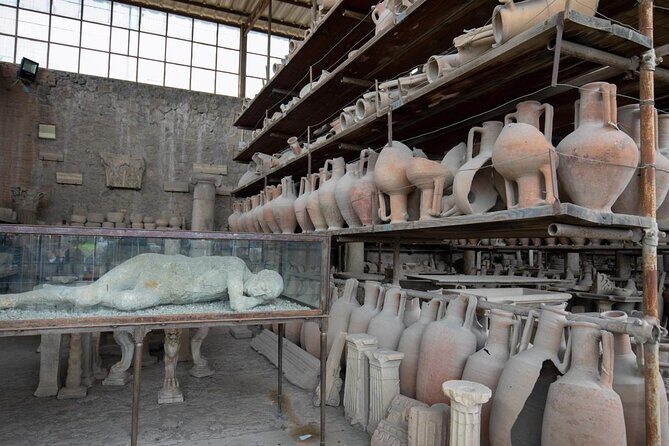
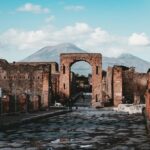
This is a highlights circuit for Pompeii. You’re not trying to “see everything.” You’re trying to see the right things, in the right order, with enough context that the city doesn’t feel like random stone slabs. Pompeii is preserved because of the 79 AD eruption of Mount Vesuvius, and that single fact can turn into something concrete only when someone ties streets, buildings, and everyday life together.
The tour leans on quick orientation plus clear explanations. That matters because Pompeii can overwhelm you fast. Even people who read guides and study maps often find themselves spending more time figuring out routes than understanding what they’re looking at.
You’ll also notice the practical energy from the guide style. Several guides are praised for making the tour easier to follow at a moderate pace, even when conditions are rough. One group specifically called out shade breaks during hot weather, which is exactly what you want in summer.
And yes, you’ll run into the “adult” side of ancient life. The itinerary includes the Lupanar (the famous brothel). It’s not graphic in the way modern entertainment can be, but it’s still a stop that families should consider, depending on kids’ comfort levels and how the guide frames it.
What You’ll Really See in 2 Hours (And Why It Works)
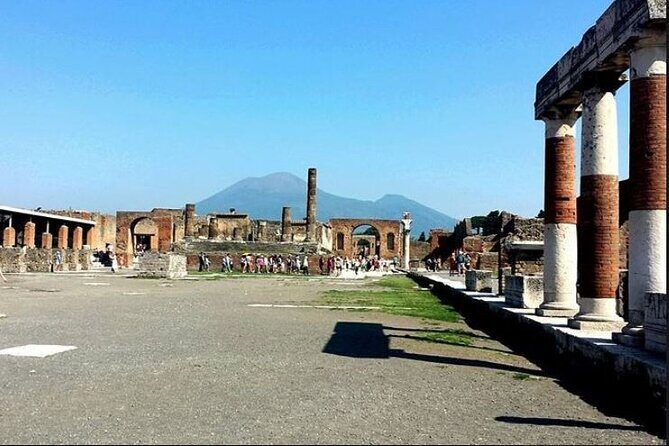
Pompeii is like a whole neighborhood frozen in time. The trick is getting your bearings fast—otherwise you end up with a bunch of photos and not much meaning. This tour is designed to do the meaning part for you.
Here’s the schedule style you can expect: a short stop at each major landmark (often 10 to 15 minutes). That’s deliberate. You’re there long enough to understand what the building is and why it mattered, not long enough to get lost in details that take hours to absorb.
Also, this tour keeps admission simple. The experience lists admission ticket included for each stop, which helps if you’d rather spend energy on the ruins than on ticket logistics.
You can also read our reviews of more tours and experiences in Pompeii
Key Stops You Can’t Miss (First-Timer Order)
- A fast walk through Pompeii’s headline sectors with theaters, homes, baths, and civic spaces in one go
- Brief, focused stops that keep the pace travel-friendly (about 10–15 minutes per site)
- High-impact architecture and art including famous fresco-focused viewpoints and major residential rooms
- Teatro Grande plus smaller performance spaces for a full picture of ancient entertainment
- The Stabian Baths and Lupanar for daily life and social culture, not just “pretty ruins”
- Guides who adapt to heat using shaded/covered spots when possible
Entering Pompeii’s Story at the Archaeological Park
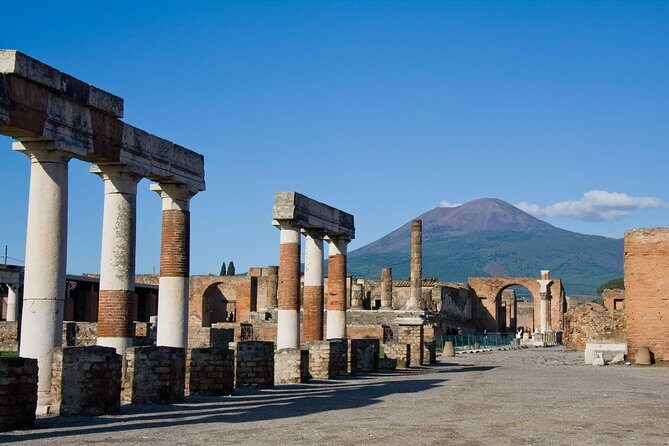
Your tour starts at the Archaeological Park of Pompeii. This is where the whole place clicks. You’re not just walking through ruins; you’re seeing an ancient Roman city preserved after Vesuvius buried it in 79 AD.
The tour’s first moments matter because they set expectations. You’ll get an orientation that helps you spot patterns as you continue: where people gathered, where they worked out, where they spent money, and where social life played out. The plan also includes fresco-focused viewing. Frescoes are often the most emotionally gripping part of Pompeii because they show real art—color and figures—not just the outline of walls.
Practical note: the park setting can feel open and exposed, so early shade and footwear choices matter even in winter. Pompeii is uneven and you’ll be walking.
What’s good for you: If you’re a first-timer, this start gives you a mental map.
What to watch: With only a short window, you’ll see the concept and a few key impressions—then you move on.
Odeon / Teatro Piccolo: Small Theater, Big Meaning
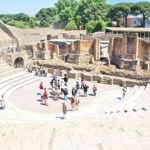
Next up is Odeon – Teatro Piccolo (often described as Teatro Piccolo). This stop helps you understand that Pompeii didn’t have just one “main event” theater. The city had performance spaces for different kinds of entertainment, and the different scale tells you something about how people organized leisure.
This area is also a breather in the itinerary. After the opening orientation, you get a smaller stop—quick context and then on to bigger structures.
Why it’s worth it: You learn the variety of Roman entertainment in a way you can’t get from random wandering.
Time reality: It’s a short stop (about 10 minutes), so use it to ask questions and get your bearings.
Teatro Grande: The Big Theater Stop
Then you reach Teatro Grande, the most important theater in Pompeii. This is the visual anchor. When you see it, you finally understand how performance and public life blended.
A theater in a city like Pompeii wasn’t only about shows. It was about status and community. It also gives you a strong sense of scale. When you picture the city moving around this structure, the ruins feel more like a real living place.
What I like about including it here: It often becomes the stop that makes everything else feel connected.
Possible drawback: If you want a close look at every architectural detail, 15 minutes will feel short. But it’s not trying to replace a full day in the park.


House of Menander: Art, Rooms, and How Wealth Lived
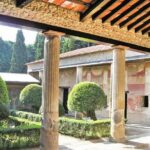
One of the most memorable stops is the House of Menander. This is described as one of the richest and most magnificent houses in Pompeii, known for architecture, decoration, and contents.
This stop matters because it shifts you from public spaces to private life. Pompeii wasn’t only marketplaces and theaters. It also had households where decoration, water use, and room layouts reflected wealth and taste.
When a guide focuses on the house’s features—how rooms connect, what decoration signals—you start to understand how people moved through a home and how display worked in daily life.
Why this works on a timed tour: You get the “wow” of a major residence without spending half a day.
What to watch: Houses can feel visually busy, so the guide’s explanations are the difference between confusion and clarity.
Stabian Baths (Terme Stabiane): Oldest Thermal Complex Vibes
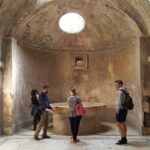
Next is Stabian Baths (Terme Stabiane). The itinerary notes they’re the oldest thermal complex in the city, and that’s a big deal. Baths weren’t a casual add-on. They were a social and routine center.
The baths also help you visualize daily schedules: bathing, meeting, relaxing, and talking. Roman bathing culture wasn’t just about hygiene—it was about community.
What I think you’ll enjoy: The baths connect architecture to real routines.
Reality check: Expect quick highlights, not a full walkthrough of every space.
Lupanar: The Famous Brothel Stop (Know What You’re Signing Up For)
Then you visit the Lupanar, the famous brothel in Pompeii. This is one of those “only Pompeii would have this” stops. It’s essential for understanding social history, and it’s also the stop that may land differently depending on who’s in your group.
For adults, it can be a fascinating look at how commerce and social behavior worked in ancient cities. For families, it can be a sensitive topic. The tour is marketed as family-friendly, but you should still consider your kids’ age and how your guide handles questions.
My advice: If you’re bringing children, ask yourself if your kids can handle mature themes as history, not as entertainment.
Via dell’Abbondanza: The Street-Level Reality of Pompeii
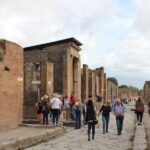
After the big sites, you’ll walk along Via dell’Abbondanza, one of Pompeii’s main streets. This stretch helps you connect the major buildings you just saw to the everyday routes between them.
Streets are where the city stops feeling like a museum display and starts feeling like a lived-in place. You can imagine foot traffic, carts, and daily movement. Even in ruins, the street layout gives you structure.
Why it’s a smart move: It ties everything together—homes, shops, and public buildings.
Time note: It’s included as a stop, but the tour is still short. Use it for orientation and photo angles.
House of the Faun: A Huge Private Residence Moment
Next is the House of the Faun, described as one of the largest and most impressive private residences in Pompeii. It’s the kind of place that makes you realize these weren’t small, modest homes. They were statements—architecture, layout, and display all working together.
When the guide points out key features, the house becomes more than a floorplan. It becomes a sense of power and everyday routine. You’ll likely get a better feel for how space and wealth were organized.
What to like: It’s a high-impact residence stop before you return to civic life.
What to watch: The scale can be overwhelming if you try to “see everything.” Trust the guide’s selection.
Foro de Pompeya: Pompeii’s Main Square Energy
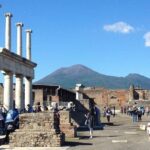
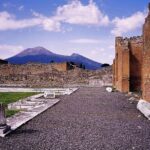
Then you reach the Foro de Pompeya, the ancient main square. This is where civic life happens. Squares are where the city gathers, where announcements and commerce overlap, and where people acted like a community.
The main square stop helps you understand the rhythm of Pompeii: you move from entertainment (theaters), to bathing and social culture (baths), to private wealth (houses), then back to civic identity.
Why this matters on a short tour: You get the full cycle—public and private—without needing extra tickets or extra planning.
Basilica: Merchants, Shelter, and City Business
Finally, the tour includes the Basilica, described as an open portico that gave shelter to merchants and other activities.
In other words: it’s where business life took cover from the weather and moved under architectural shade. It’s a reminder that Pompeii wasn’t only about grand buildings. It also had practical spaces for trading, talking, and working.
What I like here: It closes the loop with the square. You can feel the city’s functioning, not just its monuments.
Who This Tour Fits Best (And Who Should Think Twice)
This is a good match for you if:
- You’re short on time and want a guided highlight loop in about two hours
- You’re visiting Pompeii for the first time and want help turning ruins into a connected city
- You travel with kids who can handle a moderate pace and short attention bursts (many guides are praised for handling children well, such as Patrizia and Manuela)
It may be less ideal if:
- You want a slower, more detailed archaeological lecture. The time limit means the tour can’t replace a longer self-guided day.
- You’re bringing very young kids and you’d rather avoid the Lupanar topic entirely.
- You’re picky about group size. The group can run up to 30 travelers, even though it’s described as small-group.
Also, guide personality matters. In the comments you can see a lot of praise for people like Luca, Gianluca, Roberta, Keeva, Clare, Enzo, Mafilda, and Patrizia. That’s a good sign, because Pompeii rewards a guide who tells stories clearly and keeps pace steady.
Value Check: Is $32.67 Worth It?
At $32.67 per person for a roughly two-hour guided tour, the value depends on what you want from Pompeii.
If you want structure, context, and an efficient route through the highlights, the price is fair. You’re paying for the human sorting job—turning a huge site into a sequence you can understand in one afternoon.
If your goal is deep study, then you might compare this to spending the money on an all-day visit with extra self-guided time. The tour’s short stops mean you’ll get impressions, not exhaustive detail.
One smart value lever: entrance ticket rules can reduce costs. The tour notes Pompeii’s entrance ticket is free on the first Sunday of each month, and it’s always free for visitors under 18 with valid ID or passport. If you can plan around those dates, you stretch your budget even further.
Heat, Pace, and Comfort Tips That Actually Help
Pompeii can be hot, and the ruins offer limited cover. The tour includes multiple outdoor stops, so you’ll want to plan like a pro:
- Wear shoes that handle uneven ground
- Bring water and sun protection
- Expect a moderate walking pace and frequent short stops rather than one long site visit
A nice plus: some guides are specifically praised for adjusting by finding shaded and covered spots, which is exactly how you want the tour handled during peak weather.
Should You Book This Pompeii 2-Hour Tour?
I’d book this if you want a high-success visit. It’s the kind of tour that helps you leave Pompeii with real understanding, not just photos of walls.
Skip it (or pair it with more time on your own) if you crave slow archaeology time. In two hours, you’ll hit major targets, but you won’t see the entire park’s depth.
If you’re bringing kids, it’s often described as engaging and kid-friendly, but do keep expectations realistic: it includes theaters, baths, and the Lupanar, and the guide’s approach matters.
FAQ
How long is the Pompeii tour?
It runs for about 2 hours.
Is the tour offered in English?
Yes, the tour is offered in English.
Is the admission ticket included?
Admission ticket info is included for each listed stop. You also should know that Pompeii entrance is always free for people under 18 with a valid document, and free on the first Sunday of each month.
Where do we meet for the tour?
The meeting point is Ristorante Suisse, Piazza Esedra, 10/13, 80045 Pompei NA, Italy.
How large is the group?
The tour has a maximum of 30 travelers, and it requires a minimum number of 6 people.
Is this tour good for kids?
It’s described as family-friendly, so kids can stay engaged during the visit.
What’s the cancellation policy?
You can cancel for free up to 24 hours in advance for a full refund. If you cancel less than 24 hours before the start time, the amount paid is not refunded.