REVIEW · POMPEII
Pompeii 360° – 4-hour tour with an expert Guide in archaeology
Book on Viator →Operated by Guide Centre Sorrento · Bookable on Viator
Pompeii is easier with a smart route. This 4-hour Pompeii 360° tour maps you through the park’s top archaeology without the usual frantic wandering. I love the expert archaeology guide who helps you connect temples, homes, and everyday Roman life, and I love the well-timed Vesuvius photo views that feel worth stopping for. One drawback: the €20 Pompeii park entrance fee isn’t included, so you’ll want to factor that in before you book.
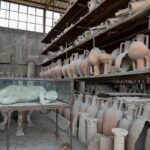
It’s a private tour, so you’re not shuffled around with strangers, and your guide can slow down for questions. I also like that the itinerary mixes the headline sights with the specific details that make Pompeii feel real—mosaic floors, plaster casts, Roman baths, and small theatrical spaces.
The trade-off is time. Some sites are only 5–15 minutes, so if you’re hoping for a long, quiet wander through one house, you’ll need to choose what matters most to you.
In This Review
- Key highlights worth marking on your Pompeii day
- A 4-hour Pompeii route that respects your time
- What the archaeology guide actually changes
- Price and the real cost: $203.70 plus park entry
- Piazza Esedra start and what to bring so you don’t suffer
- Stop-by-stop: the Pompeii 360° itinerary, and what to watch for
- 1) Anfiteatro Romano (Roman Amphitheater)
- 2) Orto dei Fuggiaschi (Garden of the Fugitives)
- 3) Tempio di Giove Capitolino (Temple of Jupiter)
- 4) Foro de Pompeya (Pompeii Forum)
- 5) Casa del Fauno (House of the Faun)
- 6) Temple of Apollo
- 7) Casa del Cinghiale (House of the Wildboar)
- 8) Via dell’Abbondanza (Main Commercial Street)
- 9) Odeon – Teatro Piccolo (Small Theater)
- 10) Stabian Baths (Terme Stabiane)
- 11) Casa dei Vettii (House of the Vettii)
- 12) Basilica (Roman courthouse)
- 13) Tempio di Venere (Temple of Venus)
- 14) Casa del Fauno (second time on the schedule)
- 15) Lupanar (House of Pleasure)
- 16) House of Venus in the Shell
- Vesuvius views that actually fit the route
- Who this Pompeii 360° tour suits best
- Should you book Pompeii 360°? My decision guide
- FAQ
- What is the duration of the Pompeii 360° tour?
- Is the Pompeii Archaeological Park entrance fee included in the price?
- Where does the tour start and end?
- What language is the tour offered in?
- Is this a private tour?
- What is the tour cost per person?
- Are there ticket discounts for younger visitors?
- Can I cancel for a full refund?
Key highlights worth marking on your Pompeii day
- A focused 4-hour route through Pompeii’s most important zones rather than a rushed checklist
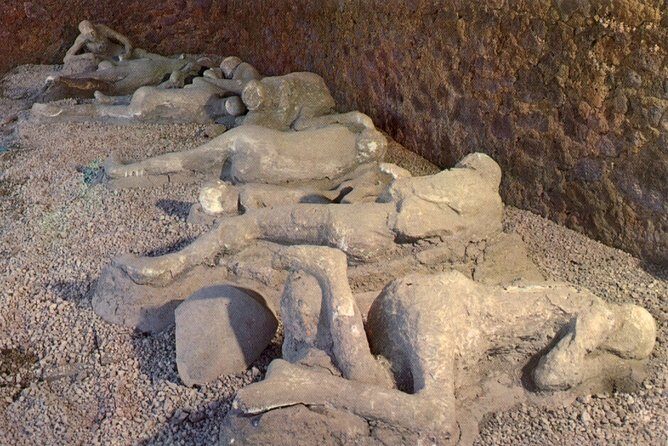
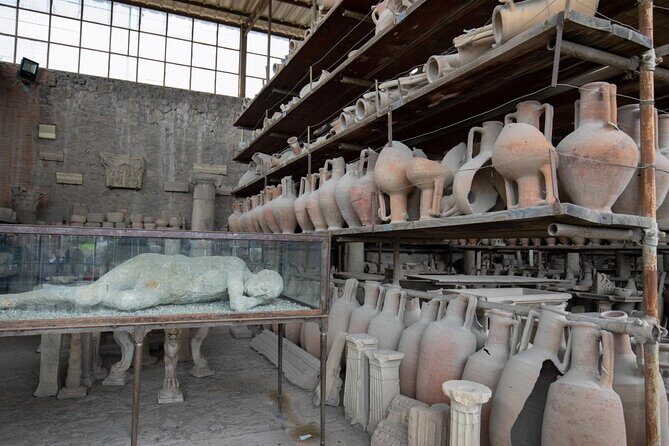
- Plaster casts at Orto dei Fuggiaschi showing how people fled during the eruption
- Forum + amphitheater + baths in one steady arc of politics, spectacle, and daily life
- Mosaics and big Roman domus stops including Casa dei Vettii and the Alexander mosaic at Casa del Fauno
- Vesuvius viewpoints built into the timing so you can photograph without sprinting
- Optional Lupanar visit if you want the more adult side of Pompeii’s history
A 4-hour Pompeii route that respects your time
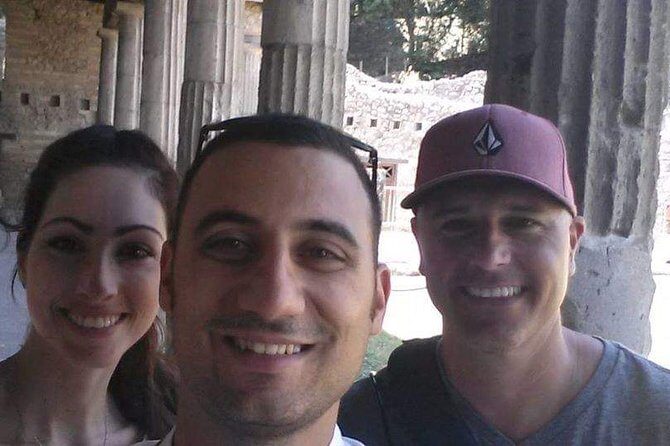
Pompeii covers 66 hectares, with about 50 excavated, and that’s the problem: you can’t see it all in one day. This tour solves that by giving you a clear “loop” of the most meaningful places, paced for a realistic day of walking. At roughly four hours, it’s built for people who want big understanding without spending the whole vacation staring at their phone for directions.
The big value here is not just the quantity of stops—it’s the order. You move from public life (amphitheater, forum, courts) to domestic life (major houses, mosaics, gardens) to the Roman “wellness” world (the Stabian Baths). By the time you’re deep in the city’s neighborhoods, the earlier stops make more sense.
One thing to keep in mind: it’s still Pompeii, so you’ll be walking. Wear comfortable shoes and be ready for uneven stone and sun exposure.
You can also read our reviews of more guided tours in Pompeii

What the archaeology guide actually changes
Having an expert guide makes Pompeii work on your brain, not just your camera roll. The ruins are impressive, but without context they can blur together—columns look like columns, and rooms all start to feel the same.
This tour is led by an expert licensed archaeology guide, and that’s the difference between seeing ruins and understanding why each one matters. Some guides referenced for this tour style have a talent for explaining connections clearly and keeping the pace interactive; for example, guides named Luciano, Eugenia, Annalise, Martina, and Ernesto are associated with standout clarity, engagement, and flexibility. One strength you should expect is the guide reading your group and adjusting the flow—slowing down for questions, helping families with explanations kids can grasp, or shifting where you focus if there’s something specific you want to see.
If you care about archaeology details—how spaces were used, what different sites tell you about status and daily routines—this is the right kind of guide-led visit.
Price and the real cost: $203.70 plus park entry
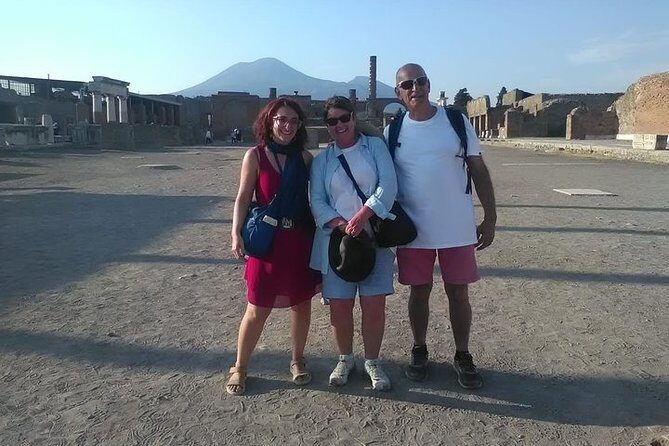
The tour price is $203.70 per person, for about four hours of private guided time. The Pompeii Archaeological Park entrance fee is not included, and you’ll pay €20 per person to access the park.
So what’s the value? You’re paying for:
- A licensed archaeology guide (not a casual “walk and point” style)
- A private experience (your group only)
- A curated run through many key sites in a short window
For budget math, don’t forget the park ticket. But if you’re the type who wants meaning, not just moving from one photo spot to the next, the overall package can feel fair—especially compared with trying to DIY Pompeii while also decoding what you’re looking at.
There are also age-based ticket notes that can change your total:
- Free park ticket for under 18
- EU ages 18 to 25 (with valid ID): €2 per person
Piazza Esedra start and what to bring so you don’t suffer
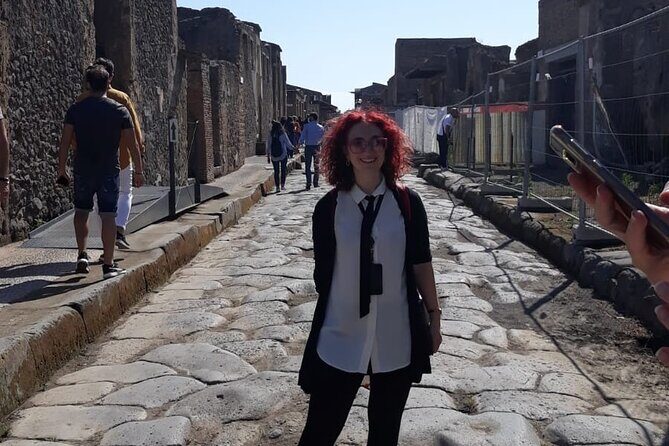
You meet at Piazza Esedra, 80045 Pompei NA, Italy, and the tour ends back at the same meeting place (with the option to finish at the exit of Piazza Esedra, depending on your preference and timing). There’s a mobile ticket included, which helps you avoid last-minute scrambling.
A few practical basics from the tour info:
- Wear comfortable clothing and shoes
- Bring sunglasses and a hat
- Keep your backpack within 30×30×15
- Service animals are allowed
- The meeting point is near public transportation
If you’re visiting in hot months, take the hat and water seriously. Pompeii can feel draining fast even when the ruins are fascinating.
Stop-by-stop: the Pompeii 360° itinerary, and what to watch for
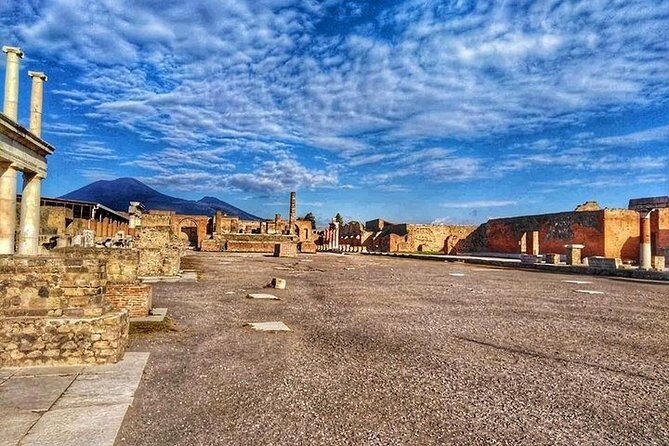
This tour moves through major sites across Pompeii in a sequence that builds your understanding. Below is what you can expect at each stop, and why each one is worth your time—even when you only have 5–15 minutes.




1) Anfiteatro Romano (Roman Amphitheater)
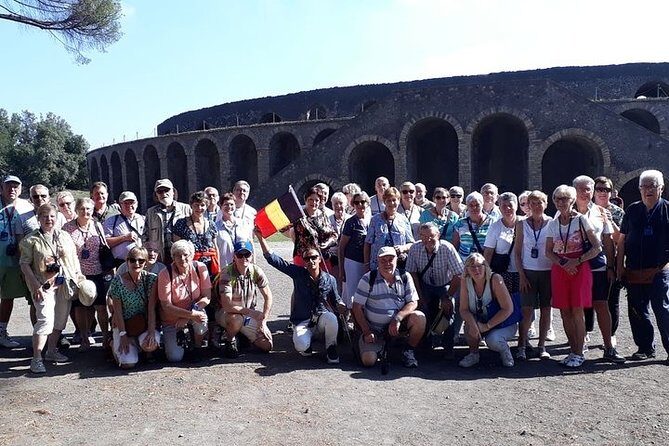
You start at one of the best-preserved ancient amphitheaters and the oldest amphitheater in the Roman world. This is the “spectacle” layer of Pompeii: a place where public events weren’t just entertainment—they were community identity.
What to watch for: the scale and structure. Even from a quick visit, you can see how this venue was built for crowds and sound.
2) Orto dei Fuggiaschi (Garden of the Fugitives)
This is famous for the moment when people tried to survive the eruption. You’ll admire the plaster casts, which are a stark reminder that Pompeii wasn’t just a city—it was someone’s life.
Why it matters: it adds emotional weight and human reality to what can otherwise feel like a purely architectural tour.
3) Tempio di Giove Capitolino (Temple of Jupiter)
A short stop, but a memorable one. This temple is dedicated to Jupiter, Juno, and Minerva, and it’s known for a view toward Mount Vesuvius.
Photo tip: if you’re going to take one “classic Pompeii with Vesuvius behind” shot early, this is a good place to practice your timing.
4) Foro de Pompeya (Pompeii Forum)
Now you’re in the center of political, religious, civil, and economic life. The forum is where you understand how Pompeii organized power and public space.
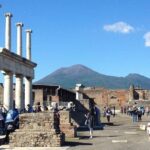
There’s also a photo stop with Vesuvius behind, which helps anchor the ruins in their setting rather than treating them like an isolated museum.
5) Casa del Fauno (House of the Faun)
You’ll spend time at Pompeii’s largest house complex area, and this is one of the stops where Pompeii becomes “tiny-story” archaeology. Expect a look at gardens and multicolor mosaics, including the famous mosaic linked to Alexander the Great.
Why I like this stop for visitors: the mosaics are visual and immediate, so even a quick visit lands. You get the sense of wealth and taste without needing a technical lecture.
6) Temple of Apollo
This temple is among the most ancient in Pompeii. It’s also restored and offers a spectacular view of Vesuvius, and it’s tied to the sun god Apollo and his twin sister Diana (goddess of the moon).
Photo tip: plan your camera angles here—this is one of the spots where the view is part of the experience.
7) Casa del Cinghiale (House of the Wildboar)
A shorter stop, but a good one. As you walk along the main street direction, you’ll see a nearby house highlighted for its mosaic floor.
What to watch for: look for mosaic craftsmanship even when the time is tight. This is the kind of detail your guide will point out so you don’t miss it.
8) Via dell’Abbondanza (Main Commercial Street)
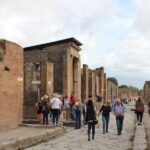
This is the “city as a system” stop. You’ll walk along Pompeii’s main commercial street, spotting shops, houses, and public fountains.
Why it works: it connects buildings to street life. Pompeii isn’t only temples and villas—it’s a working city.
9) Odeon – Teatro Piccolo (Small Theater)
In the small theater, the value is in the details—especially the precious marble floor. It was used for music and poetry, so it gives you a different side of Roman culture than the amphitheater.
If you’re into craft: pay attention to the floor and stage area. This is where archaeology feels precise rather than monumental.
10) Stabian Baths (Terme Stabiane)
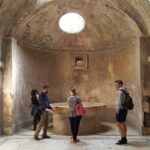
Next comes daily-body life: the Roman thermal baths. You’ll see spaces connected to a gym, a pool, and rooms associated with sauna and massages.
Why it’s a standout: baths were social hubs, not just hygiene. Even with a quick pass, it helps you imagine what people did between work and evening life.
11) Casa dei Vettii (House of the Vettii)
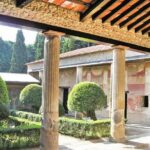
This is a longer stop on the route (about 30 minutes), and it’s a major one. It’s described as one of the best preserved Roman domus, with mythological frescoes and mosaics.
What to watch for: the mythological scenes. They’re not only decoration; they reveal how residents understood culture and identity.
12) Basilica (Roman courthouse)
Despite the name, this isn’t a religious building—it’s an ancient Roman courthouse. Here you’ll see the civic side of Pompeii’s legal and public structure.
Why it matters: it rounds out the forum story. You can connect political life to law and administration.
13) Tempio di Venere (Temple of Venus)
Another temple with a panoramic feel. It’s dedicated to the main goddess of Pompeii and placed for a strong vantage point.
Photo tip: treat this like a visual checkpoint. If you’ve been inside and walking, the panoramic angle lets you reset your bearings.
14) Casa del Fauno (second time on the schedule)
Yes, Casa del Fauno appears again in the itinerary, which is useful if you want a second chance to focus on what your guide emphasizes. Use the second visit to compare: the first time you register the scale and mosaics, and later you can concentrate on whichever details your guide points out more strongly.
Practical mindset: if you’re photo-heavy, this repeat stop can help you avoid missing the best angles.
15) Lupanar (House of Pleasure)
This one is optional at the discretion of the customer. The stop is tied to Pompeii’s erotic frescoes, and it’s worth knowing that this content may not be for everyone.
My advice: if you’re traveling with kids or anyone uncomfortable with explicit imagery, you’ll likely want to skip it. If you do go, treat it as history and social context, not just shock value.
16) House of Venus in the Shell
You finish at the domus near the amphitheater, known for its garden and for a fresco representing the birth of Venus.
Why it’s a good closer: by the end, you’ve seen public life, civic centers, and major homes. This last stop ties domestic artistry to myth in a way that lands emotionally after all the civic and commercial scenes.
Vesuvius views that actually fit the route
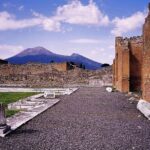
Pompeii has plenty of Vesuvius moments, but most people miss the timing because they wander. In this tour, the Vesuvius viewpoints are built into key stops like Tempio di Giove Capitolino, the Forum photo moment, Temple of Apollo, and Tempio di Venere.
That matters for two reasons:
- You’re more likely to get your photos before crowds or sun glare become a problem.
- You connect the ruins to the volcano in a way that sticks, instead of just taking a pretty picture.
If you want the best results, keep your camera accessible and listen when your guide cues the exact best angle.
Who this Pompeii 360° tour suits best
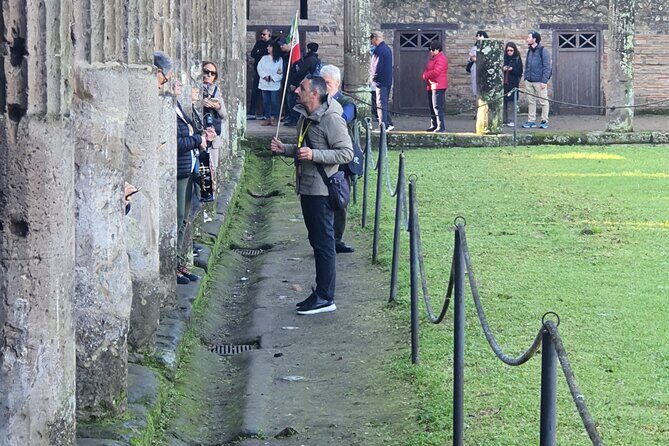
This tour is a strong match for:
- People with limited time who still want a real archaeology explanation
- Travelers who enjoy mosaics, Roman civic buildings, and daily-life spaces like baths
- Families who benefit from patient guidance and clear explanations (the tour guide style has included kid-friendly handling)
- Anyone who wants a private format so the guide can respond to your pace
It’s less ideal if you want a slow, free-form day with long interior dwell time in just one house. The structure is set, and while you can focus on what matters to your group, the stops themselves are time-bounded.
Should you book Pompeii 360°? My decision guide
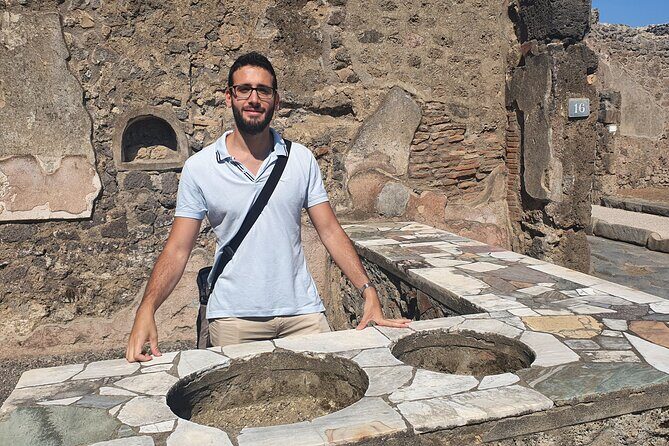
I’d book this if your goal is to see the most meaningful Pompeii highlights in one day while understanding what you’re looking at. The biggest reasons: the licensed archaeology guide, the careful mix of public and domestic life, and the route’s Vesuvius timing.
I’d think twice if you’re extremely detail-focused on one or two houses and want hours inside rather than a guided circuit. In that case, you might prefer a slower, self-paced plan or a different tour format.
If you do book, do yourself a favor: prioritize your “must-see” category before you arrive—mosaics, temples, baths, or public life—so you can spend your attention where it counts.
FAQ
What is the duration of the Pompeii 360° tour?
The tour lasts about 4 hours.
Is the Pompeii Archaeological Park entrance fee included in the price?
No. You need to pay an entrance fee of €20 per person to access the Archaeological Park of Pompeii.
Where does the tour start and end?
The meeting point is Piazza Esedra, 80045 Pompei NA, Italy. The tour ends back at Piazza Esedra, with an option to end at the exit of Piazza Esedra.
What language is the tour offered in?
The tour is offered in English.
Is this a private tour?
Yes. It’s a private tour/activity, and only your group participates.
What is the tour cost per person?
The price is $203.70 per person.
Are there ticket discounts for younger visitors?
Yes. The park has a free ticket for those under 18. EU visitors aged 18 to 25 with valid ID can get the ticket for €2 per person.
Can I cancel for a full refund?
Yes. Free cancellation is available if you cancel at least 24 hours in advance of the experience start time for a full refund.