REVIEW · POMPEII
Rome to Pompeii Tour for Kids & Families w Hotel Pickup & Skip-the-Line Tickets
Book on Viator →Operated by Rome Tours with Kids by Maria and her team · Bookable on Viator
Pompeii hits different when the day runs smoothly. This family-friendly private tour gets you from your Rome hotel to the ancient city with hotel pickup and skip-the-line entry, so you spend more time seeing and less time wrangling logistics. I love that you’re not doing Pompeii as a self-guided maze. You’re following a plan with a kids-focused guide plus an art historian who can explain what you’re standing in.
The second thing I really like is the pacing. You get short, meaningful stops—about 30 minutes each—like Via dell’Abbondanza and the Forum, instead of one long slog. One possible consideration: the day runs about 8 to 10 hours, and lunch and drinks aren’t included, so bring a snack game plan for hungry kids.
In This Review
- Key things to love about this Pompeii family tour
- Hotel Pickup to Pompeii: a low-stress start at 7:30am
- Skip-the-line entry that keeps families moving
- Via dell’Abbondanza: walking on original Roman pavement
- The Forum area: where politics, markets, and religion met
- Stabian Baths (Terme Stabiane): public baths and social rules
- Pompeii again: mosaics, frescoes, and an open-air theatre
- How this tour fits kids: pace, attention, and real breaks
- Price and value: what you’re paying for (and when it’s worth it)
- What to bring so the long day feels manageable
- Should you book this Pompeii tour?
Key things to love about this Pompeii family tour
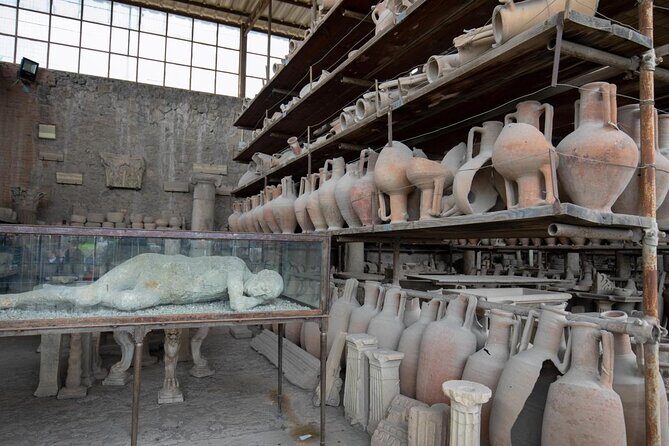
- Door-to-door pickup in central Rome (at your accommodation) in a comfortable sedan or minivan
- Skip-the-line access to start exploring right away
- Kids-first private guiding, with an art historian touch for deeper meaning
- Real Roman streets and key public spaces, mapped out in a way families can handle
- Multiple Pompeii highlights in one day: baths, forum area, houses with mosaics, and an open-air theatre
Hotel Pickup to Pompeii: a low-stress start at 7:30am
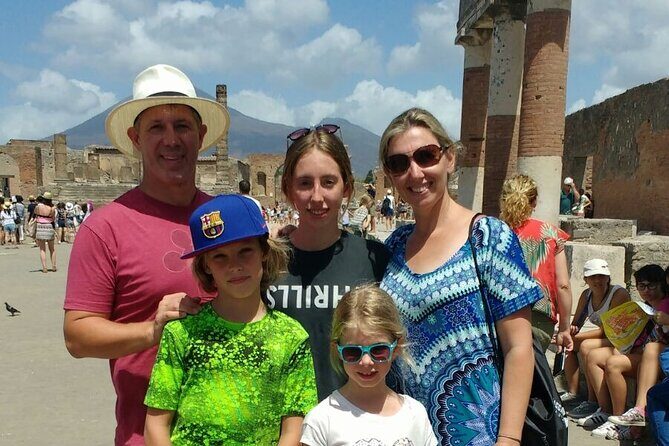
Your morning begins at 7:30am, with pickup inside Rome city centre. You’ll share the name and exact address of your accommodation, and then you’ll be met there directly—no station hunting, no awkward meeting points with a stroller and a suitcase.
You’ll ride in a comfortable air-conditioned vehicle (a minivan or sedan). For families, that matters more than it sounds. It buys you calm time while everyone is still fresh, and it makes the whole day feel organized instead of improvised.
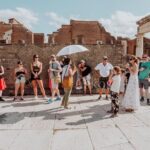
You’re also not crammed into a bus-tour vibe. This is a private tour, meaning only your group participates. That helps when kids need a quick bathroom break, a moment to reset, or when you want your guide to slow down and explain a detail without the pressure of a larger crowd moving you along.
You can also read our reviews of more tours and experiences in Pompeii
Skip-the-line entry that keeps families moving
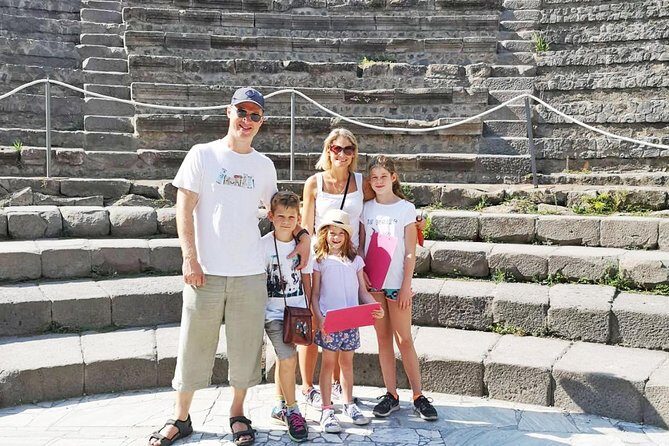
The tour starts at the Pompeii Archaeological Park with a meeting and skip-the-line tickets. The payoff is simple: Pompeii can be overwhelming at the entrance, and kids don’t do well with waiting. Getting in faster means you’re standing on ancient ground sooner, when energy is highest.
Your guide’s job here is not just to take you in—it’s to turn the place into a story. And that’s where you’ll feel the difference between a generic guide and a team approach. One part is the kids-first style, and another part is the art-historian perspective. In the experience, both matter.
In particular, I like that you’re not just walking to landmarks. You’re given context right from the start, so the ruins don’t feel like random stone piles. They feel like a town with daily routines, public life, and private worlds.
Via dell’Abbondanza: walking on original Roman pavement
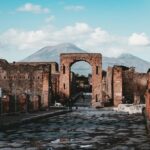
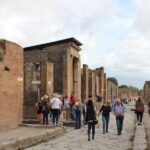
Next comes one of the most family-friendly ways to see Pompeii: Via dell’Abbondanza, the main street. The highlight isn’t just that it’s famous—it’s that you’ll walk on the original pavement where Romans once walked.
This is a smart choice for families. A long list of ruins can feel like homework. A street is easier. It gives you a clear direction and a sense of rhythm. You can follow the flow of shops, houses, and public spaces along a route that’s long and busy in the way daily life needs to be.
Your guide helps you connect what you’re seeing to what it meant. You’ll get stories about the buildings along the street and how the city functioned. Even if your kids don’t care about every label, they’ll grasp the idea of a main “downtown” road: places to buy things, places to work, and places where people lived right next to the public action.
At about 30 minutes, it’s long enough to feel like an actual walk, but short enough to keep attention from fraying.
The Forum area: where politics, markets, and religion met
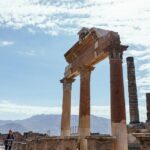
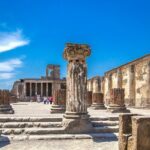
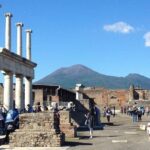
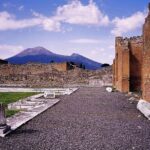
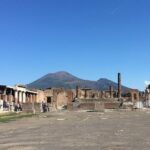
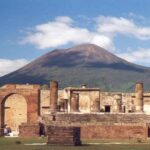
At the end of Via dell’Abbondanza, you reach the Forum of Pompeii, the city’s main square—its political, economical, and religious heart. This stop is a great “big picture” anchor. After a street full of daily life, the Forum shows you the decisions and gatherings that shaped that life.
Around the Forum, you’ll focus on key ruins such as:
- The Temple of Jupiter
- The basilica
- The city’s main food market
- Other major structures nearby
This is one of the best parts of the tour for kids who like patterns. Forums tend to feel important because they’re organized space for action. It’s also easier for adults because you can explain roles without getting too technical. Your guide can frame it as: who made rules, where people bought food, and where people gathered for religious meaning.
It’s still ruins, of course. The atmosphere is somber and beautiful, and that tone is part of Pompeii. But the stories you get here help the place feel alive, not just tragic.
Stabian Baths (Terme Stabiane): public baths and social rules
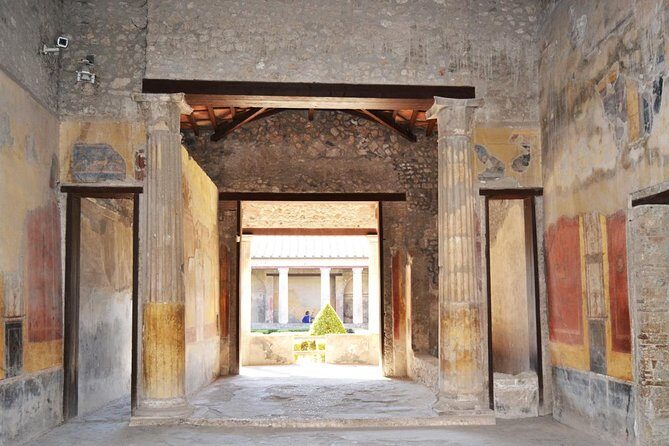
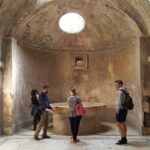
Then you head to the Stabian Baths, known as Terme Stabiane. In Roman cities, public baths weren’t only about hygiene. They were social spaces, routine stops, and places where people built community.
What makes this stop work well for families is the concrete everyday angle. You’ll see decoration and the engineering system that moved hot water to different pools. That’s visually interesting without needing museum-level art jargon.
You’ll also learn about the social layout. The baths had separate sections for women and men, and access was reserved to upper classes. That’s a sharp detail, and kids often remember the “who could go where” aspect because it explains the buildings in human terms.
This stop stays focused at around 30 minutes, which is about right. It gives you time to see how the space functioned without turning it into a long lecture.
You can also read our reviews of more tours and experiences in Pompeii
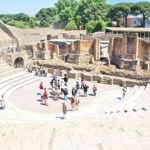

Pompeii again: mosaics, frescoes, and an open-air theatre
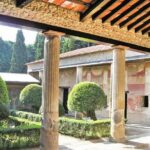
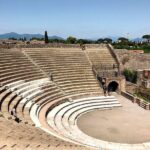
Later, you return to the Pompeii Archaeological Park area for some of the most visually rewarding sights. This portion includes private houses with extraordinary mosaics and frescoes, plus an open-air theatre that’s still working today.
This mix is a clever family strategy. Ruins often come in two types: “stone exterior” and “art and interior detail.” Mosaics and frescoes are the interior-and-decoration type, and they spark imagination fast. It’s easier for kids to picture what the rooms once looked like—color, pattern, and storytelling in wall art.
The open-air theatre adds a different kind of wow. It’s not only that it’s old. It’s that it’s still used, which helps kids connect history to the present. You can frame it as: people still come together to watch and listen in the same kind of space.
Time here is again about 30 minutes, so you’ll be guided to the best pieces rather than wandering. That’s a key value of a private tour: you skip the guesswork.
How this tour fits kids: pace, attention, and real breaks
This is built around manageable chunks. The stops are each roughly 30 minutes, and the whole experience lasts about 8 to 10 hours. That’s not a short outing, but the internal rhythm helps.
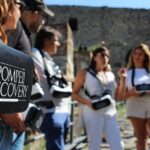
The guides are set up for family needs. The experience includes a professional kids friendly guide, and you’ll also have a professional art historian guide on top of local guidance. In practice, that usually means your guide can shift gears: explanations that make sense for adults, but also details that keep kids interested.
The strongest reassurance comes from how the tour feels in the moment. Guides like Maria and Lello are mentioned for being friendly, engaging, and especially effective for kids. There’s also Stephan credited as a prompt, kind driver who kept things moving.
A private setup also means you’re more able to adjust on the fly. If one child is tired earlier than expected, you’re not stuck waiting in a crowded line for the next group cue. You can keep control of your day.
Price and value: what you’re paying for (and when it’s worth it)
At $802.96 per person, this isn’t a budget tour. So you should ask what you’re buying.
You’re paying for:
- Private guiding (not a shared group scramble)
- Round-trip hotel pickup and drop-off
- Air-conditioned vehicle for transit from central Rome
- Skip-the-line tickets
- Admissions included
- Kids-focused professional guidance, plus an art historian angle
That package matters most for families because the costs of logistics add up fast: transport time, entry stress, and the energy drain of trying to manage Pompeii on your own. A self-guided day can be cheaper on paper, but it often becomes expensive in a different way: time, frustration, and missed moments because everyone is tired or lost.
If you’re traveling with multiple kids, or you simply don’t want to spend your vacation negotiating tickets, meeting points, and pacing, the value starts to make sense quickly.
Also note: there are group discounts available, which can improve the math for families traveling together.
What to bring so the long day feels manageable
Because lunch and food/drinks aren’t included, plan for kid energy. Even if you don’t want to overpack, having a small snack strategy helps you avoid late-day meltdowns.
Wear comfortable shoes. Pompeii is ancient, uneven, and built for people who walked in sandals or sandals-adjacent comfort two thousand years ago. Your job is to make your feet happy.
Bring something for the weather too. The park experience is outdoors, and the day starts early. If it’s hot, you’ll want water and shade breaks on your schedule, since the tour doesn’t include drinks.
If your family needs it, the tour allows service animals.
Should you book this Pompeii tour?
Book it if you want Pompeii without the stress. This tour is a strong fit when you value skip-the-line entry, a private guide for your group, and a pace that helps kids stay with you. The best signs you’re in the right place are: you want a plan that actually works for children, you’d rather spend time learning than figuring out logistics, and you like the idea of seeing major highlights in a single day.
Skip it if your family prefers to move entirely on your own schedule and you’re happy handling entries, timing, and directions without professional help. This tour is structured on purpose. It’s designed to reduce friction, not to give you maximum wandering freedom.
If that sounds like your style, it’s a smart way to turn Pompeii from a daunting name into a day your kids remember—street by street, ruin by ruin, story by story.