REVIEW · POMPEII
Pompeii tour with LOCAL GUIDE and SKIP THE LINE entrance
Book on Viator →Operated by Gennaro Balzano · Bookable on Viator
Pompeii can feel like a movie set. This small-group, skip-the-line tour pairs that wow factor with a local guide who helps you read what you’re seeing, not just walk past it. You’ll get a clear snapshot of Roman daily life—streets, homes, public space, and even the less-polished corners—within a tight 2.5-hour window.
Two things I especially like: the priority entry (you lose less time to lines) and the fact that you’re not doing this solo. A guide with real personality—like Sasa, Antonio, Gennaro, and Anna—can turn quick stops into memorable stories, and the group stays capped at 14 travelers.
One possible drawback: the time is limited. If you want to linger in the best spots or take slow photos, you may feel a little rushed—especially if you’re hoping for a deeper, longer-form Pompeii visit.
In This Review
- Key things to know before you go
- Skip-the-line entry and a small group pace
- Where your Pompeii tour starts: Via Villa dei Misteri
- Archaeological Park of Pompeii: the eruption preserved the clues
- Casa del Menandro: a wealthy home in 15 minutes
- Lupanar: understanding the Roman brothel system
- Forum of Pompeii: where the city handled business and justice
- Stabian Baths: the oldest bath complex you’ll see here
- Price and value: is $66.38 worth it?
- Guides make or break it: what you can expect from the storytelling
- Should you book this Pompeii skip-the-line tour?
- FAQ
- What’s the tour duration?
- Does the tour include skip-the-line entry?
- Is the tour in English?
- How big is the group?
- Are admission tickets included?
- Is there a mobile ticket?
Key things to know before you go
- Skip-the-line entry saves time when you’d otherwise be waiting at the gate
- Small group (max 14) keeps the pace manageable and question-friendly
- A smart mix of sites: big public spaces plus specific houses and bath areas
- Short, timed segments (including Casa del Menandro and Stabian Baths) mean you’ll see a lot fast
- Local guide storytelling makes details click, from fresco themes to Roman forum design
Skip-the-line entry and a small group pace
At Pompeii, time is the trick. The park is huge, the ground is uneven, and queues can eat your morning. This tour’s main practical win is priority service—aka skip-the-line entry. That matters because you’re buying back energy for walking and looking, not standing around.
The second win is the group size. This runs with a maximum of 14 travelers, so it doesn’t feel like a moving crowd. In a place like Pompeii, that helps. You can actually hear explanations and ask a question without waiting your turn forever.
The duration is listed at about 2 hours 30 minutes, and the experience is designed to move. That’s great if you like structure. If you prefer wandering, this might feel like a sprint through highlights. Still, it’s a strong way to get oriented fast—especially your first time in the ruins.
You can also read our reviews of more guided tours in Pompeii

Where your Pompeii tour starts: Via Villa dei Misteri
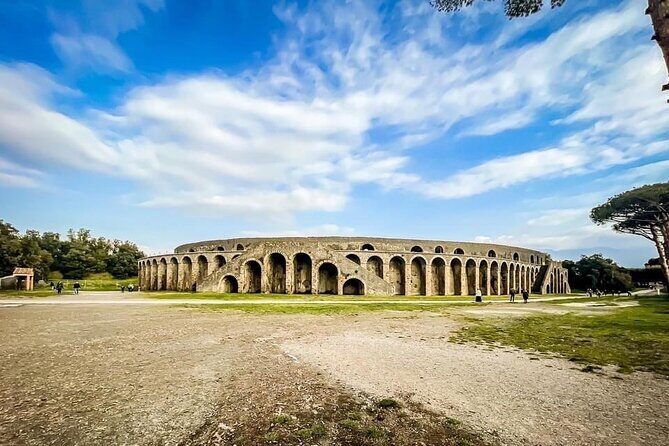
Your meeting point is Via Villa dei Misteri, 3, 80045 Pompei NA. The tour starts near the entrance area of the ruins, not at some far-off hotel pickup. That’s good news because you don’t spend your day commuting.
One small caution: meeting-point instructions can be a little confusing if you’re relying only on your phone map. I’d suggest you do two things:
- Arrive a bit early so you’re not scanning faces in a crowd.
- Double-check you’re at Via Villa dei Misteri, 3 before your start time.
Also, you’ll have a mobile ticket, so make sure your phone battery is healthy. Pompeii runs on steady daylight, but your ticket and your camera will both be hungry.
Archaeological Park of Pompeii: the eruption preserved the clues
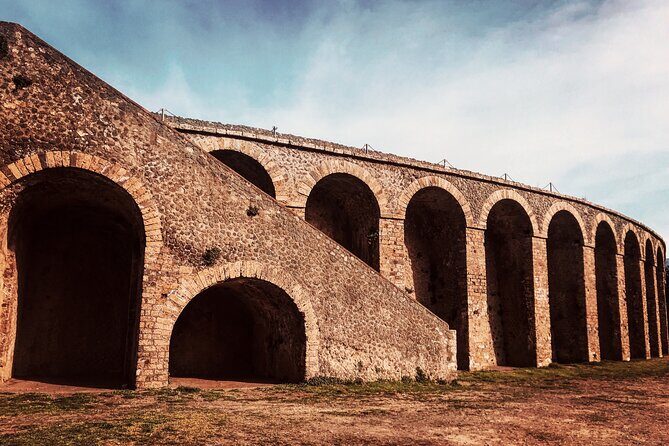
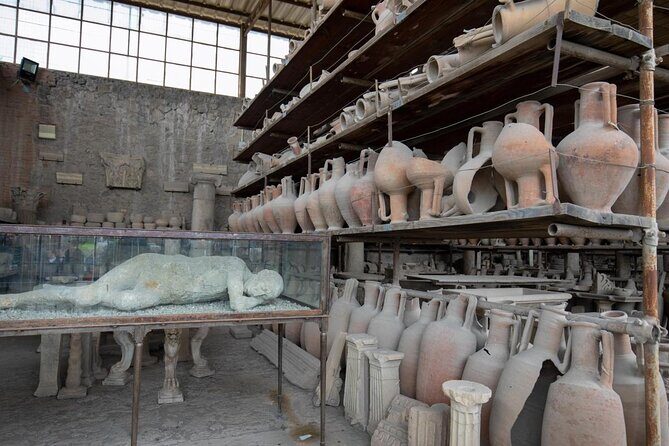
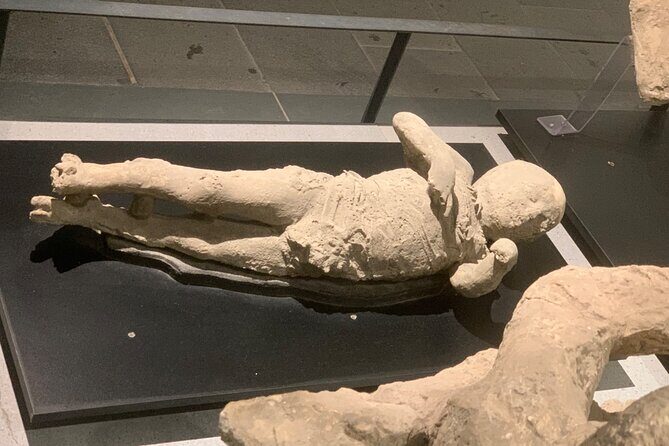
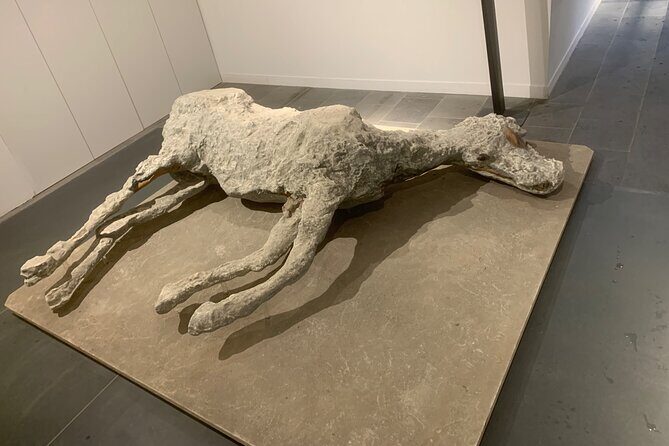
This is the centerpiece: Archaeological Park of Pompeii, where your guide sets the scene. Pompeii’s unique power is how volcanic ash preserved the city and its people, giving historians an unusually clear window into life in the Roman Empire.
You’ll hear how excavation work began in the 18th century, and how after roughly 250 years, about 75% of the site has been uncovered. That’s a big deal. It means you’re not just seeing ruins—you’re seeing a city that’s still being revealed piece by piece.
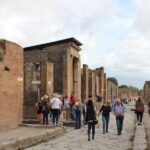
As you walk the streets, the “time hasn’t moved” feeling is real. You’ll see why people describe Pompeii like an instant frozen moment. The city layout—tight streets, storefront spaces, courtyards—helps you understand how normal life worked right up to the eruption.
What I love about this start: it gives you context before you zoom into the specific houses and buildings. When you later reach a home like Casa del Menandro or a public square like the Forum, you’ll already know the “language” of Pompeii.
What to watch for: this first part takes about 2 hours. Wear shoes that handle rocky ground, and don’t pack your day with heavy plans right after. Your legs will work.
Casa del Menandro: a wealthy home in 15 minutes

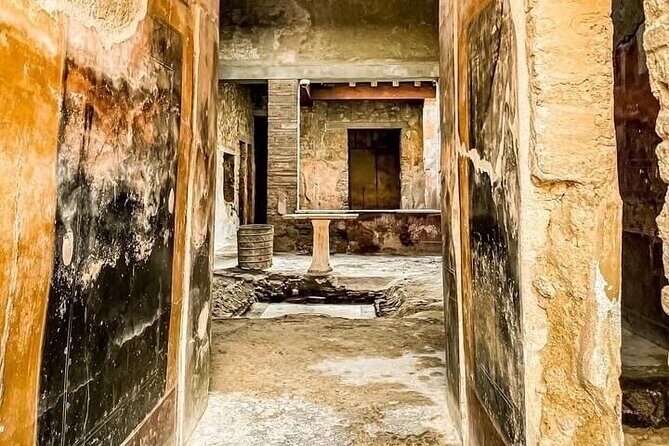
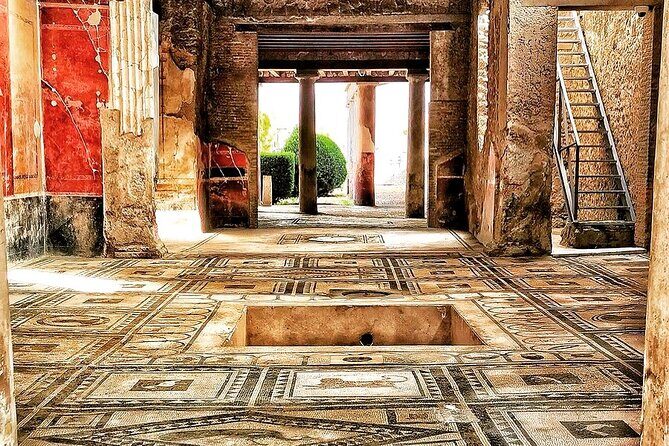
Next stop is Casa del Menandro, one of the classic big-family homes you can actually grasp during a short tour.
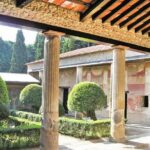
This house was shaped by complex building changes, and it represents a typical example of a high-ranking household. The atrium is the headline: it’s frescoed with scenes from the Iliad and the Odyssey. That choice of artwork isn’t random. It’s a status statement—Greek literature, displayed in Roman space, for guests and family.
You’ll also hear about the peristyle style (described as a type with a rhodium form, with the northern side higher). Even if the architectural jargon isn’t your thing, your guide will point out how space and structure supported daily life.
And then there’s the detail that makes the name stick: the house gets its name from a portrait of Menander, an Athenian playwright, placed in the porch.
One of the most fascinating moments is the story of the underground room. Beneath the house there’s a thermal area, and below that an underground space—possibly a cellar—where a chest with 118 pieces of silverware was found. That treasure was hidden before restoration work began and was the family’s service pieces. You learn not only what was found, but what it suggests about wealth and how food and banquets mattered.
Drawback to be aware of: the stop is only about 15 minutes. You’ll get the highlights, but you won’t have long to read every section of wall fresco or sketch out the full floor plan. If you love houses and details, go in ready to absorb the main stories and then consider a longer visit later.
Lupanar: understanding the Roman brothel system
Then you’ll step into the Lupanar, Pompeii’s visible brothel structure. This is not an “edgy” stop designed to shock you—it’s an archaeological look at how the city organized paid sexual services.
Here’s what you should expect to hear:
- The prostitutes were mostly Greek and Oriental slaves.
- Services cost between two and eight asses (with a cup of wine costing one).
- The building has two floors: upstairs for owners and slaves’ homes, downstairs for rooms.
- Downstairs rooms were arranged along a corridor, each with a built-in bed, and the rooms were closed by curtains.
- There’s even a latrine visible under the stairwell area.
- Small erotic pictures in the corridor helped advertise what happened inside.
The name links back to the Latin term lupa, tied to prostitution.
I appreciate how this stop is handled when your guide focuses on how the site functioned, not just what it contained. Pompeii’s realism is why it’s valuable. It shows Rome as it was—clean and messy, polite and transactional.
One note: the tour includes two separate segments labeled as Lupanar time (one around 10 minutes, and another later around 10 minutes). That doesn’t mean you’ll get a museum-level explanation twice. It usually means the route returns to another point in the same broader area, giving you a second chance to connect the layout to the story.
Consideration: this is a sensitive topic. If you’d rather not spend time on it, it’s still part of the Roman picture you came to see. I’d suggest you go into the stop expecting cultural context, not spectacle.
You can also read our reviews of more tours and experiences in Pompeii


Forum of Pompeii: where the city handled business and justice
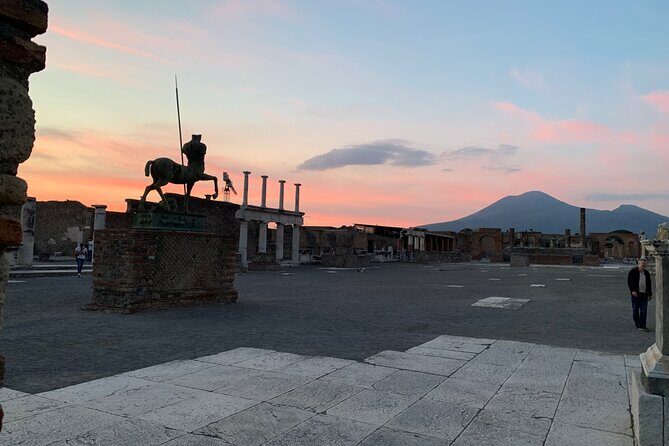
After that, you’ll reach the Foro de Pompeya, the civil forum—the center of daily life. This is where the city’s most important functions clustered: administration, justice, business management, and commercial activity.
Your guide will walk you through how the Forum changed over time. Originally, it was more of an open area with rammed earth. On one side there was the Sanctuary of Apollo, and on the other there was a row of shops.
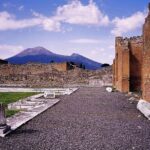
Later, between the III-II century B.C., the space was reshaped into something more regular. It was surrounded by arcades, and the bottom was paved with tuff slabs. The axis of the square aligned with major architecture—so the Temple of Jupiter sat in line with Vesuvius. That’s exactly the kind of design choice that helps you understand the Romans didn’t build just to function. They built to signal order.
In the imperial age, the Forum was paved again, this time with travertine slabs. Some slabs have recesses that once held bronze letters belonging to large inscriptions.
This stop is about human scale. Even with ruins, the layout tells you how people moved, negotiated, and judged. If you like city planning and civic life, this is one of the best portions of the route.
Potential drawback: the Forum time is about 20 minutes. That can feel short if you want to read every surviving clue. But as part of a highlights tour, it’s a smart hit. You get the big story and move on before your feet and attention run out.
Stabian Baths: the oldest bath complex you’ll see here
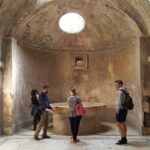
The final major stop is the Stabian Baths (Terme Stabiane). This is a thermal complex from the Roman era that was buried by the eruption in 79 and later rediscovered during excavations. It’s described as the oldest building of its kind in the city.
Roman baths weren’t only about hygiene. They were social centers and part of the daily rhythm—conversation, meeting, and relaxation. In a compact tour, it’s a great way to round out the picture beyond homes and public squares.
Even if you only spend about 10 minutes here, you’ll learn what makes this complex stand out: its age and its survival through the ash layer. It adds variety to the tour, so the day doesn’t feel like only “buildings and stones.”
Price and value: is $66.38 worth it?
At $66.38 per person, you’re paying for three things: skip-the-line priority entry, a local guide, and included admission tickets for the sites visited in the route.
Here’s the value logic I use when I’m deciding on tours in Pompeii:
- If you’re the kind of person who can’t stand standing in lines, priority entry matters a lot.
- If you learn best by having a guide connect the dots, the guide fee is doing work for you.
- If admission is included, you don’t have to play guessing games with separate ticket purchases.
Also, this is a small group (up to 14), which usually means the guide can actually manage questions and keep the group together. That’s a quality-of-experience factor, not just a logistics factor.
The only real reason the value could feel off is the time limit. Some people want Pompeii as a half-day slow study, not a highlights sprint. If that’s you, you may wish you booked a longer option. But if you want a structured orientation with key sights—and you’re okay moving every so often—this price can make sense.
Guides make or break it: what you can expect from the storytelling
One of the strongest signals from the experience is the guide impact. Names that come up include Sasa, Antonio, Gennaro, and Anna—and the common thread is that they’re described as patient, funny, and ready with answers.
For example:
- Antonio is described as especially kind to daughters and good at keeping the ruins interesting for younger minds.
- Gennaro is noted as friendly and funny, with strong knowledge.
- Anna is praised for patience (waiting over 20 minutes due to train navigation issues) and for connecting explanations to what people actually see.
- Some feedback suggests bringing headphones can help, since not every explanation is perfectly audible for everyone in a busy outdoor site.
Practical advice: if you’re bringing your own audio gear, keep it simple and lightweight. And if you’re traveling with kids, this kind of guide personality can turn an overwhelming site into something they can understand.
Should you book this Pompeii skip-the-line tour?
Book it if you want:
- A fast, structured overview of Pompeii’s must-see spaces
- Skip-the-line entry so you can spend time walking and looking
- A local guide to explain what you’re staring at (from fresco subjects to forum layout)
- A small group pace that keeps questions possible
Maybe skip it (or plan a longer add-on) if you:
- Want a slow, deep reading of every corner and want more than 2 hours in the main park
- Prefer lots of free time to roam without a schedule
- Know you need extra time for photos, sketching, or lingering
My take: this is a solid choice for your first Pompeii visit or for travelers who want the highlights with real context, without spending half your day in lines. If Pompeii is truly a once-in-a-lifetime stop for you, consider pairing this with extra self-guided time afterward—so the best moments aren’t just a quick glance.
FAQ
What’s the tour duration?
The tour lasts about 2 hours 30 minutes.
Does the tour include skip-the-line entry?
Yes. Priority service is included to skip the line for entry.
Is the tour in English?
Yes, the tour is offered in English.
How big is the group?
The maximum group size is 14 travelers.
Are admission tickets included?
Yes. Entrance tickets are included for the stops on the tour.
Is there a mobile ticket?
Yes. You’ll receive a mobile ticket.