Pompeii hits harder when someone points things out. This private tour is built for a smarter visit to one of Italy’s UNESCO powerhouses, and the experience gets extra fun thanks to guides like Viktoria, who kept the group thinking with questions and a high-energy style.
I also love the way you get oriented fast and then move through major sights with meaning, not just stops. You’ll see headline areas like the Forum, plus Roman baths, theatres, gladiator-related spaces, houses, temples, and more—so it feels like you’re piecing together real daily life.
The only real drawback to plan for is time: at about 2 hours, you’re seeing the biggest highlights, not every inch of Pompeii. It’s an efficient route, but if you want total freedom to wander for hours, you may want a longer plan.
In This Review
- Key things to know before you go
- Pompeii makes more sense with a good guide
- Meeting at Piazza Esedra and getting in without stress
- A 2-hour Pompeii route through the Forum and civic heart
- Roman baths and temples: daily life, cleaned up and worshipped
- Villas, houses, shops, and the reality of ordinary life
- Theatres and gladiator barracks: spectacle in stone
- Private tour value: what you really pay for
- English guide attention and a more human pace
- Who should book this Pompeii private tour
- Should you book this private skip-the-line Pompeii tour?
- FAQ
- How long is the Private Skip The Line Archeo Tour Of Pompeii?
- Where does the tour meet?
- Is this a private tour?
- What language is the tour offered in?
- What is included in the price?
- Are entrance fees included?
- What group size is the tour designed for?
- Is the tour suitable for most travelers?
- What is the cancellation policy?
- Can I find the tour using public transportation?
Key things to know before you go
- Private pace with an expert guide: you’re not stuck behind a mass of people; the guide can steer the timing based on your group.
- Forum and civic life first: you start with the city’s public core, which makes everything else easier to understand.
- Baths, temples, villas, and street life: you get a cross-section of how Romans lived, cleaned, worshipped, shopped, and ate.
- Theatre and gladiator zones: it’s not only ruins—there’s plenty of spectacle built into the stone.
- Mobile ticket for smoother entry: you’ll use a mobile ticket setup designed to help you get in more easily.
Pompeii makes more sense with a good guide
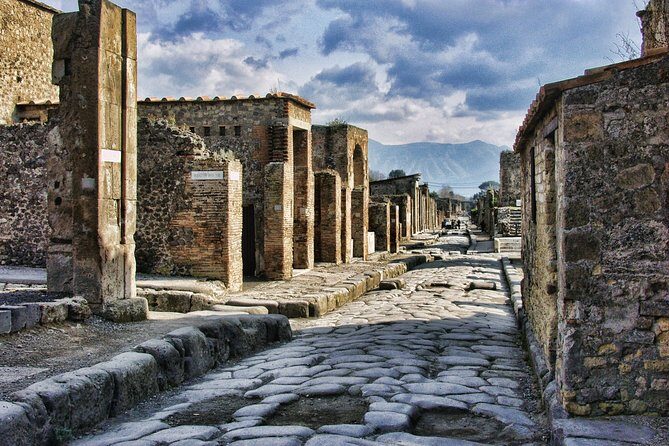
Pompeii can feel like a graveyard of stone at first glance. But with a guide, it turns into a living place you can picture: noisy streets, hot bathhouses, crowded public squares, and daily routines that connect one building to the next.
One reason this tour works so well is the guide style. In the feedback I saw, guides like Viktoria (sometimes listed as Victoria) didn’t just rattle off facts. They kept people engaged by asking questions and checking in about pace, so the visit doesn’t turn into a long, passive walk. I especially like that kind of interaction, because it helps you visualize what daily life might have looked like without getting lost in details.
And since this is a private format, you’re not forced into someone else’s rhythm. If your group has questions—about what a room was for, why certain spaces mattered—it’s the kind of tour that gives room for that.
You can also read our reviews of more tours and experiences in Pompeii.


Meeting at Piazza Esedra and getting in without stress
Your tour meets at Piazza Esedra, 80045 Pompei NA, Italy, and the activity ends back at the same meeting point. That matters more than it sounds, especially on a day when you’re trying to keep things simple and avoid extra walking or confusion.
You’ll also have an English guide and a mobile ticket. Pompeii can be busy, so any help with the entry process is useful. This experience is marketed as skip-the-line, and the mobile ticket piece is clearly part of the smooth-up approach. Still, it’s smart to show up a bit early so you’re not rushing when the site is at its busiest.
The tour time is about 2 hours, which is a sweet spot for most people: long enough to hit the major zones and learn the big connections, short enough that you’re not completely fried by heat and footsteps.
A 2-hour Pompeii route through the Forum and civic heart
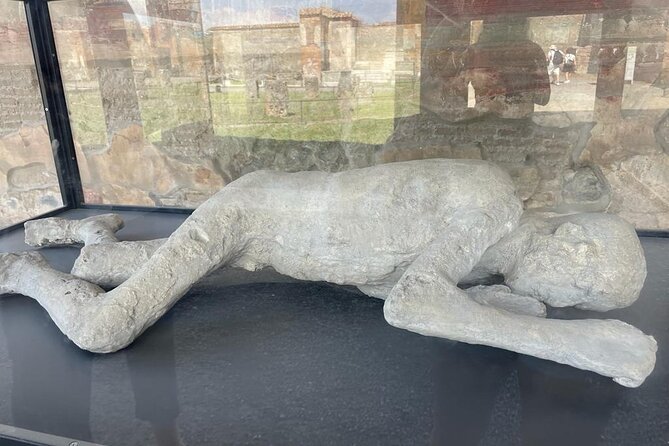
The tour starts inside the Archaeological Park of Pompeii and focuses on the key story of the city: built more than 2,500 years ago, then famously destroyed when Vesuvius erupted in 79 AD.
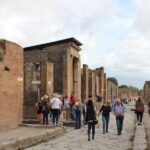
From there, the route is designed to get you oriented through the most important public areas and the places that shaped everyday life. The city’s streets come first—because once you understand the street layout and the flow between spaces, the rest feels less like random ruins and more like a functioning place.
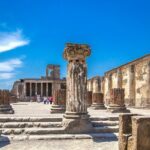
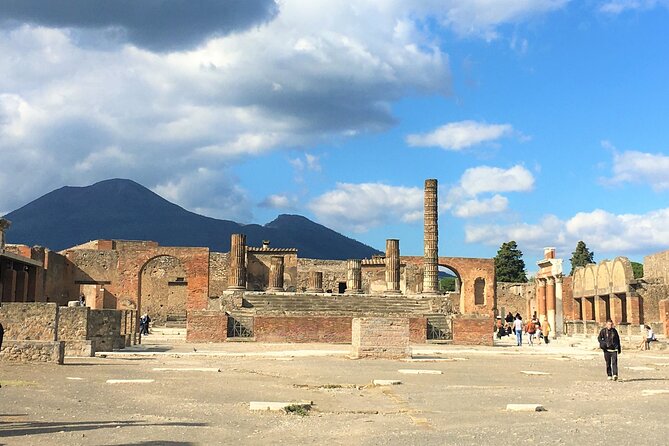
A big part of that is the Forum (the main square) and nearby civic structures like a basilica and the main public areas. If you’ve ever visited ruins where you had no idea what you were looking at, this is the fix. When you see the Forum early, you start understanding how Romans organized civic life: where people met, handled business, listened to messages, and gathered.
Then your guide connects those dots to what you’re seeing next. It’s not just architectural sightseeing. It’s a “how did people live here?” tour, with the guide pointing out small details that are hard to notice when you’re wandering alone.
Roman baths and temples: daily life, cleaned up and worshipped
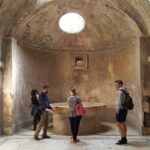
After you’ve built context with the Forum area, the tour moves into the more personal routines of Roman life. You’ll spend time at the Roman baths and around temples—including the Temple of Apollo, highlighted as one of the featured sights.
Bathhouses aren’t only about bathing. They’re social spaces, too: places where people caught up, relaxed, and handled everyday conversations while moving through cleansing areas. The guide helps you read the layout, so you don’t just see rooms—you understand the sequence and purpose.
Temples add another side of the picture. Seeing worship spaces makes the city feel complete: politics and daily routine on one side, religion and public meaning on the other. When those are explained in the right order, you start noticing how the city’s “official” and “personal” worlds fit together.
A practical note: because this is a walking tour, some areas may feel exposed if the weather is hot or bright. The guide’s job in a private tour isn’t just facts; it’s also rhythm. In the feedback, guides checked pace and adjusted content so people stayed engaged without feeling dragged.
Villas, houses, shops, and the reality of ordinary life
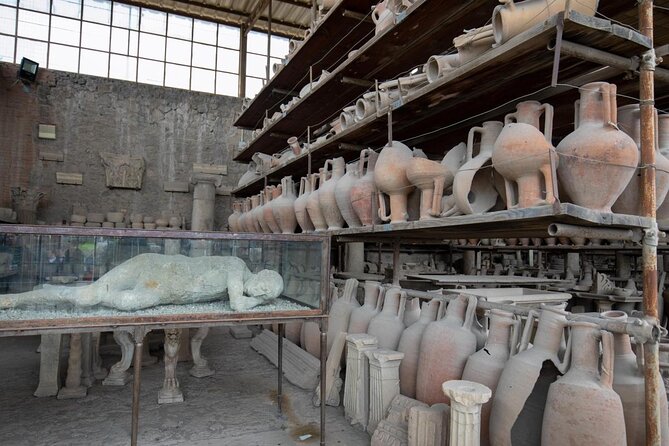
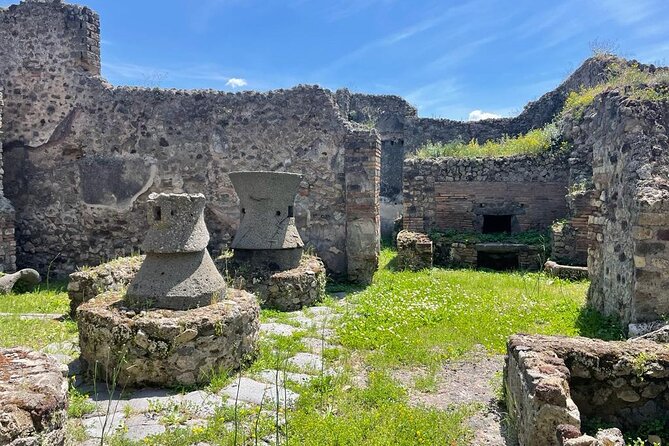
Pompeii is famous for grand scenes, but the most memorable moments often come from places that suggest daily routines. This tour covers houses, villas, and the everyday commercial side: ancient restaurants and shops.
That’s where you really get the “real place” feeling. You see how the city wasn’t only temples and theatres. It was also a dense network of homes and businesses—where people worked, ate, shopped, hosted visitors, and lived their normal lives.
In a private format, I like that the guide can slow down for the details that are easy to miss on your own. The feedback pointed to hidden treasures and specifics that would be hard to see without someone steering your attention. That could be things like how areas were used, how spaces relate to one another, or why certain buildings mattered in everyday routines.
Also, this is the kind of tour where the guide’s personality becomes part of the value. Humor came up in the reviews, and that matters here because Pompeii can be visually overwhelming. A guide who can keep things light helps your brain absorb the facts instead of just scanning ruins.


Theatres and gladiator barracks: spectacle in stone
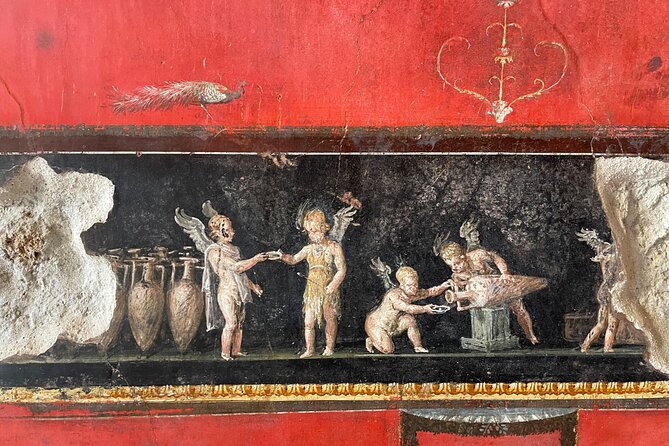
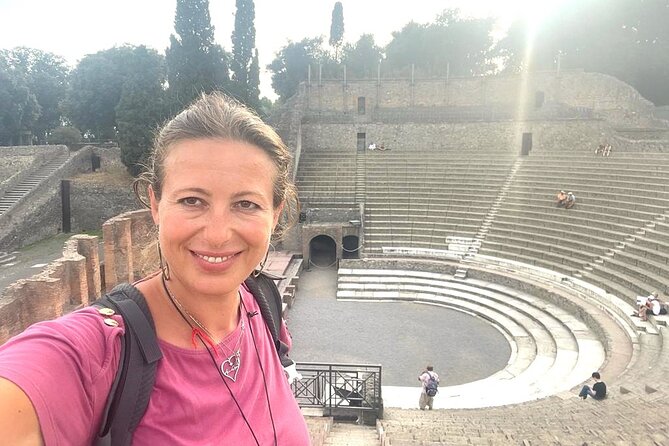
Pompeii isn’t all quiet contemplation. It has rooms and spaces built for attention, entertainment, and public display. This tour includes sights such as theatres and gladiator barracks, which help round out the story of the city.
Theatres show how performances fit into public life. Gladiator-related areas point to another layer: the kind of spectacle that drew crowds and shaped communal excitement. When you see these spaces after the Forum and civic areas, it clicks why they were placed where they were.
It’s a good reminder that Pompeii wasn’t frozen history. It was a place where people gathered to watch things happen—just like modern cities have venues for crowds. When the guide links entertainment zones to the wider city plan, you walk out with a more complete feeling for the place.
Private tour value: what you really pay for
The price is listed at $240.28 per group (up to 10) for about 2 hours. That might sound steep if you picture a per-person tour price, but the group format changes the math.
- If you’re traveling solo, it’s often not the best deal.
- If you’re a small group, you can split the cost and suddenly it looks more sensible.
- If you bring a larger crew up to the group maximum, the cost per person drops fast.
So here’s how I’d judge value: you’re paying for a guide’s time plus focused attention inside a crowded, confusing site. Pompeii is a place where “seeing” and “understanding” are two different activities. The guide is what turns scattered ruins into connected scenes.
Also, note what’s included and what isn’t. The included part is the private guide for 2 hours. Entrance fees are not included, so you should budget for admission on top of the tour cost. The good news is that you get a mobile ticket as part of the experience package.
If you’re the type who wants Pompeii to feel personal and meaningful—not just a checklist—this format is usually a strong fit.
English guide attention and a more human pace
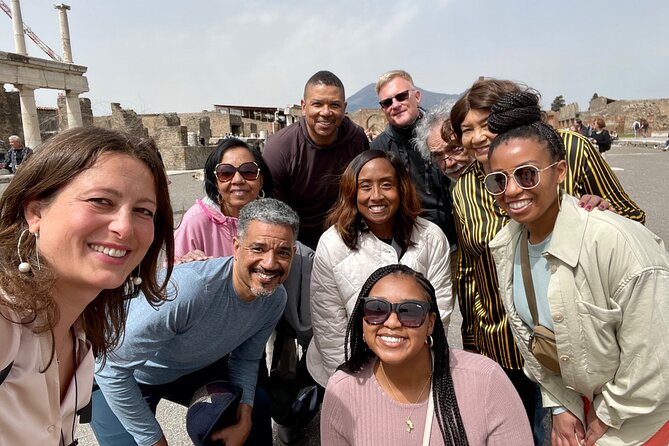
This tour is offered in English, and it runs as a private group experience, meaning only your group participates. That’s a simple but powerful advantage. It affects how questions work, how long you linger, and how your route feels.
In the reviews, Viktoria/Victoria stood out for staying engaged with the group—asking questions, checking pace, and using humor to keep the mood upbeat. I also liked the practical touch: at least one guide offered a pizza recommendation for lunch, which is exactly the kind of day-brightening advice that makes a tour feel less transactional.
Two more practical points for you:
- Plan on comfortable walking shoes. Pompeii involves a lot of uneven ground.
- Bring a water bottle if the day is warm. A two-hour walk is short, but the site isn’t gentle.
Who should book this Pompeii private tour
This experience is best for people who want:
- A guided highlights route that covers the core sights without wasting time figuring out what matters.
- A private, English-speaking guide who can answer questions and adjust pace.
- More understanding of how Romans lived, from civic life to baths, temples, and daily shops.
It can also work well for first-timers who feel overwhelmed by Pompeii’s size. If you’re visiting and want a smart foundation, this tour does that in a compact time window.
If you’re a total Pompeii fanatic, chasing every corner and detail, you may want a longer, independent plan in addition to—or instead of—this 2-hour tour. The time limit means you’ll leave with a strong story, but not with every possible stop.
Should you book this private skip-the-line Pompeii tour?
Yes—if your goal is to get oriented and see the most important parts of Pompeii with context, this tour is a good match. You’ll cover the Forum and civic areas, Roman baths, temples (including Apollo), plus houses, villas, shops, theatres, and gladiator-related sites. And the guide factor is real: the feedback emphasizes engagement, humor, and a pace that feels tailored.
Skip it if you’re traveling as just one person and you’re not willing to pay private-tour pricing, or if you want to spend half a day wandering without structure. The 2-hour format is excellent for learning, not for exhausting every square meter.
If you’re ready to visit Pompeii with your brain on, not just your camera, I’d book it—especially since this kind of tour gets reserved in advance on average. With a mobile ticket and a meeting point that keeps things simple, it’s a solid way to make your Pompeii day feel worth it.
FAQ
How long is the Private Skip The Line Archeo Tour Of Pompeii?
It lasts about 2 hours.
Where does the tour meet?
The meeting point is Piazza Esedra, 80045 Pompei NA, Italy.
Is this a private tour?
Yes. It’s private and only your group participates.
What language is the tour offered in?
The tour is offered in English.
What is included in the price?
A private guide for 2 hours is included, and you’ll have a mobile ticket.
Are entrance fees included?
No. Entrance fees are not included.
What group size is the tour designed for?
The price is per group and listed as up to 10 people.
Is the tour suitable for most travelers?
Most travelers can participate, and service animals are allowed.
What is the cancellation policy?
You can cancel for a full refund up to 24 hours in advance of the experience start time.
Can I find the tour using public transportation?
Yes. The meeting area is near public transportation.