REVIEW · NAPLES
Transfer from Naples to Positano with 2 hours Private Tour in Pompeii
Book on Viator →Operated by Askos Tours · Bookable on Viator
Short on time? You still get Pompeii. This private Naples-to-Positano day is interesting because you don’t just travel—you also get a focused Pompeii walk with a real Pompeii guide and help from your driver. I like the pickup flexibility (airport, central station, or your accommodation) because it cuts down on stress right at the start.
My favorite part is the pacing. You hit the big, meaningful stops—Forum, baths, and major houses—without burning the whole day. One possible drawback: the vehicle may not match what you expect. In one experience, the transport was listed as a minivan but arrived as a sedan, and luggage took careful positioning. If you have lots of bags, confirm the car type before you go.
If you’re doing this as your Pompeii stop from Naples (and you’re heading onward to Positano), the setup is practical. You meet the guide at Porta Marina Superiore, and Pompeii admission is included, so you can focus on learning and walking instead of tickets and lines.
In This Review
- Key highlights that matter before you book
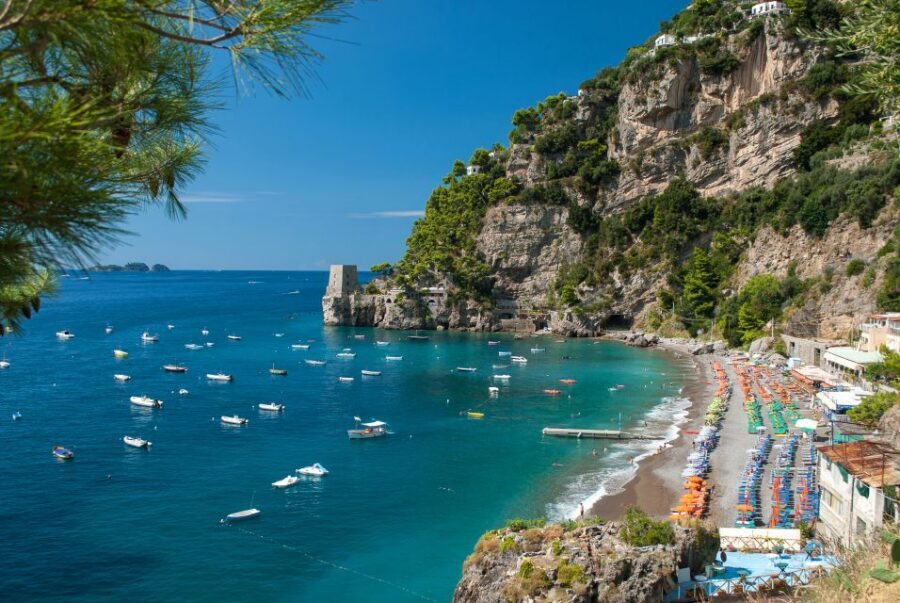
- Naples to Positano plus Pompeii: a smart use of your day
- Getting oriented at Porta Marina Superiore
- The core Pompeii walk: Basilica, Forum, and the city’s center
- Granai del Foro and Casa del Menandro: daily structures and elite life
- Stabian Baths and the Lupanar: public life and a very specific corner
- Casa del Fauno and the theaters: scale, spectacle, and the plaster-cast effect
- Maria’s kind of guide experience: driver help + a human-feeling tour
- Price and value: is $467.63 per person fair?
- Before you go: small practical tips that make the day easier
- Should you book this Pompeii transfer tour or skip it?
- FAQ
- How long is the Naples to Positano transfer with Pompeii?
- Where do we meet the Pompeii guide?
- Is Pompeii admission included?
- What transportation is provided from Naples to Positano?
- Is the tour only for my group?
- Can I get a full refund if I cancel?
Key highlights that matter before you book
- Private Naples pickup, name-sign driver, and hotel drop-off so you can keep the day simple
- Pompeii admission included for the Archaeological Area
- A tight, high-impact route that covers the Forum area, major houses, baths, and both theaters
- English-speaking Pompeii guide plus driver assistance for smoother logistics
- Confirm vehicle size if you need a true minivan for luggage
Naples to Positano plus Pompeii: a smart use of your day
This experience is basically a timed triangle: Naples to Pompeii, then on to Positano. The overall duration is about 4 hours, and that’s the key number. It’s long enough to see the most important parts of Pompeii on foot, but short enough that you won’t feel like you’re living on buses all day.
What makes it good value for the right traveler is that you’re paying for three things at once:
- private, air-conditioned transport
- Pompeii guidance (not just wandering)
- admission for the Pompeii Archaeological Area
If you’ve only got a day or two in this area, this kind of structure saves you time and guesswork. You’re not trying to coordinate public transport, timing, tickets, and entrances while also managing the logistics of moving from Naples to Positano.
You can also read our reviews of more private tours in Naples



Getting oriented at Porta Marina Superiore
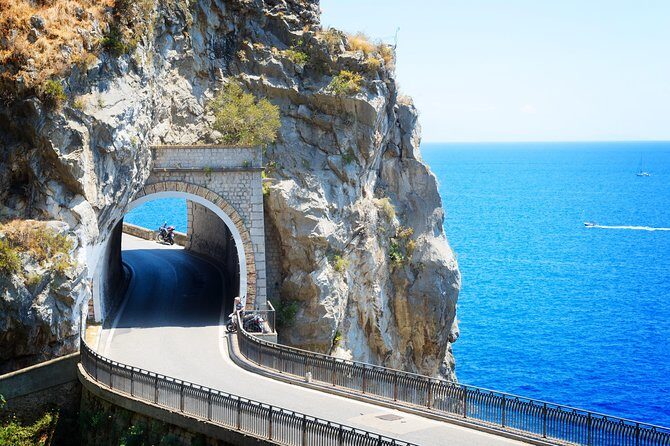
Your day starts in Naples with pickup. You can be collected at the airport, Naples central station, or your accommodation. The driver holds a sign with your name, which is a nice small detail when you’re meeting someone new in a busy place.
In Pompeii, you meet the guide at the main entrance called Porta Marina Superiore. That matters more than it sounds. Pompeii is huge, and the difference between starting at the right point vs. wandering around the perimeter can be the difference between seeing your must-dos and feeling rushed.
You’ll also have a mobile ticket included for the experience. That typically helps reduce friction on the ground—less time hunting for paperwork when you’re already on a clock.
The core Pompeii walk: Basilica, Forum, and the city’s center
Once you’re in, the route is built around Pompeii’s main power centers—commercial life, civic life, and the street-scene that connects everything.
Here’s what you can expect from this first stretch:
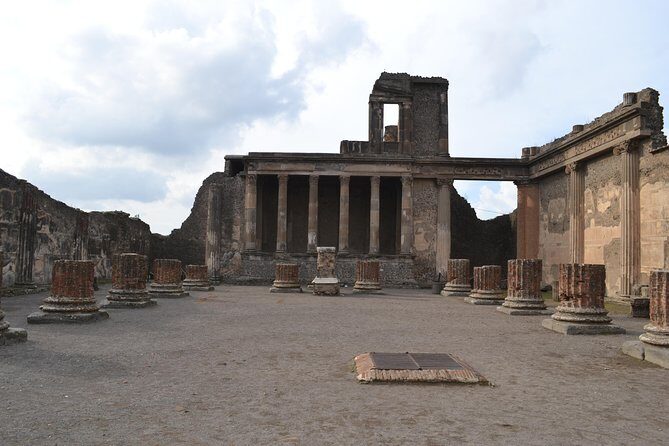
Basilica (open portico)
You’ll spend time at the Basilica, described as an open portico that sheltered merchants and other activities. In other words: it’s the practical heart of the day-to-day economy. This isn’t just “pretty ruins”—it’s the kind of space where people would have met, traded, and moved information.
Forum of Pompeii (main square)
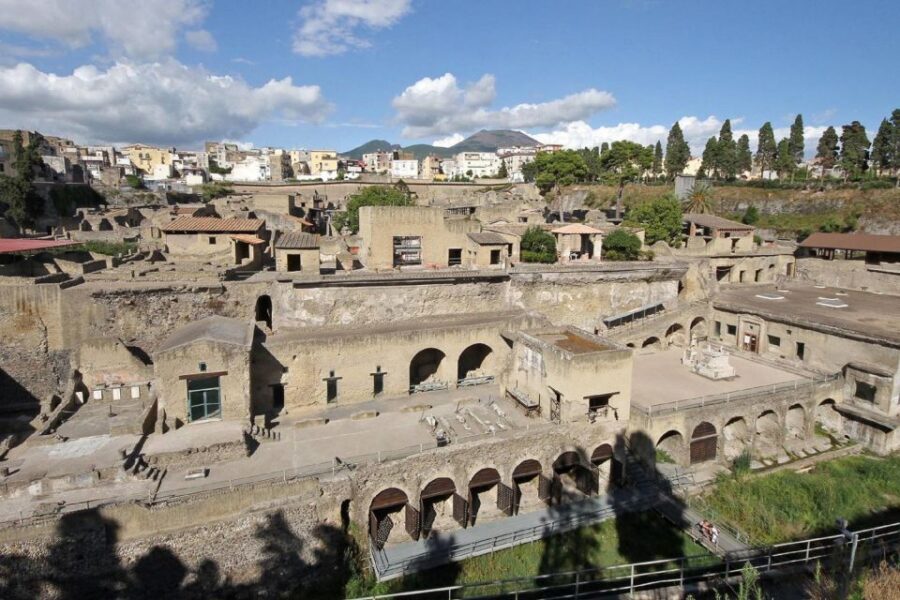
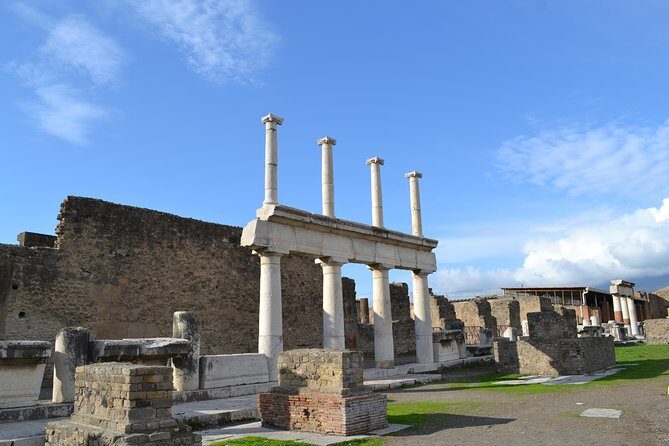
Next is the Foro de Pompeya, the ancient main square. This is where you start to understand how Pompeii worked as a city, not just a set of buildings. The Forum gives you the big picture—public space, civic events, and the locations that made everyone’s life more connected.
Main street walk
Between the major stops, you’ll walk through the main street. That segment matters because it helps you grasp how the city feels when you move along it, instead of only seeing buildings from one angle.
The trade-off with a short, highlight-focused route: you won’t have time for deep exploration of every alley or side complex. But for a first-time Pompeii visit, this kind of center-focused walk gives you fast orientation.
Granai del Foro and Casa del Menandro: daily structures and elite life
After you get the civic and street-level feel, the tour turns to two kinds of contrasts: food-storage infrastructure and the homes of people who lived like they were the main character.
Granai del Foro (granaries and water features)
At the Granai del Foro, you’ll see marble tables and baths used for fountains that once decorated entrances to houses. You’ll also encounter some of the famous plaster casts connected with the eruption, including casts of victims as well as a dog and a tree.
This stop hits both sides of Pompeii: the practical and the deeply human. The granary element helps you see how households and the city managed resources. The casts remind you what the catastrophe actually did to real bodies, not just buildings. It can be emotionally heavy, so it’s good that this tour gives you small doses, not one overwhelming marathon.
Casa del Menandro (house of Menander)
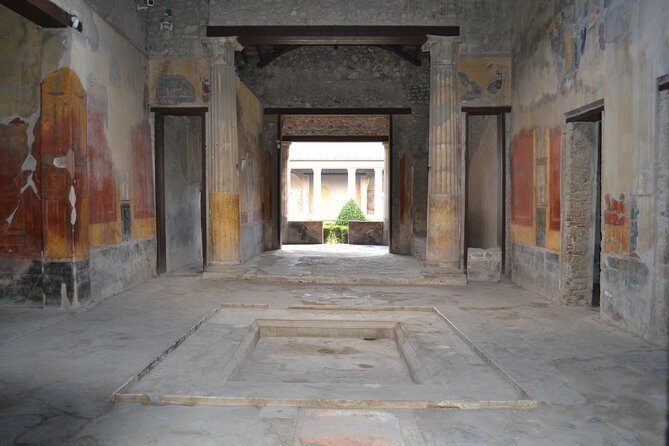
Then comes Casa del Menandro, one of the richest homes in Pompeii in terms of architecture, decoration, and contents. The time here is brief, but it’s designed to show you what wealth looked like in everyday spaces—how decoration and layout communicated status.
If you’re the type who likes to understand not only what happened, but how people lived, this is a strong pairing: you see both the city’s systems and the comfort of the elite.
Stabian Baths and the Lupanar: public life and a very specific corner
Pompeii isn’t all marble floors and big viewpoints. It’s also the places where people relaxed, socialized, and spent time. This portion of the route leans into that.
Stabian Baths (Terme Stabiane)
You’ll visit the Stabian Baths, one of the oldest thermal complexes in the city. This is a big area between key crossroads and nearby lanes. Even with limited time, baths usually teach you a lot about routine: hygiene, meeting spots, and how “leisure” worked in a Roman city.
If you’ve only seen Pompeii from photos, the baths can surprise you. They make the ruins feel more like a living town and less like a museum.
Lupanar (the famous brothel)
Next is the Lupanar, the most famous brothel in the ruined Roman city. It’s a “you came here” moment—direct, famous, and a little uncomfortable in the best educational way. The tour keeps the visit sized so you don’t get stuck in one subject too long, but you do get the context that Pompeii’s public spaces included every side of life.
One consideration: if you’d rather avoid adult-themed sites entirely, this is the point where you should decide how you feel. The tour does include it, and it’s part of what makes the route feel like a complete snapshot rather than a sanitized tour.
You can also read our reviews of more tours and experiences in Naples





Casa del Fauno and the theaters: scale, spectacle, and the plaster-cast effect
Now the route brings you back toward big, impressive structures. You start to see Pompeii’s ambition—private residences and public entertainment.
Casa del Fauno (house of Faun)
Casa del Fauno is one of the largest and most impressive private residences in Pompeii. The idea here is scale. Even if you only spend about 15 minutes, the tour route is designed so you can feel the size and importance of the home and how it functioned as a statement.
Teatro Piccolo (small theater)
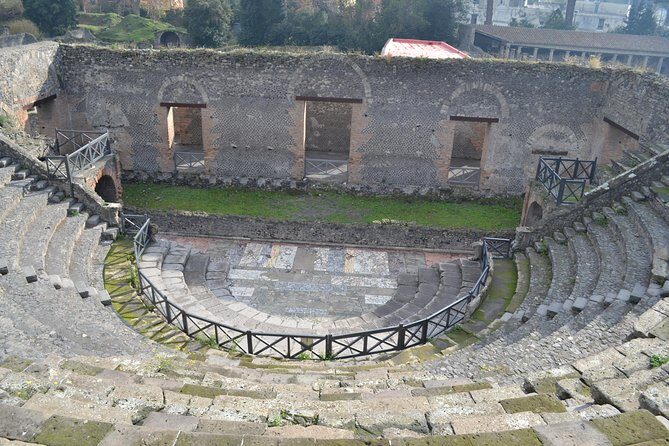
You’ll also get a look at the Teatro Piccolo. It’s a chance to see that entertainment wasn’t only one “main event.” Pompeii had multiple venues for performance and gathering.
Teatro Grande (main theater)
Then it’s Teatro Grande, described as the most important theater in Pompeii. This is one of the stops where the ruins can feel like a stage—even in silence. Along with the theater, you’ll also see the house of Tragic Poet and the famous plaster casts.
This part is powerful because it ties together two ways Pompeii tells stories:
- place and architecture (theater scale and public gathering)
- what happened to people (plaster casts)
It’s not just scenery. It’s a guided reading of the city.
Maria’s kind of guide experience: driver help + a human-feeling tour
One detail I really appreciate: the combination of your private driver and the Pompeii tour guide. It means you get both logistics and context without juggling multiple people or running around for directions.
In one strongly positive experience, the Pompeii guide was Maria, with 26 years of guiding experience. The standout detail wasn’t just that she knew the sites—it was the way she made the tour feel personable and engaging, like someone helping you see what matters instead of reciting a script.
That matters for Pompeii. When you’re moving quickly, you want a guide who can connect the dots clearly. The format here gives you that: a sequence of stops, each with a reason, plus time to look and ask.
Price and value: is $467.63 per person fair?
At $467.63 per person, this isn’t a budget option. But it can be worth it when you price it against what you’d likely have to arrange on your own.
Here’s what’s included that affects value:
- private air-conditioned transport
- one-way private transfer from Naples to Positano
- hotel drop-off
- a professional guide in Pompeii
- Pompeii Archaeological Area admission
- all taxes
What’s not included is meals.
So the real question is: how much do you value time and simplicity?
If you’re tight on days and you want Pompeii plus onward travel in one smooth motion, this package does that. If you already have transport arranged and you’re comfortable self-guiding Pompeii, then the cost may feel steep. But for many short-trip visitors, the guide plus private transfer is exactly where the money goes.
One practical note from real-world experience: make sure the vehicle matches what you need. If you need a minivan for luggage, confirm the type early. A sedan may still work for some setups, but if you’re carrying more bags, you’ll appreciate being warned before you’re on the curb.
Before you go: small practical tips that make the day easier
Pompeii on foot rewards comfortable choices. Even on a short route, you’re walking through a lot of uneven surfaces.
A few things to plan for:
- Comfortable shoes you trust on stone and irregular ground
- Sun protection and water (it’s easy to lose track of time in the ruins)
- Keep your bag situation realistic for the car you book
- Wear layers if weather swings during the drive from Naples to Positano
Also, this is a private experience, meaning you’re only your group. That helps you move at a pace you can actually handle, instead of getting squeezed into a large crowd rhythm.
And if you need a car seat, it’s available on request. Service animals are allowed too. It’s also near public transportation, in case you’re planning other legs of your trip around it.
Should you book this Pompeii transfer tour or skip it?
Book it if:
- you want Pompeii highlights without losing a whole day
- you’re traveling from Naples to Positano and want the day handled in one plan
- you like having a guide explain what you’re seeing as you walk
Skip it if:
- you want to roam and explore far beyond a fixed route
- you’re sensitive to adult-themed stops like the Lupanar
- you’re hoping for a flexible, slow museum-style pacing
My final take: this is a smart “first Pompeii” option paired with onward travel. The value is strongest for time-crunched travelers who want a guided route with admission included and a smooth private transfer done for you. Just do one homework task first: confirm the vehicle type if you’re bringing lots of luggage.
FAQ
How long is the Naples to Positano transfer with Pompeii?
The experience is about 4 hours.
Where do we meet the Pompeii guide?
You’ll meet at the main entrance of Pompeii ruins called Porta Marina Superiore.
Is Pompeii admission included?
Yes. Admission to the Pompeii Archaeological Area is included.
What transportation is provided from Naples to Positano?
You get transport by private air-conditioned minivan, plus a one-way private transfer from Naples to Positano and hotel drop-off.
Is the tour only for my group?
Yes. It’s a private tour/activity, so only your group participates.
Can I get a full refund if I cancel?
Yes, you can cancel up to 24 hours in advance for a full refund.