REVIEW · NAPLES
Herculaneum Private Walking Guided Tour 2 hours
Book on Viator →Operated by Tour Guide Naples · Bookable on Viator
Mud preserved a whole world. In this 2-hour Herculaneum private walking guided tour, your licensed guide helps the ancient city feel real again—covering daily life, family roles, religion and its temples, beliefs and superstitions, and the way Romans handled death. What makes Herculaneum different is that the eruption didn’t just bury buildings; it created conditions that preserved wooden elements, foodstuffs, fabrics, and architecture in a way that helps you understand Roman private life up close.
I especially like how quiet and manageable the site feels compared with Pompeii, so you can take in the whole story in one visit without constantly rushing. And when the guide is on form, it lands—Roberta, for example, was praised for making the site come alive for teenage kids, which is not a small feat.
One possible consideration: the tour price is $195.91 per person, but Parco Acheologico di Ercolano entrance tickets are not included, so you’ll want to budget for that add-on. Also, two hours is a strong sprint—if you love very slow archaeology sightseeing, you may still want more time after the tour.
In This Review
- Key highlights you’ll feel fast
- Why Herculaneum feels more personal than Pompeii
- Meeting at Ercolano Scavi and setting yourself up for a smooth start
- Parco Acheologico di Ercolano: what your 2 hours actually focus on
- The “why” behind the layout
- The preserved “stuff” that tells you how people lived
- Family life as the organizing thread
- Religion, temples, beliefs, and superstitions
- Funeral rites and the way death was handled
- Roman houses: typology and private space
- Why the guides matter here (and who you might meet)
- Price and value: is $195.91 per person fair?
- Who this tour suits best (and who might want a different plan)
- What to do before you go so the tour lands
- Should you book this Herculaneum private walking tour?
- FAQ
- How long is the Herculaneum Private Walking Guided Tour?
- Where does the tour start?
- Is the entrance ticket included?
- Is this a private tour?
- What’s included in the price?
- When does it start?
- Can I cancel for a full refund?
Key highlights you’ll feel fast
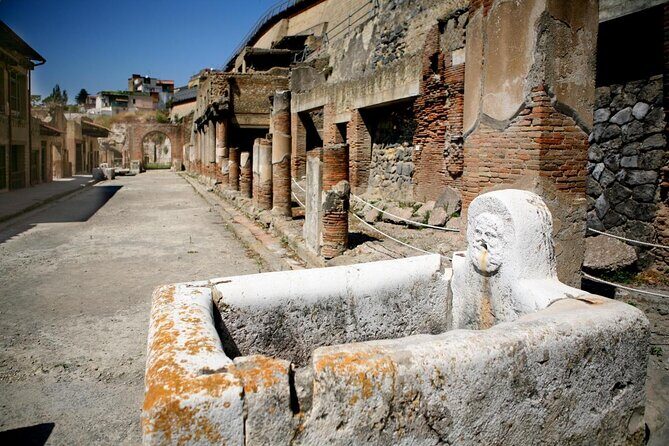
- Mud burial that preserved wood, fabrics, and even everyday items in a way Pompeii does not
- Licensed private guide who focuses on how Romans lived, believed, and buried their dead
- A site that’s easier to wrap up in a single 2-hour visit than Pompeii
- Roman houses and family life explained in plain terms as you walk
- Mobile ticket and a clear meet-up at Ercolano Scavi
- Private group format where the guide can answer your questions as you go
Why Herculaneum feels more personal than Pompeii
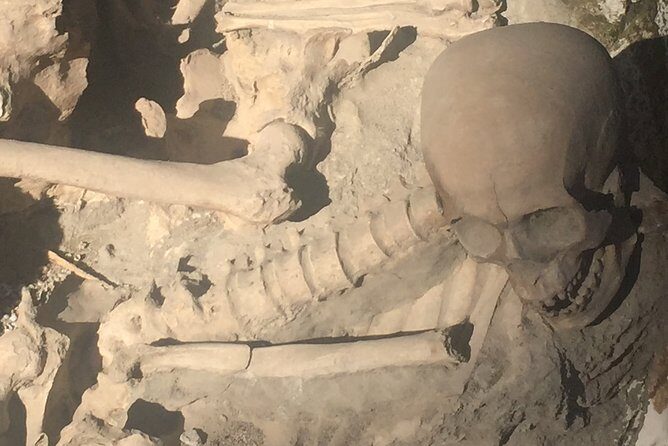
If Pompeii is the loud, dramatic classroom, Herculaneum is the quieter one where you can actually hear what daily life sounded like. The big idea is preservation. Both places were destroyed by the same eruption of Mount Vesuvius in 79 AD, but the aftermath was different. Herculaneum was buried under a torrent of mud, and that layer helped shield the remains from the wear and tear that time usually brings—like weather exposure—and from damage tied to illegal digging.
So instead of just looking at stone walls, you get a more intimate view of how Romans lived: the feel of a household, the types of rooms, and the objects that survived in unusual condition. That matters because a city is more than a collection of buildings. It’s food, cloth, tools, rituals, and routine. This tour is designed to bring that to the front, not just the dates.
And there’s a reason people say Herculaneum is easier to see. It’s simply a calmer experience. One guide experience even highlighted that Herculaneum is quieter than Pompeii and works well if you want to cover the whole place in one visit. For you, that can mean less fatigue and more time to absorb the details your guide points out.
You can also read our reviews of more walking tours in Naples


Meeting at Ercolano Scavi and setting yourself up for a smooth start
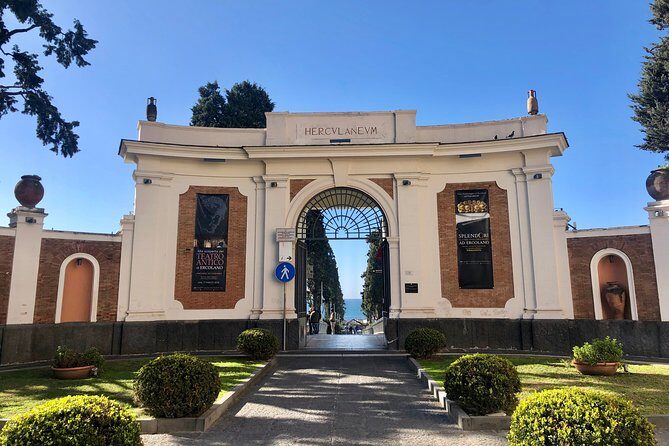
This tour starts at Ercolano Scavi (80056 Ercolano), and it ends back at the meeting point. The scheduled start time is 9:00 am, and the walking portion is about 2 hours.
A couple practical things help your visit go smoothly:
- Go prepared for a walk through an archaeological site. Comfortable shoes matter. Your itinerary is short, so you don’t want sore feet cutting into the experience.
- Since entrance tickets are not included, you’ll want to handle that in advance (or right away at the site, depending on what you choose). The guide handles the tour portion; you handle entry.
- It’s marked as near public transportation, which is good news if you’re pairing this with other stops in the Naples area.
Also, this is a private tour. That means it’s just your group. You’re not competing for the guide’s attention, and you’re not getting swept along with strangers who all want different things.
Parco Acheologico di Ercolano: what your 2 hours actually focus on
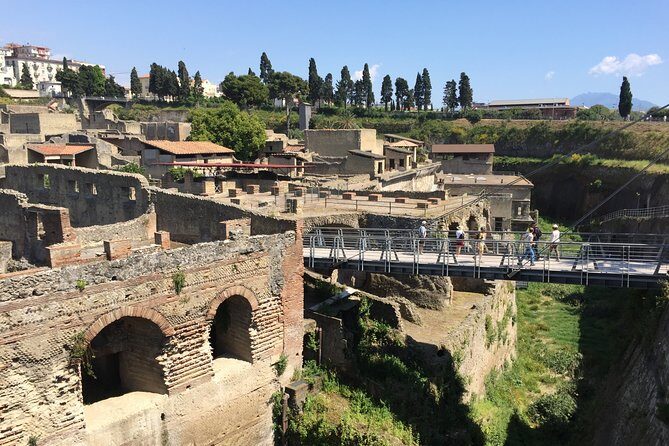
The heart of the experience is the walk through Parco Acheologico di Ercolano. Even though you’re only there for about two hours, the tour is built to cover major themes that make Herculaneum click:
The “why” behind the layout
Your guide explains the city’s origins and its place in Roman culture, starting with the idea that Herculaneum dates back to the 4th century BC and was thought to have been founded by the legendary Hercules. Then you move into the Roman era—an elite resort city that was wiped out by the same eruption that buried Pompeii in 79 AD.
That framing matters. If you understand the city’s role—who lived there, who visited, and why it mattered—you’ll read the remains differently. You’ll stop asking, “What is this?” and start asking, “What did people do here?”
The preserved “stuff” that tells you how people lived
One of the most compelling parts of Herculaneum is that you can learn more than architecture. The tour highlights natural preservation of wooden elements, foodstuffs, fabrics, and architectural features. Even without you seeing everything at once, the guide’s explanations connect those preserved items to real Roman habits.
Think about it this way: stone tells you about design and building. Preserved everyday material helps you understand routines—what households used, how they dressed, and how they stored and handled food. That’s why people say the site feels more intimate than Pompeii. It’s not only scale; it’s what survived.
You can also read our reviews of more guided tours in Naples
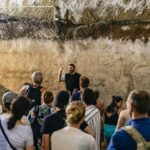
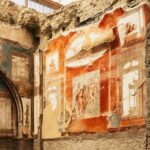

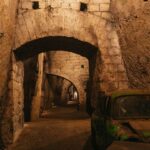

Family life as the organizing thread
The tour isn’t built around emperors or battle maps. It’s built around the Roman family. You’ll hear about the role of the family in daily life and how that shaped behavior—who had influence, how people lived together, and how households connected to broader civic and religious life.
If you like history that feels like real human life, this focus is a big win. It also helps kids and teens, since family is a more relatable lens than a long list of rulers.
Religion, temples, beliefs, and superstitions
Your guide also covers religious life, including various temples, along with the cultures, beliefs, and superstitions Romans held. It’s easy to treat ancient religion as abstract. Here, it’s explained as part of what people did—how they understood the world, what they feared, and how they built meaning into ordinary routines.
This is one of those topics where a good guide can make a big difference. The best guides don’t just mention gods; they connect belief to space, behavior, and ritual.
Funeral rites and the way death was handled
Another major theme is funeral rites. That might not sound like the most fun topic on a vacation—fair—but it’s also a way to understand what Romans valued and how they made death part of the social fabric.
And because Herculaneum preservation can be so detailed, the subject isn’t just a lecture. Your guide uses the site to help you visualize how communities dealt with loss.
Roman houses: typology and private space
The tour also tackles the typology of Roman houses—essentially, the kinds of domestic layouts Romans used. Your guide uses these forms to explain how private space worked, where people gathered, and how household design supported daily life.
This is valuable even if you’re not a “museum person.” Houses are practical. They show you patterns: where you live, where you eat, where you rest, and how your home supports your status and routines.
Why the guides matter here (and who you might meet)
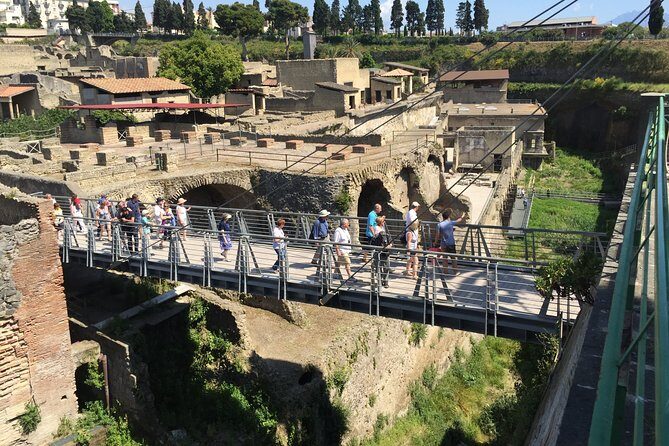
This tour is led by a licensed guide, and the difference between a standard explanation and a truly engaging walk shows up in the way people describe their experience. Several guide names came through in the feedback, and they point to a shared strength: making the site feel like a story you can follow.
- Roberta was praised for being friendly and extremely well informed, and for making Herculaneum work for teenage kids.
- Gennaro stood out for being knowledgeable and fun, with emphasis on the site being quieter than Pompeii and easier to see in one go.
- Andrew was paired with driver Pasquale in one example that included pickup from a ship area and Q&A during the drive, which is handy if you like getting context before you even start walking.
- Ionica was praised for professionalism and passion at the excavations.
- Alfredo De Luca was described as a professional archaeologist guide who made the visit very interesting.
- Ornella got repeated mentions for making the two hours fly, including when the group included kids.
- Ugo Somma (also shown as Hugo) was praised for making the tour detailed enough that the story of ancient Ercolano reached the eruption years in a vivid way.
You can’t control which guide you get, but you can control how you show up. If you like direct explanations and you’ll ask questions, you’ll get a lot more out of a private guide-led format than you would with a quick audio app.
Price and value: is $195.91 per person fair?
At $195.91 per person, this isn’t a bargain-basement option. But it’s also not overpriced in the way many private tours can be. Here’s the value logic:
- You’re paying for a licensed guide to spend the full two hours walking with you and tying together themes (family, religion, funerary customs, houses) that would be hard to connect on your own.
- The group is private, so it’s not a generic talk delivered while you’re stuck behind a crowd.
- The tour is short, which is good when you want high focus without eating your whole day.
The one cost wrinkle is that entrance fees to Parco Acheologico di Ercolano are not included, so your all-in cost will be higher. If you plan your budget early and treat that ticket as part of the total, the price starts to make more sense.
For best value, this is the kind of tour that works especially well when you want meaning, not just sightseeing. If you mainly want photos and quick looks, you might feel the paid guide time more than you’d like.
Who this tour suits best (and who might want a different plan)

This tour fits best if you:
- Want a guided walk through Herculaneum’s key themes in a tight time window
- Prefer private pacing where you can ask questions
- Travel with kids or teens and need a guide who can keep attention
- Want a Pompeii alternative that still tells a huge story, but feels easier to manage
It may be less perfect if you:
- Want to spend a half-day or more wandering slowly at your own pace
- Don’t care about cultural context (family, religion, funerary rites) and only want architecture trivia
Because the tour is about 2 hours, it’s a smart choice as a “main event” for Herculaneum. If you fall in love with the site once you’re there, you can always plan extra time on your own afterward.
What to do before you go so the tour lands
You’ll get more out of the walking tour if you do a tiny bit of prep—nothing heavy, just enough to know what to listen for:
- Think about what theme you care about most: houses, religion, death rituals, or everyday household life.
- Wear shoes you can walk in comfortably for a couple hours.
- Bring water and plan for weather. Archaeology sites can make you walk longer than you expect.
Then, during the tour, let the guide do the connecting work. The best moments here aren’t random facts—they’re the way the guide links preserved materials to how people actually lived.
Should you book this Herculaneum private walking tour?
Yes, if you want a focused, guided way to understand how Romans lived and believed in a city preserved in unusual detail. The two-hour format is ideal for most schedules, and the private setup gives you room to ask questions instead of watching from the edge.
I’d especially book it if you like history with human scale—family life, religion, and funeral rites—and if you’re looking for an experience that feels easier to complete than Pompeii. If you’re budget-sensitive, just remember the entrance ticket is extra, and you’ll want to line that up so the day stays smooth.
If your dream day in Naples is about personal stories, not just ruins, this is one of the best ways to make Herculaneum feel like a real place again.
FAQ
How long is the Herculaneum Private Walking Guided Tour?
The tour lasts about 2 hours.
Where does the tour start?
The meeting point is Ercolano Scavi (80056 Ercolano, Metropolitan City of Naples, Italy).
Is the entrance ticket included?
No. Admission to Parco Acheologico di Ercolano is not included. You’ll need to purchase the entrance fee separately.
Is this a private tour?
Yes. It’s a private tour/activity, so only your group will participate.
What’s included in the price?
The tour includes a licensed tour guide.
When does it start?
The start time listed is 9:00 am.
Can I cancel for a full refund?
Yes. You can cancel up to 24 hours in advance for a full refund. Canceling less than 24 hours before the experience’s start time won’t be refunded.