REVIEW · NAPLES
Naples: The Bourbon Tunnel Guided Tour with Entrance Ticket
Book on GetYourGuide →Operated by Galleria Borbonica · Bookable on GetYourGuide
Naples gets under your skin fast. The Bourbon Tunnel is a rare guided walk through centuries of life below the city, from 1853 planning to wartime use. It’s not just “underground sightseeing” either; it’s a story you follow in real space, with stops that change what you think you’re looking at.
I love two things most: the way the tour turns the tunnels into a clear timeline and the chance to see actual remains, from fascist-period statuary to everyday objects left behind.
If you pick the Via delle Memorie option, you’ll add more walking and more steps, and that’s the main drawback to think about. There are 90 steps to reach the entrance area, and 115 steps if your option starts from the Via delle Memorie route. If you’re sensitive to stairs or low light, plan accordingly.
In This Review
- Key moments to look for
- Entering the Galleria Borbonica: 90 steps, then a different Naples
- What you’ll actually see in the Bourbon Tunnel’s 1853 story
- Via delle Memorie option: extra walking on the tuff route
- WWII traces: hospital rooms, handwritten messages, and the “used as” history
- Fascist-period statues and the cars-and-motorcycles exhibition
- The guide, the pacing, and why group size matters underground
- Is it worth $12 for an hour underground?
- Who should book this Bourbon Tunnel tour
- Should you book the Naples Bourbon Tunnel guided tour?
- FAQ
- How long is the Bourbon Tunnel guided tour?
- Is there an option that includes the Via delle Memorie route?
- How many steps are there to enter?
- What languages are the tours offered in?
- What’s included with the ticket?
- What kinds of things can I expect to see underground?
- Is the group kept small?
- Can kids visit, and is it free for younger children?
Key moments to look for
- 1853 Bourbon-era purpose: an escape route planned by Ferdinand II of Bourbon
- WWII imprint: the tunnel repurposed as a military hospital and later used for a judicial deposit
- Via delle Memorie tuff route: an underground walk carved from Naples tuff rock
- Fascist-period statues plus a small set of historical visual “leftovers”
- Abandoned cars and motorcycles that were later cleaned up and put back on view
- Real handwritten WWII-era messages connected to wishes and desolation
Entering the Galleria Borbonica: 90 steps, then a different Naples
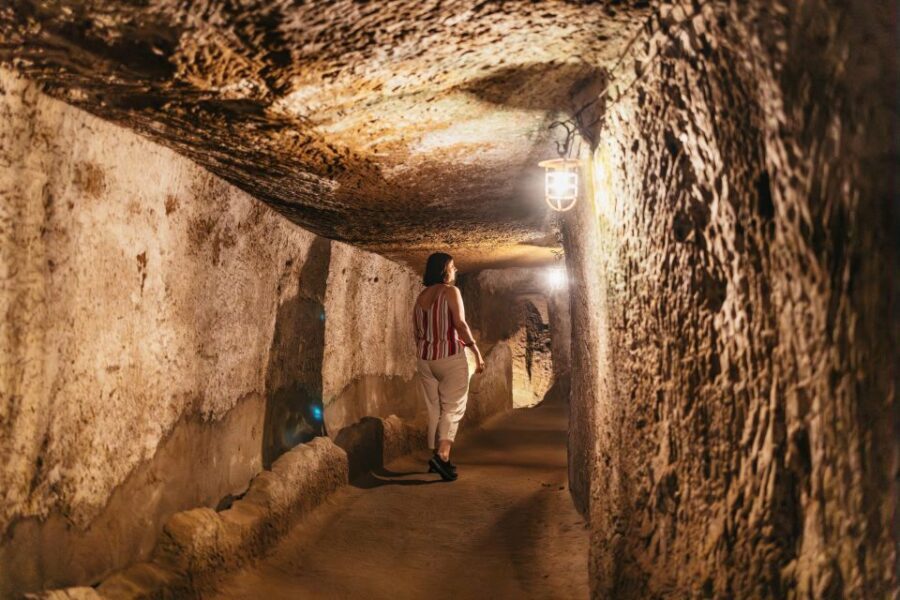
This tour starts in a basement setting at Palazzo Serra di Cassano, and the first thing you’ll feel is the pace change: going underground is instant mood lighting. You’ll descend a staircase—90 steps for the standard Bourbon Tunnel entry. If you choose the option that starts with the Via delle Memorie route, that becomes 115 steps. Take the staircase slow. Even if you’re fit, the tunnel experience starts with breath and rhythm, not speed.
Once you’re down there, the tone becomes more intimate. The tunnels aren’t “one big corridor.” You move from chamber to chamber, and the guide builds the story as you go. Expect low light, stone acoustics, and the need to listen closely when the group shifts location.
One practical tip: bring something you can see with. Even when areas are lit, the underground setting can make details harder to spot, especially for anyone who prefers brighter spaces.
You can also read our reviews of more tours and experiences in Naples


What you’ll actually see in the Bourbon Tunnel’s 1853 story
The Bourbon Tunnel was built in 1853 under the direction of Ferdinand II of Bourbon. The idea wasn’t romantic; it was practical and political. Ferdinand was concerned about a rebellion, and he asked for a secret escape from the Royal Palace to a barrack area in Via della Pace (today known as Via Morelli).
Here’s why that matters for you on the tour: you’re not just walking “historic tunnels.” You’re walking a plan that didn’t fully finish. The tunnel’s original intent was interrupted, and the space later changed roles again and again.
A big part of the guided experience is retracing that evolution. You’ll move through spots that were later adapted, which gives the tour a strong cause-and-effect feel: this is where the tunnel’s purpose shifted, and you can sense those layers physically. That’s one of the most satisfying things about the tour for me: it makes the underground feel like a living system, used by real people for real needs.
Via delle Memorie option: extra walking on the tuff route
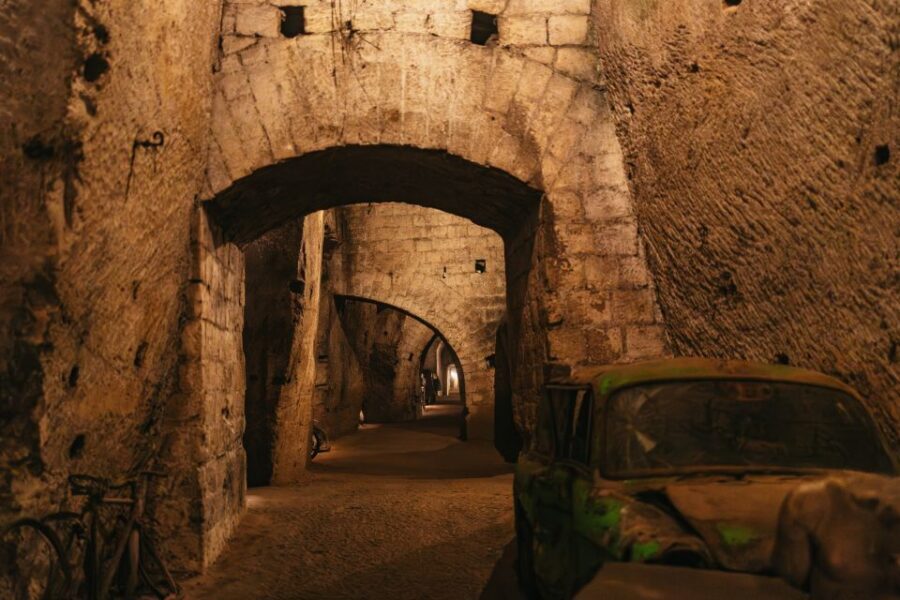
If you select the Via delle Memorie option, you add an extra underground segment before (or alongside) the Bourbon Tunnel portion. This route is carved into the tuff, the volcanic stone Naples is known for.
For you, the value is simple: more time underground, more variation in what you see, and a slightly broader sense of Naples beneath Naples. Many people prefer this extension because it tends to feel more spacious and less like you’re rushing from point to point. It also helps if you’ve got one of those “I’ll never get another chance” moods—Naples underground is not a quick photo stop.
That said, it’s not for everyone. More steps means more effort, and you’ll likely feel it more if you’re traveling with someone with mobility limits.
WWII traces: hospital rooms, handwritten messages, and the “used as” history
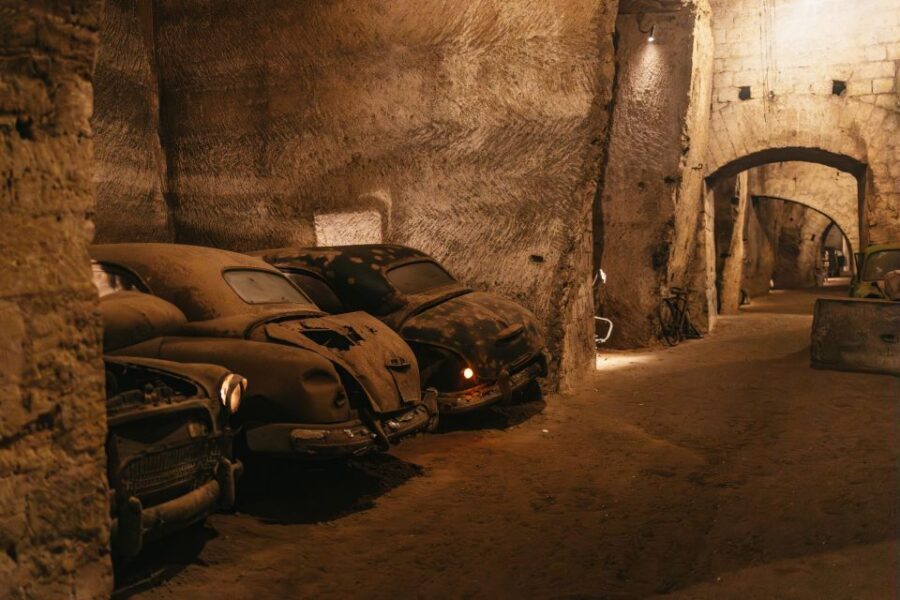
The tunnel’s most emotional chapter comes from the Second World War. During WWII, the underground space was used as a military hospital. After the war, it became the Hall Judicial Deposit.
In other words, you’re seeing a place that switched from survival care to something administrative and grim. And the war left marks in the subsoil—not just physically, but through human traces. The tour includes stopping points where you can find handwritten messages—notes tied to wishes and desolation from the people who lived there in that darker reality.
One of the strongest reasons to book this is that it keeps the focus on use, not just decoration. A tunnel used as a hospital isn’t the same as a tunnel used for storage. You feel that when the guide points out what happened where.
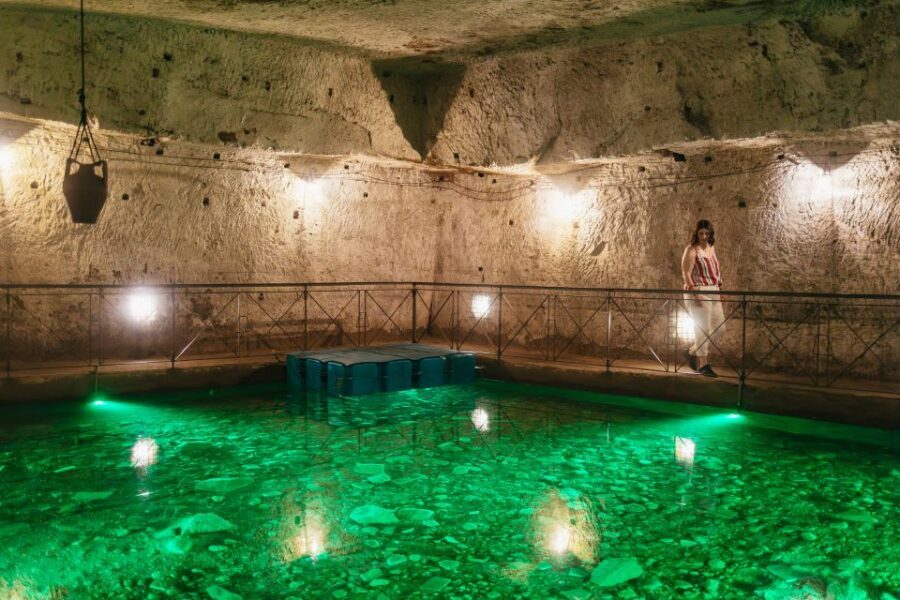
There’s also a major stop tied to water: you’ll see a water tank from the 17th century, later used as a bomb shelter. This is the kind of detail that gives you context fast. You start linking Naples’ geography, underground building materials, and wartime survival patterns into a single story your brain can actually hold onto.
Fascist-period statues and the cars-and-motorcycles exhibition
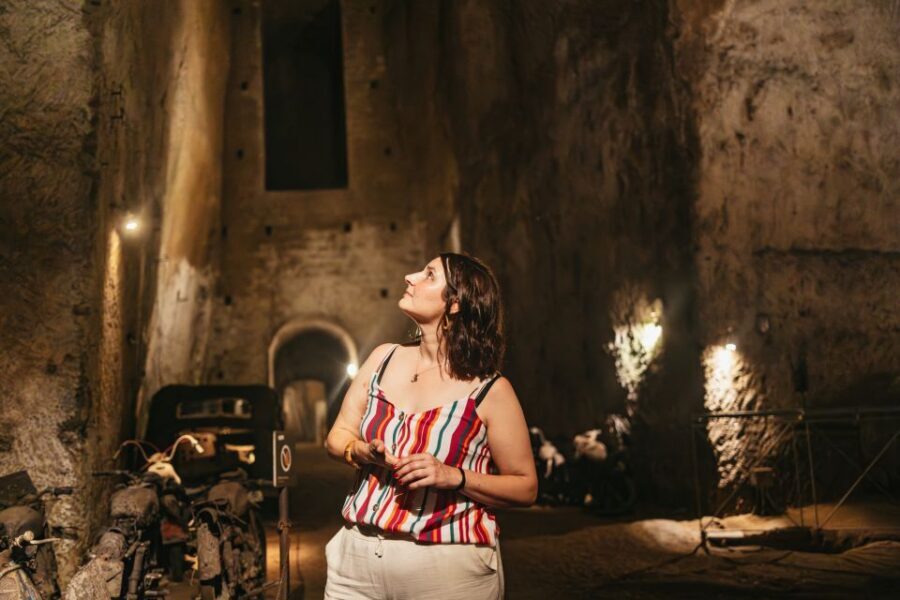
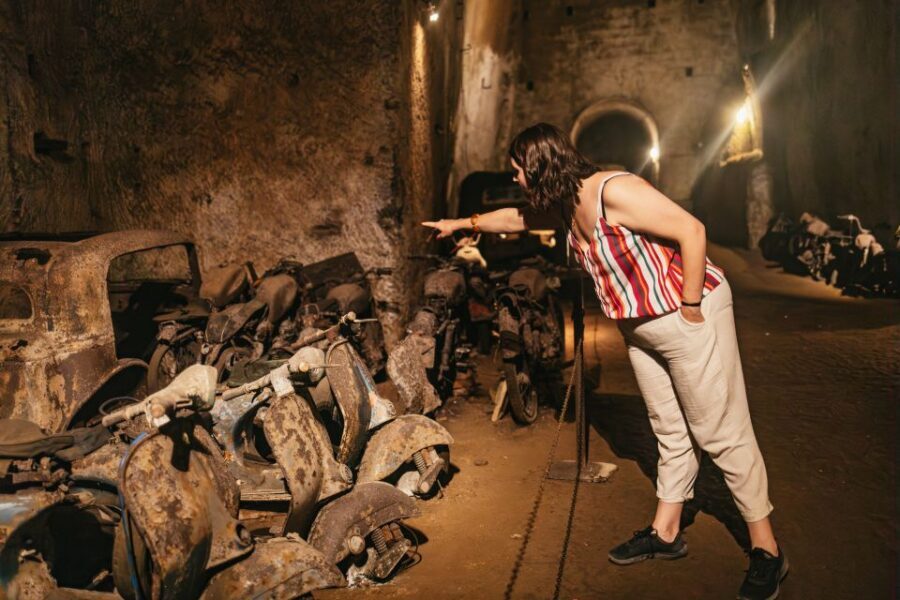
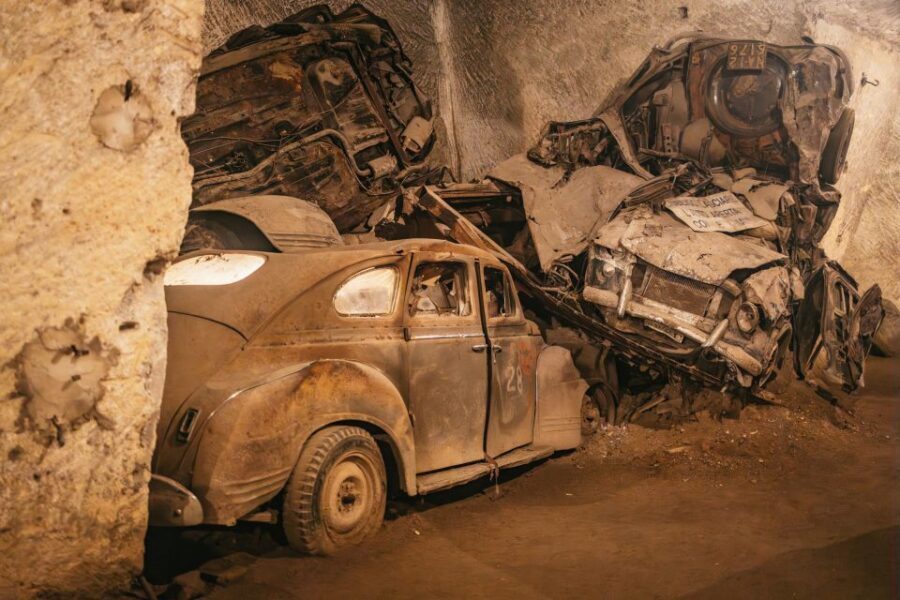
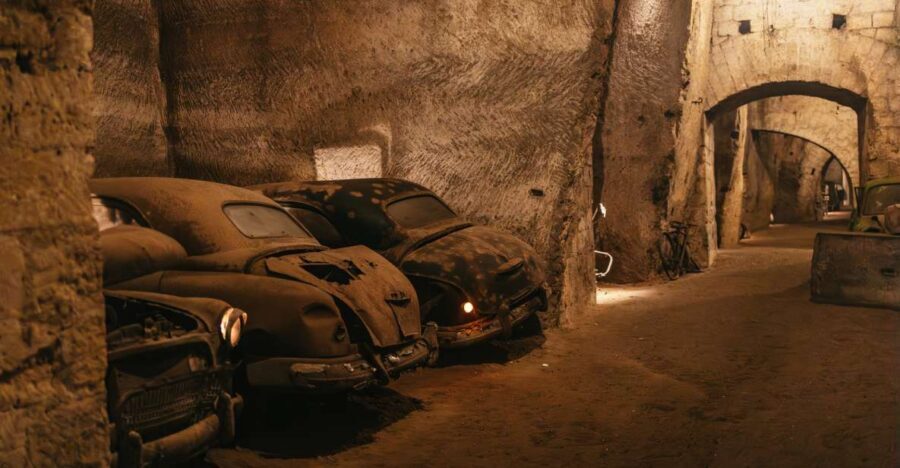
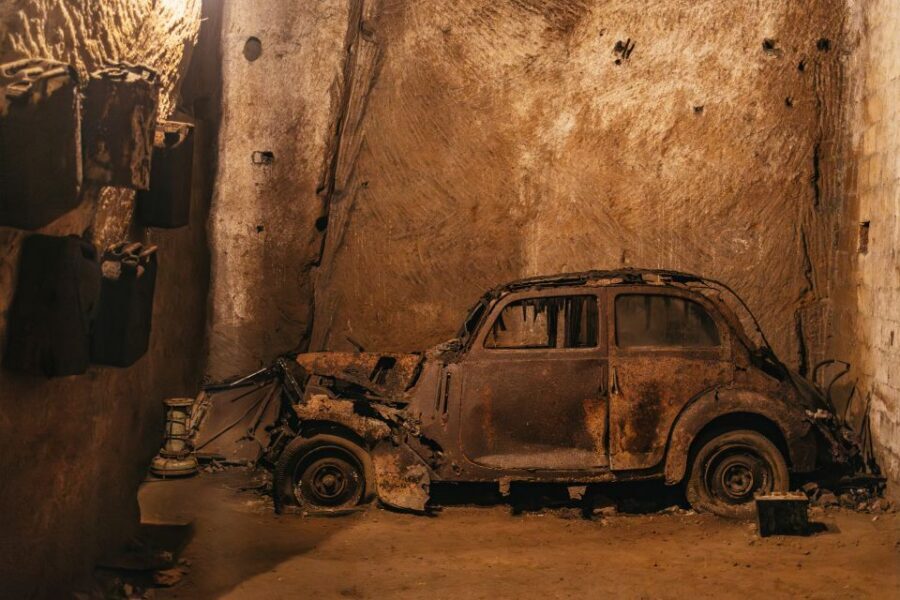
Midway through the experience, the tunnel shifts from “timeline” to “what’s left behind.” You’ll see statues dating from the fascist period, plus an exhibition area of cars and motorcycles that had been abandoned for years and then cleared from rubbish.
What I like about this section is the contrast. You’re not only seeing formal monuments. You’re seeing evidence of ordinary objects and public imagery trapped in an underground setting. That mismatch makes the history feel more real, less like a museum diorama.
A fair consideration: underground spaces can sometimes limit how clearly you’ll see fine details. If you’re the type who likes to zoom in on faces, expect some sections where you’ll rely on the guide’s pointing and your willingness to look up close within the space available.
You can also read our reviews of more guided tours in Naples



The guide, the pacing, and why group size matters underground
Tours here run about 1 hour, and that time needs to work in a place where movement is slower. You’ll deal with stone steps, turns, and the feeling of “moving through rooms.” Small groups help a lot. The tour operator offers small group options, and the group size you get can be quite manageable—around 6 up to about 16 in the experiences I’ve seen people describe.
You’ll hear the guide in Italian and English (so you can pick what fits you). Several guides have stood out by name in English-language visits—people specifically mentioned David, Lucia, Sabrina, and Martina, plus a moment where they met Marco (described as a cofounder) during one tour. That matters because the guides aren’t only reciting facts. They answer questions and connect the tunnel’s different uses to what you’re standing near.
Two pacing notes to keep in mind:
- There are stairs and you should go slow on the descent.
- Sound can bounce. Some chambers have echoes, so hearing every word can be tricky in a group.
If you’re the kind of traveler who likes asking questions, the “small enough group” format is a real plus.
Is it worth $12 for an hour underground?
At about $12 per person for a 1-hour guided experience, the value is hard to argue against—especially in a city where many guided options cost significantly more for less sensory payoff. Here, your ticket buys you:
- a guided explanation of multiple eras in one connected space,
- entry to a curated underground route,
- and (if selected) the Via delle Memorie add-on.
The hidden value is time efficiency. You don’t need a half-day plan. You can fit this into a busy Naples schedule and still walk away with a stronger sense of how the city works below street level.
If you’re trying to choose between “another surface church” and “a Naples story you can only get underground,” this tour leans toward the second option. It’s a change of scene with real historical weight.
Who should book this Bourbon Tunnel tour
This is a great fit if you want:
- a guided walk that reads like a timeline you can follow in space,
- WWII history with specific physical anchors like the hospital use and bomb shelter context,
- and underground Naples that includes both atmosphere and objects (statues, cars, motorcycles).
You should think twice if:
- you have trouble with stairs (90 steps, or 115 with Via delle Memorie),
- you’re easily bothered by enclosed environments or low visibility,
- or you struggle hearing in echo-heavy rooms.
If you’re traveling with older relatives, the steps and lighting are the biggest practical concerns. The tour does include navigation help from the guide, but the environment itself doesn’t change.
Should you book the Naples Bourbon Tunnel guided tour?
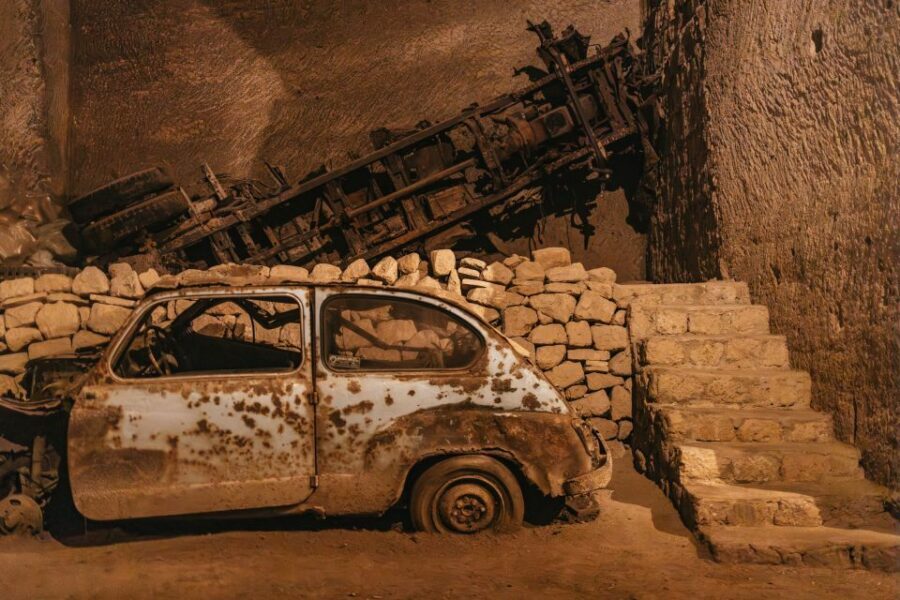
Yes, I’d book it if you want one of the most memorable “different Naples” experiences that doesn’t require a long time commitment. The combination of Ferdinand II’s 1853 escape plan, the tunnel’s WWII hospital chapter, and the on-site remnants (statues, cleared vehicles, handwritten notes) makes it feel more than just a walk.
Skip or reconsider if stairs are a deal-breaker for you, or if you know you’ll be uncomfortable underground for long stretches. If that’s not you, this tour is strong value at the price, and it’s exactly the kind of stop that adds depth to Naples fast.
FAQ
How long is the Bourbon Tunnel guided tour?
The tour duration is listed as 1 hour. Starting times vary, so check availability for the schedule.
Is there an option that includes the Via delle Memorie route?
Yes. You can choose the Via delle Memorie option, which adds a walk on a historic underground route carved from tuff.
How many steps are there to enter?
There is a staircase at the entrance with 90 steps for the standard Bourbon Tunnel entry. If your option starts from the Via delle Memorie route, there are 115 steps.
What languages are the tours offered in?
The live guided tour is available in Italian and English.
What’s included with the ticket?
Your ticket includes entry, a guided tour, and the Via delle Memorie route if you select that option.
What kinds of things can I expect to see underground?
You can expect to see historical elements connected to the tunnel’s 1853 origins and later uses, plus WWII-related traces, handwritten messages, fascist-period statues, and an exhibition of cars and motorcycles that were later cleared.
Is the group kept small?
Yes. The activity offers small group tours.
Can kids visit, and is it free for younger children?
Children under age 10 can enter for free.