REVIEW · HERCULANEUM TOURS
Pompeii and Herculaneum: Private Tour from Naples
Book on GetYourGuide →Operated by Discover Italy dmc · Bookable on GetYourGuide
Lava kept Roman streets frozen in time. This private day is built for people who want the big story of Vesuvius, plus the details that make it click: you get a live guide at both sites and skip-the-line entrance so you spend less time waiting and more time learning. I love that you’ll see both Pompeii and Herculaneum in one shot, and I also like that the private driver handles the timing and route from Naples.
The trade-off? A 6-hour window means you’ll move at a brisk pace through two major archaeological areas. If you’re sensitive to long walks and uneven ground, plan for it and wear comfortable shoes.
In This Review
- Key highlights to know before you go
- A private Pompeii and Herculaneum day from Naples (without the hassle)
- Pompeii: Roman streets, shops, squares, and survival by lava
- Moving from Pompeii to Herculaneum: a smaller town with major impact
- The cameo workshop stop: practical souvenir knowledge, not just shopping
- How the private format changes what you get out of Pompeii
- The real value of $653.83 per person for 6 hours
- Timing and what your day probably feels like
- What to wear and how to prepare for the sites
- Who this tour is best for (and who should look elsewhere)
- Should you book Pompeii and Herculaneum from Naples?
- FAQ
- What does the tour include?
- Is there lunch included?
- How long is the tour?
- Are there skip-the-line benefits?
- What sites will I visit?
- Will I have time for a workshop stop?
- Where will pickup happen?
- What languages are available for the guide?
- Can I cancel if my plans change?
- Can I reserve without paying right away?
Key highlights to know before you go
- Two UNESCO sites with one private guide, covering Pompeii and Herculaneum back-to-back
- Private driver for 6 hours, with pickup from your Naples hotel
- Skip-the-line Pompeii entrance, plus Herculaneum entrance included
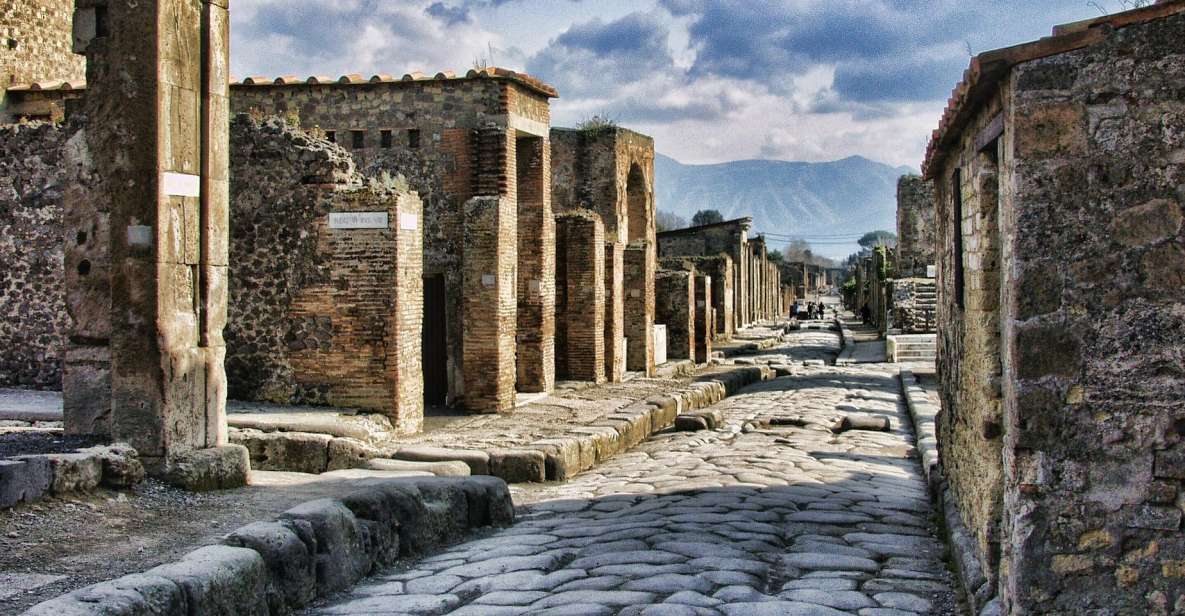
- Roman everyday life in plain terms, from shops and squares to brothels and preserved bodies
- Herculaneum’s legend tied to Hercules, paired with what you can actually see on the ground
- A cameo workshop stop on the way back to your accommodation
A private Pompeii and Herculaneum day from Naples (without the hassle)
If you only have a short window in Naples, this is the kind of plan that saves your energy. You’re picked up in the morning from your hotel, then you’re driven to Pompeii. Once you’re on-site, your tour guide takes over—so you aren’t stuck trying to connect the dots between street layouts, building types, and why a city looks the way it does today.
The big value here is simple: you’re not just seeing ruins. You’re getting the story of a Roman town preserved by the eruption of Mt. Vesuvius in 79 A.D. Pompeii is often described as the most visited Roman site after the Colosseum in Rome, and that’s not an accident. It’s famous because it’s readable—when you know what you’re looking at. With a guide, that readability kicks in fast.
Also, you’re not juggling transport. This is not a bus-and-hope situation. It’s a private car with a driver for the full 6 hours, which helps keep the schedule realistic. You’ll still walk around the sites (that’s the point), but the logistics are handled for you.
One other bonus: the tour is offered in Spanish, English, and Italian, so you can match the narration to what you actually want to understand. That matters with Roman history, because the best explanations depend on clarity, not just dates.
Pompeii: Roman streets, shops, squares, and survival by lava
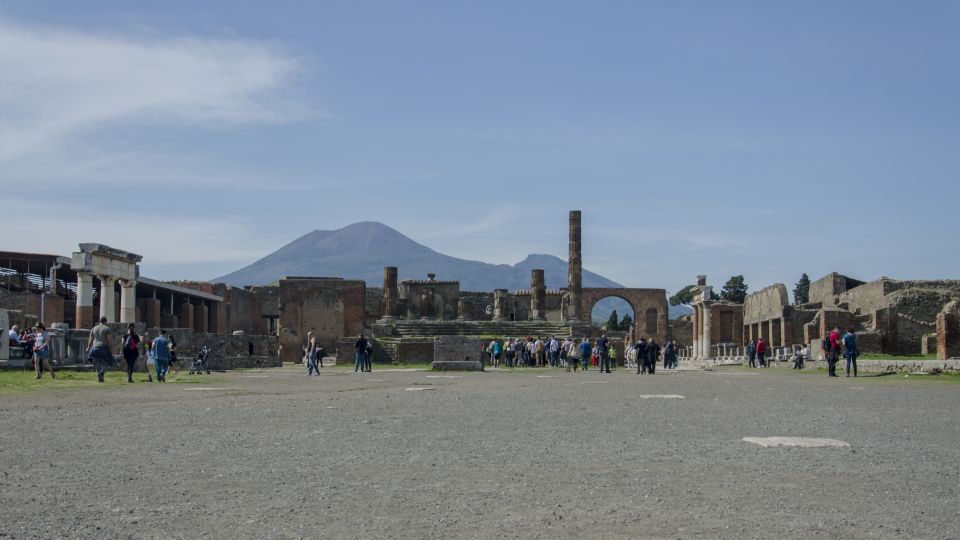
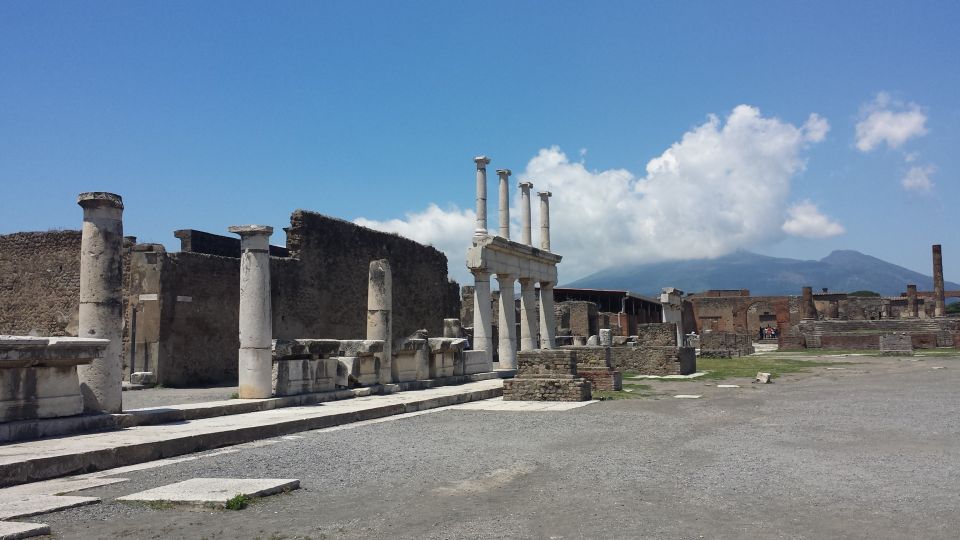
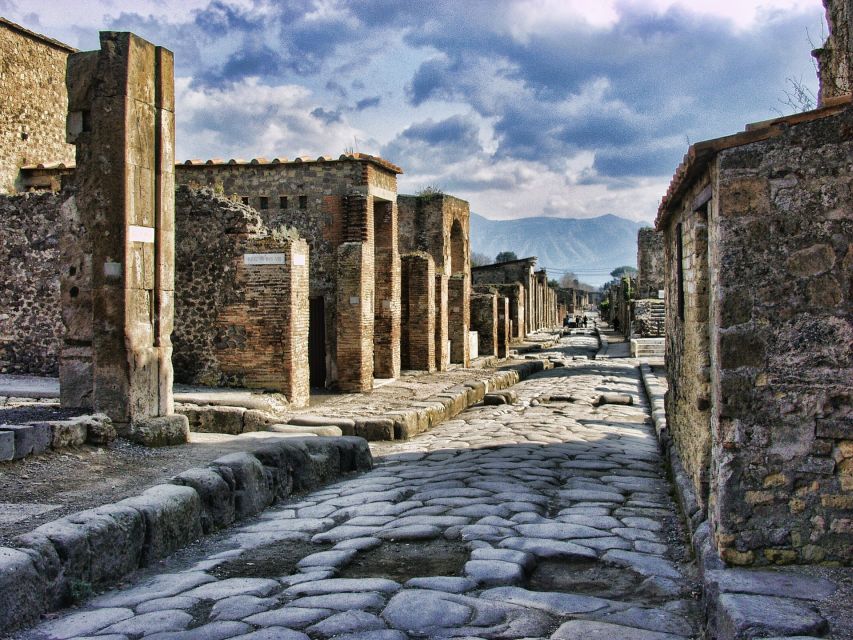
Pompeii is where the “wow” factor becomes “wait, how did this happen?” The city was preserved in lava after the eruption of Mt. Vesuvius in 79 A.D., and that preservation is what makes a guided walk so effective. On your own, it’s easy to see walls and call it a day. With a guide, those walls become evidence of everyday life.
You’ll start exploring Pompeii after meeting your guide on site. From there, the tour focuses on Roman architecture and the kinds of spaces that tell you how people moved through daily routines. The description you’ll get isn’t abstract. You’ll look at places such as shops and squares, and you’ll also encounter the kinds of buildings that feel surprising in a former Roman city—like brothels.
That’s one of the most useful parts of Pompeii: you’re not just touring monuments. You’re learning the texture of the city. A guide helps you understand why certain areas mattered, what building purposes likely were, and how this town functioned before the eruption froze it in place.
And then there’s the detail that turns your brain on: preserved human bodies. The tour highlights that you can marvel at the fact that entire human bodies were preserved by lava. You don’t need sensationalism for that to hit hard. What you need is context, and a good guide provides it—explaining what you’re seeing and why it’s significant.
A possible consideration: Pompeii is the larger stop in most Pompeii-and-Herculaneum plans. Even in a private format, you’ll want to be mentally ready for a lot of visual input in a short time. If you like taking photos slowly, you might feel the pace. If you like getting your bearings and understanding the main sites efficiently, you’ll probably feel right at home.
Moving from Pompeii to Herculaneum: a smaller town with major impact
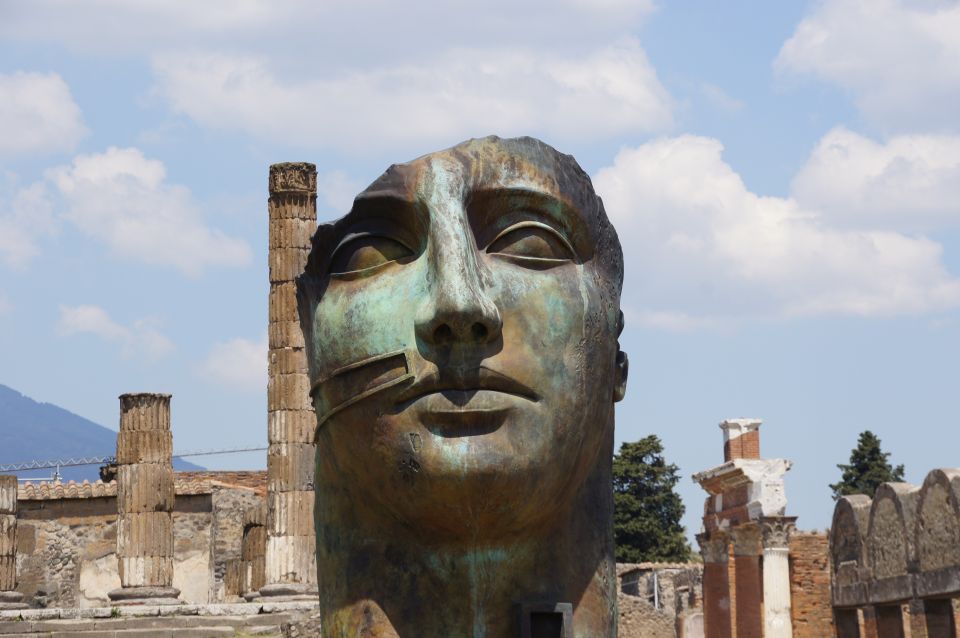
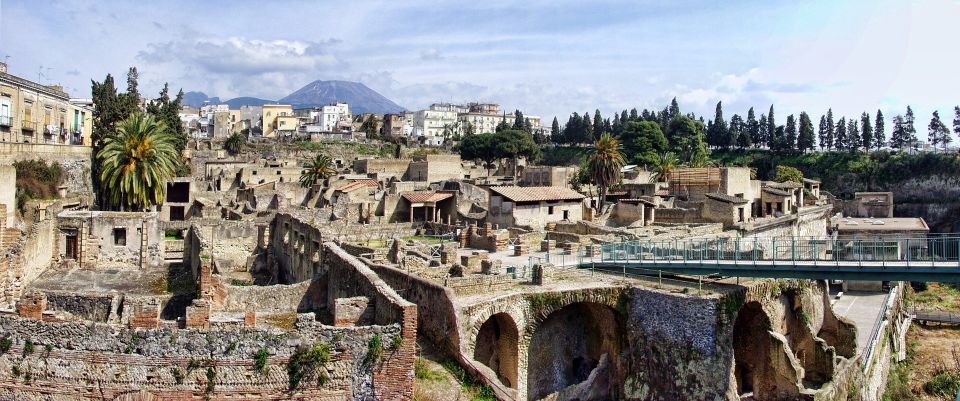
After Pompeii, you head to your next stop: Herculaneum. This is a smart choice for people who want variety. Pompeii is bigger and more famous, while Herculaneum is a bit smaller—but that doesn’t mean it’s less engaging. In fact, it can feel more manageable because you’re not fighting the same scale.
You’ll enjoy a guided tour here as well. One of the standout hooks is the legend that Herculaneum was founded by Hercules himself. Even if you treat legends as legends, they add flavor to what you’re seeing. Then your guide brings it back to the real reason Herculaneum matters: the eruption that preserved Roman life also created an archaeological record you can interpret on the ground.
Herculaneum is the kind of site where explanations can change your experience quickly. You might notice how the city layout feels different from Pompeii. Your guide helps connect those differences to how the place functioned. That’s the key benefit of doing both in one private day: you see contrasts, not just a single impressive ruin.
Because Herculaneum is slightly smaller, it can also help you recover from the intensity of Pompeii. If Pompeii feels like information overload, Herculaneum can feel like a second chapter—still heavy, still unforgettable, but easier to process.
The cameo workshop stop: practical souvenir knowledge, not just shopping
On the way back, your itinerary includes a stop at a local workshop to see how genuine cameos are made. This is a nice break from the ruins, and it also gives you something tangible to talk about when you’re back in Naples.
Why this stop works (when it’s done well) is that it turns souvenirs into a story. A cameo isn’t just a pretty object; it’s a craft. Watching how they’re made helps you understand the effort behind the piece, and it makes any purchase feel more intentional.
Just keep your expectations grounded. This is not a full-on museum experience. It’s a workshop stop, and the purpose is to show you the process. If you want an extra long food break or a slow afternoon, you may find your schedule doesn’t leave room for it. But if you enjoy learning and want one last piece of local culture before heading back, it’s a good match.
How the private format changes what you get out of Pompeii
Here’s what I think is genuinely worth paying for in a private Pompeii and Herculaneum tour: the ability to tailor your attention. When you have a guide, you don’t need to guess what matters most. You also don’t need to interpret everything at museum-speed on your own.
In past departures, guides such as Teresa have been specifically praised for being warm, friendly, and accommodating. Another guide named Elise has been called out for being knowledgeable about details and for choosing the best approaches to the sites. Both examples point to the same thing: a good guide doesn’t just talk; they manage how you see the place.
What that looks like in practice is you get verbal history that gives you handles—so a street, a room, or a building type stops being random. You start to understand what you’re looking at and why it’s there. That matters most at Pompeii, where there are so many visual “clues” that need interpretation to become meaningful.
You also get the benefit of a private group experience. That typically means you’re not stuck waiting on a large crowd’s pace. If you prefer a day that feels structured but not rushed by strangers, this format helps.
The real value of $653.83 per person for 6 hours
Let’s talk money without pretending it’s cheap. The price here is $653.83 per person, and the tour lasts 6 hours. That number can look steep until you break down what’s included.
You’re paying for:
- a private driver and car for the full 6 hours
- a tour guide
- Pompeii entrance fee
- Herculaneum entrance fee
- pickup from Naples
- skip-the-ticket-line for Pompeii
Lunch is not included, so budget for that separately.
When you compare this to options that involve groups or self-guided tickets, the value comes from time and stress. You’re effectively buying a guided interpretation plus private transport in a tight schedule. If you’re the type who wants to see both sites but doesn’t want to spend your day figuring out logistics, the price can make sense.
If you’re traveling solo, you might question whether private is worth the full per-person cost when shared tours exist. If you’re traveling with someone who likes history and doesn’t want a “everyone for themselves” plan, private often feels easier to justify. Either way, the deciding factor should be what you want to feel at the end of the day: informed and connected, or just tired and impressed.
Timing and what your day probably feels like
This is a morning departure from Naples with pickup from your hotel. You’ll drive to Pompeii, meet your guide on site, then explore Pompeii before continuing to Herculaneum. After Herculaneum, you’ll stop at the cameos workshop and return to your accommodation.
Because it’s a 6-hour plan, you should expect a steady flow: see the major highlights, get the explanations, and then move on. That’s ideal if you want a full hit of Roman history without losing an entire day.
But if your travel style is slow and exploratory—if you like lingering and doing your own side quests—you might wish you had more time at each site. This tour is designed for focus, not wandering.
What to wear and how to prepare for the sites
The tour gives one key piece of advice: wear comfortable shoes. Don’t treat that like a suggestion. Pompeii and Herculaneum are archaeological areas, and you’ll want footwear that works on uneven ground and long periods of walking.
Beyond that, plan to be mentally ready for the darker side of the Pompeii story, especially the mention of preserved human bodies. A good guide should handle this responsibly, but it’s still an intense subject. If you’d rather avoid graphic realities, you can still learn a lot on this tour—but go in knowing it’s not sanitized.
Who this tour is best for (and who should look elsewhere)
This private tour works especially well if you:
- want Pompeii and Herculaneum in one day without transport stress
- like your history with real interpretation, not just signage
- prefer a guide and driver handling logistics
- want a structured experience that hits the major highlights
It might be less ideal if you:
- want a long, unhurried pace with time for extra stops and slow wandering
- are dealing with mobility constraints and can’t comfortably handle a 6-hour archaeological day
- plan to “eat whenever,” because lunch isn’t included and your schedule likely won’t flex much
Should you book Pompeii and Herculaneum from Naples?
If you’re aiming for a high-impact day with minimal friction, I’d say yes. The mix of a private driver, a live guide, entrance fees included, and skip-the-line for Pompeii makes this a practical way to get real understanding of two Vesuvius-buried cities.
Book it when you want your Pompeii visit to feel like more than a photo stop. You’ll get explanations that connect Roman spaces—shops, squares, brothels, and the unsettling preserved evidence—to the bigger story of 79 A.D. Then Herculaneum adds a different angle, plus that legend tied to Hercules.
Skip the idea only if you know you’ll be unhappy with a fast 6-hour schedule and limited freedom to roam. Otherwise, this is the kind of private day that earns its price by saving you time and giving you context you can feel.
FAQ
What does the tour include?
It includes a private driver and car, a live tour guide, Pompeii and Herculaneum entrance fees, and pickup from Naples.
Is there lunch included?
No. Lunch is not included.
How long is the tour?
The tour duration is 6 hours.
Are there skip-the-line benefits?
Yes, it includes skip-the-ticket-line access for Pompeii.
What sites will I visit?
You’ll visit both Pompeii and Herculaneum.
Will I have time for a workshop stop?
Yes. On the way back, the tour includes a stop at a local workshop to see how genuine cameos are made.
Where will pickup happen?
Pickup is included from Naples, from your hotel.
What languages are available for the guide?
The live tour guide is available in Spanish, English, and Italian.
Can I cancel if my plans change?
Yes. Free cancellation is available up to 24 hours in advance for a full refund.
Can I reserve without paying right away?
Yes. There is a reserve now & pay later option.