REVIEW · POMPEI CAMPANIA
Pompeii Skip the line ticket+transfer from Naples
Book on GetYourGuide →Operated by VISITING CAMPANIA S.R.L. · Bookable on GetYourGuide
Pompeii, without the stress.
This day trip is built for getting you into the action fast, then letting you explore on your own pace with an audio guide and updated map. What I like most is the skip-the-line setup and the fact you’re not stuck figuring out transportation once you’re in Campania. I also like the comfortable roundtrip transfer from Naples, which keeps the day simple.
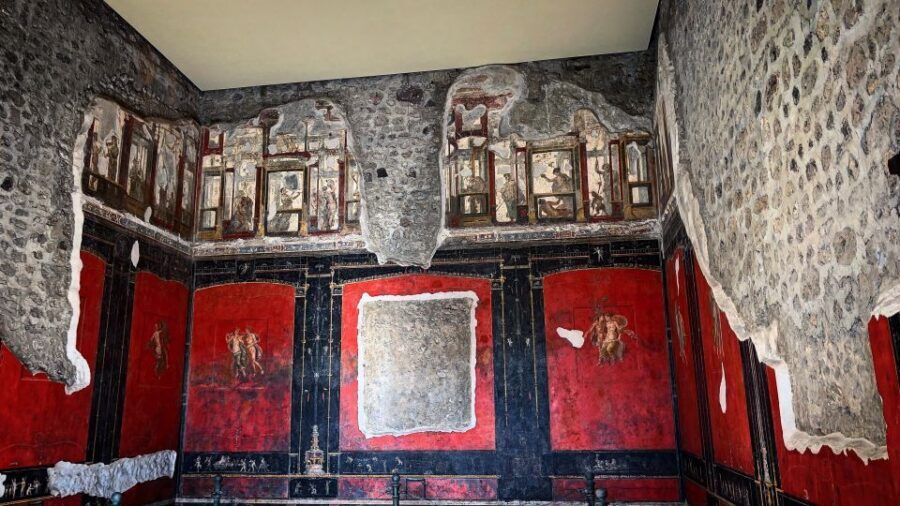
Two big wins: the audio guide helps you make sense of what you’re seeing, and the updated map keeps you from wandering in circles across the sprawling site. You’ll cover the kinds of places most people come for—frescoed homes, bath areas, theaters, and the casts related to the eruption.
One drawback to plan around: your time inside is fixed (about 3 hours), so if you move slowly—or if you want extra time in the hottest parts of the summer—you may feel a bit rushed, or have some waiting on the return bus.
In This Review
- Key things I’d watch before you go
- Pompeii from Naples: the simple way to buy time
- Meeting point in Naples: where you actually start
- The transfer ride: 45 minutes each way
- Entering Pompeii: skip-the-line + audio guide that keeps you oriented
- What to see in your 3 hours: a practical highlight route
- A pacing tip that saves your legs
- Timing reality check: leaving early vs waiting for the return bus
- What’s included (and what you’ll need on your own)
- Price and value: is $77 a smart deal?
- Who this Pompeii transfer works best for
- Getting the most from your audio guide and map
- Packing and comfort tips for a day in Pompeii
- Should you book this Pompeii skip-the-line transfer from Naples?
- FAQ
- How long is the Pompeii visit time?
- Is this tour skip-the-line for Pompeii entrance?
- Where do I meet the bus in Naples?
- What language is the driver?
- What languages are available for the audio guide?
- Is food included?
- What do I need to bring?
Key things I’d watch before you go

- Skip-the-line entry so you start walking sooner instead of burning time in a queue.
- Audio guide + updated map to help you pick highlights without getting lost.
- About 3 hours in Pompeii with a self-paced visit across a large site.
- Roundtrip transfer from Naples that reduces logistics headaches on a day trip.
- English-speaking driver plus an audio guide with multiple languages.
Pompeii from Naples: the simple way to buy time
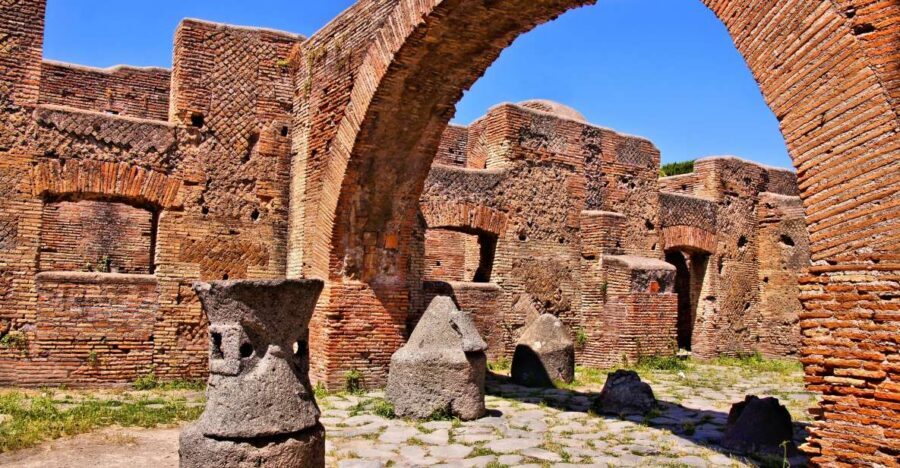
If Pompeii is on your list, this is the kind of ticket that saves you from the usual day-trip chaos. You’re paying for two practical things: fast access (skip-the-line) and a ready-made plan to get there and back from Naples. That combination matters because Pompeii is popular—around 3 million visitors a year—and the site is large, about 66 hectares. Even with good intentions, it’s easy to waste the first half of your day just getting your bearings.
The format is also smart for how people actually explore. This is not a rigid guided walk where the group moves together every few minutes. You get to roam at your pace, using the audio guide and map to decide what to focus on. That’s ideal if you enjoy stopping for photos, lingering in specific areas, or adjusting your route based on what captures your attention that day.
One more reason I like this approach: it turns Pompeii into something you can manage in a half-day rhythm. You’re not committing to a full day with transportation planning and multiple tickets. You’re committing to a clear block of time, and then Pompeii does the rest.
You can also read our reviews of more tours and experiences in Pompei Campania



Meeting point in Naples: where you actually start
You meet at Via Galileo Ferraris, 40. The spot is near Garibaldi Square and Naples Central Rail Station, so it’s convenient if you’re staying in that part of town or arriving by train.
Because meeting points can be confusing in Naples, I’d treat the provided coordinates as your best friend: 40.8505189, 14.2747942. That way you’re not relying only on someone’s verbal directions. Look for the bus/coach with the logo Around Vesuvio. The smoother your start, the calmer the whole day feels.
Also note the practical detail that can catch people: your transfer is associated with Hotel Ramada. Even if you’re not going to the hotel, it’s a useful clue that the operator has a known pickup zone in central Naples.
The transfer ride: 45 minutes each way
Your day is built around a simple rhythm. You hop on the bus/coach for about 45 minutes to Pompeii, then you repeat the same travel time after your visit.
That travel time is long enough to get comfortable, but short enough that Pompeii still feels like the main event. Still, be ready for Italian timing to feel slightly flexible once you’re at curbside and boarding. If you want an easy day, arrive at the meeting point with a little buffer.
What I’d do to make the ride feel worthwhile: use the trip time to review the audio guide plan (more on that next). If you’re the type who walks into a site and then scrambles for context, a quick setup before you arrive helps you hit the ground running once the entrance opens.
Entering Pompeii: skip-the-line + audio guide that keeps you oriented

The biggest “value” feature here is skip-the-line access. Pompeii can have long queues, and the fastest way to feel like you got ripped off at an archaeological site is to lose your energy waiting. By getting in quicker, you protect your sightseeing time and keep the day from feeling like a scramble.
Once you’re inside, you’re not on your own with nothing to guide you. You get:
- An audio guide
- An updated map
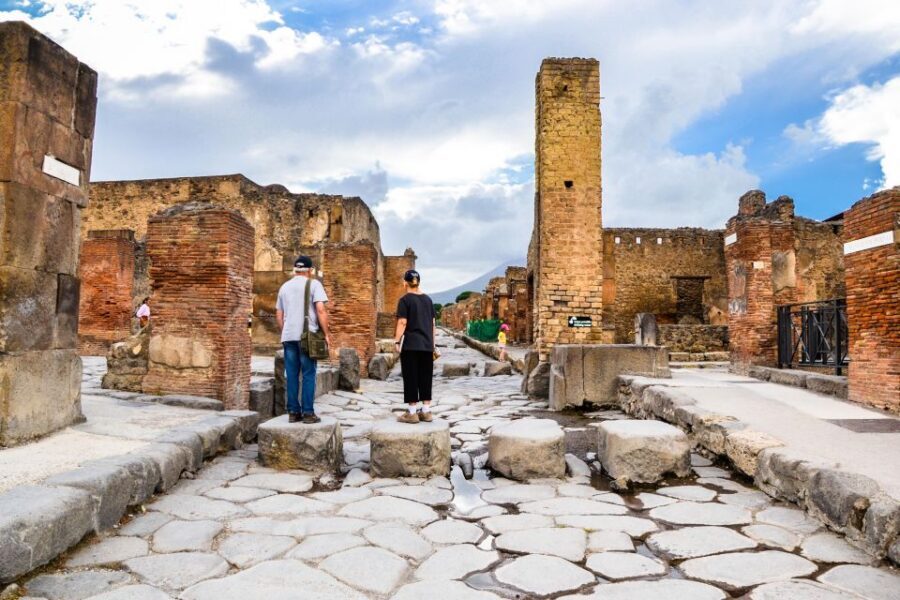
This matters because Pompeii can feel confusing without some structure. Streets crisscross, and the site changes character from one neighborhood block to the next—homes to public spaces to entertainment venues. The audio guide helps you understand what you’re looking at, while the map helps you choose a route instead of drifting.
Audio languages offered include Chinese, English, French, German, Hebrew, Italian, Portuguese, Russian, and Spanish. The driver is English-speaking. So if you don’t want the audio, you’re not completely stuck—but the audio is the tool that turns Pompeii from a pile of stone into an actual city you can follow.
What to see in your 3 hours: a practical highlight route
You have about 3 hours inside Pompeii. That’s enough for a meaningful sweep if you pick priorities and don’t try to see every corner. Here are the kinds of stops that fit well with this “self-paced but guided” setup:
Frescoed houses (domus)
These are the places where Pompeii stops being abstract. You’ll see how ordinary people lived—courtyards, rooms, and painted walls. If you’re into interiors and everyday details, aim to spend real time here rather than rushing past the first impressive facade.
Spas and temples
Pompeii wasn’t just homes. It had civic and religious spaces, plus the bathing culture you’d expect from Roman life. These areas help you understand the rhythm of the city, not just its scenic ruins.
Shops and thermopolium
A thermopolium is the ancient version of fast food. Think of it as the place where you’d grab something quickly—like a casual counter experience. It’s one of the more fun details because it makes the past feel oddly familiar.
Theaters and brothels
These are the entertainment and adult-life layers of Pompeii. If you prefer a site that feels human (not only ceremonial), these stops add personality. They also break up the walking, which helps with energy.
Casts of the victims of the eruption
This is usually where people get quiet. The casts put faces and bodies to the disaster. It’s emotionally heavy, and it’s also one of the most historically important parts of the visit.
One of the best-preserved Roman amphitheaters
This is the “big stage” moment. Amphitheaters like this help you picture crowds, noise, and daily life beyond the home and street level.
You can also read our reviews of more tours and experiences in Pompei Campania






A pacing tip that saves your legs
Use the audio guide like a menu. Don’t try to listen to every track end-to-end. Instead, focus on the sections that match where you are walking right then. That keeps your brain engaged and your body from going into autopilot.
If you’re a fast walker, you might string together more highlights. If you move slower, you’ll get more satisfaction by choosing fewer areas and spending time where you can actually absorb details.
Timing reality check: leaving early vs waiting for the return bus
Here’s the practical truth: when your return ride is scheduled, your inside time is effectively your only flexible window. The core visit is about 3 hours at Pompeii, with about 45 minutes each way by bus.
If you finish your route early, you might have some wait time before the bus returns. That matters most in summer, when heat can wear you down quickly—especially if your route includes open sun areas. I’d plan like this: decide your top 4 to 6 “must-see” stops, then let the audio guide help you connect the dots between them.
Also, if you’re the type who hates feeling rushed, don’t treat those 3 hours as a challenge. Treat them as a structured introduction. Pompeii rewards good choices, not sprinting.
What’s included (and what you’ll need on your own)
Included:
- Pompeii entrance ticket
- Audio guide
- Updated map
- Roundtrip transfer from Naples (Hotel Ramada)
Not included:
- Food and drinks
That means you’ll want to think ahead about hydration and snacks, especially because you’re spending time walking around a major archaeological site. Bring a bottle you can refill if you find that option, and pack simple snacks you can eat quickly so you don’t waste time during your “site block.”
One more small but important detail: you’ll need to bring a passport or ID card. A copy is accepted.
Price and value: is $77 a smart deal?

At about $77 per person for a 6-hour day, you’re paying for a lot of convenience: entrance without queue time, the audio guide, and a roundtrip transfer from central Naples. For many people, that’s the real value. The cost isn’t just “a ticket”—it’s time saved and stress reduced.
Here’s how to judge whether it’s worth it for you:
- If you’d otherwise spend time hunting a transport option or dealing with ticket chaos, this price looks better fast.
- If you already know exactly how you’ll get there and you’re comfortable navigating on your own, you might compare against DIY costs.
- If you want a structured day without a guide herding you, this hits that sweet spot.
Given the scale of Pompeii and the popularity (3 million visitors a year), skip-the-line can be the difference between a satisfying visit and a slightly bitter one.
Who this Pompeii transfer works best for

This setup is best for:
- First-timers who want to see key highlights without getting lost
- People who prefer self-guided wandering with support from an audio guide
- Visitors based in central Naples who don’t want to coordinate transport
- Anyone who likes comfort and a clear meeting plan more than a complicated itinerary
It’s less ideal if:
- You want a long, detailed deep-detailed guided experience
- You expect to cover the entire site in one go
- You hate any hint of waiting after your sightseeing time ends
In plain terms, think of it as the “smart entry ticket” to Pompeii—not as a marathon tour.
Getting the most from your audio guide and map
The audio guide is doing more work than you might expect. Pompeii is visually impressive, but without context it can blur together: what you’re seeing might look similar from one corner to the next unless you know what you’re looking at.
Use this strategy:
- Pick your first stop using your instincts, then let the audio guide explain what makes it important.
- When you move to a new area, use the map to confirm you’re going where you think you’re going.
- If a stop feels repetitive, skip it. Pompeii is big enough that skipping one thing won’t ruin your day.
Also, don’t underestimate how much energy walking across ruins can take out of you. Keep your breaks short and functional—water, shade if available, then back to the route.
Packing and comfort tips for a day in Pompeii
Even without knowing your exact weather, a few basics help:
- Wear shoes with solid grip (ruins mean uneven ground)
- Bring sun protection and water, since you’ll be outdoors for stretches
- Bring your ID/passport
- Have a simple plan for how you’ll handle breaks, so you don’t lose your place in your route
If you’re visiting during hotter months, plan to slow down. Pompeii is not a place where you win by moving fast. You win by moving smart.
Should you book this Pompeii skip-the-line transfer from Naples?
Book it if you want a straightforward Pompeii day: skip-the-line entry, an audio guide that helps you understand what you’re seeing, and a roundtrip transfer from central Naples that keeps the logistics off your plate.
Skip it (or consider a different format) if you’re set on spending much longer inside Pompeii, or you hate the idea that your time is limited and your return bus schedule will matter.
My take: for $77, this is a practical way to get the core Pompeii highlights without turning your day into transportation math. If you treat the 3 hours as a focused route—not an attempt to see everything—you’ll come away feeling like Pompeii was worth the effort.
FAQ
How long is the Pompeii visit time?
You’ll have about 3 hours to visit Pompeii, with around 45 minutes of coach time each way.
Is this tour skip-the-line for Pompeii entrance?
Yes, it includes a skip-the-line Pompeii entrance ticket.
Where do I meet the bus in Naples?
The meeting point is Via Galileo Ferraris, 40. You can also use the coordinates 40.8505189, 14.2747942 for accuracy.
What language is the driver?
The driver is listed as English-speaking.
What languages are available for the audio guide?
The audio guide is available in Chinese, English, French, German, Hebrew, Italian, Portuguese, Russian, and Spanish.
Is food included?
No. Food and drinks aren’t included, so you’ll want to plan for your own snacks and water.
What do I need to bring?
Bring a passport or an ID card. A copy is accepted.