REVIEW · NAPLES
Herculaneum: Skip-the-Line Guided Tour with Archaeologist
Book on GetYourGuide →Operated by Askos Tours · Bookable on GetYourGuide
Herculaneum stops you in your tracks. In just two hours with an archaeologist-led group tour from Naples, you get into one of Italy’s best-preserved Roman cities, with skip-the-line entry and headsets to keep you in the story. The big draw is that Herculaneum feels vivid and close-up, from everyday homes to the eruption’s sudden final chapter.
I love how fast you start seeing the site thanks to the skip-the-line access, so you’re not wasting your time in a queue. I also like that the guide is an actual archaeologist (often people like Luciano Leone or Diego), and they explain the ruins in plain language, sometimes with photos and visual props to make the events before and after Vesuvius easier to grasp.
The main drawback is physical: the ruins are vast and very exposed, so you’ll want solid shoes and be ready for sun or rain even if the schedule runs normally.
In This Review
- Key highlights at a glance
- Skip-the-Line Entry at Herculaneum Ruins: less waiting, more seeing
- The archaeologist guide experience: what makes it different
- Meeting point and what to bring for an outdoor site
- Casa dei Cervi: stepping into a preserved neighborhood vibe
- Casa di Nettuno ed Anfitrite: where art and symbolism do the talking
- House of Skeletons: the human scale of the disaster
- Casa dell’Albergo and Casa del Salone Nero: everyday spaces with a story
- Sacellum of the Augustales: civic life shown through ritual space
- Thermal baths, gymnasium, and the Forum: public life and movement
- The waterfront story: more than 300 people at sea
- What the 2-hour pace really means for your day
- Price and value: what $53 buys you
- Who this tour fits best (and who should think twice)
- Should you book this Herculaneum skip-the-line archaeologist tour?
- FAQ
- How long is the Herculaneum skip-the-line guided tour with an archaeologist?
- Where do I meet for the tour?
- Is admission to Herculaneum included in the price?
- What languages are available for the live tour guide?
- What should I bring or wear?
- Is this tour suitable for wheelchair users or people with mobility impairments?
Key highlights at a glance
- Skip-the-line entry gets you into Herculaneum faster
- Archaeologist guides bring the buildings and the Vesuvius story to life (Luciano Leone, Yolanta, Diego, Teresa, and more)
- Headsets included so you can follow along even when you spread out a bit
- Roman daily life in preserved spaces: thermal baths, gymnasium, and the Forum
- Human drama at the waterfront where the remains of more than 300 people were found near the sea
- Art and everyday objects survive in ceramics, paintings, and mosaics, plus carbonized wood in some areas
Skip-the-Line Entry at Herculaneum Ruins: less waiting, more seeing
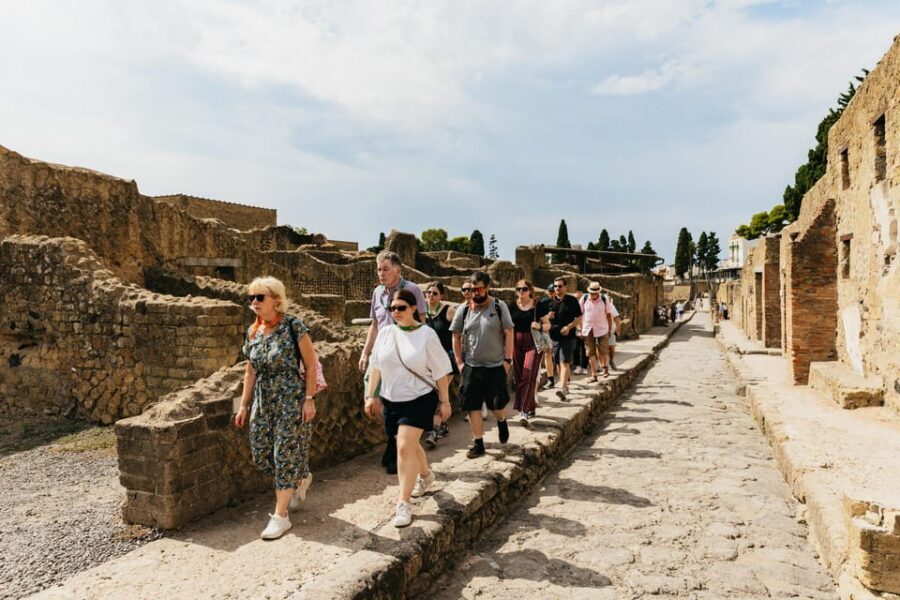
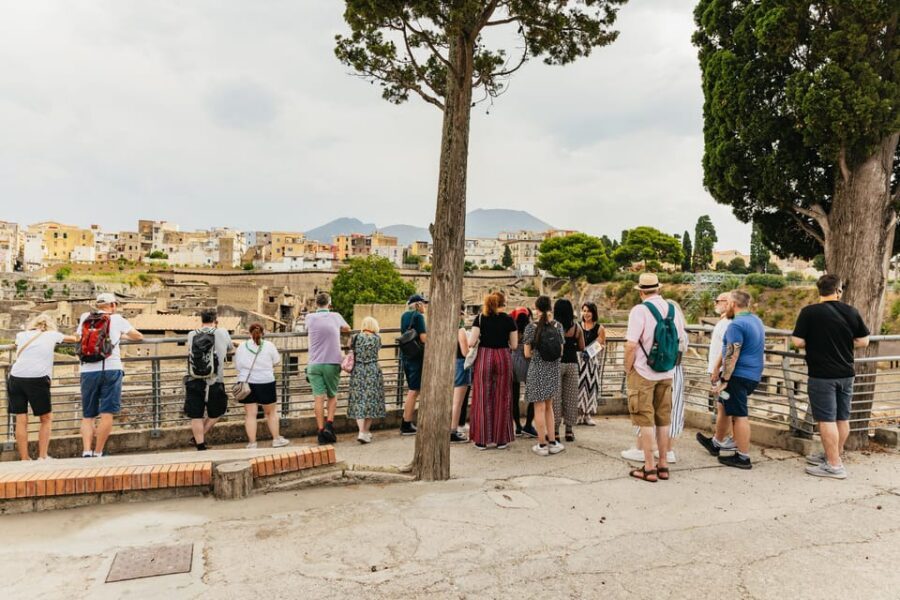
The tour’s most practical win is that you bypass the long entrance line. That matters at Herculaneum because two things can steal your time: crowds and the fact that you’re walking through a site that’s spread out and outdoors.
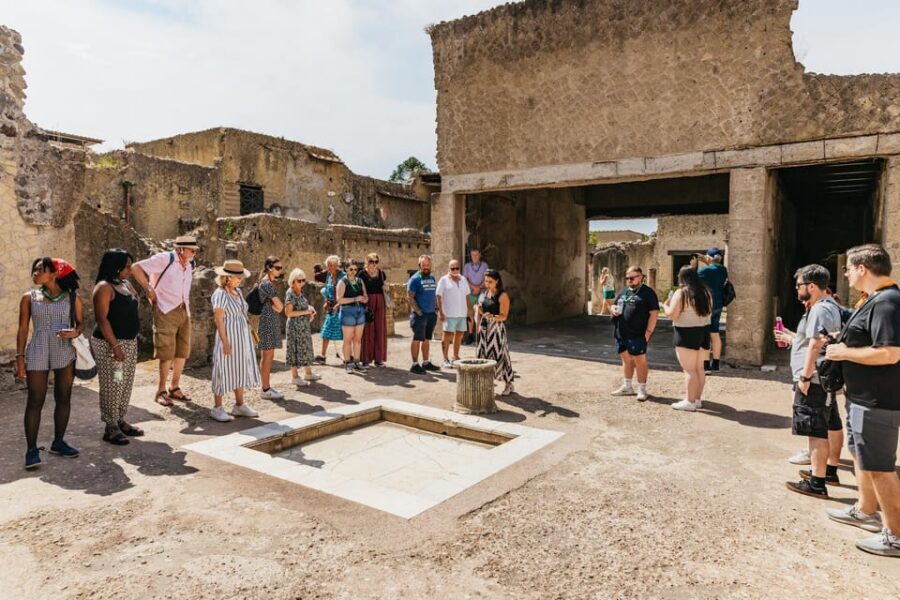
You’ll meet at the ticket office of the Herculaneum ruins. Your guide holds an Askos Tours sign, and from there you’re set up with headsets, which is a big help when you’re in a group moving between buildings and viewing points. Even if you’re a slow walker, you’re still likely to cover the core highlights in the allotted time.
You can also read our reviews of more guided tours in Naples

The archaeologist guide experience: what makes it different
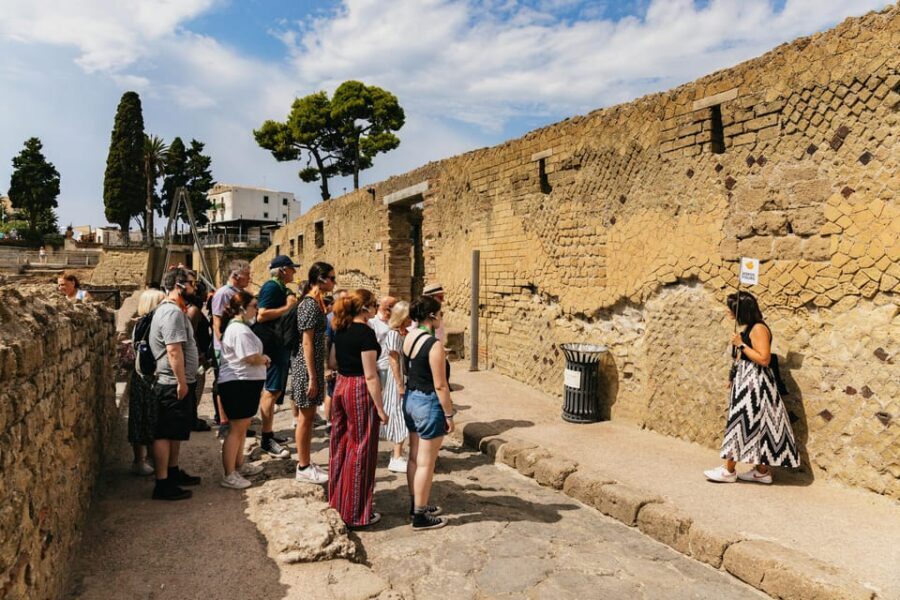
This is not a generic “stand and read” tour. The biggest praise here is the guide quality, and the pattern is pretty clear from the names and descriptions: archaeologists who are funny, animated, and confident explaining what you’re looking at.
Guides like Luciano Leone, Diego, Teresa, Yolanta, Roberta, Gerardo, Angelo, and others are repeatedly described as enthusiastic and easy to follow. Many also use visual aids—things like books, binder-style materials, and photo overlays—to show what Herculaneum looked like before the eruption and what it looks like now. That gives you a mental before-and-after, instead of just seeing ruins as a pile of stones.
One more detail that shows up in the experience: groups can be around 15–20 people, and headsets can cut out if you drift too far back. If you want the best audio, keep an eye on where you’re standing and don’t let yourself get swallowed by the back row.
Meeting point and what to bring for an outdoor site
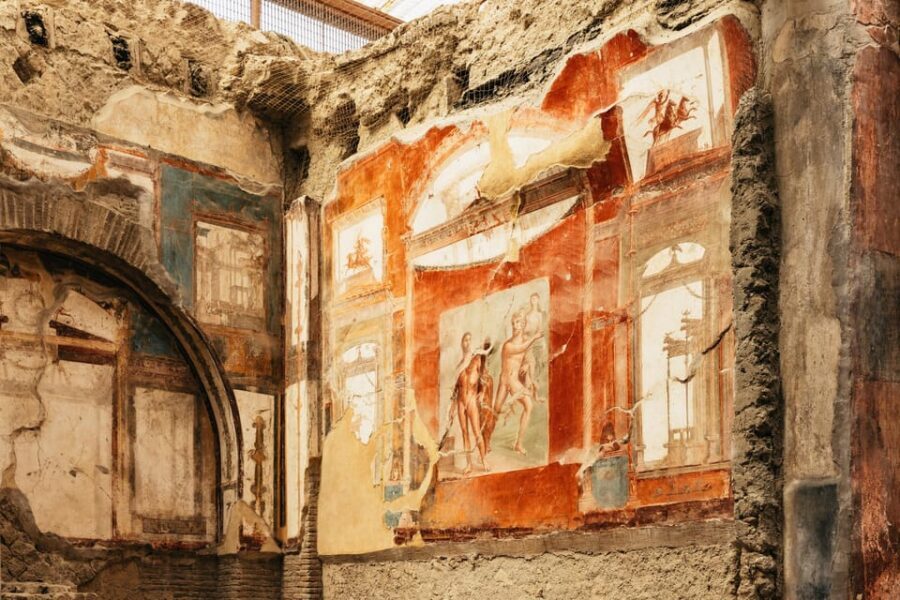
You meet at the Herculaneum ruins ticket office (Askos Tours sign), and the tour starts from there as you enter the archaeological area near Via dei Papiri Ercolanesi. From there, it’s mostly about moving: short walks between key stops, plus time spent looking closely.
Bring:
- A valid passport or ID card
- Closed-toe comfortable shoes
- Sunscreen (and a hat if you have one)
- A raincoat if the weather turns
Also note two practical rules that affect your comfort: luggage or large bags are not allowed, and the tour isn’t suitable for wheelchair users or people with mobility impairments. If you have any limits with uneven ground or walking time, this is worth factoring in before you book.
Casa dei Cervi: stepping into a preserved neighborhood vibe

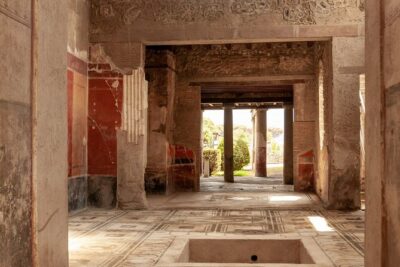
One of the included home stops is Casa dei Cervi. As you move through, this is where the “well-preserved Roman city” idea turns from marketing into something you can feel. Houses like this show how space worked—where people lived, where daily routines happened, and how domestic design carried social meaning.
The tour format matters here. Your archaeologist guide points out what to notice, instead of leaving you to guess. You’ll typically get a clear explanation of what you’re seeing and how it relates to life in the town before the eruption.
The downside, if you’re the kind of visitor who likes to pause for photos for a long time, is that the itinerary is packed. You’ll see this area well, but it’s still a fast-moving route within two hours.
Casa di Nettuno ed Anfitrite: where art and symbolism do the talking
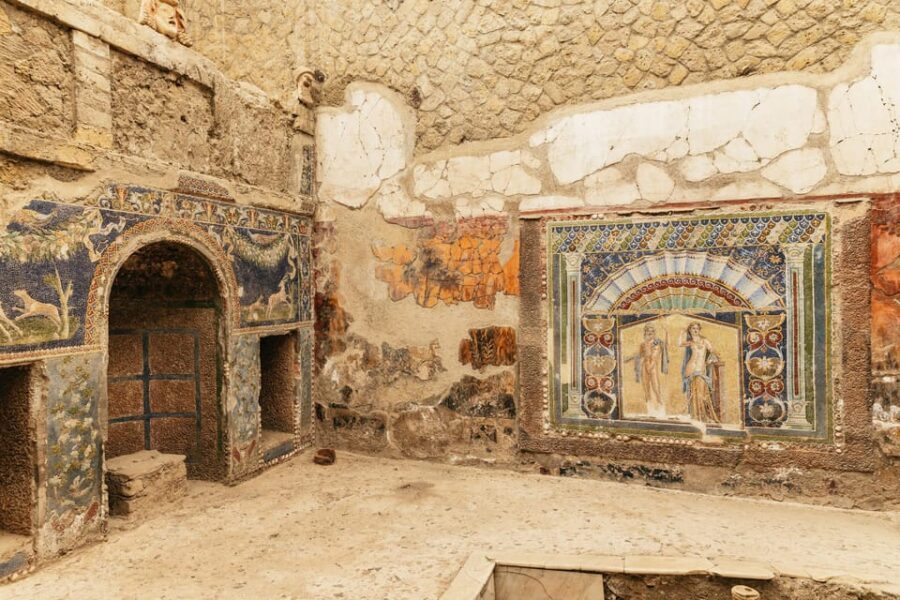
Next up is Casa di Nettuno ed Anfitrite. This is one of the stops that shines if you care about visual details—because the tour specifically highlights well-preserved artifacts like paintings and mosaics, plus ceramics.
Even when you’re not an art expert, the guide’s job is to connect the visuals to the bigger story of the city: who lived here, what they valued, and how the eruption ended things abruptly. The best part of this tour style is that you can look at a surface and understand why it’s there, rather than just admiring it.
If you’re comparing Herculaneum to Pompeii in your head (many guides do exactly this), this is where the contrast becomes easier. You’ll spend time in buildings that feel more intact and close-up than what many people expect from an outdoor ruin.
You can also read our reviews of more tours and experiences in Naples
House of Skeletons: the human scale of the disaster
The House of Skeletons stop shifts the tone. Instead of focusing only on daily life and decoration, you get pulled back to the eruption’s immediate impact. The tour frames the tragedy as something swift and total for the town.
This is also where the guide’s storytelling style matters most. When the archaeologist explains the timeline and the evidence you’re standing in front of, it turns an unsettling name into a clearer moment in the story. It’s not just emotional; it’s interpretive.
Keep your attention here, even if the rest of the tour feels like “Roman life, Roman life, Roman life.” This stop is the reminder that the city didn’t fall slowly—it stopped.
Casa dell’Albergo and Casa del Salone Nero: everyday spaces with a story
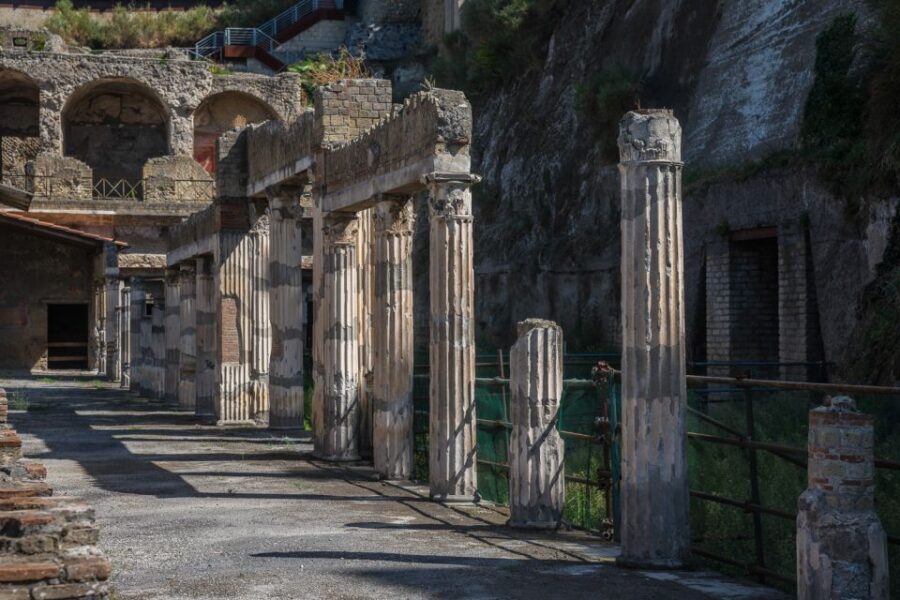
Two more residence stops follow: Casa dell’Albergo, Herculaneum and Casa del Salone Nero. These parts of the route are valuable because they broaden what you understand about the town beyond its headline sites.
You’ll get to compare different domestic spaces and notice how Roman architecture and decoration worked from house to house. The guide helps you read those differences without turning the tour into a technical lecture.
If you like variety—rather than just one museum-style room after another—this section is a good mix. The only practical caution is time: the tour is designed to cover a lot in two hours, so you’ll see these homes well but you won’t have hours to linger in each one.
Sacellum of the Augustales: civic life shown through ritual space
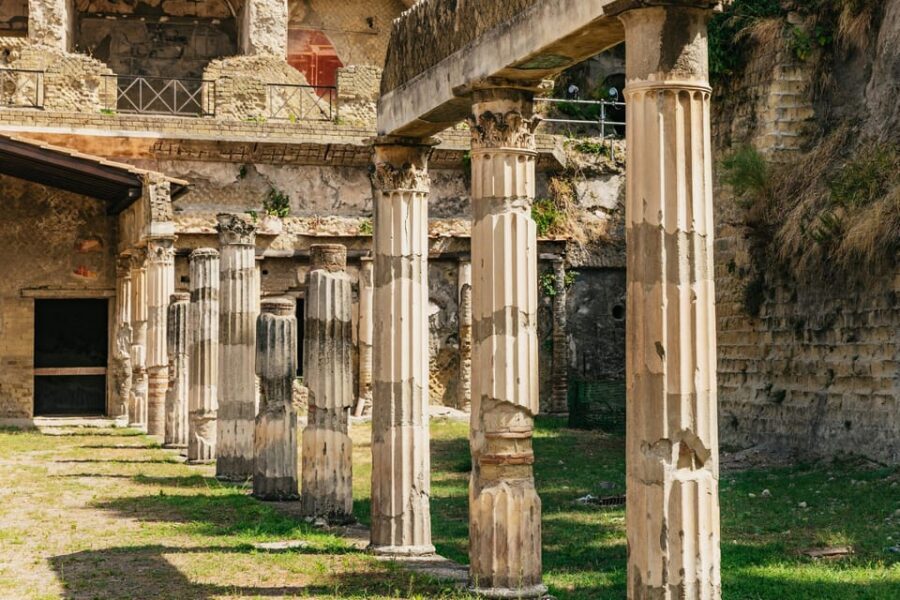
The tour includes the Sacellum of the Augustales (also described as the Temple of the Augustales in some parts of the tour overview). This is where religious and civic life start to matter more than “home décor.”
Roman sites often communicate status through what people built for public or semi-public life. Here, the guide connects the space to the broader context of Herculaneum’s social structure—its nobility and merchants—and how public institutions shaped daily routines.
You don’t need to know Latin history to enjoy this stop. The archaeologist guide’s job is to translate the meaning into what you can see right in front of you.
Thermal baths, gymnasium, and the Forum: public life and movement
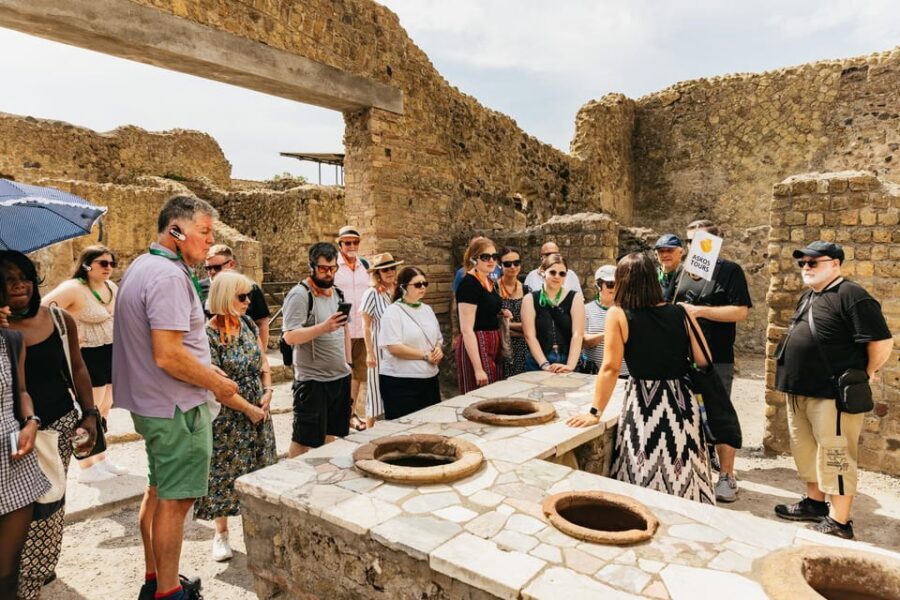
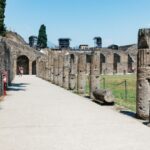
A big chunk of what makes Herculaneum special is that you’re not only looking at private houses. You also see spaces tied to how people gathered and stayed healthy: thermal baths and the gymnasium.
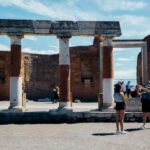
The tour also includes the Forum, which helps you understand the town as a working civic center, not just a collection of villas. This is the section that tends to work for everyone, because it feels less like “living room tour” and more like “how a city functioned.”
One standout detail from the experience: the guide may take you into a tunnel connected to the gymnasium’s center, an area tied to the swimming-pool concept. If your guide mentions it and you’re able to follow along, it’s a memorable way to experience the space beyond the exposed ruins.
The waterfront story: more than 300 people at sea
One of the most powerful parts of the tour is the waterfront area. You’ll see evidence tied to the remains of more than 300 people who died while trying to escape, taking to the ocean.
This part isn’t about architecture; it’s about timing and human behavior. Your guide frames it as an urgent end to the lives of wealthy merchants, nobility, and everyone in between. You walk through and hear how the eruption changed everything almost instantly.
If you’re moved by history that includes real people—not just dates—this is the moment you’ll remember later. It gives the whole tour emotional weight without ignoring the evidence.
What the 2-hour pace really means for your day
Two hours sounds short until you’re inside Herculaneum, where walking time adds up fast. The route is designed so you cover key areas without forcing you into a marathon.
A practical tip: the site is outdoors and exposed, and the tour keeps moving rain or shine. Plan to treat the ruins like a timed walk with stops, not like a slow stroll. If you want quiet time after the guided portion, you may need to choose your tour start time wisely—some time slots run close to closing.
Also, if you’re traveling with kids, two hours can be a sweet spot. Some visitors found an 11-year-old can get restless, especially if they’ve already seen Pompeii. If your child loves ruins and questions, you’ll likely be fine; if they tune out during explanations, consider a shorter attention strategy.
Price and value: what $53 buys you
The price is $53 per person for a guided archaeologist tour with skip-the-line access, admission, and headsets. Site entry costs €16 for adults (and €2 for EU citizens aged 18–25), and that admission is included in what you pay.
So you’re not just paying for the guide’s time; you’re paying for a packaged experience: entry + interpretation + audio support. That’s good value when you want more than “I walked through ruins.” It’s also good value when you don’t want to manage the site on your own, especially if you’re coming from Naples and don’t know where the best points are.
Food and drinks aren’t included, and transportation isn’t included either. That means your real cost for the day depends on how you get there and what you eat before or after. But as far as the on-site experience goes, this price is doing the heavy lifting.
Who this tour fits best (and who should think twice)
This tour is a strong match if you want:
- Skip-the-line entry so you start seeing the site quickly
- An archaeologist guide who explains what you’re seeing in clear, story-driven language
- Highlights that go beyond houses, including thermal baths, gymnasium, the Forum, and the waterfront tragedy
- A structured route that helps you understand Herculaneum’s differences compared with Pompeii
It’s less suitable if you:
- Use a wheelchair or have mobility impairments, since it’s not suitable for those needs
- Struggle with long outdoor walking on uneven surfaces
- Can’t comfortably handle sun, wind, or rain (you’ll be outside and the tour runs in all weather)
Should you book this Herculaneum skip-the-line archaeologist tour?
I’d book it if you want the fastest path to the most meaningful parts of Herculaneum without figuring it out alone. The combination of archaeologist-led guidance, skip-the-line entry, and headsets is what turns the ruins into a story you can actually follow.
If your top priority is spending the whole day at your own pace with lots of quiet time, you might prefer less structure. But for most visitors—especially those doing Naples and a major Vesuvius-era site—this is a smart way to get real understanding in two hours, plus a strong reason to come back later and look again on your own.
FAQ
How long is the Herculaneum skip-the-line guided tour with an archaeologist?
It lasts 2 hours.
Where do I meet for the tour?
Meet at the ticket office of the Herculaneum Ruins. Your guide will be holding an Askos Tours sign.
Is admission to Herculaneum included in the price?
Yes. The tour includes admission fees to Herculaneum, plus the archaeologist guide and headsets.
What languages are available for the live tour guide?
The live tour guide is offered in English, Italian, German, Spanish, and French.
What should I bring or wear?
Bring a passport or ID card, wear comfortable closed-toe shoes, and consider sunscreen. A raincoat is recommended since the tour runs rain or shine.
Is this tour suitable for wheelchair users or people with mobility impairments?
No. The tour is not suitable for people with mobility impairments and it’s not suitable for wheelchair users.