REVIEW · NAPLES
Pompeii: Skip-the-Line Entry Ticket with Audio Guide or Tour
Book on GetYourGuide →Operated by Vox City International · Bookable on GetYourGuide
Pompeii hits fast, even before the first street. This skip-the-line entry ticket helps you get into the UNESCO ruins quickly through Vox City at Piazza Esedra, so you waste less time in ticket lines and more time walking.
One reason I like this setup is that it turns a busy arrival day into a straightforward start.
The other big win is the audio guide with a digital map, so you can keep moving at a pace that fits your energy. And if you want the added human touch, the optional art historian tour runs in English, Spanish, or Italian.
That combination works well when you want structure at the beginning but freedom after.
The one practical drawback to plan around: you need your own charged smartphone and headphones, and the audio playback/GPS can be a little hit-or-miss depending on your setup.
If your phone battery is low or your download doesn’t go smoothly, you’ll feel it.
In This Review
- Key things I’d focus on before you go
- Pompeii in 2 hours with fast-track entry: what you gain
- Where you exchange your voucher: Piazza Esedra setup
- Audio guide + digital map: how to use it without frustration
- A realistic walk through Pompeii: what you’ll see and why it matters
- The Mount Vesuvius view: where the ruins start making sense
- Optional art historian tour: when it’s worth upgrading
- What this ticket does not include: the suburban villas
- Price and value: is $37 a good deal here?
- Logistics tips that actually matter at Pompeii
- Who should book this Pompeii skip-the-line ticket?
- Should you book this tour?
- FAQ
- Where do I exchange my voucher for entry tickets?
- Do I need to bring headphones?
- Do I need a smartphone?
- What languages are available?
- Is this ticket valid for the suburban villas?
- How long is the experience?
Key things I’d focus on before you go
- Fast-track entry at Vox City (Piazza Esedra): you exchange your voucher at the info point and head straight toward the ruins.
- Audio guide that starts based on location: the app is designed to trigger points of interest where you stand.
- You’ll cover the most famous Pompeii sights in 2 hours: Forum, baths, theaters, temples, villas—enough to understand the city.
- Major “wow” moments are built in: Mount Vesuvius views, plaster casts, and public spaces that feel surprisingly real.
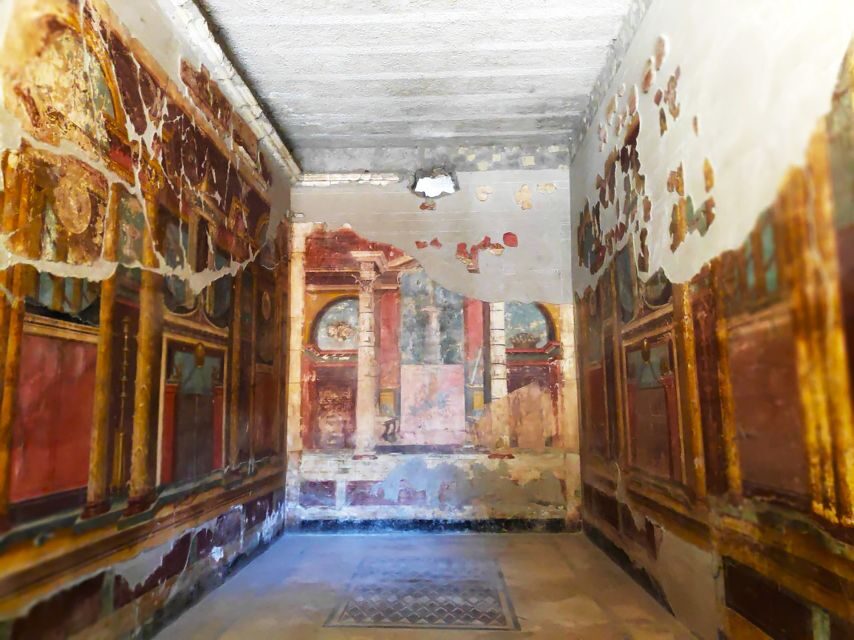
- Suburban villas are not included: Villa of the Mysteries, Villa of Diomedes, and Villa Regina stay off the list for this ticket.
Pompeii in 2 hours with fast-track entry: what you gain

Pompeii is one of those places where the scale surprises you. The ticket claims a 2-hour visit, and that’s honestly a good match for a first trip if you’re walking with a plan. You’ll get the core neighborhoods and monuments—enough to understand Roman daily life and why the eruption of 79 C.E. still grips people.
The skip-the-line part matters more than it sounds. Pompeii’s entrance area can get crowded, and the faster you pass that bottleneck, the more useful your time becomes. With a short visit window, “time saved at the start” turns into “more time where it counts,” which is inside the ruins.
I also like that this ticket is designed for flexibility. You’re not trapped on a rigid itinerary the entire time. Even with the optional guided portion, the overall structure supports a self-directed stroll after you get your bearings.
You can also read our reviews of more tours and experiences in Naples



Where you exchange your voucher: Piazza Esedra setup
Your meeting point is the Vox City info point in Piazza Esedra, in front of Hotel Vittoria. That’s where you exchange your voucher for the official entry tickets.
If you chose the guided option, you also meet your tour guide at that same Vox City point. Guided tours depart at the booked time slot, so arriving about 5 minutes early keeps things smooth.
Here’s the practical trick I’d use: treat the exchange like your “pre-visit warm-up.” Get the ticket exchange done first, confirm your audio guide is ready, and then head into the archaeological area with a calm start. You’ll enjoy the first street more if you’re not still sorting apps and headphones at the gate.
Audio guide + digital map: how to use it without frustration

This experience includes an audio guide with a digital map and multilingual commentary (English, French, Spanish, German, and Italian). You download the audio using the QR code on your voucher before you arrive.
Two things make this style of audio guide useful:
- Short, location-based info: the app is built to trigger points of interest as you reach them.
- You control the pace: you can linger at an atrium or zip ahead to a major landmark.
Now for the realistic part: some people report that the autoplay/GPS function doesn’t always start when it should, or the navigation can feel manual. That’s why it’s worth preparing like this:
- Bring headphones (not included), and make sure they work before you hit the entrance.
- Keep your smartphone charged. Pompeii is big, and the app can drain battery.
- Have a rough idea of what you want to see first (Forum, baths, theater, and the big temples are popular for a reason).
If the location-based triggering is glitchy, you’ll still have something valuable: the audio content itself. You may just need to use the map a bit more actively to find the right section. When it works, it feels effortless. When it doesn’t, you’ll still benefit—but you’ll work a little harder for your bearings.
A realistic walk through Pompeii: what you’ll see and why it matters
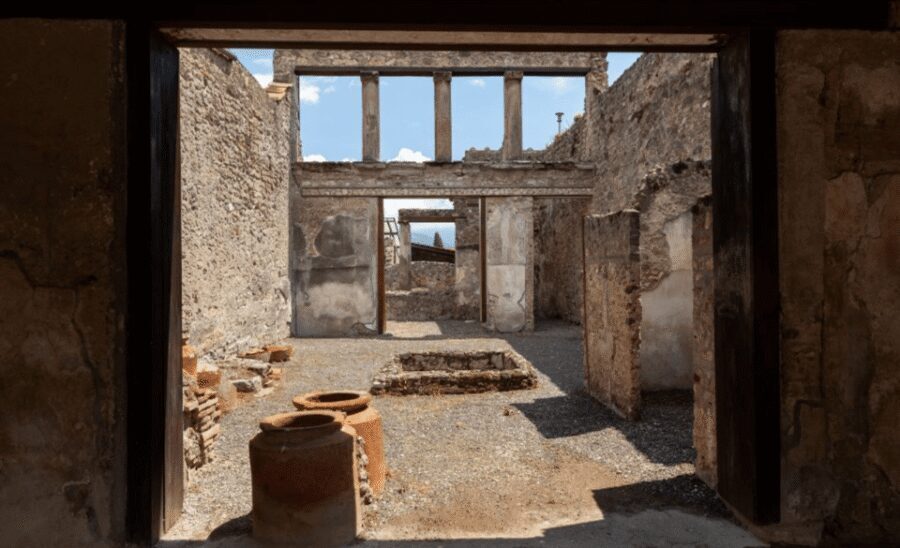
Pompeii covers a huge footprint (you’ll see it described around 44 square hectares, and sometimes rounded up to about 50 hectares). So the smart move is to focus on the “story points” that explain the city.
With a 2-hour window, you’ll mostly follow the highlights:
- The Forum area: the civic heart where public life happened. You’ll get a feel for what Romans did together, not just what elites owned behind walls.
- Temples dedicated to Venus, Apollo, and Jupiter: these aren’t just pretty ruins. They help you understand how religion sat inside everyday routines.
- The theater: a reminder that entertainment and public gatherings were central to the city’s rhythm.
- Marketplaces: these give Pompeii its commercial pulse. It’s easier to imagine the day-to-day when you’re near spaces that handled foot traffic and trade.
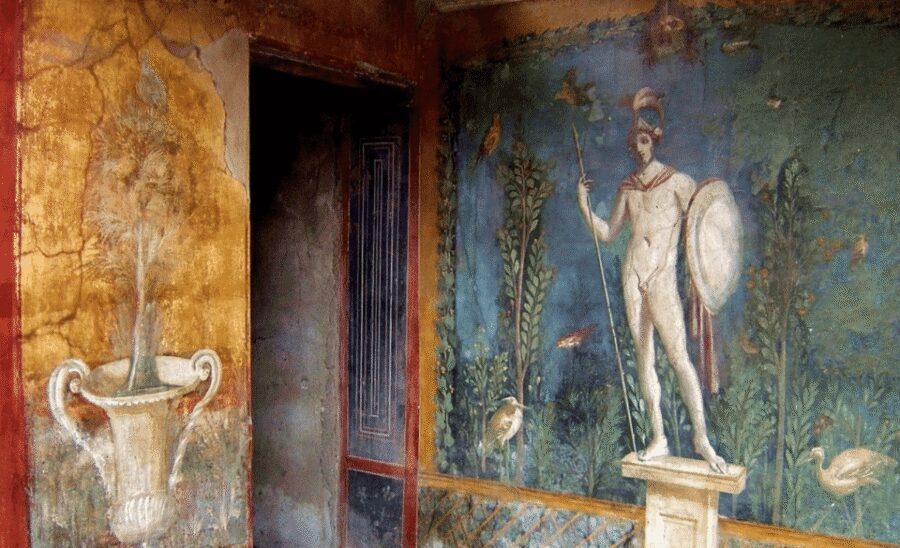
- Public baths: you can spot the intricate mosaics in the baths area, and they show that “relaxing” was also an art project.
You’ll also see domestic life snapshots:
- House of the Faun: a famous residence that helps you picture wealth, layout, and how homes were organized around courtyards.
Some of the most haunting elements show up too:
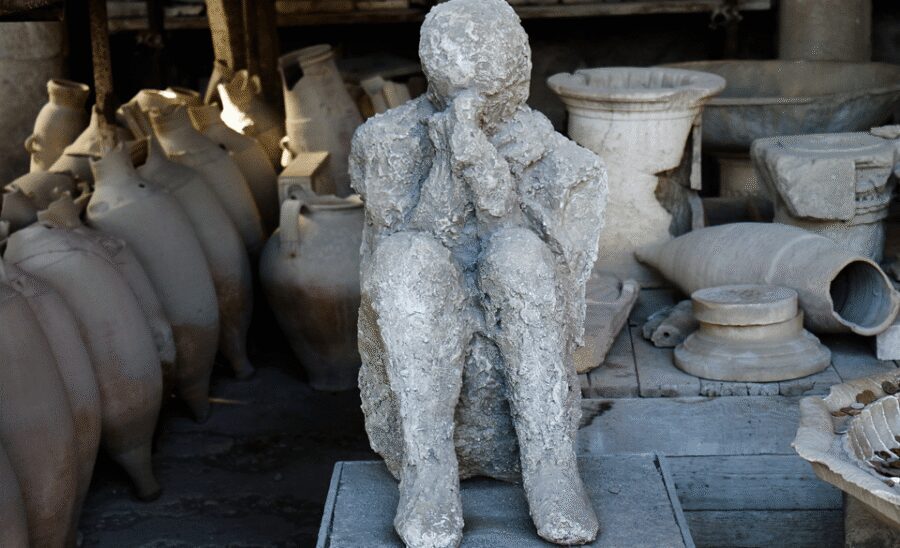
- Plaster casts of victims: these are a powerful stop because they freeze a moment of catastrophe into something you can look at closely. They’re difficult, but they explain Pompeii’s survival story in a way no textbook does.
One more set of details I’d call out because they make the ruins feel human: inscriptions and everyday labels. You can encounter the kind of witty messaging Pompeians left behind, like Salve lucru (Welcome, profit) in Sirico’s house, plus wine jars labeled Vesuvinum—a playful nod that links the volcano and wine culture.
The Mount Vesuvius view: where the ruins start making sense
If you’ve never stood in Pompeii with Vesuvius in view, you don’t yet know how the geography affects the mood. The ruins are laid out in a way that keeps reminding you where the disaster came from. You’ll pass vantage points with a backdrop of Mount Vesuvius, and that makes the eruption narrative stick.
This is also where audio guidance shines. The best moments are when you connect:
- a place (like a public square or temple),
- its function (civic/religious entertainment),
- and the timing (the eruption of 79 C.E. that devastated and preserved the city).
When you connect those dots, you stop seeing random buildings and start seeing a city that lived, traded, prayed, worked, and socialized.
You can also read our reviews of more guided tours in Naples




Optional art historian tour: when it’s worth upgrading
If you add the optional guided tour, you get a professional art historian lead (English, Spanish, or Italian). In a place this big, a live guide helps you in two big ways:
- you get context fast, so your self-walk afterward feels smarter,
- and you avoid wandering too much early.
Recent guide names that have come up include Grace, Maria, and Mario—a reminder that you may be paired with someone who knows how to explain Pompeii without drowning you in details. One thing to watch: a guided tour is still only part of your time. You’ll leave with a sense of the “main story,” but you still need to walk to see it.
Who should consider the guided option?
- First-timers who want an easier start
- People who like more interpretation than audio-only can provide
- Groups that want smoother navigation during peak crowds
What this ticket does not include: the suburban villas

This ticket does not include access to the suburban villas, including:
- Villa of the Mysteries
- Villa of Diomedes
- Villa Regina
That matters because these villas can be a draw if you’re especially interested in wealthy country life outside the main city. With your 2-hour window, you’re getting Pompeii proper—its public spaces, temples, baths, and key residences. If suburban villas are your top priority, you’ll likely need a different ticket plan.
Price and value: is $37 a good deal here?
At $37 per person for skip-the-line entry plus audio and a digital map, the value is mostly about what you get for your time.
Think of it like this:
- The official entrance is paid either way.
- The “pay extra” part is the convenience and the added interpretation (audio) plus the faster entry.
Some people have pointed out that the base entry ticket can be cheaper on official channels, and the add-ons are where this package cost comes from. That doesn’t automatically make it bad—it just means you should treat the audio guide as part of your purchase decision, not a free bonus.
So ask yourself: will you actually use the audio on your phone?
- If yes, this package can be a smart “time management” choice.
- If you already know you hate apps, or you’re worried about battery/data reliability, you might prefer a different style of guiding.
Logistics tips that actually matter at Pompeii
Pompeii doesn’t care about your schedule, but you can still work with reality.
- Bring headphones and a charged phone: headphones aren’t included, and the audio depends on your device.
- Arrive a little early if guided: guided tours depart at the time slot, and starting on time keeps the group moving.
- Expect rain or heat: the experience can be affected by weather, and a downpour can shorten a 2-hour plan fast.
- Dress and pace like you’re walking: Pompeii is uneven, and the ruins cover a lot of ground. Comfortable shoes help more than an extra gadget.
- Have a short shortlist: with 2 hours, it’s better to nail the Forum, baths, theater, temples, and a major residence than to try to see everything and end up stressed.
One more sanity check: Pompeii is enormous, and some major finds are presented elsewhere. If you start feeling like you want artifacts and objects rather than just ruins, planning a stop at the Archaeological Museum of Naples can complement your Pompeii visit—especially when you want to see what was moved indoors.
Who should book this Pompeii skip-the-line ticket?
Book it if:
- You’re visiting Pompeii as a major highlight and want maximum time inside.
- You like the idea of audio guidance but still want to move at your own speed.
- You want the option of a guided start with an art historian in English, Spanish, or Italian.
Consider another option if:
- You don’t want to rely on a smartphone for GPS or audio.
- Your group needs something more fixed and guided than an audio-based experience.
- Suburban villas are the main reason you’re going.
Should you book this tour?
Yes, if you’re smart about tech and you want a fast, low-stress start. The best part of this package is simple: skip the ticket line, then use the audio guide + digital map to understand the city as you walk.
If you’re worried about app performance, don’t ignore that concern. Bring working headphones, keep your phone charged, and download the audio before you arrive using the QR code. With that done, you get a strong first pass through Pompeii without wasting your limited daylight on queues or guesswork.
FAQ
Where do I exchange my voucher for entry tickets?
You exchange your voucher at the Vox City info point in Piazza Esedra, in front of Hotel Vittoria.
Do I need to bring headphones?
Yes. Headphones are not included, and the audio guide is designed to be used with your own headphones.
Do I need a smartphone?
Yes. You’ll need a charged smartphone to download and use the audio guide.
What languages are available?
The guided tour option is available in English, Spanish, or Italian. The audio guide includes multilingual commentary in English, French, Spanish, German, and Italian.
Is this ticket valid for the suburban villas?
No. This ticket does not include access to the suburban villas (Villa of the Mysteries, Villa of Diomedes, Villa Regina).
How long is the experience?
The duration is listed as 2 hours.