REVIEW · NAPLES
Herculaneum: Skip-the-Line Entry Ticket with Audio Guide
Book on GetYourGuide →Operated by Tempio Travel Sorrento · Bookable on GetYourGuide
Herculaneum feels like time slowed down. This skip-the-line entry ticket gets you into the Archaeological Park at a Roman pace, then the included audio guide and map help you make sense of what you’re seeing—villas, market lanes, fountains, temples, and the tragic remains from Vesuvius’ 79 AD eruption.
I especially like two things: the audio guide (multiple languages, easy to use, and specific to points of interest) and the well-preserved ruins that show how people actually lived. The park is smaller than Pompeii, yet it still packs in striking walls, doors, and details you don’t just glance past.
One thing to watch for: the audio guide cues and site numbering can be a bit inconsistent, so you’ll want to orient yourself with the map and don’t assume every phone/app number matches exactly where you’re standing.
In This Review
- Key points at a glance
- First Stops: Ticket Office, Audio Device, and Getting Oriented Fast
- Herculaneum vs. Pompeii: Why This Ruin Feels More Intimate
- Villas Buried Under Ash: The “How Did Anything Survive?” Moments
- Market Streets, Public Fountains, and the Town Plan That Helps You Navigate
- Frescoes, Wood, and the Details That Make Romans Feel Close
- Temples, Gods, and the Social Map Inside the Homes
- The Poignant Parts: Where Rescue Hopes Turned Into Ruin
- Small Museum and the Boat/Antiquarian Stop Near the Exit
- How Long You Should Plan: 3 to 4 Hours Works Better Than You Think
- Price and Value: Is $15 for Audio + Skip-the-Line a Good Deal?
- Should You Book This Audio Ticket for Herculaneum?
- FAQ
- What’s included with the Herculaneum skip-the-line entry ticket?
- Where do I show my ticket?
- Do I get a guide with this ticket?
- What languages are available for the audio guide?
- How long does the experience last?
- What should I bring to the site?
- Is there free cancellation?
- Can I reserve and pay later?
- Is Herculaneum sometimes free on certain days?
Key points at a glance
- Skip-the-line entry helps you get moving fast once you arrive at the office
- Audio guide in 5 languages (English, French, German, Italian, Spanish) keeps you flexible
- Map + self-guided route makes it easier to pick what you want to see
- Frescoes and wooden door details help you picture daily life, not just ruins
- Daily-life contrasts show rich homes versus where slaves were housed
- Extra exhibits near the end (including museum artifacts and the boat/antiquarian area) add closure
First Stops: Ticket Office, Audio Device, and Getting Oriented Fast
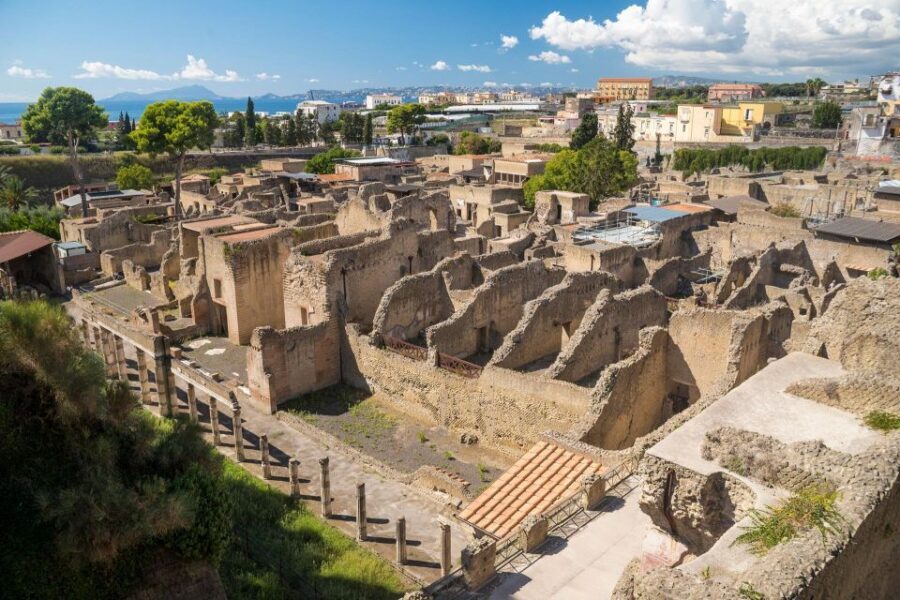
Your visit starts at the Herculaneum ticket office. Show your ticket, and then shift focus to grabbing the audio guide and the map that comes with it. This is one of those sites where getting your bearings early pays off. When you know what you’re looking for, the whole park clicks.
The audio guide is designed for a self-guided walk, so you’re not tied to a set tour group. Several people find the device/app intuitive once it’s working, and you can stop, replay, or pause without feeling like you’re holding anyone up.
A quick practical note from how the experience runs: you may need to show an ID to collect the audio device, and some parts of the process can feel slightly scattered on arrival. On a low-crowd morning it’s usually smooth; on busier hours, give yourself a few extra minutes to sort out where you should stand and where the audio collection happens.
You can also read our reviews of more tours and experiences in Naples


Herculaneum vs. Pompeii: Why This Ruin Feels More Intimate
I like Herculaneum as a Pompeii alternative because it’s compact and intensely preserved. The town is buried under volcanic ash from Vesuvius’ eruption in 79 AD, and that kind of “natural freeze-frame” helps explain why details survive.
As you walk, you get a strong sense of the everyday Roman world. Instead of huge sweeping streets, you’re exploring homes and civic corners where the scale is human. That makes the visit easier to emotionally absorb—especially when the site shifts from “wow, how intact this is” to “this is what happened to real people.”
If you’re doing a Naples-area day trip, this ruins set is also a good option when you want something historic but not exhausting. You can see a lot without needing a full marathon.
Villas Buried Under Ash: The “How Did Anything Survive?” Moments
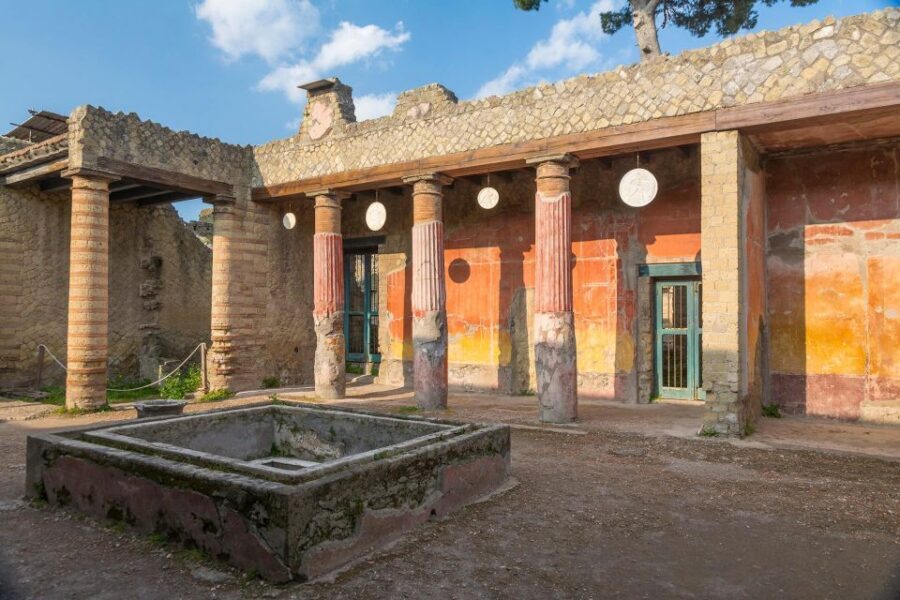
The centerpiece of Herculaneum is what the eruption left behind. You’ll see villas and well-preserved spaces that were buried under volcanic ash during the eruption. The preservation quality matters, because it’s not only about stone shells. You’ll notice surfaces and layouts that help you picture daily routine.
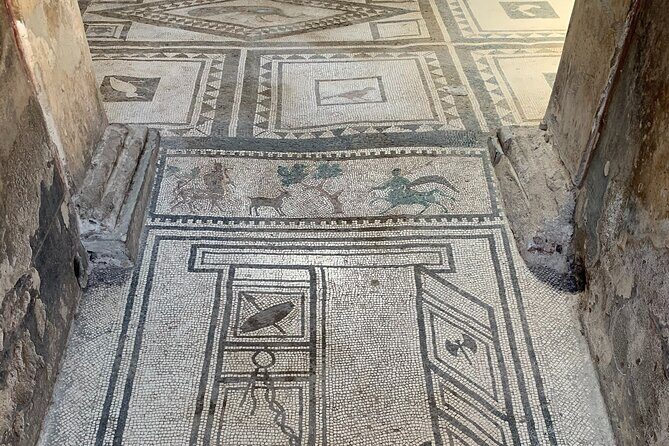
One of the most compelling parts is how the site doesn’t feel generic. The rooms, doors, and painted surfaces give you a sense of taste, comfort, and status. And because the town was sealed away so quickly, you get a rare look at the visual side of Roman life—colors and textures that would be unimaginable in more weathered ruins.
Plan to slow down here. If you walk quickly, you miss the “proof” details—things like door structures and wall paintings that make Herculaneum feel less like a stop and more like an artifact.
Market Streets, Public Fountains, and the Town Plan That Helps You Navigate
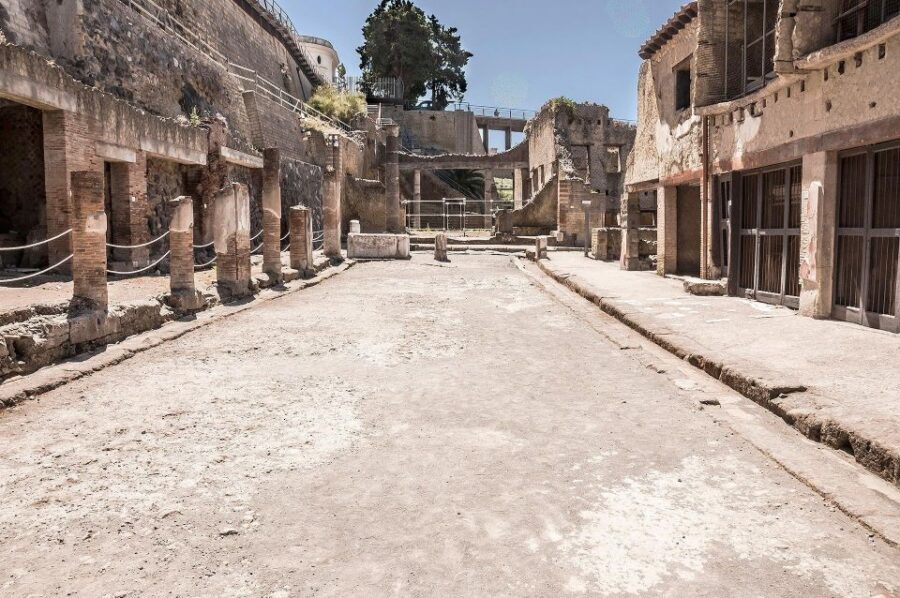
Herculaneum is built for wandering. With the included map, you can move between key areas like the ancient market, public fountains, and the theatre without guessing where everything is.
The market area helps you understand the town as a place with activity, not just residences. As you walk through, your brain starts doing the translation: this spot likely hosted transactions, this one serviced daily needs, and the streets between weren’t empty spaces—they were routes used every day.
The fountains are especially useful for orientation. Roman cities weren’t only about temples and wealth. Water systems and public spaces were part of daily rhythm, and seeing them inside a preserved layout makes that idea concrete.
One practical consideration: some visitors report that the audio’s point-by-point guidance can be a little hard to match to the physical numbering system on site. So treat the map as your anchor, and use the audio as your guide to what to look for, not as a GPS replacement.
Frescoes, Wood, and the Details That Make Romans Feel Close
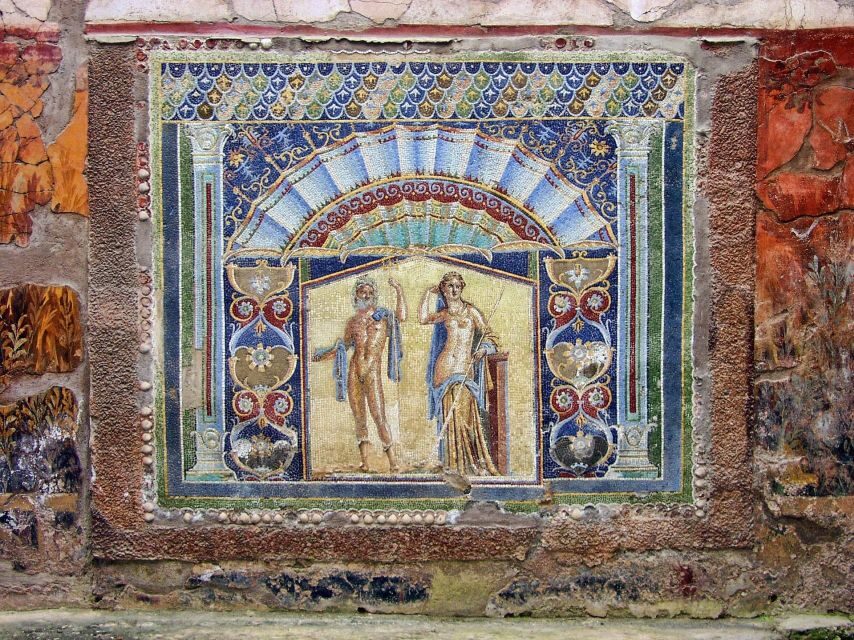
This is where Herculaneum earns its reputation. You can admire areas where vibrant paintings and even wooden doors are still intact. That combination is powerful. A fresco tells you what people wanted to see; a preserved door tells you what people used.
As you move through houses, keep an eye out for small design cues. They help you read the space: where attention was placed, what felt important, and what was built for comfort. When the audio points you toward a specific feature, the descriptions make the visuals easier to interpret.
A plus if you like technology: the audio experience can include 3D or 360-style viewing for some objects, which helps you understand what a ruined area might have looked like before the eruption. It’s one more tool for turning “I see a wall” into “I get why this mattered.”
You can also read our reviews of more guided tours in Naples



Temples, Gods, and the Social Map Inside the Homes
Beyond houses and street corners, Herculaneum also gives you the religious and social layers. You’ll be able to venture to ancient temples and see depictions connected to Roman gods. Even if you’re not a classics nerd, these areas give you the framework for how belief and civic life blended.
Then comes the social comparison that makes the visit hit harder. The ruins let you compare slave housing with the more lavish living spaces of wealthy Romans. That contrast is one of the most educational parts of the experience because it moves beyond generic “Romans lived here” and turns into a story about hierarchy in real architecture.
This is also where your pacing matters. Take breaks. Sit somewhere quiet when you can. The site has moments that are surprisingly emotional, especially near the parts that refer to people who perished while hoping for rescue from the sea.
The Poignant Parts: Where Rescue Hopes Turned Into Ruin
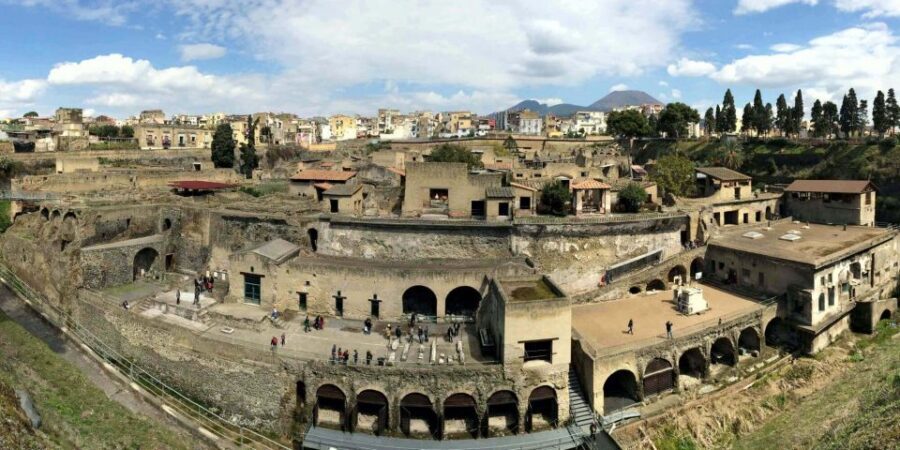
One of the most striking areas is where around 300 people perished, based on what the audio guide explains. The setting is part of why this part feels so different from “tourist ruins.”
Even with the self-guided format, the audio guide helps you slow down and understand the human stakes. You’re not just seeing a preserved space—you’re being guided to recognize a tragedy embedded in the layout of the town.
If you’re sensitive to heavy historical moments, it’s smart to mentally prepare for that shift. It tends to land strongest when you’ve already spent a couple hours in the “look at this intact detail” mode and then the story tightens.
Small Museum and the Boat/Antiquarian Stop Near the Exit
Don’t treat the visit like it ends when you exit the main ruins. There’s a museum near the exit/entrance that adds context and shows artifacts that help connect the ruins to the people who used them.
You may also come across the boat and antiquarian area, which gives a broader sense of Herculaneum’s setting and objects tied to the community. That kind of closing chapter is useful when you want the story to feel complete, not cut off mid-sentence.
If you only have a half-day in the area, you might feel tempted to skip this. I wouldn’t. This is where you can translate what you saw into something more tangible and memorable.
How Long You Should Plan: 3 to 4 Hours Works Better Than You Think
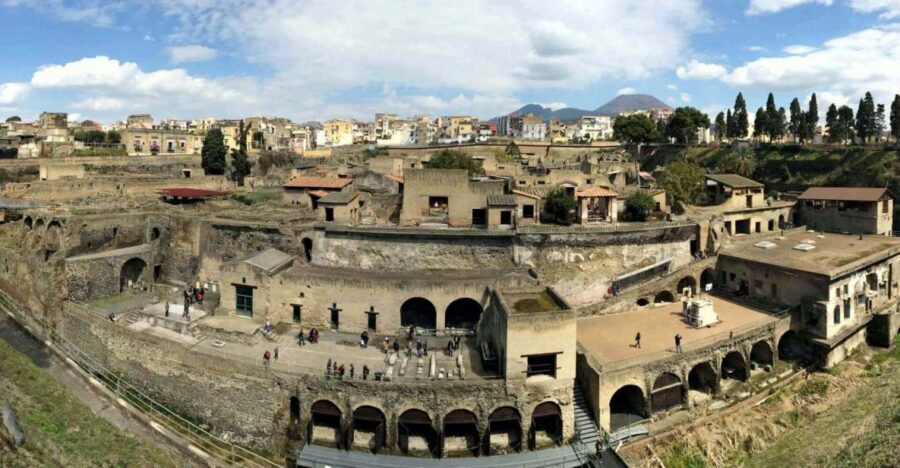
The ticket is sold as a 1-day experience, with starting times depending on availability. In practice, you should plan more than a quick walk-through. Many people spend around 4 hours when they move at a relaxed pace and stop to look closely.
Here’s why: the site rewards attention. Once you get into the rhythm—audio cue, look around, check the map, linger—you naturally end up spending more time than you expect. Add in steep or uneven surfaces (cobblestones and some steps), and you’ll feel the walk even if you’re not hurrying.
If you’re the type who hates rushing, build in extra time. If you’re trying to fit this between trains or transfers, I’d still keep buffer time, because shifting between audio, maps, and partially closed internal areas (when applicable) can slow things down.
Price and Value: Is $15 for Audio + Skip-the-Line a Good Deal?
At $15 per person, this ticket is strong value if what you want is independence. You’re paying for three things that matter on day trips: entry, an audio guide, and a map. That combo helps you avoid the classic ruin problem where you’re staring at stones with no idea what you’re supposed to notice.
Is it perfect value? The main trade-off is that a guide isn’t included with this ticket. The audio guide does a lot of heavy lifting, and it’s offered in multiple languages, but it can’t respond to your questions.
If you like human interaction, there’s evidence that upgrades to a guided tour can make a big difference. One visitor mentioned a guided upgrade and named Tony as the guide, calling him funny and very informative, with an approach mindful of heat. Another named Fabio for an upgrade and praised his storytelling pace. Those examples suggest that if you want deeper explanations (or you find the audio cue numbering frustrating), a guide could be worth considering.
Should You Book This Audio Ticket for Herculaneum?
Book it if you want a high-value, self-guided ruins visit where the site preservation does most of the talking—and where the audio guide helps you understand what you’re seeing.
Pass (or consider a different format) if you need perfect, one-to-one matchups between audio points and site numbers, or if you get frustrated when you can’t instantly line up guidance with your exact position. In that case, a guided upgrade might save time and confusion.
Best fit: history lovers, families who want flexibility, and anyone doing Naples-area ruins who wants something less crowded and more intimate than Pompeii. Bring comfortable shoes and a passport/ID, and plan on lingering. Herculaneum works best when you slow down enough to notice the details.
FAQ
What’s included with the Herculaneum skip-the-line entry ticket?
It includes entry to Herculaneum Archaeological Park, an audio guide, and a map.
Where do I show my ticket?
Show your ticket at the Herculaneum ticket office.
Do I get a guide with this ticket?
No. A guide is not included with this experience, but an upgrade to a guided tour may be possible.
What languages are available for the audio guide?
The audio guide is available in English, French, German, Italian, and Spanish.
How long does the experience last?
It’s listed as 1 day. Starting times can vary, so check availability for the slot you want.
What should I bring to the site?
Bring a passport or ID card and wear comfortable shoes.
Is there free cancellation?
Yes. You can cancel up to 24 hours in advance for a full refund.
Can I reserve and pay later?
Yes. It offers reserve now & pay later.
Is Herculaneum sometimes free on certain days?
One review notes that entry is free on the first Sunday of every month.