REVIEW · POMPEI CAMPANIA
Pompeii Sunset tour for small group
Book on GetYourGuide →Operated by Pompeii 4U · Bookable on GetYourGuide
Sunset makes Pompeii feel human again. This small-group Pompeii sunset tour works because you time your walk for softer light and you get guided hidden corners instead of only the busiest paths. I like that the whole experience is built around photos and real street-level details, not just quick stops.
What I especially enjoy is how you move from the more crowded parts of the site toward quieter areas, still within a tight 2.5-hour window. I also like that you’re with a licensed local guide who brings the place to life, including smart connections beyond the ruins right in front of you. One possible drawback: if it rains, you may miss the classic golden-hour glow the name promises, though the tour still runs.
At the end, you’re not locked into a hard finish line. You can keep exploring Pompeii on your own afterward and linger where the crowds thin out, which is a big win if you want a couple extra photos or a slower look.
In This Review
- Key things that make this Pompeii sunset tour worth it
- Why Pompeii at sunset changes how you see the ruins
- Meeting near Parking Zeus and finding your guide fast
- The route: Forum square and Via dell’Abbondanza without the drag
- The quick “hit list” stops that actually add up
- Basilica of Pompeii: reading the building at street level
- Macellum of Pompeii: where everyday life shows up
- Foro Civile di Pompei and the Forum vibe
- Large Theatre: architecture plus atmosphere
- House of the Faun and the theatre district: where details feel personal
- The quieter corners: why sunset tours feel calmer
- Terme Stabiane and the Lupanare: two very different looks, same payoff
- Terme Stabiane: the city’s social rhythm
- Lupanare: understanding the city’s darker edge
- Rain or shine: planning for the light you might not get
- What to wear and how much walking to expect
- Price and value: is $52 a good deal for 2.5 hours?
- Who this Pompeii sunset tour is best for
- After the tour: keep going where the crowds thin
- Should you book this Pompeii sunset tour?
- FAQ
- Where do I meet for the Pompeii sunset tour?
- How early should I arrive?
- How long is the tour?
- Is this an entry-ticket included tour?
- What’s included in the price?
- What if it’s raining?
- What languages are offered?
- Is the tour walking heavy?
- Can I get a refund if my plans change?
Key things that make this Pompeii sunset tour worth it
- Sunset photo stops that fit the light instead of rushing you through
- Walking out of the busiest zones and into calmer corners of the ruins
- A licensed local guide who explains what you’re actually seeing
- Forum square, Via dell’Abbondanza, and the theatre district on one smooth route
- Quick, high-value look at major sites like the Large Theatre and House of the Faun
Why Pompeii at sunset changes how you see the ruins
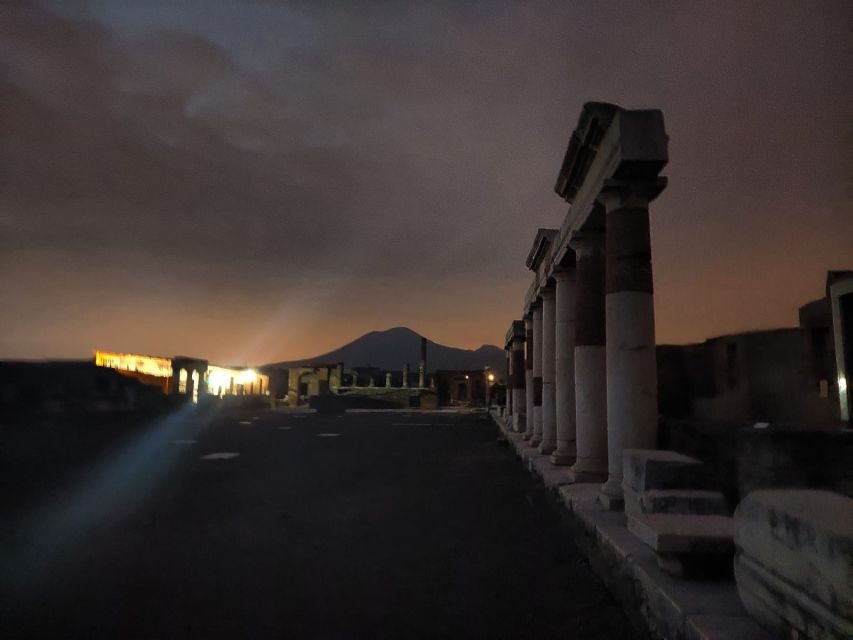
Most Pompeii visits start with bright daylight and a big dose of crowds. This tour flips that rhythm. When you arrive closer to sunset, the ruins can feel less like a museum and more like a real city you’re walking through. The light helps you spot details: worn stone steps, doorways, street angles, and the way different buildings relate to the street.
I also like the pace logic here. The total time is listed as about 2.5 hours, but you spend roughly two and a half hours walking through the ancient town. That’s long enough to get meaningful context—without turning the day into a full Pompeii marathon.
And the photo angle is practical. You get scheduled photo stops, plus a route that helps you find less chaotic viewpoints. The tour is designed so you’re not always fighting people for the same patch of shadow-free stone.
You can also read our reviews of more evening experiences in Pompei Campania

Meeting near Parking Zeus and finding your guide fast
Logistics matter, especially with tours that run at a specific time of day. This one asks you to arrive about 20 minutes before departure so you can check in calmly. The guide is waiting near the train-station area at a parking area called Parking Zeus, and you’ll spot them with a banner that says Pompeii sunset Tour.
There’s also a second key landmark you should know: the guide meets you near Porta marina Superiore, the main entrance area mentioned for the experience. In practice, that means you should expect a short lead-in from the meeting spot toward the entrance and start walking soon after everyone gathers.
If you’re driving or taking local transit, aim to be early rather than perfect on the minute. In Pompeii, a few minutes of confusion can feel like an hour once the crowds and paths start moving around you.
The route: Forum square and Via dell’Abbondanza without the drag
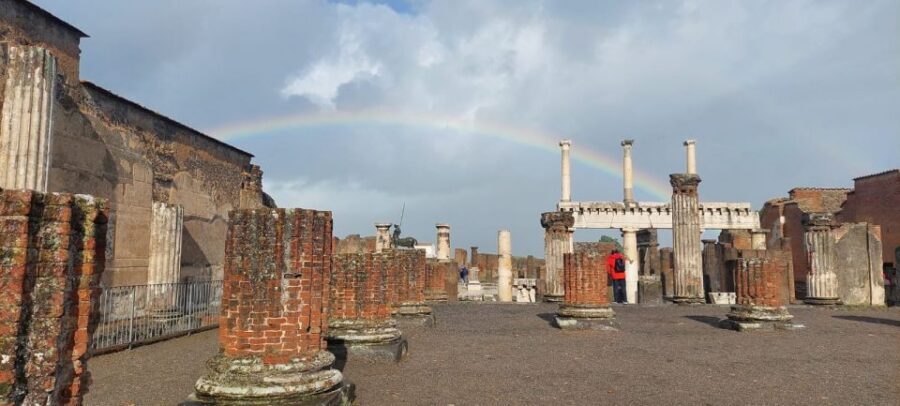
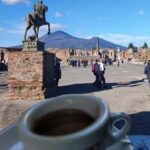
Your guided walk focuses on Pompeii’s core public spaces and the streets that connect them. After you meet, you’ll head into the ancient town with your guide and begin with the big-name layout pieces that make Pompeii make sense.
You’ll cover public buildings and key civic areas, including:
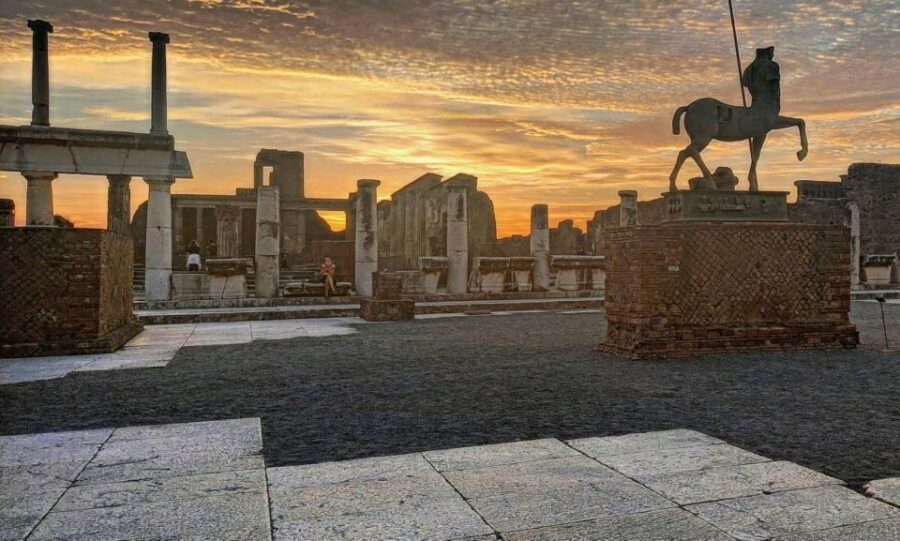
- Forum square (the civic heart)
- The main road Via dell’Abbondanza
- The theatre district
- Plus some hidden corners meant for a calmer experience
Here’s why this route is valuable. The Forum and Via dell’Abbondanza aren’t just “important stops.” They’re the scaffolding for understanding how people moved, gathered, and used the city day to day. When you walk the main road and then step into civic spaces, Pompeii stops being a collection of pretty ruins and starts behaving like a place with rhythm.
The tour format also keeps you moving. Some segments are guided, while other moments give you room to pause, take photos, and absorb what you’re seeing. That balance helps you learn without feeling trapped in a lecture.
The quick “hit list” stops that actually add up
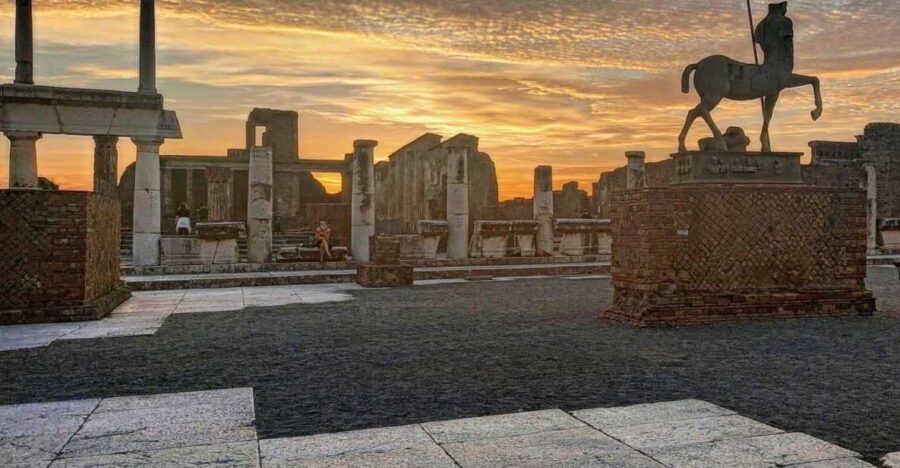
This tour is built to cover a lot of ground in a short time, but it doesn’t feel like a checklist. Several of the stops are designed as brief, targeted looks—just enough time to understand what the structure was for and why it belongs on your route.
Basilica of Pompeii: reading the building at street level
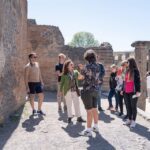
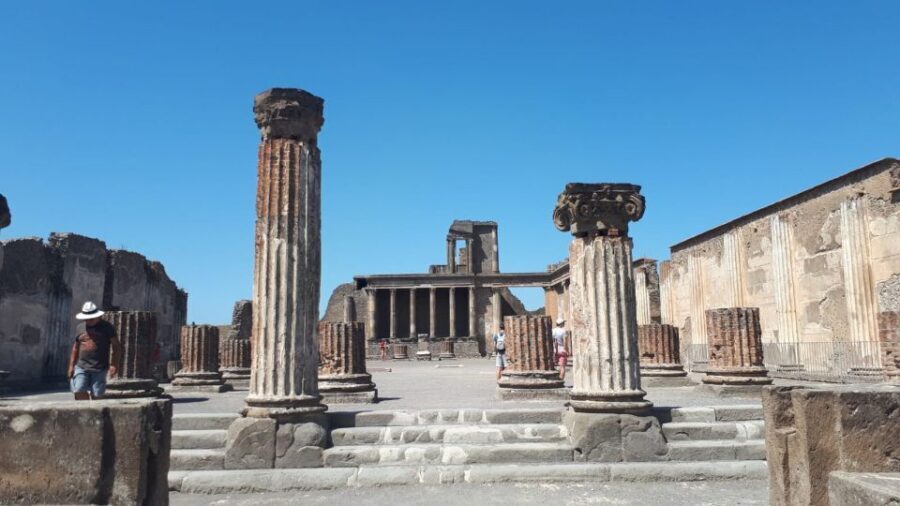
You’ll get a short guided moment at the Basilica, Pompeii. Even in a brief stop, this kind of building matters because it shapes the public feel of the Forum area. If you take a second to look around the entrances and edges, you’ll start to understand how the civic world worked.


Macellum of Pompeii: where everyday life shows up
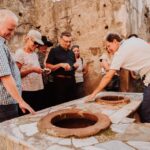
Next is the Macellum of Pompeii, also with a short guided segment. This is the type of place that makes Pompeii feel less abstract. Food, commerce, and daily routines are what turn the stones into stories.
I like that you don’t spend forever on any single site. In 2.5 hours, the goal is to build an overview—and these short “anchor” visits do exactly that.
Foro Civile di Pompei and the Forum vibe
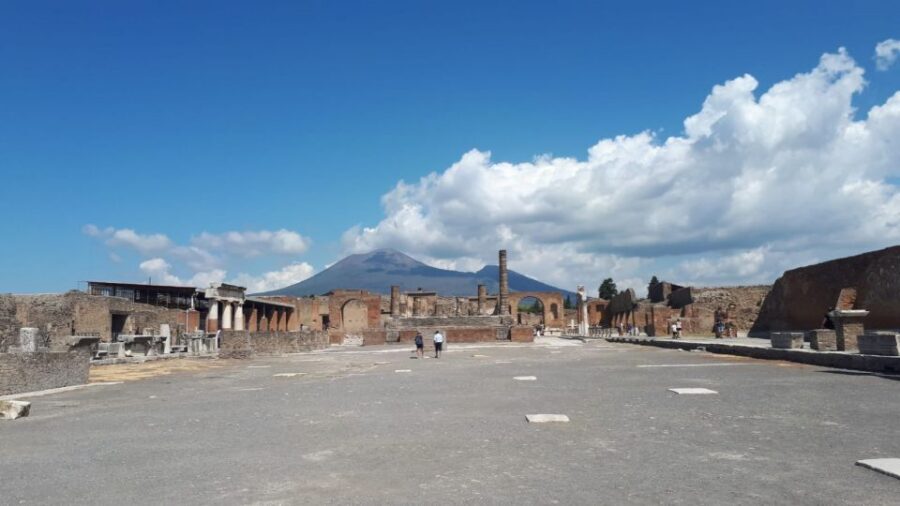
The tour includes the Foro Civile di Pompei. This is where your guide’s explanation can help you connect the geometry: open spaces, the way people would gather, and how different structures guided movement.
If you’re the kind of person who wants meaning, not just sightseeing, these guided minutes are the payoff.
Large Theatre: architecture plus atmosphere
You’ll also visit the Large Theatre, Pompeii with a guided segment. Theatre districts are one of those areas where a quick look can still feel satisfying, because you can still “read” the venue: seating, stage direction, and the flow from street to performance space.
Sunset helps here too. The theatre area can look dramatically different in softer light, and you’ll have more pleasant conditions for spotting details than you often do in mid-afternoon heat.
House of the Faun and the theatre district: where details feel personal
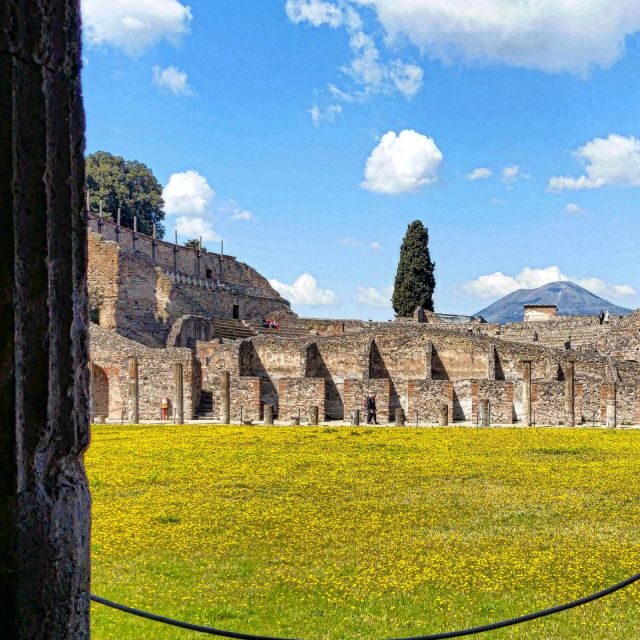
You’ll get a guided visit to the House of the Faun with a short explanation. Houses in Pompeii are powerful because they show how wealth, daily routines, and status lived side-by-side.
Even when the time is brief, this is a stop where you can often spot features that make you pause: a sense of layout, how rooms connect, and how the home ties into the surrounding street structure. The guide’s job is to help you interpret what you’re looking at so you don’t just memorize names.
The theatre district element in your route is also key. When Pompeii is walked as a network—Forum, main road, public venues—the site becomes easier to navigate and remember.
The quieter corners: why sunset tours feel calmer
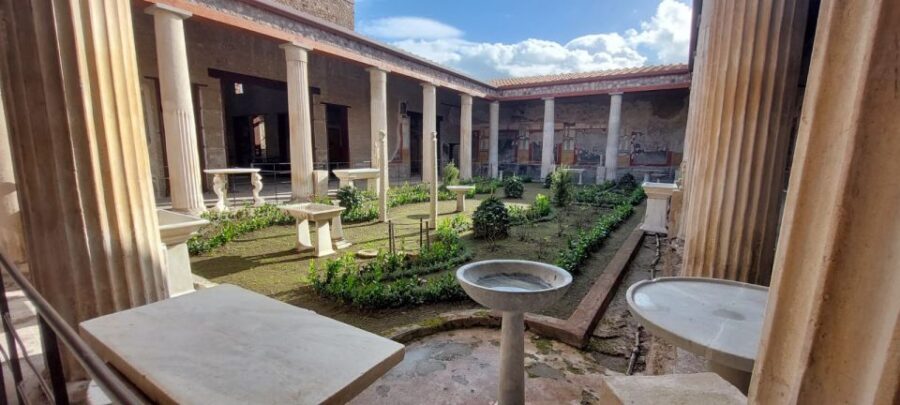
One of the most praised elements of this tour is the idea of moving away from the most crowded zones. The tour specifically highlights that you’ll walk out from the crowded spot and visit hidden corner areas where you can enjoy Pompeii differently.
This matters for two reasons:
- You get better photos. Crowds ruin framing. Softer light can’t fix people blocking every viewpoint.
- You can actually concentrate. Pompeii works when you take in details: a doorway height, a step worn by feet, a street’s curve. If you’re stuck behind a group that won’t move, you lose that “reading the city” feeling.
Even if the weather isn’t perfect, the timing and the route logic still tend to make the visit feel easier.
Terme Stabiane and the Lupanare: two very different looks, same payoff
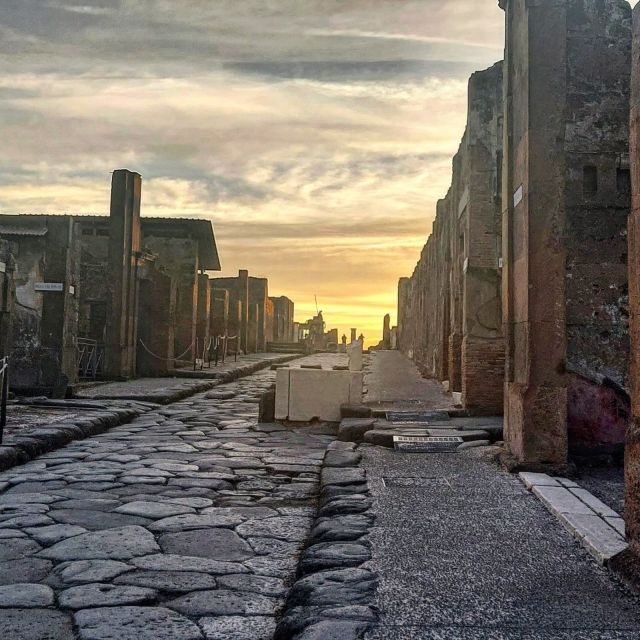
In the final stretch, the tour includes several short guided visits that add depth by showing different sides of city life.
Terme Stabiane: the city’s social rhythm
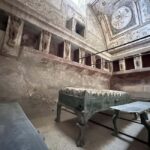
You’ll visit Terme Stabiane with a guided segment. Bath complexes are more than plumbing and stone. They were a social hub, and understanding that changes how you look at what remains.
Lupanare: understanding the city’s darker edge
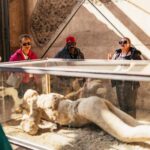
The Lupanare is included as another guided stop. It’s an important place to see because it reflects how people lived and interacted in the real world—Pompeii didn’t erase everyday truths when the walls and roofs collapsed.
These stops are short, but they’re high value for making the city feel complete. You’re not only seeing monuments. You’re also seeing how daily life, leisure spaces, and social spaces show up in the ruins.
Rain or shine: planning for the light you might not get
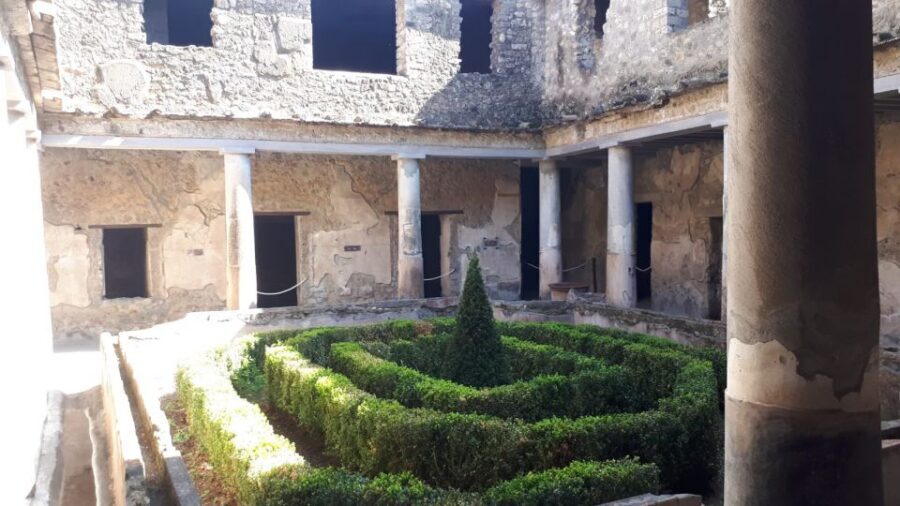
This is a rain-or-shine walk, so don’t treat it like a guaranteed golden-hour photo party. If clouds roll in or rain starts, you’ll still visit the planned sites, but the classic sunset glow may not happen.
My practical advice: wear shoes you’re comfortable walking on even if the ground looks slick. Also, if the light is worse than expected, trust the route. A good guide can still help you find workable viewpoints and angles, especially in shaded corridors and less crowded areas.
What to wear and how much walking to expect
This is a walking tour. The walking time is listed as about 2.5 hours, so treat it like an active site visit rather than a slow stroll.
Bring:
- Comfortable shoes (non-negotiable)
And plan for real pavement and uneven ancient stone. Even when the distance is manageable, Pompeii ruins can be tricky underfoot. Start early, move steadily, and let the guide’s pace do the work for you.
Price and value: is $52 a good deal for 2.5 hours?
At $52 per person, this tour sits in the mid-range for Pompeii experiences, but the value comes from what’s included and how the time is spent.
What’s included:
- Licensed tour guide
Not included:
- Entry tickets
You also get skip the ticket line, which is a big deal in peak times because it protects your limited sunset window. In a tour this short, every minute matters. Paying for a guide plus getting in faster often beats doing it all independently when the crowd pressure is high.
So, the math is simple: if you’re planning to visit key civic areas and major sites anyway, paying for a guide and skipping delays can make the day feel efficient without turning it into a rushed blur.
Who this Pompeii sunset tour is best for
This tour fits best if you:
- Want a guided overview that connects the streets, civic spaces, and major structures
- Prefer a small-group feel that keeps things moving without chaos
- Like photos but also want context for what you’re photographing
- Have limited time and want a strong route in 2.5 hours
It’s also a good pick for people who want to go beyond the highlights but don’t want to spend an entire day building an itinerary.
After the tour: keep going where the crowds thin
At the end, you can continue staying in Pompeii and enjoy quieter corners on your way. That’s a smart structure. You get the guided framework first, then you can choose what to linger on once you know what you’re looking for.
If you want more photos, this extra time is perfect for returning to a spot you liked most during the walk. If you want to slow down, you can use the guide’s route as your map and then explore at your own pace.
Should you book this Pompeii sunset tour?
If you want a short, well-paced Pompeii visit that focuses on the right areas—Forum, Via dell’Abbondanza, the theatre zone—and adds in calmer corners for photos, I think this is a smart booking. The price feels reasonable for the time you gain and the guide-led interpretation you get.
The main reason you might skip is if your travel style is strictly DIY and you don’t care about being guided through the civic layout. Also consider weather: if you’re chasing that perfect golden-hour look, rain can soften the light, even though the tour still runs.
If your goal is an efficient sunset window plus a guide who helps you understand what you’re seeing, this one is an easy yes.
FAQ
Where do I meet for the Pompeii sunset tour?
You meet close to the train station at a parking area called Parking Zeus. The guide waits with a banner that says Pompeii sunset Tour.
How early should I arrive?
Arrive about 20 minutes before the departure time so you can meet the guide and start smoothly.
How long is the tour?
The tour lasts about 2.5 hours.
Is this an entry-ticket included tour?
Entry tickets are not included. The tour includes skip the ticket line.
What’s included in the price?
The price includes a licensed tour guide.
What if it’s raining?
The tour takes place rain or shine.
What languages are offered?
The live guide is available in English, French, Spanish, and Italian.
Is the tour walking heavy?
Yes. It’s a walking tour for about 2.5 hours, with comfortable shoes recommended.
Can I get a refund if my plans change?
Free cancellation is available up to 24 hours in advance for a full refund.