REVIEW · POMPEII
Guided tour of Pompeii with a writer
Book on Viator →Operated by Morosofi Guided Tours · Bookable on Viator
Pompeii comes alive fast.
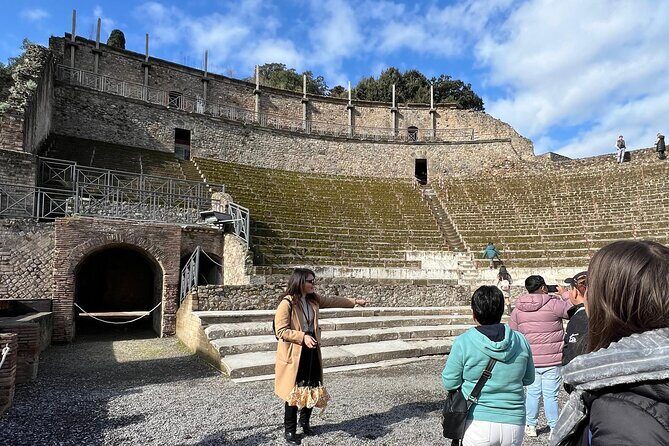
What makes this tour feel different is the angle: you’re not just counting columns and mosaics. You’re learning how people actually lived, including topics like women’s daily reality and everyday routines before the eruption. I especially liked how the guide (often referred to as Sara) uses lively storytelling to connect the architecture to real life, and how the walk stays light and accessible instead of turning into a lecture.
Two things I truly liked: first, the tour’s focus on homes, shops, and community spaces, so Pompeii feels like a place with habits and schedules. Second, you get a paced route that works with site closures set by the park, so you see what’s actually open instead of forcing a rigid checklist. The one thing to plan around is that the entrance ticket is not included, and the 2–3 hour window means you won’t cover every corner of the archaeological park.
In This Review
- Key takeaways before you go
- Pompeii With a People-First Storyline
- Where You Start: Piazza Porta Marina
- What You’ll Actually See Inside the Archaeological Park
- Houses: more than walls and floors
- Shops: the city’s everyday engine
- The spa and civic habits
- Adapting to closures without losing the plot
- The Guide Matters: Why Sara’s Style Gets Strong Reviews
- How Long Is Enough for Pompeii?
- Price and Value: Is $173.47 Worth It?
- Mobile Ticket and Getting There Without Drama
- Who This Tour Fits Best
- Should You Book This Pompeii Tour?
- FAQ
- How long is the Pompeii guided tour?
- Where do we meet for the tour?
- What’s included, and do I need to buy entry tickets separately?
- Is this a private tour?
- What fitness level do I need?
- When will I receive confirmation after booking?
- What is the cancellation or change policy?
Key takeaways before you go
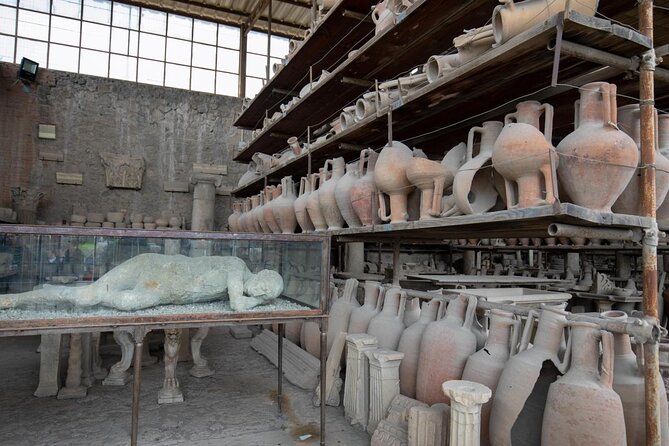
- Daily life over dead facts: you’ll learn how people lived, worked, and socialized, not just what survived.
- Sara’s energetic way of teaching: stories, humor, and quick explanations keep the ruins from feeling flat.
- What you see depends on park access: closures can shift the exact route, but the tour adapts.
- Private, licensed guide: only your group, with time for questions and a calmer pace.
- Meeting at Porta Marina: easy start point for a first-time visit.
- Admission ticket not included: you’ll need to handle that part separately.
Pompeii With a People-First Storyline
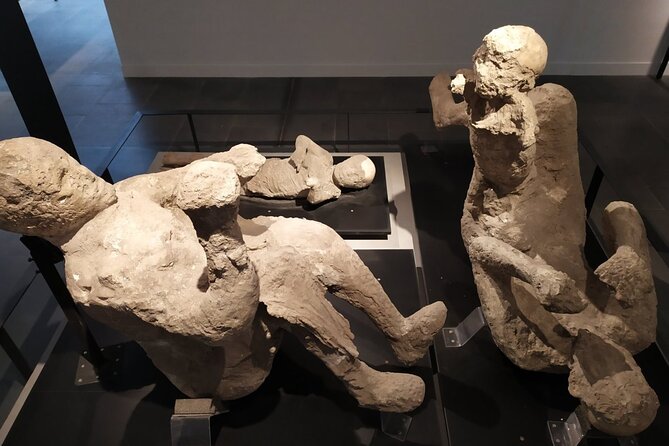
Most Pompeii tours start with big names and big dates. This one starts with people. That’s the key difference. You’ll spend your time thinking about daily routines—what ordinary life looked like—and how the city’s spaces shaped social habits.
I like this approach because ruins can trick you. You see a doorway or a shop and your brain jumps to decoration. With a guide who talks like a writer—clear, story-driven, and focused—you start to picture who walked through it, what they bought, and what their day probably felt like. Even better, the tour doesn’t ignore tougher questions like the condition of women in Pompeii and what that might mean in practical terms.
You can also read our reviews of more tours and experiences in Pompeii.


Where You Start: Piazza Porta Marina
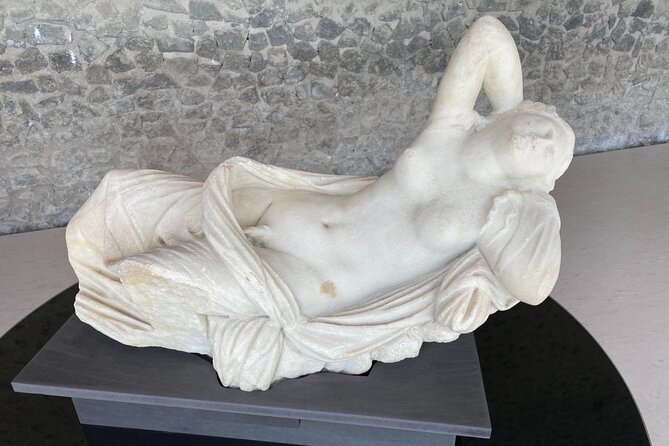
Your tour begins at Piazza Porta Marina in Pompeii. That matters more than it sounds. A solid meeting point helps you avoid the start-stress spiral that can eat into a short tour.
This experience is also described as being near public transportation, which is a win if you’re fitting Pompeii into a larger day (even if you’re also thinking about Naples or Vesuvius). And because it’s a private tour/activity, you won’t be shuffled into a crowded group that moves at the speed of the slowest person.
What You’ll Actually See Inside the Archaeological Park
The itinerary is built around one core stop: Pompeii Archaeological Park. Expect a walk that highlights major categories of structures you’d want to understand on a first visit.
Here’s the practical idea: you’ll cover houses, shops, a spa, and other important buildings, depending on what the park allows on the day. Pompeii’s management decisions can affect access, so the guide works within those boundaries instead of wasting time on closed areas.
Houses: more than walls and floors
You’re not just looking at pretty stone. The goal is to connect layout with life. When you understand how domestic spaces were used, Pompeii stops being a museum display and starts being a lived environment.
A good guide will point out how rooms functioned and how those spaces shaped daily rhythms—who had access, how people moved, and how private and public life blended. In a short 2–3 hour tour, that’s the kind of focus that makes the visit stick.
Shops: the city’s everyday engine
Pompeii wasn’t just villas and temples. It ran on small businesses and street-level commerce. With shops on the route, you’ll get a stronger sense of how people funded life, built routines, and interacted with customers.
This is where your brain gets pictures quickly: footsteps, transactions, and the constant flow of everyday business. If you like travel that feels human and not just historical, this section is one of the best uses of your time.


The spa and civic habits
A spa in Pompeii is more than a bathroom with archaeology vibes. It helps you understand community behavior—how people gathered, how leisure mixed with social life, and how hygiene and relaxation fit into schedules.
Even if you’re not a “Roman bathing nerd,” this stop helps you interpret the site as a network of routines instead of isolated landmarks.
Adapting to closures without losing the plot
The tour notes that the route is based on closures imposed by park management. That sounds like a limitation, but it’s also a smart reality check. Pompeii isn’t always fully open, and trying to force a perfect path can lead to wasted walking and confusion.
With this format, you should get a coherent experience that fits what’s actually accessible, rather than a checklist that crumbles on arrival.
The Guide Matters: Why Sara’s Style Gets Strong Reviews

A licensed guide is included, and the tone described in the feedback is consistent: the best part is the way the information lands. The guide is praised for engaging storytelling, competence across archaeology and history, and the ability to make details feel relevant.
Here’s what that means for you. You’re more likely to remember facts that explain daily life: how people spent time, how they interacted, and what the city’s layout suggests about habits. And because the tour is private, you can ask questions without feeling like you’re interrupting a cattle line.
The reviews also highlight that Sara’s explanations worked for mixed ages, including kids as young as 6 and groups with teenagers. That’s a big deal. Pompeii is visual, but it’s also dense. If your group includes anyone who gets bored with long narration, this kind of storytelling can keep them with you.
How Long Is Enough for Pompeii?
You’re looking at about 2 to 3 hours. Stop time matters here. Pompeii can overwhelm you fast because there’s so much to see and so much to read. A shorter guided tour is often the better choice for first-timers because it prevents the classic mistake: wandering for hours and remembering almost nothing.
In this time frame, you should aim to leave with three wins:
- a clear mental map of what kind of buildings matter and why
- an understanding of how everyday life functioned
- a sense of how the city’s spaces shaped social behavior
If you want to do Pompeii like a completionist, you’ll need more time. But if you want a satisfying first pass that feels coherent, this duration is a sweet spot.
Price and Value: Is $173.47 Worth It?
The price is $173.47 per person, and the tour includes a licensed guide. Admission tickets are not included, so budget for those separately.
So is it good value? For me, the value hinges on two things that matter in Pompeii:
1) Pompeii needs interpretation. The site is famous, but it’s easy to walk past meaning. A guide turns stones into context.
2) A private, story-led pace saves time and reduces stress. You’re not fighting crowds or trying to decode everything alone.
If you’re comfortable self-guiding and you already have a strong background, you might not need a guide. But if this is your first Pompeii visit—or you want it to feel personal and human—then paying for a guide who tells the story clearly can be the difference between seeing Pompeii and understanding it.
Mobile Ticket and Getting There Without Drama
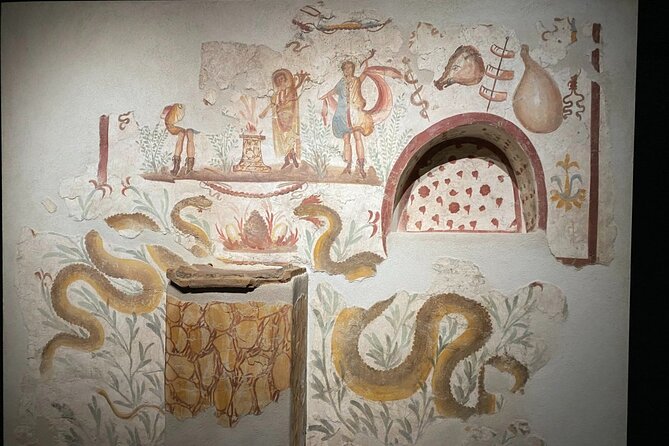
You’ll receive a mobile ticket, which simplifies the pre-arrival step. That’s especially helpful in Italy, where paper tickets and last-minute confirmations can become a hassle.
You also meet at Piazza Porta Marina, which is a straightforward starting point. The tour ends back at the meeting point. That round-trip format is practical: you’re not left figuring out your next move while your feet are already tired.
Your group’s physical needs are also flagged as moderate fitness. Pompeii involves walking, uneven ground, and stairs or ramps depending on the route. If you can handle that level of movement for a couple hours, you’re in the right zone.
Who This Tour Fits Best
This experience is especially well-suited if you:
- are visiting Pompeii for the first time and want an organized story
- care about how people lived, not just the eruption headline
- want a private experience with space for questions
- travel with mixed ages and need explanations that stay engaging
It may be less ideal if you’re looking for a long, exhaustive survey of the entire park. A 2–3 hour format won’t cover everything. But it’s built to give you the “why it matters” view, which is often the part that lasts.
Should You Book This Pompeii Tour?
I’d book it if your goal is meaning, not just mileage. The people-first approach, the focus on daily life, and the guide’s energetic storytelling style all point to a visit that feels clear and memorable in a limited time.
Before you commit, check one practical thing: plan for admission tickets separately. Also be realistic about route limits caused by park closures. The tour adapts, but you should still expect that Pompeii is dynamic and not every area is guaranteed.
If you want a guided Pompeii that feels like a lived city—and not a hallway of ruins—this is a strong choice.
FAQ
How long is the Pompeii guided tour?
The tour runs about 2 to 3 hours.
Where do we meet for the tour?
You start at Piazza Porta Marina, 80045 Pompei NA, Italy.
What’s included, and do I need to buy entry tickets separately?
A licensed guide is included. Entrance tickets for Pompeii are not included, so you’ll need to purchase those yourself.
Is this a private tour?
Yes. It’s a private tour/activity, and only your group will participate.
What fitness level do I need?
The activity is listed for travelers with a moderate physical fitness level.
When will I receive confirmation after booking?
Confirmation is received within 48 hours of booking, subject to availability.
What is the cancellation or change policy?
The experience is non-refundable and cannot be changed for any reason. If the minimum number of travelers isn’t met and the tour is canceled, you’ll be offered a different date/experience or a full refund.