REVIEW · NAPLES
Pompeii private small group tour – 4 hours including transfers
Book on Viator →Operated by A DRIVE INTO THE BLUE · Bookable on Viator
Pompeii, minus the stress. This private half-day trip is designed to get you from Naples (hotel or cruise port) to Pompeii fast, with round-trip transfers handled for you. You can go self-guided once you arrive or add a licensed guide for a more narrated walk through the ruins.
What I like most is the mix of structure and freedom. You get a set route that hits the Forum, theatre, baths, and standout homes, and then you still have time to roam on your own for photos and slower reading. The one drawback to consider: half-day timing can feel tight, and if you don’t clearly confirm the guide option you may end up with mostly transport plus a self-paced visit.
In This Review
- Key Highlights You’ll Feel the Most
- Private Pickup From Naples: Cruise-Port Pro Moves
- Getting Into Pompeii: Two Hours That Actually Work
- The Forum Area: Where Civic Life Really Happened
- Teatro Grande and Terme Stabiane: Drama Plus Routine
- Casa del Menandro: A Wealthy Home Without the Hollywood Filters
- Price and Value: Is $300.40 for a Half-Day Worth It?
- Small Group Energy: The Sweet Spot for Pompeii
- What to Expect From Your Driver and Guide (and Why It Matters)
- Practical Tips: How to Make Half a Day Feel Like More
- Should You Book This Pompeii Private Small Group Tour?
- FAQ
- How long is the Pompeii private small group tour with transfers?
- Where does pickup happen?
- Is this tour private, or will I be mixed with other travelers?
- Is a guide included?
- Are entry tickets to Pompeii included?
- What’s included in the tour price?
- Is lunch included?
- What’s the dress code?
- What’s the cancellation policy?
Key Highlights You’ll Feel the Most
- Door-to-door pickup from Naples hotels or the cruise port, with a smooth return afterward
- About two hours inside Pompeii to actually see what you came for (not just a drive-by)
- Optional licensed guide for a more “put-it-all-together” experience
- Curated route that keeps you moving through Forum/Courts/baths/theatre/home highlights
- Bottled water included, which matters when you’re walking stone paths in the sun
- Small group means you’re not stuck with a giant crowd energy
Private Pickup From Naples: Cruise-Port Pro Moves
This is one of those trips where the value is partly invisible. If you’re on a cruise, you’re dealing with timing pressure, crowds, and the fear of missing the ship. Here, pickup is set from your accommodation or your cruise docking area, and the return drops you back at the pickup point (or another requested drop-off in the local area).
A practical tip from the field: if you’re cruising, don’t wait at the curb right next to the ship. Leave the cruise terminal and meet the team where they can actually find you. It saves time and confusion when traffic is chaotic.
You’ll also be dealing with the realities of the trip itself. The day is built around getting you to Pompeii early enough to start walking while the crowds are still manageable. Even if your goal is just the top sights, you’ll appreciate arriving with time to settle in—some groups even had a chance to grab coffee before the gates opened, then used the next stretch to wander.
You can also read our reviews of more private tours in Naples



Getting Into Pompeii: Two Hours That Actually Work
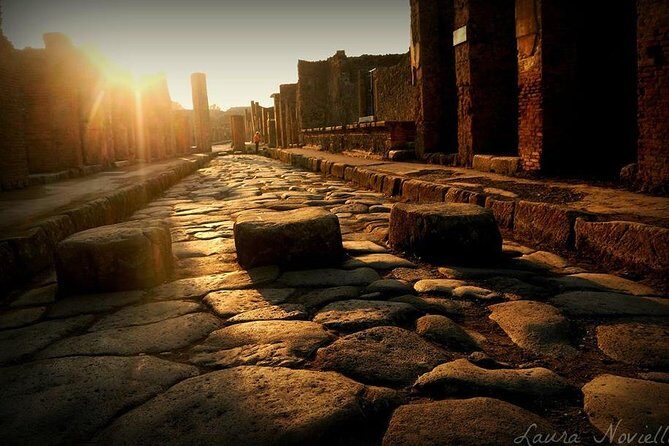
Once you arrive at the entrance of Pompeii Archaeological Park, you’ll do one of two things:
1) Go self-guided with an entry ticket you manage yourself, or
2) Meet your licensed guide if you selected the guided option.
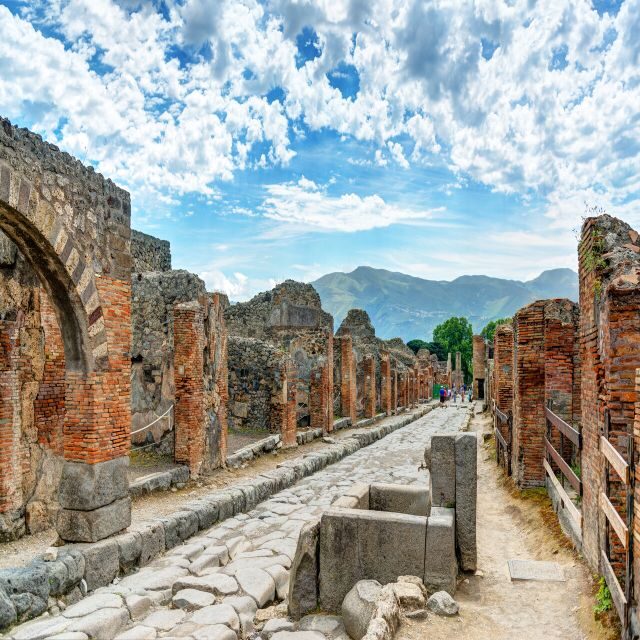
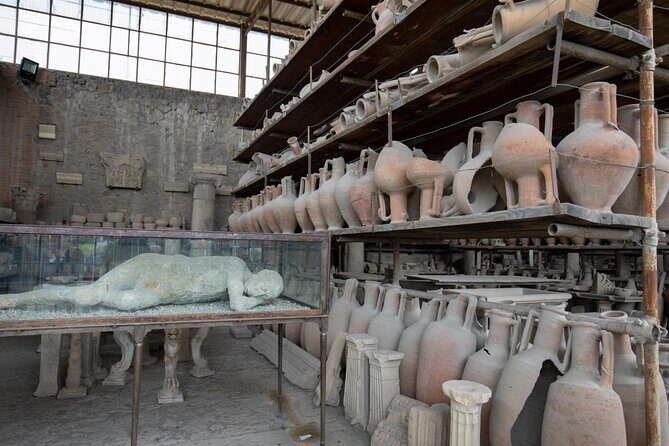
Either way, you’re given about two hours to explore. For many people, that’s the sweet spot for a half-day. Pompeii is huge, but the scale is also part of the drama. You’re stepping into a city that was founded around 600 B.C., shaped by Greek and Etruscan roots, and then became a major Roman city. Then, on August 24, A.D. 79, Vesuvius erupted and buried it under roughly 30 feet of hot volcanic ash—which is why so much is still there to see today.
When you go self-guided, your best move is to use those two hours to pick a “must-see spine,” then add side detours if you’re feeling fresh. If you choose the guided option, you’ll get context that helps the ruins stop being just impressive stone and start feeling like daily life: workshops, civic space, law courts, baths, theatres, and homes across different social levels.
One thing to watch: the tour offers different options, and the details on entry can vary depending on what you selected. The itinerary notes admission tickets are not included by default, but tickets are included if you chose the ticket-inclusive option. Before you head out, double-check whether you’re bringing Pompeii tickets or whether they’re covered in your booking.
The Forum Area: Where Civic Life Really Happened

After the main entrance time, your route focuses on key pieces of the city’s public core. The first stop is the Foro de Pompeya (Pompeii’s Forum). This was the main square and a high-importance hub for civic, commercial, and political-religious life.
If you’ve ever wondered how Roman cities felt day-to-day, this is where your imagination gets traction. The Forum isn’t just a pretty ruin. It’s the “why are these buildings here” moment—space where people showed up for real stuff: announcements, business, public activity, and civic identity.
Next comes the Basilica, which served as the seat of the law courts and a major business area. There’s also an interesting connection to later Christian church design: the basilica style became a model for how churches were built.
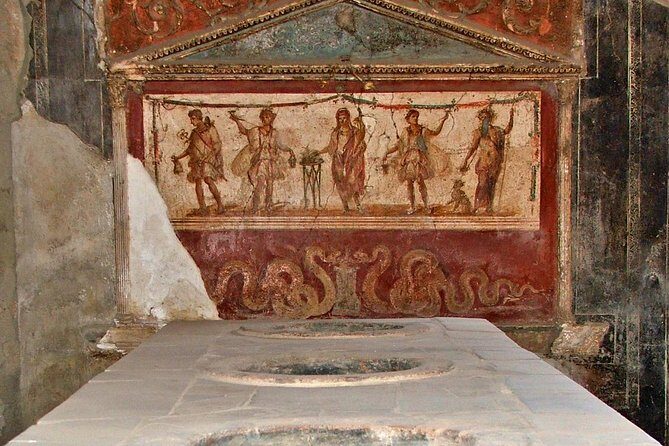
Then you’ll hit a stop that is both historically important and a little uncomfortable: the Lupanar, Pompeii’s brothel. It’s short on time, but it gives you a raw sense of what a Roman city included—everything from civic formality to the commerce of desire. If you prefer a gentler pace, this is a moment where your guide’s framing matters. If you’re self-guided, just remember this is a survival of real social history, not a modern performance.
Teatro Grande and Terme Stabiane: Drama Plus Routine
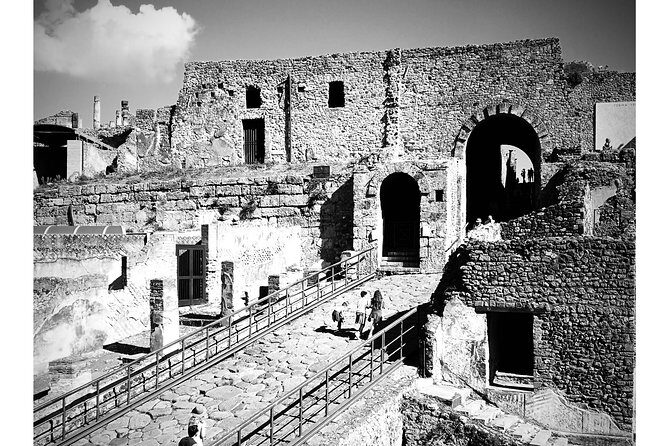
Now you move into the parts of Pompeii that show how Romans relaxed and how they kept going. First up is the Teatro Grande, a Greek-Roman theatre with around 5,000 seats. Even if you don’t catch a performance, the scale tells a story: entertainment was a big public activity.
The theatre also pairs well with quick context. It helps you see the city as more than “a tragic event.” You’re viewing a functioning place where people gathered, watched, and belonged to shared culture.
After that, you’ll visit the Stabian Baths (Terme Stabiane). These are a classic example of Roman spa culture, with multiple pools:
- frigidarium (cold water)
- tepidarium (warm water)
- caldarium (hot water)
This stop is one of the most valuable for practical understanding. Baths weren’t only about hygiene. They were social space—people met, talked, relaxed, and reset their bodies. Even if your tour time is short here, the layout is memorable because it’s so functional.
If you’re the type who loves small details, baths are a good place to slow down for a minute. Even quick glances at the different rooms help you understand how daily routine worked in a Roman city.
Casa del Menandro: A Wealthy Home Without the Hollywood Filters
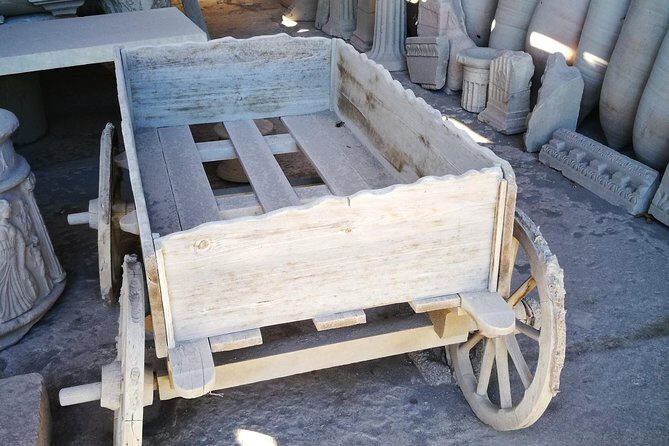
Your last scripted stop is Casa del Menandro, a representative example of what a wealthier Pompeian’s home looked like. Homes in Pompeii matter because they show how status expressed itself in layout: where you’d host, where privacy lived, how space moved between public-facing and private areas.
This is also a good contrast to earlier stops. You start in civic space (Forum, courts), you pass through entertainment and public routine (theatre and baths), and then you end in domestic life. The effect is surprisingly complete for a half-day structure.
One caution: when the tour schedule is tight, people tend to rush through homes because they feel “smaller” than the theatre or baths. Resist that urge. Even a quick look at the design can help you picture the everyday rhythm of someone who lived there—servants, guests, family time, and the reality of status.





Price and Value: Is $300.40 for a Half-Day Worth It?
Let’s talk value honestly. At $300.40 per person for a private small-group experience that runs about 3 to 4 hours including transfers, you’re paying for three things:
1) Time saved and stress reduced
Getting from Naples (especially a cruise port) to Pompeii and back without juggling transit schedules is the real-world money-saver. You avoid the mental load of figuring out buses, train connections, and who’s where when.
2) Private access to your group’s pace
This isn’t a bus-and-freeze kind of trip. Even when you follow a route, your experience can be adjusted for your group. Some guides also tailor the pace to your interests.
3) Optional expert context
If you choose the guide option, you’re essentially buying interpretation: why the Forum mattered, what a basilica was used for, how a theatre was integrated into civic life, and what you’re looking at in a house like Casa del Menandro.
Is it “cheap”? No. Is it “fair” for what you’re getting? It often is—especially for cruise days when time is tight. But there’s one scenario where the cost can feel high: if your booking doesn’t include a guide and you end up with a lot of transfer time and not much narration. If you want real guidance through the ruins, confirm that you selected the guided option before you go.
Also note what isn’t included: lunch and drinks are on you. The tour does include bottled water, which is helpful, but you’ll still want a plan for food if you’re hungry after walking.
Small Group Energy: The Sweet Spot for Pompeii
This experience is described as private, with only your group participating. That matters because Pompeii punishes slow movement. Stone streets and uneven paths are not ideal for dragging behind a giant crowd.
In smaller groups, you can:
- ask quick questions without waiting
- spend 30 extra seconds on a detail if it catches your eye
- keep your bearings instead of constantly re-locating the meeting point
The reviews you shared also highlight that some guides worked well with small parties of about four people and adjusted the route to match their group.
A small funny-but-important note: if you’re aiming for a guide, you should treat confirmation as part of the vacation. One situation showed up where the voucher suggested an English guide but the tour didn’t start with one. The group found a guide outside the doors. That worked out, but it’s exactly the kind of friction you want to avoid. Before pickup, confirm what’s included—guide or no guide.
What to Expect From Your Driver and Guide (and Why It Matters)
The ride itself is not just transportation. In some cases, drivers add context along the route. One group mentioned a driver who had an iPad with highlighted points as they drove through Naples, plus clear directions about where to go once they reached the ruins.
In the guide department, you may run into experts with different styles. Names that came up include Antonio and Toni (drivers) and a guide described as an archaeologist. Those details matter because you can feel the difference between someone who can point and someone who can explain. For many people, Pompeii becomes much more satisfying when you understand what you’re looking at.
If you’re booking this as a highlight day from a cruise, the driver side also matters. One group said the driver took them after the tour to a good local lunch spot where locals eat, and another mentioned dropping them in a great area for walking and shops, with a pizza stop at Sorbillo.
You shouldn’t assume every driver will do restaurant side trips. But even without that, a driver who communicates well makes the whole day calmer.
Practical Tips: How to Make Half a Day Feel Like More
Half-day Pompeii works best when you plan for your own pace.
Here’s what I recommend you do:
- Wear smart casual and comfortable walking shoes. Roman stone does not care about your fashion choices.
- Bring a small snack or plan for a coffee stop if your schedule gives you time before the gates open.
- Stay hydrated. Even with bottled water included, you’ll likely want extra water or something to pair with it.
- Build in extra buffer mentally. Pompeii is awe-inspiring, but you’ll also hit bottlenecks at entrances and in popular areas.
Lunch isn’t included. You’ll usually want either a plan for Naples after you return, or snacks you can keep in a day bag. One practical tip that came through clearly: half-day Pompeii often feels short if you’re trying to see everything. Use your two-hour Pompeii window to focus on the parts you care about most, then let the rest be “good reason to come back.”
Should You Book This Pompeii Private Small Group Tour?
You should book this if:
- you want Naples-to-Pompeii logistics handled and you value not worrying about transit
- you’re on a cruise day or short on time, but still want a structured, high-impact Pompeii visit
- you like small-group pacing, and you want enough freedom to wander after the guided route (if included)
Skip or reconsider if:
- you’re expecting a full-depth Pompeii day. Two hours in the park plus scripted stops is a lot of highlights, not everything
- you want expert storytelling but you’re not sure your booking includes a guide. Confirm the guide option clearly before you go
If you’re visiting Pompeii for the first time and you want a smooth, efficient half-day built around the main “you can’t miss” zones, this is a very workable way to do it—especially when Naples pickup and return matter as much as the ruins themselves.
FAQ
How long is the Pompeii private small group tour with transfers?
The tour runs about 3 to 4 hours, including round-trip transfers from Naples.
Where does pickup happen?
Pickup is offered from your accommodation in Naples or from the cruise docking area if you’re arriving by cruise ship.
Is this tour private, or will I be mixed with other travelers?
It’s private. Only your group participates.
Is a guide included?
A professional guide is included only if you select the option that includes a guide. If you choose the self-guided option, you’ll explore on your own after pickup.
Are entry tickets to Pompeii included?
Admission tickets are not included by default, but tickets are included if you choose the ticket option during booking.
What’s included in the tour price?
Included items include bottled water, a driver, pickup and drop-off, and a professional guide only if selected, plus tickets only if selected.
Is lunch included?
No. Lunch and drinks are not included.
What’s the dress code?
The dress code is smart casual.
What’s the cancellation policy?
You can cancel for a full refund if you cancel up to 24 hours in advance of the experience start time.