REVIEW · SALERNO
SALERNO WALKING TOUR
Book on GetYourGuide →Operated by DAPRO VIAGGI · Bookable on GetYourGuide
Salerno moves fast, and this walk helps you keep up. In about 1.5 hours, you thread from the modern waterfront into medieval streets, learning how this seaside city became a commercial crossroads and a place tied to the Salerno Medical School. You’ll also hear myths and legends that make the alleys feel less like leftovers and more like living folklore.
Two things I really like: you get a licensed guide who keeps the story straight, and you finish at the Duomo with a clear sense of how the city’s power shifted over time—from rulers like Arechi II to the Romanesque church that still anchors Salerno. One consideration: there’s some stair climbing, so wear shoes you trust and plan for a bit of a leg workout.
What you’re really buying for $53 is guided orientation plus context. You start at the Stazione Marittima area (a very striking Zaha Hadid design), take in a wide city view from Piazza della Libertà, then step into older lanes where the details matter. If you prefer totally flat routes or easy-to-hear narration no matter where you stand, this isn’t the perfect fit.
In This Review
- Key highlights worth marking on your mental map
- From Zaha Hadid’s Maritime Station to your first real view
- Piazza della Libertà: where the sea, hills, and city layers make sense
- Medieval alleys and the Salerno Medical School legend (yes, it’s more than a name)
- San Pietro a Corte: Arechi II’s palace and Lombard power
- Via dei Mercanti to the Duomo: commerce meets Romanesque artistry
- Price and pacing: is $53 worth it for this 105-minute walk?
- Who should book this Salerno walking tour
- Should you book this Salerno walk?
- FAQ
- How long is the Salerno walking tour?
- Where does the tour start?
- Where does the tour end?
- Is the tour suitable for people with mobility limitations?
- What languages are available for the live guide?
- Does the price include entrance fees?
- Is it a walking tour only, or are there transfers?
- Is cancellation free?
- What should I wear for this tour?
Key highlights worth marking on your mental map
- Zaha Hadid Maritime Station start: you begin with a modern landmark before the medieval streets
- Piazza della Libertà viewpoint: a quick overview of waterfront, sea buildings, and the area around Arechi
- Salerno Medical School stories: the medieval lanes come with context, myths, and meaning
- Via dei Mercanti + local craft stops: you see how commerce shows up in everyday places
- San Pietro a Corte and Arechi II: Lombard-era power gets explained in plain language
- Duomo finale (Romanesque): atrium, precious ambos, and the St. Matthew crypt all get attention
From Zaha Hadid’s Maritime Station to your first real view
The tour starts at the Maritime Station entrance at Stazione Marittima di Salerno, which is a fun jolt of modern design right at the beginning. The guide frames it as the kind of place Salerno uses to welcome the world—then you leave that “arrival zone” and slowly transition into the older spine of the city.
Right away, this matters for your day. You’re not just walking. You’re building a mental map while your feet move. I like how the route helps you figure out where the waterfront sits, where the higher areas are, and why people historically traveled through this stretch rather than around it.
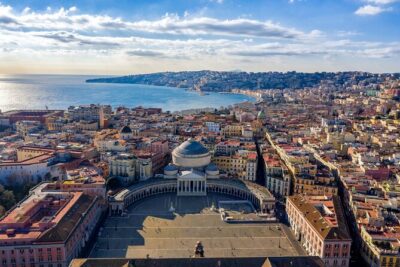
When you hit Piazza della Libertà, you get the kind of broad view that makes the rest of the walk click. From there, you can see the waterfront, the general layout of the city, and landmarks tied to the surrounding hills—especially the area around Arechi Castle. It’s the moment where you stop guessing and start understanding.
You can also read our reviews of more tours and experiences in Salerno.


Piazza della Libertà: where the sea, hills, and city layers make sense
This square is the tour’s orientation checkpoint. The guide points out relationships you’d miss if you wandered alone: how the waterfront draws people in, how the older center sits in relation to the sea, and how elevated points like Arechi Castle fit into the story.
It’s also a good place to pause mentally before the climb into the medieval center. One review noted that stairs are part of the experience, and Piazza della Libertà is where you can feel that you’re moving toward older streets and older structures. So, this is the moment to check your footing, adjust your pace, and make sure you can keep listening.
If you’re the type who likes architecture and city design, you’ll appreciate that this isn’t random sightseeing. The viewpoint is used to explain why the city grew the way it did—commercial hub first, then layered with institutions and patronage.
Medieval alleys and the Salerno Medical School legend (yes, it’s more than a name)
Then comes the fun part: slipping into the medieval alleys. This is where Salerno stops feeling like “a port city” and starts feeling like a character with secrets.
The guide connects the streets to the reputation of the Salerno Medical School. Even if you’ve never studied medieval medicine, the walking format helps you understand what makes this city famous: it wasn’t just a place to pass through. It developed knowledge and institutions that pulled people in. You’ll hear myths and legends too, which gives the architecture a story beyond dates.
I also like the way a live guide can steer you away from the usual tourist filter. Instead of pointing at every door and calling it history, the guide ties what you’re seeing to how Salerno functioned—markets, scholars, and the everyday city life that grew around them.
Practical note: because you’ll be in narrow lanes, you’ll want to keep an eye on where you step, and don’t assume you’ll have room to fully stop and chat. That’s part of the experience here.
San Pietro a Corte: Arechi II’s palace and Lombard power
After the medieval lanes, you reach San Pietro a Corte, described as the palace of Arechi II, a Lombard prince. This stop adds a different flavor to the walk. It’s not just churches and legends. It’s the political and cultural side of Salerno—how rulers shaped the city’s identity.
In a short tour, this kind of stop works well because it gives you a reference point. When you later look at the Duomo, you’ll understand it less as an isolated monument and more as part of a broader timeline of patronage and authority.
I appreciate that the guide keeps the story human. Lombard rule can sound distant on a museum placard. In walking conversation, it becomes clearer: who had power, why that power mattered locally, and how it shows up in the city fabric.
Via dei Mercanti to the Duomo: commerce meets Romanesque artistry
Via dei Mercanti is where the tour leans into everyday Salerno. The name alone hints at trade, and the guide uses the route to show how commerce still echoes through the city.
There’s also a stop at local craft stores, which I think is one of the most practical highlights on the list. It turns your tour from pure sightseeing into a chance to buy something small and real—something tied to the city’s working life rather than a mass-produced souvenir.
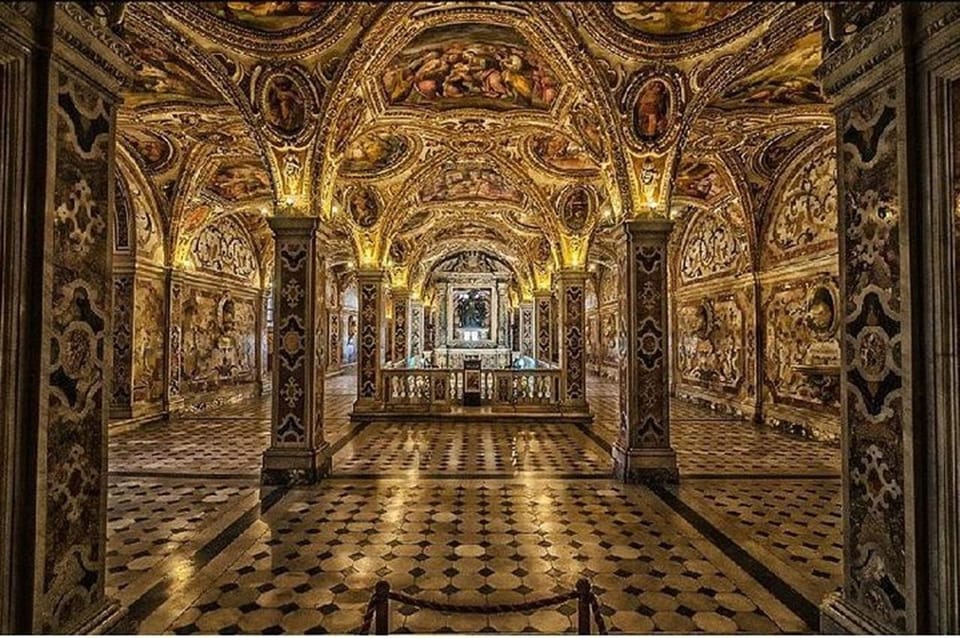
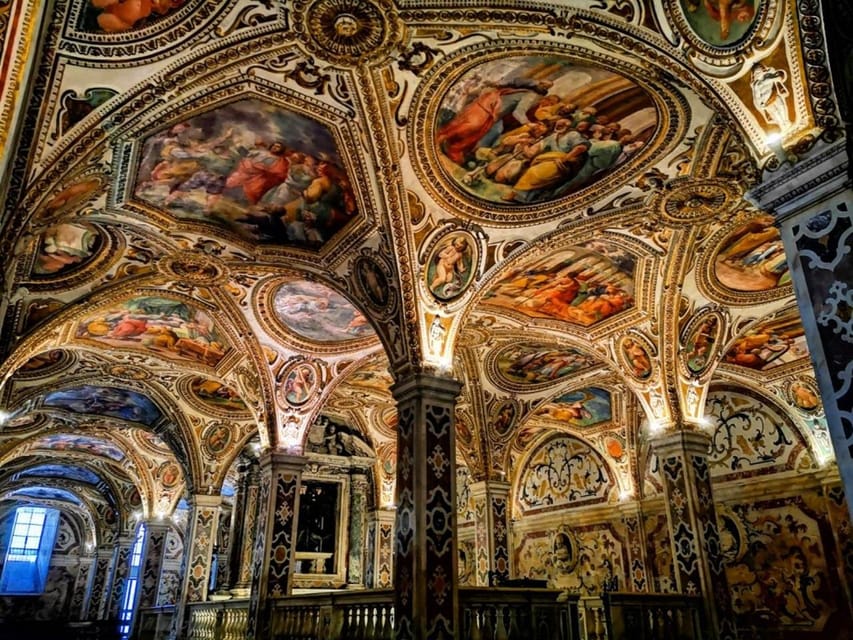
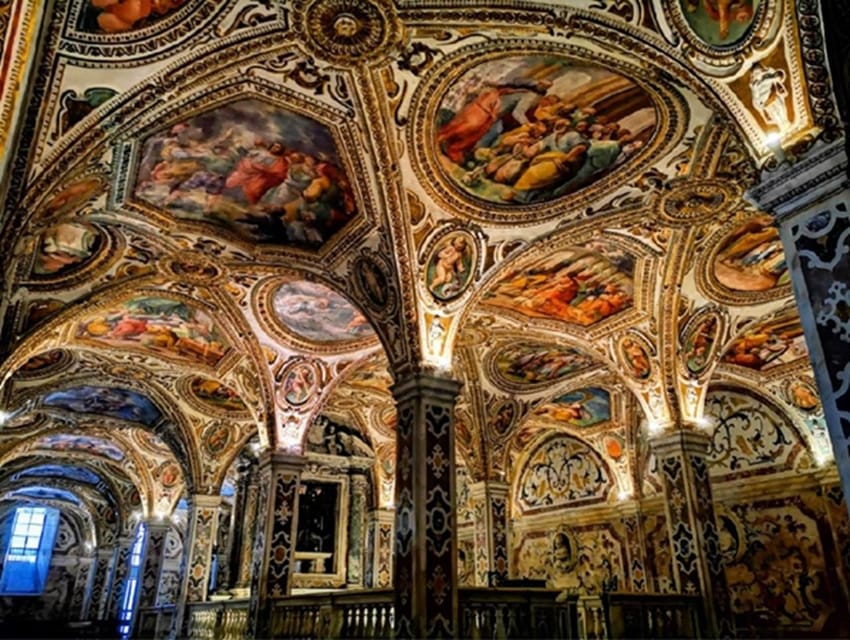
Then you arrive at the Duomo di Salerno (Cattedrale di Santa Maria degli Angeli, San Matteo e San Gregorio VII). This is the big finale, and it’s a meaningful one. The guide highlights the Romanesque monument features you can’t fully appreciate from a quick glance: the beautiful atrium, precious ambos, and the crypt dedicated to the Evangelist Apostle St. Matthew.
If you care about church art and medieval construction, you’ll like how the guide slows down at the right moments. If you’re more into atmosphere than details, you’ll still get value because the guide explains what those features were built for and why they mattered in that era.
One more practical point: because it’s a walking tour with a cathedral finish, bring layers. Even in comfortable weather, cathedral spaces and shaded alleys can feel cooler than the open square areas.



Price and pacing: is $53 worth it for this 105-minute walk?
At $53 per person for about 105 minutes, the value comes from two areas: time and guidance. You’re not only getting a route. You’re getting an explanation-heavy walk that helps you avoid the classic problem of sightseeing without context.
What’s included is a guided tour of the historic center, with in-depth knowledge from the guide. Entrance fees aren’t included, so if there are portions you want to access more fully inside the Duomo complex, you’ll likely pay on site. That’s normal for Italy and actually helps keep the tour from charging you for things you might not use.
Pacing is generally friendly, but the route includes stairs. One review specifically warned that you should expect climbing stairs. I’d take that seriously. If you’re carrying a small daypack, keep it light, and move steadily rather than sprinting to keep up.
Also consider listening conditions. One person noted it was difficult to hear the guide and suggested audio would help. That’s not something the tour data guarantees, but it’s a good reminder to pick a spot closer to the guide and face them when possible.
Who should book this Salerno walking tour
This fits best if you want:
- A guided orientation to Salerno’s historic center in a short window
- Stories that connect the city’s medieval institutions to what you see on the street
- A craft stop and a cathedral finish, without spending a whole day planning
- English or Italian narration from a live guide
It’s also a good choice if you like “leg and lesson” travel—walk enough to feel the city, but still rely on a guide to connect the dots.
It may not be your best option if you want a mostly flat route or if stairs are a dealbreaker. And it isn’t suitable for people over 95 years old.
Should you book this Salerno walk?
Yes, I’d book it if you’re spending only part of a day in Salerno and want a real sense of the city fast. The route makes smart use of a modern starting point, an explanatory viewpoint at Piazza della Libertà, medieval lanes tied to the Salerno Medical School, and a strong Duomo finale with specific features the guide points out.
Skip it only if you strongly dislike stair climbing or you know you’ll struggle to hear narration in a moving group. If you’re okay with those trade-offs, this is a high-value way to get your bearings and leave with stories you can repeat back while you explore on your own.
FAQ
How long is the Salerno walking tour?
The guided tour lasts about 105 minutes (about 1.5 hours).
Where does the tour start?
It starts at the Maritime Station entrance (Stazione Marittima di Salerno), listed as Travel Point.
Where does the tour end?
It finishes at the Duomo di Salerno (Cattedrale di Santa Maria degli Angeli, San Matteo e San Gregorio VII).
Is the tour suitable for people with mobility limitations?
The tour is not suitable for people over 95 years old, and it includes walking with stairs.
What languages are available for the live guide?
The live tour guide is offered in Italian and English.
Does the price include entrance fees?
No. Entrance fees are not included and would need to be purchased on site.
Is it a walking tour only, or are there transfers?
Transfers aren’t included. The tour is done on foot starting from the city center.
Is cancellation free?
The activity offers free cancellation up to 24 hours in advance for a full refund.
What should I wear for this tour?
Wear comfortable walking shoes, because you’ll encounter stairs and uneven, narrow areas in the historic center.