REVIEW · SALERNO
Pompeii and Amalfi Coast from the Port of Salerno
Book on Viator →Operated by Askos Tours · Bookable on Viator
Two UNESCO days in one tight schedule. That’s what makes this Salerno-to-Pompeii-and-Amalfi trip so appealing: you get a guided Pompeii morning and then roll straight into the Amalfi Coast (with time in both Amalfi and Ravello), all in one long, well-organized day. I especially like that it’s private, so you’re not stuck with a noisy crowd pace, and I like the mix of structure (a Pompeii guide) plus freedom (time in Amalfi and Ravello at your own speed). The main thing to consider is that Pompeii is huge, and this runs on a highlights schedule with many short stops—so it’s ideal if you want the best sights fast, not if you’re hoping for a slow, deep, take-your-time museum-style visit.
This tour also feels practical from the first minute. You’ll be picked up at your port or hotel area, then meet your Pompeii guide at the main entrance at Porta Marina Superiore (Askos Tours sign is how you spot them), and you’ll move through the ancient core with clear routing. Later, Amalfi time is designed for easy wandering: you can check out the Cathedral of Saint Andrew area or simply stroll the streets and grab gelato without feeling like you’re constantly waiting on the group.
And yes, the price feels high on paper—$496.21 per person for a full day. But it’s built around private transportation, a guided Pompeii portion with admission included, and round-trip logistics from Salerno. For a port day when you can’t afford to gamble with buses and timing, that value can make a lot of sense.
In This Review
- Key highlights that make this Pompeii and Amalfi day work
- UNESCO twofer: Pompeii and the Amalfi Coast in one long day
- Salerno port start: pick-up, meeting points, and avoiding timing stress
- Pompeii highlights with a guide: what you’ll see and why it matters
- Centro-style orientation: Basilica and Foro
- Granai del Foro and the idea of daily life
- Rich homes: Casa del Menandro and Casa del Fauno
- Baths and the social side: Stabian Baths and Lupanar
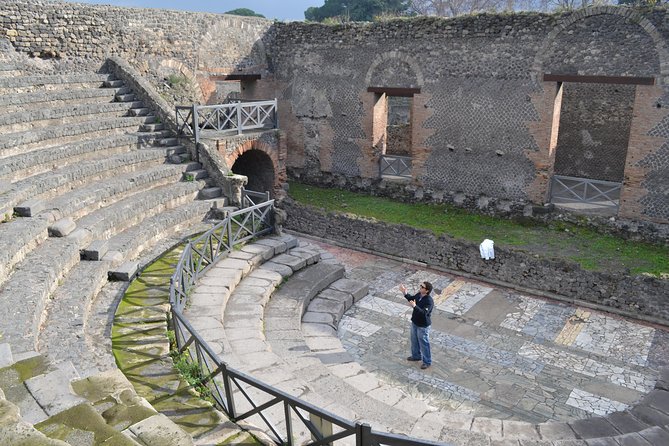
- Theater time: Teatro Piccolo and Teatro Grande
- Important reality check: short stops, big results
- Amalfi time: Cathedral of Saint Andrew, Via dei Mercanti, and gelato breaks
- Lunch stop with a choice
- Amalfi walking time: Ruga Nova Mercatorum and the cathedral area
- How to use your Amalfi time well
- Ravello and Atrani walk: why the smaller towns fit this schedule
- Ravello quick downtown time
- Ravello-Atrani walk for nature and old streets
- Price and value: what you’re paying for (and what you’re not)
- What to pack and how to pace yourself for 8 hours
- Who this Pompeii and Amalfi Coast tour is best for
- Should you book this Pompeii and Amalfi day trip?
- FAQ
- How long is the Pompeii and Amalfi Coast tour from the Port of Salerno?
- Is the tour offered in English?
- Where do I meet the driver and guide?
- Are Pompeii admission fees included?
- Are meals included?
- Is this a private tour?
- Are service animals allowed?
- What is the cancellation policy?
Key highlights that make this Pompeii and Amalfi day work
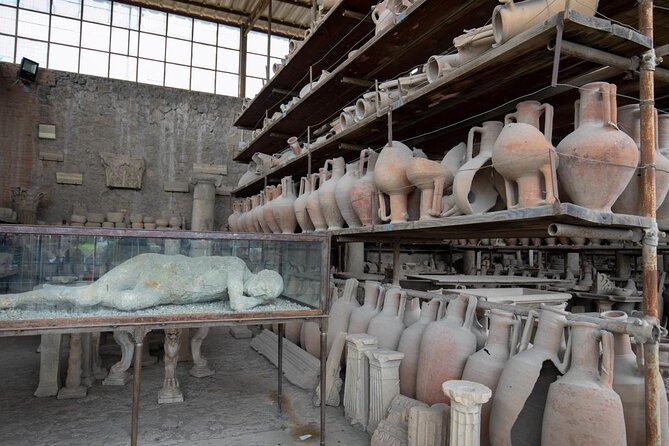
- A true two-site day: Pompeii plus the Amalfi Coast/area in one outing
- Private, not shared: only your group, in a modern, air-conditioned minivan
- Pompeii guided at the start: meet the guide at Porta Marina Superiore with an Askos Tours sign
- You get Amalfi freedom: Cathedral area time, plus street wandering and gelato
- Ravello plus Atrani walking time: nature and old-town wandering, with short, manageable pacing
UNESCO twofer: Pompeii and the Amalfi Coast in one long day
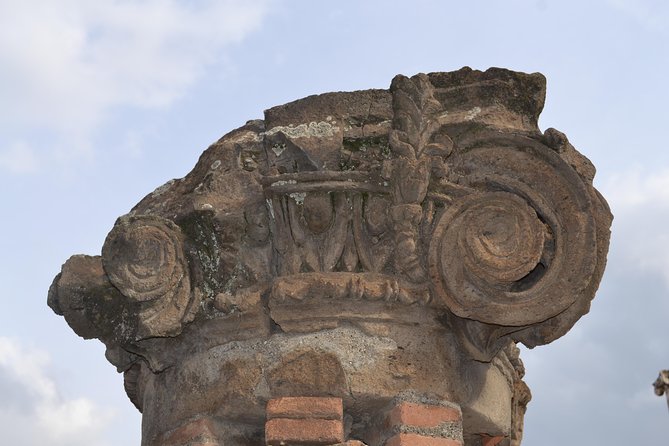
If you’ve ever looked at Pompeii and thought, I could spend days here, you’ll understand the appeal of this format. You’re not trying to conquer everything. You’re getting the core sights that most people care about, explained clearly, then you shift gears to the coast where the views do half the talking.
Pompeii gives you the shock of scale and the emotional weight of what survived. The Amalfi area gives you the drama of cliffside towns and seaside streets. Putting them together in one day is intense, but it’s also efficient for travelers who are staying in Salerno or who want a big “wow” day without adding overnight travel.
The other smart part is the pacing. Pompeii is handled with a guide and a sequence of key stops, then Amalfi/Ravello becomes more self-directed. That means you’re not locked into constant talking, but you’re also not stuck trying to interpret ruins on your own.
You can also read our reviews of more tours and experiences in Salerno.


Salerno port start: pick-up, meeting points, and avoiding timing stress
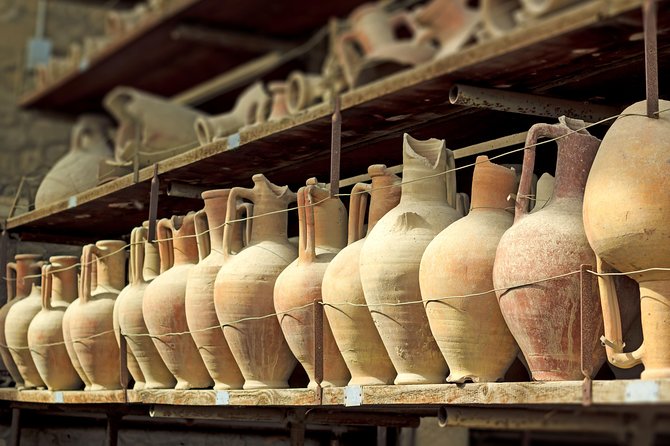
This is built for port or hotel convenience. You meet your driver somewhere in the Salerno area—either at the port or at your hotel (the exact pick-up location is handled as part of the service). From there, you head to Pompeii and meet your guide at the main entrance of the archaeological park, Porta Marina Superiore.
The name detail matters because it reduces confusion during busy cruise port hours. Your guide will be holding a sign with the company name Askos Tours at the entrance. That’s a small thing, but it makes a big difference when you’re trying to get moving quickly.
You’ll also want to plan your mindset for an all-in-one itinerary. This is about reducing stress, not creating a leisurely day. So I recommend treating it like a “best-of day with guides” and then using your remaining time in Naples/Amalfi later for slow wandering.
Pompeii highlights with a guide: what you’ll see and why it matters
Pompeii can be overwhelming at first. The streets are familiar in concept (forums, baths, theaters), but everything is out of scale, and it’s easy to lose the story. That’s exactly where the guided portion helps.
You’ll start at Porta Marina Superiore and go through a classic route that covers the city’s public life, private homes, entertainment, and daily rituals. Each stop is short—often around 10 to 15 minutes—so the guide focuses on the big picture and what makes each structure meaningful.
Centro-style orientation: Basilica and Foro
After you meet the guide at the entrance, you get an early taste of how Pompeii functioned as a living city.
- Basilica: Think of this as a covered portico space that sheltered merchants and activities. It’s a reminder that commerce and public life happened under protection from sun and weather.
- Foro de Pompeya (main square): This is the central hub. Standing here helps you connect the ruins to the civic rhythm—where people gathered, spoke, traded, and acted like a city.
If you only visit Pompeii once, this early grounding helps you understand what you’re looking at later.
Granai del Foro and the idea of daily life
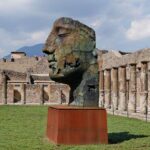
Then you move into Granai del Foro, where you’ll see features connected to storage and public utilities. It’s also where you get glimpses of marble elements connected to fountain-adjacent spaces, plus those unforgettable casts related to the eruption’s aftermath. It’s not “fun,” but it’s one of the places where Pompeii hits hardest emotionally.



Rich homes: Casa del Menandro and Casa del Fauno
You’ll see two private residences that highlight how different people lived.
- Casa del Menandro: A richly decorated home where architecture and details show wealth and taste.
- Casa del Fauno: One of the larger, more impressive residences, which helps you grasp the scale of elite living compared to the bustle of the streets.
Even in short visits, these homes help you see Pompeii as more than stone shells. You’re looking at spaces built around taste, status, and daily routines.
Baths and the social side: Stabian Baths and Lupanar
Pompeii also isn’t all tragedy and architecture. It’s social life.
- Stabian Baths (Terme Stabiane): You’ll pass through a vast thermal complex and learn why baths mattered in Roman culture. This area represents an older thermal setup and shows how big these facilities were in daily life.
- Lupanar: The most famous brothel in Pompeii. It’s one of the clearest examples of how the city incorporated commerce and services into its urban fabric.
I like that these stops expand the story beyond the postcard ruins. You get a more complete sense of what Pompeii felt like as a place to live.
Theater time: Teatro Piccolo and Teatro Grande
Finally, you’ll see the performance side of Pompeii.
- Teatro Piccolo: A quick look helps you orient the smaller entertainment space.
- Teatro Grande: The bigger, more important theater. This is the one that people usually remember, because it makes the city feel organized for public gatherings and spectacles.
By the time you reach the theaters, the city starts to read like a living map instead of isolated buildings.
Important reality check: short stops, big results
The route is packed, so don’t expect hours in one place. That can be frustrating if your goal is to wander slowly with no plan. But if your goal is to see the essentials with clear explanations, the format works.
One detail I also appreciate from guide experiences: people repeatedly praise guides who keep things engaging without turning it into a lecture. Names like Serena, Alice, Teresa (described as an archaeologist), and Mena come up in guides you might encounter, and the consistent theme is that Pompeii becomes understandable fast.
Amalfi time: Cathedral of Saint Andrew, Via dei Mercanti, and gelato breaks
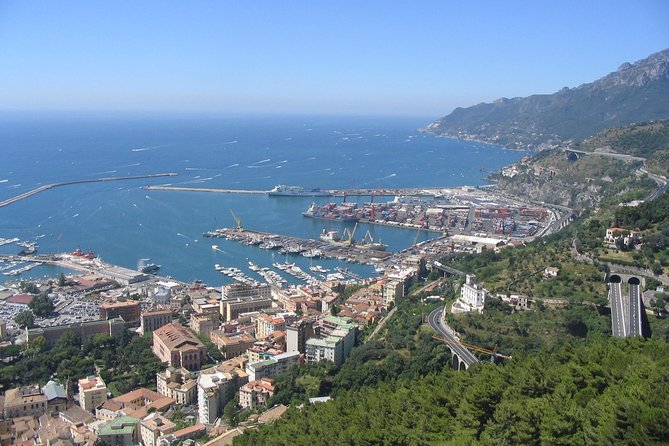
After Pompeii, you transfer to Amalfi for lunch and sightseeing. The day shifts from ruins to sea air, and the schedule becomes more flexible.
Lunch stop with a choice
You’ll have about an hour allocated for lunch. The tour can be a typical Italian restaurant and pizzeria, or you may stop at a winery on the slopes of Mount Vesuvius (not required). This is one of the best value moments because it means you’re not scrambling for lunch logistics during a packed day.
Just remember: meals aren’t included in the price, so plan on paying for your lunch at the stop you choose.
Amalfi walking time: Ruga Nova Mercatorum and the cathedral area
Once in Amalfi, you get time to explore by yourself around:
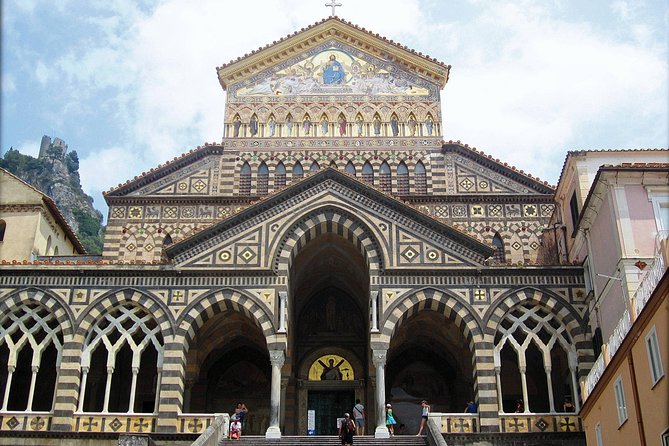
- Ruga Nova Mercatorum (Via dei Mercanti): a main shopping street where you can wander and get a feel for the town.
- The Cathedral of Saint Andrew area, with additional time around nearby highlights like the Fontana sant’Andrea.
The itinerary also explicitly leaves room for a gelato break. In Amalfi, that’s not a silly request—it’s how you keep your energy up when the sun and stairs start adding up.
How to use your Amalfi time well
Because this is self-paced, you can steer it:
- If you love photos, spend time near the central walking routes and viewpoints you can reach on foot.
- If you want culture, focus your walk around the cathedral area.
- If you just want to feel the place, aim for the shopping street and take it slow.
This part is also why I like the tour’s structure: Pompeii is guided, Amalfi is yours.
Ravello and Atrani walk: why the smaller towns fit this schedule
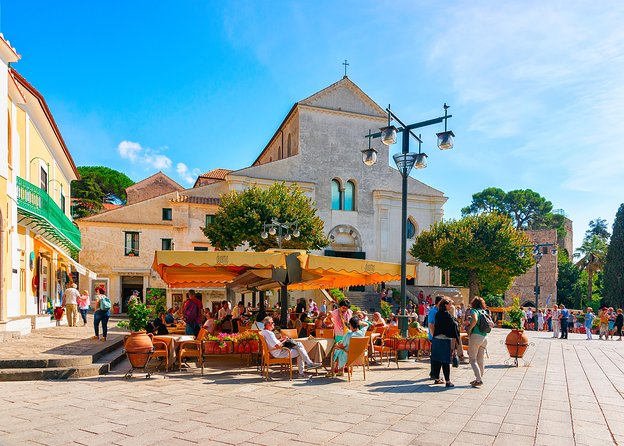
Ravello is the calmer cousin in many people’s Amalfi-daydreams. It’s not about rushing through one major attraction. It’s about atmosphere—streets, overlooks, and a town scale that feels more walkable.
Ravello quick downtown time
You’ll have about an hour in Ravello for a quick walk downtown. That’s enough time to orient yourself, pop into a few shops, and enjoy the views without turning the day into a marathon.
Ravello-Atrani walk for nature and old streets
Then you’ll do the Ravello-Atrani walk with a shorter time window. The point is that you’re not stuck in one big bus transfer loop. You’re moving through the area with a more “on-the-ground” feeling—nature and old town streets, plus the chance to browse local shops.
Atrani is often where you feel the Amalfi Coast as a lived-in place rather than a sightseeing checklist. Even with limited time, the pairing makes sense here because it balances coastal scenery with a more human scale.
Price and value: what you’re paying for (and what you’re not)
Let’s talk money without hand-waving.
You pay $496.21 per person for roughly 8 hours, and the tour includes:
- Private transportation in a modern, air-conditioned minivan
- Round-trip pick-up/drop-off from Salerno port or hotel area
- Private guidance in Pompeii
- Pompeii admission fees
That’s the value backbone: you’re paying for the logistics and the guided time in Pompeii, plus the coast transfers that otherwise eat your whole day in public transit and uncertainty.
Not included:
- Other entrance fees (outside Pompeii)
- Meals
So if you want a day where the main costs are handled and you’re not managing tickets while coordinating a port-day timeline, this format can be a good deal for your time.
If you’re traveling with multiple people, private transportation usually stops feeling expensive fast. The cost can feel more manageable when you split the day’s convenience across a group. If you’re solo and comparing it to cheaper group tours, you’re really buying a stress-free, port-friendly schedule plus your own group pace.
What to pack and how to pace yourself for 8 hours
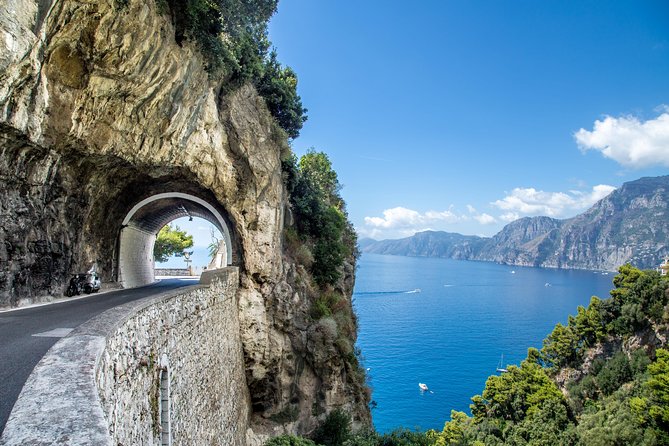
Even with smart timing, you’re doing a lot of walking in two different environments.
Bring:
- Comfortable walking shoes (Pompeii and town streets are not the place for flip-flops)
- Sun protection (the coast can be bright fast)
- A small water plan for Pompeii heat (some drivers provide cold water at stops, but don’t rely on it)
Also, keep expectations realistic:
- Pompeii is run on short stops. You’re seeing highlights.
- Amalfi and Ravello give you freedom, but time is still limited.
- This is a “see it all fast” day, not a “linger everywhere” day.
The people praising the guides often highlight that the information stays digestible and fun. That’s what helps when you’re moving quickly.
Who this Pompeii and Amalfi Coast tour is best for
This is a strong choice if you:
- Are staying near Salerno or docking at the port and want a coherent day plan
- Want one guided UNESCO site (Pompeii) plus coastal time that isn’t fully scripted
- Prefer private pacing over a crowded group schedule
- Are traveling with mixed ages and want someone else handling the driving and routing
It’s also a good match if you like structure at the start of a day and then freedom afterward. Guides you might encounter, like Alice (Pompeii), Serena, Teresa, Mena, and Angelo, are repeatedly described as engaging and effective at turning Pompeii into something you can actually picture.
If you’re the kind of traveler who always needs hours in one place, you might find the Pompeii portion too condensed. In that case, you’d probably enjoy a slower Pompeii-focused day with extra time.
Should you book this Pompeii and Amalfi day trip?
I’d book it if your priority is maximizing a port day without guessing transportation timing. The private pick-up/drop-off, air-conditioned minivan, and guided Pompeii admission-included package make it feel designed for real schedules, not wishful thinking.
I would hesitate only if your personal style is slow travel and you want deep, unhurried time in Pompeii. This outing is a highlights route, even though it’s packed with meaningful stops. Think: best-of Pompeii explained, then Amalfi and Ravello with room to breathe.
If you want a single day that links ancient city life to coastal Italy and you’d rather pay for convenience than spend your day solving logistics, this is a smart pick.
FAQ
How long is the Pompeii and Amalfi Coast tour from the Port of Salerno?
It runs about 8 hours (approx.) for a full-day experience.
Is the tour offered in English?
Yes, it is offered in English.
Where do I meet the driver and guide?
You’ll meet the driver at any port, your client’s hotel, or another meeting location in Salerno’s area. In Pompeii, you meet the guide at the main entrance called Porta Marina Superiore, where the guide holds an Askos Tours sign.
Are Pompeii admission fees included?
Yes, Pompeii admission fees are included as part of the tour.
Are meals included?
No. Meals are not included. Lunch is offered as a stop where you can choose a typical Italian restaurant/pizzeria or a winery option, but you pay your own meal.
Is this a private tour?
Yes. This is a private tour/activity, and only your group will participate.
Are service animals allowed?
Yes, service animals are allowed.
What is the cancellation policy?
Free cancellation is available. You can cancel up to 24 hours in advance for a full refund, based on the local start time.