REVIEW · SALERNO
Salerno : Must-See Attractions Walking Tour
Book on GetYourGuide →Operated by Guydeez Tours · Bookable on GetYourGuide
Salerno’s backstreets make more sense with a guide.
I like how this tour strings together key sights with quieter corners, so you get both the big landmarks and the little street-level details. I especially love the panoramic stops at Giardino della Minerva and the way the guide turns the route into something personal—answers fit what you care about. One thing to keep in mind: access can vary at certain times, so you might need flexibility if a specific garden or interior visit isn’t available that day.
You start at Via Andrea Sabatini, right by Limoncello Rooms, then move through spots like the Medieval Aqueduct known as Ponti del Diavolo, the Duomo of San Matteo (including the crypt), and the atmospheric complex of San Pietro a Corte. You end on the Lungomare promenade with benches, sea air, and a view out toward the Amalfi Coast—and yes, the big Ferris wheel in the area is part of the finish.
If you get a guide like Roberto, the storytelling can feel very local—plus he’s the kind of person who listens and adjusts. And if you’re with Carmen, expect a friendly, helpful pace and clear explanations in English, Italian, Spanish, or French.
In This Review
- Why This Salerno Walking Tour Feels Better Than Self-Guided Wandering
- Key Highlights You’ll Actually Feel During the Walk
- Finding Your Starting Point at Via Andrea Sabatini (And Why It’s Convenient)
- Ponti del Diavolo: The Medieval Aqueduct Stop That Sets the Tone
- Duomo di San Matteo: Baroque Facade and the Crypt
- San Pietro a Corte Complex: Hypogeum and Palatine Chapel
- Fontana dei pesci and Via Mercanti: Street Scenes With Meaning
- Villa Comunale di Salerno (Garden of Enchantment) and Teatro Verdi
- Giardino della Minerva Viewpoints: Where the Photos Make Sense
- Ending on the Lungomare Trieste Promenade (Sea Air and the Big Ferris Wheel)
- Price and Value: Is $77 for Two Hours a Smart Deal?
- Who This Tour Fits Best
- Should You Book This Salerno Walking Tour?
- FAQ
- Where is the meeting point for the Salerno walking tour?
- How long is the tour?
- Is this tour private or shared?
- What languages is the live guide available in?
- Is public transportation included?
- What’s included in the price?
- Is food or drinks included?
- Is the tour wheelchair accessible?
- What is the cancellation policy?
- Do you have options for booking without paying right away?
Why This Salerno Walking Tour Feels Better Than Self-Guided Wandering
This is a private walking tour (just your group), built to cover a smart slice of the old town in about two hours. That matters in Salerno, where it’s easy to walk past something impressive without realizing it—especially with stairs, side lanes, and levels that change from block to block.
The route also keeps moving from outdoors to interiors to viewpoints, so you’re not stuck staring at one type of scene for the whole time. And because your guide shares practical recommendations beyond the scheduled stops, the tour often works like a shortcut for planning the rest of your stay.
One more small practical point: the tour includes walking plus public transport when it makes sense, which can save you energy if the route shifts in elevation.
Key Highlights You’ll Actually Feel During the Walk
- Private, exclusive group: you’re not competing with other people’s questions or pace.
- Customizable narration: the guide can tailor what you hear based on your interests.
- Top viewpoint timing: Giardino della Minerva is worked into the walk, not tacked on later.
- Major interiors, not just photos: you’ll see the Duomo of San Matteo and San Pietro a Corte complex.
- Local advice for the rest of your trip: you leave with ideas that go beyond the checklist.
You can also read our reviews of more tours and experiences in Salerno.


Finding Your Starting Point at Via Andrea Sabatini (And Why It’s Convenient)
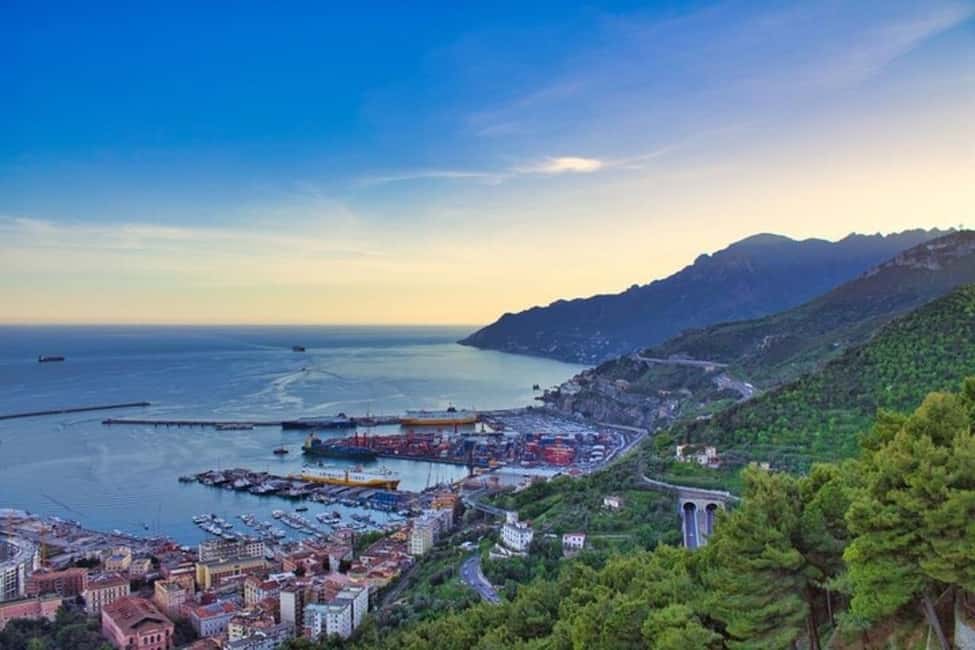
Meet at Via Andrea Sabatini, 4 (near Limoncello Rooms). This is a strong location because it puts you close to the old town action without making you fight through the most chaotic streets right at the start.
I like meeting points that are easy to reach and easy to recognize. Here, you’re placed in a central area where cafes and shops are around, so it’s not a lonely street corner waiting for a vanishing guide.
If you’re coming by foot from the Lungomare area, you’ll also get a head start on orientation. One reason this tour works so well on a first day is that it gives you a mental map fast.
Ponti del Diavolo: The Medieval Aqueduct Stop That Sets the Tone
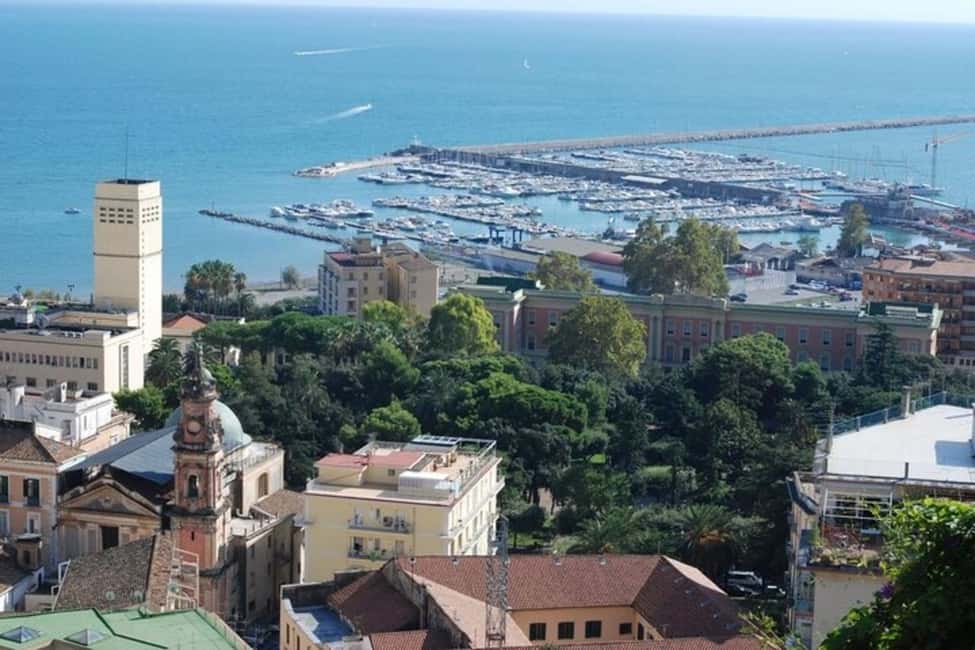
The tour kicks off with the Medieval Aqueduct, known as Ponti del Diavolo. Even if you’re not a “history person,” an aqueduct hits a useful sweet spot: it’s functional, it’s dramatic, and it tells you how a city managed water long before modern plumbing.
You’ll get a guided look and a chance for a photo stop. This is also a good early moment to start noticing Salerno’s vertical feel—how the city layers itself, with views that open and close as you move.
What I like here is that it’s not just a random monument. It’s a story starter. Once you understand why the aqueduct is where it is, you notice the city differently for the rest of the walk.
Duomo di San Matteo: Baroque Facade and the Crypt
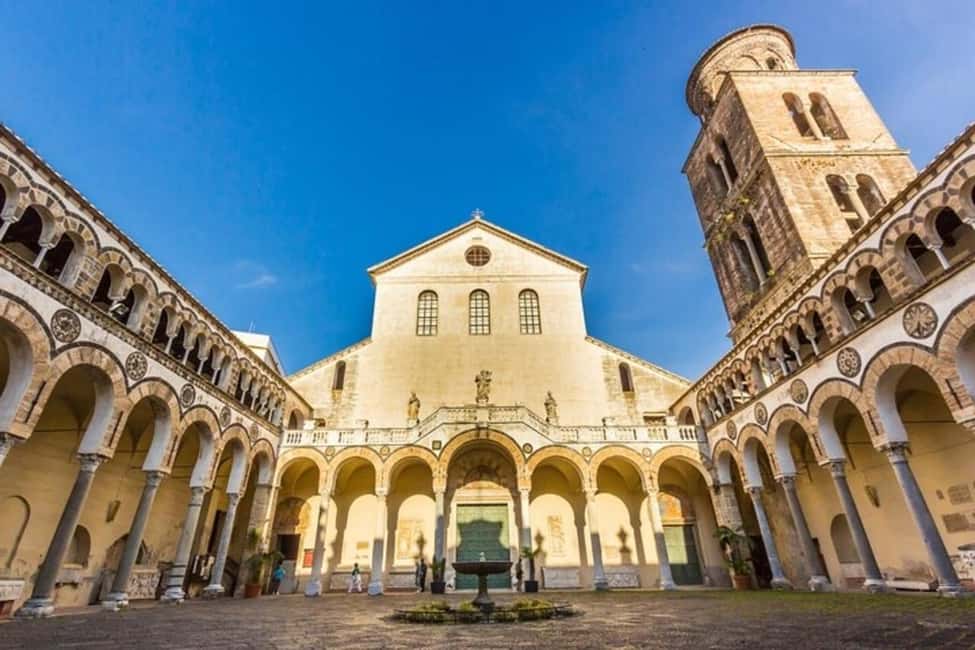
Next up: the Cathedral of San Matteo, with the baroque facade and crypt. Cathedrals can be “check the box” stops. This one tends to land better because the guide can explain what you’re looking at in a way that makes the building feel less like stone and more like lived-in meaning.
The big takeaway is the mix of visual impact and interior depth. You get the facade as a street-level wow moment, then the crypt adds atmosphere—cooler, quieter, and built for reflection.
If you like religious art and architecture, this is one of the highest-value stops on the whole route. Even if you don’t, it’s still a major anchor point for understanding Salerno’s old center.
Practical tip: plan to move slowly through interiors. Places like the crypt often reward patience, and your guide’s pacing helps you avoid rushing past details.
San Pietro a Corte Complex: Hypogeum and Palatine Chapel
Then you move into the monumental complex of San Pietro a Corte, including the Hypogeum and the Palatine Chapel. This is the kind of stop that feels made for guided storytelling, because the space itself can be hard to “read” without someone connecting the dots.
The Hypogeum tends to be a standout for most people because it shifts the mood instantly—more enclosed, more atmospheric, and full of history in a way that doesn’t rely on huge crowds or modern distractions.
The Palatine Chapel adds a contrasting note, helping you see the complex as more than one room or one wall. It becomes a coherent site rather than a quick photo.
A real-world consideration: if you encounter temporary access limits for any interior component, your guide should help adjust on the fly so you still get value from the time. Flexibility is part of good planning in older cities.



Fontana dei pesci and Via Mercanti: Street Scenes With Meaning
After the bigger monuments, you’ll slow down into two classic “walk and look” areas: the Fish Fountain (Fontana dei pesci) and Via Mercanti.
Fontana dei pesci is short, but it works because it’s visually specific. It’s the kind of detail that makes you realize a city isn’t only made of large churches and grand squares. It’s also made of symbols and everyday landmarks.
Then comes Via Mercanti, a commercial street with Lombard-era charm. You’ll get a guided view that helps you understand why the street feels the way it does—how commerce and history shaped what you see today.
This is one of the moments where a local guide earns their fee. The same street looks different when someone points out what to notice beyond the obvious.
Villa Comunale di Salerno (Garden of Enchantment) and Teatro Verdi
The walk continues to the Villa Comunale di Salerno, now known as the Garden of Enchantment. This stop is where you get a breather from dense old-town stone. It’s a place to reset your eyes and your legs, while still staying in “Salerno mode.”
You’ll also see the Teatro Verdi (Giuseppe Verdi Municipal Theater). The theater gives you a different kind of cultural perspective: not just the sacred side of the city, but the civic and artistic one.
In practice, this part of the tour is good if you want balance. You’re not stuck doing only archaeology-and-cathedral. You get a softer pause before the gardens and viewpoints.
One more note based on real experiences: access and opening times can affect what you see in this section. If a stop isn’t possible that day, your guide should steer you toward what’s available so you don’t feel like time was wasted.
Giardino della Minerva Viewpoints: Where the Photos Make Sense
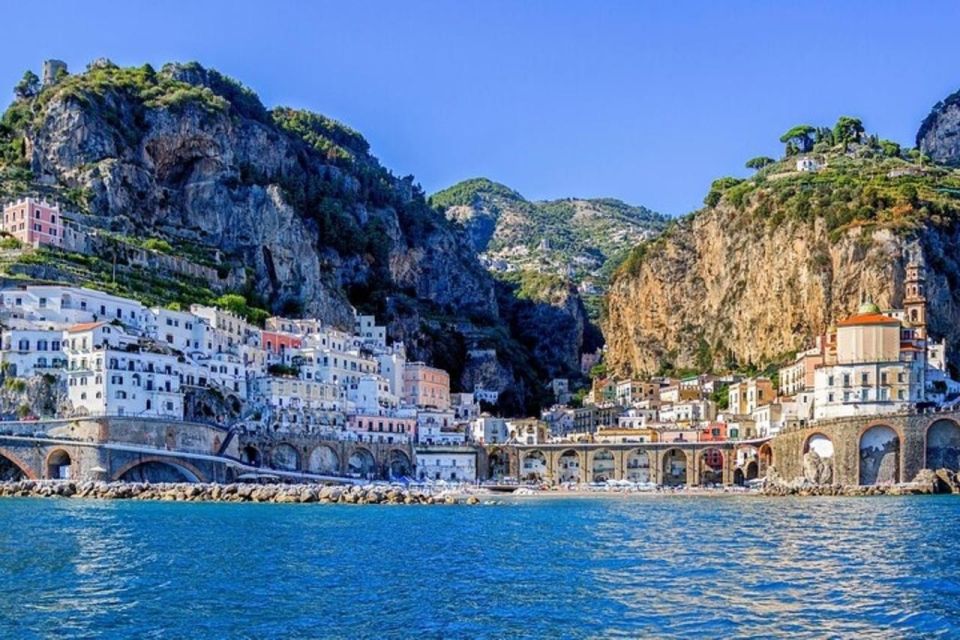
Giardino della Minerva is the big “send your camera out for a job” stop. It’s a historic botanical garden with panoramic views that stretch across the area. This is one of the best places to get the city’s scale—where the old center sits, how the coast relates, and why Salerno feels like it’s built in layers.
I like how the tour sets you up for this viewpoint at a point when you’re already warmed up. You’ve seen enough key landmarks that the views feel informative, not just pretty.
If you care about photography, this is where you’ll probably want a bit of extra time. Even if the walk stays tight, the guide’s timing and directions can help you face the right angles.
Ending on the Lungomare Trieste Promenade (Sea Air and the Big Ferris Wheel)
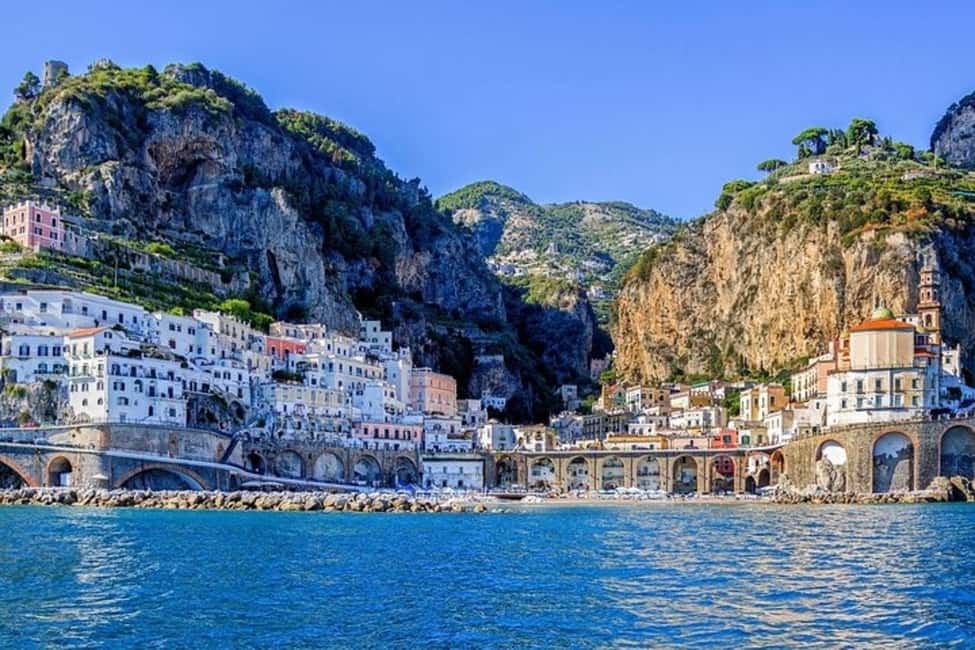
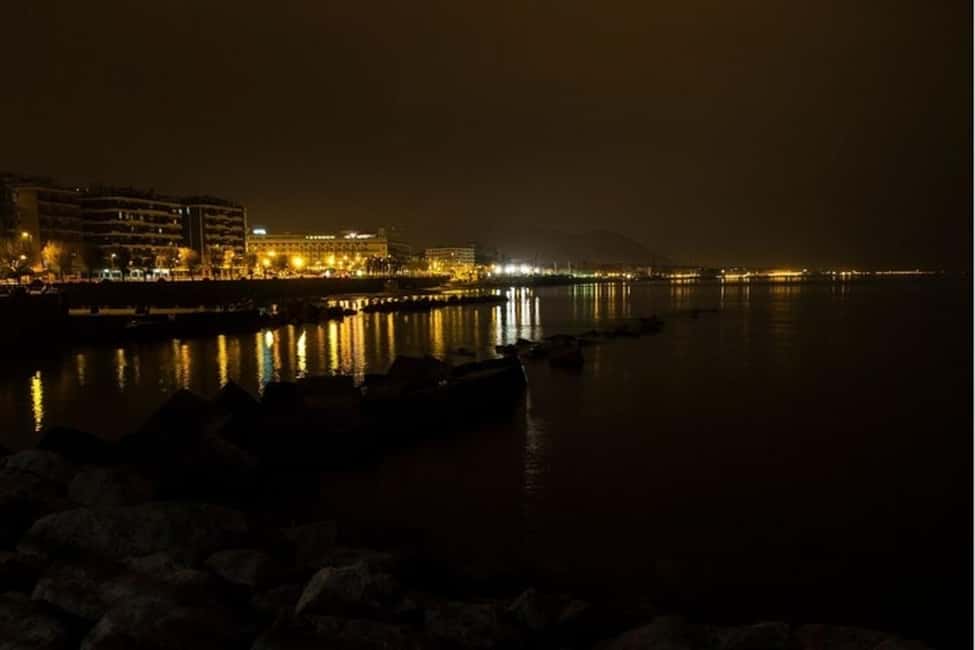
The tour finishes on the promenade, with benches and a strong view over the sea and toward the Amalfi Coast. This is a smart ending because it turns the walk into a feeling: you stop, you look, you breathe.
You’ll also notice the largest Ferris wheel in Europe as part of the scene. It’s a modern landmark, but it also helps you understand that Salerno is not frozen in the past. The city mixes time periods in a way that feels natural.
If you’re thinking about the rest of your day, this ending is useful. It leaves you near a place where you can naturally continue strolling, grab something to drink, or plan a water-side sunset.
Price and Value: Is $77 for Two Hours a Smart Deal?
At $77 per person for a 2-hour private walking tour, you’re paying for three things: a guide who can tailor the experience, a focused route through major highlights, and help that usually makes visiting interiors smoother (including assistance to book tickets for the visits that need them).
Is it the cheapest option? No.
Is it good value? Often yes—especially if you want:
- less guesswork about what matters
- faster orientation in the old town
- a route that doesn’t require you to research every crypt and chapel in advance
If you’re the type who loves long self-directed wandering, you could do some of this on your own. But if you want a guided “Salerno sense-making” session—then this price starts to feel reasonable.
Also, private is a real lever here. In the best experiences, your guide listens and adjusts. That alone can justify the cost when you’re traveling with kids, someone who needs a slower pace, or you just know what you want to see.
Who This Tour Fits Best
This tour works especially well if you:
- are visiting Salerno for the first time and want quick orientation
- care about historic interiors like the Duomo and San Pietro a Corte
- want panoramic viewpoints without hunting them down
- prefer a private guide who can tailor the story to you
It may be less ideal if you’re looking for a long, wide-ranging food crawl or a “stay out late” plan. This one is compact and organized, with a clear ending on the promenade.
And if you have mobility needs: the tour is listed as wheelchair accessible. It’s still smart to message in advance about your specific route needs, since older cities can have uneven ground even when access is possible.
Should You Book This Salerno Walking Tour?
I’d book it if you want a focused, high-impact way to understand Salerno in one morning or one afternoon. The combination of Duomo di San Matteo, the San Pietro a Corte complex, and the viewpoint payoff at Giardino della Minerva is a strong trio—plus the ending on the Lungomare Trieste gives you a satisfying close.
I’d hesitate only if you’re extremely budget-focused and plan to spend most of your time just roaming. In that case, you could save money by doing a self-guided route.
Best move: book early, ask what’s likely accessible on your day for gardens and interiors, and then use the guide’s recommendations for the rest of your stay. This is one of those tours that can make your next decisions easier.
FAQ
Where is the meeting point for the Salerno walking tour?
The meeting point is Via Andrea Sabatini, 4, 84121 Salerno SA, Italy, in front of Limoncello Rooms hotel.
How long is the tour?
The tour lasts 2 hours.
Is this tour private or shared?
It’s a private group tour, meaning it’s exclusive to your group.
What languages is the live guide available in?
The guide is available in English, Italian, Spanish, and French.
Is public transportation included?
The tour includes walking and public transport, except if you select one of the option(s) that changes this.
What’s included in the price?
Included features are the private exclusive tour, customization, walking tour (and public transport where applicable), and help from the team to book tickets for the desired visits.
Is food or drinks included?
No. Drink or food is not included.
Is the tour wheelchair accessible?
Yes, the tour is listed as wheelchair accessible.
What is the cancellation policy?
You can cancel up to 24 hours in advance for a full refund.
Do you have options for booking without paying right away?
Yes. The tour offers reserve now & pay later, meaning you can book your spot and pay nothing today.