REVIEW · POMPEII
Pompeii 3 Hours Walking Tour Led by an Archaeologist
Book on Viator →Operated by Askos Tours · Bookable on Viator
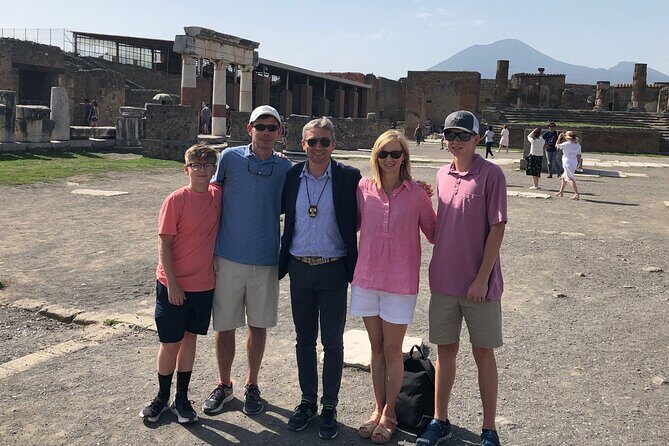
Pompeii rewards a slow, guided pace. This 3-hour archaeologist-led walk in Pompeii helps you connect buildings to the people who used them, from street life to public gathering spots. I love that it’s private, so the pace and questions stay yours. One drawback to plan for: Pompeii is vast and mostly exposed, so sun and heat can feel intense even on a short tour.
A second big like is the stop-by-stop structure. You’ll hit Pompeii’s anchors—like the Basilica portico, the Forum square, and the major theaters—without the usual “where are we?” moments. Admission ticket fees are included at the stops where tickets apply, so you can focus on what you’re seeing rather than juggling extras.
Finally, the tour runs rain or shine and stays outdoors. If you’re sensitive to glare or sun, bring sunscreen and a hat; you’ll see why once you’re walking past long, shaded-light-less stretches. Good news: you start and end at the same meeting address, and the guide can help you figure out how to get back.
In This Review
- Key highlights worth your attention
- Why this Pompeii walking tour feels different than the usual route
- Meet at Porta Marina Superiore and keep your day stress-free
- How the route makes Pompeii easier to understand on foot
- Basilica portico sheltering merchants and daily business
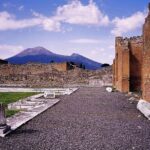
- The Forum square: Pompeii’s main civic moment
- Granaries of the Forum: marble tables, fountain baths, and casts
- House of Menander: a peek into wealth and decoration
- Stabian Baths (Terme Stabiane): the oldest thermal complex feel
- Lupanar: the most famous brothel in Pompeii
- House of the Faun: big private life in a large residence
- Teatro Piccolo and Teatro Grande: two ways Pompeii staged entertainment
- What makes the guides stand out (and why it matters)
- Timing, sun, and the real comfort checklist for Pompeii
- Price value: what you’re really paying for
- Who should book this Pompeii private archaeologist tour
- Should you book it? My honest take
- FAQ
- How long is the Pompeii 3-hour walking tour?
- What does the Pompeii tour cost?
- Is the tour private?
- What language is the tour offered in?
- Where do we meet, and where do we end?
- Is admission included?
- What should I bring for Pompeii?
Key highlights worth your attention
- Archaeologist-led explanations: You’re not stuck with generic captions; you get real context.
- Private group experience: Only your group participates, with time for questions.
- Major Pompeii landmarks in 3 hours: Basilica, Forum, thermal baths, House sites, and both theaters.
- Included admission fees at ticketed stops: Less hassle, more time for the ruins.
- Practical Pompeii comfort tips baked in: Minimal shade means you’ll plan for the sun.
Why this Pompeii walking tour feels different than the usual route
Pompeii is one of those places where “I saw it” and “I understood it” can be two very different stories. This tour is built to push you from seeing walls and mosaics toward understanding daily life—how Romans shopped, met, relaxed, worked, worshiped, and staged entertainment.
The private format matters more than you’d think. In a big crowd, your attention tends to break into pieces: one person reads, another person walks ahead, someone asks a quick question, and the guide has to move on. Here, you’re more likely to follow the flow, linger where something clicks, and ask follow-ups when the guide explains things like the relationship between the city’s painted surfaces and the eruption’s aftermath.
It also helps that the tour is short: around 3 hours. That’s long enough to cover major sights but not so long that you lose your energy. Pompeii wears people down. A focused route keeps the experience satisfying instead of exhausting.
You can also read our reviews of more walking tours in Pompeii
Meet at Porta Marina Superiore and keep your day stress-free
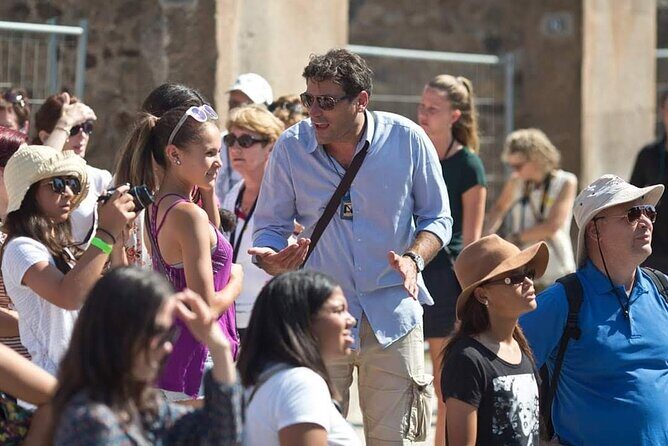
The tour starts at the Pompeii Archaeological Park main entrance called Porta Marina Superiore. Your guide will be holding a sign for Askos Tours, which makes the first step simple: you can spot the team and get moving instead of wandering the entrance area.
You’ll also meet at Via Villa dei Misteri, 1, 80045 Pompei NA, Italy, and you finish back at that same address. Even better for practical travel life: there’s a free luggage store near the meeting point, so you can drop bags safely before you start walking.
One small detail that’s surprisingly helpful: the tour is near public transportation. If you’re staying out of town or you’re moving between Naples and Pompeii, it’s easier to build the day around trains and buses rather than only around private car time.
How the route makes Pompeii easier to understand on foot
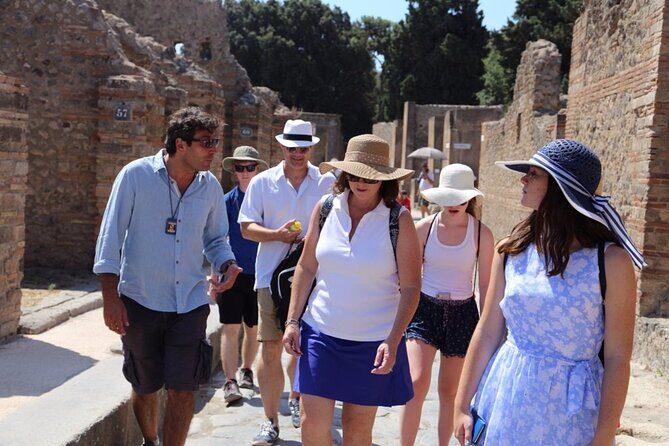
Pompeii is often described like a museum you walk through, but the feeling is more like a city that never fully stops talking. The route here is set up to move through recognizable themes and spaces.
You begin inside the park near the Forum-area heart, then work your way through public buildings and civic life. After that, you shift into private-world scenes—houses, bath complexes, and the famed entertainment side of Roman culture. The final stretch brings you to the theaters, which helps the day land with that sense of people gathering for plays, performances, and spectacle.
This sequencing is the trick. Instead of bouncing randomly between highlights, you see how different parts of Pompeii relate to one another: public porticoes and merchant shelter, a main square for civic life, neighborhoods with everyday amenities like baths, and entertainment venues where crowds gathered.
Basilica portico sheltering merchants and daily business
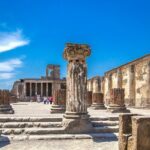
Stop one is the main entrance area, then you move on to the Basilica, described as an open portico that gave shelter to merchants and other activities. This isn’t just an architectural stop. It’s a reminder that Pompeii wasn’t a set piece—it was a functioning town where commerce happened in spaces designed for crowd flow and shade-like cover.
In practical terms, the Basilica helps you read the city. When you stand there, you start to picture the routine rhythm: people arriving, negotiating, waiting out sun, and passing messages. Even if you don’t know Roman architecture terms, this stop gives you an anchor. It’s the kind of place where the guide’s explanations can turn “big old building” into “real public life.”
Time on site: about 20 minutes.
Tickets: free.
The Forum square: Pompeii’s main civic moment
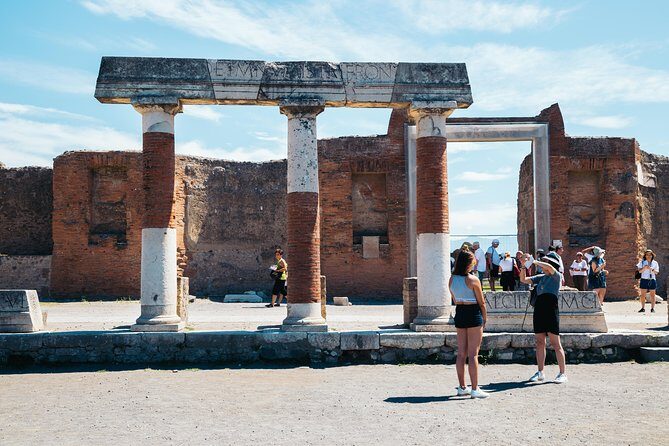
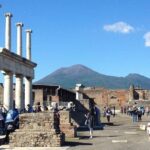
Next comes Foro de Pompeya, the ancient main square. This is where you should expect the biggest “OK, I get it” feeling of the whole tour. Squares are where civic identity shows up—public decisions, foot traffic, and social energy.
The Forum stop is also one of the best times to ask questions. If the guide is running you through the city’s layout, this is where that mental map starts to form. You’ll likely notice how the square connects to nearby structures and why it makes sense that Pompeii’s public life centered here.
Time on site: about 20 minutes.
Tickets: free.
You can also read our reviews of more tours and experiences in Pompeii

Granaries of the Forum: marble tables, fountain baths, and casts
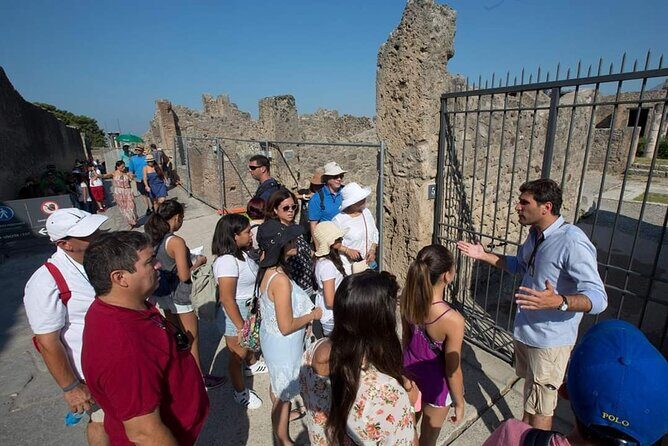
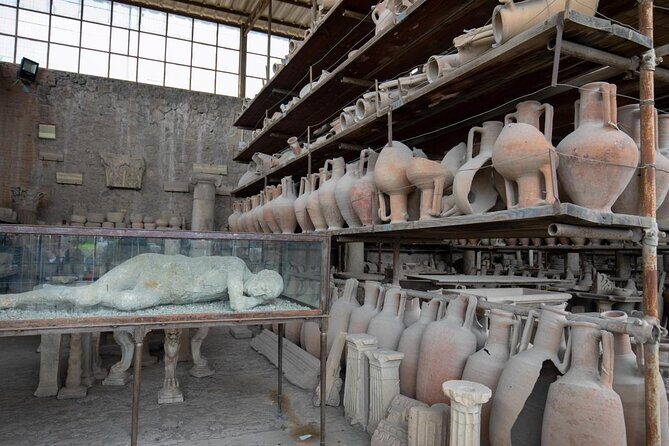
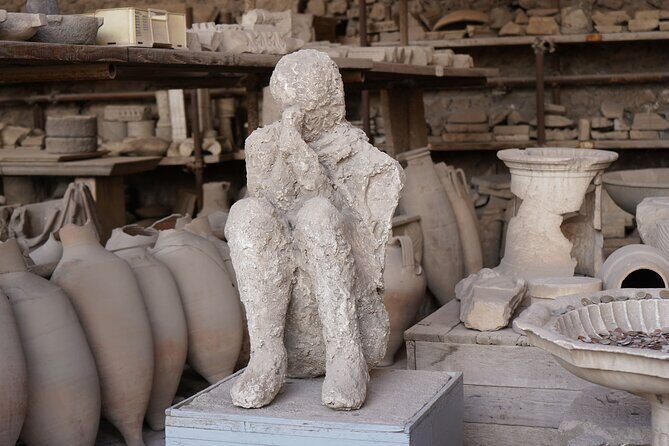
The Granaries of the Forum bring you into a more complicated, more emotional side of Pompeii. You’ll see marble tables and bath-like basins for fountains that once adorned entrances of houses. That’s the everyday world—ornament, water access, and household entrances that signaled status.
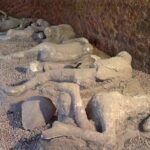
Then the stop adds a heavy punch: you’ll also see casts connected to the eruption’s victims, including casts of a dog and a tree. Whether you’re sensitive to tragedy or not, Pompeii’s cast displays have a particular way of landing. They make the disaster real at human scale, and they also connect the eruption to the street-level details you’ve been seeing all day.
This stop is worth your attention because it bridges two themes at once: normal life objects and the sudden end. A good guide keeps that from becoming just “sad photos.” They help you understand what you’re looking at and why these details matter.
Time on site: about 20 minutes.
Tickets: included.
House of Menander: a peek into wealth and decoration
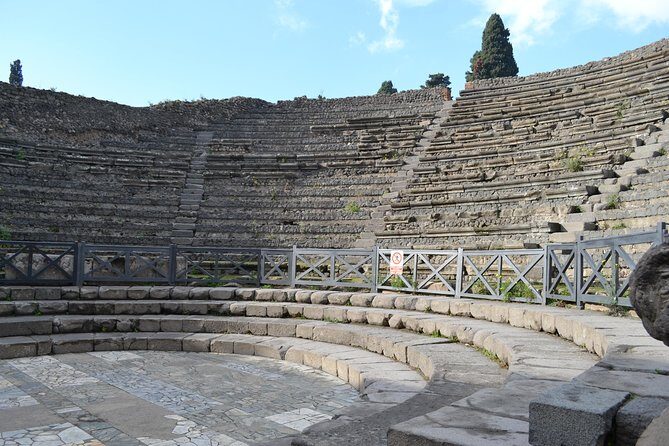
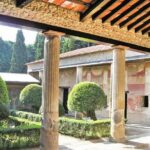
After public spaces, the tour shifts into domestic life with the House of Menander. This one stands out for architecture, decoration, and contents, and that emphasis matters. Pompeii isn’t only famous for ruins; it’s famous for how much “home” you can still feel through layout and surviving details.
In a private setting, this stop tends to work well because you can take your time with the parts your eyes keep catching. One moment you’re looking at the structure; the next you’re thinking about how much it would have cost to maintain and furnish a home like this.
Time on site: about 20 minutes.
Tickets: free.
Stabian Baths (Terme Stabiane): the oldest thermal complex feel
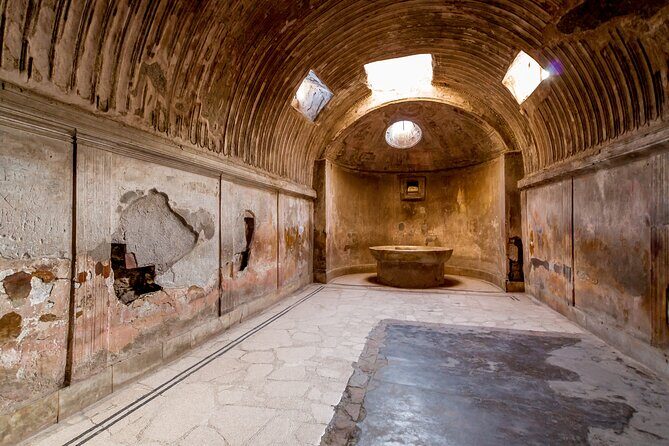
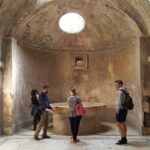
The Stabian Baths occupy a vast area between key routes in the city, and they’re described as the oldest thermal complex in Pompeii. That alone makes this stop worth it. Baths weren’t just about hygiene; they were a social hub. People met there, talked there, and passed time as part of everyday life.
When you’re standing in a place like this, the best way to “read” it is to remember that it’s built for movement and routine. You’re not just looking at rooms—you’re trying to picture the flow: where people would gather, where they’d relax, and how long they might spend in these communal spaces.
Time on site: about 25 minutes.
Tickets: free.
Lupanar: the most famous brothel in Pompeii
Next up is the Lupanar, Pompeii’s most famous brothel. This stop is always a little polarizing, but that’s also why it’s important. It shows that Roman life included entertainment and commercial sex work—functions that existed in plain sight and were integrated into the city’s social structure.
The guide can make a big difference here, because you’re looking at a space with a lot of context needed to interpret what you’re seeing. The best tours treat it as history with facts, not shock value. In a private format, you can also ask questions about how the site functioned in its time, and you’re less likely to feel rushed away from the details.
Time on site: about 20 minutes.
Tickets: free.
House of the Faun: big private life in a large residence
The House of the Faun is described as one of the largest and most impressive private residences in Pompeii. If Menander gives you a taste of wealth and decoration, the Faun house gives you scale—how prominent some homes were, how much space families controlled, and how the architecture and layout supported status.
This is the stop where I recommend slowing down just a bit. With Pompeii’s pace, it’s easy to treat houses like quick photo stops. Instead, use the guide’s explanations to notice what you’re seeing: how rooms relate, how entrances worked, and what the layout suggests about daily routines.
Time on site: about 20 minutes.
Tickets: free.
Teatro Piccolo and Teatro Grande: two ways Pompeii staged entertainment
The tour finishes with major entertainment venues, starting with Odeon – Teatro Piccolo and then moving to Teatro Grande.
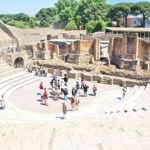
You get a quick look at Teatro Piccolo, then a more detailed visit of the city’s most important theater. This dual theater sequence is smart. It helps you see that Pompeii’s entertainment wasn’t one-size-fits-all. Smaller performance spaces and larger stages served different kinds of gatherings and community needs.
Time on site:
- Teatro Piccolo: about 5 minutes
- Teatro Grande: about 20 minutes
Tickets: free.
What makes the guides stand out (and why it matters)
Because this is archaeologist-led, the most praised part of the experience is the way the guide brings the technical and human sides together. Names that have shown up for this tour include Monica (noted as having a PhD in archaeology), Daniela Mantice (art historian), Antonella, Anna Sorrento, Nicoletta, and Lia.
Here’s what you should look for in a great Pompeii guide, and why this tour seems to hit it:
- They explain architecture in plain language. You don’t need a degree to understand what you’re seeing.
- They link art and materials to the catastrophe. One guide has been praised for describing the relationship between Vesuvius’s storm conditions and Pompeii’s painted surfaces, which is exactly the kind of connection that turns ruins into a story.
- They handle questions without rushing. In a private tour, the conversation is allowed to breathe.
If you enjoy learning, this is the tour that rewards your curiosity. Even if you’re more of a wander-and-observe person, the guide’s structure helps you keep moving with purpose.
Timing, sun, and the real comfort checklist for Pompeii
Pompeii is famous for being hard to stay comfortable in. The tour notes minimal shade, and it’s not wrong. Even on a mild day, the sun can feel aggressive because you’re walking in open areas.
Pack like you’re going to be outside for hours:
- Sunscreen and a hat are strongly recommended.
- Wear comfortable walking shoes. The surface can be uneven and the day adds up fast.
- If you tend to get dehydrated, bring water, even if the tour includes tickets but not drinks.
Also remember: the tour takes place rain or shine. So plan a thin rain layer. When the forecast looks uncertain, the “rain or shine” approach is actually reassuring—you won’t face a last-minute scramble to replace the experience.
Price value: what you’re really paying for
At $256.99 per person for about 3 hours, this is not a budget tour. The value comes from three things working together:
- You’re paying for an archaeologist guide, not just a driver or a generic narrator.
- It’s private, so the guide’s time is directed only at your group.
- Admission ticket fees are included at ticketed stops, which reduces hidden add-ons.
There’s also mention of group discounts, which can matter if you’re traveling with friends or family and want the private format without paying full freight per person.
One more practical note: this tour is booked about 50 days in advance on average. That suggests it’s popular for the very reason you’d hope—people like the guide quality and the flow.
Who should book this Pompeii private archaeologist tour
This is a strong fit if you:
- Want a guided walk but don’t want a giant group.
- Prefer learning that connects buildings to how people lived.
- Are trying to see the “main Pompeii” sights without doing a full all-day marathon.
- Care about interpretation, not just photos.
It’s also a good match for art and architecture fans. The guide style highlighted in past experiences includes art-historian thinking and archaeology-level explanation, which is perfect if you like details like materials, design, and how rooms were used.
If you hate walking in open sun, you’ll need to be strategic. You can still go, but you should take the shade warning seriously and plan your timing, clothing, and hydration.
Should you book it? My honest take
If you want Pompeii in a tight, meaningful package, I’d book this. The combo of private pacing plus archaeologist explanations plus a route that hits major civic, domestic, bath, and entertainment spaces is exactly how you get from “cool ruins” to “I understand this place.”
I’d only hesitate if you’re very heat- or sun-sensitive, because Pompeii’s exposed layout is real. If you’re good with basic outdoor planning (hat, sunscreen, water), this tour is a solid way to make your time count.
And if you care about asking questions—about Roman public life, homes, baths, or what you’re actually looking at in the cast displays—this is the kind of tour that turns curiosity into a better day.
FAQ
How long is the Pompeii 3-hour walking tour?
It lasts about 3 hours.
What does the Pompeii tour cost?
The price is $256.99 per person.
Is the tour private?
Yes. It’s a private tour/activity, and only your group participates.
What language is the tour offered in?
The tour is offered in English.
Where do we meet, and where do we end?
You meet at Via Villa dei Misteri, 1, 80045 Pompei NA, Italy, and the tour ends at the same address. Your guide will meet you at the Pompeii main entrance called Porta Marina Superiore.
Is admission included?
Yes. Admission ticket fees are included. Some stops also state free admission, such as the Basilica and the Forum.
What should I bring for Pompeii?
Pompeii is vast and very exposed with minimal shade, so bring sunscreen and a hat. The tour runs rain or shine, so pack for weather.