REVIEW · POMPEII
Small Group Guided Walking Tour of Ancient Pompeii Highlights
Book on Viator →Operated by Private Tours of Pompeii · Bookable on Viator
Pompeii makes more sense on foot. This small-group guided walk hits the sites that teach you how Romans lived, worked, and entertained in a city frozen by Vesuvius. What makes it especially practical is the skip-the-line setup plus real guided storytelling at each stop.
I like two things a lot: the small group limit (max 18) for quicker questions, and the fact that the tour comes with entrance tickets included so you are not juggling paperwork while you’re trying to see ruins. One consideration: this is a timed, group tour, so if you show up late, you may miss reserved entry slots.
In This Review
- Pompeii Highlights: quick tour takeaways
- Pompeii’s highlights work best as a guided walking circuit
- Tour logistics: 2 hours, small group pace, and meeting point
- Stop 1: the UNESCO area with an included admission ticket
- Stop 2: Teatro Grande and why a 5,000-seat venue matters
- Stop 3: Odeon and Teatro Piccolo in about 20 minutes
- Stop 4: Terme del Foro Roman baths and the burial story
- Stop 5: Lupanar, frescoes, and appointment-house reality
- Skip-the-line access: why it’s more than a marketing line
- The guide effect: archaeologist storytelling and clear audio
- What you’ll learn (and what you should do after the tour)
- Price and value: what you’re actually paying for at $107+
- Who this Pompeii highlights walk is best for
- Practical tips before you go
- Should you book this Pompeii small-group highlights tour?
- FAQ
- How long is the Small Group Guided Walking Tour of Ancient Pompeii Highlights?
- How much does the tour cost?
- What’s included in the price?
- Is there a skip-the-line benefit?
- Where does the tour start and end?
- Is this a ticket to the ruins by itself?
- What should I wear?
Pompeii Highlights: quick tour takeaways
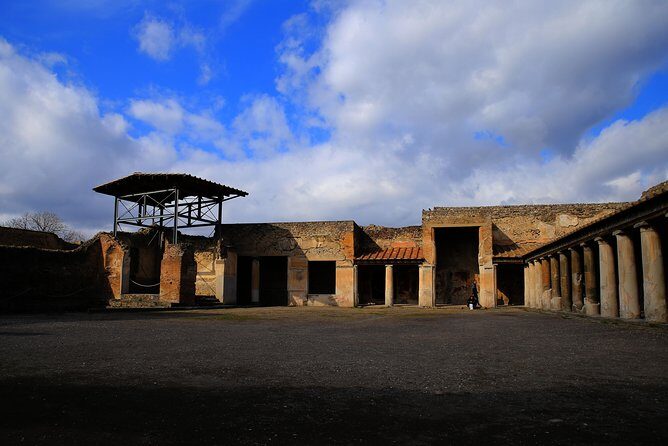
- Skip-the-line access helps you start seeing ruins faster instead of waiting outside.
- Tickets are included, which simplifies your day and cuts down on logistics.
- Stop-by-stop focus covers major areas: theaters, baths, and the Lupanar.
- Small group size (18 max) makes questions easier and the walk feel more personal.
- Radio headsets mean you hear the guide clearly while moving through the site.
- Comfortable-shoes focus matters because you’ll be walking on original ancient streets.
Pompeii’s highlights work best as a guided walking circuit
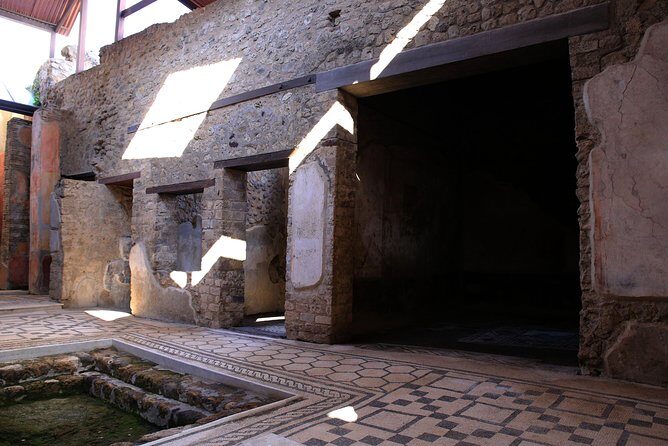
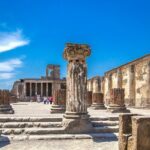
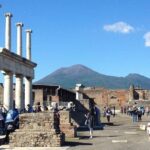
Pompeii is big, and it’s easy to feel lost fast. Even if you’ve seen photos, the real payoff is connecting the dots: what you’re standing on, what it was used for, and why certain buildings ended up preserved in the first place. This tour is built for that. It moves you through a set of core stops that explain entertainment venues, daily life, and elite vs. everyday spaces.
The guide’s job here is not just to point. You’ll get the kind of on-the-ground explanations that make the ruins feel less like random stone and more like a functioning city. You also get an intentional pace, which matters because Pompeii is not just sightseeing. It’s walking on uneven ancient surfaces, in sun, and with lots to take in.
You can also read our reviews of more walking tours in Pompeii
Tour logistics: 2 hours, small group pace, and meeting point
This is an about 2-hour guided walking tour with multiple short stops. Each segment is timed, so you’re not stuck waiting at one place too long. The tour ends back at the meeting point, so you can keep the rest of your day flexible for your own exploring afterward.
You start at Coffee Shop Vittoria, Via Mare, 80045 Pompei NA, Italy. Plan to arrive about 10 minutes early. The tour rules are clear: if you’re delayed, the guide won’t wait because reserved entrance times are booked for the group. I treat this as non-negotiable advice. Pompeii runs on timed entries, and missing them can turn a great plan into a stressful afternoon.
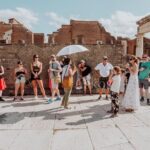
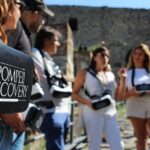
Group size is limited to 18 travelers maximum, which is one of the biggest quality signals. With a smaller group, you can actually hear the guide, move together smoothly, and ask follow-up questions when something catches your eye.
Stop 1: the UNESCO area with an included admission ticket
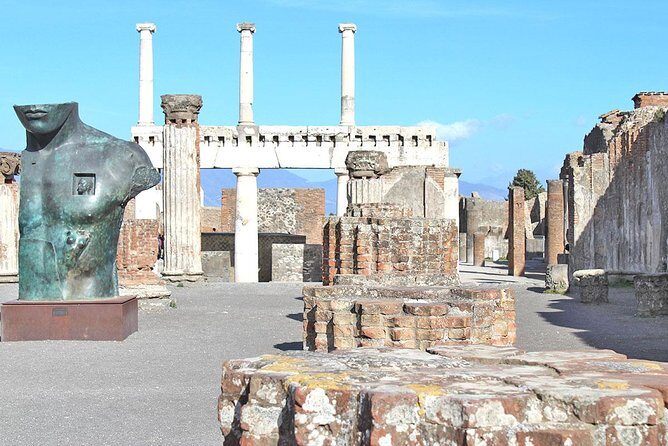
The first stop is labeled Private Tours of Pompeii, where you get access to one UNESCO World Heritage Site area for about 30 minutes, with an admission ticket included. Think of this as your grounding moment. You’ll get orientation that helps the later stops click into place.
Why this opening matters: Pompeii is best understood by context. If you start right at a theater or a bath complex with no framing, you may still enjoy it, but you won’t connect it to the bigger picture of how the city worked. The guide’s explanations at this first stage are meant to set up what you’ll see next.
A practical note: this tour includes entrance tickets, but your confirmation is specifically for a guided tour. It is not a standalone ticket you can use on your own. You’ll want to bring your confirmation and use it only with the guide as directed.
Stop 2: Teatro Grande and why a 5,000-seat venue matters
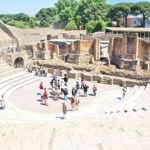
Next up is Teatro Grande, a large open-air theater with 5,000 seats. You’ll spend about 20 minutes here, with admission included. A theater is more than a place to watch shows. It’s a statement: who had status, how public entertainment was organized, and how crowds moved through the city.
In a guided setting, this stop pays off because you’re not just looking at architecture. You’re learning how Romans used space. The guide’s approach turns a big seating bowl into something logical: entrances, views, crowd flow, and the practical side of an open-air venue.
Since it’s open-air, sun and heat can hit harder than at some indoor museums. If you’re visiting in warmer months, you’ll appreciate that this itinerary uses multiple shorter stops rather than one long slog in the hottest spot.
Stop 3: Odeon and Teatro Piccolo in about 20 minutes
After the big theater comes the smaller counterpart: Odeon and Teatro Piccolo, an open-air theater seating about 800. Again, you get about 20 minutes with admission included.
This pairing is smart. Once you’ve seen Teatro Grande, you start noticing differences that tell you about scale and purpose. The smaller venue helps you understand that Pompeii’s entertainment scene wasn’t one-size-fits-all. Different crowds, different events, different levels of formality.
If you’re traveling with teens or anyone who tends to lose interest in long explanations, this is a good structure. The stops rotate. You don’t just stand and listen for 60 minutes straight.
You can also read our reviews of more guided tours in Pompeii
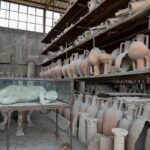
Stop 4: Terme del Foro Roman baths and the burial story
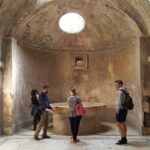
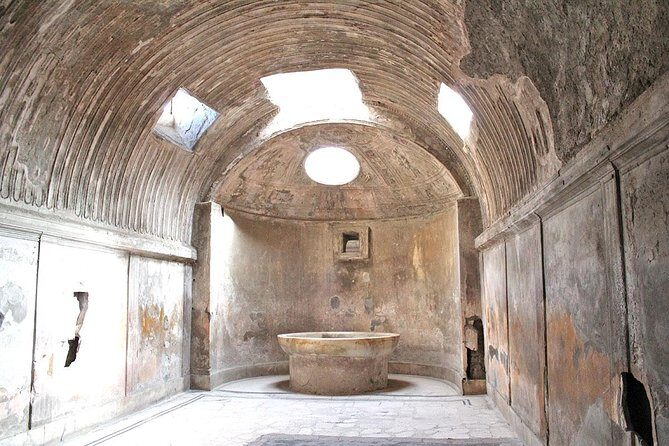
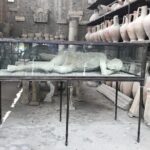
Then you’ll reach Terme del Foro, a Roman bath complex that was buried by Vesuvius in 79 A.D. You spend around 20 minutes there, with admission included.
Baths are one of my favorite Pompeii themes because they hit everyday life. They were not just about cleaning. They were social spaces and routine. Guided context helps you understand how these places worked as part of a city’s daily schedule. When the eruption ended that routine, the complex became preserved in a way that lets you study it today.
One small drawback to consider: baths can be physically spread out or partially in ruin depending on how the guide navigates. That’s not a problem, but it means you should expect to pause, look, then walk a bit again as the guide explains key features.
Stop 5: Lupanar, frescoes, and appointment-house reality

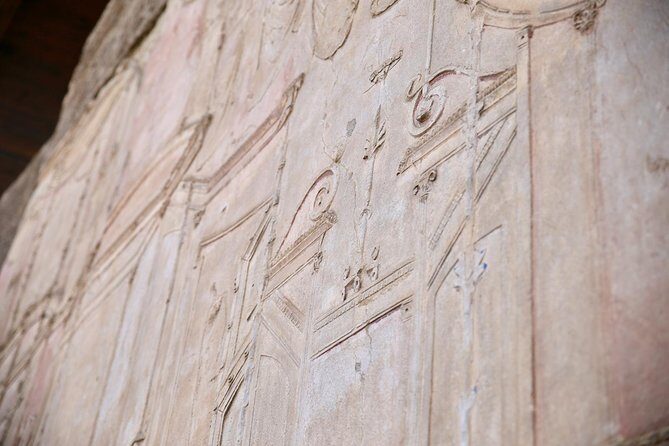
The final major stop is Lupanar, often described as a set of appointment houses or brothels. You’ll spend about 30 minutes here, with admission included. Some frescoes are still visible, and the guide explains what they show about the specialty of the women working.
This is the stop where Pompeii can feel most human. You’re seeing spaces used for very specific services, and that can be awkward in a way that’s more about topic than about comfort. A good guide makes it factual and respectful, connecting art and daily life without turning it into gossip.
The 30-minute timing helps here. You don’t need to sprint through; you get a chance to understand the layout and why the visual clues matter. If you want to know what Rome’s sex work economy looked like at a street level, this is one of the few places in Pompeii where that connection becomes real.
Skip-the-line access: why it’s more than a marketing line
This tour includes guaranteed skip-the-line access. In practical terms, that can make the difference between a smooth morning and a wasted chunk of time standing around. Pompeii is popular, and waiting outside ruins is the kind of annoyance you can avoid with a timed entry plan.
But do note the distinction that the tour confirmation is for a guided visit. Your reserved entry is tied to going in with the guide. That matters because it keeps you from showing up and assuming you can wander in solo at the reserved time.
Once you’re inside, the itinerary’s short segments help you take advantage of your access while still moving efficiently through the key highlights.
The guide effect: archaeologist storytelling and clear audio
The biggest reason these tours earn high marks is the guide. I’m drawn to this tour concept because the guides are not just docents reading captions. They bring stories and archaeology background into the ruins.
In particular, I’d keep an eye out for guides like Lello, described as an archaeologist with a passion for Pompeii that keeps families engaged. Another guide, Italo, comes across as friendly and fun, with clear explanations that still feel tuned to real people. Susanna is also mentioned as educational, entertaining, and kind, which matters when the tour has to deal with late arrivals in a humane way.
One extra practical quality is the use of a radio system with a small ear piece. When you’re walking between ruins, wind and crowd noise can make it hard to hear. This setup keeps the guide’s voice clear without forcing you to constantly lean in.
What you’ll learn (and what you should do after the tour)
By the end of the walk, you should have a better map in your head. You’ll understand Pompeii’s entertainment side through the theaters, its daily routine through the baths, and the street-level reality through the Lupanar. The UNESCO-area orientation in the beginning ties it all together so you’re not just collecting random sights.
After the tour, you’re free to keep exploring on your own. I like having that split because the guide gives you the framework, then your own curiosity decides what you want to look at longer. If you return to an area and things suddenly make sense, that’s when Pompeii starts clicking.
If you want a simple strategy: pick one extra spot to revisit, not ten. Pompeii punishes scatter-brained wandering. One good extra hour beats five frantic stops where you barely absorb anything.
Price and value: what you’re actually paying for at $107+
At $107.23 per person for about two hours, the value is not just the guide’s time. You’re also paying for entrance tickets and guaranteed skip-the-line access. That’s a real cost saver in busy seasons when standalone tickets plus waiting can add up to a frustrating day.
The small-group cap also changes the value. You get movement efficiency and more chances to ask questions, which can make the difference between watching the ruins and understanding them.
A final value thought: if you compare this to pricier big-name attractions in other cities on the same trip, you may find this one punches above its weight because it combines access, included tickets, and an itinerary built around learning.
Who this Pompeii highlights walk is best for
This tour fits best if you want structure and you like learning while you walk. It’s especially good for:
- Families with teens who still want to move and not sit too long
- Travelers who want the highlights without planning every stop
- Anyone who prefers small groups for better questions and smoother pacing
- People visiting Pompeii for a first time who want a guide to help you read the site
It may not be the best fit if you want long, slow wandering with lots of independent time from the start. This is built as a guided circuit with timed entry. You can still explore after, but the guided portion is about efficiency.
Practical tips before you go
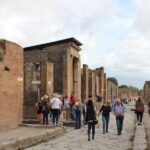
Wear comfortable shoes. Pompeii uses original ancient paving, and you’ll be walking on uneven surfaces. Bring a light layer if you get cold near the open-air spaces, but do expect heat in sun.
Also, stick to smart casual dress. It’s not a formal event, but you’ll feel better when you’re comfortable and ready to move.
Finally, keep your confirmation rules in mind. This is a guided-tour confirmation tied to the guide. Don’t plan to use it as a walk-in ticket.
Should you book this Pompeii small-group highlights tour?
If you want Pompeii’s top sites in two focused hours, with tickets handled and a guide who turns ruins into stories, I think this is a smart buy. The small group size and clear audio system are quality-of-life upgrades, and the stop selection hits big themes fast.
Book it especially if:
- you hate waiting in lines
- you want the guide’s help understanding what you’re seeing
- you prefer a plan that keeps you moving without feeling rushed
Skip it if you want total freedom from the first minute, or if your schedule might make it hard to arrive about 10 minutes early.
FAQ
How long is the Small Group Guided Walking Tour of Ancient Pompeii Highlights?
It runs for about 2 hours.
How much does the tour cost?
The price is $107.23 per person.
What’s included in the price?
The tour includes a professional guide, guaranteed skip-the-line access, and entrance tickets.
Is there a skip-the-line benefit?
Yes. The tour includes guaranteed skip-the-line access.
Where does the tour start and end?
It starts at Coffee Shop Vittoria, Via Mare, 80045 Pompei NA, Italy and ends back at the same meeting point.
Is this a ticket to the ruins by itself?
No. It is a guided tour confirmation, and you can use it only with the guide.
What should I wear?
Smart casual is the dress code, and you should wear comfortable shoes because you will be walking on original ancient streets.