REVIEW · POMPEII
3-Hours Private Walking Tour in Pompeii with an Archaeologist
Book on Viator →Operated by Tours with an archaeologist · Bookable on Viator
A good Pompeii guide turns rubble into stories. In just three hours, this private walking tour helps you read the city like it was still alive—streets, buildings, and everyday Roman life all connected by solid archaeology.
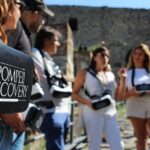
Two things I really like: you get a licensed archaeologist with an archaeological degree, and the experience is truly private (your group only, up to 8). If you want the walk to lean more toward daily life details or the architecture, you can ask for that kind of focus—and your guide can adapt.
One consideration: the admission ticket is not included, so you’ll need to budget the entry fee separately. Also, the tour depends on good weather, since it’s a walking experience inside the park.
In This Review
- Key Points You’ll Care About
- Pompeii in 3 Hours With an Archaeologist’s Lens
- Your Starting Point: Piazza Esedra, Then Straight Into the Park
- Inside Pompeii Archaeological Park: Public Buildings, Private Life
- What “public and private” means on the ground
- Architecture that’s easier to understand than you think
- The Off-Route Stops: Where the City Feels Less Crowded
- Customize the Walk: Add Your Must-See Interests
- Meet Giada (and the Guide Style That Works)
- The Pompeii Story You’ll Hear: Life, Then Vesuvius
- Pace and Practical Reality: What Three Hours Feels Like
- Price and Value: $504.10 for Up to 8, Plus Entry
- What to Ask Your Archaeologist During the Walk
- Who This Pompeii Private Tour Is Best For
- Should You Book This Pompeii 3-Hour Private Tour?
- FAQ
- How long is the private walking tour?
- How big is the group for a private tour?
- Is Pompeii admission included in the price?
- Where do we meet, and where does the tour end?
- What language is the tour offered in?
- Do I get a ticket on my phone?
- Do I need good weather for this tour?
- When will I receive confirmation after booking?
- Is this experience refundable if I cancel?
- Are service animals allowed?
Key Points You’ll Care About
- Private, up to 8 people: you can ask questions and keep the pace comfortable.
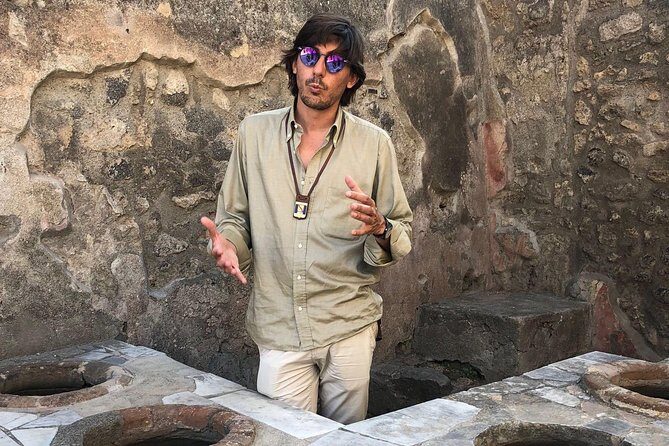
- Licensed archaeologist guide: you get context tied to Greco-Roman life and what’s preserved.
- Hidden spots off the main routes: you’re not stuck only where the biggest crowds go.
- Flexible customization: you can add specific interests to your walking plan.
- 3 hours focused on essentials: major public and private areas without trying to do everything.
Pompeii in 3 Hours With an Archaeologist’s Lens
Pompeii is famous for good reasons, but it can also feel like a lot of stones in a lot of light—until someone teaches you how to look. This tour is built for that exact problem. You’re not just moving from landmark to landmark. You’re learning how the Romans lived, worked, and believed, using the ruins as your evidence.
I love that the guide keeps it practical. The walk is designed to connect what you see with why it matters, from how daily routine might have looked to what the buildings say about status and city life. And because the guide is an archaeologist, the explanations stay grounded in the site, not in vague guesswork.
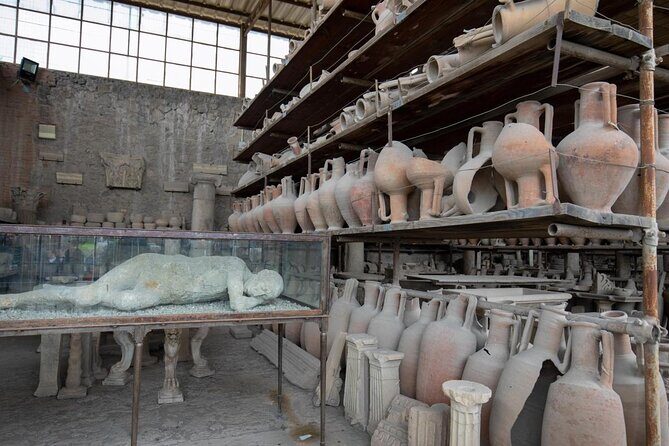
Also, you’ll spend time on both public and private buildings. That balance matters. Too many visits focus on the grand spaces and forget the human scale—yet Pompeii is where you can almost feel the everyday.
If your group wants a smooth, guided path with room for questions, this is the kind of experience that makes Pompeii feel manageable.
You can also read our reviews of more walking tours in Pompeii
Your Starting Point: Piazza Esedra, Then Straight Into the Park
You meet at Piazza Esedra 10/13, 80045 Pompei NA. The big advantage of starting there is that it keeps things simple: the tour ends back at the same meeting point, so you’re not trying to figure out a second rendezvous.
Plan for a walking tour pace. This isn’t a sit-down museum experience. You’ll be on your feet for about three hours in the Pompeii area, moving between the most important areas and a few lesser-known spots off the standard route.
One practical note: the tour includes the licensed guide, but the Pompeii Archaeological Park admission is extra—€20.00 per person. That’s common for Pompeii, but it’s still worth budgeting early so you don’t get surprised at the gate.
Inside Pompeii Archaeological Park: Public Buildings, Private Life
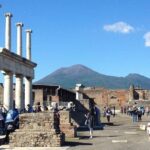
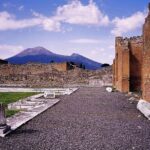
The heart of this tour happens inside the Pompeii Archaeological Park. The plan is focused: you’ll see the most important public and private buildings of the ancient city, then your guide steers you to quieter areas that most people miss.
What “public and private” means on the ground
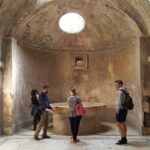
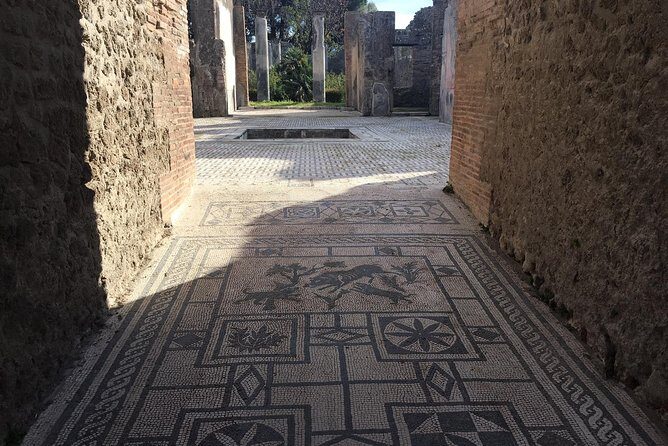
Public spaces help you understand how the city functioned—where people gathered and what power looked like in stone. Private spaces bring you closer to the human scale: daily routines, personal spaces, and the small details that make Pompeii feel less like an ancient postcard and more like a place you could have walked through.
This matters because Pompeii is not only about big moments. It’s also about texture—how architecture, layout, and everyday habits fit together. The guide uses the preserved remains to show patterns of Roman life and how the city worked.
Architecture that’s easier to understand than you think
You might expect architecture talk to be dry. It doesn’t have to be. Here, the architecture is used to explain daily life—how spaces were designed, how buildings were organized, and what those choices can suggest about the people using them.
If you’re the kind of person who likes explanations that make you look differently at what you’re standing in front of, you’ll likely enjoy this part.
You can also read our reviews of more private tours in Pompeii



The Off-Route Stops: Where the City Feels Less Crowded
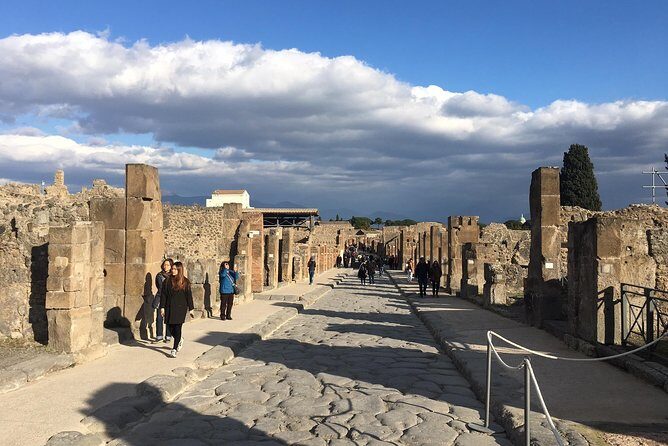
A highlight of this tour is the promise of hidden spots off the tourist routes. In practice, that means you get a mix of headline ruins and quieter corners where you can slow down and actually take in details.
Crowds can flatten your experience. Even the best site feels smaller when you’re squeezed into the same viewing angles everyone else has. Off-route stops help you regain perspective—so you can see the city as a system, not just a checklist.
This is also where a good guide earns their fee. Off-route doesn’t mean random. It means purposeful: places that still help tell the story, but with fewer distractions.
If you like photos, you’ll probably appreciate the calmer spots too. But the bigger win is how the explanations land when you can stand and think for a moment.
Customize the Walk: Add Your Must-See Interests
What makes a private tour feel worth it is control. This one is built to be customized, so if there’s a specific area or theme you want more of, you can request it.
That could mean you want more emphasis on how Romans lived day-to-day, more context on how traditions shaped public behavior, or simply you want extra time in the places that grabbed your attention.
Your archaeologist guide is there to answer your questions, so you’re not stuck with a scripted route that leaves you wondering what you missed.
I like tours that let you steer gently. You’re still getting an organized plan, but you’re not trapped inside it.
Meet Giada (and the Guide Style That Works)
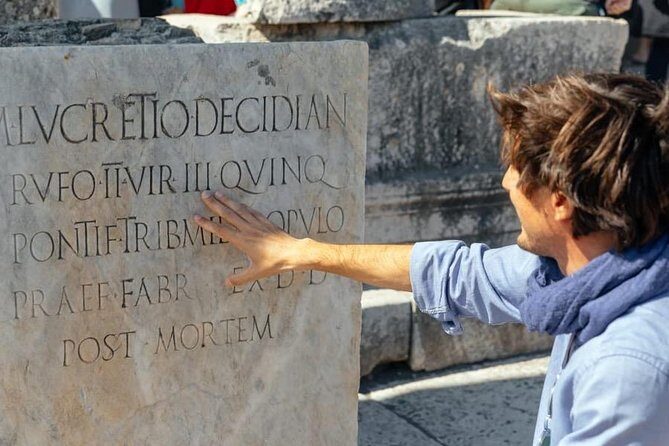
One of the standout details from the people who’ve taken this tour is the quality of guidance—especially with Giada. Many people highlight how she chooses particularly interesting sites and provides history and context that make the ruins click.
What I take from that is a simple point: you’re not just getting facts. You’re getting interpretation tied to the site. And you’re getting it in a way that invites questions, not shuts them down.
If you’ve ever had a guide give a fast explanation while you’re still trying to understand the layout, you’ll probably appreciate this style more than you expect. A good guide helps you ask better questions, and a good archaeologist can answer them in a way that’s actually useful on your feet.
Also, the tour runs with a licensed guide with an archaeological degree, which usually means the explanations are built from training, not guesswork.
The Pompeii Story You’ll Hear: Life, Then Vesuvius
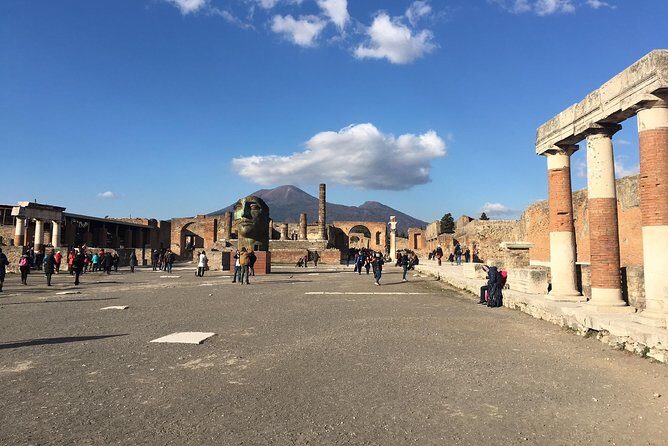
You’ll talk about Roman civilization, including traditions and how Pompeii ended with the eruption of Vesuvius. That arc is part of what makes Pompeii so intense: you’re looking at remains of daily routines that were interrupted suddenly.
A strong guide helps that story feel real instead of dramatic-for-drama’s-sake. The explanations work best when you can connect the tragedy to what you’re seeing—how the city was organized, what people built, and how their lives filled the spaces that are now ruins.
I also appreciate that the tour doesn’t treat the site as only a disaster. It keeps the focus on what made Pompeii a functioning city—how people worked, lived, and valued things—before shifting to the catastrophic end.
Pace and Practical Reality: What Three Hours Feels Like
Three hours goes faster than you expect in Pompeii because there’s a lot to see and your brain will want to process what you’re learning. This tour keeps the focus on essentials rather than trying to cover the entire park.
That’s a good thing. Pompeii rewards attention, and you can’t pay full attention if you’re sprinting.
What helps: private pacing. In a group setting, you’re often waiting. Here, you can settle into the walk and keep your question rhythm. If you want time to look at details—doors, walls, and layout—this format tends to make that easier.
Still, wear comfortable shoes. Ruins and walking surfaces can be uneven, and the tour is outdoors for the full duration.
Price and Value: $504.10 for Up to 8, Plus Entry
This tour costs $504.10 per group for up to 8 people, for about 3 hours with a licensed archaeologist. Entry to the Pompeii Archaeological Park is not included and is €20.00 per person.
Here’s the value angle I’d use when deciding:
- Private pricing can sound high if you’re thinking per person.
- But with up to 8 people, the guide cost spreads out quickly.
- You’re also paying for a specialist: an archaeologist, not just a general guide.
If you fill the group capacity, the guide portion works out to about $63 per person before admission. If you’re fewer than that, it shifts upward per person, so you’ll want to ask yourself whether the private format is a must-have for your style of travel.
I think this tour makes especially good sense if:
- you want your questions answered on the spot,
- your group includes people who care about archaeology and context,
- you’re traveling with kids or family and want control over pace,
- you’re visiting Pompeii once and want the most meaningful highlights plus quieter stops.
If you’re traveling solo and only want a “see the big stuff” walk, you might decide against the private price. But if you want Pompeii to make sense, the archaeologist angle is where your money goes.
What to Ask Your Archaeologist During the Walk
If you want to get your full value, come ready with questions. The best Pompeii experiences turn curiosity into clarity.
Here are question types that fit this tour’s focus:
- How can you tell how people used a space in daily life?
- What details in the architecture suggest social rank or practical needs?
- What traditions shaped public behavior, based on what we can see today?
- What caused the differences between public and private areas in the city?
- Where would you send me to keep learning after this walk?
Giada and other guides in this format have shown they’ll answer questions and tailor the route, so don’t be shy.
Also, if you have mobility limits, tell your guide early. They can sometimes adjust the pace so you stay comfortable for the full three hours.
Who This Pompeii Private Tour Is Best For
This is a strong match if you want:
- a private walking experience rather than a crowded audio-tour situation,
- an archaeologist-led explanation of Roman life and architecture,
- off-route stops that help you slow down and look,
- a tour that can be customized for your interests.
It may be less ideal if you’re trying to see every corner of Pompeii in one trip and you’re okay with relying on your own reading. Pompeii is big. Three hours is selective, by design.
Should You Book This Pompeii 3-Hour Private Tour?
My bottom line: if you’re the type of visitor who wants Pompeii to make sense—architecture, everyday life, and the story behind what survived—this private archaeologist tour is a smart use of time.
Book it if you value:
- private Q&A and a guide who can tailor the walk,
- quieter off-route stops,
- serious archaeological context paired with clear storytelling.
Skip it if you’re mainly after a fast “highlights only” visit and you’re not interested in deeper interpretation. In that case, Pompeii’s vastness may be better served by your own pace or a broader group format.
If you’re on the fence, this one has an extra selling point: people specifically praise Giada for selecting interesting sites and giving context that helps you understand what you’re seeing.
FAQ
How long is the private walking tour?
The tour lasts about 3 hours.
How big is the group for a private tour?
It’s private, and the group size is up to 8 people.
Is Pompeii admission included in the price?
No. Admission to the Pompeii Archaeological Park costs €20.00 per person and is not included.
Where do we meet, and where does the tour end?
You meet at Piazza Esedra, 10/13, 80045 Pompei NA, Italy. The tour ends back at the same meeting point.
What language is the tour offered in?
The tour is offered in English.
Do I get a ticket on my phone?
Yes. It includes a mobile ticket.
Do I need good weather for this tour?
Yes. It requires good weather. If canceled due to poor weather, you’ll be offered a different date or a full refund.
When will I receive confirmation after booking?
You’ll receive confirmation within 48 hours of booking, subject to availability.
Is this experience refundable if I cancel?
This experience is non-refundable and cannot be changed for any reason. If it’s canceled due to poor weather, you’ll have the option of a different date or a full refund.
Are service animals allowed?
Yes, service animals are allowed.