REVIEW · POMPEII
Private Pompeii and Vesuvius with Wine Tasting and Full Tickets
Book on Viator →Operated by Leisure Italy · Bookable on Viator
Roman ruins plus real mountain air.
This private day pairs a focused Pompeii walkthrough with a hands-on visit to Mount Vesuvius, including a volcanologist introduction and a half-crater loop when conditions allow. I love the flexibility of a private guide who can steer where you spend time, and I love that the day ties into a family-run winery meal with 5 wines at Cantina del Vesuvio. The main thing to think about is the walking: Pompeii has lots of steps and Vesuvius is sun, wind, and gravel up a hill.
You’ll get picked up from Naples, Sorrento, Pompeii, train stations, airports, and even cruise ports, then dropped back off after. The pace is usually “8 to 9 hours,” so this is best for people who like a full day outdoors and can handle moderate walking without needing frequent breaks.
In This Review
- Key highlights to look for
- Private transport plus full tickets: what you’re really buying
- Getting to Pompeii on your schedule (and still seeing Vesuvius)
- Pompeii walk: Porta Marina, the Forum, and the places to slow down
- Porta Marina e cinta muraria: arriving the way visitors did
- Temple of Apollo: a sacred landmark near the civic core
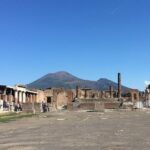
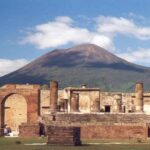
- Forum: Pompeii’s civic heart seen from an easier angle
- Macellum: Pompeii’s food market and the rhythm of daily trade
- Terme del Foro: social life, hot rooms, and preserved stucco
- Casa dei Vettii: an elite home with frescoes that tell a lifestyle story
- Insula dei Casti Amanti: a neighborhood caught mid-life
- Teatro Grande: public entertainment with big-city scale
- Antiquarium di Pompei: your emotional setup before the streets
- Pompeii for kids option: games and a pace built for 6–11 year olds
- Mount Vesuvius: the gravel trail, the wind, and the half-crater loop
- Cantina del Vesuvio: wine tasting and lunch on the slopes
- Value for money at $701.99 per person
- Who should book this private Pompeii and Vesuvius day
- Book it or skip it: my quick decision guide
- FAQ
- How long is the private Pompeii and Vesuvius tour?
- Is pickup included, and where can they pick me up?
- Are entrance tickets included for Pompeii and Vesuvius?
- How much do we have to walk on Mount Vesuvius?
- What’s included in the wine tasting and lunch?
- Is there a kids-friendly option for Pompeii?
- What is the cancellation policy?
Key highlights to look for
- Private driver + private guide: you’re not stuck in a big crowd shuffle
- Full Pompeii site coverage: major stops plus the Antiquarium museum gateway
- Vesuvius trail access: closest drop-off point and a live volcanologist intro up top
- Wine tasting with lunch: 5 pours plus a set menu, all on the Vesuvius slopes
- Pompeii for kids option: interactive activities aimed at kids ages 6 to 11
- Live guide names show up in real service: guides such as Fabio and Danilo have led this route
Private transport plus full tickets: what you’re really buying
This is the kind of trip that costs a lot—$701.99 per person—but you’re not just paying for “a driver and a hat.” You’re paying for a day that bundles transport, a guided Pompeii route, and admissions that would otherwise take you multiple stops to sort out on your own.
On the Pompeii side, the ticketing is built into the flow: you move through the Archaeological Park and then hit multiple key ruins during your walk, including places like the Forum area, Teatro Grande, and the Antiquarium. The Vesuvius visit also includes ticket handling, and the winery stop includes a tasting plus a set lunch.
In plain terms, if you’d rather spend your energy looking at stone and frescoes instead of figuring out timed entry and where to stand, this format makes sense.
You can also read our reviews of more tours and experiences in Pompeii

Getting to Pompeii on your schedule (and still seeing Vesuvius)
The tour is designed as a one-day circuit, not a “drive by the highlights” quickie. You’ll typically start with pickup from your location—hotels, vacation rentals, train stations, airports, and cruise terminals/ports are all listed as pickup options. That matters because Pompeii is busy, parking is a headache, and the day already has a lot of walking baked in.
Once you reach Pompeii, you’ll walk as a private group with a guide choosing the highlights route. The idea is smart: Pompeii is huge, and going in “blind” often turns into zig-zagging. With a guided route, you get the key spaces in a way that helps you understand what you’re seeing.
Then the day moves toward Vesuvius. There’s a shared volcanologist introduction at the top, and you’ll have time to walk part of the crater loop. There’s also a café by the parking area if someone in your party decides to skip the climb.
Pompeii walk: Porta Marina, the Forum, and the places to slow down
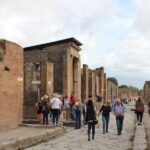
Pompeii is one of those sites where the best experience usually comes from pausing at the right places. This route focuses on the town’s movement, public life, and elite homes, with a museum stop to connect the dots.
Porta Marina e cinta muraria: arriving the way visitors did
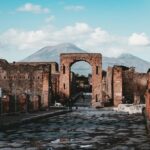
You start with Porta Marina, one of the main gates and a point tied to the port area. It’s short on time, but it sets the stage. You can walk along the original stone ramp and see how the defensive wall system worked for controlling access to the city.
This is a good opening stop because it gives you orientation fast. Without it, Pompeii can feel like a scatter of “cool rooms.” With it, you start thinking about entry, trade, and movement.
Temple of Apollo: a sacred landmark near the civic core
Next is the Temple of Apollo, dedicated to Apollo, the god of the sun, music, and prophecy. The guide route keeps it brief, but you get the key idea: this wasn’t just a building. It was a place for offerings and for people seeking guidance.
The courtyard setting helps too. Even in a short visit, you can get a sense of how open-space worship worked in ancient town planning.
You can also read our reviews of more food & drink experiences in Pompeii



Forum: Pompeii’s civic heart seen from an easier angle
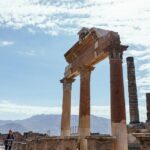
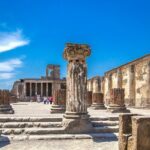
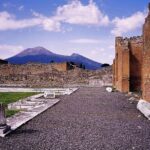
The Forum stop is longer than the temples and markets because it’s central to how you read Pompeii. You’ll look at the arrangement of temples, administrative buildings, and market structures, and you’ll get views over key ruins such as the Capitolium, Basilica, and Macellum from elevated walkways.
This is one of the best moments for context. From here, you can connect religion, government, and commerce in a way that makes the rest of the day click.
A small watch-out: the Forum area can be visually busy. Your guide’s job is to point out what matters, not just “show you the square.”
Macellum: Pompeii’s food market and the rhythm of daily trade
You’ll hit the Macellum, the main food market. It’s a covered complex with stalls and storerooms, and it’s designed to show how food supply and commerce supported urban life.
If you like everyday archaeology—the stuff about cooking, buying, selling—this is a stop that rewards your attention. The market layout helps you imagine who worked where and what a morning in Pompeii likely felt like.
Terme del Foro: social life, hot rooms, and preserved stucco
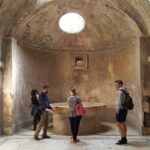
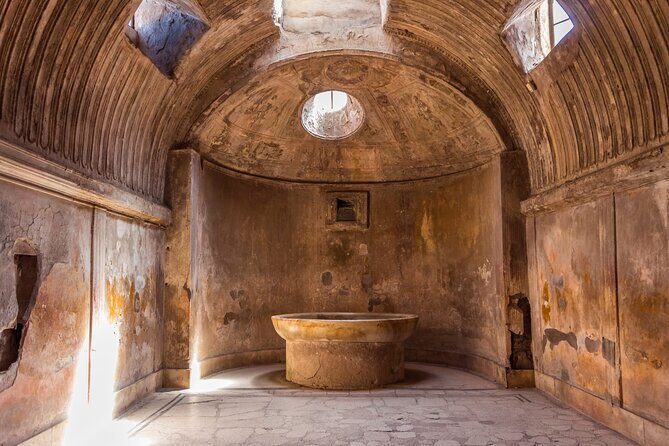
The Forum Baths are a favorite for many people because they look “alive” even now. You’ll see the hypocaust heating system logic, different temperature zones (warm/hot and a colder plunge pool), and the stucco reliefs and vaulted ceilings that survive surprisingly well.
This stop also gives you a break from “straight-line walking.” Baths mean social mixing, daily routine, and leisure. It’s a reminder that this was a functioning town, not a museum display.
Casa dei Vettii: an elite home with frescoes that tell a lifestyle story
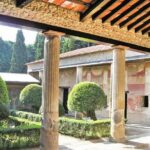
Next is Casa dei Vettii, known for frescoes and a refined house layout around atria and peristyle gardens. This is where the tour shifts from public spaces to private taste and status.
If you want to understand what wealth looked like in the 1st century AD, this stop helps. You’re not just staring at fragments—you’re seeing how homes were organized for light, movement, and decoration.
Insula dei Casti Amanti: a neighborhood caught mid-life
The Insula dei Casti Amanti stop is tied to a famous fresco of lovers. Today you view it via ramps that give a panoramic view into workshops and rooms below without grinding up fragile surfaces.
This is a powerful place to visit because it makes you imagine trade and home life overlapping. You also get a sense of the neighborhood working “normally,” right up to the AD 79 eruption.
Teatro Grande: public entertainment with big-city scale
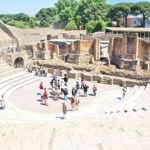
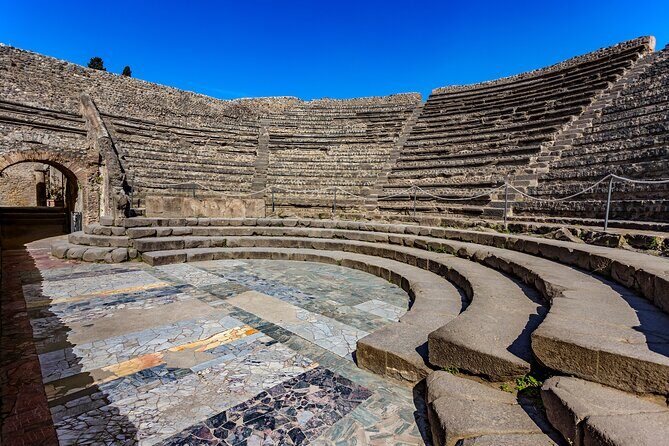
Then comes Teatro Grande, where you can look down at seating tiers and stage structures from modern walkways. The theatre’s layout plus the views toward Pompeii and Mount Vesuvius help you understand why performances drew crowds.
If you love the “how did people spend their evenings?” angle, don’t rush this. The theatre is a place where architecture and social life fit together.
Antiquarium di Pompei: your emotional setup before the streets
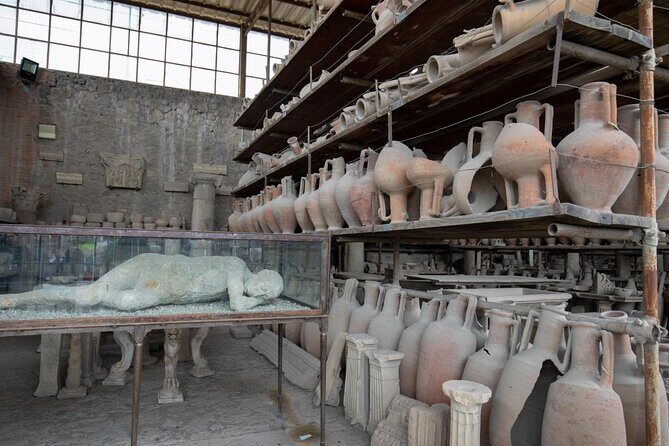
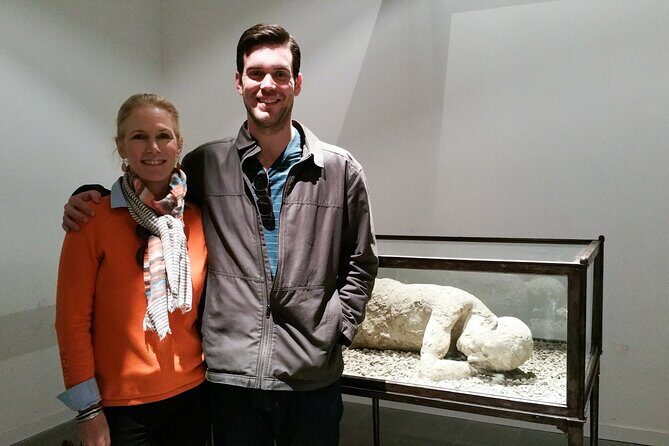
Finally, you’ll visit the Antiquarium di Pompei. It works like a bridge between “ruins you see” and “meaning you build.” You’ll move through galleries with recovered artifacts—household objects, inscriptions, jewelry, statues—then reach plaster casts tied to the eruption story.
This is not just academic. It changes how you look at what comes after. Even if you’ve read about Pompeii, the museum framing helps you notice details with more care when you return to the open-air site.
Pompeii for kids option: games and a pace built for 6–11 year olds
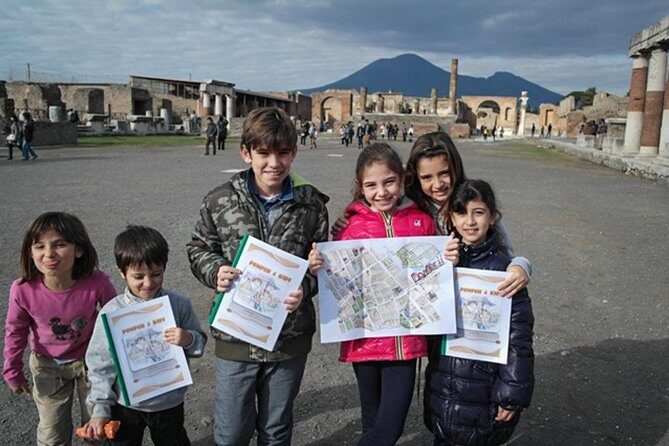
If you’re traveling with kids, this tour has an actual dedicated path: Pompeii for Kids. It’s specifically recommended for kids aged 6 to 11, and it’s designed around activities and games rather than nonstop lectures.
That matters because Pompeii is tiring for children when the day becomes a long loop of stone without interaction. The kids option aims to keep attention on the meaning behind the ruins. It also gives you a reason to stay engaged during the walk where adults might otherwise check out.
Even if you don’t use the kids program, the fact that it exists means the operator understands that families need pacing control.
Mount Vesuvius: the gravel trail, the wind, and the half-crater loop
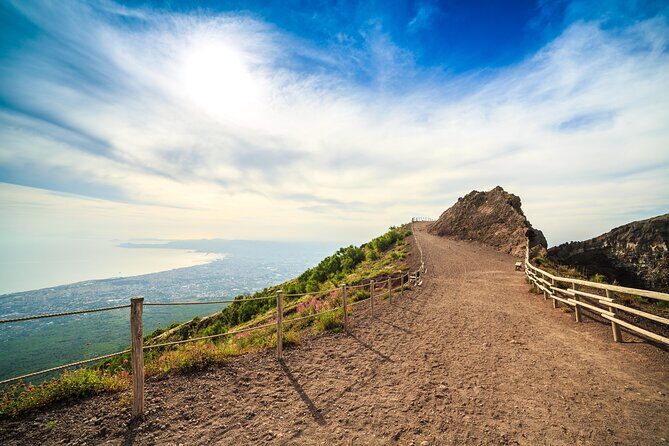
Vesuvius is where the day turns from “archaeology” into “weather and atmosphere.”
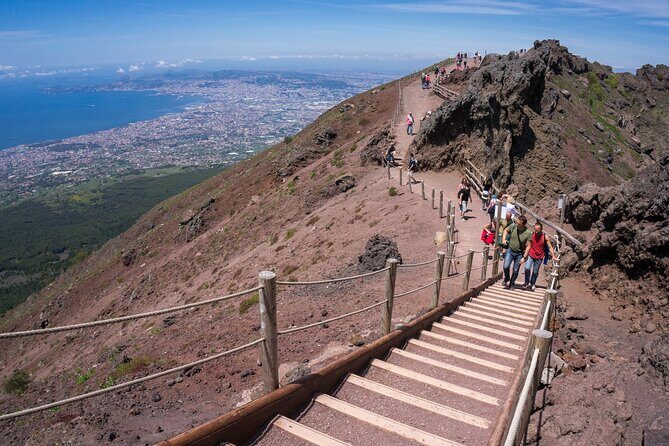
Your driver will take care of tickets and bring you to the closest drop-off for the trail. Expect about 30 minutes up on a path made of gravel and ash. Once you’re moving, you’ll be exposed—sun and wind are part of the deal.
Up top, you’ll hear a shared talk in English led by a volcanologist. It’s described as a 10-minute introduction, and it starts every few minutes. This is helpful if you want the science side explained without needing to hunt for it on your own.
Then you can walk halfway around the crater on your own. That’s about 30 minutes. Clear days are best for photos, since the views can be dramatic.
And you do have a realistic safety valve: there’s a café by the parking lot if someone doesn’t feel like climbing all the way. That flexibility is worth noticing if you’re traveling as a mixed group with different stamina levels.
Cantina del Vesuvio: wine tasting and lunch on the slopes
The winery stop is one of the most practical parts of the whole day because it’s not a long detour with empty calories. You get a set meal plus a tasting that’s tied to the volcanic terroir theme.
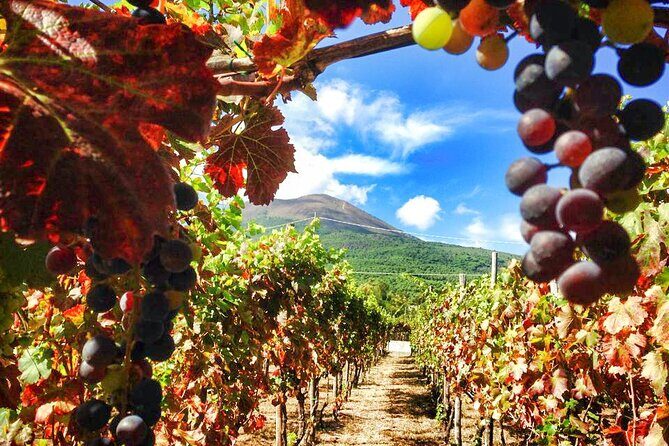
At Cantina del Vesuvio – Famiglia Russo, you can explore the vineyards and then taste signature reds and whites. The tasting isn’t just “a couple sips,” either—5 different wines are served: Rosè Sparkling, White, Rosé, Red, Red Reserva, plus a sweet dessert wine. You’ll also get pairings with the meal.
Lunch is set-menu style:
- Bruschetta, provolone cheese, salame and capocollo cured pork meat
- Spaghetti with the cherry tomatoes del Piennolo from Mt Vesuvius
- Pastiera (wheat and ricotta cake)
This is a solid match for the day’s arc. You spend hours walking through Pompeii’s streets and then you’re eating tomatoes and regional dishes while you’re literally still in Vesuvius country. It turns the volcanic setting from an optional add-on into something you taste.
One practical note: the winery stop is timed. It’s not a free-form “hang out until sunset” place, so if you’re picky about ordering or want lots of extra time, build that expectation in.
Value for money at $701.99 per person
Let’s talk straight about the price. $701.99 per person is not small money. But in this case, the value comes from how many big pieces are included.
You’re getting:
- private transport (pickup and drop-off from multiple locations)
- a private guided route through Pompeii with admissions included for the sites on the route
- a Vesuvius visit with tickets handled and a live volcanologist intro
- a winery lunch with a set menu and 5 wine tastings
If you tried to piece this together yourself, you’d likely spend time coordinating transport, timed entries, and multiple admission costs. You’d also lose some of the “stop where you want” flexibility. Private days like this are priced for convenience and time savings as much as for guidance.
Where price might feel less justified is if you already know exactly what you want to see in Pompeii and you’re comfortable managing tickets and travel on your own. But if you want less friction and a smoother flow from Pompeii to Vesuvius, the bundle pricing starts to make sense.
Also worth noting: this tends to be booked early, with an average booking window around 100 days in advance. If you’re set on a specific date or you want the kids option, early booking helps.
Who should book this private Pompeii and Vesuvius day
This is a strong fit if you:
- want a private guide and a route that reduces wandering
- care about Pompeii’s layout—public spaces, markets, baths, and elite homes
- like having lunch and wine organized as part of the plan
- want a Vesuvius visit that includes the live talk and a reasonable crater walk
It’s also a good fit for couples and small families who don’t want to fight crowds. The service is explicitly family-friendly, and the Pompeii for Kids plan is aimed at that age range.
The main “not for everyone” factor is physical effort. You should have moderate fitness for Pompeii walking plus the Vesuvius gravel climb.
Book it or skip it: my quick decision guide
Book this tour if you want your day to feel efficient and guided: Pompeii with full context, Vesuvius with the science introduction, and a winery meal that makes the whole route feel connected.
Skip or shop around if you:
- want a slower pace with lots of free time inside Pompeii
- prefer to climb Vesuvius on your own without a structured plan
- don’t drink wine and feel the tasting portion won’t justify the cost (even though the lunch is included)
If your ideal day is one driver, one guide team, and a clear plan from gate to crater, this private setup is a smart choice.
FAQ
How long is the private Pompeii and Vesuvius tour?
It runs about 8 to 9 hours.
Is pickup included, and where can they pick me up?
Pickup is offered from Naples, Sorrento, Pompeii, train stations, airports, vacation rentals, hotels, and cruise terminal/port locations. You choose your pickup place when booking.
Are entrance tickets included for Pompeii and Vesuvius?
Yes. Pompeii stops include admission tickets on the route, and Vesuvius tickets are handled as part of the experience.
How much do we have to walk on Mount Vesuvius?
You’ll take a trail up the hill for about 30 minutes, then you can walk about 30 minutes halfway around the crater. There is a café by the parking lot if someone doesn’t feel like climbing up.
What’s included in the wine tasting and lunch?
At Cantina del Vesuvio, you’ll have a set lunch plus tasting of 5 wines (including sparkling rosè, white, rosé, red, red reserva, and a sweet dessert wine). The lunch menu includes bruschetta and meats, spaghetti with vesuvian cherry tomatoes, and pastiera.
Is there a kids-friendly option for Pompeii?
Yes. There’s a Pompeii for Kids activities option aimed at kids ages 6 to 11, with interactive activities and games.
What is the cancellation policy?
Free cancellation is available if you cancel up to 24 hours in advance of the experience start time for a full refund.