REVIEW · POMPEII
Pompeii Skip-the-Line Entry & Guided Tour with a certified guide
Book on Viator →Operated by Pompei Tour Organizer_Tempio Travel · Bookable on Viator
Two hours, and Pompeii makes sense. This small-group tour is built for people who want more than stone and photos. You get skip-the-line entry plus a guide who explains what you’re actually looking at, from public life in the Forum to everyday food spots and elite homes.
I especially like that the route hits Pompeii’s “big meaning” areas fast: the Foro di Pompei and the Macellum give you the city’s political and market center in one sweep. I also love the practical listening setup—headsets are included when the group is over 15—so you can keep up even when the site gets crowded.
One thing to keep in mind: this tour is short by design (about 2 hours). If the day is hot or the crowd is heavy, you might feel the pace, with fewer long stop-and-stare moments than you’d get on your own.
In This Review
- Quick hits
- Where You Start: the Pompeii Tickets office in Villa dei Misteri
- What You Get for $58.87: “Skip-the-line” plus a real guide
- The Tour Flow in Plain English (and why it works)
- Stop 1: Foro di Pompei (the city’s main square)
- Possible drawback
- Stop 2: Macellum (Pompeii’s market for meat and fish)
- Why it matters for you
- Stop 3: Terme del Foro (Roman baths with separate entrances)
- What to watch for as you walk
- Possible consideration
- Stop 4: Casa del Fauno (elite home and the Alexander mosaic)
- Why I think this stop is smart
- Stop 5: Casa dei Vettii (romantic, political, and very human)
- What you’ll likely enjoy
- Time note
- Via dell’Abbondanza: the street that connects the city
- Why this walk matters
- Stop 6: Thermopolium Regio VI (fast food, Pompeii style)
- Why it’s a great closing stop
- The Pace, the Terrain, and What to Bring
- Group Size and Listening Setup
- Guides: the difference between ruins and a story
- Not Included: what you might want to add
- Should You Book This Skip-the-Line Pompeii Tour?
- FAQ
- How long is the Pompeii skip-the-line guided tour?
- What is the price per person?
- Where do I meet the tour?
- Does this tour include tickets to enter Pompeii?
- Are headsets provided?
- Is the Villa of Mysteries entrance included?
Quick hits
- Skip-the-line express entry means less time waiting at the gate
- Guided context helps the ruins feel readable, not random
- Headsets included for larger groups, so you won’t miss key points
- A smart mix of places: Forum, baths, markets, and major domus
- Tour length is tight (around 2 hours), so bring a flexible mindset
Where You Start: the Pompeii Tickets office in Villa dei Misteri
Meet at Via Villa dei Misteri, 1, in the Pompei Scavi Villa dei Misteri area. The key detail: you meet in the first floor of the red-station building at the Circumvesuviana stop. Your meeting point is the office named Tempio Travel / Pompeii Tickets, about 100 m from the entrance of Porta Marina Superiore.
I like this setup because it’s easy to anchor yourself to something real. Instead of hunting vague street corners, you can find the train station building and go upstairs.
Pro tip: arrive 15 minutes early. The tour includes an entry flow, and you’ll want time to regroup if you’re coming in from another part of town.
You can also read our reviews of more guided tours in Pompeii
What You Get for $58.87: “Skip-the-line” plus a real guide
At about $58.87 per person for roughly 2 hours, the value is in two parts: admission is included and the guided portion is what turns “Pompeii” into a story you can follow. The express/skip-the-line ticket helps you trade waiting for time inside the ruins.
If you’re tempted to do Pompeii solo, your main tradeoff is context. Many of the sites are unmarked or partly collapsed. A guide is what helps you connect a courtyard to status, a bath area to social rules, or a shop counter to daily takeout.
One practical note: the tour includes express entrance to the archaeological site, but it does not include an additional ticket called the entrance tickets plus for the Villa of Mysteries. If that’s a must-see for you, you’ll need to arrange it separately.
The Tour Flow in Plain English (and why it works)
This is a guided walk focused on a compact but high-impact loop. You’ll cover:
- The civic center and religious/public heart
- A food-and-market stop in the Forum area
- Roman bathing spaces
- Two big aristocratic-style domus (houses)
- A street stretch between major zones of the city
- A fast-food-style stop (thermopolium) where people bought hot food to go
Because it’s time-limited, the stops are brief—think quick orientation plus key facts—then you move on. This works well if you want to understand the city’s layout and daily life without spending an entire day.
It also helps you decide what to revisit after. Once you know what each area means, you can circle back with better questions.
Stop 1: Foro di Pompei (the city’s main square)
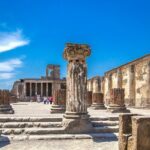
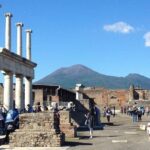
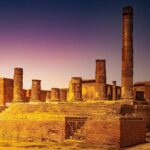
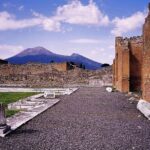
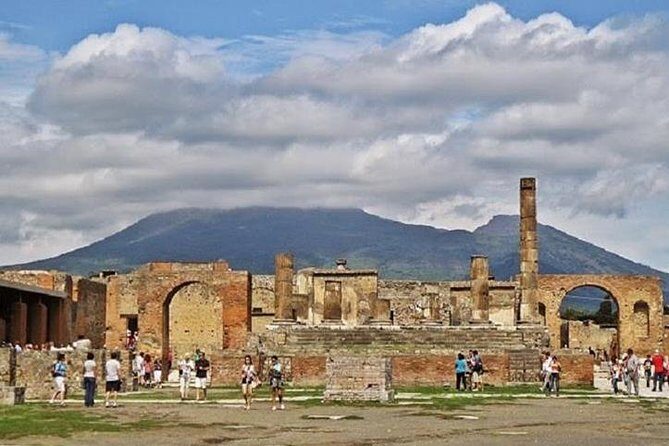
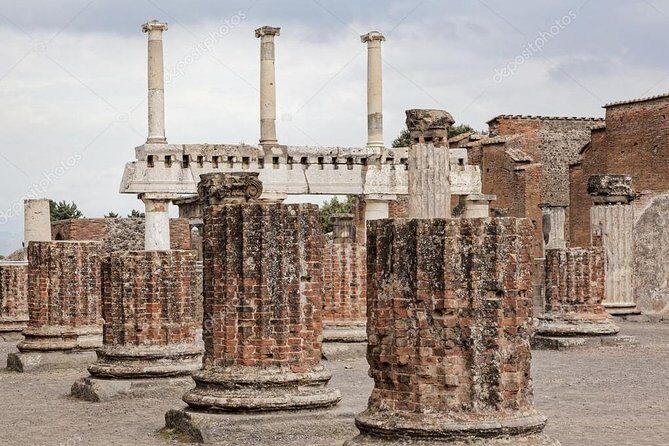
The tour starts at the Foro di Pompei, Pompeii’s main piazza. This was not just “a square.” It was the center for politics, economics, and religion—the place where city life happened and where power and ceremony were on display.
What I like here is that the Forum lets you get your bearings fast. Even if you’ve seen photos before, Pompeii can feel like scattered ruins until someone shows you what’s connected: where decisions were made, where crowds gathered, and how buildings framed the public space.
Possible drawback
Because this stop is about 30 minutes, you’ll get the big picture more than deep reading. If you love long, quiet museum-style time, you may want to plan a second visit on a separate day.
You can also read our reviews of more tours and experiences in Pompeii


Stop 2: Macellum (Pompeii’s market for meat and fish)
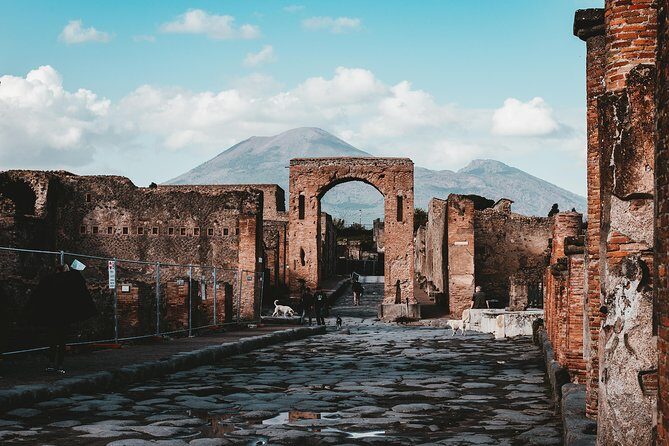
Next up is the Macellum, located on/near the Forum. This is the market area where people bought meat and fish, and the guide connects it to daily habits.
One of the most useful details is the visual evidence: there are frescoes showing foods eaten by Romans in the 1st century AD. That’s exactly the kind of thing that makes the city feel human instead of ancient.
Why it matters for you
When you see food represented in wall art, you start noticing how Pompeii’s economy showed itself in everyday life. It’s not abstract history. It’s what people ate, bought, and used to cook—right next to the civic hub.
Stop 3: Terme del Foro (Roman baths with separate entrances)
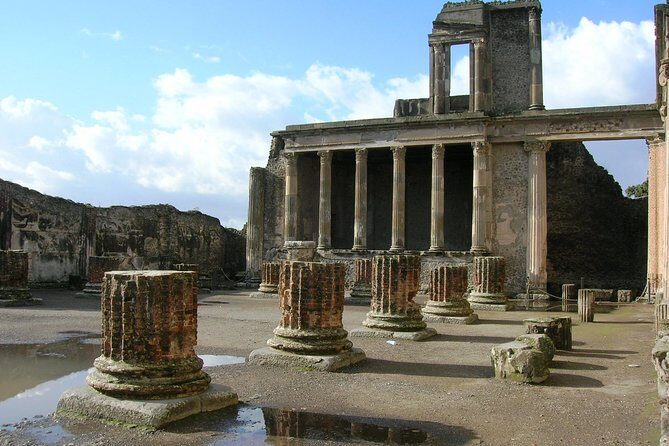
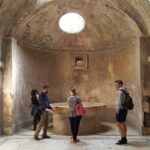
The tour continues to the Terme del Foro, baths located behind the Temple of Jupiter area. Here’s the standout detail: the bath sector was about 410 square meters, and there were separate male and female sections, each with its own entrance.
You’ll also learn about water supply. The baths were fed by the Serino aqueduct, but there was a well available if water ran short. That small “plan B” detail is pure Roman problem-solving.
What to watch for as you walk
This stop isn’t just about soaking in an idea. You can actually look at the spaces and the physical clues: the guide points out original ceiling elements and surviving stucco, plus the marble tub in the caldarium and a mosaic floor.
Possible consideration
Bath areas can be visually dense. If you’re the type who likes to take photos slowly, bring your patience—this stop is around 15 minutes.
Stop 4: Casa del Fauno (elite home and the Alexander mosaic)
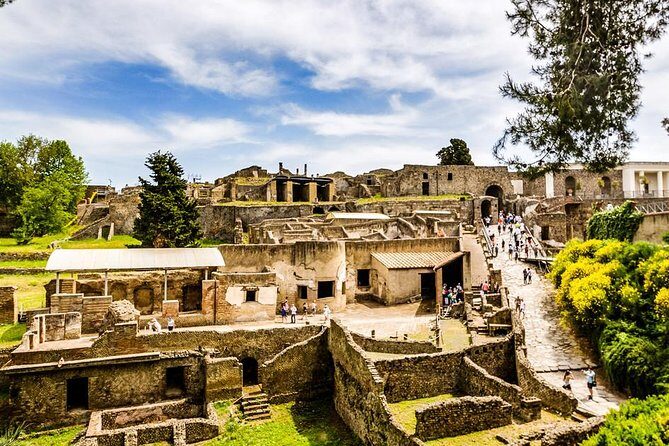
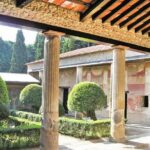
Then you move into the Casa del Fauno, one of the larger, more luxurious aristocratic homes from the Roman Republic era.
The highlight is the Alexander Mosaic. In this house, what you’ll see is a copy, while the original is kept at the MANN museum. The guide’s job is to help you understand why that matters: you’re still looking at a famous artwork, but with a clear distinction between site piece and museum original.
Why I think this stop is smart
A house tour can turn into trivia if you don’t have context. Here, the value is in seeing how status was performed through space—rooms, scale, and what kind of art owners displayed.
Stop 5: Casa dei Vettii (romantic, political, and very human)
Next is the Casa dei Vettii. This domus was buried during the 79 eruption and later uncovered through archaeology. The house is named for its owners: Aulo Vettio Restituto and Aulo Vettio Conviva.
The most talked-about area is a room with pictorial erotic images. The explanation connects it to the social reality of the household—this kind of room is linked to a story about use inside the home.
What you’ll likely enjoy
Pompeii can be educational, but this is where it feels real. These aren’t just “pretty mosaics.” They’re private spaces that reveal what people thought was normal, entertaining, or taboo.
Time note
This stop is brief (about 10 minutes). If you want to study a single room in detail, you’ll probably want to return later using your own pace.
Via dell’Abbondanza: the street that connects the city
After the houses, you walk along Via dell’Abbondanza. This street links major city zones between the Forum and Porta Sarno—meaning it’s useful for understanding how Pompeii was laid out.
The guide uses this stretch to connect the dots you just learned: public areas, temples, theaters, and the amphitheater are all part of the larger city system you’ll eventually want to explore further.
Why this walk matters
It’s the “context connector” part of the tour. Even a few minutes on the street can help you stop feeling lost, because you start seeing Pompeii as a set of neighborhoods, not one massive pile of ruins.
Stop 6: Thermopolium Regio VI (fast food, Pompeii style)
The last listed stop is a thermopolium—literally a place where something is sold hot. Think of it as Pompeii’s fast-food counter where people could grab food to take away.
You’ll spend about 10 minutes here, and the guide frames it as an everyday consumer spot: not elite life, not civic speeches—just food and routines.
Why it’s a great closing stop
Ending with a thermopolium is a smart move because it brings you back to daily life. After art, politics, baths, and houses, this is the city’s “normal working rhythm” made visible.
The Pace, the Terrain, and What to Bring
Pompeii is famous, but it’s also physical. You’re walking on uneven ground and you may face steep sections getting into the archaeological area.
From what I’d plan for, I suggest:
- Comfortable shoes with grip
- Sunscreen if you’re going in summer
- An umbrella can help if you’re visiting in August or any sun-heavy season
- A water bottle (inside the site rules can vary by day, so bring enough for your needs)
The tour includes headsets when groups are larger, which is helpful. That way, you’re not stuck straining to hear the guide over foot traffic.
If you’re worried about pace, treat this as an orientation tour. It’s the sort of experience that helps you choose what to do next once you’re inside on your own.
Group Size and Listening Setup
This tour runs with a maximum of 35 travelers. That’s big enough to move, but small enough that a guide can still keep the group together.
If the group is larger than 15, you get headsets. It’s a small detail, but it changes everything when you’re in a crowded ruin area. You spend less time looking around for who’s talking and more time looking at the buildings.
Guides: the difference between ruins and a story
The guide is the main ingredient, and I’d follow your instincts when you read about this tour. In past experiences, guides have included people like Alfonso, Annalisa, and Eraldo, and the common thread is clear: they explain what you’re seeing and keep the energy up.
If you’re traveling with kids, this matters. A guided Pompeii works best when someone can explain why an object is there and what it meant, not just recite dates.
Not Included: what you might want to add
Two things to watch for:
- Villa of Mysteries: the tour does not include the additional “plus” entrance ticket for this site. If that villa is on your must-do list, plan an add-on.
- Extended time: the guided portion is about 2 hours. If you want museum-style time in specific rooms or want to wander beyond the planned stops, you’ll need extra hours on your own after the tour.
Should You Book This Skip-the-Line Pompeii Tour?
Book it if:
- You want Pompeii with context, not just a checklist of ruins
- You’re short on time and want a guided route that hits major life areas
- You value skip-the-line entry to protect your hours inside
- You like the idea of learning first, then exploring deeper afterward
Skip it or consider a different format if:
- You hate time pressure and want long independent stops at each site
- You’re planning around a tight schedule and can’t handle a slightly rushed feel
- Villa of Mysteries is central to your day (since it isn’t included with the tour ticket)
My take: this is a strong “get oriented and understand Pompeii’s daily life” tour. It’s best when you treat it as the opening chapter, not the whole book.
FAQ
How long is the Pompeii skip-the-line guided tour?
The tour runs about 2 hours (approx.).
What is the price per person?
The price is $58.87 per person.
Where do I meet the tour?
Meet at Via Villa dei Misteri, 1, 80045 Pompei NA, Italy, at the Tempio Travel / Pompeii Tickets office on the first floor of the Pompei Scavi Villa dei Misteri Circumvesuviana station.
Does this tour include tickets to enter Pompeii?
Yes. Express entrance tickets for the archaeological site are included.
Are headsets provided?
Yes. Headsets are included for groups with more than 15 people.
Is the Villa of Mysteries entrance included?
No. Entrance tickets “plus” for the Villa of Mysteries are not included.