Pompeii hits harder with guidance.
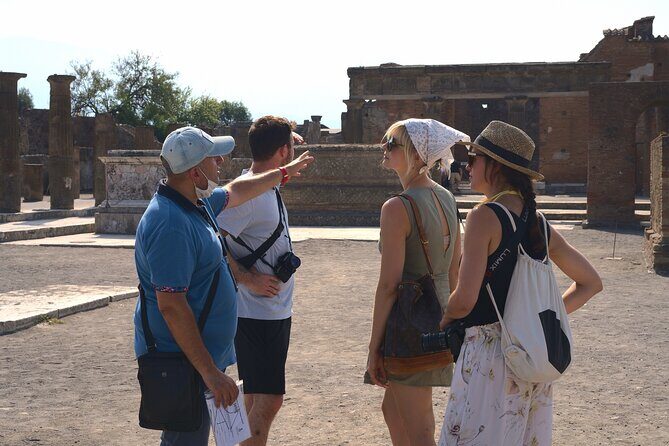
This private tour in Pompeii is built for time-strapped visitors who want to see the key monuments without burning hours in line. You get priority admission plus a local expert who can explain what you’re looking at—then adjust the walk so your group actually enjoys it. One name that pops up often for this tour is Romolo, who’s praised for turning daily life and the eruption story into something you can picture.
I love the way it’s private and flexible, so you can move at a comfortable speed and ask as many questions as you want. I also like that you see more than just one famous site; the route typically includes theatres, the main square, streets, the Lupanare House, Roman Villas recently open, thermal baths, and other highlight areas.
One thing to consider: admission fees are not included. That means you’ll need to budget for tickets on top of the tour price, and you’ll want to plan your entry timing so you don’t lose the time advantage.
In This Review
- Key things you should notice before you book
- Priority admission: saving your day at Pompeii
- What a 2–3 hour private route really means
- The heart of Pompeii: theatres, square, streets, and daily life
- Lupanare House and Roman Villas: architecture with context
- Thermal baths: where people slowed down and chatted
- Q&A time is part of the value, not a bonus
- Meeting point at Via Villa dei Misteri: getting started without stress
- Price and value: what $98.51 buys you (and what it doesn’t)
- Who this tour fits best
- Quick practical tips before you go
- Should you book this Pompeii private tour?
- FAQ
- How long is the Pompeii private tour?
- Is the admission ticket to Pompeii included?
- Does this tour help with waiting in line?
- Where do we meet for the tour?
- Is the tour private or shared?
- What language is the guide?
- What do I receive for the ticket?
- Can I cancel for free?
Key things you should notice before you book
- Priority admission means less line time and more time walking the ruins
- Private pacing lets you slow down for stairs, photo stops, or family needs
- A short, focused route works well when you have only half a day to make sense of Pompeii
- Daily-life stops like theatres, baths, and the Lupanare House help Pompeii feel human
- English guide service is clearly stated, so you can follow the story closely
- A loop back to the start keeps logistics simple if you’re planning other stops later
Priority admission: saving your day at Pompeii
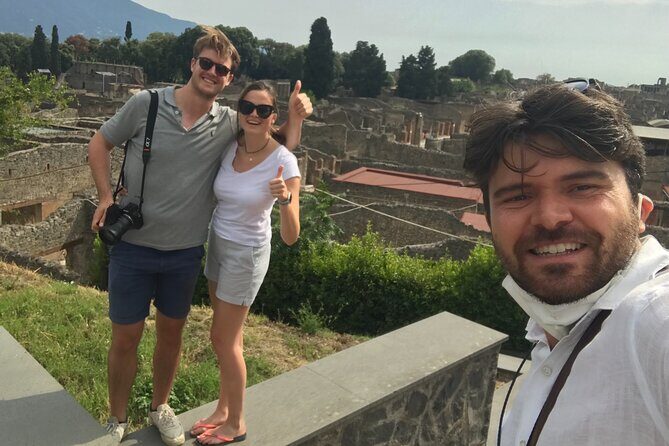
Pompeii is big, and the ticket line can eat up your energy. This tour’s biggest practical perk is priority admission, which helps you “get in and get moving” faster. In real terms, that matters because Pompeii is not a place you can fully “do later.” The best understanding comes when you’re standing in the places the stories refer to—streets, public buildings, and homes right where they were.
Also, priority entry pairs well with the private format. If you’re traveling with kids, older family members, or anyone who needs slower walking, the guide can shift the route so the schedule supports you, not the other way around. People often remember the guide’s explanations more than the clock, and priority admission is what gives you enough time for both.
You can also read our reviews of more guided tours in Pompeii

What a 2–3 hour private route really means
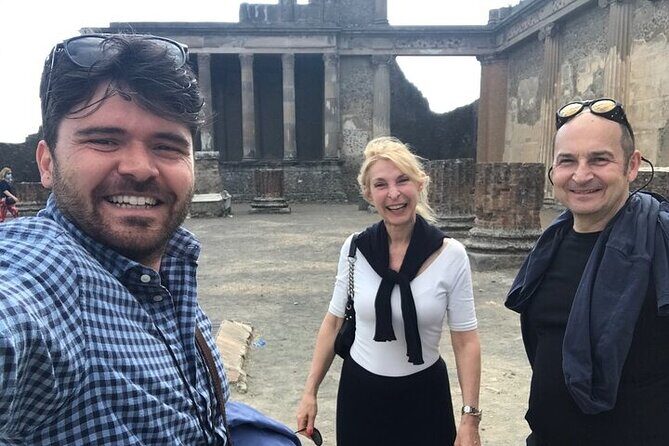
The tour runs about 2 to 3 hours. That’s not long, and you shouldn’t expect to “cover everything.” Instead, the value is in focus. You’ll hit the kind of highlights that help Pompeii click: major public spaces, key architecture, and everyday-life corners.
Because it’s private, your guide can adjust:
- how fast you walk
- which stops you linger at
- how much detail you want for each area
This is where guides like Romolo get mentioned with extra enthusiasm. The theme is the same: he’s described as energetic, question-friendly, and tuned to the group. If you see a guide named Sophia or Francesco associated with this tour, they’re also known for being easy to follow and making it feel like a real conversation instead of a lecture.
One caution: if you’re the type who wants to read every inscription and sketch every mosaic, this time window might feel tight. In that case, consider whether you’d rather spend longer on your own after the tour. The goal here is to give you the mental map so your self-guided time feels rewarding instead of confusing.
The heart of Pompeii: theatres, square, streets, and daily life
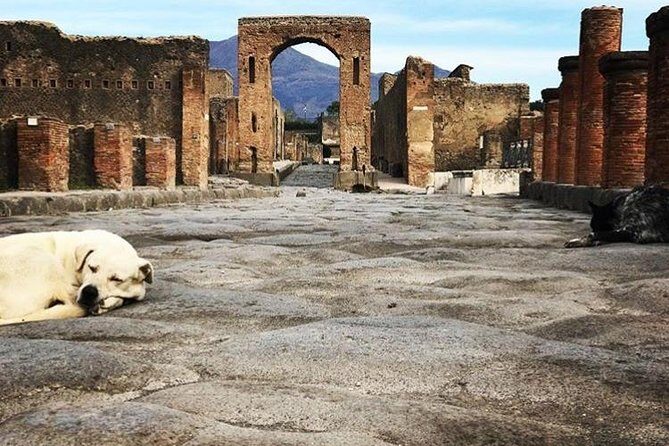
Stop after stop, the route is designed to build a picture of how Pompeii worked.
The theatres help you understand public entertainment and social life in a way that’s hard to grasp from photos. Even if you’re not a theatre person, you’ll get a sense of how Romans gathered and how the built environment shaped community.
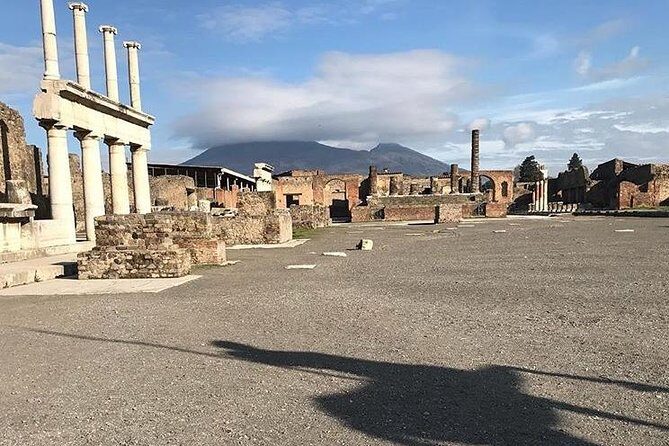
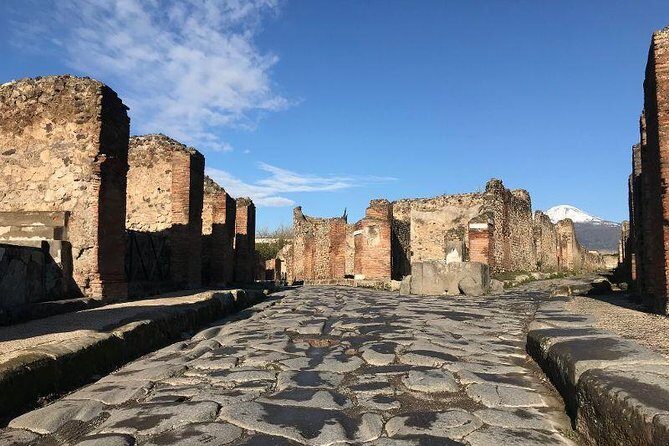
Then you move through the square and streets, which is where Pompeii starts to feel like a real town rather than a museum. Streets are the “spine” of the experience. A good guide helps you track the layout—what’s connected to what—and that makes the whole city easier to interpret.
One practical advantage of doing these early: it reduces the “what am I even looking at” feeling. You’re building context as you go, not trying to assemble it at random while everyone else is rushing.
Lupanare House and Roman Villas: architecture with context
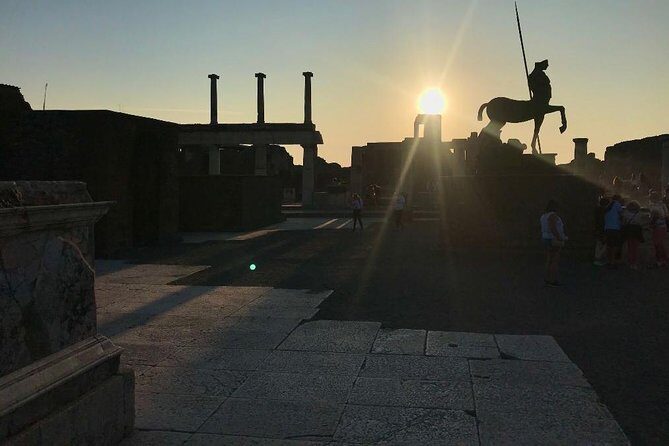
The tour includes the Lupanare House, a site that people often find both fascinating and a little shocking. When a guide explains the architectural layout and the function, it helps you move past gossip-level assumptions and understand it as part of a lived city. You’ll also learn how Pompeii’s everyday spaces show up in the architecture, not just in the big monuments.
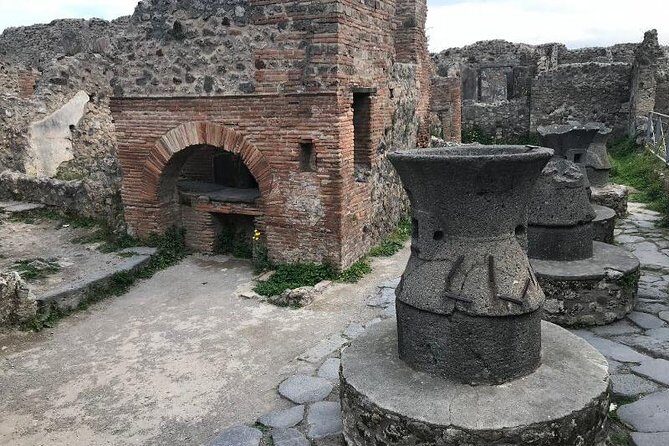
You’ll also see Roman Villas, including areas described as recently open. This is a smart addition when you only have a few hours. Villas can show you how wealth, space, and daily routine intersected—courtyards, rooms, and design choices that tell you how people lived.
A key idea I’d keep in mind: Pompeii’s buildings are not just ruins. They’re clues. Architecture becomes meaningful when someone helps you connect features (layout, movement through space, and how people used rooms) to daily life. That’s exactly what this format is aiming for.
Drawback to note: because these are highlighted stops, you may not get the slow, room-by-room pace you’d want for a deep architectural study. You’ll get the story and the orientation; you’ll decide later if you want to return for more.
Thermal baths: where people slowed down and chatted
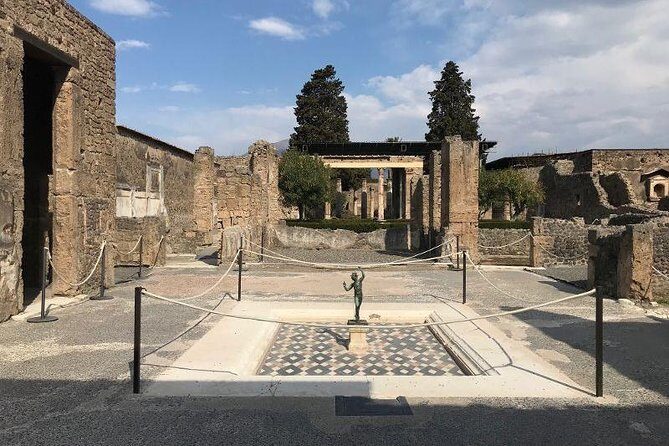
You’ll also visit the thermal baths. Baths are great for a tour because they show civilization at human scale: routine, social interaction, and how a city cared for leisure and hygiene.
In a short tour, baths can do something powerful. They give you a sense of rhythm. You stop thinking only about the eruption as a disaster and start thinking about Pompeii as a place where people lived their days, including time for relaxation and conversation.
If your group includes a mix of ages—say a parent who walks slowly plus younger people who want photos—the bath stop is often a good balancing act. It’s engaging, but it’s also flexible: you can spend more time if you want to talk about the concept, or move on if you need to keep the tour moving.
You can also read our reviews of more private tours in Pompeii




Q&A time is part of the value, not a bonus
A private tour should not feel like a slideshow you’re trapped inside. Here, there’s emphasis on plenty of time for Q&A as you take in the highlights. That’s a big deal at Pompeii, because the questions you’ll naturally have are the ones that make the ruins come alive:
- What’s the purpose of this space?
- How do we know what we know?
- How does the architecture connect to daily life?
- What changed right before the eruption?
Guides like Romolo are described as answering questions with insight and adjusting the tour so people learn while still enjoying the walk. That’s the sweet spot. You don’t just see the city—you understand what you’re seeing.
Meeting point at Via Villa dei Misteri: getting started without stress
Meet at Via Villa dei Misteri, 2, 80045 Pompei NA, Italy, and the tour ends back at the same place. This “back where we started” setup is underrated. Pompeii can tangle up time with transport and orientation, especially if you’re lining up other plans afterward.
It also helps that the meeting point is described as near public transportation, so you’re less likely to feel stuck if you’re not in a taxi. And if you’re booking with a small group, it’s generally easier to coordinate because you’re not searching for a big meeting crowd.
In terms of real-world experience, some people noted that staff were on time with clear signage and that the meetup felt seamless. You can still reduce stress by arriving a few minutes early and confirming your exact meeting spot the day before, just to avoid last-minute confusion.
Price and value: what $98.51 buys you (and what it doesn’t)
The price is $98.51 per person, for a private English guide, typically lasting 2 to 3 hours. That’s not a “budget ticket,” but it can be good value when you consider what you’re paying for:
- A guide who can turn the ruins into a readable story
- Priority admission, so you don’t lose half your morning in a queue
- Custom pacing for your group’s needs
- Time for questions instead of rushing through highlights
The part that changes your math: admissions fees to the Pompeii ruins are not included. So your total cost is tour price plus Pompeii entry. You’ll want to check the ticket requirement before you go and plan your entry timing accordingly.
One practical strategy if you’re staying in the region longer: if you think you’ll return for a second visit, you may want to consider whether multi-entry options make sense. A tour can give you the map fast, and then a second pass lets you slow down where you care most.
Who this tour fits best
This is a solid pick if you want:
- A first-time Pompeii experience with orientation built in
- A private setup for families, couples, or mixed-age groups
- Time efficiency without feeling like you’re sprinting
- A guide who’s comfortable with questions and pacing adjustments
It’s also a good choice when you have limited hours. Pompeii can feel overwhelming because it’s so visually dense. With a private guide, you’re not just walking through; you’re learning how to see.
If your group wants total freedom with no structure, you might prefer self-guided time after you’ve researched a route. But if you want the city’s meaning quickly—then this private format is the easier way.
Quick practical tips before you go
- Wear shoes you trust. Pompeii is uneven in spots, and you’ll walk a lot for a short tour.
- Bring water. Even in mild weather, the walking adds up fast.
- Ask your guide what you should focus on. If you tell them what you care about—architecture, daily life, or the eruption story—you’ll get a better route.
- If you’re sensitive to crowds, prioritize the time window that reduces congestion. Priority admission helps, but Pompeii still gets busy.
And yes, if you see Romolo listed for this tour, that name is worth extra attention based on consistent praise for passion, pacing, and clear explanations. If you see Sophia or Francesco instead, the important thing is the same: look for guides described as flexible and friendly with questions.
Should you book this Pompeii private tour?
If your goal is to understand Pompeii in a short window, I think you should seriously consider booking. The combination of priority admission, a private guide, and a route that targets how people lived makes the time feel efficient instead of frantic. You also get real conversation time, which is the difference between seeing ruins and understanding them.
I’d skip it or rethink it only if you already plan multiple hours in Pompeii and you want total independent wandering with no structured highlights. In that case, you can absolutely build your own route. But if you want help building the map and knowing what’s worth your attention, this is one of the cleaner ways to do it.
FAQ
How long is the Pompeii private tour?
It lasts about 2 to 3 hours.
Is the admission ticket to Pompeii included?
No. Admission fees to the Pompeii ruins are not included.
Does this tour help with waiting in line?
Yes. The tour includes priority admission, so you should spend less time in line and more time inside the ruins.
Where do we meet for the tour?
The meeting point is Via Villa dei Misteri, 2, 80045 Pompei NA, Italy, and the tour ends back at the meeting point.
Is the tour private or shared?
This is a private tour/activity, meaning only your group participates.
What language is the guide?
The tour is offered in English.
What do I receive for the ticket?
You get a mobile ticket.
Can I cancel for free?
Yes. You can cancel up to 24 hours in advance for a full refund.