REVIEW · NAPLES
Pompeii and Vesuvius Full Day Private Shore Excursion
Book on Viator →Operated by Askos Tours · Bookable on Viator
Pompeii feels like stepping into a time machine. This full-day private tour lines up skip-the-line Pompeii entry with a licensed archaeologist guide, so you spend less time stuck in lines and more time understanding what you’re seeing. The big drawback: Vesuvius includes a steep, slippery walk (especially the last 500 meters), so you’ll want solid shoes and a realistic pace.
I like how the day is built for convenience. You get a modern minivan with hotel pickup and drop-off across Naples, Sorrento, and the Salerno area, plus a structured route through the major sites at Pompeii before heading for the crater views over the Bay of Naples. Lunch is on your own time and expense, but you do get a built-in break on the slopes.
In This Review
- Quick takeaways before you go
- Private pickup across Naples, Sorrento, and Salerno
- Pompeii with an archaeologist guide: why this format works
- The Pompeii route: from Porta Marina to Teatro Grande
- Lunch on the Vesuvius slopes: plan for your own timing
- Vesuvius crater visit: what the steep last 500 meters means
- Price and value: is $568.94 per person worth it?
- Who should book this private Pompeii and Vesuvius day
- Should you book Askos Tours for Pompeii and Vesuvius?
- FAQ
- FAQ
- How long is the Pompeii and Vesuvius private shore excursion?
- What areas do you pick up from in Italy?
- Is Pompeii admission included, and what about Vesuvius tickets?
- Is this tour private?
- How much walking is involved?
- Is the tour suitable for reduced mobility?
- What is the lunch situation?
- What is the cancellation policy?
Quick takeaways before you go
- Private minivan pickup from Naples, Sorrento, and the Salerno area saves you from patching together transit
- Skip-the-line Pompeii admission helps you start strong right at Porta Marina
- An archaeologist guide in Pompeii means explanations match the buildings, streets, and everyday objects
- A focused Pompeii route covers key stops like Lupanar, Stabian Baths, and Teatro Grande
- Vesuvius crater visit with real climb guidance includes the steep last stretch where footwear matters
- Vesuvius ticket notes need checking since the info says admission fee included but also lists an 11 euro entry
Private pickup across Naples, Sorrento, and Salerno
This is a true private shore excursion setup: you’re not sharing the day with strangers, and your driver handles the moving parts. The minivan is described as modern and comfortable, and pickup and drop-off cover Naples, Sorrento, and the Salerno region, with meeting points set at your accommodation or transport hub.
That matters because this area is spread out. Pompeii isn’t far in distance, but getting there smoothly from the coast is where time gets wasted on DIY plans. A private vehicle is also a win if you’re traveling with kids or anyone who gets tired in transit.
Just plan on a full day. It’s around 7 hours total, with Pompeii and the Vesuvius crater visit taking most of your time, plus transfers and short stops for photos and walking.
You can also read our reviews of more private tours in Naples



Pompeii with an archaeologist guide: why this format works
You’re not just touring ruins—you’re walking a living puzzle with someone trained to explain it. Pompeii is guided for about 2 hours by a licensed guide, and that’s the sweet spot for most people: enough time to understand the big picture without turning it into a lecture.
One standout from real-world experiences: Pompeii guides have included archaeologists, and the approach can be fast and vivid. In one family outing, the guide was Mareluce and managed to keep kids aged 7 and 9 engaged with kid-friendly explanations. That’s a good sign if your group wants meaning, not just pictures.
Also, the entrance is set for momentum. You enter through the main entrance called Porta Marina, with skip-the-line admission fees included. In practical terms, that means your day starts at the ruins instead of in a queue.
A possible catch: the route moves. Each stop is timed, so if you love lingering over small details, you may wish you had more hours. The guide helps you prioritize, but you’ll still feel the “see it all” pace.
The Pompeii route: from Porta Marina to Teatro Grande
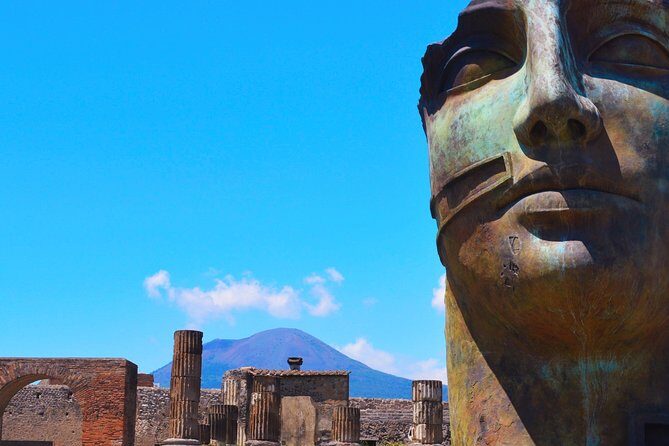
The itinerary is built like a guided walk through the city’s main districts, with short, targeted time at each place. The duration at each stop is brief, so it’s smart to listen closely at the beginning of the visit and then look harder once your brain has context.
Here’s what you can expect along the way:
Porta Marina and the main entrance area
You start at Porta Marina, the main entrance named in the plan. It’s a useful first step because it sets your bearings fast: you’re oriented to the streets and the logic of how Pompeii functioned.
Basilica (portico area)
This stop is described as an open portico that sheltered merchants and other activities. In other words, you’re looking at a public meeting place, not a random building. Think of it as the kind of practical space where people talked business and waited out bad weather.
Casa del Menandro
This house is noted as one of the richest and most magnificent homes for architecture, decoration, and contents. If you want to see how wealth expressed itself in daily life, this is one of the stronger stops. You’ll get a sense of how art, layout, and design were part of status.
Casa del Fauno
The house of Faun is described as one of the largest and most impressive private residences in Pompeii. Homes like this help you understand that Pompeii wasn’t just streets and shops—it had private worlds with their own rhythms.
Granai del Foro (granary area)
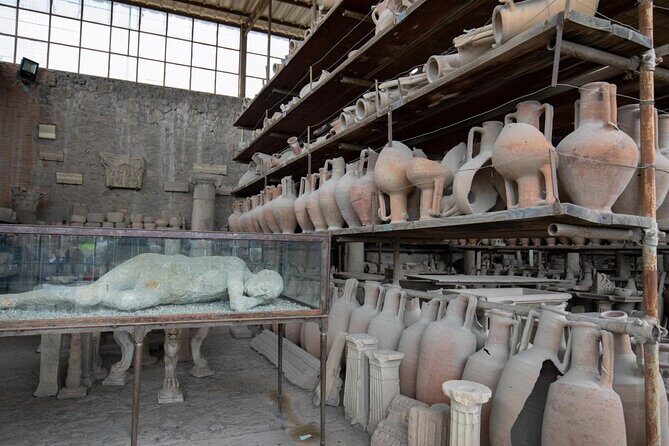
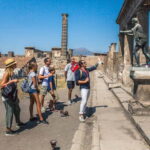
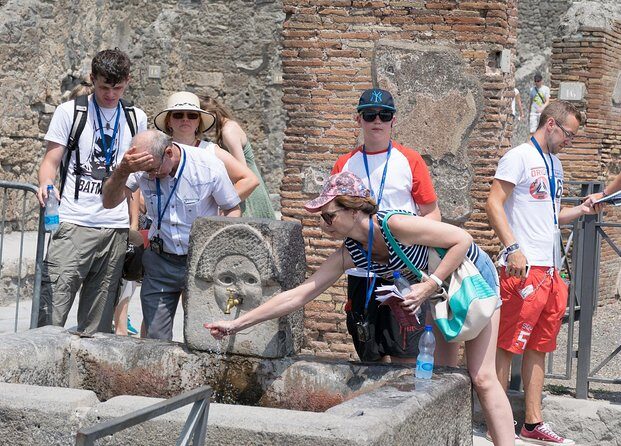
This is one of the more unusual stops on the list. The granary area includes marble tables and baths for fountains used to adorn entrances of houses, plus casts of victims and also a dog and a tree. That mix of everyday public design with heartbreaking aftermath is heavy, but it’s also where Pompeii can feel real fast.
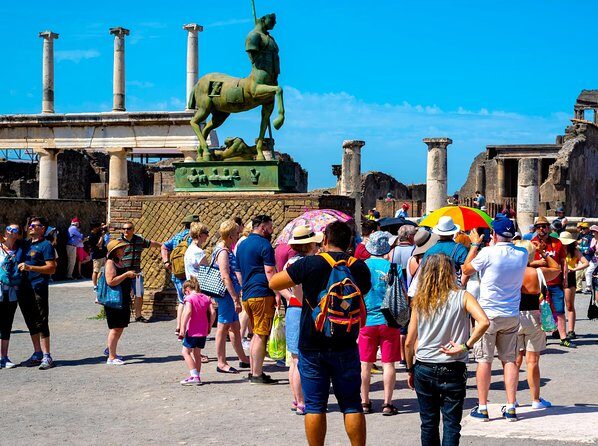
Foro (main square)
The ancient main square is included as a dedicated look. You’ll get a chance to see the civic heart—exactly where the city’s public life would have played out.
Lupanar (brothel)
This stop is the most famous brothel in the ruined Roman city of Pompeii. It’s also a reminder that daily life included every kind of business, even the parts modern visitors might prefer to skip. The guide’s framing is what turns it from shock-value sightseeing into context you can actually use.
Stabian Baths (Terme Stabiane)
The Stabian Baths are described as the oldest thermal complex in the city. Baths were social spaces as much as they were for bathing, so this stop helps show how people spent time together, handled routine, and stayed clean.
Teatro Piccolo and Teatro Grande
You get a look at the Teatro Piccolo and then the Teatro Grande, described as Pompeii’s most important theater. In practice, the theaters are great for understanding social life—who attended, why it mattered, and how performances fit into the calendar of city life.
Tip: if you want the most out of Pompeii, don’t just take photos of walls. Take photos of street angles, doorways, and the big open squares. The guide’s explanations make those views click.
Lunch on the Vesuvius slopes: plan for your own timing
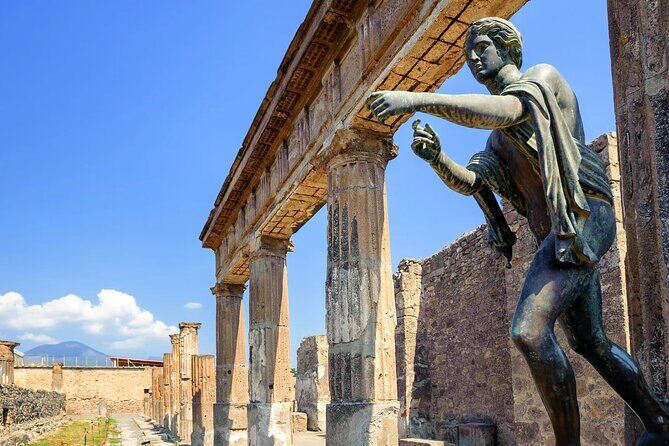
Between Pompeii and the crater, you get an optional lunch break. The plan includes about 1 hour for a restaurant lunch on the slopes of Mount Vesuvius or in Pompeii, and lunch itself isn’t included in the price.
The upside is flexibility: you can eat early, eat late, or skip lunch if you’re more focused on the climb. The downside is that you’re choosing where to eat on your own time, so you’ll want to keep it simple and don’t plan a fancy meal if you hate pressure before a hike.
Real-world advice from a guide recommendation: one driver named Luigi suggested a lunch stop at I Matti Pizzeria. That kind of local pinpoint matters because tourist areas can be hit-or-miss when you’re on a tight schedule.
Vesuvius crater visit: what the steep last 500 meters means
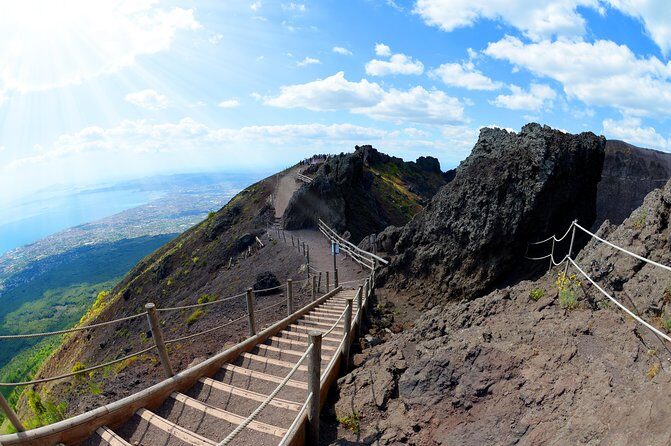
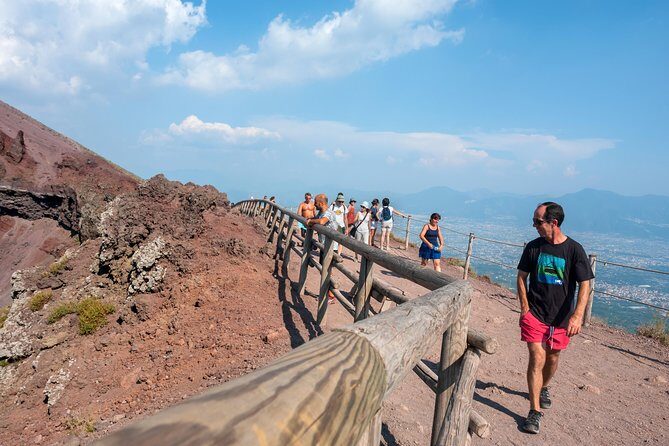
The Vesuvius portion is built around two things: the crater view and the panorama over the Bay of Naples. The plan notes that the crater still smokes slightly, and you’ll get wide views including Capri and Ischia, plus the edge of the Sorrento coast and more.
Here’s the key physical detail: the last 500 meters is described as a very steep uphill walk, and closed-in shoes are essential. That’s not a suggestion for fashion—it’s about traction and footing on a steep approach. The path is also described as steep and slippery in the accessibility notes, which is why the tour isn’t suitable for reduced mobility.
In one outing, the guide shared facts on the drive up so talking would be easier once the climb started. That’s a practical approach: you absorb the background before your legs take over.
Also, there are snack and drink stops on the way up (described as two stops in one experience). If you’re prone to low energy during climbs, plan to use those breaks. Bring water when you can, but use the in-route stops as your backup.
One fun payoff: a group celebrated the climb with lemoncello at the top. It’s the kind of small reward that makes the effort feel worth it.
You can also read our reviews of more tours and experiences in Naples




Price and value: is $568.94 per person worth it?
At $568.94 per person, this isn’t a budget day trip. What you’re paying for is a private vehicle all day, pickup and drop-off from your area, and guided time with admission included at Pompeii.
Let’s break down the value logic:
- Private transportation + door-to-door service: you’re not coordinating trains, buses, or local shuttles.
- Pompeii admission and skip-the-line: time saved is real, especially in peak seasons.
- Guided Pompeii for about 2 hours: this is where the experience becomes more than scenery.
- Vesuvius entry notes: the information you have includes Vesuvius admission fee in the package, but it also lists an 11 euro entry ticket. Before you go, I’d confirm what you’ll pay on your day, so there are no surprises.
Lunch is not included, so the true “all-in” cost depends on how you eat. But the structure gives you a reasonable lunch window, not endless waiting.
When this price feels fair: if your group wants comfort, wants to avoid line delays, and values expert explanations in Pompeii, the private format usually hits the right balance.
When it might feel steep: if you’re solo, love wandering without guidance, and are happy to handle tickets and transit on your own, you may find cheaper options. But you’d be trading away convenience and a guided route.
Who should book this private Pompeii and Vesuvius day
This tour fits best if you want an efficient day with a guided route and practical logistics handled for you.
It’s a good match for:
- Families who want expert explanations and a paced route through key sites
- People who care about context as they walk (houses, baths, theaters, civic spaces)
- Travelers who value pickup and drop-off convenience and hate wasting time commuting
- Anyone who can do moderate walking and a steep climb with careful steps
It may not fit if:
- You have reduced mobility. The path on Mount Vesuvius is described as steep and slippery, and the tour is explicitly not suitable for people with reduced mobility.
- You want long unstructured time at each ruin. The Pompeii route is timed at multiple stops, so you’ll be on a schedule.
Should you book Askos Tours for Pompeii and Vesuvius?
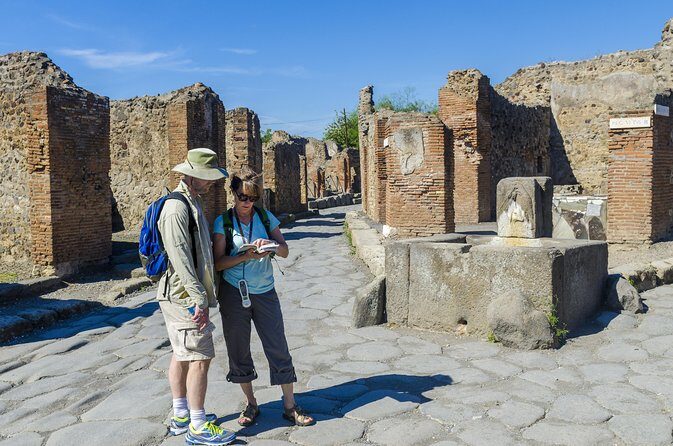
I’d say this is a strong booking choice if your priority is a guided, organized day that runs smoothly from the coast. Pompeii especially benefits from a guide who can connect streets, buildings, and household details into something you can actually picture—Casa del Menandro, the main square, the baths, and the theaters are much easier to understand with that support.
If you do book, come prepared for the only real “workout” of the day: the Vesuvius climb. Solid shoes, a steady pace, and a calm attitude about walking uphill will make the crater view feel like the reward it’s supposed to be.
FAQ
FAQ
How long is the Pompeii and Vesuvius private shore excursion?
The tour is approximately 7 hours.
What areas do you pick up from in Italy?
Pickup and drop-off are offered for the Naples area and the Sorrento and Salerno areas, including your hotel or accommodation and also airport or train station meeting points.
Is Pompeii admission included, and what about Vesuvius tickets?
Pompeii admission is included, with skip-the-line admission fees included for entry. For Vesuvius, the information notes an 11 euro entry ticket, but it also states Vesuvius admission fee is included—so you should confirm what you’ll actually pay at booking.
Is this tour private?
Yes. It’s listed as a private tour/activity, meaning only your group participates.
How much walking is involved?
The tour involves a moderate amount of walking. The Vesuvius path is steep and includes a steep uphill final segment, so comfortable shoes and a moderate fitness level are important.
Is the tour suitable for reduced mobility?
No. The tour is not suitable for people with reduced mobility because the path on Mount Vesuvius is steep and slippery.
What is the lunch situation?
Lunch in Pompeii is optional and not included. There is also an optional lunch break on the slopes of Mount Vesuvius or in Pompeii, with about 1 hour provided.
What is the cancellation policy?
You can cancel for a full refund up to 24 hours in advance of the experience start time.