REVIEW · POMPEII
Pompeii private tour with expert guide in archaeology
Book on Viator →Operated by POMPEIGRANDTOUR · Bookable on Viator
Pompeii reads like a puzzle—this tour helps you solve it. You’ll walk through streets and buildings that show everyday life 2000 years ago, with an archaeology-focused guide who connects the scenes in a way that makes the ruins easier to understand and more moving to see.
I especially like two things. First, the guide’s focus on archaeology in Pompeii turns the “scenery” into a real city—schools, baths, markets, and home interiors all fit together. Second, it’s a private group up to 8, so the pace stays human and you can steer the visit toward what you care about.
One consideration: the tour runs about 2 hours, and the entrance ticket isn’t included, so you’ll want to budget time for the €19 Archaeological Park admission and make sure you’re comfortable walking at a moderate fitness level.
In This Review
- Key highlights
- Why Pompeii feels different with an expert guide
- 2 hours at Pompeii: a smart walking arc
- Gladiator school and theater: context before the chaos
- The main streets: taverns, shops, and the city’s daily routine
- Baths and the spa culture that people actually used
- Red light district frescoes: plan for what you’ll see
- A patrician Domus: seeing wealth up close
- Forum finish: temples, markets, and plaster casts
- Price and value for a private group up to 8
- Who this Pompeii private tour fits best
- Quick practical notes (so your day runs smoothly)
- Should you book this Pompeii private tour?
- FAQ
- FAQ
- What’s included in the tour price?
- How long is the Pompeii private tour?
- What’s the group size?
- What language is the tour offered in?
- Where do we meet for the tour?
- Where does the tour end?
- Do I need to buy the Pompeii entrance ticket?
- Is pick-up and drop-off included?
- What’s the cancellation policy?
Key highlights

- Expert archaeologist guide focused on Pompeii’s material culture and everyday life
- Private group (up to 8) for a calmer pace and easier Q&A
- Gladiator training area + theater early on, so you get context fast
- Baths and the red-light district with famous erotic frescoes
- Forum ending point with plaster casts and key civic buildings to tie it together
Why Pompeii feels different with an expert guide
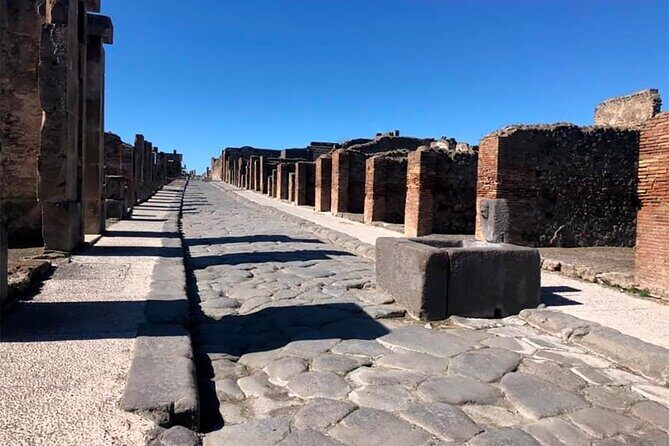
Pompeii can overwhelm you at first. Walls, doorways, mosaics, and street corners all look equally “ancient,” and it’s easy to wander without knowing what you’re actually looking at. This private format fixes that. You’re not just touring stone—you’re being guided through how people lived, worked, and relaxed.
The big value here is the guide’s archaeology lens. Instead of treating ruins like a theme park, the guide points out what matters: how spaces functioned, what people used them for, and how the city’s layout shaped daily routines. That’s how Pompeii becomes readable.
And because it’s private, you can actually respond. If you want more on the domestic side (houses, mosaics, frescoes), you can spend more time there. If you’re more drawn to public life (forum, market, temples), you can lean that way. That flexibility is a real perk when you’re standing in the middle of a huge site.
You can also read our reviews of more guided tours in Pompeii
2 hours at Pompeii: a smart walking arc
This tour is designed as a focused sprint—about 2 hours—that still covers the essentials. You start at a nearby café meeting point (Coffee Shop Vittoria on Via Mare), and the tour ends back at the same meeting point.
What makes the timing work is the order. You begin with big, recognizable social spaces and institutions (gladiator training and the theater), then you move into street life, bathing culture, and the city’s mixed-use zones. By the time you reach the Forum, you’re ready to understand it as the central stage for public decisions and daily movement.
It also helps that your guided portion ends at the Forum. After that, you can choose to keep exploring on your own or return to the exit points with the guide. That gives you control without losing the benefits of expert direction.
Gladiator school and theater: context before the chaos
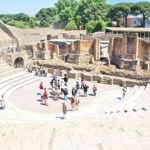
Your first stop is the Pompeii Archaeological Park, where the guide sets the frame for everything that follows. The early visits include the school and training place of gladiators. Even if gladiators aren’t your main interest, this stop is useful because it shows how organized entertainment and training were built into the city’s life.
Right after that, you’ll see the theater. This is one of those places where it’s tempting to think, “It’s just seats and walls.” With the right explanations, you start noticing how the theater fits into the rhythm of the town—where crowds would gather, how public events shaped social life, and how performance culture worked in an ancient setting.
Practical tip: arrive with a light curiosity about entertainment and public spectacle. You’ll get more out of it as the guide connects these spaces to the rest of what you’ll walk through.
The main streets: taverns, shops, and the city’s daily routine

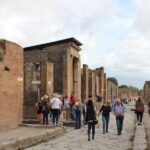
From the earliest public spaces, the tour shifts to the main streets, including areas with ancient taverns and shops. This is where Pompeii stops being a collection of famous ruins and starts feeling like a place where people actually spent time.
Think about it like this: once you’ve seen a gladiator school and a theater, you understand that Pompeii was built for gathering. Once you see street commerce and taverns, you realize that gathering also happened for food, drink, and everyday shopping—not only for formal events.
The guide’s job here is to connect buildings to routine. You’re not just looking at faded marks. You’re being guided to interpret what kinds of services might have operated from those storefront spaces and how the street itself shaped movement and social contact.
Baths and the spa culture that people actually used
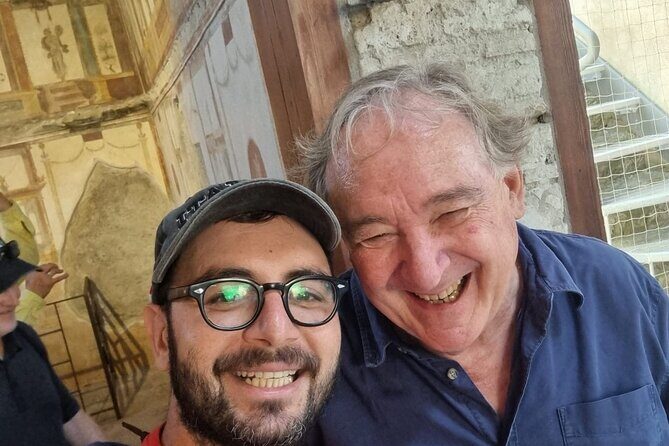
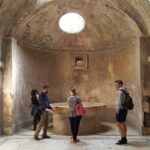
One of the standout stops is the Baths, a 2000-year-old spa. Baths in ancient cities weren’t only about hygiene. They were also social spaces—places to meet, relax, and pass time.
When the guide talks through the Baths, the ruins start making sense as a complex machine for bathing and circulation. You can spot how different rooms likely played roles in the bathing process. You also get a feel for why a city would invest so much space and design effort into a place where people weren’t just working—they were resting and talking.
If you want a break from the “public spectacle” angle of the site, this is where you get that calmer, human scale. And it’s a great anchor point for understanding Pompeii as a lived-in city.
You can also read our reviews of more private tours in Pompeii
Red light district frescoes: plan for what you’ll see

Then comes one of Pompeii’s most talked-about zones: the red light district, including famous erotic frescoes. This is not the kind of stop that’s background entertainment. It’s direct, and it’s part of how Pompeii reflects the full range of human behavior.
A good guide helps you view it in context instead of as shock value. You’re not being left alone with it as an awkward question. You get an explanation that frames the artwork and the area as part of the city’s social structure.
Consideration: if you’re sensitive to sexual content, this is the part to think about in advance. It may affect how long you want to linger in that area. Because the tour is private, you can usually adjust your pace at the moment—just tell the guide what feels comfortable.
A patrician Domus: seeing wealth up close
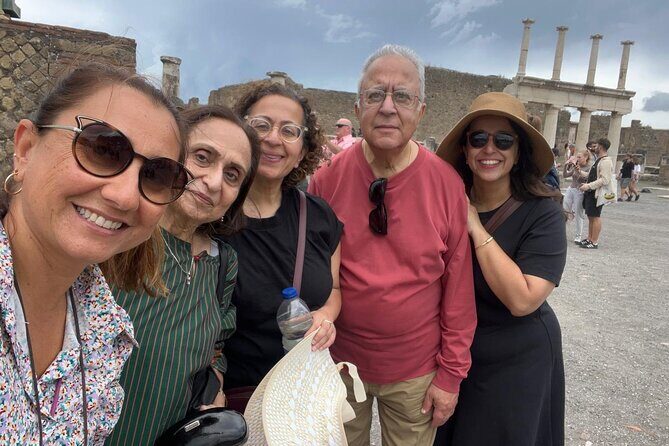
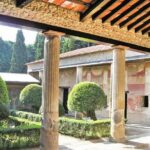
Next, you’ll visit a house of rich Roman patricians (a Domus), with frescoes and mosaics. This stop is valuable for one reason: it shows you Pompeii’s “inside life.”
Public spaces tell you how people gathered. Homes tell you what they valued, how they decorated, and how different social classes experienced their environment. Frescoes and mosaics aren’t just decoration—they’re cues about taste, status, and the way rooms were designed to be seen and used.
Even if you don’t know Roman art, you can still get a lot out of this stop with guided interpretation. You’ll learn what to look for and how the design choices connect to what daily life might have been like in that household.
Forum finish: temples, markets, and plaster casts
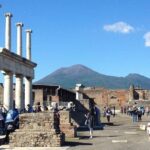
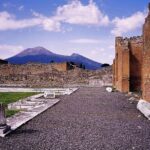
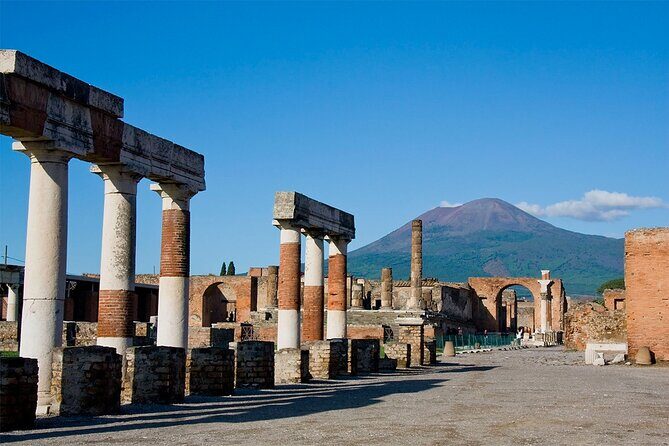
The tour ends at the Forum, which is the center of social life in Pompeii. This is where everything you saw earlier starts clicking into place. The Forum is civic energy: buildings for worship, the flow of commerce, and a central meeting point for the city.
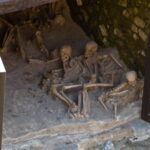
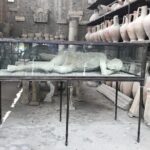
You’ll also see plaster casts of victims—figures crystallized at the time of the Vesuvius eruption. This portion can feel heavy, and it’s often the moment when Pompeii goes from “interesting ruins” to something deeply human. The guide’s explanations matter here because they help you understand what you’re looking at and why these casts are part of Pompeii’s story.
You’ll also cover temples and areas connected to the main market. Those stops help you see the Forum as more than a monument. It was working space, meeting space, and belief space all in one.
After the guided walk ends, you choose what you do next. If you want more time in specific areas, you can keep going yourself. If you’d rather not navigate the site alone, you can return to the exits with the guide.
Price and value for a private group up to 8
The price is $302.34 per group, up to 8 people, for around 2 hours. On paper, it’s a private-tour cost. In reality, it can be good value because the guide is included, and it’s shared across the group.
Here’s how to think about it:
- If you’re traveling as a pair or small group, you’re paying for expert time and a customized pace.
- If you can fill 4–8 spots, the per-person cost drops fast, and you get the benefit of a guided explanation without taking on the whole expense alone.
- Since the entrance ticket to the Archaeological Park is not included (it’s €19.00 per booking), you can treat this price as the “human” part of the experience: the guide and time on the ground.
Also note: admission tickets add up for larger groups, so check how your group size affects your total spend.
Who this Pompeii private tour fits best
This is the right choice if you want Pompeii to make sense fast. It’s also great for people who don’t want to piece everything together from a map while trying to interpret stonework.
You’ll likely enjoy it most if:
- you want a structured route in about 2 hours
- you value an archaeology guide who explains what you’re seeing
- your group includes different interests (public life, homes, arts, baths, even the darker or more provocative corners), and you want everyone to get something
- you prefer a quieter experience than large group tours
It may feel less ideal if you’re hoping for a slow, long-form visit. Pompeii rewards time, but this plan is built for an efficient overview with expert framing.
Quick practical notes (so your day runs smoothly)
The tour is in English. It starts at Coffee Shop Vittoria on Via Mare, and it ends back there.
The meeting point is near public transportation, and service animals are allowed. You’ll want moderate physical fitness—there’s walking on uneven ancient surfaces.
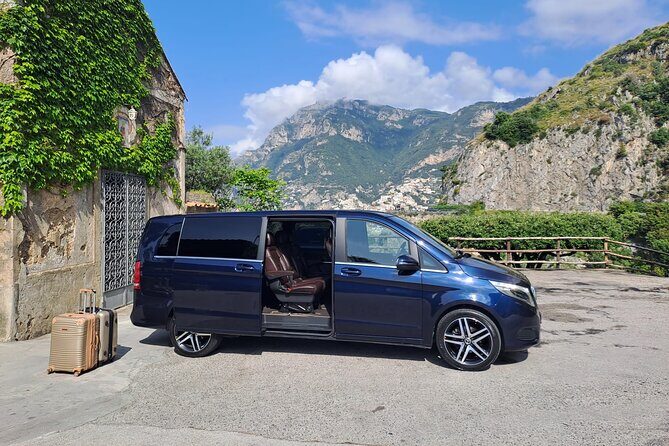
Pick-up and drop-off by minivan aren’t included, though you can book that option separately through Pompeigrandtour.
Should you book this Pompeii private tour?
If your goal is to leave Pompeii with real understanding—not just photos—this private guide setup is a strong pick. The most praised benefit is simple: the ruins improve a lot when you get explanations that connect the sites into one story.
Book it if you:
- want a guided, structured route that still leaves space for choice at the end
- are traveling with a small group and want value through shared cost
- care about archaeology-focused interpretation rather than wandering
Skip it or consider a different option if you want a long, open-ended exploration with minimal guidance, or if the erotic fresco stop would seriously upset your comfort level.
FAQ
FAQ
What’s included in the tour price?
An expert archaeologist guide is included. The Archaeological Park entrance ticket is not included.
How long is the Pompeii private tour?
It’s about 2 hours.
What’s the group size?
It’s a private tour for your group, up to 8 people.
What language is the tour offered in?
The tour is offered in English.
Where do we meet for the tour?
You meet at Coffee Shop Vittoria, Via Mare, 80045 Pompei (NA), Italy.
Where does the tour end?
It ends back at the same meeting point. The guided visit ends at the Forum, and you can continue on your own or return with the guide.
Do I need to buy the Pompeii entrance ticket?
Yes. The entrance fee to the Archaeological Park of Pompeii is €19.00 per booking and is not included.
Is pick-up and drop-off included?
Pick-up and drop-off by minivan is not included, but there’s a possibility to book it through Pompeigrandtour.
What’s the cancellation policy?
You can cancel for a full refund if you do so at least 24 hours before the experience start time.