REVIEW · POMPEII
Pompeii Private Tour with an Archaeologist Guide
Book on Viator →Operated by Askos Tours · Bookable on Viator
Pompeii makes more sense with a guide. This private Pompeii tour with an archaeologist is built for people who want the big sights, but also want the stories behind them. You get guided context on Roman daily life and how the city worked, not just a checklist of ruins.
I especially love the undivided attention. With a private setup, you can ask questions as they come up, and the pace can flex when you hit something that fascinates you. I’ve also found the stop selection smart for first-timers: the tour hits standout public spaces like the Forum and Stabian Baths, plus homes and street scenes that show what life looked like.
One consideration: the headline price is per person, and the Pompeii entry ticket may cost extra depending on the situation. So before you go, I’d budget for the park ticket and wear closed shoes; Pompeii’s paths are not the kind of place for flip-flops.
In This Review
- Key highlights you’ll notice right away
- Pompeii is huge. This tour is the smart slice.
- Porta Marina Superiore meet-up and ticket reality check
- Casa dei Vettii and Lupanar: private rooms and public temptations
- Thermopolium of Vetutius Placidus and Teatro Grande: everyday food and public entertainment
- House of the Faun, Via dell’Abbondanza, and the Stabian Baths
- Forum Baths, Macellum, and the food-and-power core
- House of Menander, granaries, and the Pompeii Forum finale
- What makes the archaeologist guide worth the money
- Price and value: $178.45 buys focus, not acres
- Who should book this Pompeii private tour (and who might not)
- Should you book?
- FAQ
- What’s included in the private tour price?
- How long does the Pompeii private tour last?
- Where do we meet the archaeologist guide?
- Is this a private tour?
- What language is the tour offered in?
- Do I need to bring my own entry ticket?
- Is free cancellation available?
Key highlights you’ll notice right away
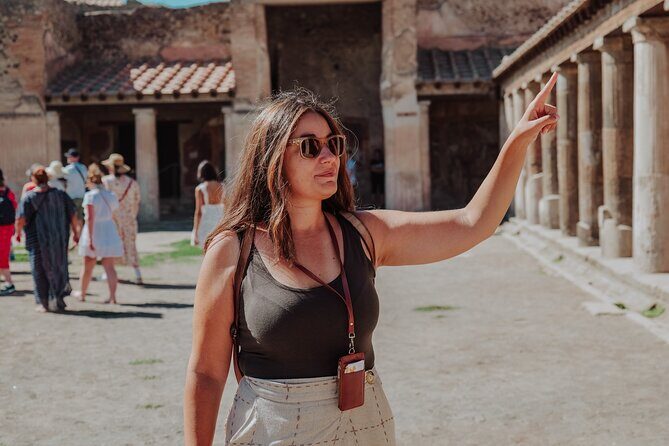
- Archaeologist-led, private format: just your group, with time for questions
- Crowd-aware pacing: you’re guided from one key area to the next without feeling rushed
- Forum + baths focus: Stabian Baths, Forum Baths, Macellum, granaries, and more
- Street-level Pompeii: Via dell’Abbondanza gives you the city rhythm
- Homes that tell stories: Casa dei Vettii, House of Faun, House of Menander
- Hands-on context: guides like Rossana, Mena, Paolo, Mimma, and Michele are repeatedly praised for making the city feel real
Pompeii is huge. This tour is the smart slice.
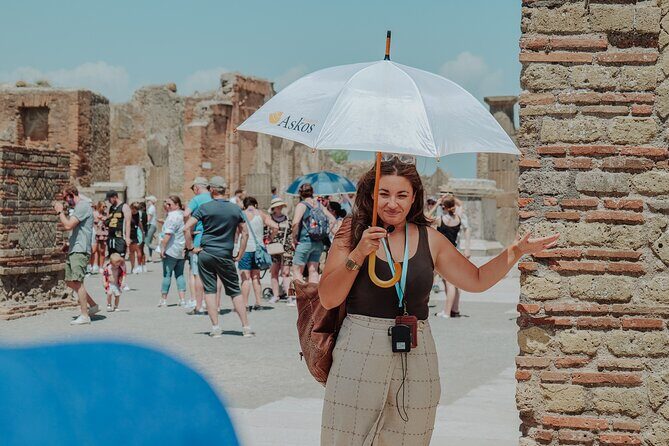
Pompeii covers a lot of ground, and that can be both the thrill and the problem. In two hours, you can’t see everything. What you can do is learn how to read the site—streets, water, markets, homes, and public buildings—so the rest of your visit makes sense.
This tour’s value is that it’s structured around the places that help you understand the whole city. You don’t just walk past walls. You connect what you’re seeing to how people lived: where they ate, where they shopped, how they bathed, and what public life looked like. That turns Pompeii from overwhelming into readable.
And because it’s private, you’re not stuck waiting for a big group to form up again. Your guide can slow down if you want to linger on a fresco or speed up if you’re moving on.
You can also read our reviews of more guided tours in Pompeii
Porta Marina Superiore meet-up and ticket reality check
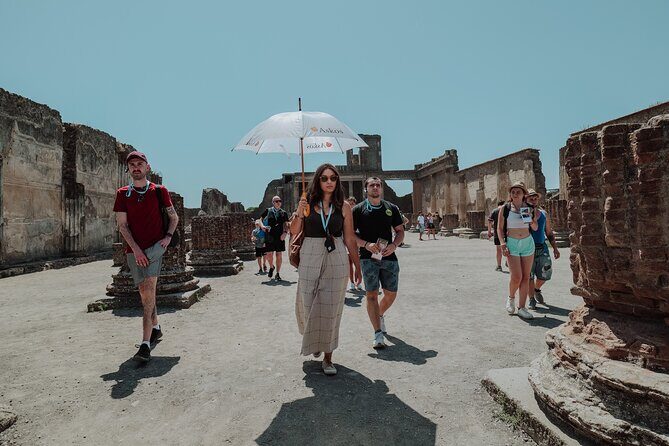
You meet at the main entrance of the archaeological park at Porta Marina Superiore, where your guide holds a sign for Askos Tours. The posted meeting address is Via Villa dei Misteri, 1, 80045 Pompei NA, Italy—the guide can also help you figure out how to return to your accommodation or the nearest train station after.
Here’s the one thing I’d plan carefully: the Pompeii entry ticket situation. The tour description can read a bit mixed—some parts suggest admission is included at the start, but the important practical point is that you should expect to pay the park ticket separately at some point. A couple of guides are noted for clear communication, but even then, budget for the entry fee so you don’t get stuck doing math in the ticket line.
Timing matters too. This is scheduled for about 2 hours, so you’ll want to be ready at the start and keep your phone charged. Pompeii is easier when you can spend your energy looking, not scrambling.
Practical win: closed shoes. Pompeii can be rough underfoot, and even short transfers between sites add up.
Casa dei Vettii and Lupanar: private rooms and public temptations
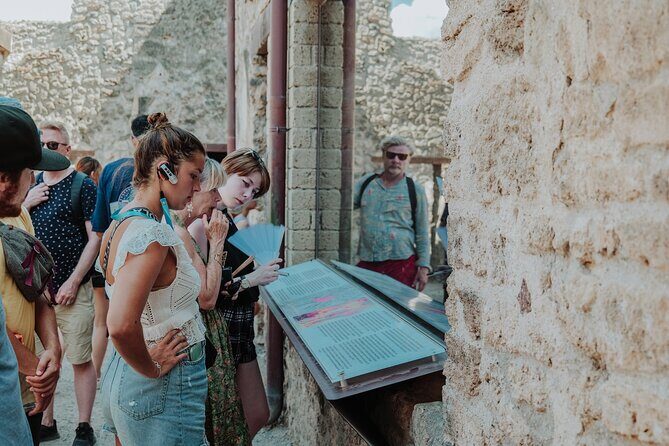
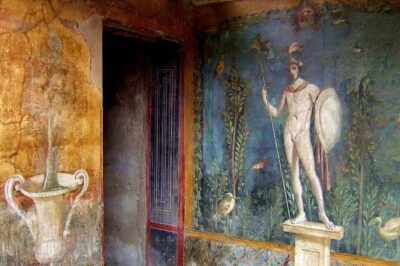
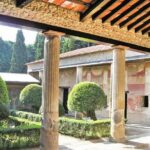
The tour kicks off by getting you oriented inside the park, then moves into stops that quickly teach you how Pompeii worked socially. The Casa dei Vettii (House of the Vettii) is a strong early choice. It helps you see how an upper-class home was organized—rooms, decorative details, and the way space shaped daily routine.
What I like here is the guide’s ability to translate what you’re seeing. Roman houses are not built like modern apartments. The layout, access points, and the way visitors would move through a home are clues to status and lifestyle. When the guide explains those connections, the walls start telling you a story instead of being just stone.
Then comes the Lupanar, often described as a brothel in Pompeii. Even if you don’t care about the sensational reputation, it’s a useful stop because it shows street-level commerce and how businesses advertised themselves. The guide can also place it in context—how signage worked, how public space differed from domestic space, and how the city’s routines played out.
Drawback to consider: if you’re sensitive to the more explicit side of Roman art and history, this stop may feel intense. On the flip side, it’s also one of the most direct windows into how people used public space.
Thermopolium of Vetutius Placidus and Teatro Grande: everyday food and public entertainment
Next you’ll hit the House and Thermopolium of Vetutius Placidus, including a look at the termopolium (a Roman fast-food counter). This is one of those stops that makes Pompeii feel modern. Roman cities had places where you could grab something to eat without going home to cook.
What you’ll get from a good archaeologist guide is interpretation. The structure of a thermopolium isn’t just architectural trivia. It connects to labor, daily schedule, and how foot traffic moved through town. You begin to see Pompeii as a working city, not just a museum.
After that, you’ll move to Teatro Grande, the large theater area. It’s short in the itinerary, but it does something valuable: it gives you the public entertainment anchor. Even without spending a long time there, you’ll understand why the theater mattered—gathering, spectacle, and civic identity.
If you’re visiting in hot weather, the theater-to-street flow matters. Pompeii rewards smart pacing. A private guide can keep you moving while also controlling your stops so you’re not stuck in the sun longer than necessary.
House of the Faun, Via dell’Abbondanza, and the Stabian Baths
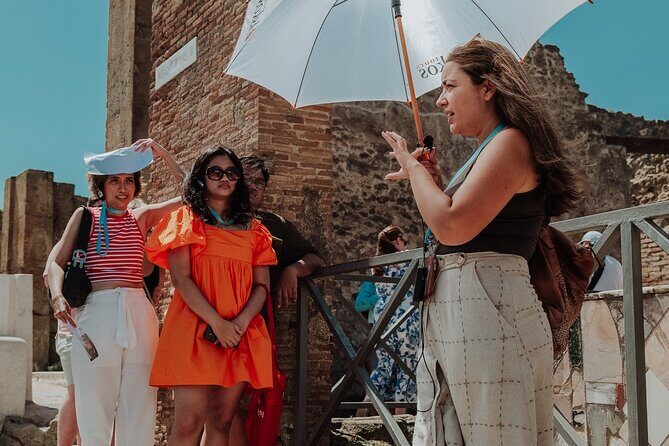
The House of the Faun is one of the most famous homes in Pompeii, and that fame is there for a reason: it helps you grasp the scale of wealth in the city. Even if you only spend about 10 minutes here, a guide can highlight what makes the layout and details important—how wealthy residents used their space, how decoration signaled status, and how a home sat within the city’s street system.
Then you’ll walk Via dell’Abbondanza, one of Pompeii’s main streets. This street stop is underrated. Homes and buildings are easier to understand when you see their relationships: how far people walked, how shop-front areas worked, and how the city funnelled movement. It’s a quick way to reset your perspective.
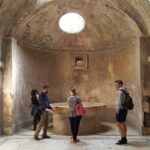
After the street, you’ll visit the Stabian Baths (Terme Stabiane). Baths are where Pompeii really becomes practical. You see how people socialized, how they cooled down and warmed up, and why bathing was more than hygiene. Roman bath culture was tied to routine and community.
The value of spending time at baths with a guide is that they can explain the function of each area—so you don’t just admire an outdoor ruin while missing the logic of how the system worked.
You can also read our reviews of more private tours in Pompeii

Forum Baths, Macellum, and the food-and-power core
The heart of the itinerary keeps returning to what made Pompeii run: water, commerce, and civic spaces.
You’ll see the Forum Baths, a reminder that bath life wasn’t limited to one area. It’s a sign of how important bathing and meeting people in public really were.
Then comes the Macellum, the market. This stop helps you understand food culture and supply chains. Markets aren’t only about shopping. They’re also about conversation, status, and daily decision-making.
And because this is a private tour, you can ask why certain structures are where they are. A guide can connect the market to the street plan and the surrounding public buildings. That’s where Pompeii becomes easy to read.
House of Menander, granaries, and the Pompeii Forum finale
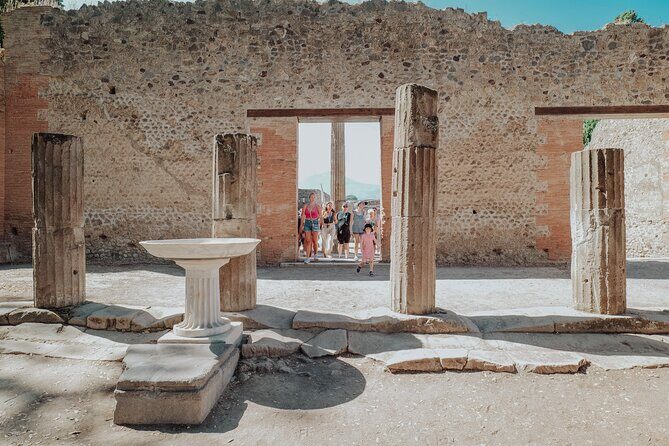
Near the end, you’ll visit the House of Menander and then head to key storage and civic spaces: the Granaries of the Forum, plus a look at the Foro de Pompeya (the Forum itself).
The House of Menander is another home stop that reinforces the domestic side of Pompeii. If Casa dei Vettii showed you a particular kind of household feel, this one helps broaden your sense of variation. With an archaeologist, you’ll also hear about how decoration, public-facing areas, and the internal layout reflect lifestyle.
Then the granaries add an essential layer. Food storage is power. It’s how a city handles risk, seasonal shortages, and population needs. When a guide points out how these spaces worked, the Forum area stops being just symbolic. It becomes functional—built for administration and supported by supply systems.
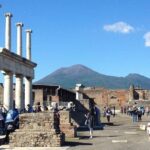
Finally, the Forum view ties it together. The Forum is where civic life concentrates. You leave with a better sense of what people did in the day, what institutions mattered, and how social life moved between public buildings and private homes.
It’s also a nice moment to ask final questions. Most private tours work best when you finish with big-picture context, and this itinerary does that.
What makes the archaeologist guide worth the money
Plenty of tours can say they show you the highlights. What makes this one different is the archaeologist guidance and the private format. That combination is what turns two hours into something you remember and can explain.
Here are the most praised traits that matter to you:
1) The guide’s passion is practical, not just theatrical.
People are often impressed by guides like Rossana, Mena, Mimma, Paolo, Jolanda, Michele, and Maria for the same reason: their excitement is tied to clear explanations. You don’t just hear facts. You see why a detail matters.
2) They help you use the site like a map.
A common complaint in Pompeii is that it’s too big, too fast, and too confusing. With this tour, you get an orientation that helps you explore afterward with confidence. Even the guides who are praised for steering around crowds are really doing one thing: keeping your brain from overheating.
3) The pace is adjustable.
A private tour means you can slow down. One example shared is how guides accommodated a broken foot by taking it slow and finding places to sit. If you’re traveling with kids or anyone who needs breaks, that flexibility is huge.
4) Q&A time is built in.
In Pompeii, your questions are never silly. Why this room? What was this for? Who used this space? A good guide can answer without making you feel like you’re interrupting. You’re not stuck following a script.
Is it always perfect? One review noted communication issues during the tour. That’s a reminder that even a great concept depends on guide performance and clarity. Still, with a private setup, you have a better chance of adjusting on the spot—ask your questions early if you’re unsure.
Price and value: $178.45 buys focus, not acres
At $178.45 per person for about two hours, you’re not paying for more time on site. You’re paying for focus: a guide who can point out what matters and help you connect the dots quickly.
So the value question becomes: do you want structure, or do you want freedom? If you want to wander and read signs, you can do Pompeii on your own. But Pompeii signage won’t explain the logic of baths, streets, markets, and domestic life. That’s where the archaeologist guide earns the money.
Be sure to factor in the likely Pompeii park ticket. Some guidance suggests it’s included, but other experiences indicate it’s often extra. If you book expecting everything to be rolled in, you might be surprised when you get to the entrance. I’d treat the $178.45 as your tour cost, then plan a separate budget line for the park entry.
Also note: this tour is often booked about 27 days in advance on average. That’s not a “must” number, but it tells you demand is real. If you’re visiting in peak season, book earlier.
Who should book this Pompeii private tour (and who might not)
This tour fits best if you:
- have limited time and want the main Pompeii highlights
- care more about how people lived than just big monuments
- want real Q&A and a guide’s undivided attention
- are traveling with kids and want someone who can keep them engaged
- prefer a smoother route through crowded areas
It may not fit as well if you:
- want to maximize total walking time and see lots of smaller corners
- dislike stops that include the more adult side of Roman life (like the Lupanar)
- want a long, unbroken meander without scheduled stops
One more tip I’d give: if you fall in love with Pompeii mid-tour, two hours can feel short. A couple of people suggested that a longer visit would make the overall day better. If you can, plan some extra time for independent wandering after the guide drops you off.
Should you book?
Yes, I’d book this Pompeii private archaeologist tour if you want high-value orientation plus the big sights in a tight schedule. It’s especially worth it when you’re trying to get Pompeii right the first time, without wasting your best hours on confusion.
Book it if you care about the Forum, baths, street life, and household culture—and you want a guide to explain the connections. Just go in with two practical expectations: budget for the park ticket, and wear shoes that can handle uneven stone.
If you want, tell me your travel month and whether you have kids or mobility limits. I can suggest the best time of day to aim for and how to structure your remaining Pompeii hours.
FAQ
What’s included in the private tour price?
The tour includes guidance and assistance by an archaeologist and the private tour itself. Pompeii entrance ticket and transportation are not included.
How long does the Pompeii private tour last?
It runs for about 2 hours.
Where do we meet the archaeologist guide?
You meet at the main entrance of the archaeological site at Porta Marina Superiore. The tour meeting/end address is Via Villa dei Misteri, 1, 80045 Pompei NA, Italy. The guide will be holding a sign with Askos Tours.
Is this a private tour?
Yes. It’s private, and only your group participates.
What language is the tour offered in?
It is offered in English.
Do I need to bring my own entry ticket?
Yes. The Pompeii entrance ticket is not included, so you should plan to purchase it separately.
Is free cancellation available?
Yes, you can cancel up to 24 hours in advance for a full refund.