REVIEW · POMPEII
Semi – Private Tour of Pompeii with an Archaeologist
Book on Viator →Operated by Around Amalfi coast · Bookable on Viator
Pompeii turns into real life fast. This semi-private, English-speaking walk through the Archaeological Park focuses on how Romans lived in the city 2,000 years ago, with small-group pacing and archaeologist-led context. I love that you get a guided route instead of wandering, and I love the way the explanations train your eye for details like water systems and painted walls.
One thing to plan for: the €18 admission ticket isn’t included, and on some days the guide may feel more like a top storyteller than a strict academic archaeologist. Still, the best sessions make the site feel understandable and personal.
In This Review
- Key things to know before you go
- What You See in Pompeii During This 2-Hour Ruins Walk
- Roman Life, Not Just Columns: How the Stories Work
- The Stops That Usually Hit Hardest: Theatres, Shops, and Houses
- Theatres: where crowds made sense
- Shops and street life: how money and food worked
- Houses: the differences you can actually see
- Skip the Worst Crowd Moments and Work With the Heat
- Price and Value: Why This Tour Costs More Than a Ticket
- Meeting at Coffee Shop Vittoria and What to Expect On the Ground
- Who Should Book This Semi-Private Pompeii Tour (And Who Might Want More Time)
- Should You Book This Semi-Private Pompeii Archaeologist Tour?
- FAQ
- Is the Pompeii admission ticket included in the tour price?
- How long is the Pompeii tour?
- What time and where does the tour start?
- How big is the group?
- What language is the tour offered in?
- Can I get a full refund if I cancel?
Key things to know before you go
- About 2 hours on-site, designed to hit major highlights without taking all day
- Admission is extra (€18 per person), so budget for it up front
- Small-group format (max 15), with routes built to keep you together
- Meeting at Coffee Shop Vittoria (Via Mare) at 10:00 am and returning there at the end
- Guides with real passion, including names like Lello, Leonardo, Camilla, and Rafaello who are repeatedly praised for storytelling
- Mobile ticket in English, and service animals are allowed
What You See in Pompeii During This 2-Hour Ruins Walk
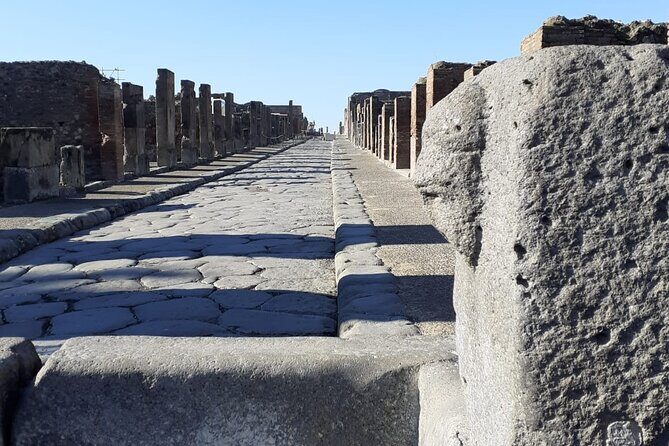
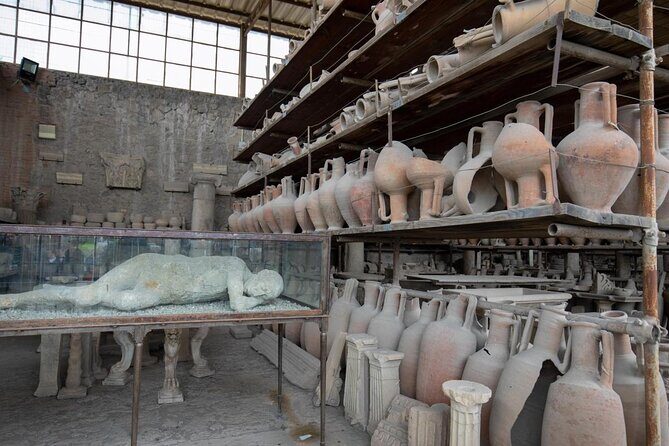
Pompeii is huge. Even if you’ve studied it on your phone, the place can feel like a scatter of walls unless someone gives you a line to follow. This tour is built around a tight window—about 2 hours—so you spend your energy on the parts that help you “read” the city.
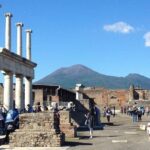
You’ll move through key areas of the Archaeological Park and focus on the things that made daily life work: theatres where people gathered, streets lined with shops, and residential houses that show how families organized space. The goal is simple: not just seeing stone, but understanding how a Roman town functioned.
A quick note on timing: the advertised duration is around 2 hours, but I’d treat it as flexible. Some guides keep momentum through crowds, while others slow down when people have good questions or when you need shade breaks.
You can also read our reviews of more private tours in Pompeii
Roman Life, Not Just Columns: How the Stories Work
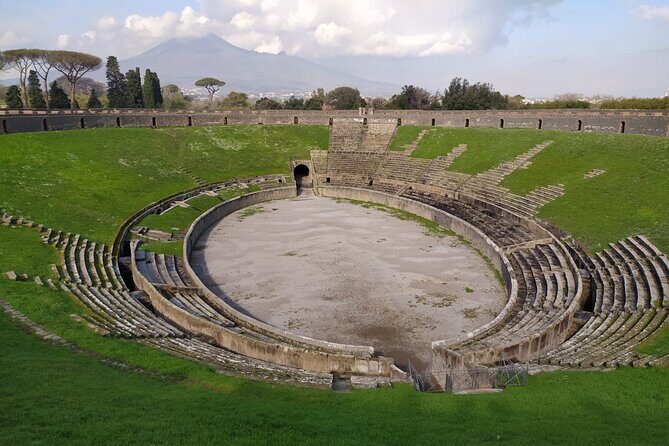
Here’s where the experience earns its value. Pompeii is famous for tragedy, but what makes the ruins hit hardest is the normal stuff beneath it. A strong guide helps you connect the buildings to routines—where people ate, how they cooled off, who worked where, and how social life played out in public spaces.
You’ll see examples in the way guides explain what you’re looking at. Guides like Lello, Leonardo, and Camilla are repeatedly praised for turning the site into a story you can follow. People describe guides making you imagine the day-to-day rhythm—so you don’t just spot an archway and move on. You start to understand why that spot mattered.
In practical terms, this kind of guide-led storytelling also changes how you walk. Instead of scanning for “must-see” photos, you start noticing the small infrastructure clues—like water systems (water pipes show up in explanations) and painted decoration (fresco details get pointed out). Those are the moments that make you feel like the city is still thinking, not only surviving.
The Stops That Usually Hit Hardest: Theatres, Shops, and Houses
This tour covers the heart of Pompeii’s layout through a selection of major areas—theatres, shops, and houses—plus key monuments along the way. Even if your route changes slightly day to day, the themes stay consistent: public life, commerce, and home life.
Theatres: where crowds made sense
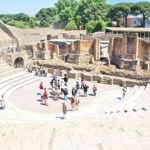
Pompeii’s theatres aren’t just old architecture. A good guide frames them as community engines—places where people gathered for events and where social status could be seen. You’ll likely hear how the design shaped what people experienced, from sightlines to the sense of energy in the room.
Shops and street life: how money and food worked
The shopping streets are where Pompeii stops being “a museum” and starts being “a place people depended on.” Guides are praised for pointing out commercial details and for bringing in everyday comparisons—things like food service counters and the variety of small businesses you’d find in a working city.
If you like authenticity, this is a key value. It’s easy to look at a storefront and forget it was a business. With a guide, you learn what types of trade looked like and why certain street corners mattered.


Houses: the differences you can actually see
Residential Pompeii is where you start sorting the city by life stage, wealth, and daily routines. Reviews highlight that guides bring up the idea of different “town zones,” including mid-town and upper-town styles. That helps you read the city like a map of lifestyles rather than one flat ruin field.
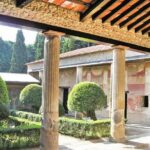
One of the most useful habits of a great guide: they slow you down long enough for you to notice house features people would have used every day. That can include interior layout cues and decoration clues, and it often includes attention to frescoes and the quality of finishes.
Skip the Worst Crowd Moments and Work With the Heat
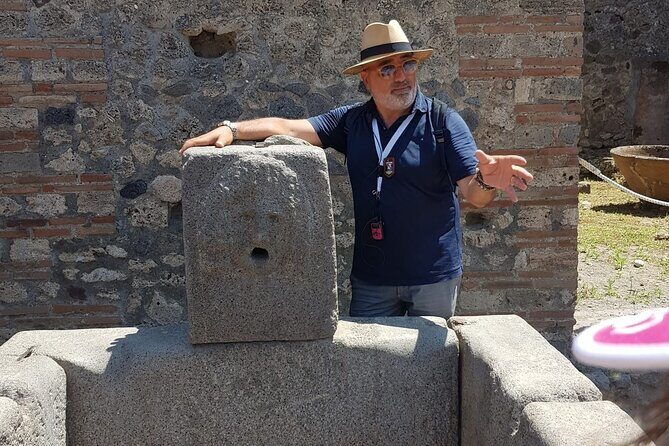
Pompeii can be crowded. Even when you’re excited, the logistics can drain you—long entry lines, tight passageways, and a sun that doesn’t care about your itinerary.
This is exactly why a guided route helps. Multiple guides connected with this experience are praised for helping groups get moving quickly at entry, including being early enough to avoid the worst crush. You should still expect crowds inside the park, but a good guide can help you avoid getting stuck in the same bottleneck as everyone else.
Then comes the heat problem. A repeat theme in feedback is that you’ll want shade stops. One guide (Viktoriya/Vittoriya appears in feedback) is specifically mentioned for pausing for shade and making use of breezes. That’s not glamorous, but it’s smart. At Pompeii, shade breaks can decide whether the tour feels energizing or exhausting.
What I’d bring:
- Water (you’ll thank yourself)
- Sun protection you’ll actually use
- Comfortable shoes with grip
- A light layer (even in summer, you’ll sometimes feel the temperature swing in shade)
Also, keep your expectations realistic. Even with a guide, you’ll be walking through a very public space. If someone in your group needs breaks, one guide (Lello, specifically in feedback) is noted as adjusting by having someone rest while others continued, then regrouping. That kind of flexibility is a good sign for a semi-private format.
Price and Value: Why This Tour Costs More Than a Ticket
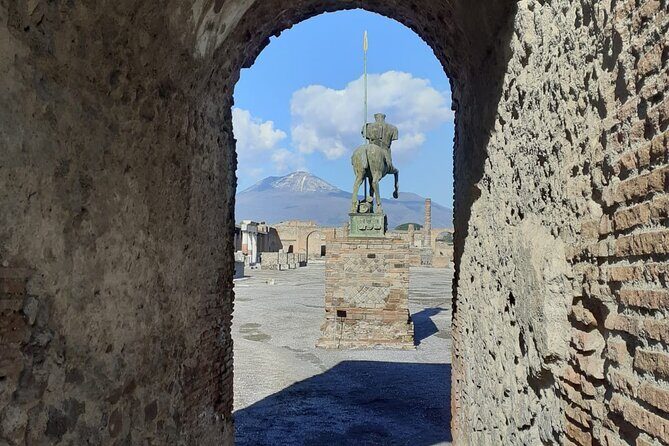
Let’s talk numbers plainly. You pay $36.28 per person for the tour experience, but the Pompeii admission ticket is €18 per person extra. So you’re really paying for a local guide and their route plan, not the entrance.
That can still be excellent value, especially because Pompeii is the kind of place where self-guided can turn into hours of looking at stuff without understanding why it matters. When you have someone explain how Romans lived—where people ate, how the city organized daily movement, how public and private spaces worked—you get context you won’t easily recreate on your own.
Why do people keep giving this tour very high ratings? The best sessions seem to deliver:
- Time efficiency in a time-tight site
- Less wasted wandering
- More “oh, I get it” moments, like noticing water pipes or decoration quality
- A guide who keeps the pace humane in busy areas
There’s one consideration worth respecting: a few negative experiences mention group size being larger than expected and/or a guide who wasn’t acting like a formal archaeologist. That doesn’t mean every departure is like that, but it does mean you should treat the “semi-private” idea as a goal, not a guarantee of a tiny bubble.
Still, the most consistently praised guides—names like Rafaello, Camilla, Esther, Leonardo, and Lello—are singled out for engagement, clarity, and the way they bring Pompeii to life.
Meeting at Coffee Shop Vittoria and What to Expect On the Ground

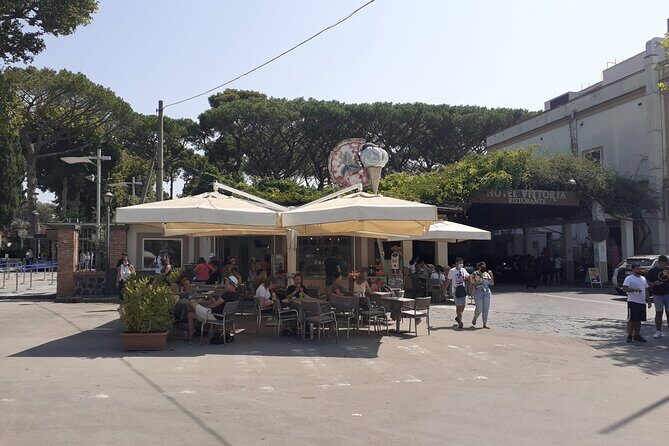
Your start point is Coffee Shop Vittoria, Via Mare, 80045 Pompei NA, Italy, with a 10:00 am start. The tour ends back at the same meeting point.
That matters more than it sounds. Pompeii mornings can get chaotic if you show up unsure where to meet or if you end up separated from your group. A fixed meeting spot gives you a clean reset at the end, too.
Also, you’ll get a mobile ticket. That’s handy for a busy travel day because you aren’t hunting for paper while navigating transit.
The park is near public transportation, which helps if you’re mixing this with other stops in the area. Since the tour is in English and most travelers can participate, it’s a good option for mixed-age groups—especially families and first-timers—because the guide can steer attention to the most readable, memorable sights.
One more practical reality: the experience is capped at 15 travelers. That usually supports a guided flow where you’re not lost in a crowd of strangers. But because Pompeii itself is crowded, plan to stay flexible with pacing.
Who Should Book This Semi-Private Pompeii Tour (And Who Might Want More Time)
This tour is a strong fit if:
- You want Pompeii highlights without spending the whole day
- You value context over collecting random photos
- You like guides who explain daily life—shops, homes, public spaces
- Your schedule is tight and you want a clear plan from arrival to return
It’s also a nice choice for kids or teens if the guide uses storytelling. Several guide styles listed in feedback are described as funny, engaging, and attentive to questions—exactly what keeps younger visitors interested.
You might consider a different format if:
- You’re expecting a strictly academic lecture style every minute
- You need a very slow, fully customizable pace with lots of long stops
- You’re deeply sensitive to crowd management and group-size swings
Pompeii is powerful enough on its own. The guide just determines whether you feel lost in the ruins—or oriented in a real city.
Should You Book This Semi-Private Pompeii Archaeologist Tour?
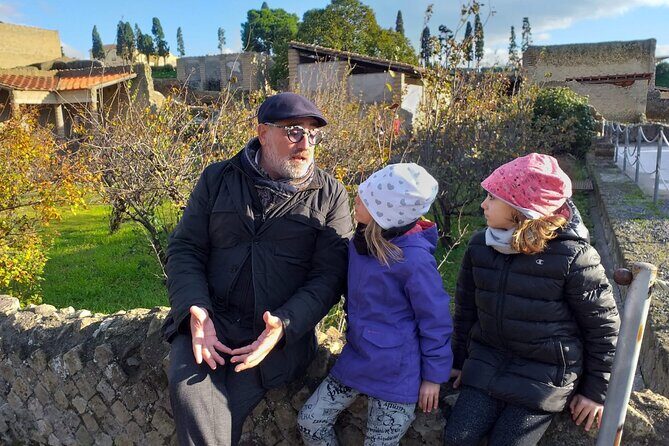
I think this is a smart booking for first-timers and time-constrained visitors. You’re paying for guidance through a site that’s otherwise easy to misunderstand, and the best versions of this tour seem to deliver exactly that: major sights plus Roman daily-life context, with guides praised for making details click.
Book it if you want:
- A structured route through theatres, shops, and houses
- A guide who helps you notice meaningful details
- A semi-private group size that keeps interaction possible
Double-check your expectations around two things: the €18 entry ticket you’ll pay separately, and the fact that Pompeii crowds can affect how small the group feels in practice. If you’re okay with that, this tour can be one of the most efficient and rewarding ways to experience Pompeii.
FAQ
Is the Pompeii admission ticket included in the tour price?
No. The tour price is for the guide only. You’ll need to pay the Pompeii site admission separately (listed as €18.00 per person).
How long is the Pompeii tour?
The duration is about 2 hours.
What time and where does the tour start?
It starts at 10:00 am at Coffee Shop Vittoria, Via Mare, 80045 Pompei NA, Italy.
How big is the group?
This experience has a maximum of 15 travelers.
What language is the tour offered in?
The tour is offered in English.
Can I get a full refund if I cancel?
Yes. Cancellation is free if you cancel up to 24 hours before the start time for a full refund.