REVIEW · POMPEII
Best of Pompeii & Herculaneum: Private Tour with an Archaeologist
Book on Viator →Operated by Tours with an archaeologist · Bookable on Viator
Two UNESCO sites, one tight plan.
This private tour is interesting because you’re not just walking around ruins. You get a local expert archaeologist who connects what caused the eruption with what everyday Romans did before it, and you cover Pompeii plus Herculaneum in the same half-day. I like the focus on real Roman routines, like public life in Pompeii and indoor decoration in Herculaneum. The one drawback to keep in mind: the big sites’ entrance fees aren’t included, and the day depends on good weather.
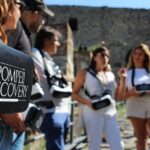
You’ll tour for about 4 to 5 hours, starting at Piazza Esedra in Pompeii and ending in Herculaneum. It’s designed as a small, private group (up to 8), so you can ask questions without feeling rushed or swallowed by crowds.
One thing I really value in this kind of tour is how the guide handles questions. Roberto, for example, is praised for answering with both the eruption story and day-to-day life of the Pompeiians, while Giada is noted as funny, kind, and deeply knowledgeable with a knack for practical suggestions, even pointing people to a great pizza spot after. That mix matters because Pompeii and Herculaneum can feel overwhelming fast—having a guide who can sort the meaning from the stone helps you leave with clarity, not just photos.
In This Review
- Key things to know before you go
- Why Pompeii plus Herculaneum is a smart pairing
- Pompeii Archaeological Park: public buildings and the Lupanare
- Herculaneum Parco: homes, shops, and the art on the walls
- The private archaeologist factor: what you should actually ask for
- Price and logistics: where the real costs show up
- Meeting points, timing, and getting around without stress
- Weather, cancellations, and how to keep your plans flexible
- Should you book this private Best of Pompeii and Herculaneum tour?
- FAQ
- How long is the Best of Pompeii & Herculaneum private tour?
- How many people are in the group?
- Is the tour offered in English?
- Are the entrance fees included in the price?
- Is lunch included?
- Do I need private transportation?
- Where do we meet, and where does the tour end?
- When will I receive confirmation after booking?
- What happens if the tour is canceled for weather?
Key things to know before you go
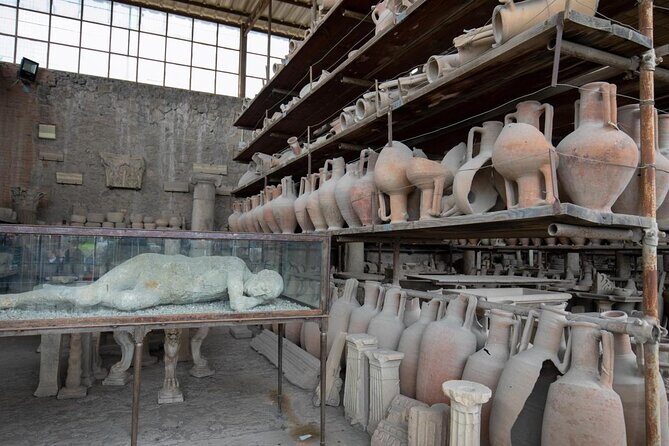
- Private archaeologist guidance: you get expert explanations instead of a self-guided scavenger hunt
- Two UNESCO sites in one outing: Pompeii for public spaces, Herculaneum for homes and shops
- You’ll see decorative art up close: frescos, mosaics, and stucco details are a major focus
- Small group pacing (up to 8): easier to stop, ask, and re-group than with big bus tours
- Good weather matters: the experience is weather-dependent, so plan with flexibility
Why Pompeii plus Herculaneum is a smart pairing
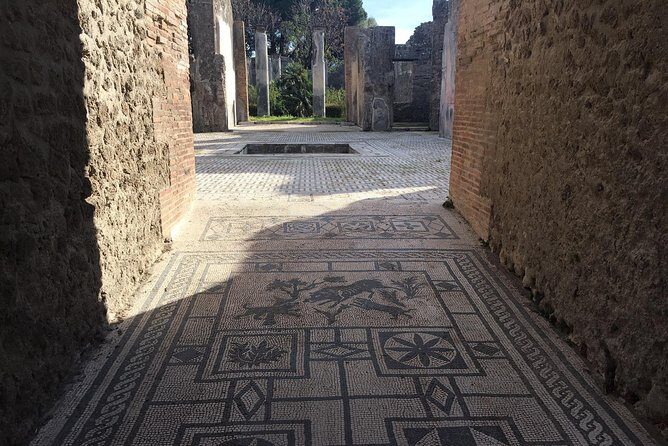
Pompeii and Herculaneum are cousins from the same disaster, but they don’t tell the story in the same way. Pompeii leans toward how a city worked in public: forums, theaters, and the spaces where people gathered. Herculaneum, by contrast, often feels more personal because you see private houses and commercial spots with decoration that still reads like Roman interior design.
That difference is exactly why I like doing both in one tour. If you only do Pompeii, you can end up with a great sense of streets and buildings, but less of what daily life looked like inside. If you only do Herculaneum, you get that intimate feel, but you miss the larger civic picture. This private format helps you connect the dots—public routine in Pompeii, private routine in Herculaneum.
Because you’re paying for a guide, the value comes from using the time wisely. In a shorter half-day, your archaeologist can point out what’s worth noticing without turning every stop into a long lecture. And that’s the real benefit of a private tour: you can move at a pace that keeps your brain engaged.
You can also read our reviews of more private tours in Pompeii
Pompeii Archaeological Park: public buildings and the Lupanare
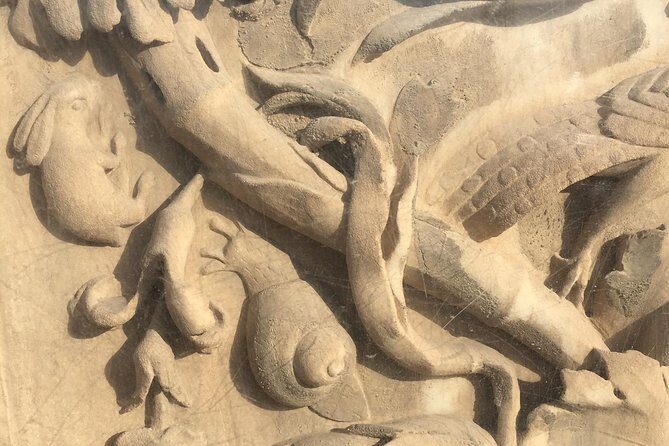
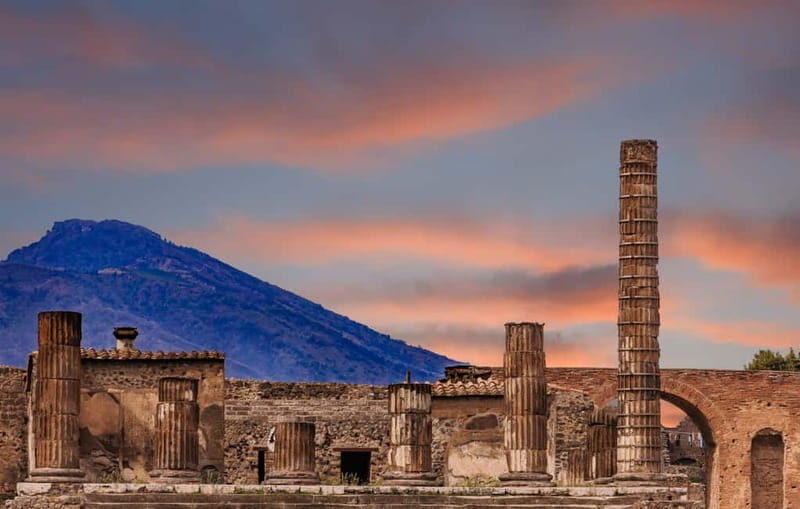
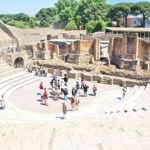
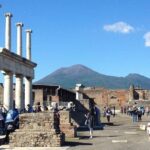
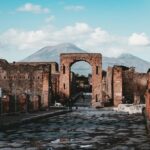
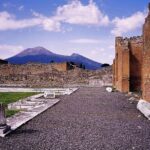
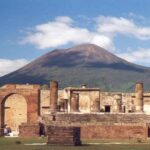
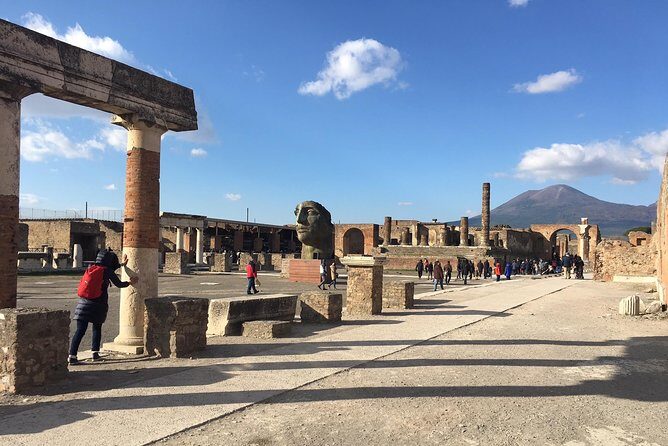
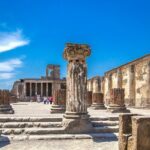
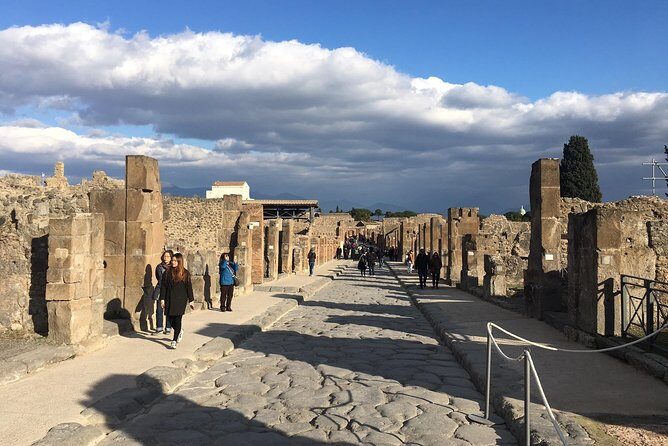
You spend about two hours in Pompeii, focusing on key public areas—think theaters, thermal baths, and the Forum and its surroundings. This is the part of the day that helps you understand how Romans structured community life. Even if you only catch fragments of what’s left, the layout tells a story: where people met, where they exercised, where they staged performances, and where civic decisions played out.
Two of the most meaningful parts of this stop are the variety and the scale. Pompeii isn’t one monument; it’s a whole city plan. A good guide helps you see the logic—how a person might move through the city during a typical day, then how that city functioned right up to the eruption.
You’ll also visit the Lupanare, the famous brothel. This is often the most talked-about site in Pompeii, and it’s also one of the best places to learn about social life rather than just architecture. The point isn’t sensationalism. It’s understanding how a Roman city created economies and social services, and how that shows up in carved or painted messaging in the surviving spaces.
Practical note: admission is not included, so you’ll want to budget for the entrance fee per person. Also, Pompeii is outdoors and spread out, so wear shoes that don’t mind uneven ground. Two hours can feel short if you stop for everything, so I recommend treating your guide as your filter—ask for the details you care about most.
Herculaneum Parco: homes, shops, and the art on the walls
After Pompeii, you move to Herculaneum for about 1.5 hours. This is where the tone shifts from city life to close-up daily life. You’ll see private houses and shops, including places like a bakery and a thermopolium (a kind of Roman eatery).
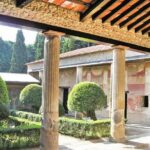
The biggest draw here is the decorative survival: frescos, mosaics, and stucco work. In Pompeii, you often appreciate buildings by form and location. In Herculaneum, you get to appreciate them by what people chose to look at every day—wall paintings, floor patterns, and molded surfaces that made spaces feel personal.
That matters because it changes the kind of understanding you get. When you see decoration in private settings and commercial corners, you’re not just learning about the eruption. You’re picturing what it meant to live there: how rooms looked, what people displayed, and how merchants tried to attract customers. It’s one of the clearest ways to feel connected to ordinary Romans rather than just famous ruins.
A time-savvy tip: if you have limited energy, focus on the places your guide highlights. These sites can reward slow attention, but a half-day schedule means you’ll get more meaning by looking where your archaeologist tells you the details are doing the most work.
The private archaeologist factor: what you should actually ask for
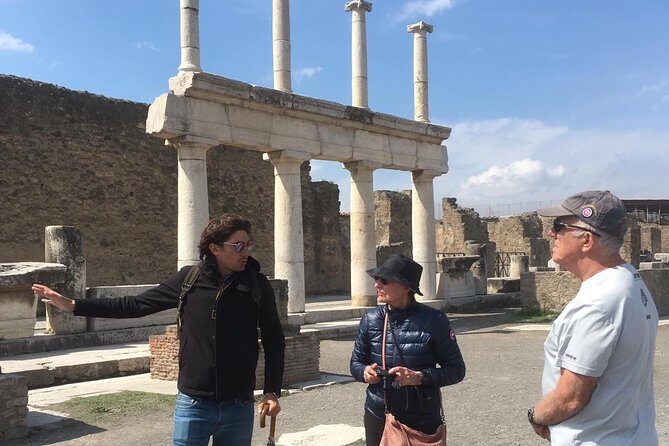
This tour is built around a local expert archaeologist as your private guide, and that’s the heart of the value. Pompeii and Herculaneum are famous, but fame can flatten your experience. A good archaeologist prevents that by translating stone and paint into human choices: how people lived, what they valued, and how the eruption changed everything.
One reason people rate this kind of outing so highly is how the guide handles questions. Roberto is singled out for tackling questions in a way that links the eruption day with daily life of the Pompeiians. Giada is praised for being funny and kind, but also for knowing her material and making it usable. That’s a helpful blend, because you want accuracy without feeling like you’re in a classroom.
Here are the kinds of questions that typically improve the tour (and you can ask them naturally):
- What does this space tell us about daily routine—morning, work, leisure, evening?
- What should I look at first in the frescos or mosaics to understand the theme?
- How does this building’s function compare to something we saw earlier in Pompeii?
Also, English is offered, and the tour is private, so you’re not stuck with a fixed group script. In practice, that means you can steer toward what interests you: public life, private life, art, or the eruption timeline.
Price and logistics: where the real costs show up
The price is $720.91 per group for up to 8 people, and it runs about 4 to 5 hours. That base price buys you the private archaeologist time and the plan to cover two sites in one outing.
The key detail is the entrance fee: plan on €40 per person for Pompeii and Herculaneum archaeological parks. That fee isn’t included in the tour price, so it’s the part that can surprise you when you compare options. Once you add it, the math depends on group size:
- If you fill the group with 8 people, the guide portion works out to about $90 per person, then add €40 for entry.
- If you’re only 2 people, the guide portion per person is much higher, and the entrance fee is the same.
That’s why this tour tends to be best value when you can share it with a few people, like a family group, a small circle of friends, or travelers who want to stay flexible with meeting points and pace.
There are also optional extras:
- A light lunch break is optional, from €20 per person.
- Private transportation is optional, from €350 euros, with a professional driver.
If you’re comparing costs, don’t just look at the tour price. Factor in the entrance fee, then decide whether you want to add lunch and whether you’d rather handle transport on your own or pay for a driver.
One more practical budgeting note: this tour is often booked well ahead, with an average booking time of 132 days. If your dates are fixed, earlier booking helps.

Meeting points, timing, and getting around without stress
The tour starts at Piazza Esedra, 10/13, 80045 Pompei NA, Italy, and ends at Archaeological Park of Herculaneum, Corso Resina, 187, 80056 Ercolano NA. It’s not a round-trip return to the exact same place, so plan your next activity accordingly.
Confirmation is handled within 48 hours of booking, subject to availability, and you’ll receive a mobile ticket. That’s one less thing to coordinate on the day, and it can help if you’re juggling multiple plans in the area.
The tour is near public transportation, and most travelers can participate. Service animals are allowed as well. So if you’re planning this as part of a larger itinerary, you’re not stuck arranging everything around private access.
Timing-wise, the schedule is built around two focused blocks: about two hours in Pompeii, then about 1.5 hours in Herculaneum. That’s enough time to see major highlights without trying to “win” the day by sprinting through everything. Still, if you tend to read slowly or take lots of photos, you’ll want to rely on your guide to steer you toward the most meaningful views and details.
Weather, cancellations, and how to keep your plans flexible
This experience requires good weather. If it gets canceled due to poor weather, you’ll be offered a different date or a full refund. That’s the good news.
The less fun news is that it’s non-refundable and cannot be changed for any reason if you cancel. So I recommend booking only when your dates are realistic, and keeping an eye on the forecast as your day approaches.
Should you book this private Best of Pompeii and Herculaneum tour?
Book it if you want a guided, high-impact half-day that covers both UNESCO sites with expert context. It’s a strong choice when you care about how Romans actually lived—public routines in Pompeii and home-and-shop life in Herculaneum—plus you want a guide who can handle questions with substance. The fact that guides like Roberto and Giada are noted for their approach to explanation, and even for sharing local tips, is a good sign that this isn’t just a walk-and-point exercise.
Skip it or look for another option if:
- You’re trying to keep costs very low, because entrance fees are extra and the private price can be steep unless you split the group.
- You have very inflexible plans and you’re worried about weather disruption, since the experience depends on good conditions and cancellations are non-refundable.
If your goal is to leave with a clear sense of daily Roman life—how the city worked, how people decorated their spaces, and how the eruption reshaped everything—this private two-site tour is a solid way to spend your time in the area.
FAQ
How long is the Best of Pompeii & Herculaneum private tour?
It runs about 4 to 5 hours.
How many people are in the group?
It’s a private tour for your group only, with up to 8 people.
Is the tour offered in English?
Yes, it’s offered in English.
Are the entrance fees included in the price?
No. Entrance fees for the Pompeii and Herculaneum Archaeological Parks are €40 per person.
Is lunch included?
Lunch is optional. A light lunch break is offered starting at €20 per person.
Do I need private transportation?
Private transportation is optional. It starts at 350 euros with a professional driver.
Where do we meet, and where does the tour end?
You start at Piazza Esedra, 10/13, 80045 Pompei NA, Italy. You end at Archaeological Park of Herculaneum, Corso Resina, 187, 80056 Ercolano NA.
When will I receive confirmation after booking?
You’ll receive confirmation within 48 hours of booking, subject to availability.
What happens if the tour is canceled for weather?
The experience requires good weather. If it’s canceled due to poor weather, you’ll be offered a different date or a full refund.