REVIEW · POMPEI CAMPANIA
2-Hour Pompeii Child-Friendly Tour
Book on GetYourGuide →Operated by Askos Tours · Bookable on GetYourGuide
Pompeii makes sense when kids lead the way. This 2-hour, family-friendly walk through the ruins is built for kids and parents at the same time, using tablets, reconstructions, and multimedia prompts so you can spot the everyday parts of Roman life, not just the big stone views. I like that it hits major landmarks in a tight route, and I especially like the focus on houses, temples, and public spaces so everyone stays engaged.
One thing to consider: it’s still a walking tour through uneven historic ground, so younger kids may need a slower pace plan and a little stamina.
In This Review
- Key things to love about this Pompeii family tour
- A Kid-First Way to See Pompeii’s Big Places
- Meeting at Porta Marina Superiore: Start Easy, Get Oriented Fast
- Porta Marina and the Temple of Apollo: Ancient Anchors for Kids
- The Forum Civile and Basilica: The Roman Public Square Moment
- Houses of Menander and the Faun: When Home Becomes a Story
- Forum Baths and Stabian Baths Energy: The Body-Function Stops
- Large Theatre: A Break for Kids With a Built-In Purpose
- House of the Vettii and the Thermopolium: Real People, Real Routines
- Tablets and Reconstructions: Why This Tour Works for Families
- Skip-the-Line Entry and a Guide Buying Tickets Quickly
- Price and Value: Is $212.41 Worth It for a 2-Hour Tour?
- Who This Tour Suits Best (and Who Should Rethink It)
- Should You Book This 2-Hour Pompeii Child-Friendly Tour?
- FAQ
- FAQ
- How long is the Pompeii child-friendly tour?
- Where is the meeting point?
- What does the tour include besides a guide?
- Is the tour private?
- What stops will we see during the tour?
- What language is the tour offered in?
- Is transportation provided?
- Is it wheelchair accessible?
- What is the guide using to help explain the ruins to kids?
- Is there a free-entry option?
Key things to love about this Pompeii family tour
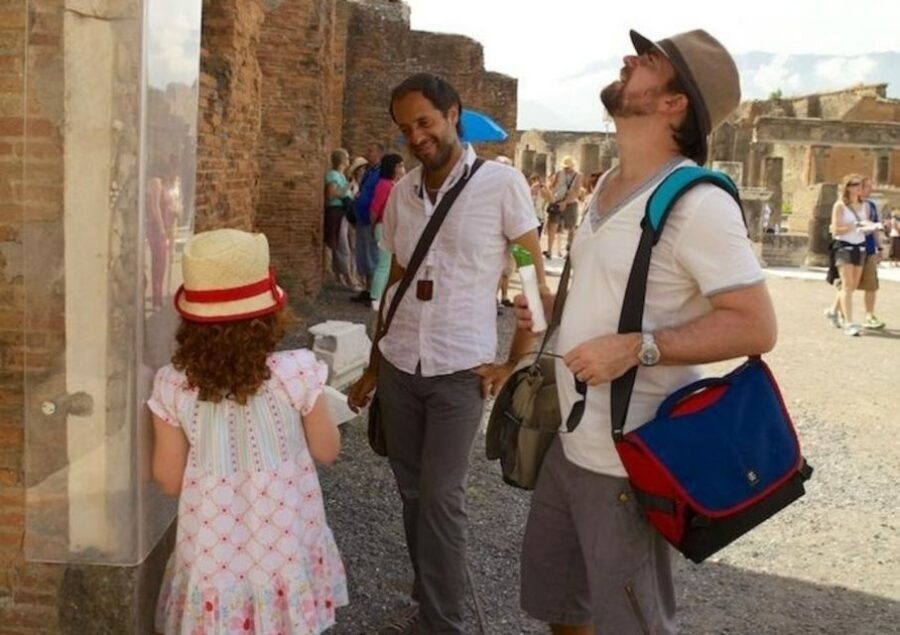
- Kid-focused tablets and multimedia help you understand what you’re seeing without needing a lecture
- A guided loop through top Pompeii highlights in just 2 hours, so you don’t waste time
- Time in houses and public buildings, not only exterior ruins
- Tablet reconstructions and plaster-cast style learning that turns fragments into stories for kids
- Private group feel with a certified guide working at your pace
A Kid-First Way to See Pompeii’s Big Places
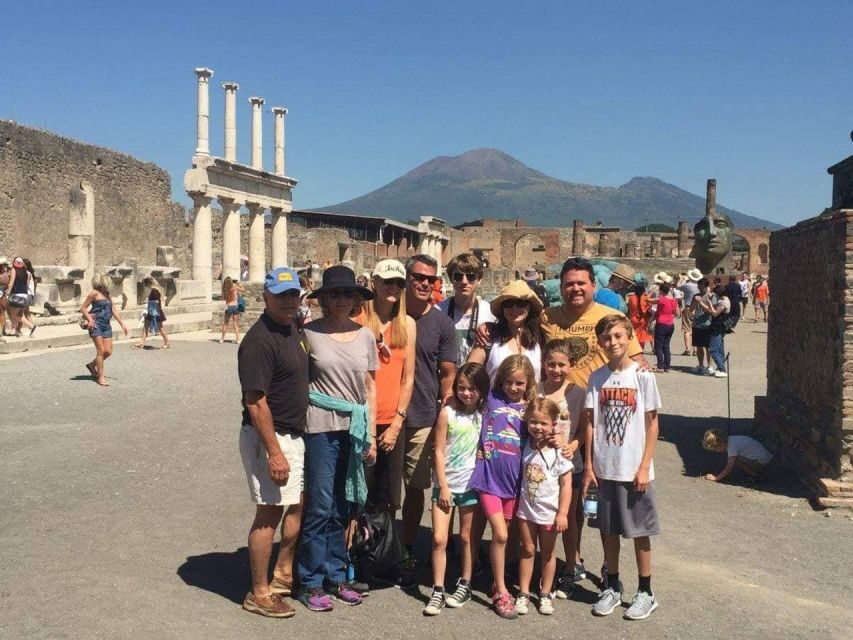
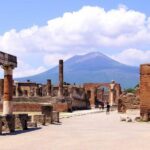
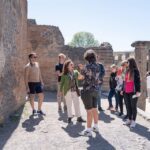
If you’ve ever tried to tour Pompeii with children, you know how fast it can turn into: look at stones, walk in circles, repeat. This tour is designed to avoid that. The guide keeps the story moving with visual tools like tablets and multimedia, plus reconstructions that help kids picture the spaces as they once worked. You’re not just sightseeing. You’re learning how people likely lived in Roman times, using the ruins as your “textbook.”
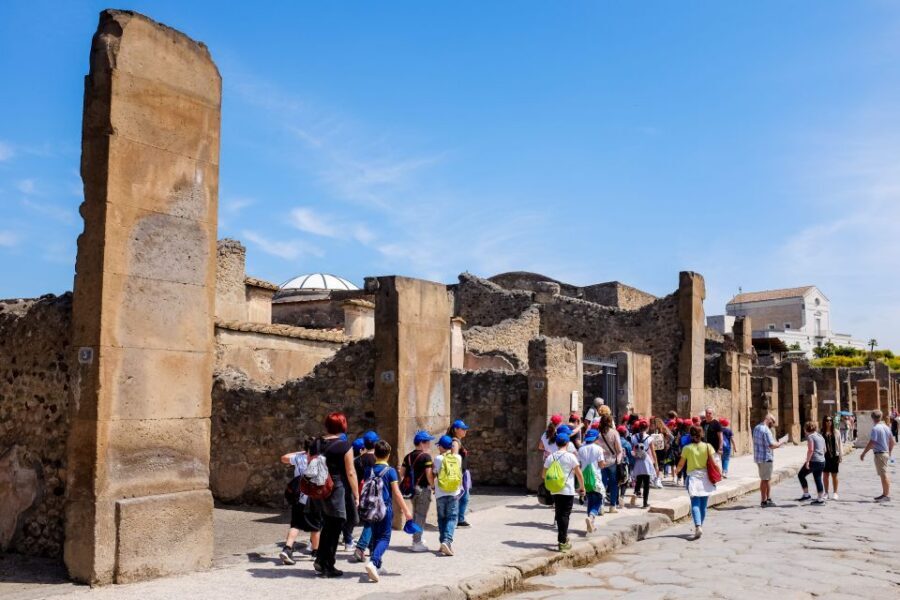
I also like the structure. It’s a compact route, so you get to more of what most families want to see—gates, temples, the forum, baths, theaters, and standout houses—without burning the whole day. At the same time, it’s not a rushed blur. Stops are built for short guided walks, then enough time to take in what’s right in front of you.
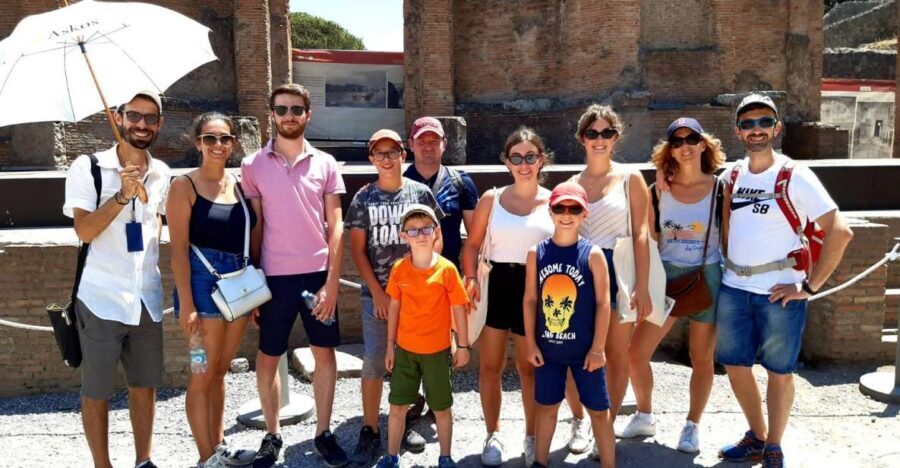
The other plus is that the tour matches the needs of both adults and kids. The guide’s job is to keep parents informed while giving kids something concrete to look for. In the small group format, that kind of balance matters.
You can also read our reviews of more tours and experiences in Pompei Campania
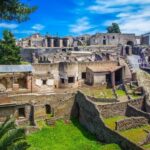
Meeting at Porta Marina Superiore: Start Easy, Get Oriented Fast
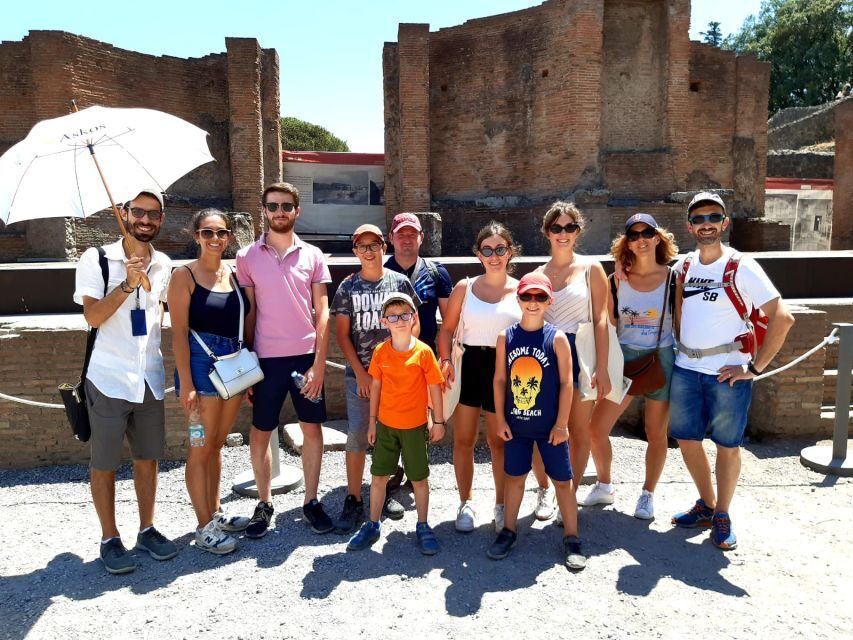
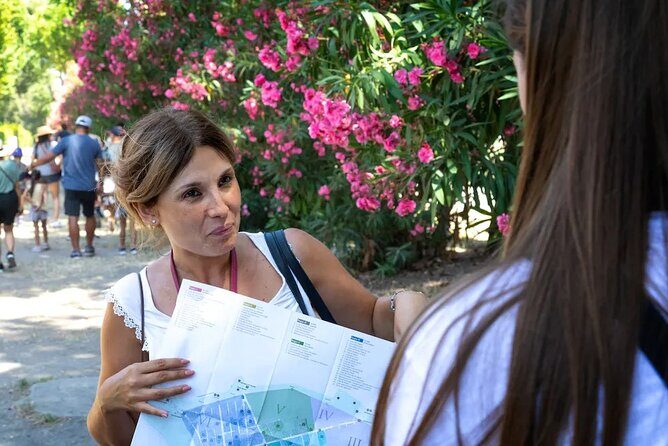
Your tour begins at Via Villa dei Misteri, 2. From there, you meet the guide at the main entrance gate called Porta Marina Superiore, on the opposite side of the bar-restaurant Hortus. The guide will be holding a sign with your name.
That start location is more than just a pin on a map. Pompeii can feel like a maze when you’re first inside. Starting at the main gate with a guide means you’re oriented early—what to look for, where you’re heading next, and how the route makes sense.
One practical tip: arrive with everyone ready to walk. The tour doesn’t include transportation inside the ruins, so you’ll want comfortable shoes, plus water and snacks that are easy to handle during short stops.
Porta Marina and the Temple of Apollo: Ancient Anchors for Kids
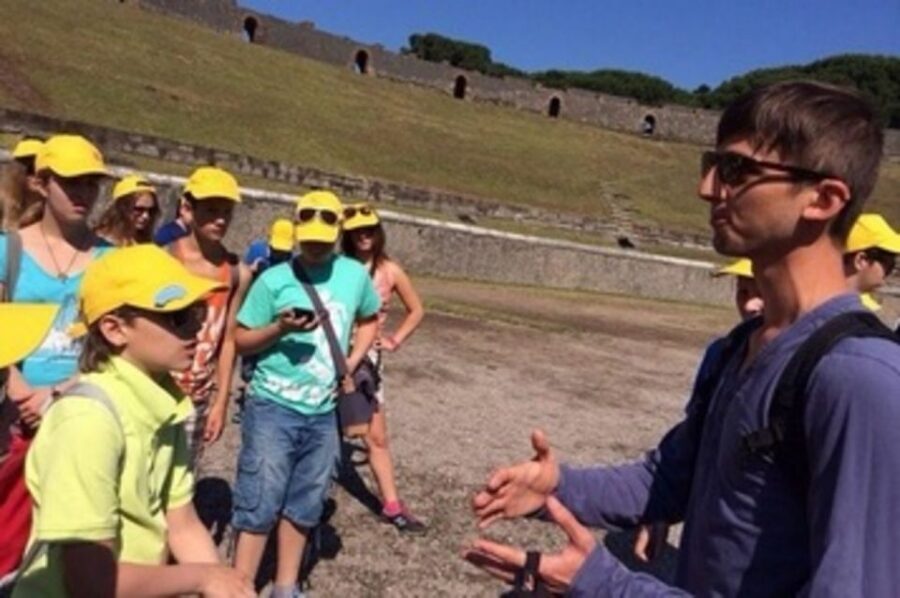
The first stop is Porta Marina, where you’ll get a guided visit for about 10 minutes. For kids, a gate is a natural starting point because it’s visual and easy to understand: a threshold, an entry, a “this is where people would come in.” For adults, it’s a clean way to begin without needing deep background.
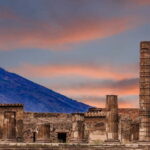
Then you head to the Temple of Apollo for another guided visit of about 10 minutes. Temples can be tricky for children because they’re often just tall remains from the outside. This is where the tablet and multimedia approach helps. Instead of asking kids to guess what used to be inside or how it functioned, the tour uses reconstructions and child-friendly storytelling tools to bring the space to life.
What I’d keep in mind: short stop times mean you’ll want to pay attention to the guide’s prompts. The tour is paced so kids don’t get bored, but that only works if you’re present during the guided minutes.
The Forum Civile and Basilica: The Roman Public Square Moment
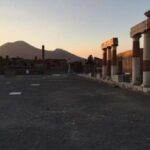
Next up is the Foro Civile di Pompei, with about 20 minutes guided. This is one of the best places on the route for families because it’s the social “center of gravity.” Even if you don’t remember every ancient term, kids tend to understand the idea of a main square: where people gather, trade, and move between buildings.
In this area, you’ll also connect the dots to the kinds of structures people used every day—market-related spaces and municipal buildings are part of what the tour highlights. The guide’s use of multimedia and tablet materials makes the square feel like a living route instead of an empty stage.
After that, you visit the Basilica for about 10 minutes. The tour describes this as a court house. That detail helps kids understand why people would gather there and why it mattered. For adults, it gives you a stronger sense of how Roman civic life worked, not just how the city looked.
A balanced note: public spaces are where kids may ask questions fast, and adults may want more background. The “private group” format helps the guide adapt, but if your group includes a range of attention spans, it’s smart to stay flexible.
Houses of Menander and the Faun: When Home Becomes a Story
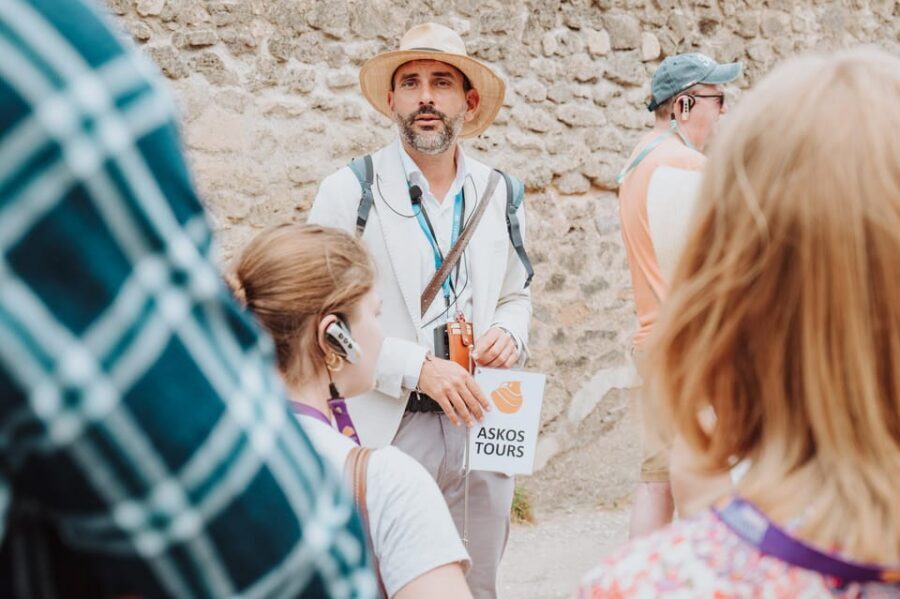
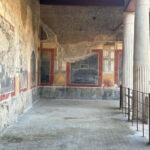
Then the tour shifts into domestic life with the House of Menander (about 20 minutes guided). This is a longer stop, and it’s one of the places where kids usually get truly curious because it feels like a real home space. The guide uses tablets, reconstructions, and multimedia material to explain what you’re looking at and how rooms and daily routines likely worked in Roman times.
Next is the House of the Faun, another guided visit of about 10 minutes. Short, but still meaningful. These houses help you move from “big public buildings” to “what daily life looked like,” which is exactly where family tours can succeed. Kids can’t always stay interested in architecture alone, but they often latch onto the idea of how people cooked, relaxed, and lived.
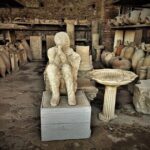
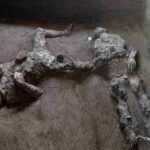
You’ll also see plaster casts as part of the experience. That’s a key educational element because it turns the ruins into human stories you can actually understand. Even when the tour is brief, casts and reconstructions can make a huge difference for younger visitors.
Potential drawback: houses can mean more walking inside/outside small areas and more visual detail. If you have a very restless kid, the tablets and guide cues can help, but you may still need to pause and reset during the longer Menander stop.

Forum Baths and Stabian Baths Energy: The Body-Function Stops
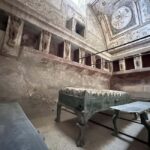
After the houses, you’ll visit the Forum Baths for about 10 minutes. Bath spaces often feel like “rooms with a purpose,” which is why they work well for families. Kids may not know Roman bathing customs, but they do understand the basic idea: a place people used regularly.
The tour description also includes the Stabian Baths as part of the highlights. That’s helpful because it broadens the theme. Instead of one quick bath-room moment, you get exposure to more than one bathing setting.
This is one of those areas where multimedia materials can really pay off. Baths aren’t always intuitive to read in ruins form, so the guided tools help you connect the physical layout with what it was for.
Large Theatre: A Break for Kids With a Built-In Purpose
The Large Theatre is on the route for about 10 minutes. This stop is great for families because theatres come with built-in expectations. Kids know what a performance space is. Even when the building is fragmented, the guide can anchor the story so you understand why people gathered there.
The theatre slot also works as a pacing reset. You’ve had civic life, court/basilica space, then houses and baths. A theatre stop gives a change of mood, and it’s an easy topic for kids to get excited about.
House of the Vettii and the Thermopolium: Real People, Real Routines
Next is the House of the Vettii for about 10 minutes, followed by a visit to the Thermopolium (about 10 minutes). The house stop keeps the home-life theme going, while the thermopolium adds the food-and-street angle.
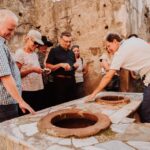
This pairing is smart. Kids often remember places where something happens. A thermopolium is especially good for storytelling because it connects the ruins to what people ate and how food may have been served and sold in daily life. The guide’s multimedia materials help turn that word into a picture you can understand.
Then you loop back to where you started, ending at Via Villa dei Misteri, 2.
Tablets and Reconstructions: Why This Tour Works for Families
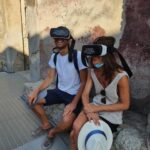
Pompeii can overwhelm kids fast. Stone walls don’t explain themselves. This tour tackles that head-on with tablets, reconstructions, and multimedia material. The tools guide your eyes to details you might miss on your own and help translate ruins into normal routines.
Here’s what that means for you, practically:
- You spend less time guessing.
- You get less crankiness, because kids understand what they’re looking at.
- Adults still get value, because the guide frames what the space likely meant.
And there’s another subtle benefit: these visuals make it easier to keep everyone together. When kids understand the reason for a stop, they’re less likely to sprint ahead or zone out during the guided minutes.
Skip-the-Line Entry and a Guide Buying Tickets Quickly
This tour includes admission fees and gives you skip-the-line entry. The description also says the guide can buy the tickets for you, usually in about 5 to 10 minutes.
That matters because Pompeii entry lines can eat into the short 2-hour window. A guided, fast ticket process helps protect the time you paid for—time that’s supposed to be spent inside the ruins with a story, not outside in a queue.
Price and Value: Is $212.41 Worth It for a 2-Hour Tour?
At $212.41 per person, this isn’t a budget bargain. But it can be good value depending on your group.
Here’s the value math I’d use:
- You’re paying for a certified guide, not just a self-guided route.
- Admission fees are included.
- You skip the ticket line and reduce wasted minutes.
- The tour uses tablets, reconstructions, and multimedia content that actually changes the experience for kids.
Where it can feel pricey is when your group is only adults who would enjoy reading signs and wandering. If that’s you, a cheaper self-guided ticket might work.
Where it makes more sense is when:
- You’re traveling with children who need structure.
- You want the tour to keep the city understandable in a short time.
- You value a guide adapting to attention spans and questions rather than sticking to one rigid script.
Who This Tour Suits Best (and Who Should Rethink It)
This is a strong fit for families who want Pompeii without turning it into a long grind. The tour is explicitly designed for kids and parents together, and the route covers the highlights that usually land well with children: gates, temples, a civic square, baths, theatres, and houses.
It also makes sense if you want a guided “starter loop” in a limited timeframe. Two hours is short, but it’s enough to feel like you saw meaningful parts of the city rather than only a few walls.
One important note to check: the information you get says wheelchair accessible, but another part of the details says not suitable for wheelchair users. Because accessibility needs real-world confirmation, I’d contact Askos Tours before booking so you can understand the exact walkways and feasibility for your specific needs.
Should You Book This 2-Hour Pompeii Child-Friendly Tour?
I’d book it if you’re bringing kids and you want Pompeii to feel like Roman daily life, not a confusing museum scavenger hunt. The mix of guided stops, tablet-based explanations, and reconstructions is the main reason it’s worth considering, especially since it includes admission fees and skip-the-line entry that protects the short 2-hour schedule.
I’d think twice if your group doesn’t need guidance, or if your children are the type who struggle with sustained walking even at a short duration. In that case, you might prefer a less structured plan—or plan breaks around your own pace.
FAQ
FAQ
How long is the Pompeii child-friendly tour?
The duration is 2 hours.
Where is the meeting point?
Meet your guide at the Pompeii main gate called Porta Marina Superiore, on the opposite side of the bar-restaurant Hortus. The meeting point is also listed as Via Villa dei Misteri, 2.
What does the tour include besides a guide?
It includes admission fees and skip-the-line entry.
Is the tour private?
Yes. This is listed as a private group.
What stops will we see during the tour?
The tour includes stops such as Porta Marina, the Temple of Apollo, the Foro Civile di Pompei, the Basilica, the House of Menander, the Forum Baths, the House of the Faun, the Large Theatre, the House of the Vettii, and the Thermopolium.
What language is the tour offered in?
The live tour guide is available in English and Italian.
Is transportation provided?
No. It’s a walking tour with no transportation included.
Is it wheelchair accessible?
The details list wheelchair accessibility, but there is also a note that it is not suitable for wheelchair users. I recommend confirming with Askos Tours directly before booking.
What is the guide using to help explain the ruins to kids?
The tour uses tablets, reconstructions, and multimedia material.
Is there a free-entry option?
The first Sunday of each month is free of charge, but tickets cannot be reserved ahead of time, so entry is not guaranteed. The guide can also buy tickets for you to skip the ticket line quickly.