REVIEW · POMPEII
Small-Group Tour in Pompeii with a Real Archeologist, ticket included
Book on Viator →Operated by Pompei Trip&Transfer · Bookable on Viator
Pompeii feels close when you meet a real pro. I love the real archaeologist approach here because it turns ruined walls into dated, explainable daily life. I also like that you start with a priority ticket so you lose less time to lines. The main consideration is that this is a fast 2.5-hour walk, so crowds and waiting can affect whether you see everything on the day.
This is built for a small group, capped at 15, with headsets so the guide stays clear even when you’re craning over mosaics or stepping around other tour groups. The price, $66.23, looks fair because park entry is included and you also get guided context, not just a wander through stone. Since Pompeii is outdoors and the pace is active, the heat can be the real boss fight.
You’ll meet at Hotel Vittoria, Piazza Esedra (Pompei), then loop through Pompeii’s best-known houses, public areas, and the Apollo area. After the tour, your priority park access still gives you time to go back and linger on what you liked most. If you’re hoping for a slow, sit-down museum day, this may feel a bit too structured.
In This Review
- Key things I’d bank on before you go
- The value of a real archaeologist guide (and why it matters)
- Price and ticket logic: what $66.23 really buys
- Meeting point and how to keep your day smooth at Pompeii
- Casa del Poeta Tragico and the Cave Canem mosaic
- Casa dei Vettii: luxury, names, and what the wealth signals
- The Lupanar: a blunt look at Roman sex-work
- Forum of Pompeii: 142 meters of public life without carts
- Suburban Baths and the travel-and-port angle
- Casa del Fauno: a bronze faun you’ll remember
- Casa del Menandro: frescoes, Trojan War scenes, and silver objects
- Archaeological Park: the arena, 20,000 seats, and dark linen shade
- Temple of Apollo: bronze bow, Diana, and why Jupiter won
- Pace, heat, and what to do with your energy
- Small-group experience: questions, flow, and real-life crowd issues
- Who should book this tour (and who might skip it)
- Should you book it? My practical take
- FAQ
- How long is the Pompeii tour with an archaeologist?
- How much does the tour cost?
- Is the tour for English speakers?
- Is the priority ticket included?
- Do I need to buy separate tickets at each stop?
- How big is the group?
- Where do we meet, and where does the tour end?
- Is free cancellation available?
Key things I’d bank on before you go
- Max 15 people plus headsets: easier conversation, less crowd pressure.
- Priority entry for the Archaeological Park: you spend more time inside the ruins.
- A stop-by-stop mix of status houses and public sites: from mosaics to baths to the forum.
- Concrete details you can picture: like the Lupanar’s rooms and the arena’s 20,000-seat scale.
- Real interpretation of symbols: mosaics, frescoes, and temple statuary tied to dates and culture.
- Day ticket access after the tour: useful if a site run is delayed.
The value of a real archaeologist guide (and why it matters)
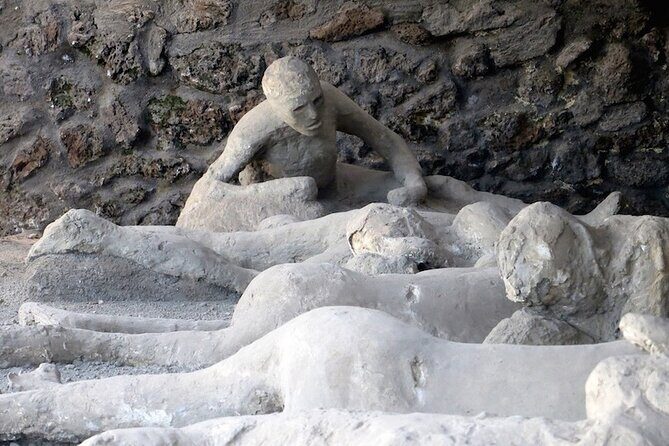
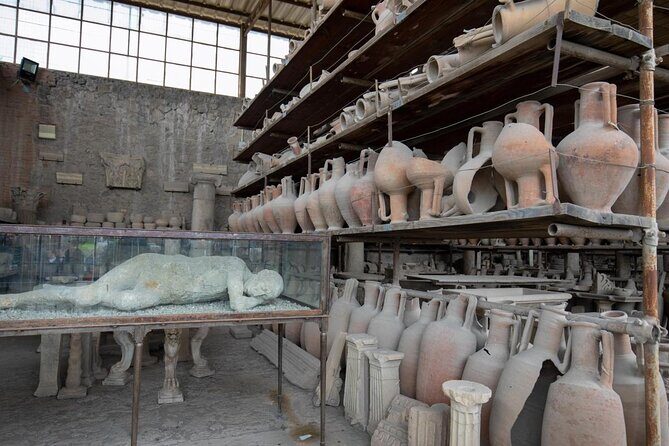
A good Pompeii guide does more than point. The best ones help you answer the questions your brain keeps asking: Who lived here, what did they do, and how do we know? That’s the tone of this tour: an archaeologist-led walk focused on city life and how the parts fit together.
You’ll see Pompeii’s big visual hits, but you’ll also get the meaning behind them. For example, a famous mosaic isn’t treated like a postcard. You get the story and the date context so it clicks as a piece of real Roman culture, not just decorative flooring.
I also like the small-group format because Pompeii punishes slow groups. With 15 people max, you’re more likely to keep momentum while still getting questions answered. Headsets help too. When you’re trying to hear explanations while looking at a mosaic or reading a room layout, audio clarity is not a luxury.
You can also read our reviews of more tours and experiences in Pompeii


Price and ticket logic: what $66.23 really buys
$66.23 isn’t cheap, but it’s not just a guided walk price either. You get a guide service, headsets, and a priority ticket entrance for the Archaeological Park of Pompeii. That matters because entry timing can make or break a Pompeii day.
One catch to keep in mind: the itinerary lists admission ticket details per stop, and one park-related stop notes admission ticket not included. Meanwhile, the overall tour includes priority entrance for the park. The practical takeaway is simple: before you start walking, confirm that your priority park ticket is active for the arena/park area you want to see. If anything feels unclear at check-in, ask on the spot so you don’t lose time later.
The tour runs about 2 hours 30 minutes, so you should plan this as your guided backbone, not your entire Pompeii day. If you want a longer experience, use the included access after the tour to slow down at your favorite houses and public buildings.
Meeting point and how to keep your day smooth at Pompeii
Your start is Hotel Vittoria, Piazza Esedra, 80045 Pompei NA, Italy, and the tour ends back at the meeting point. That round-trip structure helps because you’re not stuck figuring out transit once you’re tired and sunburned.
Pompeii can feel like a maze when you’re hot and dehydrated. I like tours that keep you anchored with one clear start and end, especially when your visit includes multiple houses and open-air areas. Also, you’ll be near public transportation, which helps if you’re fitting this between other plans in Naples or Sorrento.
Finally, this is offered in English and you’ll receive mobile ticket access. That’s good for reducing fussy paperwork, but still save your confirmation on your phone before you leave for the ruins.
Casa del Poeta Tragico and the Cave Canem mosaic
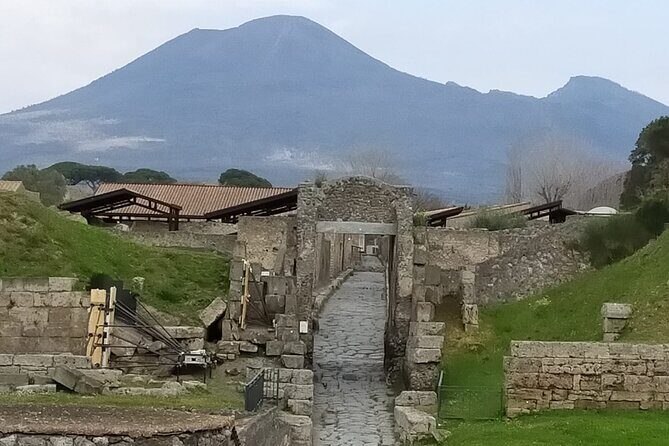
Stop one is Casa del Poeta Tragico, an elegant imperial-age house. The star here is the famous floor mosaic Cave Canem, the warning that you shouldn’t let the dog fool you.
What I love about starting with this house is how it sets the tone. You’re immediately looking at household imagery and seeing how Romans used art to communicate. A mosaic like Cave Canem isn’t random. It’s a visual cue inside a lived space—exactly the kind of detail that makes Pompeii feel human.
Time is tight here, around 15 minutes. Don’t try to do a full self-guided museum crawl at stop one. Instead, use it to build your instincts: where are you standing in relation to the room layout, what’s decorative versus functional, and what visual motif connects to Roman taste.
Casa dei Vettii: luxury, names, and what the wealth signals
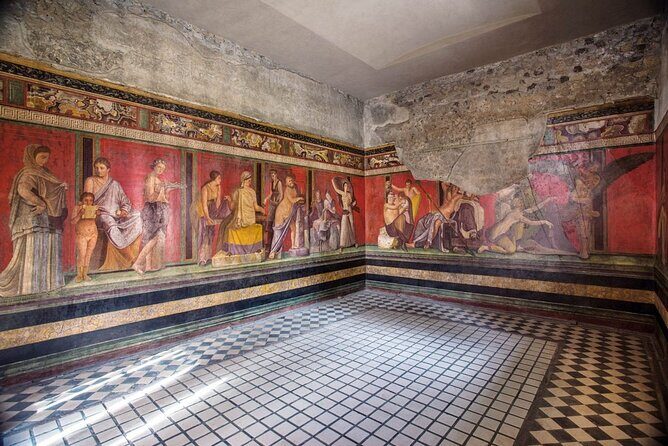
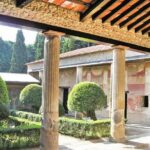
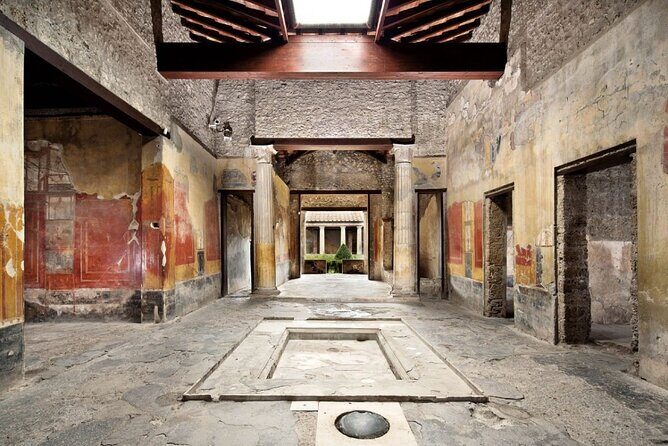
Next up is Casa dei Vettii, tucked in vicolo dei Vettii, one of Pompeii’s most luxurious houses. It’s named for its owners, Aulo Vettio Restituto and Aulo Vettio Conviva—a detail that adds a human line to the stone. You’re not just looking at an anonymous rich home; you’re meeting named people.
This is also a place where the interpretation helps. In Pompeii, you’ll see plenty of “pretty” rooms, but the key is learning what the luxury meant. A tour like this tries to connect decoration and household space to status and social behavior.
Fifteen minutes again means you’ll get the highlights rather than a full slow tour. If you care a lot about houses, make a note of what you want to revisit later, because you’ll have time after the guided portion to go back on your own.




The Lupanar: a blunt look at Roman sex-work
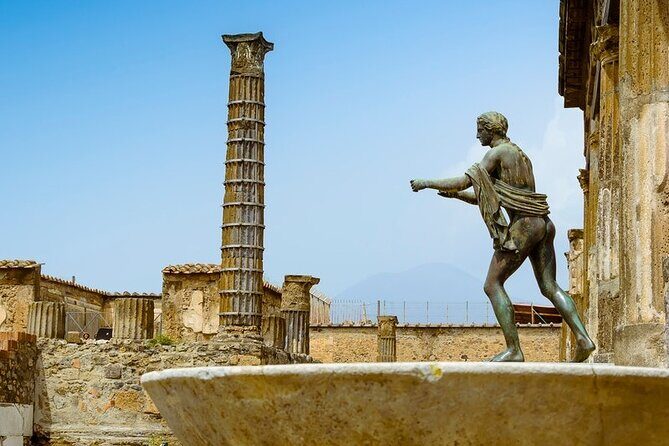
Stop three is the Lupanar, a two-story building tied to prostitution. It’s one of the most visited spots for a reason: the building layout is unusually clear for Pompeii, so you can grasp how it functioned.
Here’s what you’ll see in a way that’s easier to picture: it had five rooms on the ground floor and five above, and each room had a concrete bed. If you’re thinking about discomfort, you’re in the right headspace. This wasn’t a romanticized “old Rome” fantasy. It was a commercial arrangement with basic infrastructure.
A practical note: the Lupanar can feel intense in a small-group setting, especially with 15 people pressing close. If you prefer a lighter emotional tone, give yourself a small pause before or after this stop so you can keep enjoying the day.
Forum of Pompeii: 142 meters of public life without carts
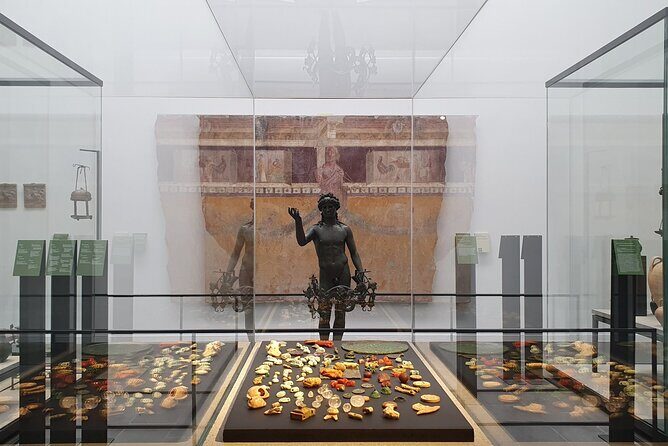
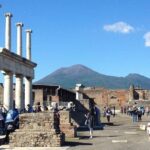
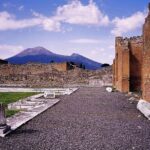
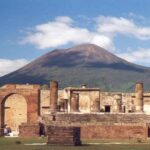
Stop four is the Forum, a public center about 142 meters long and 38 meters wide. It was reserved for pedestrians, and carts weren’t allowed, which tells you how the space was meant to work socially and politically.
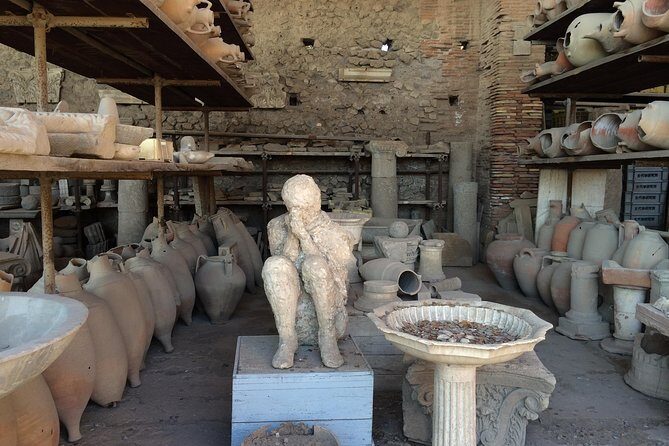
Today, it’s less ornate than it once was. The area is mostly bare of statues, and you won’t see the same look of flooring and marble work that existed before. The key historical point is that after the eruption, materials were dug up and re-used in later works.
I like the forum stop because it changes your mental map. You go from private rooms to a shared civic stage, then you come away thinking about how information and power moved through a city. Even without statues, the forum explains why Pompeii mattered as a place where everyday life happened in public.
Suburban Baths and the travel-and-port angle
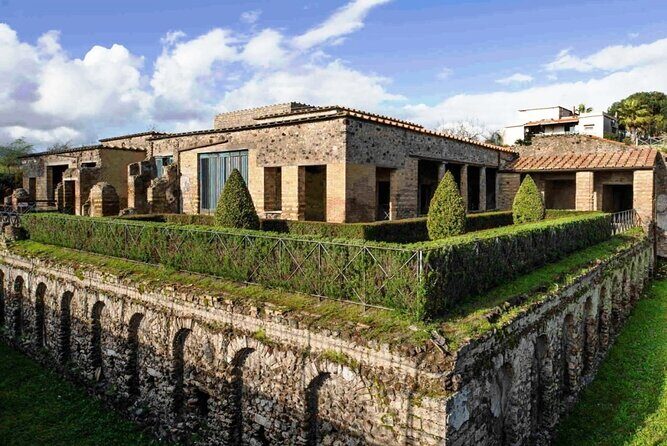
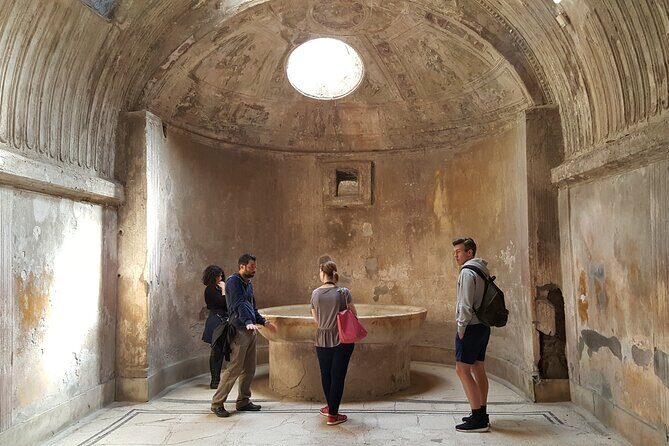
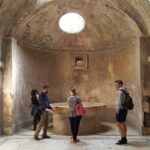
Next you’ll visit the Suburban Baths, located outside the city walls. This is a great stop if you like your Roman history to include travel, not only domestic life.
The bath area had a nearby port—several large rocks where boats could be moored. That implies the baths likely served people in transit, not just local residents. It’s a subtle shift, but it helps you see Pompeii as part of a network, with visitors and commerce feeding into the city’s rhythm.
Fifteen minutes here is enough to get the idea, especially with an archaeologist guiding the “why.” Just don’t expect every feature to be explained in detail. Use the time to connect location to function: outside the walls means different users, different patterns, and a different feel.
Casa del Fauno: a bronze faun you’ll remember
Stop six is Casa del Fauno, named after a bronze statue of a faun in the impluvium. The house itself is famous in Pompeii circles, and the statue is one of the reasons people track it down.
This is the moment where Pompeii becomes art history without you even trying. A statue in the impluvium isn’t a random placement. It’s tied to how light, water, and space interacted in a courtyard-centered Roman home.
If you enjoy symbolism, this stop will click. If you’re more into architecture, you’ll still appreciate how the house layout supports everyday movement. Either way, take a minute to look slowly—this is one of those places where your brain benefits from a calmer pace.
Casa del Menandro: frescoes, Trojan War scenes, and silver objects
Stop seven is Casa del Menandro, a prestigious home covering about 2,000 square meters. It gets its name from a fresco of the poet Menandro and includes an impressive set of finds, including 118 silver objects, likely tableware.
The fresco themes also matter. You’ll encounter scenes connected to the Trojan War, including the death of Laocoonte, along with Cassandra and Ulysses.
I like this stop because it shows how literature bled into daily life. Romans didn’t just read stories; they staged them in rooms. Once you understand that, you look at walls and think about identity, education, and taste—who the homeowners were and what they wanted visitors to see.
Again, time is limited. If you leave thinking, I want more, you’re not stuck. The tour includes park access that gives you a chance to revisit at your own pace afterward.
Archaeological Park: the arena, 20,000 seats, and dark linen shade
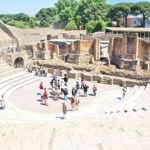
Stop eight is inside the Archaeological Park of Pompeii, where you’ll see the arena and adjacent gymnasium area. Pompeii had an amphitheatre that could hold up to 20,000 people across three levels. That scale lands differently when you’re standing in the bones of the structure.
One detail that really helps the scene come alive: during hot summer months, spectators were protected by a type of dark linen covering. It’s a small note, but it changes the atmosphere from theory to lived comfort issues.
Adjacent to the arena, you can see the gymnasium, where young people would work out. That lets you connect the “games” to education and training. It’s not just violent spectacle; it’s part of a whole cultural system.
Practical note: the itinerary notes admission for this stop as not included, while the tour includes priority entrance for the park. I’d treat this as a “confirm at the start” moment. Once you’re there, ask the guide what your included park ticket covers so you don’t scramble later.
Temple of Apollo: bronze bow, Diana, and why Jupiter won
Your final thematic stop is the Temple of Apollo. The worship of Apollo arrived a bit before the eruption in 79 A.C., and then—according to the tour context—you’ll learn how Apollo’s followers lost ground as Jupiter became stronger.
You’ll also see key statuary: a bronze statue of Apollo depicted with bow and arrow, plus a statue of Diana. This makes the temple less abstract. You get a visual hook, and the guide’s explanations help you connect religion to politics and cultural shifts.
Time is still about 15 minutes, so don’t treat it like a full architectural study. Treat it like a closing argument: Pompeii isn’t only houses and street scenes. It’s also the religious ideas that people carried into ordinary days.
Pace, heat, and what to do with your energy
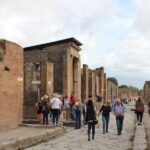
The tour is structured, and that’s a plus when you don’t want to guess what matters. It’s also a lot of walking in an outdoor site. The practical advice is simple: wear good shoes and plan to manage heat.
One clear theme from guidance on this kind of visit: bring plenty of water and be ready for real sun. Pompeii can feel hot even when you think you’ve timed it right, and the ruins don’t let you ignore the weather.
A smart strategy is to keep your expectations tight. Think of this as your guided highlights circuit. Then, if you’re not fried by lunch, use your ticket access afterward to linger in the houses or areas you cared about most.
Small-group experience: questions, flow, and real-life crowd issues
A group cap of 15 is a big deal at Pompeii. It means the guide can actually manage the flow and still answer questions without everyone being left behind. Headsets also help so you don’t have to step awkwardly close to hear explanations.
You should still expect occasional friction from real-world crowds and lines. Sometimes entry timing at a specific house can be slower than you’d like, and then the guide may adjust the route. The best move in that case is to treat the rest of your included park access as your safety net: if something takes longer, you can come back later and finish what you missed.
I also like that the meeting point and route help you keep your bearings fast. Pompeii navigation is easier when you’re not reinventing the day yourself.
Who should book this tour (and who might skip it)
This works best if you want:
- guided context from a real archaeologist rather than a quick stop-and-snap walk
- a small-group experience with headsets
- priority park access so you don’t lose hours to entry timing
- a route that moves through both private homes and public city space
You might choose something else if you’re after a long, slow, self-paced day with lots of time to sit and read. This tour is built around momentum, and 15-minute house stops won’t satisfy people who want every wall and corridor explained at leisure.
Also, if you’re sensitive to intense subject matter, the Lupanar stop is part of the standard route. It’s historically important, but it’s not a gentle topic.
Should you book it? My practical take
If you’re visiting Pompeii for the first time, I’d book this. The combination of a small group, a real archaeologist guide, headsets, and priority park access gives you strong value for the time you have.
The biggest reason to skip is pacing anxiety. If you know you need long breaks indoors and you hate crowds, you may feel rushed in a 2.5-hour guided circuit.
If you do book, come ready for walking heat, bring water, and keep your expectations aligned: you’re getting Pompeii’s essential highlights with interpretation, not every single room in one day. Then use your access after the tour to go back where you feel the pull.
FAQ
How long is the Pompeii tour with an archaeologist?
It’s approximately 2 hours 30 minutes.
How much does the tour cost?
The price is $66.23 per person.
Is the tour for English speakers?
Yes, it is offered in English.
Is the priority ticket included?
Yes. The tour includes a priority ticket entrance for the Archaeological Park of Pompeii.
Do I need to buy separate tickets at each stop?
Admission ticket details are listed per stop. The itinerary includes admission tickets for most listed sites, and it notes admission ticket not included for one park-related stop, so it’s smart to confirm what your priority park ticket covers on the day.
How big is the group?
The maximum group size is 15 travelers.
Where do we meet, and where does the tour end?
You start at Hotel Vittoria, Piazza Esedra, 80045 Pompei NA, Italy, and the tour ends back at the meeting point.
Is free cancellation available?
Yes. You can cancel for a full refund up to 24 hours in advance. If you cancel less than 24 hours before the start time, the amount paid will not be refunded.