REVIEW · POMPEII
Private Tour of Pompeii
Book on Viator →Operated by Enjoy Pompeii · Bookable on Viator
Pompeii is fast-paced and easy to misread. A private guide helps you see what matters without running in circles.
I like the private, group-friendly format (up to 10 people) because it keeps the conversation going. You get to ask questions while you’re walking, not after you’re already tired. And I really enjoy that the tour focuses on key parts of the ancient city—so you leave with a clear sense of daily life before the AD 79 eruption.
One heads-up: the 2 hours 15 minutes goes quickly. You’ll cover the most important highlights in the western area, but you won’t see everything in one go—so plan for extra time if you want to wander afterward.
Here are the details that matter most for deciding.
In This Review
- Key things to know before you go
- Pompeii in 2 hours 15 minutes: why private works better
- Meeting at Ristorante Bar Sgambati: how to start without stress
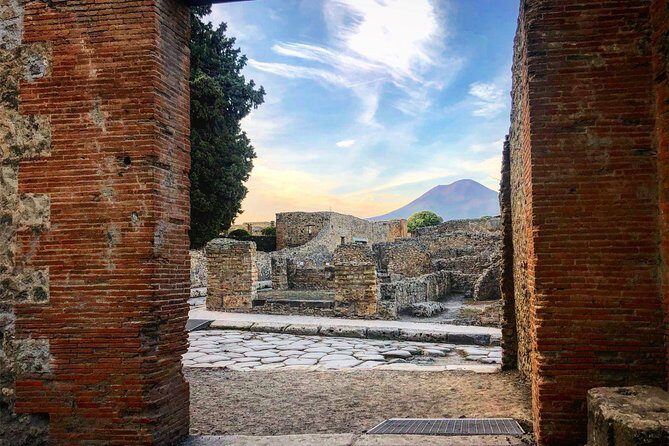
- What you’ll actually see in Pompeii’s western city
- The Basilica and Forum area: public life, not just stone
- Thermal baths: where social time happened
- The bakery: the city’s daily engine
- Residential houses: private life behind public streets
- A guide who answers questions makes Pompeii make sense
- The AD 79 story: what you’ll learn before the eruption
- Don’t burn your whole day: plan time to explore after the tour
- Price and value: is $298.37 worth it?
- Who this Pompeii private tour suits best
- Quick practical considerations before you book
- Should you book this private Pompeii tour?
- FAQ
- Is this tour private?
- How long is the Pompeii tour?
- What is the group size?
- Do I need to buy the Pompeii entry ticket separately?
- What language is the tour offered in?
- Where do we meet for the tour?
- What happens if the weather is bad?
Key things to know before you go
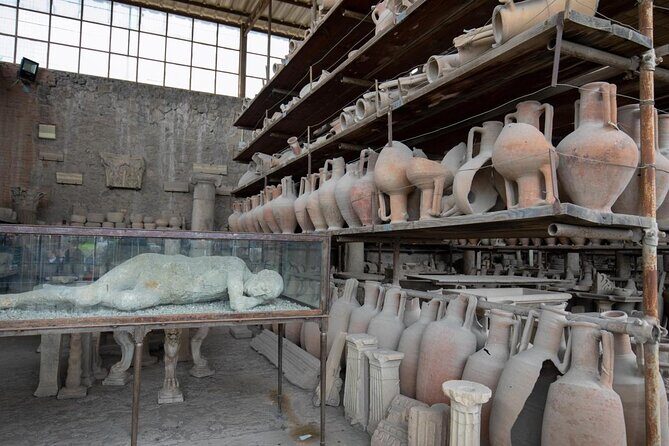
- Private group tour (up to 10) means your schedule and questions stay in your control
- English guidance keeps Pompeii readable, from buildings to everyday life
- Western Pompeii focus covers major anchors like the Basilica and Forum area
- Admission ticket not included so budget time to purchase entry separately
- Good weather matters because this is an outdoor archaeological site
Pompeii in 2 hours 15 minutes: why private works better
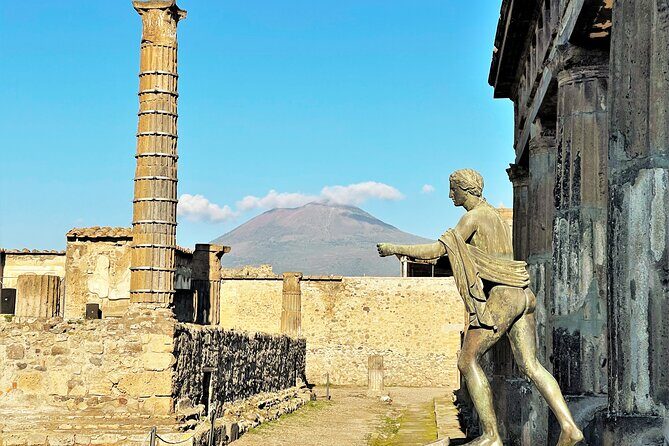
Pompeii can feel like a lot of ruins at once. Stone walls, broken floors, and street corners all start looking the same if you’re on your own. With a private guide, the site becomes a map with a story.
This format is also practical. You’re in a small group (up to 10), moving through the park with a plan. That means you spend more time understanding what you’re seeing and less time trying to figure out where you are and what each building is for.
I also like the tone this kind of guide tends to bring: not just dates and names, but the human stuff. What did people do all day? Where did they shop? How did public life work? You’ll get that sense as you walk, and you can ask questions as you go.
You can also read our reviews of more private tours in Pompeii

Meeting at Ristorante Bar Sgambati: how to start without stress
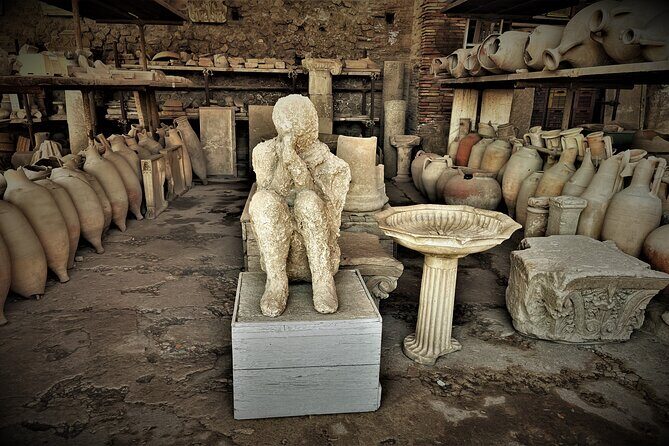
Your tour starts at Ristorante Bar Sgambati, on Via Villa dei Misteri, 1, 80045 Pompei NA. It ends back at the same meeting point, so you’re not left figuring out a last-mile scramble.
This is also a convenient location if you’re using local transit. The meeting point is listed as near public transportation, which can help a lot on busy days when parking feels like a competition.
One more thing I’d plan for: since the archaeological park entry ticket isn’t included, you’ll want to make sure your timing works for entry on the day. If you arrive late, that’s time you lose on the guided portion.
What you’ll actually see in Pompeii’s western city
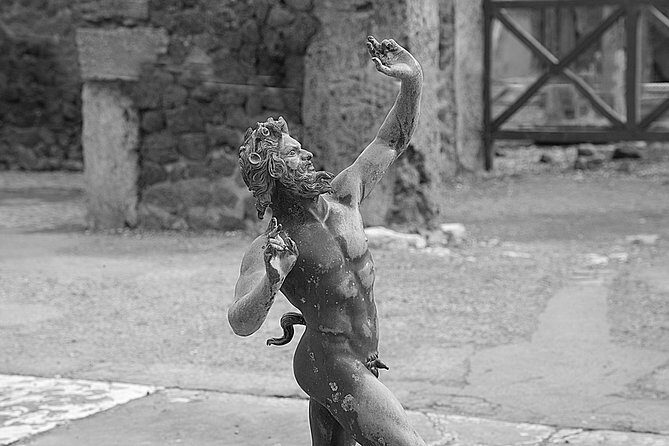
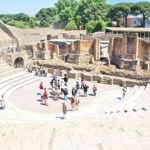
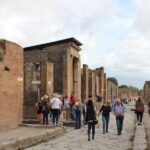
The tour is built around a classic Pompeii learning path. You’ll explore the western part of the city, with stops that connect major public spaces to daily routines.
Here’s the core of what you can expect to focus on during your 2 hours 15 minutes:
The Basilica and Forum area: public life, not just stone
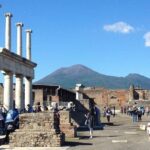
The Basilica and Forum-type spaces are about how the city functioned. These weren’t background scenery. Think of them as the stage where people handled business and public affairs.
With a guide, it’s easier to understand the purpose of these buildings instead of treating them like impressive architecture. You’ll learn what these spaces meant in everyday terms, which makes the whole area click.
Thermal baths: where social time happened
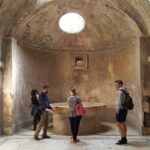
Pompeii’s thermal baths help you picture social life. Baths were not only about hygiene; they were places to gather, talk, and unwind.
When you understand the layout and the roles of different rooms, the ruins stop looking random. You start seeing a routine—movement, waiting, chatting, relaxing—based on how the complex was designed.



The bakery: the city’s daily engine
A bakery stop can be a turning point because it grounds the city in production. You’ll get a clearer sense of what it took to keep people fed day after day, not just what the wealthy houses looked like.
This kind of stop is especially useful if you’re visiting with kids or anyone who gets restless with pure architecture. It feels concrete fast: food meant work, tools, and systems.
Residential houses: private life behind public streets
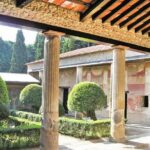
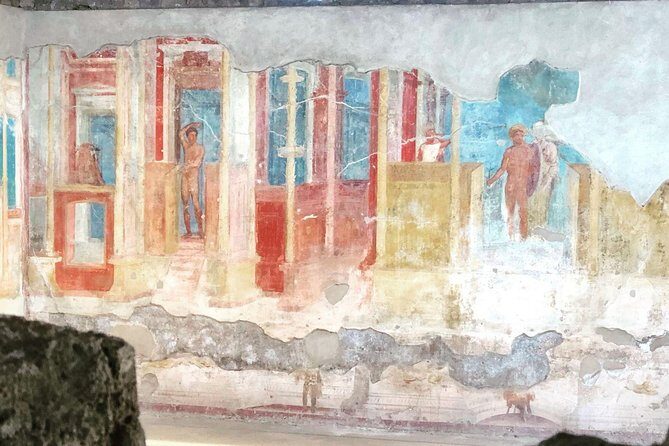
You’ll also see some residential houses. That’s where Pompeii gets more personal. Even with limited space and ruins, you can often pick up how homes related to streets, how rooms were used, and what the division between public and private life looked like.
If you’ve ever wondered how Roman neighborhoods felt on a typical day, these house stops are where you start answering that question.
A guide who answers questions makes Pompeii make sense
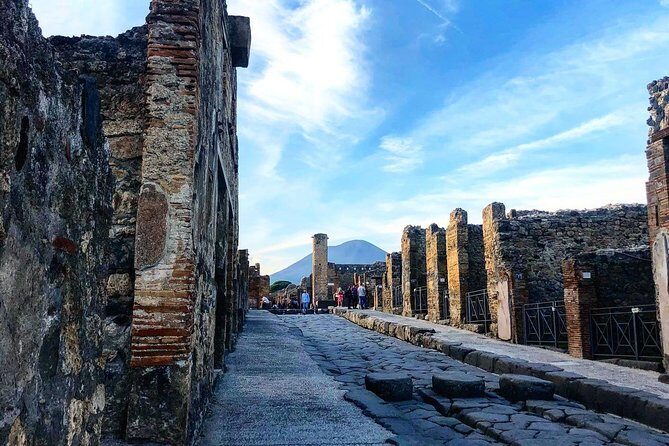
The best part of this tour type isn’t just coverage—it’s the Q&A energy. You’re walking with a guide who can explain what you’re looking at in plain language.
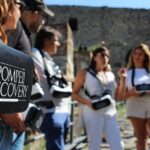
In past private groups, guides connected with the site in a way that turned it from a list of monuments into something you could actually picture. Names that came up strongly include Frenky (also heard as Frankie), Sasa, Francesco, Melana, and Anna. The common theme: they didn’t just talk; they guided you to notice what matters and invited questions along the way.
You’ll also feel how the group size helps. In a private group of 10, one person noted that the guide projected their voice well enough that ear pieces weren’t needed. That’s not guaranteed for every tour, but it matches the general idea of private guided walking: you’re close enough to hear naturally.
One more practical win: private tours can help you move through the site more efficiently. If your guide can keep you from bouncing between far-apart areas, you spend less time stuck in bottlenecks and more time actually learning.
The AD 79 story: what you’ll learn before the eruption
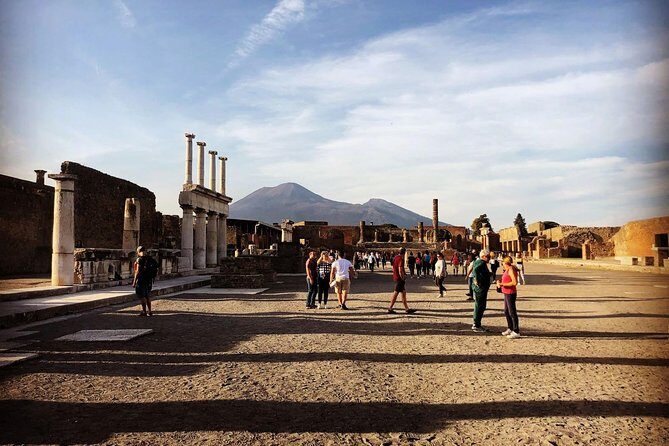
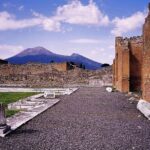
Pompeii’s reputation comes from one moment: the eruption of Vesuvius in AD 79. But a good Pompeii tour keeps the focus where it belongs—life before the catastrophe.
As you walk, you should feel the timeline shifting from disaster to routine. The guide’s job is to connect buildings and objects to what people were doing right up until the eruption.
That’s why the route matters. You’ll see civic buildings, baths, food production, and homes. Together, those pieces help you understand a whole city system, not isolated sights.
Don’t burn your whole day: plan time to explore after the tour

Your guided walk is about 2 hours 15 minutes, and then you’re free to keep exploring.
If you still have energy, I’d use that extra time to look at parts of the site that caught your attention. One useful reminder from other Pompeii experiences: the on-site museum can be worth it. Even a short visit can help you connect ruins to objects you can’t fully see in the open air.
Also, Pompeii has a lot of visual texture—mosaics, room layouts, stone markings. After the guide’s explanations, your second pass at details becomes faster and more satisfying. You’ll know what to look for.
Price and value: is $298.37 worth it?
The price is $298.37 per group, up to 10 people, for about 2 hours 15 minutes. Entry tickets to the park are not included, and parking/transport aren’t included either.
So the value question comes down to this: do you have at least a few people who will benefit from a guided explanation?
Here’s how I see it:
- If you’re a couple or a small family, you’re paying for your time and clarity. You’re not just buying access; you’re buying someone to interpret the site.
- If you’re in a group of friends (near the 10-person limit), the per-person cost drops fast, and the private format becomes a real bargain.
- If you’re the type who loves walking and figuring things out on your own, a guided tour might feel optional. But Pompeii punishes guesswork—you’ll see more and understand more with help.
Bottom line: for most groups, this price makes sense because Pompeii is one of those places where context turns “cool ruins” into a real understanding of daily life.
Who this Pompeii private tour suits best
This is a good match if you want:
- A private tour where your group only shares the experience with itself
- An English-speaking guide who can handle questions while you walk
- A structured route that avoids the chaos of trying to self-navigate a huge archaeological park
It can also work well for mixed ages. One reason is that the stops aren’t only monumental buildings. You get baths, food production, and homes—more ways to keep interest alive.
If your group wants to see Pompeii slowly or cover more territory than the western highlights, you might pair this with additional self-guided time (or consider a longer guided option if available on your dates).
Quick practical considerations before you book
A few points to keep you set up for a smooth visit:
- Bring a plan for entry, since the Pompeii admission ticket isn’t included.
- This is an outdoor site and the experience is listed as weather-dependent, so have a flexible mindset.
- You’ll get the most out of it if you show up ready to walk. Ruins are easier to enjoy when you’re not constantly stopping to figure things out.
Should you book this private Pompeii tour?
Book it if you want Pompeii to feel like a story you can follow—public life, work, food, and home life—without guessing what everything is.
Don’t overthink it if you have limited time. For many visitors, a tight private route is the best trade-off: you get high-impact sights and a guide who can answer questions while you’re still curious.
But if you expect to wander the entire park for hours, this likely won’t cover everything you want. In that case, use the guided time to learn the “big picture,” then go back to your favorite areas on your own.
If you want Pompeii to click fast and stay in your head, this is a strong, practical choice.
FAQ
Is this tour private?
Yes. It is a private tour/activity, and only your group participates.
How long is the Pompeii tour?
The tour duration is about 2 hours 15 minutes.
What is the group size?
This private tour is priced per group and can include up to 10 people.
Do I need to buy the Pompeii entry ticket separately?
Yes. Admission ticket to Pompeii is not included.
What language is the tour offered in?
The tour is offered in English.
Where do we meet for the tour?
The meeting point is Ristorante Bar Sgambati, Via Villa dei Misteri, 1, 80045 Pompei NA, Italy.
What happens if the weather is bad?
The experience requires good weather. If it’s canceled due to poor weather, you’ll be offered a different date or a full refund.
If you tell me your travel month and how many people are in your group, I can help you estimate whether 2 hours 15 minutes will feel perfect or too short for your style.