REVIEW · POMPEII
Pompeii Tour & Admission included in a Small Group
Book on Viator →Operated by Grand Tour Experience · Bookable on Viator
Pompeii hits hard in two hours. This small-group walk is built for people who want the big story fast: you start at Porta Marina, with Mt Vesuvius in view, then you move through the civic core, homes, and public spaces that explain what daily life was like right before 79 AD.
I like that Pompeii admission is included in the price, so you can focus on the ruins instead of ticket math. I also like the practical touches: an authorized guide/archaeologist, plus a headset when the site is busy, and even a paper map for your bearings. One thing to consider: Pompeii is uneven and you’ll do real walking on stone, curbs, and stepping points.
In This Review
- Key things to know before you go
- Two hours in Pompeii: why this tour is a smart fit
- Meeting at the Villa of the Mysteries and entering at Porta Marina
- Porta Marina to the Forum: Pompeii’s civic core in walking order
- Basilica and the main square: where business and justice happened
- Temples of Venus, Apollo, and Jupiter: worship along the main street
- Roman baths and the art of everyday leisure
- Thermopolium and market energy: how people ate and shopped
- Domus and shop life: what homes and streets reveal
- Theaters and gladiator barracks: public entertainment in stone
- What you actually get for the $66.01 price
- Pacing, terrain, and how to avoid stress on the ground
- Guides like Livio, Antonio, Riccardo, Ornella, and Annalisa
- Who this Pompeii small-group tour suits best
- Should you book this Pompeii Tour & Admission?
- FAQ
- How long is the Pompeii Tour & Admission?
- How much does the tour cost?
- Is Pompeii admission included?
- What language is the tour offered in?
- How big is the small group?
- Where do I meet for the tour?
- Does the tour include a headset and a map?
- Is bottled water included?
Key things to know before you go
- Admission included: your entry ticket to the Archaeological Park is part of the cost.
- Expert guide: an authorized guide/archaeologist leads the route and keeps the story grounded.
- Headsets if crowded: if the park is busy, you’ll get help hearing clearly.
- A tight highlight route: you’ll see Forum monuments, baths, temples, major houses, and theaters.
- Mobile ticket + paper map: less fuss on arrival, easier navigation during free moments.
Two hours in Pompeii: why this tour is a smart fit
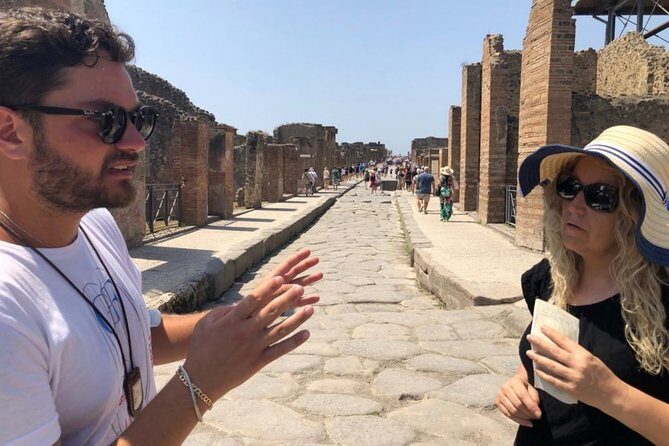
If you have limited time, this is a good way to see Pompeii without wandering in circles. The route is designed around the city’s main axes and big “why it mattered” buildings, so you come away with a clear picture of daily life and the eruption’s aftermath.
You’ll also get a guide who can connect the dots. That matters in Pompeii, because the ruins can look like disconnected piles—until someone shows you how the street plan, public buildings, and private houses all worked together.
The group stays small (up to 15), which helps you keep your pace and ask questions without the whole tour turning into a slow-moving traffic jam.
You can also read our reviews of more tours and experiences in Pompeii.

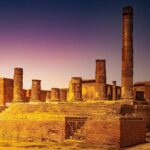
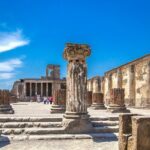
Meeting at the Villa of the Mysteries and entering at Porta Marina
You meet at the Villa of the Mysteries (Via Villa dei Misteri, 2, 80045 Pompei NA, Italy). The tour then ends back at the meeting point, which is handy if you’re trying to line things up with later plans.
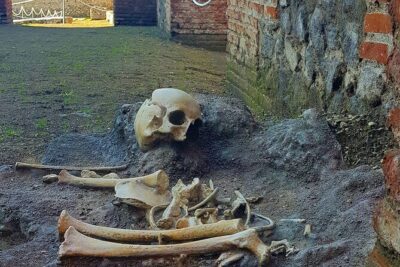
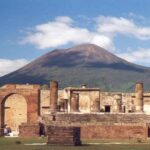
From the start, you step into the setting that makes Pompeii feel real. Beginning at Porta Marina puts you on the approach into the city, so Vesuvius is part of the story from minute one. You’ll learn about the city’s dramatic final moments—how the eruption changed everything—and then you’ll walk among the spaces people used every day.
One practical win: you’re not left to figure out where to go first. That’s big at Pompeii, where it’s easy to waste energy on routes that don’t teach you much.
Porta Marina to the Forum: Pompeii’s civic core in walking order
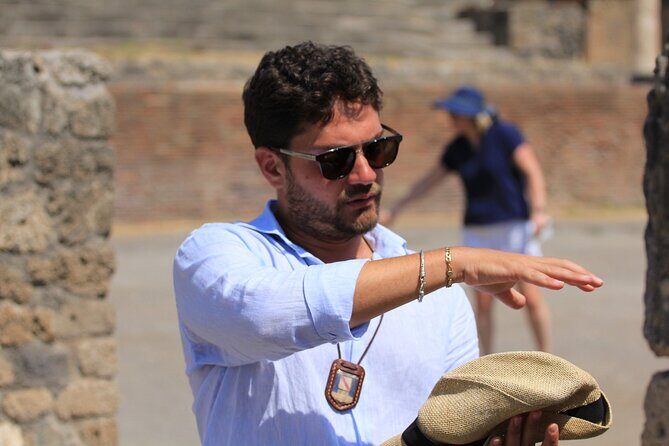
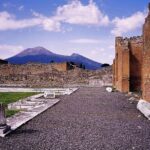
The tour’s main spine is the route through the Roman Forum zone and nearby highlights. You’ll walk along ancient streets and the Decumanus Maximus (the main east-west street), picking up context as you go.
Here’s what that usually means for your experience:
- You get explanations of what each building did (business, justice, worship, markets).
- You learn how public life and everyday life overlapped.
- You see enough variety—temples, markets, baths, and homes—to stop Pompeii from feeling repetitive.
The stops that anchor this section include the Roman Forum and major civic structures, plus key public spaces that explain how people lived, traded, and spent free time. It’s a highlight route, but it still feels like a guided story instead of a checklist.
Basilica and the main square: where business and justice happened
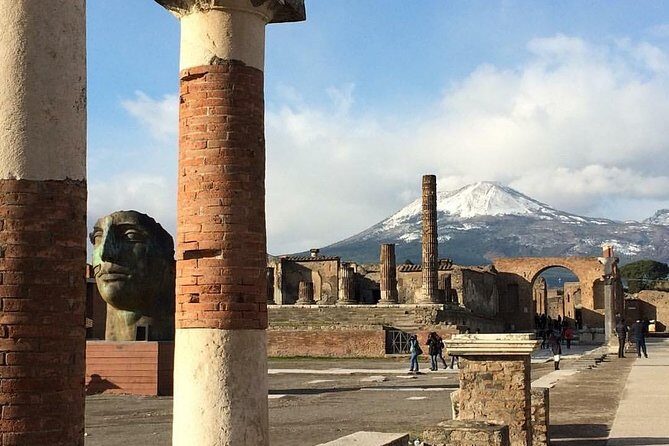
In the Forum area, the Basilica is a must-see. It was the big public building where business and administration of justice took place. Seeing it in context is the point: this wasn’t just a pretty landmark; it was where people showed up for practical matters.
You’ll also spend time at the Forum – Main Square, the center of daily life. The value here is clarity. When you understand that the Forum was the city’s social and commercial hub, Pompeii starts clicking—suddenly you can picture people moving between transactions, community events, and religious stops.
Temples of Venus, Apollo, and Jupiter: worship along the main street
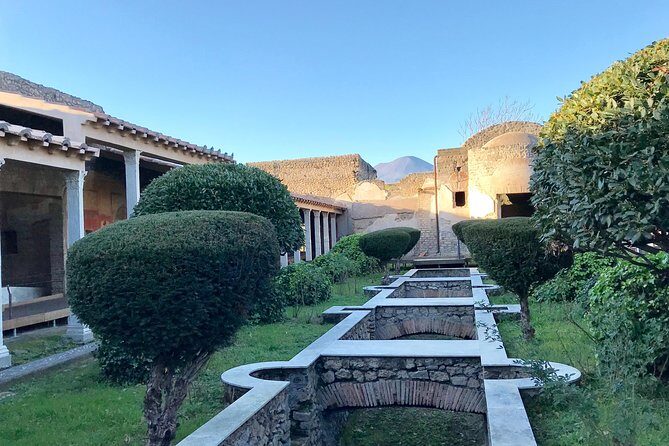
Pompeii’s religious buildings are spread in a way that makes sense once you see the street layout. You’ll stop at:
- Tempio di Venere (Temple of Venus): a temple dedicated to Venus, patron goddess of Pompeii.
- Sanctuary of Apollo: one of Pompeii’s older worship sites, placed strategically along the road from Porta Marina to the public heart of the city.
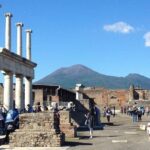
- Tempio di Giove Capitolino (Temple of Jupiter): dominant on the northern side of the Forum, with Vesuvius rising behind it.
These stops are short (around 10 minutes each), but they’re meaningful. Each one shows you how religion was tied into civic life. In other words: worship wasn’t tucked away in a remote corner—it sat along the route people already traveled every day.


Roman baths and the art of everyday leisure
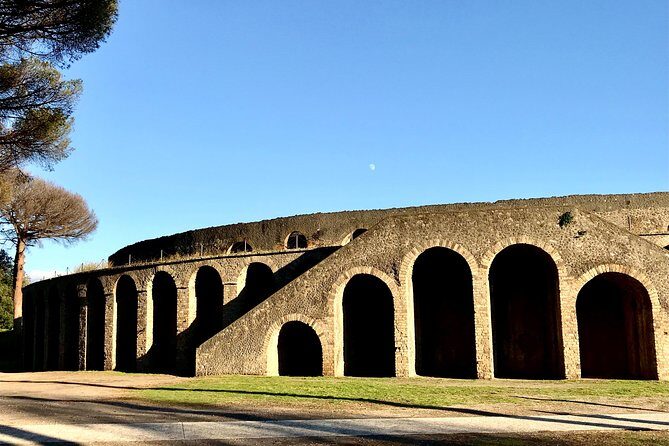
One of the best parts of Pompeii is that it doesn’t only show big ceremonies or grand speeches. It shows routines.
You’ll visit the Roman Baths along the Decumanus Maximus route, including a highlight that’s been recently reopened. Baths were social spaces as much as they were for cleaning, and they help you understand the comfort level of everyday Roman life.
The Terme del Foro (Forum Baths) are especially interesting because female and male parts had separate entrances. That’s a concrete detail that makes the site feel less abstract and more like a functioning community with rules—and comfort levels—people lived with.
Thermopolium and market energy: how people ate and shopped
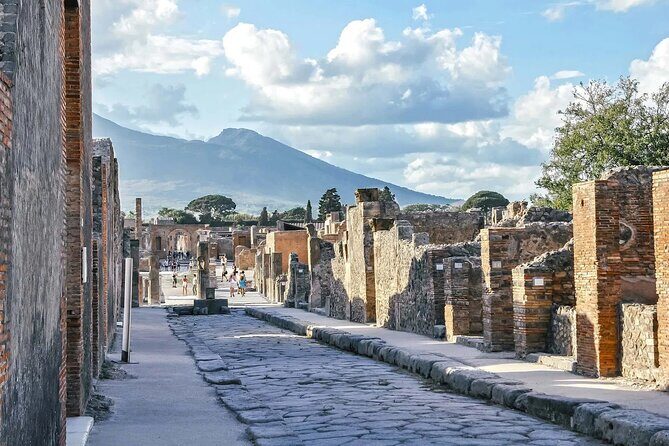
If you’ve ever wondered what Pompeians actually ate, you’ll be in the right place. The tour includes a thermopolium, an ancient diner-style stop for refreshments. One named example here is the Thermopolio di Vetuzio Placido.
You’ll also see Macellum, the monumental market building used for the sale of food and daily consumer products. This area gives you a strong sense of commerce and supply—people weren’t just living in isolation inside houses.
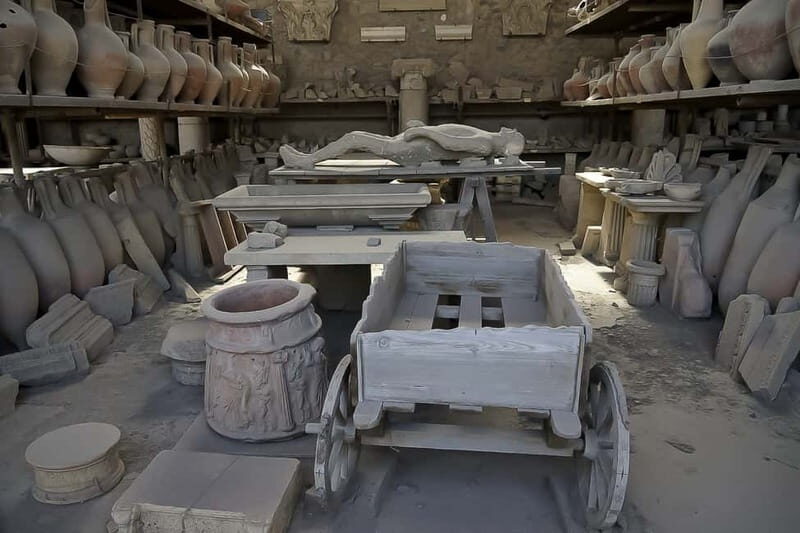
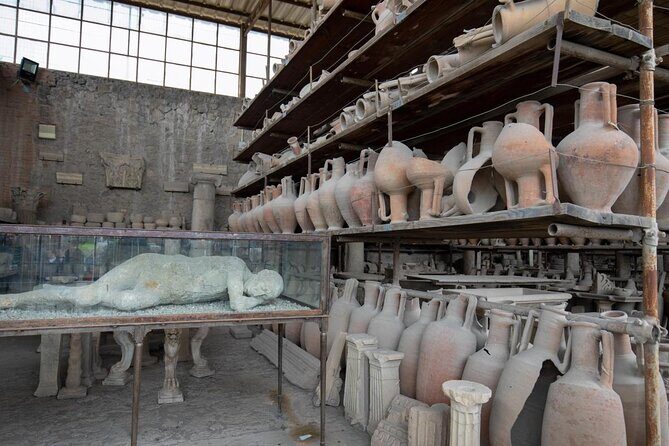
A standout feature is the presence of plaster casts (bodies) connected to how archaeologists found and represented the victims as they were at the moment of eruption. It’s intense, but it’s also powerful context. Pompeii becomes more than architecture when you see how archaeology can bring human stories back into focus.
Domus and shop life: what homes and streets reveal
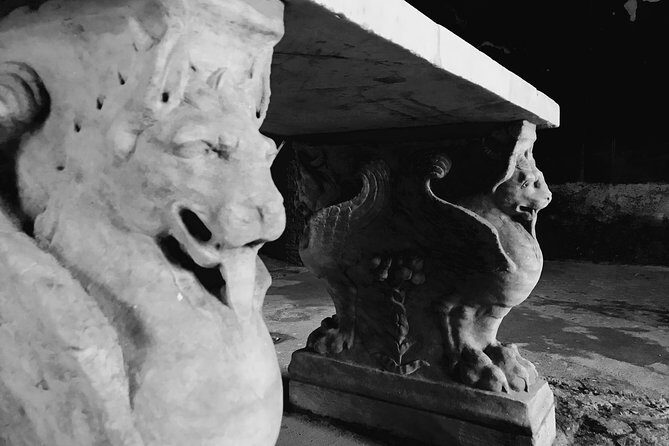
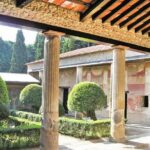
Pompeii’s private houses, or domus, are where you see status, taste, and daily rhythm. The tour includes visits tied to major house highlights, including the House of the Faun and the House of the Vettii.
The House of the Faun is one of the larger homes in Pompeii, and you’ll even hear about the welcome inscription HAVE in Latin. That’s the kind of detail you’d never catch on your own unless you’re looking for it.
The House of the Vettii is among the richest and most famous houses in Pompeii, and you’ll learn about the home being under the protection of Priapus, the god of prosperity. Even if you don’t read every carving, you’ll understand the idea: art and symbols were part of living, not just decoration.
You’ll also walk the Via dell’Abbondanza, the ancient main street (the Decumanus Maximus). Street life is where you get a better sense of movement—where people passed shops, where food and goods changed hands, and how homes sat close to public routes.
Theaters and gladiator barracks: public entertainment in stone
Pompeii wasn’t only politics and prayer. It was also entertainment.
You’ll see:
- Teatro Grande (Large Theater), used for performances in the Greco-Roman tradition, including comedies and tragedies.
- Other major public entertainment highlights in the wider route, including the Large and Small Theatres and the Gladiators’ Barracks.
This section is a reminder that Pompeii had a lively cultural calendar. When you connect the theaters with the market and the baths, you get a fuller picture: people worked, ate, relaxed, shopped, and spent time watching shows—all within the same city blocks.
What you actually get for the $66.01 price
At $66.01 per person, you’re paying for more than a walk with a guide. Your money covers:
- Pompeii admission (the Archaeological Park ticket is included)
- An authorized guide/archaeologist
- Headsets if it’s crowded
- A Pompeii paper map
- A mobile ticket format
That’s solid value if you’d otherwise have to buy admission and then figure out how to make sense of the site. Pompeii can turn into costly time loss if you’re constantly stopping, re-checking, and backtracking.
The real “value” piece is guidance that helps you prioritize. You won’t see everything, but you’ll see the most story-driven parts in a time window that’s realistic for a two-hour visit.
Pacing, terrain, and how to avoid stress on the ground
Pompeii is famously uneven. There are curb edges and stepping points, and you’ll be walking on stone that can feel awkward, especially if the day is hot.
So go in ready:
- Wear shoes with solid grip.
- Give yourself a little mental patience for the physical reality of old streets.
- Keep an eye on your footing more than your phone.
Also, remember the tour is built for highlights. If you’re hoping for a heavy focus on excavation methods, you might find the emphasis is more about seeing and understanding the main spaces rather than the technical process.
One more timing note: some sites can close at set times, so if you’re trying to add extra stops on your own after the tour, check opening hours once you’re in Pompeii. This is one of those places where a small time mismatch can cost you the view you wanted.
Guides like Livio, Antonio, Riccardo, Ornella, and Annalisa
A lot of the tour success comes down to the person leading it. The names that show up in strong feedback include Livio, Antonio, Riccardo, Ornella, Annalisa, and Angelo.
What you should expect from guides in this style is clear explanations of Roman life and architecture, with a respectful tone when the story turns to 79 AD. If you get a guide who’s passionate—like the ones named above—you’ll likely notice how they connect details on the ground to bigger ideas in the city’s design.
Even better: several guides are known for managing pace well, which matters because Pompeii’s best moments are time-sensitive. The right pace helps you see the view, hear the explanation, and still keep moving.
Who this Pompeii small-group tour suits best
This tour is a great match if:
- You want a guided Pompeii highlights route without getting lost.
- You’re short on time but still want the Forum, baths, temples, houses, and theaters.
- You prefer a small group so you can hear instructions (headsets help) and move with the guide instead of wandering alone.
It might not be ideal if:
- You’re trying to do a long, slow, totally self-paced exploration with lots of “linger here for hours” moments.
- You want a deep, technical focus on excavation methods rather than how the ruins fit into daily life.
Should you book this Pompeii Tour & Admission?
I think you should book it if you want Pompeii that makes sense in a short visit. The combination of admission included, an expert guide, and practical tools like headsets and a paper map makes the day smoother than doing it all solo.
If you’re comfortable with walking on uneven ground and you’re fine with a highlights-first route, this is a strong value. You’ll leave with a clearer sense of how Pompeii worked—streets, worship, markets, baths, and homes—plus the chilling context of what happened in 79 AD.
FAQ
How long is the Pompeii Tour & Admission?
The tour is about 2 hours.
How much does the tour cost?
It costs $66.01 per person.
Is Pompeii admission included?
Yes. Admission to the Archaeological Park of Pompeii is included.
What language is the tour offered in?
The tour is offered in English.
How big is the small group?
The tour has a maximum of 15 travelers.
Where do I meet for the tour?
You meet at the Villa of the Mysteries, Via Villa dei Misteri, 2, 80045 Pompei NA, Italy.
Does the tour include a headset and a map?
Yes. You get a headset in case the site is crowded, and there is a Pompeii paper map included.
Is bottled water included?
No. Bottled water is not included.