REVIEW · POMPEI CAMPANIA
Pompeii: Skip-the-Line Entry & Audioguide
Book on GetYourGuide →Operated by TOURISTATION · Bookable on GetYourGuide
Pompeii hits different when you skip the line. This visit is built for walking at your rhythm through ruins left behind by the eruption of Vesuvius in 79 AD, with an audioguide that helps you connect the stones to real Roman life.
I especially like the skip-the-line entry, because you start exploring right away instead of spending your best daylight circling ticket counters. I also like the freedom to choose your route—Forum first, then streets, then the bigger public spots—without feeling rushed. One drawback to keep in mind: some people worry about deposits or day-of add-ons tied to audio equipment, so double-check what is covered in your booking before you hand over any ID.
If you want a practical way to see Pompeii’s key areas without a rigid schedule, this is a strong option. It’s also a good fit when you don’t want to spend energy translating everything yourself, thanks to the multi-language audio tracks.
In This Review
- Key highlights you’ll actually use
- Skip-the-line entry: where the day starts and what to have ready
- Your first big moment: Pompeii’s Forum with Vesuvius in view
- Roman streets and the city’s water system: aqueducts and fountains
- Homes and businesses: fresco remains that make it feel real
- Public life highlights: baths, statues, and entertainment venues
- Audioguide + paper map: how to use them so you don’t lose time
- How long you’ll actually need: squeezing Pompeii into 2 hours (or not)
- Price and value: what $53 gets you, and what to double-check
- What’s not included: Villa dei Misteri and your own food plans
- Best for: who will love this visit and who might want a different plan
- Should you book this Pompeii skip-the-line audioguide?
- FAQ
- Where is the meeting point for Pompeii skip-the-line entry?
- How long is the experience?
- What is included with the ticket?
- Is Villa dei Misteri included?
- What languages are available for the audioguide?
- Do I need to bring ID?
- Are bags allowed inside Pompeii?
- Can I bring a pet?
- Is smoking allowed?
- Is the experience refundable?
Key highlights you’ll actually use
- Skip-the-line entry helps you start walking fast and protects your time at the site
- Audioguide in 9+ languages means you can move independently and still understand what you’re seeing
- Forum-to-streets route gives you a clear “city center to neighborhoods” flow
- Roman daily life stops include aqueduct/fountains, baths, homes, businesses, and statues
- Amphitheater and dramatic theater show how loud and social public entertainment was
Skip-the-line entry: where the day starts and what to have ready
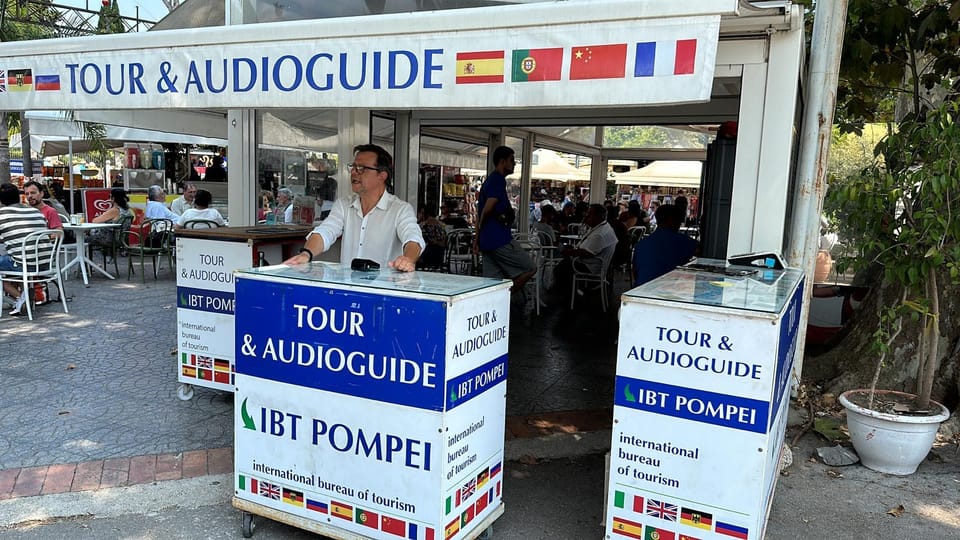
Your visit begins at the IBT Center/Touristation next to Chalet Donna Lucia. That matters because Pompeii can feel confusing the first time—getting to the exact meeting point keeps things smooth from the start.
Because this is skip-the-line entry, you can generally focus on the ruins instead of time-wasting in queues. Still, treat it like a museum visit: bring your passport or ID card, and make sure you have it with you during the whole experience. One practical lesson from the field: people can get nervous about handing over documents for deposits, especially when they feel the process could be tighter. If deposits are part of your specific pickup, ask what’s happening and how long your ID will be held.
You’ll also want to pack smart for Pompeii’s paths. No luggage or large bags are allowed, and smoking is not allowed. Pets are not allowed, but small dogs are permitted in the archaeological area—kept on a leash and carried when inside buildings. If you’re traveling with a companion animal, plan around those rules before you arrive.
You can also read our reviews of more tours and experiences in Pompei Campania.

Your first big moment: Pompeii’s Forum with Vesuvius in view
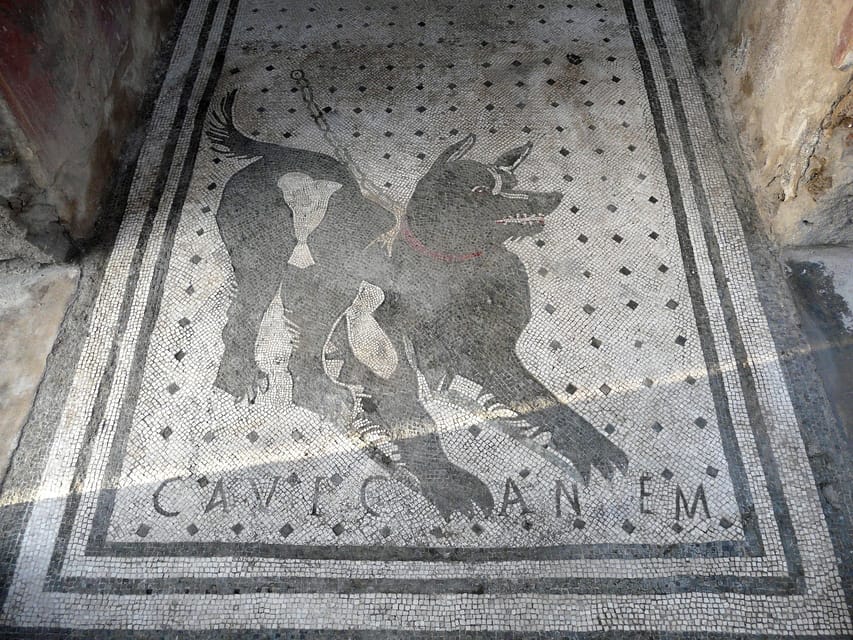
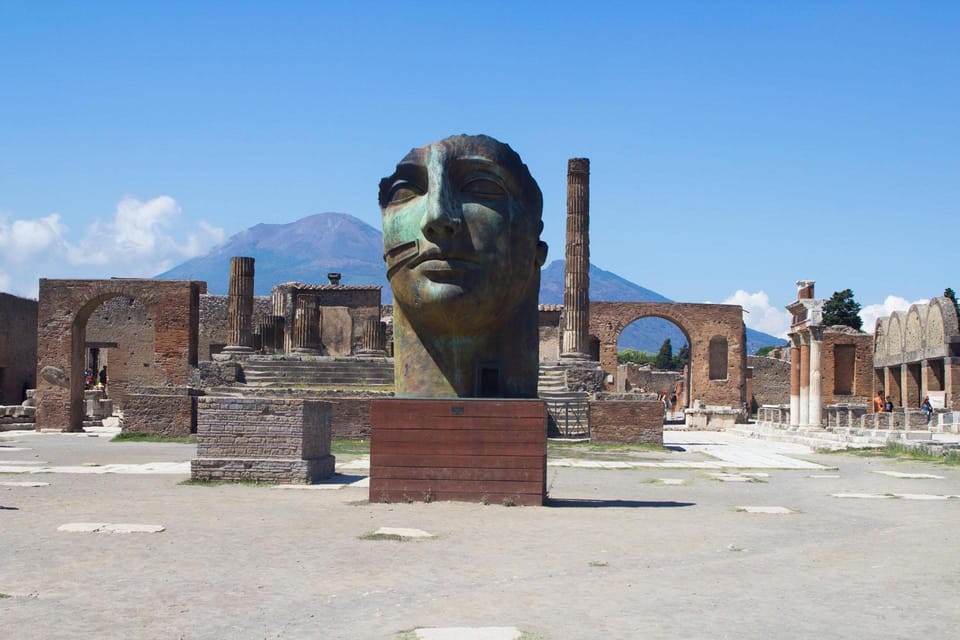
A great way to start Pompeii is the center of the action: the central forum. This is where you get that instant sense of scale—columns, doorways, and leftover architectural outlines that still tell you where the city gathered and moved.
What I like about starting here is how the setting does half the storytelling. With Mount Vesuvius looming in the background, you can look at the stones and imagine the everyday bustle—market chatter, foot traffic, and civic life—without needing a lecture. The ruins aren’t just “old walls”; they’re structure, layout, and human movement.
Even if you only spend a short time in the forum, you’ll get a mental map. From here, it’s easier to understand how the rest of Pompeii connects: public life leading into neighborhoods, shops, and entertainment venues.
Roman streets and the city’s water system: aqueducts and fountains
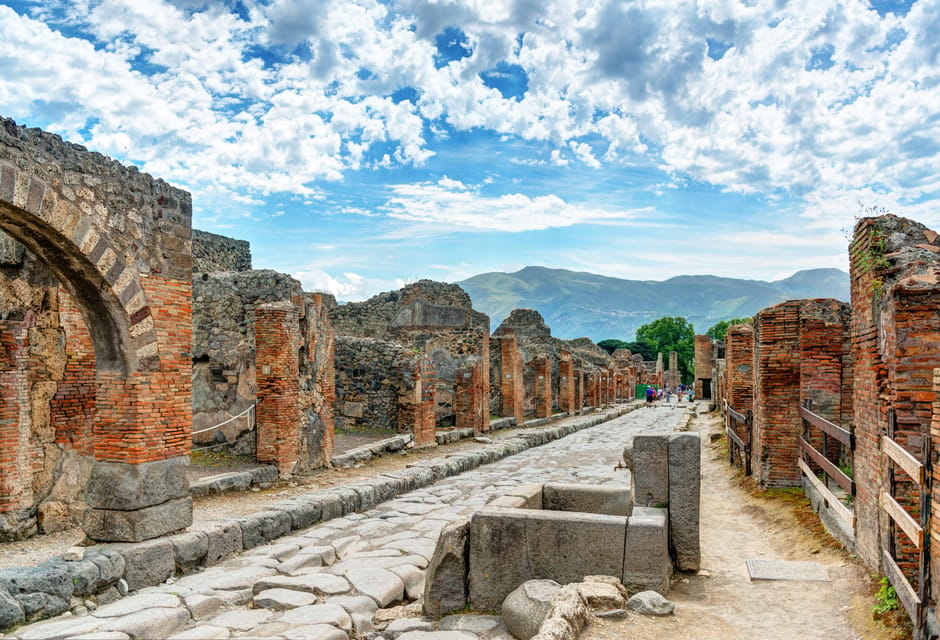
Once you’ve got your bearings in the center, Pompeii becomes a walk through infrastructure as much as architecture. As you follow the streets, you’ll see the remains of aqueducts and fountains, plus hints of how water and public services shaped daily routines.
The value here is not just seeing a ruin. It’s realizing these weren’t symbolic features. Water mattered. Fountains and public systems supported cleaning, cooling, and the rhythm of streets and squares. When you pair what you see with the audio explanations, the layout starts to feel like a working city plan—even though it’s frozen in time.
The streets also help you appreciate why Pompeii still feels personal. You’re not looking at one isolated monument. You’re moving through a grid of spaces where people lived above shops, visited public baths, and spent time in entertainment areas.
Homes and businesses: fresco remains that make it feel real
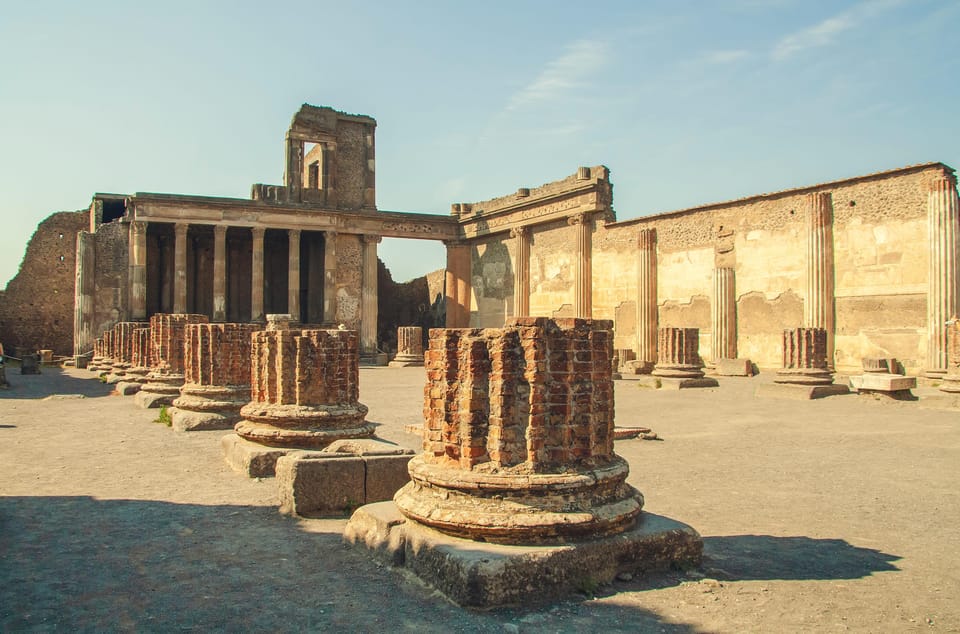
Pompeii’s most emotional details often come from what survives on walls. As you wander, you’ll pass through the remains of Roman homes and businesses, including areas where you can see colorful fresco remnants.
This is where the audioguide earns its keep. Without audio support, fresco fragments can feel like decorative leftovers. With it, you start to connect those painted surfaces to how people displayed identity, status, or simple everyday messaging. Even when the paintings are incomplete, the idea of color, commerce, and domestic life comes through.
You’ll also notice how Pompeii’s houses and shopfronts relate to the street. That street-facing design is a reminder that Roman life wasn’t hidden behind walls. People worked, sold goods, and lived in shared proximity.
Practical tip for your comfort: Pompeii involves a lot of walking on uneven ground. If you want the fresco areas and smaller details to land, go slower than you think you need to. A fast lap can turn Pompeii into “mostly big ruins.” A steadier pace makes it feel like a neighborhood you can almost hear.
Public life highlights: baths, statues, and entertainment venues
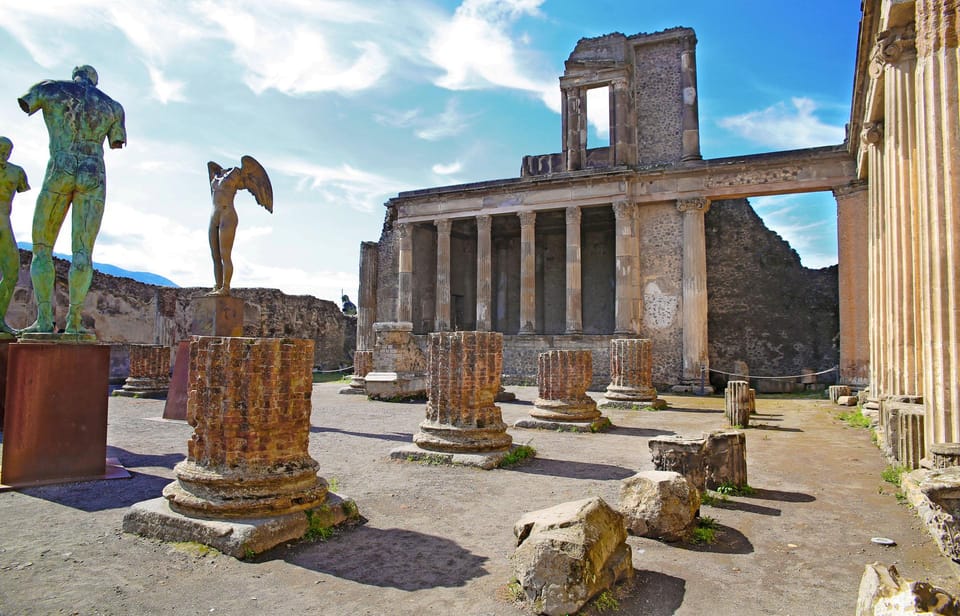
Pompeii wasn’t quiet. The site includes major public spaces where crowds gathered—perfect stops when you want a change of tempo from narrow streets.
You’ll see remains tied to public baths and statues, plus major venues like the amphitheater and the dramatic theater. These areas help you understand social life: people didn’t just eat and sleep here. They watched performances and participated in events.
Here’s what makes these stops worthwhile: they show Pompeii as a complete city, not only a collection of houses. When you stand near the amphitheater or theater remains, you can better picture where spectators sat, how movement funneled through entryways, and why the architecture was built to hold attention.
If you’re the type who learns best by seeing the same story from multiple angles, this is a great section. You’ll have already walked the everyday water and street life. Now you see how leisure and civic gatherings fit into the same urban fabric.



Audioguide + paper map: how to use them so you don’t lose time
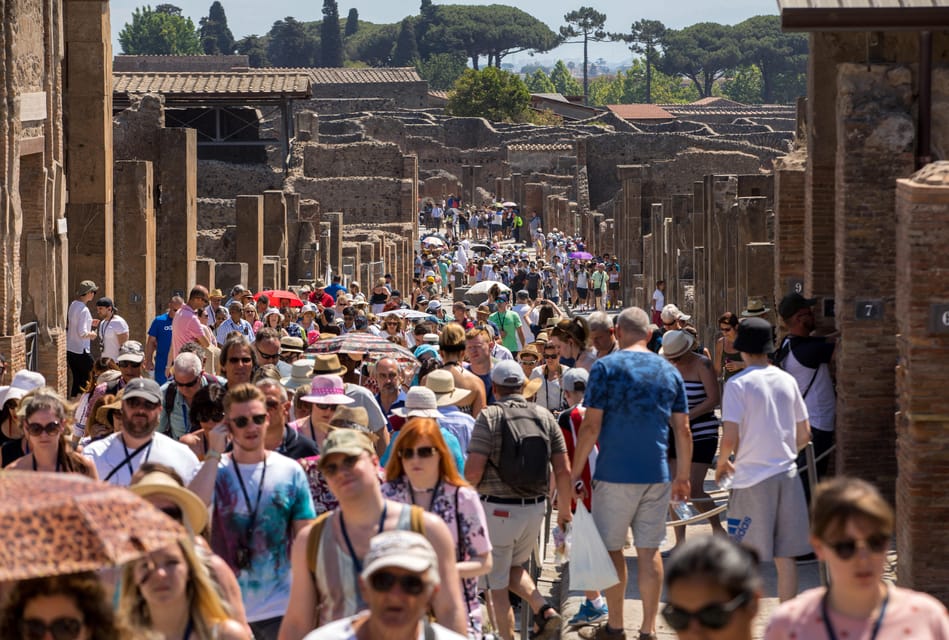
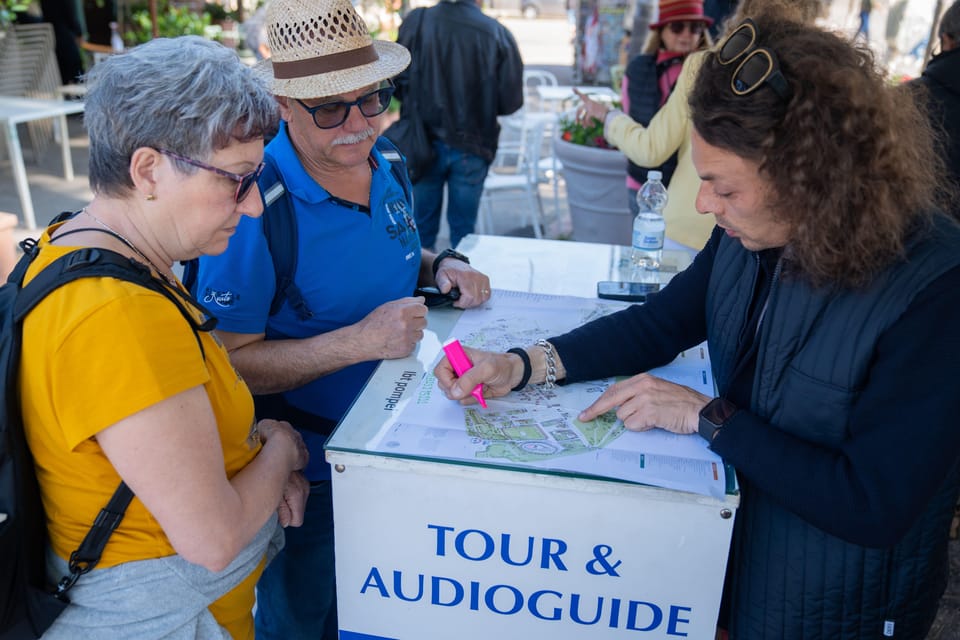
This experience includes an audioguide and a paper city map, and both help you stay efficient without locking you into a guided pace.
The audioguide is available in Italian, English, French, Spanish, German, Portuguese, Chinese, and Japanese. That’s useful because Pompeii can be overwhelming if you don’t know what to look for first. Audio explanations can give context about buildings and what each area likely meant in daily life.
How to use it smartly:
- Start early in your route so audio sets the tone for the forum and central streets.
- Don’t try to listen to every single track at full volume. Stop listening when you need to look, then restart when you’re ready to connect details.
- Use the paper map to keep your route coherent. If you skip around too much, you can accidentally create backtracking and lose the best views.
One more practical note: some people feel uneasy about equipment deposits. Even if your booking includes audio, make sure you understand whether there’s any handoff process for the device. If you’re uncomfortable, ask questions before you proceed.
How long you’ll actually need: squeezing Pompeii into 2 hours (or not)
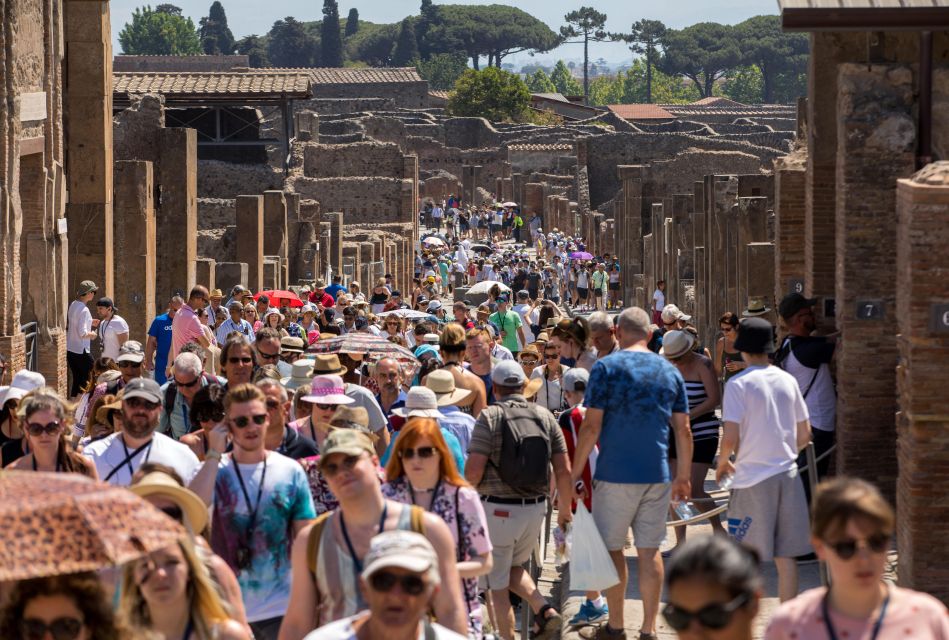
The scheduled duration is listed as 2 hours to 1 day, depending on starting times and what you want to cover. In real terms, that means you can do Pompeii in a focused highlights style, or linger longer for details.
A good 2-hour approach (if you like highlights):
- Forum as your anchor point
- Main street loop to connect daily city life
- One set of residential/business areas with fresco remnants
- A fast stop at the amphitheater or dramatic theater
If you have more time, you’ll enjoy Pompeii more when you slow down for the smaller “in-between” elements: fountain remains, aqueduct traces, and street-facing shopfront layouts. Those are the moments that turn a landmark visit into an experience that feels like you lived inside a Roman city for a few hours.
Price and value: what $53 gets you, and what to double-check
The price is $53 per person, and the value case depends on two things: how much you value saved time and how useful the audio guidance will be for you.
You’re paying for:
- Skip-the-line entry
- Audioguide
- Paper city map
- A guided tour only if you select that option
That’s a solid package for people who want Pompeii to feel understandable without adding extra planning. Skip-the-line entry can be especially valuable in peak season, when waiting can drain your energy before you even start walking.
Still, there are two “check before you go” points:
- Confirm your audioguide situation in your booking details. Some people report confusion about whether audio equipment costs extra or whether an audiophone is handled differently from an included audioguide. You don’t want to discover that after arriving.
- If deposits are mentioned anywhere, ask how they work. One common frustration is feeling the process is messy or unclear. Pompeii is outdoors, so you don’t want to spend time worrying about security procedures.
If you do those quick confirmations, $53 can feel like a fair price for a smoother start and a guided learning layer while you walk.
What’s not included: Villa dei Misteri and your own food plans
Two things to note so you don’t get surprised:
- Villa dei Misteri entrance is not included. If you want that specific site, you’ll need separate access.
- Food and drinks are not included, so plan on grabbing something before or during your visit based on how long you stay.
This matters because Pompeii can take longer than expected once you start looking carefully at fresco remnants and building layouts. Having a small food plan keeps your energy up so you don’t rush the best areas.
Best for: who will love this visit and who might want a different plan
This skip-the-line + audioguide format is a great match for:
- Independent explorers who still want context while walking
- First-timers who don’t want to spend effort figuring out what each ruin used to be
- People who prefer a self-paced route rather than fixed timing
- Visitors who want the main public and residential highlights without adding extra tours
It might be less ideal for you if:
- You strongly dislike any equipment handoff process involving documents
- You want a highly structured, step-by-step narration with minimal walking on your own
- You’re specifically targeting areas beyond what’s listed as included (like Villa dei Misteri, which isn’t part of this package)
Should you book this Pompeii skip-the-line audioguide?
Book it if you want Pompeii to start fast, feel understandable, and still stay flexible. The combination of skip-the-line entry, multi-language audioguide, and a paper map is built for real sightseeing—Forum to streets, water-and-homes details, and the big public entertainment venues.
Don’t book it blindly if you’re worried about day-of confusion. Before you go, verify that audio is genuinely included as described and check how any equipment or deposits work. Once that’s clear, this is one of the easiest ways to experience Pompeii without turning your visit into a logistics puzzle.
FAQ
Where is the meeting point for Pompeii skip-the-line entry?
You should go to the IBT Center/Touristation next to Chalet Donna Lucia.
How long is the experience?
The duration is listed as 2 hours to 1 day. Starting times vary, so check availability for the option you’re booking.
What is included with the ticket?
You get skip-the-line entry to Pompeii Archaeological Park, an audioguide, and a paper city map. A guided tour is included only if you select that option.
Is Villa dei Misteri included?
No. Entrance to Villa dei Misteri is not included.
What languages are available for the audioguide?
The audioguide is available in Italian, English, French, Spanish, German, Portuguese, Chinese, and Japanese.
Do I need to bring ID?
Yes. An ID is required for all participants, and you should bring your passport or ID card.
Are bags allowed inside Pompeii?
No. Luggage or large bags are not allowed.
Can I bring a pet?
Pets are not allowed. Small dogs are permitted inside the archaeological area, but they must be kept on a leash and carried when inside buildings.
Is smoking allowed?
No. Smoking is not allowed.
Is the experience refundable?
No. This activity is non-refundable.