REVIEW · POMPEII
Pompeii Exclusive 2h Private Tour with your Archaeologist
Book on Viator →Operated by Grand Tour Experience · Bookable on Viator
Two hours is a very smart way to see Pompeii. This private tour pairs skip-the-line entry with an archaeologist-led route, so you spend less time stuck at the entrance and more time understanding what you’re actually looking at—street life, public spaces, and homes preserved under ash from 79 AD.
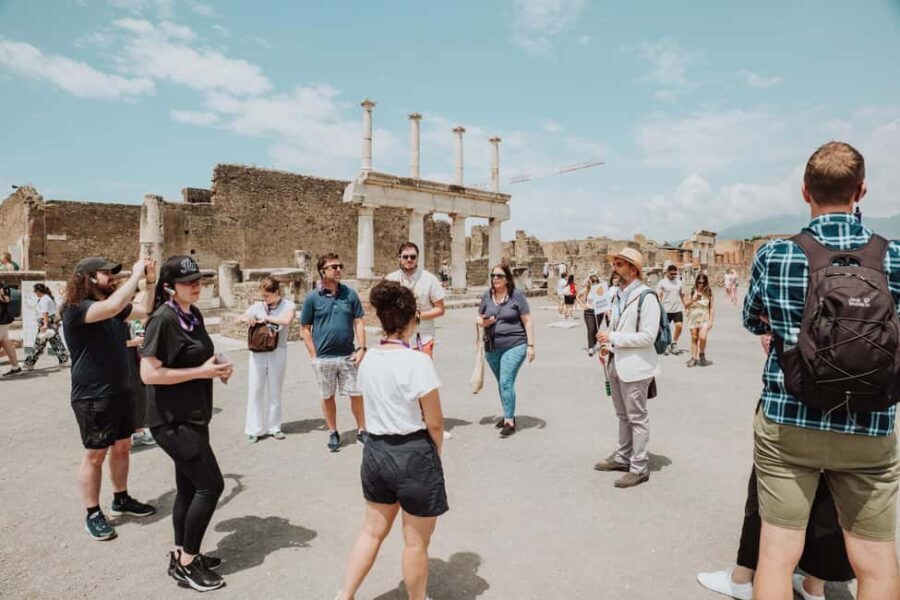
I especially like the way the guide builds the visit around your group, not a one-size-fits-all script. In reviews, guides like Raffaele, Maria, Massimo, and Federica are praised for making the site interactive and easy to follow, including for a 6-year-old, while also working well for mixed ages. One possible drawback: admission tickets are not included, and the tour time is only about 2 hours—so you won’t cover every corner of the huge park.
In This Review
- Key takeaways before you go
- Why a private, archaeologist-led Pompeii tour saves more than time
- Meeting point at Porta Marina and how the route feels in two hours
- Great Theatre and the Odeion: watching daily culture become architecture
- Roman banquets and plaster casts: learning faces and routines, not just walls
- Cardo and Via Stabiana street life: shops, snacks, and the city’s daily pulse
- Houses, the main square, and Roman spa areas: from private rooms to public life
- Baths, palsters casts, and the city’s last layers of meaning
- Price and value: $299.82 per group plus the €19 ticket
- Who this Pompeii tour fits best (and who should consider something else)
- Practical tips to get more out of your 2-hour walk
- Should you book this Pompeii Exclusive private tour?
- FAQ
- How long is the private tour?
- Is the admission ticket included in the price?
- How big is the group for a private tour?
- Where do we meet, and does the tour end nearby?
- What language is the tour offered in?
- Are service animals allowed?
Key takeaways before you go
- Skip-the-line tickets help you get into Pompeii without burning your limited time waiting.
- An archaeologist guide turns ruins into a story you can actually picture.
- Custom pacing and route tweaks work well if you’re traveling with kids or different ages.
- Highlights are grouped efficiently, from the theaters and banqueting areas to the baths and main square.
- You’ll see famous “survival” details, including plaster casts made from people preserved by the eruption.
- Choose your start time, so you can fit Pompeii into the rest of your day.
Why a private, archaeologist-led Pompeii tour saves more than time
Pompeii is not one of those sites where you can wander for an hour and feel satisfied. It’s big, layered, and easy to miss the point if you don’t know where to look. A private archaeologist tour solves the main problem: you get help reading the place.
What you’re paying for is not just access. It’s interpretation. In a guided format, you learn why certain buildings mattered, how streets shaped daily movement, and what public spaces were designed for. That changes the whole vibe. A wall stops being a wall and becomes something like a clue.
This tour also stays practical. You’ll spend about 2 hours in the park, and the ending is simple: it finishes back at the meeting point. That makes it easier to plug Pompeii into a broader itinerary without scrambling all day.
You can also read our reviews of more private tours in Pompeii

Meeting point at Porta Marina and how the route feels in two hours
You meet at Scavi di Pompei – Biglietteria Porta Marina Superiore, at Via Villa dei Misteri, 2, 80045 Pompei. From there, your tour starts in the Porta Marina area and moves into the core sights.
You should expect the route to feel efficient rather than exhausting. Pompeii can be tiring—uneven ground, lots of walking, and frequent stops to explain details. The best part of a private group is that the guide can slow down when you want more context, or speed things up when your group is eager to keep moving.
One small planning note: the itinerary is packed with major stops, but it’s still only approx. 2 hours. You’ll see a strong cross-section of Pompeii, not the entire site. So if your goal is depth at every single building, you might still want a longer tour. If your goal is smart orientation plus key highlights, this length works well.
Great Theatre and the Odeion: watching daily culture become architecture
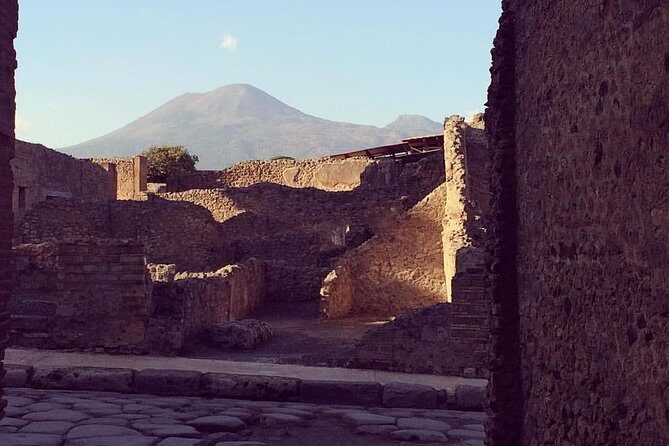
Your first big stop is the Pompeii Archaeological Park, starting near Porta Marina Inferiore and then heading toward the theaters.
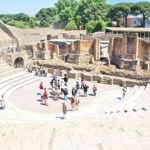
The Great Theatre is where you get a sense of how Romans organized public entertainment and social life. Even though you’re looking at ruins, the scale of the space helps you understand how performances drew crowds. It also gives you a mental map: once you know where the theater sits in the urban layout, the rest of Pompeii feels less random.
Right after that, you visit the Small Theatre, also known as the Odeion. The contrast is useful. Big space and smaller space tell you something about how events could be more intimate. It’s the kind of detail a good guide points out: not just what’s there, but what the difference meant for the people using it.
A consideration: theaters are popular viewpoints, so the early timing you choose can affect how calmly you can move and listen. If you can start earlier in the day, you may find the park feels less crowded while you’re learning the main story.
Roman banquets and plaster casts: learning faces and routines, not just walls
Pompeii is famous for being frozen in time. This tour pushes that idea in a very concrete way.
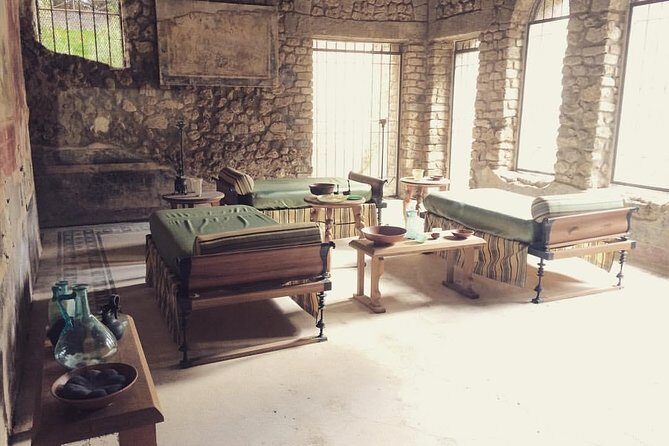
You’ll see places where Romans held banquets, and you’ll explore how daily life worked through spaces that sound familiar: gathering areas, eating culture, and the rhythms of a city that had real routines.
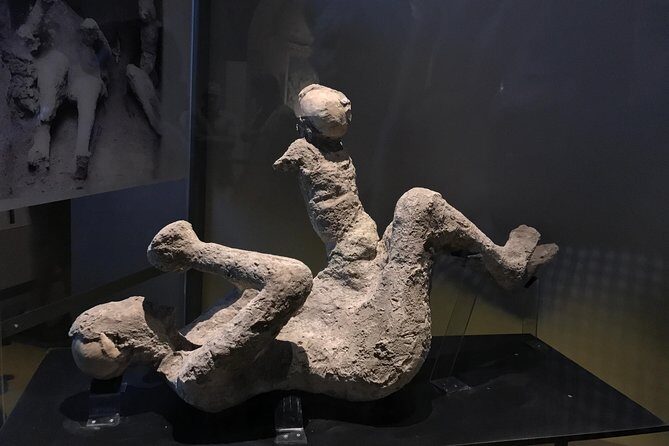
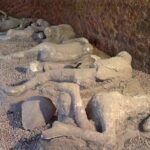
Then comes one of the most powerful parts: plaster casts of citizens preserved as they were during the eruption. Seeing casts on-site (rather than from a distance or in a museum only) changes how you process the story. It stops being a historic event and becomes human-scale evidence.
These casts also make your guide’s job easier. A good archaeologist doesn’t just point. They help you connect: what you’re looking at, why it’s important, and how it fits into the larger picture of the city’s layout and survival.
If your goal is a respectful, meaningful experience—not just a photo safari—this is where the tour earns its time.
Cardo and Via Stabiana street life: shops, snacks, and the city’s daily pulse
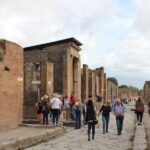
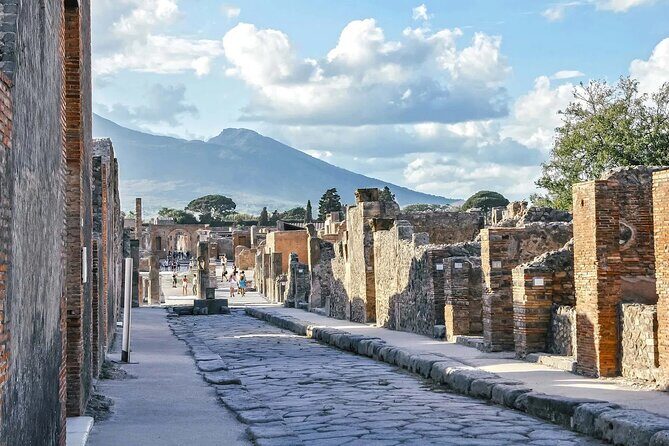
Next, your tour reaches the Roman Cardo (also called Via Stabiana) with typical street commerce—roman shops, including what’s described as an ancient snack bar and tabernae.
This is a smart stop because street life is the glue of an ancient city. When you walk a bit of the street and understand what lined it, you start picturing real movement: people heading somewhere, stopping for food, and interacting with the everyday economy of the city.
A key benefit of a private guide here: you can ask practical questions and get immediate answers without slowing down strangers behind you. And your guide can adjust the level—some people want architecture terms, others just want plain language for what life looked like.
Possible drawback: street-shop areas can be visually busy. Without context, they blur into “old buildings.” With a guide, you get the structure—what these shops were for and how they fit the city’s plan.
You can also read our reviews of more tours and experiences in Pompeii




Houses, the main square, and Roman spa areas: from private rooms to public life
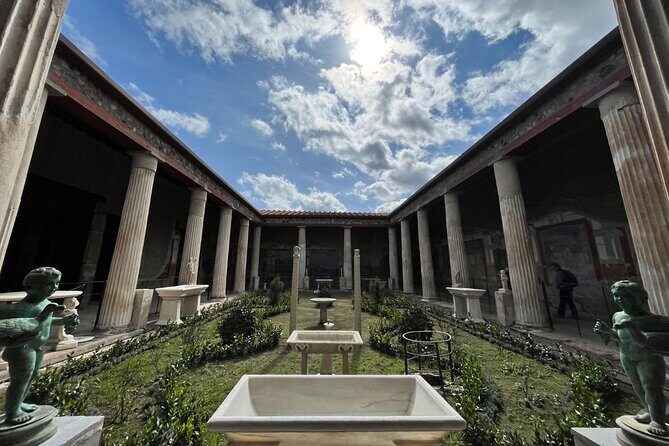
You’ll spend time exploring houses and everyday items that were still remarkably intact when unearthed. This is where Pompeii shifts from public buildings to intimate life.
Inside a home context, details matter. You learn how rooms worked, how daily objects help you imagine routines, and how domestic spaces differed from larger public structures. A good guide helps you avoid the common mistake of treating the houses like simple ruins. Instead, you see them as functioning environments that tell you something about status, work, and family life.
Then you head toward the main square and the thermal bath complex, often described as a Roman spa. This pairing is excellent. Houses show you private life. Baths show you public life, health habits, and social mixing—an entire city of people sharing space for relaxation and function.
This is also where the tour touches some of the more complex parts of the city layout, including brothels and additional preserved areas. If your group is the curious type, you’ll likely appreciate how your archaeologist guide frames these sites with context rather than shock value.
Baths, palsters casts, and the city’s last layers of meaning
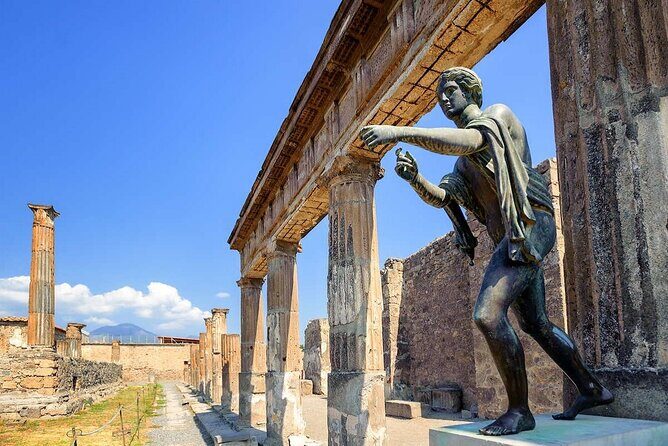
The tour highlights include the thermal bath complex and mentions plaster casts again in this broader section, reinforcing how often the eruption preserved details for modern understanding.
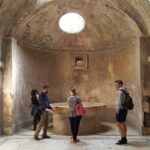
Thermal baths in Roman cities were more than just a place to wash. They were built for social time and bodily routines, and the architecture reflects that. When you’re shown the spaces in sequence—how people would move and what each area likely did—you get a better sense of why the site is still so studied.
One thing to keep in mind: the park is outdoors, and these areas can require steady walking and attention to footing. Plan to take short breaks when your guide offers them, especially if you’re traveling with kids or older family members. Reviews highlight that guides adjust pacing for different ages, and that flexibility is a real quality-of-life factor in Pompeii.
Price and value: $299.82 per group plus the €19 ticket
The tour is listed at $299.82 per group (up to 10) for about 2 hours. Admission is not included, and you’ll add €19.00 per person.
So how do you decide if it’s worth it? Think in terms of two buckets:
1) Your group size matters. If you’re traveling with multiple people, the guide cost spreads out fast. A private archaeologist for up to 10 people can be a strong deal compared with booking separate tickets and joining a larger group tour.
2) Time is your biggest limited resource in Pompeii. Skip-the-line entry matters because the site is popular and the park is huge. When you save entrance waiting time, you buy back energy for the places you actually want to understand.
If you’re a solo traveler, the price per person is naturally higher than a group tour. But if you want a tailored route, faster entry, and Q&A without rushing, private still often wins.
Who this Pompeii tour fits best (and who should consider something else)
This is a great fit if you want a private, paced experience and you care about understanding what you see. Reviews strongly point to guides making the tour enjoyable for kids, including a 6-year-old, while still keeping adult interest engaged.
It also fits mixed-age groups: families, friends traveling across generations, and anyone who doesn’t want to worry about whether they’ll keep up. Private pacing lets the guide slow down for questions or speed up when the group is ready.
Consider a different format if:
- You want to spend most of the day wandering at your own speed.
- You’re aiming to cover every neighborhood and building category in Pompeii.
- Your plan is built around very tight timing where even a 2-hour visit might feel short.
For many people, though, this is the sweet spot: big highlights, clear context, and manageable time.
Practical tips to get more out of your 2-hour walk
I’d plan your day so you don’t need to sprint afterward. Pompeii can leave you tired in a good way, but the walking adds up. Wear comfortable shoes you trust on uneven ground.
Because you’re focusing on major sites—the theaters, banqueting areas, cardo street, houses, main square, and baths—you’ll get more out of the tour if you come with a simple goal. For example:
- I want to understand what daily Roman life looked like.
- I want the most famous preserved moments, including the casts.
- I want a guided path that feels logical and not random.
Your guide can match your interests, including age-based pacing. If anyone in your group gets restless, say so early. A good archaeologist-led private tour can adjust.
Finally, remember admission is separate. Budget €19 per person for the ticket, and expect the private guide fee to cover the interpretation and the skip-the-line entry arrangement.
Should you book this Pompeii Exclusive private tour?
Book it if you want a high-efficiency, private archaeologist experience that helps you understand Pompeii instead of just touring it. The combination of skip-the-line entry, a guide who can keep mixed ages engaged (including strong kid-friendly pacing), and a focused route makes the 2 hours feel like a well-structured highlight reel—with real meaning behind the ruins.
Skip it or consider a longer tour if your priority is seeing a massive amount of Pompeii beyond the core highlights. This is a smart sampler, not a full-site marathon.
FAQ
How long is the private tour?
It lasts about 2 hours.
Is the admission ticket included in the price?
No. Admission is not included. The ticket price is €19.00 per person.
How big is the group for a private tour?
The tour is for up to 10 people per group.
Where do we meet, and does the tour end nearby?
You meet at Scavi di Pompei – Biglietteria Porta Marina Superiore, and the activity ends back at the meeting point.
What language is the tour offered in?
The tour is offered in English.
Are service animals allowed?
Yes, service animals are allowed.