REVIEW · POMPEII
Pompeii Archaeological Area Entrance Ticket
Book on Viator →Operated by Weekend in Italy · Bookable on Viator
Pompeii feels instantly real. This prebooked entrance ticket lets you bypass lines and then wander at your own pace through the 79 AD ruins, with multiple entry times during the day.
I really like that the experience is self-guided: you choose what to prioritize, from grand public spaces to quiet streets. I also like the fact that Pompeii is big enough that you can shape the day instead of being pulled into one fixed loop.
Two highlights I love are the Forum and the Theatre area, because they show how Romans gathered, performed, and governed. I also give big points to the Lupanare (the brothel) and its still-visible frescoes, which turn Pompeii from a list of stones into human stories.
One consideration: even with a prebooked ticket, you may still need to stop at an info/ticket exchange point first, and that can cost time—especially if you arrive close to your entry time.
In This Review
- Key points to know before you go
- Self-guided access to Roman Pompeii’s ash-stilled streets
- Entering Pompeii with a prebooked ticket: line-skipping and gate selection
- Three start routes: Porta Marina, Piazza Esedra, and Piazza Anfiteatro
- Porta Marina route: temples, early walls, and public power
- Piazza Esedra route: baths, houses, food stops, and daily work
- Piazza Anfiteatro route: necropolis, gardens, amphitheater, and temples
- Forum, Theatre, and Lupanare: the stops that actually shape your day
- The Forum: where politics and daily rhythm met
- The Theatre and entertainment spaces: scale you can feel
- The Lupanare: the brothel with surviving frescoes
- What the buried city teaches you: casts, shops, baths, and homes
- How long should you plan? Heat, walking, and what 2–3 hours really means
- Maps, apps, and getting your bearings without stress
- Site rules that keep the ruins safe (and your feet happy)
- Price and value of a $54.44 entrance ticket for independent ruins time
- Should you book this Pompeii entrance ticket?
- FAQ
- FAQ
- How long do I have in Pompeii with this entrance ticket?
- Is a guided tour included with the ticket?
- Will I skip the ticket lines?
- Where do I meet the tour?
- What are the opening hours for this ticket?
- Is a map provided when I arrive?
- Can I take photos and video?
- Can I bring bags and umbrellas into the site?
- Which entrance is recommended if I have limited mobility?
Key points to know before you go
- Guaranteed line-skip access, but you may still need a quick exchange step at arrival
- Self-guided ruins time with recommended routing ideas and maps at the gate
- Top sights are spread out (Forum, Theatre, Lupanare), so plan a smart walking loop
- 3 possible starting areas (Porta Marina, Piazza Esedra, Piazza Anfiteatro) help you cover more
- Photography for private use is allowed, but rules apply for tripods and flash
Self-guided access to Roman Pompeii’s ash-stilled streets
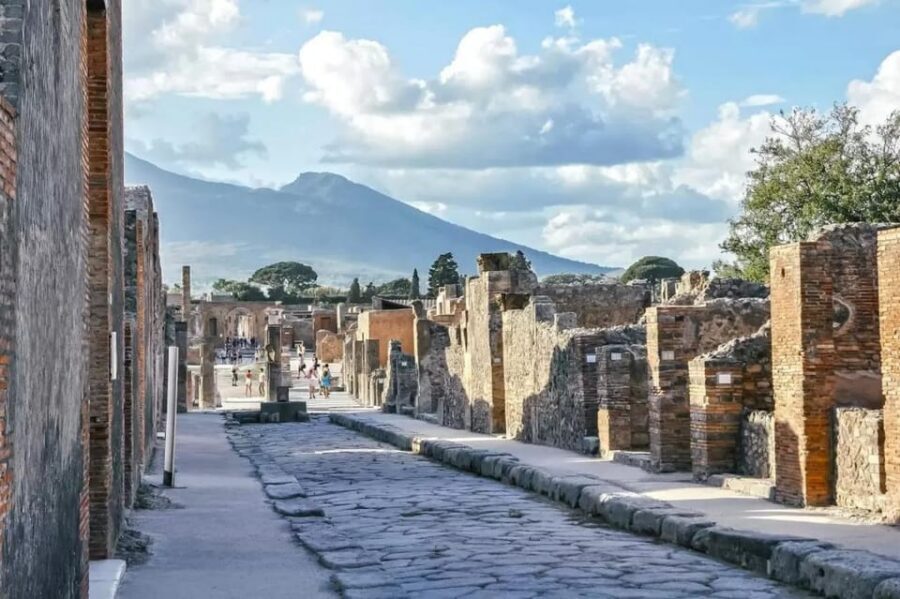
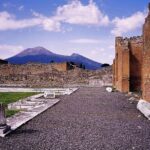
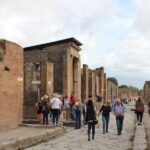
Pompeii is one of those rare places where the past doesn’t sit politely behind a barrier. You’re walking streets and stone thresholds that were frozen in place when volcanic ash buried the city in 79 AD. When you enter, it’s immediately “real life” scale: paved roads, shop fronts, doorways, and building layouts you can trace with your own feet.
This ticket is designed for independent exploring. That means no guide voice steering you every ten minutes. You can linger where something clicks—like a complex home layout, an eerie “body cast” area, or the way public buildings connect to main streets.
The ruins cover about 66 hectares (163 acres). That’s why independent access works so well here: you can aim for the highlights first, then branch out based on time and energy. Your visit ends when you exit the park.
You can also read our reviews of more tours and experiences in Pompeii.


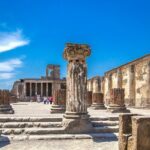
Entering Pompeii with a prebooked ticket: line-skipping and gate selection
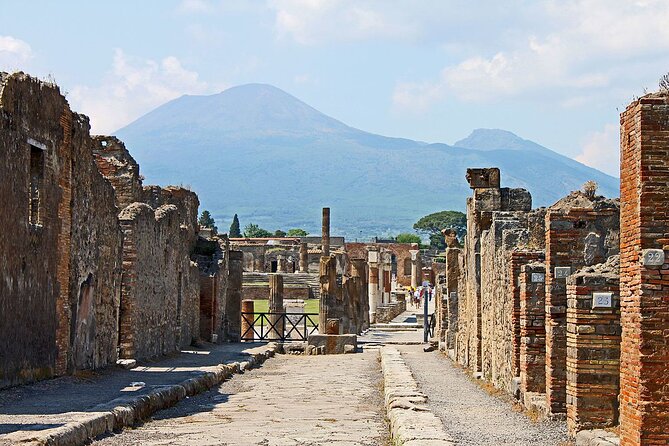
You book a specific entrance time, then on the day you make your own way to the archaeological area. Once there, show your pre-booked ticket so you can get in and head to the ruins. There’s also a route map available inside the entrance area, and you may be able to pick up a complimentary map with suggested routes.
On paper, the ticket is guaranteed to skip long lines. In practice, plan for a small amount of “getting sorted” time on arrival. One common snag is ticket recognition or exchange at the initial counter. So treat your entry time as a target to arrive slightly early—especially in busy seasons or if signs are unclear where you park.
Also note the operating window provided for this offering: Monday through Sunday, 9:00 AM–1:00 PM (for the date range listed). That short morning window matters because Pompeii is a walking park. If you start late, your “2 to 3 hours” can easily shrink.
Three start routes: Porta Marina, Piazza Esedra, and Piazza Anfiteatro
One of the best ways to get value from a limited ticket window is to choose a start area that matches what you want most. The archaeological park supports multiple routes, and you’ll notice different clusters of sites depending on which gate area you start from.
Porta Marina route: temples, early walls, and public power
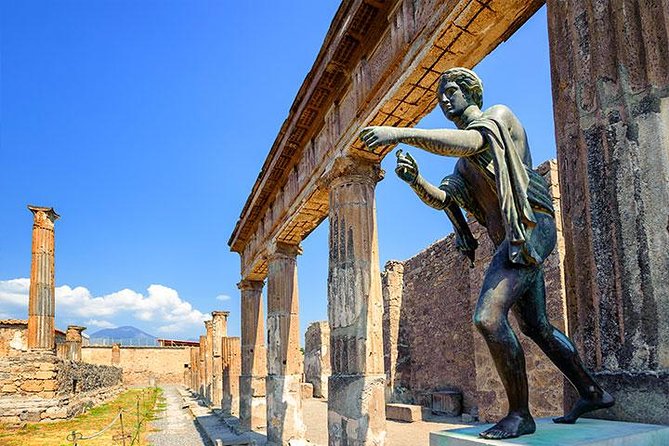
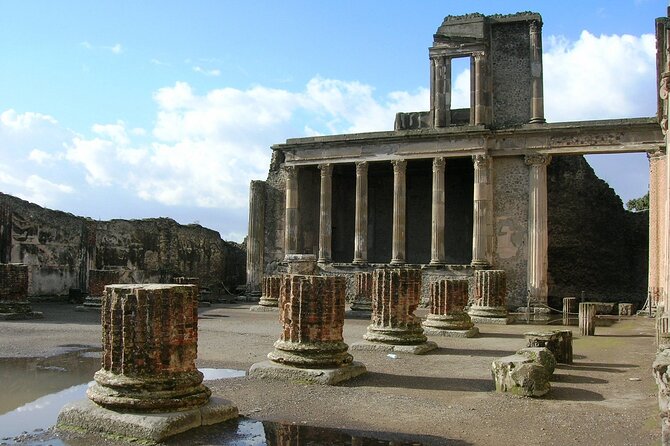
Starting around Porta Marina sets you up for an “edge of the city” feel. You can see the gate and walls, then work toward major public structures like the Temple of Apollo and the Basilica. If you’re into civic life—how the city organized religion and administration—this is a strong opening direction.
Along the way you’ll also encounter public administration buildings and the Building of Eumachia. This route tends to feel structured: you’re moving from boundary → temple → major public spaces.
Piazza Esedra route: baths, houses, food stops, and daily work
The Piazza Esedra area is a good choice if you want a mix of public life and domestic life close together. You’ll pass sites like Forum Baths and the Temple of Fortuna Augusta, then slide into residential streets and specific houses.
This route is also great for texture—places like the Thermopolium, a type of hot-food shop. Seeing a food-stop building in context is one of those details that helps Pompeii stop feeling like a museum grid.
You can also aim for houses such as the House of the Faun, House of Pansa, and House of Cecilio Giocondo. If you want everyday jobs made visible, keep an eye out for Fullonica Stephanus, connected with cloth laundering. That work element is easy to miss unless you’re actively looking for it.


Piazza Anfiteatro route: necropolis, gardens, amphitheater, and temples
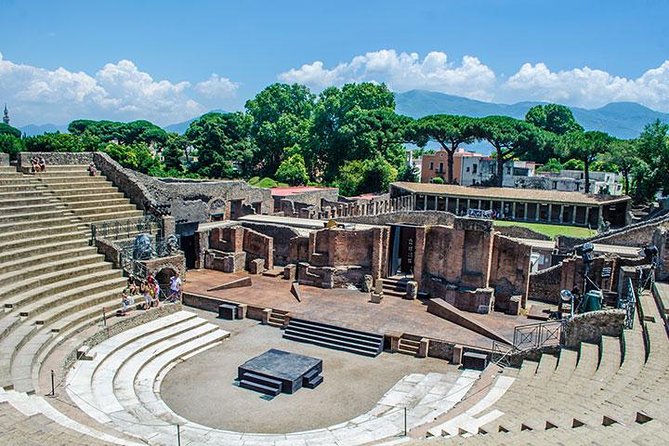
If your top priorities include the biggest performance spaces, start near Piazza Anfiteatro. This area links you to the Amphitheater, plus nearby theatre spaces like the Small Theater (Odeion) and the Great Theater.
This route also includes more “city edge” feeling: the Necropolis of Porta Nocera and Porta Nocera and walls. You’ll also see domestic and garden spaces such as the Garden of the Fugitives and houses like House of Venus in the shell and House of Octavius Quartio.
A plus here: the route naturally pulls you toward major gathering spaces (amphitheater + theatres) and then into surrounding temples and forums, including Temple of Isis, Triangular Forum, and a Doric Temple.
Forum, Theatre, and Lupanare: the stops that actually shape your day
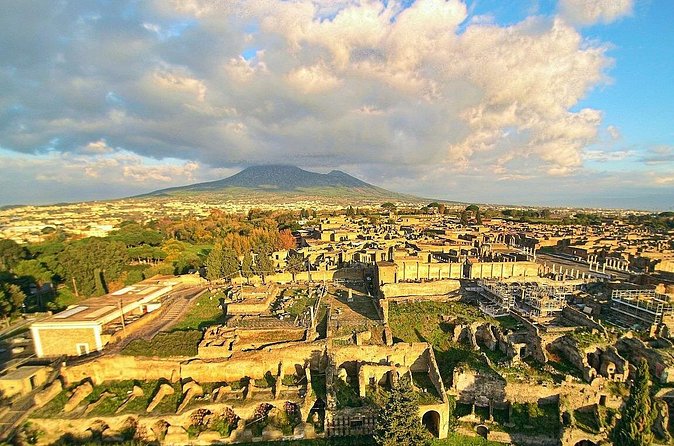
Some places in Pompeii act like anchors. Hit them first and the whole city starts to make sense.
The Forum: where politics and daily rhythm met
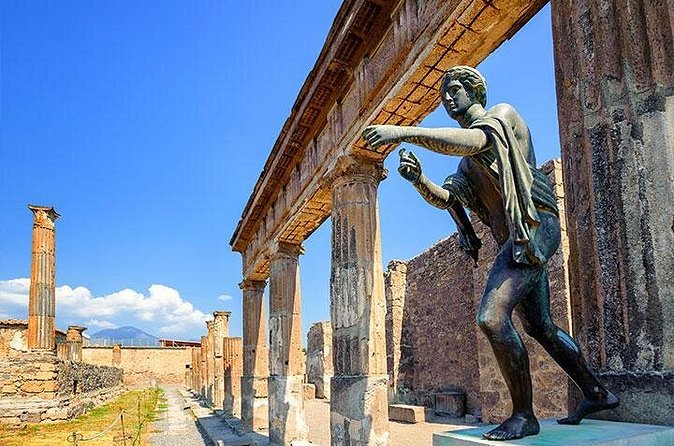
The Forum was Pompeii’s main public heart. When you stand there, you’re not just looking at columns and stone—you’re picturing how people moved for meetings, ceremonies, and routine business. It’s a spot where the layout helps you connect homes and streets to power and community.
The Theatre and entertainment spaces: scale you can feel
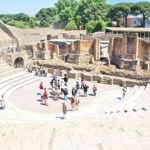
The Theatre areas show you performance culture in a physical way. The Great Theater and Small Theater (Odeion) help you understand how Romans gathered for shows and public events.
A practical tip: pace yourself. Theatres are visually intense, but the rest of Pompeii is also packed with details. If you burn too much time in one entertainment cluster, you’ll feel rushed later.
The Lupanare: the brothel with surviving frescoes
The Lupanare (the two-story brothel) is one of the most talked-about stops for a reason. The walls still have erotic frescoes, so it’s not just architecture—it’s a snapshot of street-level adult life and social attitudes.
This is also a good place to calibrate your Pompeii comfort level. If you prefer family-friendly stops only, you can still see the building and move on quickly. If you want the full range of Roman life, this is one of the clearest examples you’ll encounter.
What the buried city teaches you: casts, shops, baths, and homes
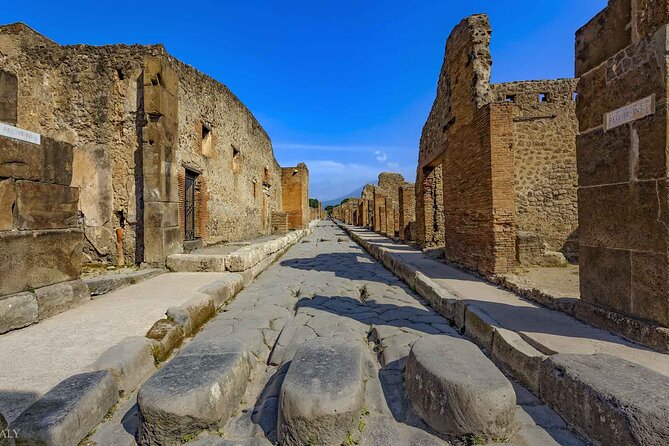
Pompeii isn’t one monument. It’s a whole city of functions. That’s why a self-guided ticket can be so satisfying: you can follow your interests instead of being forced into a single story.
Here’s what you’ll likely find most memorable as you wander:
- Victim casts: seeing the plaster-like forms gives the eruption a human scale. You can look, step away, and then look again. It’s heavy, but it’s also where Pompeii becomes more than sightseeing.
- Public buildings like basilicas and administration structures: these help you understand the city’s organization. When you connect them to the Forum area, it clicks faster.
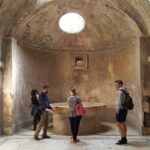
- Baths and daily wellness: places like Forum Baths show how Romans mixed health, routine, and social time.
- Food and service businesses: the Thermopolium is a reminder that Pompeii had fast food-style stops, too—hot items for people on the move.
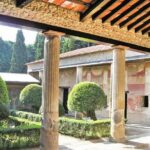
- Homes and gardens: houses such as House of the Tragic Poet and House of the Faun show how wealth and design shaped everyday comfort.
Even if you only reach a handful of these clusters, the city still feels coherent. That’s the quiet magic of Pompeii: you’re not seeing random ruins. You’re reading a living layout that ash preserved.
How long should you plan? Heat, walking, and what 2–3 hours really means
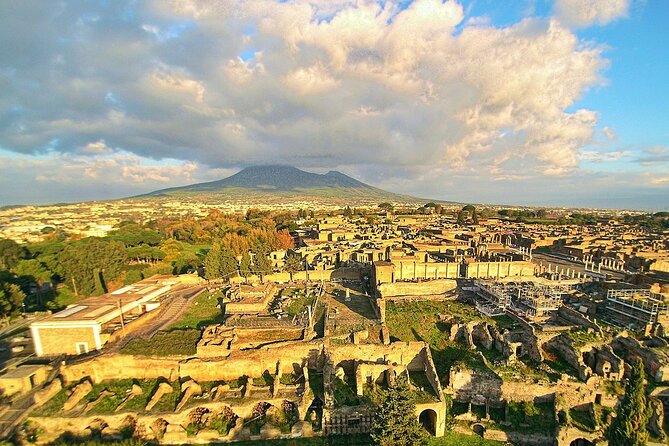
The ticket experience is listed as about 2 to 3 hours. That’s enough time to see major highlights if you walk with purpose. But don’t treat 2–3 hours as a guarantee of a full “best of Pompeii” lap.
Pompeii covers a lot of ground, and the terrain encourages constant micro-decisions: turn now toward a house, or keep going toward the next public space? One key practical reality from real on-site experiences: people often end up spending more time than they planned.
If you want a smart approach, pick one route theme:
- Public life first (Forum + theatres/amphitheater clusters)
- Homes and crafts first (houses + laundery/shops like Fullonica)
- A balanced mix (start at one gate, then branch to a second cluster)
And yes, heat matters. If you’re visiting in warm months, your pace will slow. Start earlier in the morning window and bring water (even though food and drinks aren’t included).
Maps, apps, and getting your bearings without stress
You’ll get help on site. The most important thing is that a route map is available inside the entrance, and you can grab a complimentary map inside the gate area. That alone can save you from wandering for an hour trying to figure out what’s close.
I also recommend using a navigation aid on your phone. One helpful approach is using a guide app and map to point you toward standout buildings quickly, then using your feet to choose the rest. Even if you don’t love phone navigation, it helps you orient when signage feels sparse.
A simple strategy:
- Use the map immediately after entry.
- Choose a “must-see” list of 5–7 sites.
- Then switch to wandering once you’re oriented.
That way, you avoid the classic Pompeii problem: you’re impressed by everything, but you still want more time.
Site rules that keep the ruins safe (and your feet happy)
Pompeii is described as fragile and precious. You’ll see rules meant to protect the excavated surfaces and keep people safe. They also affect how smoothly your visit goes.
Key on-the-ground reminders:
- Walk carefully and don’t stop on the edges of excavations.
- Don’t climb on walls.
- Avoid shouting, and don’t write on structures.
- Don’t disperse waste—use bins.
- Leave bulky items at the wardrobe (bags, backpacks, umbrellas).
- Wear flat-soled shoes.
One more practical note: there may be stray dogs that have passed perimeter defenses. Stay away from them and keep your attention up, especially in quieter corners.
Photography is allowed for private use, including filming. But rules apply for tripods and artificial light. If you plan anything more than handheld snapshots, follow the official guidance.
Price and value of a $54.44 entrance ticket for independent ruins time
At $54.44 per person, you’re paying for access plus the convenience factor: prebooking and skip-long-line access. The value is highest if you use the ticket exactly as intended—arrive ready, choose a route, and commit to an independent walk.
But here’s the fair balance: a couple of reported problems center on voucher redemption. Some people found there wasn’t an obvious redemption place until staff helped sort it out by phone or email, and others faced a ticket exchange step even though skip-the-line access was advertised. That doesn’t change the value of Pompeii itself—it changes the value of the time you lose if your arrival process is confusing.
So I’d judge this ticket by one question: do you feel confident navigating to the correct entrance area and handling a quick check-in step? If yes, the time saved can be real.
Also remember: this is not a guided tour. If you want someone to connect buildings into a full narrative, you’ll need to arrange that separately.
Should you book this Pompeii entrance ticket?
Book it if you:
- Want self-guided time to set your own pace.
- Like seeing the big highlights like the Forum, Theatre, and Lupanare without being boxed into a tour script.
- Are good at planning a walking route and starting early in the entry window.
Maybe skip or rethink if you:
- Hate any chance of ticket confusion or you’re traveling with tight timing.
- Only want a guided, highly structured experience, since no guided tour is included with this ticket.
- Are expecting a guaranteed stress-free entry with zero counter stops. Even when the ticket is supposed to skip lines, the on-site “getting sorted” step can happen.
My final take: Pompeii rewards a plan, but it also rewards curiosity. This ticket is a good match for people who want control. If you arrive early, use the map right away, and pick a route theme, you’ll get real value out of the time you pay for.
FAQ
FAQ
How long do I have in Pompeii with this entrance ticket?
The experience is listed as about 2 to 3 hours (approx.). In practice, the site is large, so you may want extra time if you want more than the top highlights.
Is a guided tour included with the ticket?
No. This ticket is for independent entry and exploring on your own. Food and drinks are also not included.
Will I skip the ticket lines?
The offering states guaranteed skip long-line access. You should still allow a little time for on-site checks, since you may need to exchange or validate your ticket at the entrance area.
Where do I meet the tour?
There is no guided meeting point described. You make your own way to the Pompeii archaeological area, then show your pre-booked ticket at the entrance.
What are the opening hours for this ticket?
For the listed date range, it is open daily (Monday–Sunday) from 9:00 AM to 1:00 PM.
Is a map provided when I arrive?
Yes. A site route map is available inside the entrance, and there is also a complimentary map you can collect inside the gate for recommended routes.
Can I take photos and video?
Photography and filming are authorized for private use only. Tripods, flash, and artificial light require contacting the Office of the Superintendent for authorization.
Can I bring bags and umbrellas into the site?
No. You should leave bags, backpacks, umbrellas, and other bulky items at the wardrobe.
Which entrance is recommended if I have limited mobility?
People with limited mobility are advised to enter from Piazza Anfiteatro and to limit their visit to the surroundings of the Amphitheater.