REVIEW · POMPEII
Pompeii and Herculaneum small group Excursion from Naples
Book on Viator →Operated by Askos Tours · Bookable on Viator
You’re walking through two Roman cities in one day. This small-group Pompeii and Herculaneum excursion is set up for speed with real interpretation, so you’re not just looking at ruins—you’re learning how the places worked. I like that it combines skip-the-line entry with an archaeologist-led tour, and I also like the tight schedule that still builds in enough time to feel the difference between the two sites.
The biggest consideration: you’re doing a lot of walking and quick “hit” stops. It’s usually a fun pace, but the day runs about 7 hours, with brief segments inside the larger Pompeii/Herculaneum parks—so bring good shoes and plan for an active outing.
In This Review
- Key highlights to know before you go
- Pompeii and Herculaneum in One Day: How the 7-Hour Plan Really Feels
- Getting From Naples to the Sites: Pickup, Minibus Comfort, and Fast-Track Entry
- Pompeii Archaeological Park: From the Forum Axis to the Theaters
- Basilica
- Forum (and Granaries of the Forum)
- Via dell’Abbondanza
- House of Menander
- Stabian Baths (Terme Stabiane)
- Lupanar
- House of the Faun
- Odeon – Teatro Piccolo and Teatro Grande
- Reading Pompeii With an Archaeologist Guide: Why the Names You Hear Matter
- Herculaneum Archaeological Park: Houses, Thermæ, and the View-Focused Stops
- House of the Deer
- La Terrazza di M. Nonio Balbo
- College of the Augustales
- Casa del Rilievo di Telefo
- Partem Domus lignea – Casa del Tramezzo di Legno
- House of the Skeleton
- Central Thermae
- House of the Black Salon
- Casa Sannitica, Casa del Bel Cortile, House of the Grand Portal
- Pacing, Walking, and What to Bring (Because Ruins Are Real Work)
- Price and Value: Is $173.27 Worth It for Two Sites?
- Who Should Book This Excursion—and Who Might Prefer Another Plan
- Should You Book This Pompeii and Herculaneum Small-Group Excursion?
- FAQ
- How long is the Pompeii and Herculaneum excursion?
- Does the tour include pickup from Naples?
- Are admission tickets included?
- Is skip-the-line entry included?
- Are meals included?
- What COVID-19 requirements are listed for the experience?
Key highlights to know before you go
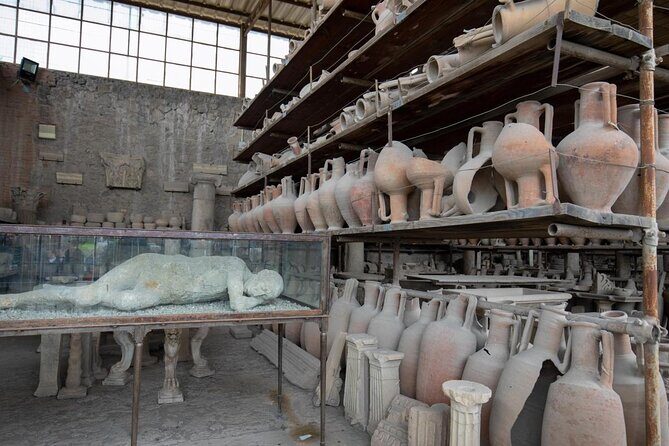
- Archaeologist guide interpretation: you get context for what you’re seeing, not just names
- Skip-the-line entry at Pompeii: built-in time savings so more minutes are inside the sites
- Two sites, one day: structured for first-timers who want Pompeii and Herculaneum without juggling logistics
- Small group size (max 20): easier to hear, easier to keep together, and less chaotic in busy spots
- Focused route through big landmarks: Forum, baths, theaters, and major houses in both towns
- Transport included from Naples: minibus service helps you avoid port/travel hassles
Pompeii and Herculaneum in One Day: How the 7-Hour Plan Really Feels
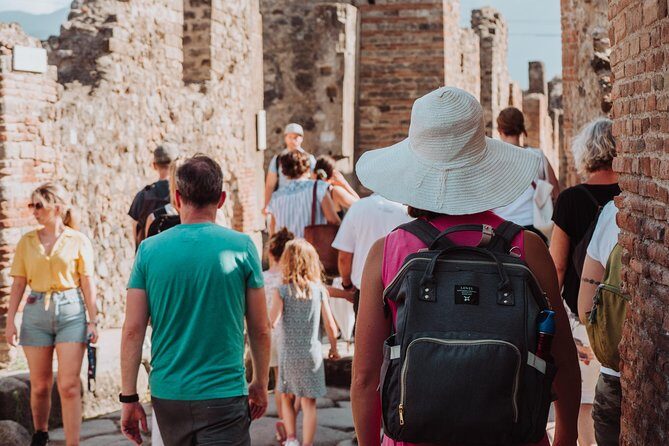
This tour is built around a simple idea: see the highlights of both cities without losing a whole day to transit. The day is roughly 7 hours, with dedicated time inside Pompeii and Herculaneum parks, then a sequence of landmark stops that keeps you moving and oriented.
At Pompeii, you spend about 2 hours in the Archaeological Park, then you hit major stops along the way. At Herculaneum, you get another 2 hours in the Archaeological park, followed by a run of house interiors, terraces, baths, and other standout buildings.
The effect is like getting two guided “chapters,” not one long hike where everything blurs together. You’ll likely leave with a clearer sense of how the cities looked and how people lived there—especially because the guide is there to connect the dots as you go.
You can also read our reviews of more tours and experiences in Pompeii.

Getting From Naples to the Sites: Pickup, Minibus Comfort, and Fast-Track Entry
Logistics matter on a day like this, and this one is handled for you. Pickup is offered from the Starhotels Terminus area in Naples (the meeting point is listed at Starhotels Terminus, Piazza Giuseppe Garibaldi 91), and the tour also covers transportation service by minibus.
Once you’re at the parks, time-saving is the name of the game. You’ll use Pompeii Express entry tickets to speed through the process at Pompeii, so you can spend more of your day inside the Archaeological Park rather than stuck at lines.
Herculaneum entry is also included (with the Herculaneum tickets listed at €16 each), and the tour keeps the flow tight between the two cities. If you’ve ever tried to do Pompeii on your own, you already know how quickly the day can shrink.
Pompeii Archaeological Park: From the Forum Axis to the Theaters
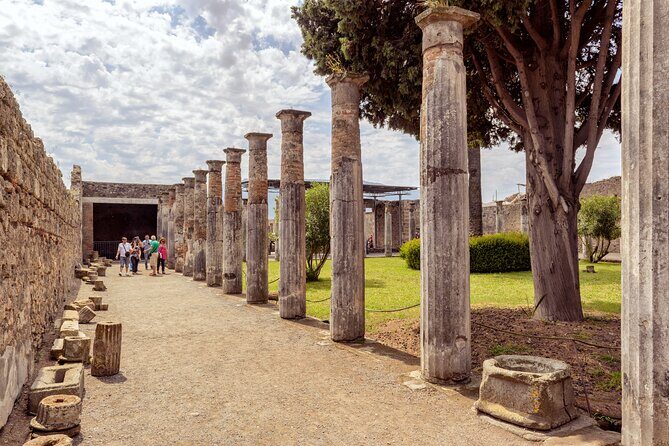
Pompeii is the big one, and the plan respects that. You start with about 2 hours in the Pompeii Archaeological Park, which is long enough for a first real sense of the layout—streets, public spaces, and the rhythm of big Roman buildings.
Then you move through a set of quick, high-visibility stops (many are about 5–10 minutes). That setup is good for first-timers, but it also means you’ll want to listen closely and decide where to linger after the guide’s “what to notice” pointers.
Here’s what those Pompeii stops add up to:
Basilica
This is one of the early “public life” anchors. Even in a short stop, it helps you understand the civic core of Pompeii—where people gathered and business-like life happened.
Forum (and Granaries of the Forum)
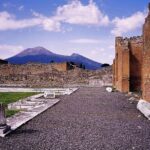
You see the Forum and then the granaries (barn-style storage structures tied to the Forum area). The value here is contrast: you get the social/political center, then you see how the city supplied itself.


Via dell’Abbondanza
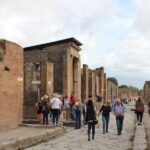
This is a great “street” moment. Walking through Via dell’Abbondanza helps you picture daily movement—how residents and visitors would pass through the main thoroughfare and shop or pause along the way.
House of Menander
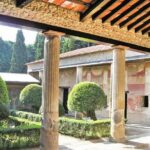
A house stop is where Pompeii turns from “public city” into “private life.” The House of Menander gives you a glimpse of domestic scale and design, and it’s usually the kind of place where a guide’s explanations make tiny architectural cues feel meaningful.
Stabian Baths (Terme Stabiane)
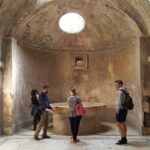
Baths matter because they were a social and routine hub. Seeing the Stabian Baths helps you connect Pompeii’s buildings to everyday habits, not just to grand monuments.
Lupanar
Yes, this stop is famous—and it’s part of what makes Pompeii feel human. The Lupanar is a direct look at an aspect of urban life, and the guide’s job is to keep it factual and readable rather than sensational.
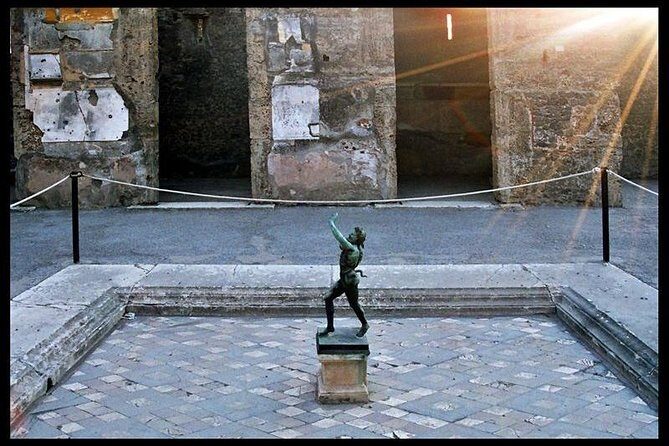
House of the Faun
Another house stop, the House of the Faun, gives you a stronger sense of how some households had room for display and comfort. It’s a key bridge between street-level Pompeii and the bigger residential spaces.
Odeon – Teatro Piccolo and Teatro Grande
You finish the Pompeii circuit with the small theatre (Odeon/Teatro Piccolo) and then the Great Theatre (Teatro Grande). The value is seeing Pompeii’s performance spaces at two scales, so you grasp how entertainment and public gatherings fit into the city’s structure.
One note: many of these stops are short by design. If you love one specific building and want more time, you might find yourself wishing for a longer second pass—but the upside is you get a broad, coherent view in one day.
Reading Pompeii With an Archaeologist Guide: Why the Names You Hear Matter
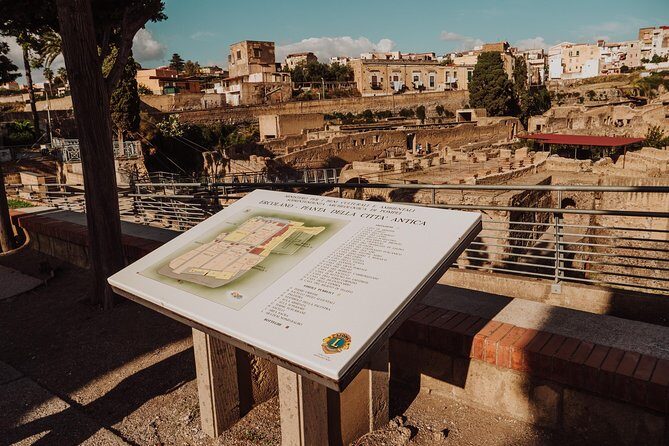
What makes this tour work isn’t just tickets. It’s the archaeologist guide and the way the route is interpreted.
Guides used for this experience have standout styles. People specifically praise guides like Rafael for being funny and engaging, Gennaro for knowing which architectural and history points land for different audiences, Michele Lamberti for creating an emotional sense of what life felt like, and Giulia for keeping the day on track while staying very clear.
That “clear and organized” part matters because Pompeii can feel overwhelming. When you’re staring at walls in a huge park, you need someone to translate the layout into something your brain can hold onto. The guide is also adjusting the pacing and commentary so the group stays together.
You’ll likely notice that the stops are chosen for variety: streets, civic buildings, baths, theaters, and houses. That mix helps you build a mental map. Instead of one big blur of stone, you get separate threads—public life, domestic life, entertainment, and everyday routines—that connect by the end of the day.
Herculaneum Archaeological Park: Houses, Thermæ, and the View-Focused Stops
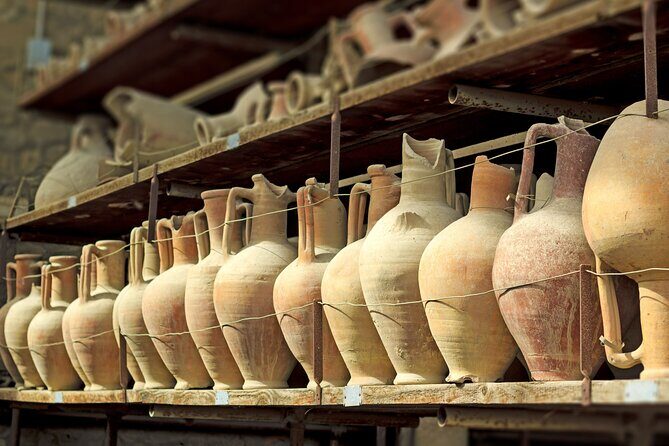
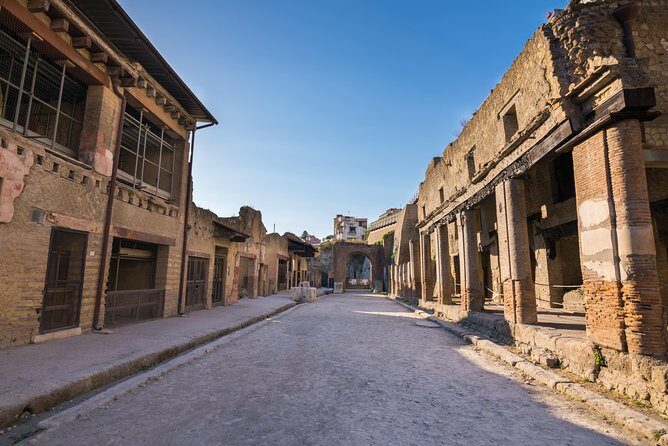
After Pompeii, Herculaneum feels different right away. The tour gives you another 2 hours at the Archaeological park of Herculaneum, which is enough time to shift your attention from the broad city sweep to the details of buildings.
Then comes a series of landmark stops—many about 5–10 minutes—that focus on houses, terraces, baths, and notable interior spaces. Even short stops can be meaningful when the guide points out what to look for.
Here’s what the Herculaneum list adds up to:
House of the Deer
A house stop like the House of the Deer is where you start seeing how domestic space can feel more intimate and detailed. It’s also a good reset after Pompeii’s public scale.
La Terrazza di M. Nonio Balbo
This is a “pause and take it in” moment. The Terrace of Nonio Balbo stop is short, but it gives you a sense of how Herculaneum wasn’t only about rooms—it also had outdoor sight lines and elevation.
College of the Augustales
This looks like a different kind of building than a house or bath. The College of the Augustales stop helps you understand that community life wasn’t only civic politics or household life.
Casa del Rilievo di Telefo
At the House of the Relief of Telephus, you’re in the zone of decorative storytelling. This is the type of stop where interpretation makes the difference between “I saw a carving” and “I understand why it mattered.”
Partem Domus lignea – Casa del Tramezzo di Legno
This is one of the more specific named stops: Partem Domus lignea and the wooden partition house. It’s a great example of why having a guide helps: details like construction choices aren’t obvious at a glance.
House of the Skeleton
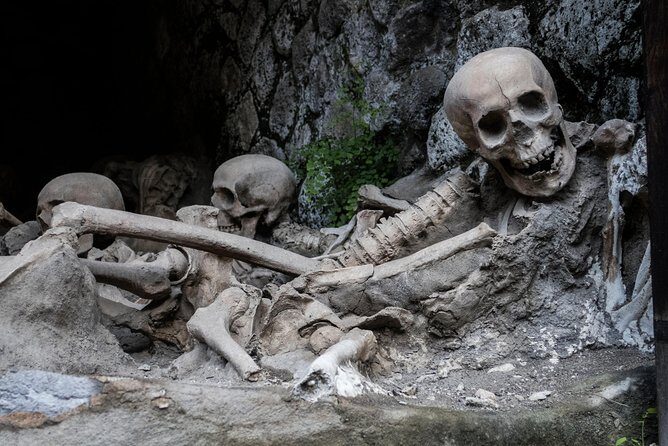
As dramatic as the name sounds, the point of a stop like House of the Skeleton is historical interpretation—how the city’s tragedy intersects with what remains. The tour uses these stops to keep the story connected instead of turning it into shock value.
Central Thermae
The Central Thermae stop keeps the comparison going with Pompeii’s baths. Once you’ve seen one bath complex, the second one reads faster—and you start noticing patterns in how bathing spaces fit into daily life.
House of the Black Salon
The House of the Black Salon is about interior character and visual impact. Even in a short stop, it can help you think about atmosphere: rooms weren’t all identical, and design choices communicated something.
Casa Sannitica, Casa del Bel Cortile, House of the Grand Portal
These final house stops—Casa Sannitica, Casa del Bel Cortile, and the House of the Grand Portal—round out the day by giving you several different domestic “faces” of Herculaneum. The mix is useful: you end the tour with more than one image in your head.
Pacing, Walking, and What to Bring (Because Ruins Are Real Work)
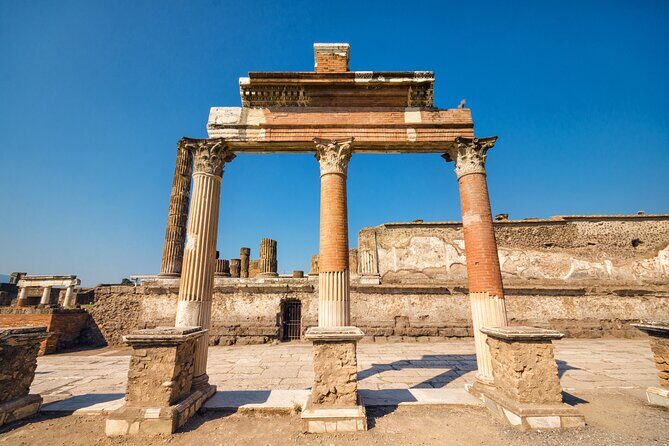
This is a small-group tour with a maximum of 20 travelers, which helps a lot with crowd pressure and group control. You’ll still be on your feet for most of the day, and one review vibe that comes through strongly is the idea that you should come ready for steps.
The pace is described as easy by many people, but the reality is: Pompeii and Herculaneum are uneven, and you’re moving between multiple stops in a tight timetable. Plan for that.
What to bring:
- Comfortable shoes with grip
- Sun protection (you’ll be outside a lot)
- Water (meals and drinks are not included, so hydrate and snack smart on your own before or between the parks)
- A mask if required during your visit, since the tour lists mask use as mandatory and requests you bring your own
- A backup layer (cooler mornings and shaded ruins can vary)
Also, access may include temperature checks as part of the COVID-19 measures listed for the experience. If you get easily delayed by screening or have health concerns, build a little extra time into your day.
Price and Value: Is $173.27 Worth It for Two Sites?
At $173.27 per person, you’re paying for a structured day that includes:
- An archaeologist guide for both Pompeii and Herculaneum
- Skip-the-line entry via Pompeii Express tickets
- Herculaneum entry tickets listed at €16 each
- Minibus transport and professional driver assistance
Meals and drinks are not included, so you’ll budget for food separately.
So is it value? For me, the math works best if you care about saving time and reducing stress. Doing Pompeii and Herculaneum independently means spending extra time on transport, ticket lines, and figuring out a sensible route. This tour hands you a plan, then adds interpretation so you don’t waste that plan’s advantage staring at stone without context.
You’re also paying for the “two cities in one day” convenience. If your time in Naples is tight, that convenience is hard to beat.
Who Should Book This Excursion—and Who Might Prefer Another Plan
This tour is a strong match if you:
- Want a first-timer introduction to both Pompeii and Herculaneum
- Like having an expert steer your attention to the right buildings and details
- Prefer a small group over big bus chaos
- Are okay with active walking and short guided segments inside major sites
It might be less ideal if you:
- Have mobility limits and want a less walking-heavy approach (the experience says most travelers can participate, but it still involves a lot of ruins walking and uneven terrain)
- Need lots of unstructured time in just one building or section (the schedule is designed for “highlights,” not deep meandering)
If you’re the type who wants a good day plan with real interpretation, this setup fits your style.
Should You Book This Pompeii and Herculaneum Small-Group Excursion?
Yes, I’d book it if your goal is to see Pompeii and Herculaneum efficiently and still leave with understanding. The combination of small group size, archaeologist-led guidance, and fast-track entry is the core value. You spend your time where it counts: inside the parks and key buildings, not in transit or ticket lines.
I’d think twice only if you know you struggle with long walks, or you want a slow, repeat-visit kind of day. Otherwise, this is one of those tours that respects your time and makes the ruins easier to read.
FAQ
How long is the Pompeii and Herculaneum excursion?
The tour duration is about 7 hours.
Does the tour include pickup from Naples?
Pickup is offered, with the meeting point listed at Starhotels Terminus in Naples.
Are admission tickets included?
Yes. Pompeii entry tickets are included via Pompeii Express tickets, and Herculaneum admission tickets are included (listed as €16 each).
Is skip-the-line entry included?
Yes, skip-the-line entry is included, including fast-track entry for Pompeii.
Are meals included?
No. Meals and drinks are not included.
What COVID-19 requirements are listed for the experience?
Mask use is mandatory (bring your own), social distancing must be maintained, and entry is subject to visitor temperature detection.