REVIEW · POMPEI CAMPANIA
Pompei: the Latest Discoveries with your Archaeologist
Book on GetYourGuide →Operated by Grand Tour Experience · Bookable on GetYourGuide
Pompeii hits different with an archaeologist.
This tour focuses on the latest discoveries and the restoration work you can still see, from the story of 79AD to the newest digs in Regio V. I also like that it starts at Porta Marina Superiore, so you’re walking into the ruins the way the Romans did. One watch-out: it’s a short, fast-paced 2 hours, and it’s not suitable for wheelchair users.
What makes it feel special is the way the guide links art, everyday life, and active excavation into one clear route. You’ll move through key parts of Pompeii like the Forum area and major houses, with time set aside for the places that are changing—recent reopenings and work still in progress. In the tour notes, guides such as Daniela and Sonja are singled out for their passion and strong explanations, and I think that matters more than the usual checklist.
If you want Pompeii as a living archaeological site—not a static postcard—this is a strong fit. Just plan to follow the site rules carefully, especially around tickets and where photos aren’t allowed.
In This Review
- Key things that make this tour worth your time
- Meeting at Porta Marina Superiore: where your Pompeii experience truly begins
- Why an archaeologist-led walk changes what you see
- The 2-hour route: from Porta Marina through the Forum and Regio V
- Porta Marina Superiore and the orientation setup
- Foro Civile di Pompeii and the recently reopened bath-house area
- Macellum: the city’s food and trade engine
- Casa dei Vettii: frescoes and restoration you can actually talk about
- Regio V and the “Roman-house + street” experience
- Torre di Mercurio XI: a viewpoint that makes the city make sense
- Insula dei Casti Amanti: an active archaeological site with strict photo rules
- Restorations, casts, and the value of seeing what’s still changing
- Rules, tickets, and why arriving on time is non-negotiable
- Tickets are personal, with your full name on them
- Bring your ID
- No photos or video in Insula dei Casti Amanti
- Drone and pet restrictions
- Price and group size: what you get for $294.54
- Who should book this Pompeii archaeologist tour
- Should you book? My decision guide
- FAQ
- Where do I meet for Pompeii: the Latest Discoveries with your Archaeologist?
- How long is the tour?
- What’s included in the price?
- Does this tour skip the ticket line?
- What languages are available?
- Is the tour wheelchair-friendly?
- Are photos or videos allowed everywhere?
- What documents should I bring?
- Are there restrictions on who can join or bring items?
Key things that make this tour worth your time
- Starts at Porta Marina Superiore, the original Roman gate—so your orientation feels real, not random
- Special access to the latest openings and working areas tied to Regio V digs
- Stop-by-stop context connects plaster casts, street life, and elite homes to what was happening in 79AD
- Casa dei Vettii restoration spotlight, including fresco quality and the long restoration timeline
- Torre di Mercurio XI for a high viewpoint that gives you scale and layout
- Insula dei Casti Amanti is an active site, and you’ll follow the no-photo rule there for security
Meeting at Porta Marina Superiore: where your Pompeii experience truly begins
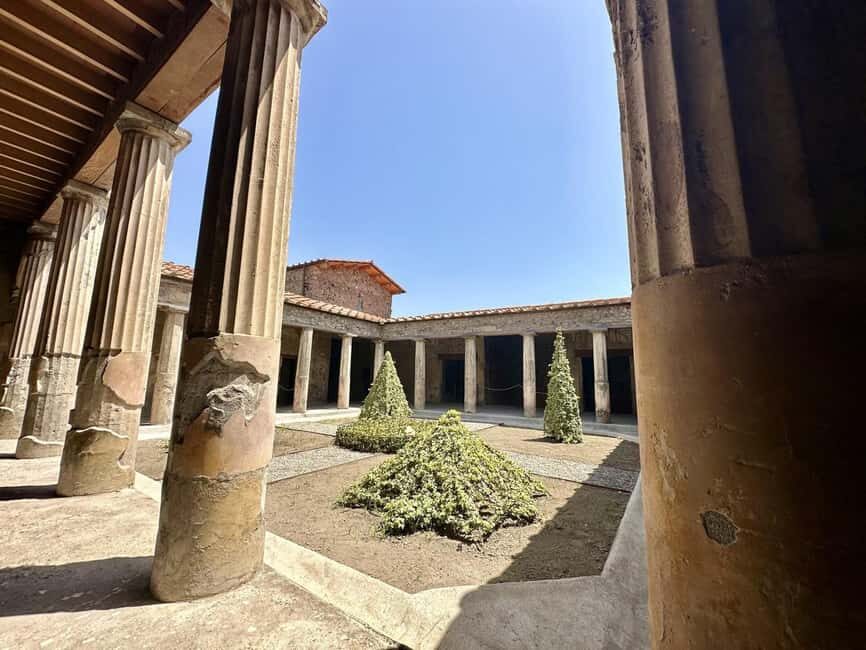
Your tour starts at Porta Marina Superiore, the entrance gate to Pompeii Park. This detail isn’t just ceremonial. Porta Marina Superiore helps you “place” Pompeii in your mind before you start walking, because you begin at a Roman arrival point rather than wandering in from wherever the map drops you.
For practical planning, the meeting area is across the street from Hortus Garden Bar & Restaurant. If you’re arriving by train, the closest station is Pompei Scavi – Villa dei Misteri. If you’re driving, the closest parking lot listed is Parking Zeus. This matters because Pompeii is big, and wasting time searching the first 10 minutes can make the whole 2 hours feel tighter.
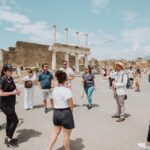
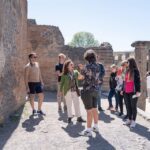
Also note the vibe: this is a small group tour with a maximum group size of about 15/17, so you’re not just one face in a crowd. The organizer also mentions headsets if the group exceeds 12 people, which usually means the guide’s explanations stay clear even when multiple people are talking among themselves.
You can also read our reviews of more tours and experiences in Pompei Campania.
Why an archaeologist-led walk changes what you see
Pompeii can be memorized like a highlight reel—Forum, baths, villas, frescoes. But a good guide changes the whole experience by explaining what you’re looking at and why it matters.
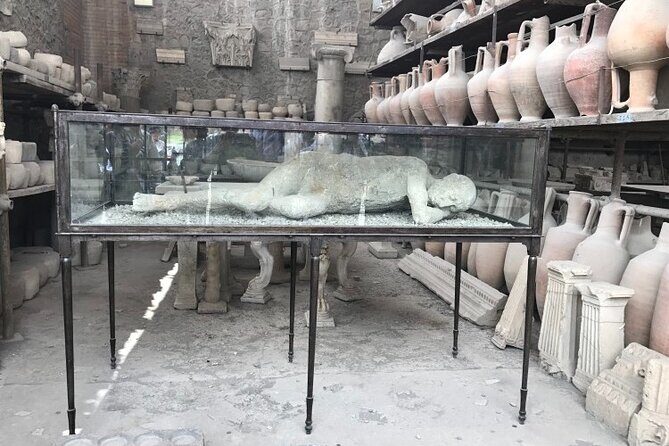
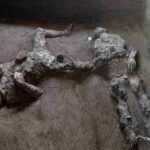
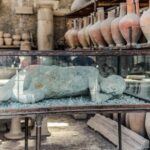
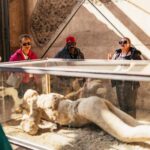
This tour is built around an expert guide in Pompeian archaeology, and the focus stays on the human story behind the buildings. You’ll start with the Pompeii timeline and the eruption of Mt. Vesuvius in 79AD, tied to the season of Emperor Titus. Then you’ll see the plaster casts (bodies), which push Pompeii beyond ruins and into a very specific kind of history—personal, tragic, and immediate.
From there, the guide works like a translator. When you reach places like the Roman Forum area or the Macellum, you’re not just looking at stone. You’re understanding how public space, commerce, and daily routine connected. And when you arrive at homes like Casa dei Vettii or Casa delle Nozze d’Argento, you’ll get the “how” behind the art and the “why” behind the layout.
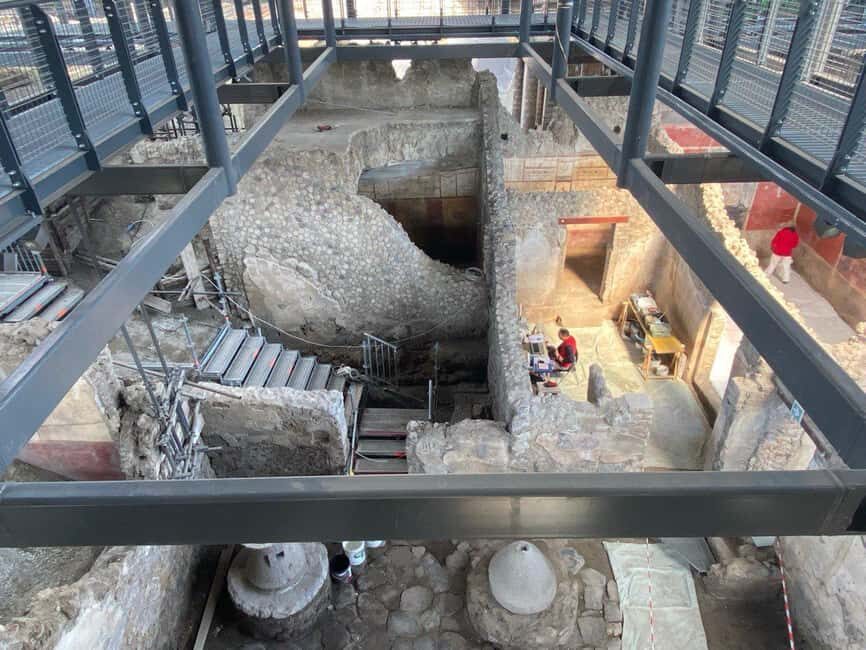
This is also where the latest discoveries angle earns its keep. Pompeii isn’t finished archaeology. It’s an ongoing dig and restoration program, and this tour is designed to show you what’s newly uncovered or reopened, not just what’s always been on the standard route.
The 2-hour route: from Porta Marina through the Forum and Regio V
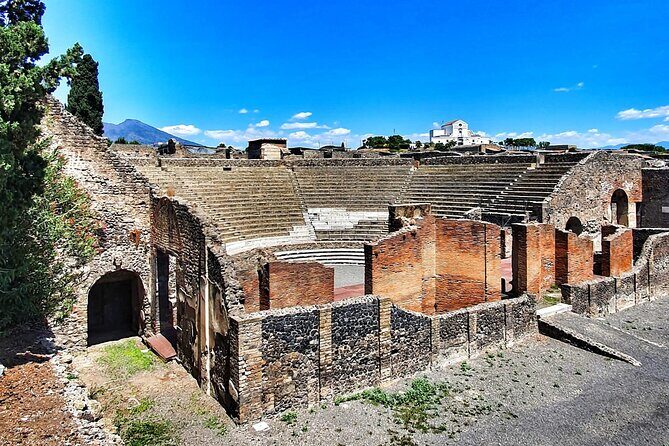
This tour follows a focused circuit, and you’ll feel the structure. It’s not a slow stroll. Think of it as a guided corridor through Pompeii’s main ideas: city life, elite homes, and the newest work in the excavation zones.
Porta Marina Superiore and the orientation setup
You meet at Porta Marina Superiore and get an introduction that frames the ruins. The guide’s job here is to give you a map in your head so you don’t just collect sights—you understand where you are and how the city functioned.
You’ll also get the eruption context before the more visual stops. That helps, because Pompeii’s sites mean more when you already understand the catastrophe and the sudden end that preserved details.
Foro Civile di Pompeii and the recently reopened bath-house area
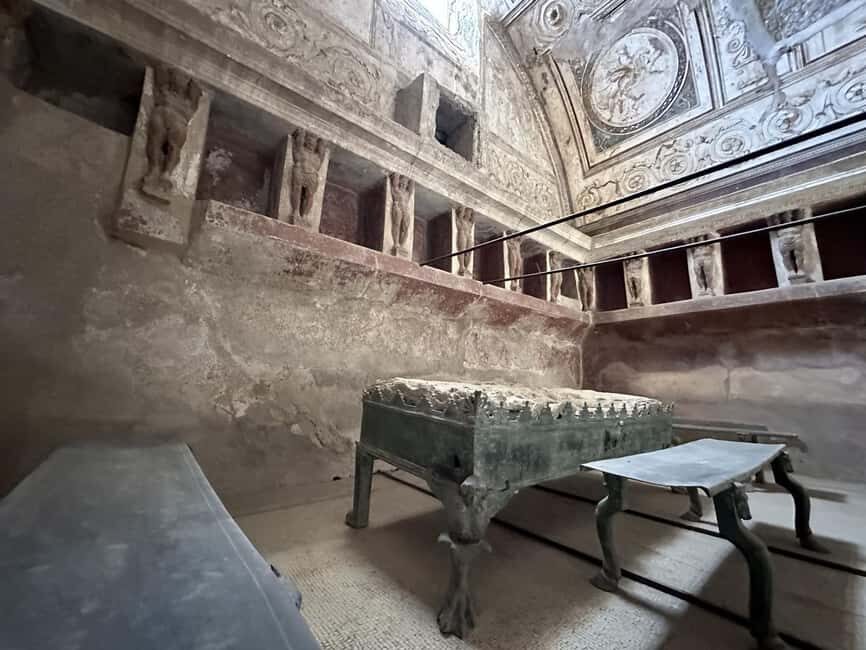
Next comes the Forum/Civic Forum zone. This is where Pompeii’s public life “reads” the fastest: the spaces set up for civic gathering, status, and movement. A standout detail in the tour description is the Forum Bath House, described as recently reopened after years of maintenance.
That reopening angle matters. A reopened building often comes with better access and clearer routes for visitors, but the bigger value is what the guide can point out visually: how well elements have held up, what restoration has clarified, and where original finishes still show through.

Macellum: the city’s food and trade engine
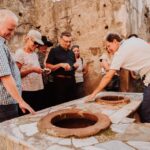
You’ll visit the Macellum of Pompeii, which is the Roman market structure. Even if you know the word, you may not know the feeling of it until you’re standing there. Here, the guide can connect the city’s economy to the spaces you’re seeing—food trade, daily supply, and the kind of regular movement that made Pompeii feel like a real town, not a museum.
Casa dei Vettii: frescoes and restoration you can actually talk about
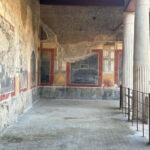
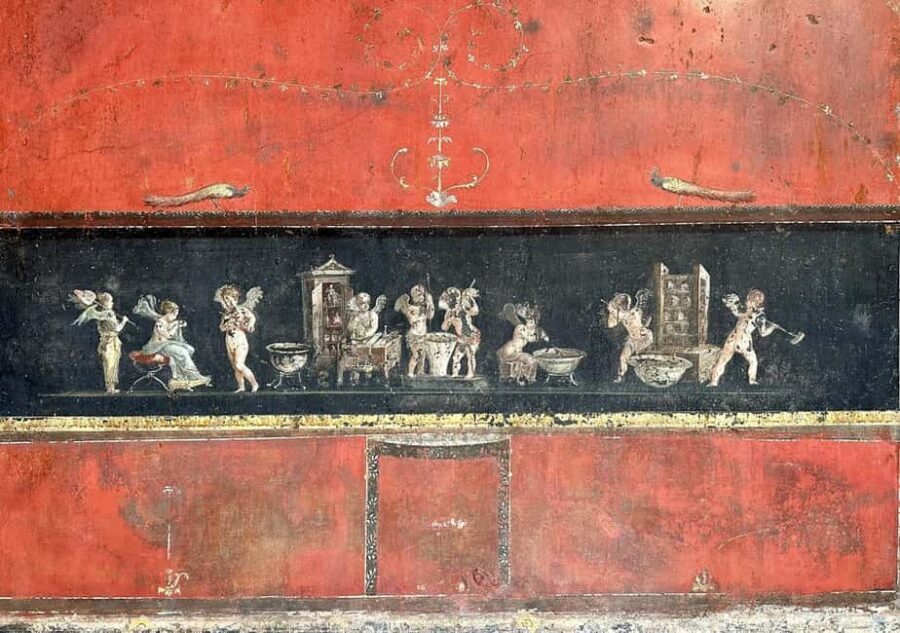
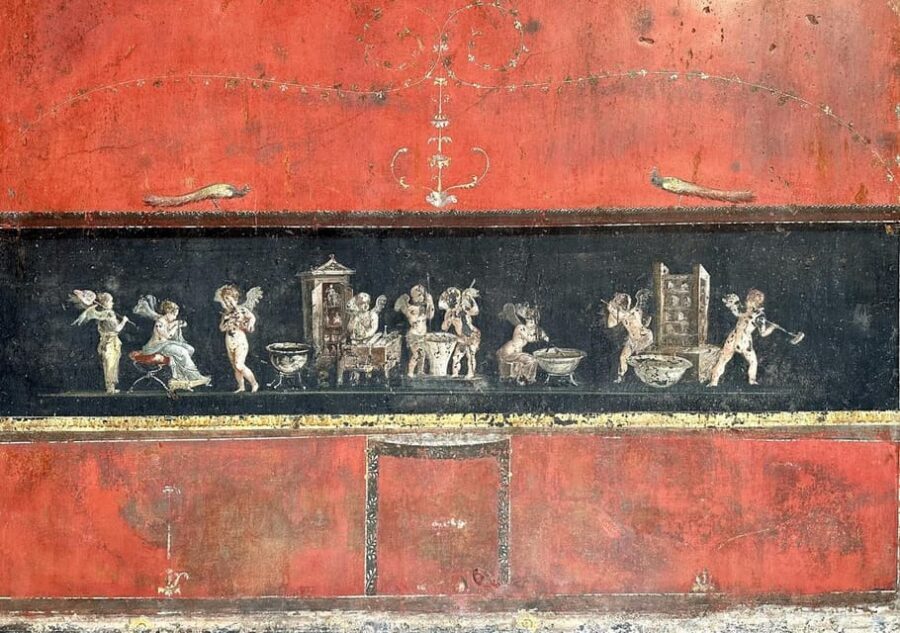
One of the most memorable stops is Casa dei Vettii. The tour description highlights that restoration took 27 years and finished last year. That long timeline matters because it explains why the frescos and decorative elements can look crisp and why the guide can point to specific qualities of the restored work.
The guide also focuses on the fresco impact—especially the “Pompeian red” look referenced in the tour notes. If you care about art, paint, and color surviving in outdoor ruins, this is the moment where Pompeii becomes more than architecture. You’ll see how wall decoration shaped the feel of the home.
A practical note: this stop is popular for a reason, so come ready to pay attention even if you’ve seen other villas before. The guide’s archaeologist perspective makes the details stick.
Regio V and the “Roman-house + street” experience
After the major house stop, the tour moves into Regio V, described as the area where the best of the new digs are happening. This is where the tour shifts from “big famous sites” into “ongoing excavation reality.”
You’ll visit Casa delle Nozze d’Argento (the House of the Silver Weddings). Like other Pompeian homes, it’s a chance to compare how status, wealth, and private space showed up in the same city that had a public market and civic buildings.
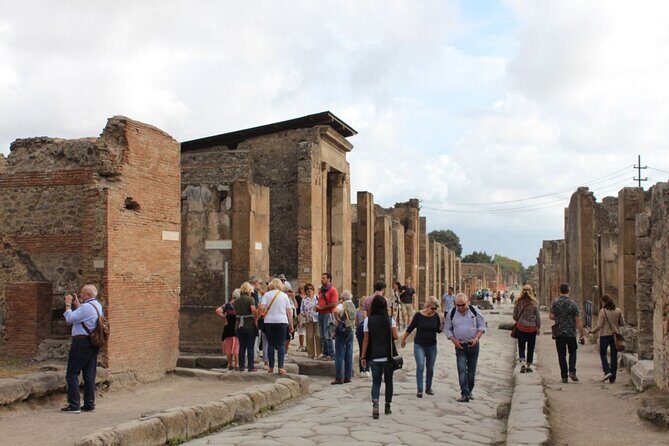
Then you’ll walk toward and along Stabian road, with the tour describing you’ll see the facade of Caecilius Iucundus along the way. Even when you’re not going into every doorway, street context changes the way you understand these residences. It’s one thing to see a house plan on paper. It’s another thing to see how it sits along a real road.
Torre di Mercurio XI: a viewpoint that makes the city make sense
The tour includes the Tower of Mercury (Torre di Mercurio XI). The key detail here: you can admire Pompeii from the top, and it’s described as the only Roman defending tower open. A viewpoint stop like this is valuable because Pompeii is easier to understand when you can spot how areas relate to each other.
If you’ve ever toured Pompeii and thought, I like the buildings but I don’t fully get the layout, a tower stop is the fix. You get the geometry back.
Insula dei Casti Amanti: an active archaeological site with strict photo rules
The last key area is Insula dei Casti Amanti. This is described as a live archaeological site with restorers actively working on the spot.
That means you’re seeing excavation and restoration as it happens, not just finished results. The tour also explains that you’ll need to keep your camera put away: photos or video aren’t allowed for security in this area. So set your expectations now. You’re there to observe and learn from the guide’s explanation, not to record everything.
You’ll finish the experience at the Pompeii ruins area, where the description mentions a new bar and restaurant corner with toilets inaugurated. That’s genuinely useful after two hours of walking and standing.
Restorations, casts, and the value of seeing what’s still changing
One reason this tour feels different is that it keeps returning to a single idea: Pompeii is active. It’s not frozen in time.
You’ll see evidence of that in several ways:
- Plaster casts (bodies) bring the 79AD catastrophe into focus immediately. It’s a concrete reminder that the eruption preserved human moments, not just architecture.
- The Forum Bath House is highlighted as recently reopened, which signals that Pompeii’s visitor experience keeps evolving.
- Casa dei Vettii is tied to an explicit restoration story: a 27-year process and a recent completion.
- Regio V is framed as the zone where new digs are happening, and Insula dei Casti Amanti is presented as an active worksite.
The practical payoff for you is that you’ll walk away with a stronger sense of how archaeology works. The buildings aren’t just “there.” People are still studying them, stabilizing them, and deciding what can be safely shown.
And if you’re the type who likes details like fresco quality and restoration outcomes, this tour’s angle is built for you. If you’re strictly hunting for famous statues and maximum free time, you might feel the structure is a bit tight.
Rules, tickets, and why arriving on time is non-negotiable
This tour comes with a few site-specific rules you should treat seriously.
Tickets are personal, with your full name on them
From the tour information, Pompeii Archaeological Park has new rules to stop illegal resellers (starting November 15). That means the tickets must include your full name and surname. You’re asked to send participant details by email, including full name, age, and booking code for each person joining the tour.
So you’ll want to handle this early. If you delay, you risk delays on ticket matching at the gate. This is also why the tour stresses being on time—tickets are personal, so showing up late can cause trouble.
Bring your ID
You should bring an original ID or passport. The same applies to children. This is not one of those tours where they can accept a photo on your phone.
No photos or video in Insula dei Casti Amanti
In the active excavation area, photos or video are not allowed for security. Plan to rely on your guide’s explanations here. I’d treat this as a learning moment, not a missed opportunity to capture everything.
Drone and pet restrictions
The rules list no drones and no pets (assistance dogs are allowed). There are also restrictions around mobility gear: non-folding wheelchairs and electric wheelchairs are not allowed, and the tour is labeled not suitable for wheelchair users.
Price and group size: what you get for $294.54
The price is listed as $294.54 per group (up to 1 in the summary). Since the tour is described as private and has a max group size of 15/17, your real per-person value depends on how many people are in your private group.
Here’s what’s included that helps justify the cost:
- Archaeological park tickets
- An expert archaeology guide
- A special route aimed at the latest openings
- Headsets if your group is larger than 12
- A small-group experience rather than open-ended wandering
What’s not included: food and drinks. So if you’re stacking this with lunch plans, do it after the tour.
In plain terms: this price makes sense when you want more than a basic entry ticket. You’re paying for access to newer openings, for someone to explain what you’re seeing, and for the time-efficient structure that keeps the 2 hours focused.
Who should book this Pompeii archaeologist tour
This tour fits best if you:
- Want expert interpretation rather than reading signs at your own speed
- Care about restoration and current excavation, especially in Regio V
- Like hands-on art discussions, including fresco-heavy stops like Casa dei Vettii
- Are comfortable with a structured 2-hour timeline and walking outdoors
It’s probably not ideal if you:
- Need wheelchair accessibility (the tour is not suitable, and certain wheelchairs aren’t allowed)
- Want long, relaxed time in every room
- Are determined to take photos everywhere (because Insula dei Casti Amanti has strict restrictions)
Language options are available: English, French, Italian, and Spanish, and the tour uses live guiding throughout.
Should you book? My decision guide
Book it if you want Pompeii with context, not just landmarks. The mix of plaster casts, a reopened bath-house area, major houses like Casa dei Vettii, and working excavation zones like Insula dei Casti Amanti makes this feel like a tour of what Pompeii is becoming, not only what it used to be.
Skip it if you prefer a self-guided visit, you want wheelchair access, or you’re hoping for a full-day free roam. At two hours, this tour aims for focus over length.
If you can follow the ticket rules and you’re excited by restoration and newly accessible areas, this is a very good use of your time in Pompeii.
FAQ
Where do I meet for Pompeii: the Latest Discoveries with your Archaeologist?
You meet at Porta Marina Superiore, the entrance gate to Pompeii Park. The meeting point is across the street from Hortus Garden Bar & Restaurant, and the tour ends back at the meeting point.
How long is the tour?
The duration is listed as 2 hours. Starting times vary, so you’ll need to check availability.
What’s included in the price?
The tour includes Pompeii archaeological park tickets, an expert archaeology guide, a special route to reach the new openings, and headsets if the group exceeds 12 people.
Does this tour skip the ticket line?
Yes. The tour information says it includes skip the ticket line.
What languages are available?
The live guide is offered in English, French, Italian, and Spanish.
Is the tour wheelchair-friendly?
It is not suitable for wheelchair users. The information also lists restrictions on wheelchairs (including electric wheelchairs).
Are photos or videos allowed everywhere?
Photos and video are not allowed in Insula dei Casti Amanti for security reasons.
What documents should I bring?
Bring an original passport or ID card. This also applies to children.
Are there restrictions on who can join or bring items?
Yes. Pets are not allowed (assistance dogs allowed), and drones are not allowed. The rules also list restrictions on mobility devices like skateboards, scooters, and certain wheelchairs.