REVIEW · NAPLES
Visit to the Lapis Water Museum in Spanish
Book on Viator →Operated by GRAND TOURS ITALY · Bookable on Viator
Naples keeps its secrets underground.
This Lapis Water Museum tour takes you past the modern street level and into the city’s water world, linking Greco-Roman engineering to later layers of Neapolitan life. You start at Piazza Dante, then head to the Pietrasanta church complex before going down about 35 meters to see the old aqueduct and cistern spaces recreated from ancient times. One thing to consider: the guided tour is in Spanish, so plan accordingly if you want more than a basic level.
I especially like how the tour makes the underground feel human, not just historical. You’re not only looking at stone and ruins; you’re hearing stories tied to daily survival, including the part of the route used as a Second World War shelter, plus films that help you picture what those underground rooms meant in difficult moments. That said, it’s worth double-checking that you’re booking the guided Spanish tour of the Lapis Museum, since some mix-ups can happen when people end up reviewing the broader site instead.
In This Review
- Key things to know before you go
- Lapis Museum: Naples’ water system under your feet
- Meeting at Piazza Dante and how the timing works
- Pietrasanta church complex: the surface layer before the descent
- Down 35 meters: Greek and Roman aqueducts you can follow
- The prince’s pool cistern: where water logic meets scale
- WWII shelter stories: a different kind of survival
- Spanish guide, small group size, and what that means for you
- Price and value: is $46.34 worth it?
- Who should book this tour (and who might skip it)
- Should you book the Lapis Museum tour?
- FAQ
- What language is the guided tour?
- How long is the Lapis Museum tour?
- Where do I meet, and where does the tour end?
- What’s included in the price?
- What are the main sights you visit?
- How big is the group?
- Can I get a full refund if I cancel?
- Is the tour suitable for people with disabilities?
Key things to know before you go
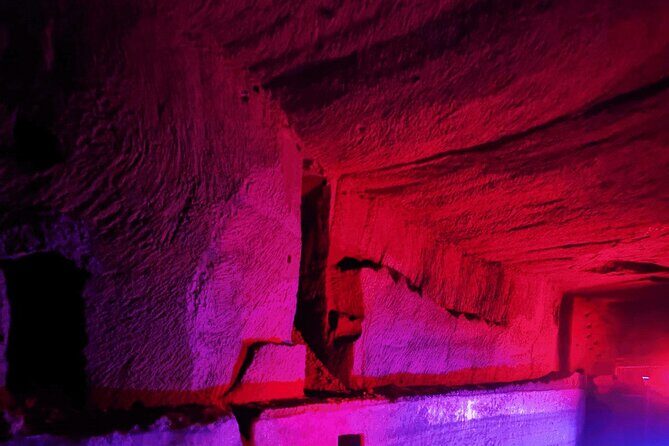
- Go down 35 meters to reach Naples’ deeper Greco-Roman water remains.
- See the Greek and Roman aqueduct of ancient Neapolis.
- Visit the prince’s pool cistern, described as the largest in Naples underground.
- Step into WWII shelter space, where the story shifts from water to refuge.
- Small group size (max 20) with admission included for an efficient 1 hour 15 minutes.
Lapis Museum: Naples’ water system under your feet
The Lapis, Museo dell’Acqua Napoli experience is built around one simple idea: Naples didn’t just grow above ground. It learned to survive underground, too. The museum project started in 2021 to bring older Greco-Roman water cisterns back to life, working with a Neapolitan water company to recreate streams and cisterns the way they worked in ancient times.
That matters because you get more than a standard underground walk. You understand why water infrastructure was such a big deal for a city like Naples—how it supported life, what it meant for order and safety, and how later generations reused these massive underground spaces.
The most praised part of the experience is the storytelling quality. People consistently highlight the guide’s ability to explain what you’re seeing in a compelling way, and they also mention that the films help you enter the emotional context of the underground rooms. If you like museums where the guide connects objects to real life, this is the right style.
You can also read our reviews of more museum experiences in Naples


Meeting at Piazza Dante and how the timing works
You meet at Piazza Dante at the time you select. Once the group number is reached, you walk together to the museum area at Piazzetta Pietrasanta 17. The guided portion starts there and ends directly at the museum.
The tour lasts about 1 hour 15 minutes, and admission is included. That short length is a plus for most schedules: you can fit it into a tight Naples day without feeling like the morning or afternoon disappears. It also keeps the experience focused, which is useful here because the route goes from church space to underground water systems quickly.
You should also know the route is near public transportation, so getting to Piazza Dante in the first place is usually painless. Just build a bit of buffer time for finding the correct meeting point, since you’re coordinating with a guide.
Pietrasanta church complex: the surface layer before the descent
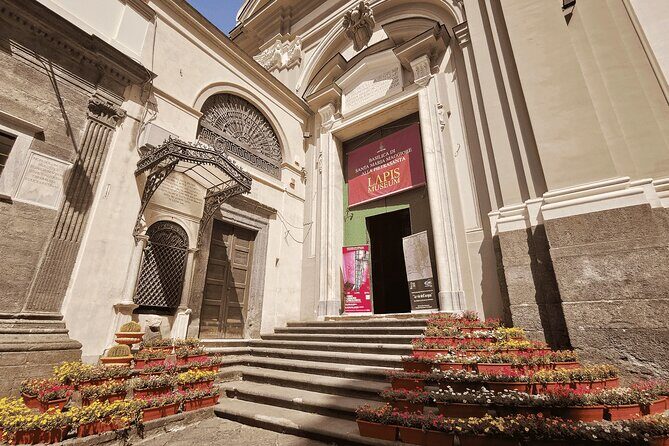
Before the underground, you visit the Basilica of Santa Maria de la Pietra Sagrada (the route refers to it as Pietra Sagrada) and the Pietrasanta architectural complex of basilica and chapels, described as having Greco-Roman origin.
This stop is more than a quick “pretty church photo moment.” It helps set up the bigger theme of the tour: Naples exists as layers. The information you get here connects early settlement history to the area where the Basilica of Pietrasanta stands today. The first settlers used the name Partenope for the city, which links the modern place names back to the earliest story of Neapolis.
If you only care about the underground, this church portion might feel like a prelude. But I think it’s the right kind of prelude. It gives you context so the descent later lands with meaning instead of feeling like a random set of tunnels.
Down 35 meters: Greek and Roman aqueducts you can follow
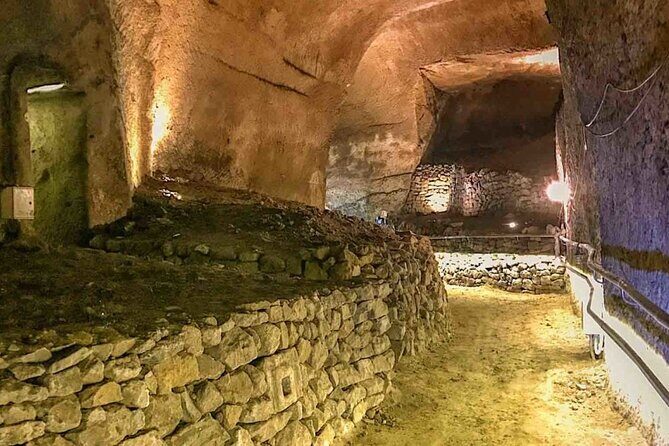
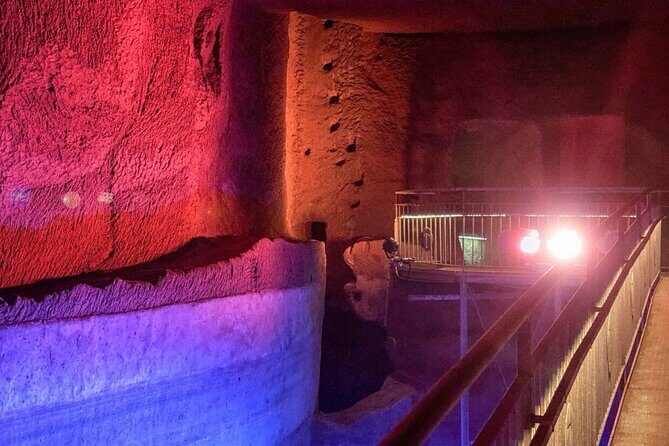
Here’s the moment that gives this tour its real pull: you go down to the deepest part of the city, around 35 meters. Once you’re down there, you see the Greek and Roman aqueduct of ancient Neapolis.
For me, the value is in being able to connect engineering to space. These aren’t distant “they used to have aqueducts” facts. You’re guided through what the aqueduct and water systems were meant to do, and the museum’s recreation project is what makes that easier to visualize. The museum aims to recreate the streams and cisterns in a way that helps you read the underground like a working system, not just a set of chambers.
One practical consideration: you’ll be moving from above-ground settings down into the depths. Even if the tour is efficient, it’s still a different environment—so don’t plan this as your only activity if you’re expecting to be completely flexible with walking pace.
The prince’s pool cistern: where water logic meets scale
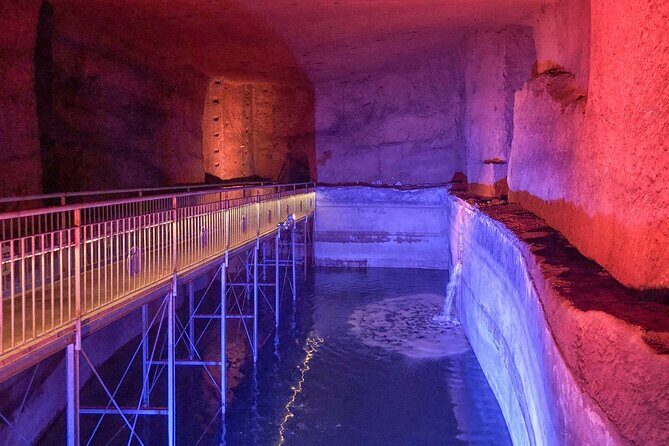
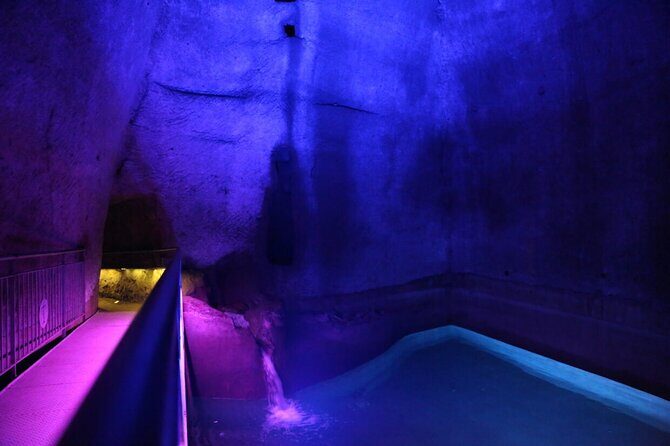
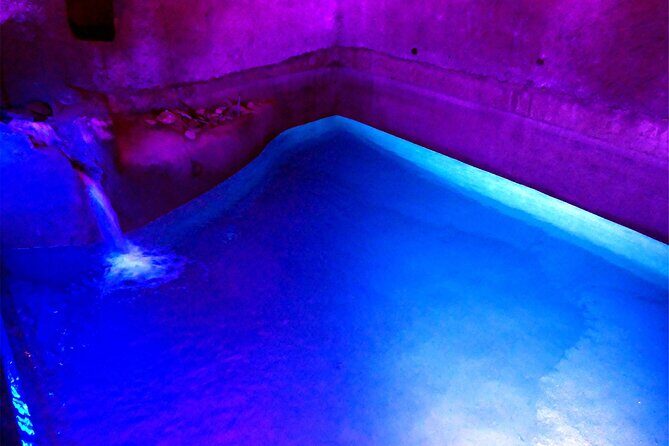
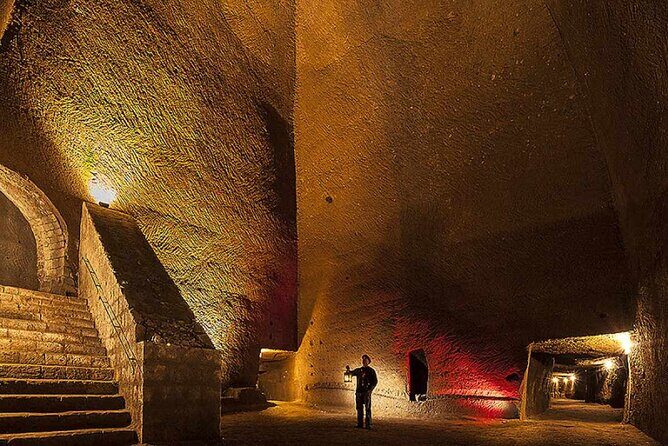
Next comes one of the headline features: the ancient cistern called the prince’s pool, described as the largest cistern in Naples underground.
This is where the tour stops being abstract. A cistern isn’t just a pit in the ground. It’s a storage system tied to supply and planning. Standing in (and understanding) a space that was designed to hold water at scale helps you grasp why “water management” shaped the city as much as politics, markets, or art.
I like that the museum project doesn’t leave you guessing. It’s part of the reason this experience gets repeat praise. The guide helps you connect the size and layout to the purpose, and you can see how the cistern fits into the wider Greco-Roman water story under Naples.
And because it’s underground, it also changes your sense of time. You’re looking at infrastructure that existed long before the modern streets, but you experience it in a way that’s tied to a clear explanation.




WWII shelter stories: a different kind of survival
Then the route shifts again. One portion of the underground area was used as a shelter during the Second World War. This is one of those details that turns a “history tour” into something heavier.
In the reviews included here, people specifically call out the strong respect shown for the Neapolitans who took refuge in these spaces, including the reality that bombing and disease took lives. The emotional tone is not treated like a generic sad story; it’s presented as part of the reason this underground world matters.
I also appreciate how the films and guide explanations support that shift. Instead of just listing dates, you get help understanding what it would have meant to live, wait, and hope in underground rooms during extreme conditions.
If you’re sensitive to wartime topics, this stop isn’t necessarily graphic, but it is emotionally direct. Plan your headspace accordingly.
Spanish guide, small group size, and what that means for you
The tour is a Spanish guided experience with a maximum group size of 20 travelers. That small cap can matter more than you’d think. With a group this size, the guide can keep the explanation flowing and you have a better shot at hearing key details rather than getting lost in the back of a big crowd.
The language is the main trade-off. If you’re not comfortable in Spanish, you might still enjoy the setting, but you’ll miss part of what makes the experience special—especially the explanation quality and how the guide threads water systems, church context, and WWII shelter into one story.
Also, admission is included, so you don’t need to budget for ticket extras once you arrive. The pace is tight but workable.
Price and value: is $46.34 worth it?
At $46.34 per person, this isn’t the cheapest thing you can do in Naples—but it also isn’t priced like a long, multi-stop day trip. The duration is about 1 hour 15 minutes, and admission is included, so you’re paying mainly for a guided route through specific underground features and reconstructions tied to the Lapis project.
Value usually comes down to two questions:
- Do you want a guided explanation that connects the underground water story to later layers of Naples life?
- Are you okay committing to Spanish?
If yes, I think the price makes sense because the experience is focused. You’re paying for access to the underground spaces and for a guide who helps you interpret them. If no—especially if Spanish is a barrier—then you might get more satisfaction with something that matches your language comfort.
As for timing, it’s commonly booked about 35 days in advance on average. That suggests enough demand that you’ll want to plan rather than assume you can walk up.
Who should book this tour (and who might skip it)
This is a great fit if you want Naples in layers—water, architecture, and survival—within a short time. It also suits people who like guided museums where the explanation and small details help you build a real understanding fast.
It’s also described as suitable for everyone, including people with disabilities. That’s a big plus, and it suggests the tour is designed with broader participation in mind.
You might skip or reconsider if:
- Spanish is a dealbreaker for you.
- You’re expecting a hands-on activity style museum. This is guided and interpretive, with films and storytelling.
- You want a longer, looser exploration. This is efficient and ends right at the museum.
Should you book the Lapis Museum tour?
Book it if you’re the type who likes the Naples “under the city” feeling, and you want your visit to connect aqueducts, cisterns, a Greco-Roman inspired church complex, and WWII shelter history into one coherent route. The strongest promise here is the explanation—clear enough to make the underground make sense, and emotional enough to respect what those spaces meant.
Skip it if you don’t speak Spanish and you’d feel frustrated not understanding the guide’s main thread. Also, double-check you’re getting the guided tour option you want, not a different entry type tied to the broader museum complex.
If you match the language and you like guided storytelling, this is one of those Naples experiences that turns a famous city into something you can actually picture.
FAQ
What language is the guided tour?
The guided tour is offered in Spanish.
How long is the Lapis Museum tour?
It runs for about 1 hour 15 minutes.
Where do I meet, and where does the tour end?
You meet at Piazza Dante (P.za Dante, 80135 Napoli NA, Italy). The tour ends directly at the museum, at Lapis Museum – Museo dell’Acqua Napoli (Piazzetta Pietrasanta, 80138 Napoli NA).
What’s included in the price?
Admission ticket is included in the $46.34 per person price.
What are the main sights you visit?
You visit the Basilica of Santa Maria de la Pietra Sagrada, then go down to see the Greek and Roman aqueduct of ancient Neapolis, the ancient cistern called the prince’s pool, and a WWII shelter area. You also see the Pietrasanta architectural complex of basilica and chapels.
How big is the group?
The tour has a maximum of 20 travelers.
Can I get a full refund if I cancel?
Yes. You can cancel up to 24 hours in advance for a full refund, based on the experience’s local time.
Is the tour suitable for people with disabilities?
It is described as suitable for everyone, including people with disabilities.