REVIEW · POMPEII
2.5-Hour Guided Tour of Pompeii with an Archaeologist
Book on Viator →Operated by Enjoy Pompeii · Bookable on Viator
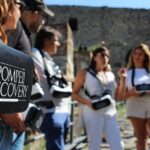
Pompeii snaps into focus quickly. This 2.5-hour guided visit sends you straight into the Pompeii ruins with a real archaeological guide and skip-the-line entry, so you spend less time stuck and more time looking. You’ll cover the western part of the city and get a guided sense of daily life before Vesuvius changed everything.
I especially like how the route keeps moving, yet still hits the big anchors—like the Forum and the thermal baths—instead of drifting through random corners. The best guides (I’ve seen names like Francesco, Paulo, Ana, and Monica mentioned) seem to mix solid facts with humor, and that combination helps the place feel human, not museum-flat.
One thing to keep in mind is that results can vary a bit. Some people report the tour running closer to 2 hours or feeling lighter in factual detail, and a few mention the guide style (for instance, more comedy or more kid-friendly pacing).
In This Review
- Key points to know before you go
- Pompeii in 2.5 Hours: the plan that actually works
- The western route: what you’ll see and why it matters
- The Forum and Basilica area: the city’s public heart
- The Forum’s “adjacent” buildings: how the city kept running
- Thermal baths: daily routine, social life, and infrastructure
- Bakery: food mattered more than you think
- The “AD 79” story: how your guide connects eruption to street life
- What skip-the-line feels like (and how to use it)
- Small-group reality: up to 10 or up to 15?
- Meeting at Ristorante Bar Sgambati: where the walk begins
- Pace and comfort: what to expect on a hot stone city
- Price and value: is $71.20 a smart buy?
- Who this tour suits best
- The travel-day checklist that helps
- Should you book this Pompeii archaeologist tour?
- FAQ
- How long is the Pompeii guided tour with an archaeologist?
- What’s the price per person?
- Is skip-the-line entry included?
- What language is the tour offered in?
- How many people are in the group?
- Where do I meet for the tour, and where does it end?
- Do I get a mobile ticket?
- Is transport or parking included?
- What if the weather is bad?
- Is the tour suitable for most people?
Key points to know before you go
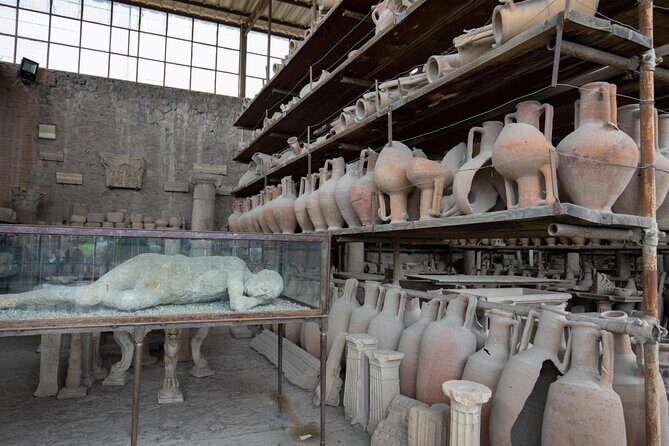
- Skip-the-line entry helps you start seeing ruins faster
- Small group size aims to keep the walk manageable and interactive
- Western Pompeii route focuses on major public spaces and daily-life buildings
- English guide makes the story easy to follow
- No transport included means you’ll need a plan to get to Pompeii and return
Pompeii in 2.5 Hours: the plan that actually works
Pompeii is huge. That’s the problem and the opportunity. A guided 2.5-hour visit is a very practical way to get oriented and see the core sights without trying to sprint the entire site on your own.
This tour is designed as a compact, structured walk. You’re not bouncing around hoping to find the right street; you’re following your archaeologist through the western side of Pompeii and stopping at major landmarks that help you understand how the city functioned—public life, neighborhoods, and the systems people depended on every day.
One practical bonus: you’re doing this with a skip-the-line entry setup. That matters at Pompeii, where wasting an hour standing around can turn a good plan into a cranky one.
You can also read our reviews of more guided tours in Pompeii

The western route: what you’ll see and why it matters
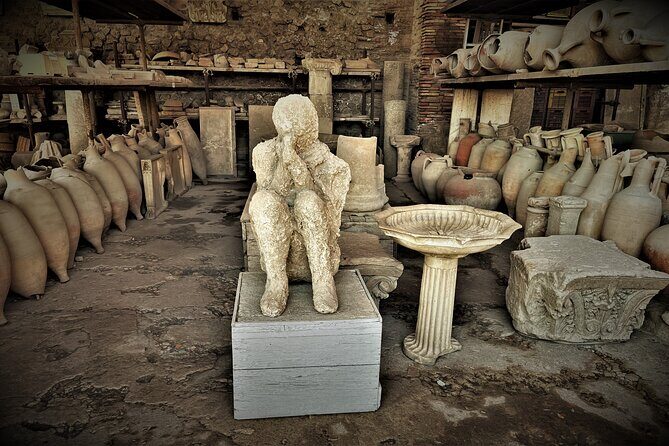
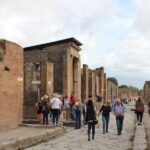
Your guided time centers on the western part of Pompeii, which is a smart choice for a short visit. It’s where you can connect the dots quickly: the city’s institutions, its infrastructure, and the types of buildings that shaped everyday life.
Here’s what the walk is built around, and what each stop tends to help you “read” on the ground.
The Forum and Basilica area: the city’s public heart
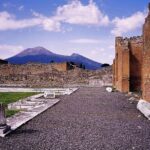
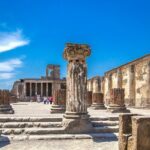
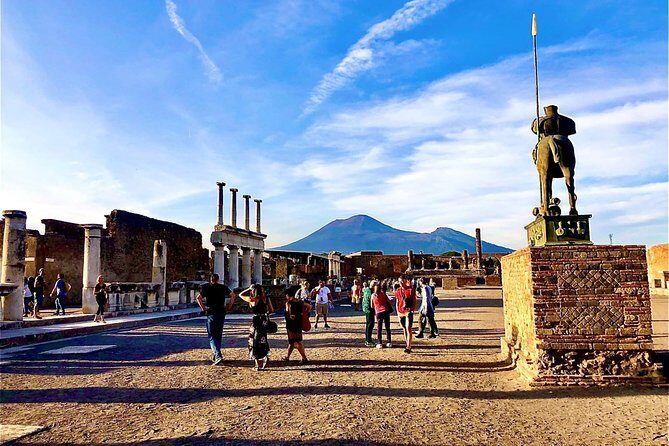
You’ll get close to the civic center of Pompeii—places tied to law, gatherings, commerce, and power. The Forum is one of the fastest ways to understand why Pompeii wasn’t just a pile of streets and homes. This is where people would have mixed for business and community life.
If your guide is one of the more story-forward types, you may also hear comparisons that make the architecture click. The goal isn’t memorizing terms. It’s learning what these spaces were for so you can look at the ruins and tell what went on there.
The Forum’s “adjacent” buildings: how the city kept running
Pompeii wasn’t a theme park. It was a functioning urban system. As you move through the public zone and nearby blocks, your guide’s job is to show you how spaces relate to each other—where food production might sit compared to where people gathered, and how everyday logistics connected to major public life.
This is where a strong guide really makes a difference. In the feedback you shared, several guides were praised for being entertaining and for adding Roman-life context that goes beyond surfaces.
Thermal baths: daily routine, social life, and infrastructure
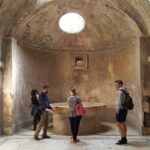
The thermal baths are a key stop because they reveal routine. People didn’t just wake up and wander. They cleaned, relaxed, socialized, and moved through parts of the bathing system as part of everyday rhythm.
When you see the thermal baths on the ground, you can start thinking about water supply, movement of people, and how much space was devoted to leisure and hygiene. Even if you don’t know the terminology, the design and layout make the purpose understandable once someone points you in the right direction.




Bakery: food mattered more than you think
The bakery stop is a great reminder that ancient cities depended on production, not just buildings. This is where you start to appreciate how the city fed itself—at scale.
It’s also a helpful contrast to the big monuments. A bath complex speaks to daily routine. A bakery speaks to the city’s fuel: food.
The “AD 79” story: how your guide connects eruption to street life
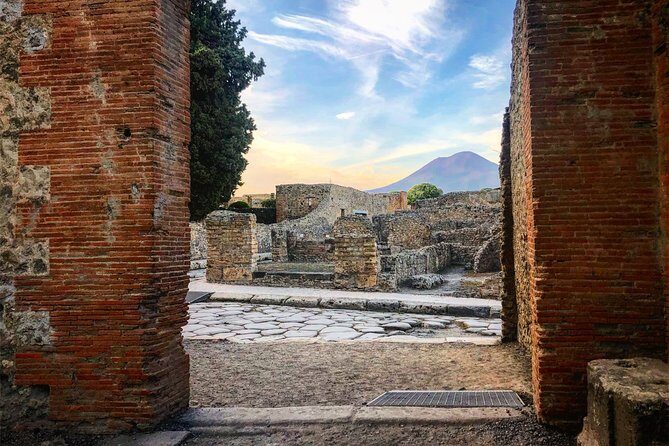
The tour’s big theme is Pompeii before and after AD 79. That’s an essential framing device, because otherwise you’ll just see ruins and feel impressed (which is true, but incomplete).
With an archaeologist leading the walk, you should come away understanding what kind of city Pompeii was: where people spent time, how they organized public spaces, how they used buildings for daily needs, and how the eruption turned normal life into sudden stillness.
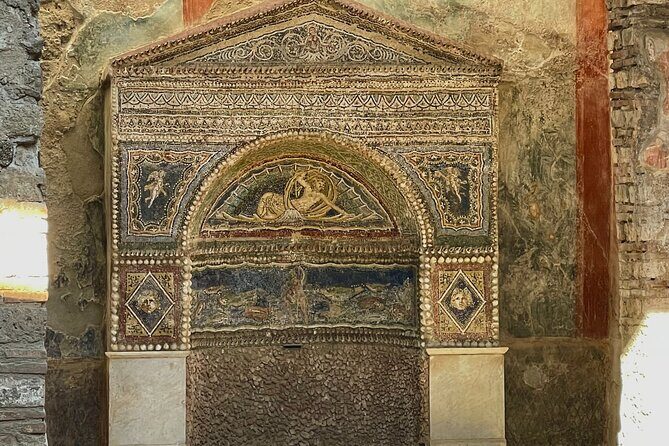
A good guide also helps you notice things you’d otherwise miss. The walls aren’t just pretty texture; they’re context. The layout isn’t random; it’s a map of human behavior. And the more clearly your guide explains that logic, the more the site feels like a place rather than a concept.
What skip-the-line feels like (and how to use it)
Skip-the-line doesn’t mean skip all time. You still need time to enter, find your group, and get oriented. But it does cut down the most painful delay—waiting in the main entry queue.
The value is simple: you protect your limited hours. On a site as large as Pompeii, the difference between starting on time and starting late can be the difference between seeing the highlights versus missing them.
Also: the tour includes entrance tickets, so you don’t have to juggle that part yourself while trying to keep your schedule tidy.
Small-group reality: up to 10 or up to 15?
The tour description emphasizes a small-group format, with a maximum of 10 people in the tour size language. At the same time, the activity info notes a maximum of 15 travelers.
Either way, you’re not stuck in a huge herd. A smaller group usually means:
- easier listening in the open air
- more chance to ask questions
- a walk pace that doesn’t require constant shoulder-checking
Still, timing can matter. One drawback mentioned in the feedback you provided is that the actual duration can come in shorter than the promised window. If you’re trying to catch a later plan (train, ferry, or dinner), I’d treat the advertised length as an estimate and keep a little buffer in your day.
Meeting at Ristorante Bar Sgambati: where the walk begins
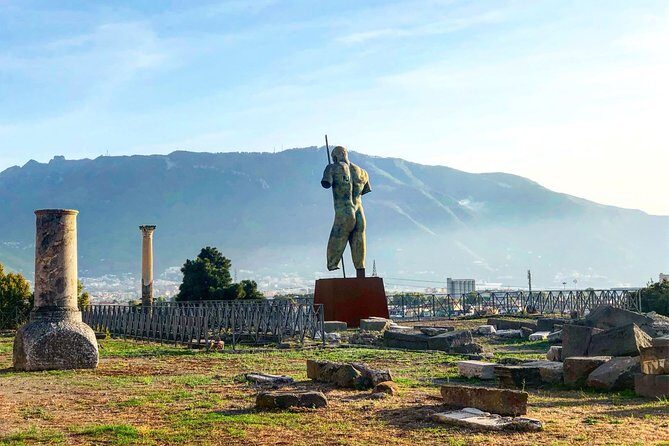
Your start point is listed as Ristorante Bar Sgambati, Via Villa dei Misteri, 1, 80045 Pompei NA, Italy. The ending point is the Forum of Pompeii, Via Villa dei Misteri, 2, 80045 Pompei NA, Italy.
Two practical tips:
- Take a moment to get your bearings at the meeting point. Pompeii streets can feel confusing fast.
- Because the tour ends at the Forum, plan your next move around that area rather than expecting to finish back at the entrance gate.
The good news: it’s stated to be near public transportation, so you should be able to build a simple arrival plan without needing parking.
Pace and comfort: what to expect on a hot stone city
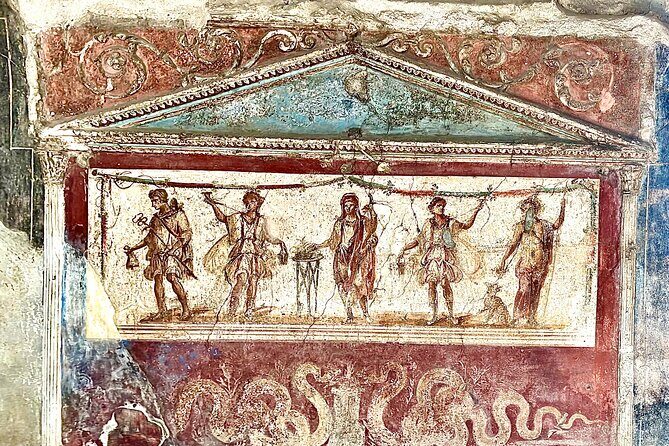
Pompeii ruins are outdoors. There’s not much cover, and the walk can feel sun-heavy depending on the season and time of day.
In the feedback you shared, multiple people praised guides who managed the experience intelligently—finding shade when they could and pacing the tour so it felt doable rather than punishing. One comment also notes that there isn’t really a formal break, so don’t count on sitting down for a long rest mid-tour.
My practical advice: wear sun protection, bring water if you tolerate it easily in your bag, and use the moments when your guide stops to really look. When the guide points something out, pause for ten seconds longer than you think you need. Those seconds are what turn ruins into understanding.
Price and value: is $71.20 a smart buy?
At $71.20 per person for about 2.5 hours, you’re paying for three things that are hard to replicate well on your own:
- A real archaeologist guide (not just a casual host)
- Entrance tickets included
- Skip-the-line access
If you’ve ever tried to do Pompeii without a guide, you know the problem: the site is impressive, but the meaning doesn’t automatically attach itself to what you’re seeing. A guide can connect “what you’re looking at” with “what it was used for.”
That said, balance matters. Some people in the feedback you provided felt the explanations weren’t deep enough or that the tour felt shorter than advertised. So if you strongly want a heavier, detail-dense lecture style, you may want to compare other tour options too.
Still, for many visitors, this price is a reasonable way to buy time and clarity—especially if you’re trying to fit Pompeii into a busy day.
Who this tour suits best
This is a strong fit if you want:
- the major Pompeii highlights in a manageable time window
- a guide-driven story that helps you read ruins
- a small-group atmosphere
It may also suit you well if you don’t want to spend the entire day navigating on your own, because the route is structured and the guide is there to keep you from wandering down dead ends.
If you’re the type who wants to ask lots of follow-up questions and linger in specific buildings, pick this only if you’re comfortable with a fixed walking plan. The best guides can adjust to questions, but the clock still runs.
The travel-day checklist that helps
Here’s what will make your visit smoother, using only practical things you can control:
- Wear sturdy shoes with good traction.
- Bring sun protection and plan for walking in open air.
- Keep your next reservation flexible enough for the tour to potentially run close to 2 hours.
- If you’re traveling from nearby towns, give yourself extra time to reach the meeting spot.
And one more nerdy-but-useful thought: when your guide mentions everyday life, watch for the physical clues. A bakery stop should make you think about food production. A bath stop should make you think about water and routines. That’s how the guide’s explanation “sticks.”
Should you book this Pompeii archaeologist tour?
If you want a time-smart, highlights-focused Pompeii visit with skip-the-line entry and a guide who can turn ruins into stories, I’d say this is worth booking—especially because it’s structured for a short visit.
I’d be a bit more cautious if you know you need very deep, factual, slow-paced historical detail, or if your schedule cannot tolerate the tour possibly running closer to 2 hours. In that case, consider either a different operator or a private format so the guide can match your tempo.
If you do book it, my best advice is simple: go with the mindset of learning how the city worked—not just sightseeing. Pompeii rewards that approach fast.
FAQ
How long is the Pompeii guided tour with an archaeologist?
The tour runs about 2 hours 30 minutes (approx.).
What’s the price per person?
The price is $71.20 per person.
Is skip-the-line entry included?
Yes. Skip the line is included, along with entrance tickets.
What language is the tour offered in?
The tour is offered in English.
How many people are in the group?
The tour is described as a maximum of 10 people, and the activity info lists a maximum of 15 travelers.
Where do I meet for the tour, and where does it end?
Meet at Ristorante Bar Sgambati, Via Villa dei Misteri, 1, 80045 Pompei NA, Italy. The tour ends at the Forum of Pompeii, Via Villa dei Misteri, 2, 80045 Pompei NA, Italy.
Do I get a mobile ticket?
Yes, it’s a mobile ticket.
Is transport or parking included?
No. Parking area and transport are not included.
What if the weather is bad?
This experience requires good weather. If it’s canceled due to poor weather, you’ll be offered a different date or a full refund.
Is the tour suitable for most people?
Most travelers can participate. Confirmation is received at the time of booking.