REVIEW · POMPEII
Visit Pompeii with a local expert guide
Book on Viator →Operated by Guide Turistiche Campania di Febronia Amato · Bookable on Viator
Pompeii clicks faster with the right guide. This private Pompeii visit is designed around clear storytelling and real context, with a certified expert helping you see how everyday Roman life worked under the volcano-shadow of Vesuvius. I especially like the local guide service and the admission tickets included for the two big stops you’ll focus on.
There’s one trade-off to know up front: the experience is about 3 hours and concentrates on two key areas. If your goal is to wander the entire site at a slower pace, you may want to add extra time after the tour.
In This Review
- Key highlights before you go
- Why Pompeii feels more real with a certified local guide
- Piazza Esedra start: get oriented, then let the walk do the work
- Stop 1: Foro de Pompeya and Roman public life in 30 minutes
- Stop 2: Teatro Grande, dating, and the habits behind the shows
- The sweet spot: 3 hours that prevent history fatigue
- What’s included, what’s not, and why that’s good value
- Weather, language, and participation notes that affect your planning
- Who this Pompeii tour is best for
- Should you book this Pompeii guided visit?
- FAQ
- How long is the Pompeii guided tour?
- Is this a private tour?
- What does the price include?
- What is not included?
- Where do we meet, and where does the tour end?
- What time does the tour start?
- Are tickets included for the stops?
- Is the meeting point easy to reach by public transportation?
- Do I get confirmation after booking?
- What if the weather is bad?
- Can I choose the language for the tour?
Key highlights before you go
- Private group feel (up to 10 people) so your questions don’t get lost in the crowd
- Tickets included for both the Foro de Pompeya and Teatro Grande stops
- Story-first explanations that help you understand how Pompeii worked day to day
- Language choice so the explanations match the way you think
- Two focused stops that still cover a lot without burning you out
Why Pompeii feels more real with a certified local guide
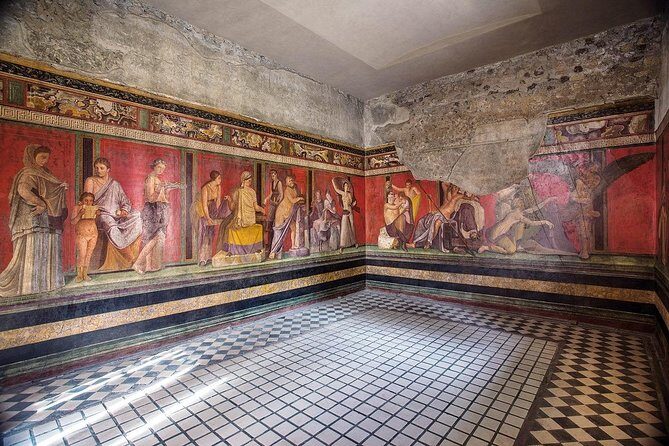
Pompeii can look like a set of ruins until someone shows you the logic behind the layout. That’s where this tour earns its keep. You don’t just walk from point A to point B; your guide connects what you’re seeing to how Romans used public space, shared entertainment, and carried on daily habits.
I also like how the guide-driven approach reduces that common feeling of historical information overload. People doing multiple tours in the same week often expect too much repetition, but the guide’s job here is to make the city understandable, not just to recite facts. Guides associated with Guide Turistiche Campania di Febronia Amato have included standout names like Alessia, Soraya, Piero, and Febronia—and the common thread is the way they keep explanations clear while staying friendly and practical.
You’ll also get an actual sense of pacing. Even though Pompeii is huge, this visit is intentionally structured so you can leave with meaning, not just photos.
You can also read our reviews of more guided tours in Pompeii
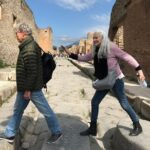
Piazza Esedra start: get oriented, then let the walk do the work
The tour starts at Piazza Esedra, 80045 Pompei NA, Italy at 9:00 am. It ends back at the meeting point, which is a nice, low-stress setup on a day when you’ll probably be thinking about tickets, stairs, and where the crowd funnels.
Because it’s near public transportation, you’re not locked into a complicated schedule just to get to Pompeii. And because it’s a private experience for your group (up to 10), you can settle into a rhythm instead of constantly recalculating where you stand relative to everyone else.
Practical tip from how these tours usually play: plan to arrive a few minutes early. Not because you’ll be rushed, but because Pompeii makes you want to start looking the moment you step inside the archaeological area.
Stop 1: Foro de Pompeya and Roman public life in 30 minutes
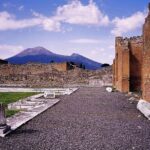
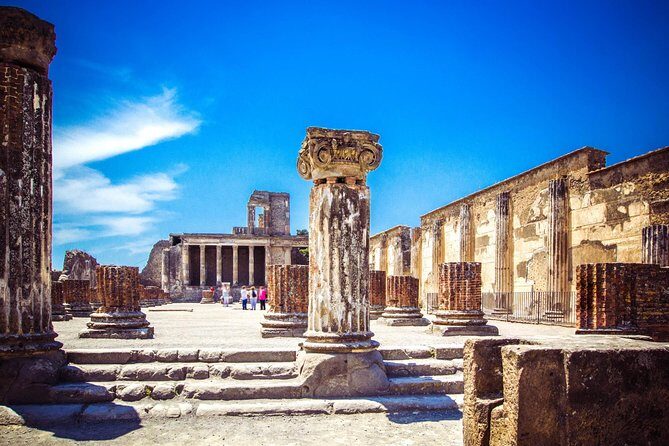
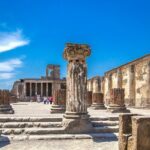
The visit begins with the Foro de Pompeya, the heart of civic life. Think of it as the city’s public stage—where people gathered, where official life happened, and where power and daily routine met in one place. The tour gives you about 30 minutes here, plus admission ticket included, which matters because it keeps the stop from becoming a hassle.
What I find valuable about covering the Foro early is that it gives you a framework. When you later look at other parts of Pompeii—streets, buildings, and public spaces—you understand what “public” meant in that world. It’s not abstract. Your guide’s explanations help you picture who would be there, what they’d be doing, and how the city organized itself around shared spaces.
A good guide also helps you notice the less obvious details: where movement flows, what kinds of activities cluster in a civic center, and why certain areas feel like they were built for crowds. Even in a short stop, that kind of orientation can make the whole day feel more coherent.
Possible drawback here: if you’re the type who wants to sit in one location and study every corner for an hour, 30 minutes may feel short. The upside is that you won’t lose your energy before the next highlight.
Stop 2: Teatro Grande, dating, and the habits behind the shows
Next comes the Teatro Grande, with about 50 minutes on site and admission ticket included. This is where Pompeii shifts from civic life to public entertainment, and your guide’s job is to connect the architecture to human behavior.
The itinerary highlights it as a stop about dating and habits—and that’s exactly what you want from a theatre visit. Knowing when the theatre was used and what the audience expected changes how you read the space. You start to see the theatre not as a static ruin, but as a machine for gathering people and creating shared moments.
I like this stop because it tends to land well with different age groups. Some families worry theatres will be too “lecture-y,” but the best guides turn it into a picture of how people spent their time. If you’re traveling with teens, this kind of guided explanation often works better than self-guided wandering, since your guide can keep the story moving at a pace that holds attention.
Keep in mind that Pompeii weather and crowds can affect how quickly you can move between viewpoints and photo spots. The tour’s focus on two major areas helps you avoid the feeling of running everywhere while still seeing key anchors of the site.
The sweet spot: 3 hours that prevent history fatigue
This tour clocks in at about 3 hours, and that matters more than it sounds. Pompeii has a way of absorbing you, but it can also fry your brain if you try to cram in too much. The two-stop structure is deliberate: it gives you depth without turning the day into constant mental switching.
One reason the feedback is consistently positive is that the timing feels right even for people who have already done other guided sessions. It’s a strong “next stop” format. You get fresh context without the day collapsing into repetitive explanations.
Also, the private nature helps. Your guide can slow down when questions come up and speed up when your group is ready to move. That small-group control is one of those quiet advantages that makes the tour feel smoother than a typical large group day.
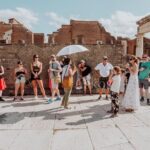


What’s included, what’s not, and why that’s good value
The price is $210.52 per group (up to 10) for the guide service. Admission tickets for the two included stops are not extra, which is a real value point because it removes one common travel headache: hunting down ticket counters or worrying about whether you’re paying twice.
It does not include private transportation. That’s normal for Pompeii-based walking tours, but it means you’ll want to plan your own way to the meeting point.
Here’s how the price can make sense depending on your group size:
- If you’re traveling as a smaller group, the cost per person is higher, but you still get private attention plus included admissions.
- If you’ve got a group closer to 10, the cost per person becomes much more comfortable, and you get a true private experience instead of paying “large group” prices.
For me, the value logic is simple: you’re paying for interpretation. Pompeii is full of stones; the guide is what turns those stones into a story you can actually remember.
Weather, language, and participation notes that affect your planning
Pompeii is an outdoor archaeological site, and this experience has a good weather requirement. If it’s canceled due to poor weather, you’ll be offered another date or a full refund—so it’s worth keeping an eye on forecasts and having a flexible day.
You can also choose the language you prefer. That’s a huge quality-of-life detail because it changes everything: you don’t just understand the facts, you understand the tone of explanations and jokes your guide uses to keep it human.
The tour notes that most travelers can participate, which is helpful if you’re deciding whether to do Pompeii on a travel day when you might not be at your best physically. Still, you’ll be doing walking at an archaeological site, so if you have mobility constraints, consider asking ahead for how the route is handled.
Finally, the meeting point and start time are clear: 9:00 am at Piazza Esedra, and you return there at the end. That makes it easier to plug this into a larger Pompeii and Naples plan.
Who this Pompeii tour is best for
I’d point you toward this tour if you want Pompeii to make sense quickly. It’s especially good for:
- First-timers who don’t want to feel lost in a massive site
- People who prefer explanations tied to what you’re seeing, not just a list of monuments
- Families with teens, since public-life and theatre stories are often easier to follow
- Small groups who want a private, question-friendly pace
It may not be your best fit if you’re planning to treat Pompeii like a self-guided scavenger hunt. With only two main areas covered in the tour window, you’ll likely want additional time on your own to see everything else that catches your eye.
Should you book this Pompeii guided visit?
If you care about understanding Pompeii rather than just checking it off, I think this is a smart booking. The private group format, the included admissions, and the way guides like Alessia, Soraya, Piero, and Febronia are described as attentive and expert-focused all point to a tour designed to leave you with real clarity.
Book it if your goal is a guided, meaningful first pass through the city—especially the Foro and the Teatro Grande—within a day that still feels manageable.
Skip it (or plan extra time) if you want to cover a huge chunk of Pompeii in one go. This experience is about focus, not trying to swallow the entire archaeological park in one session.
FAQ
How long is the Pompeii guided tour?
The tour lasts about 3 hours.
Is this a private tour?
Yes. It’s private for your group only (up to 10 people).
What does the price include?
The price includes the guide service. Admission tickets are included for the Foro de Pompeya and Teatro Grande stops.
What is not included?
Private transportation is not included.
Where do we meet, and where does the tour end?
You meet at Piazza Esedra, 80045 Pompei NA, Italy. The tour ends back at the same meeting point.
What time does the tour start?
The start time is 9:00 am.
Are tickets included for the stops?
Yes. Admission tickets are included for Foro de Pompeya and Teatro Grande.
Is the meeting point easy to reach by public transportation?
Yes. The meeting point is noted as near public transportation.
Do I get confirmation after booking?
Yes. Confirmation will be received at time of booking.
What if the weather is bad?
This experience requires good weather. If it’s canceled due to poor weather, you’ll be offered a different date or a full refund.
Can I choose the language for the tour?
Yes. You can choose the language you prefer.