REVIEW · POMPEII
Private Tour with Official Guide through the wonders of Pompeii.
Book on Viator →Bookable on Viator
Pompeii gets clearer fast. This private tour strings together some of the site’s most famous buildings and everyday corners, so you stop seeing random ruins and start seeing how a city functioned. You’ll move through theaters, villas, baths, temples, and main streets with an official guide who turns stone, paint, and layout into a story you can follow.
I especially like two things here. First, the guide style is high energy but not chaotic, with humor and lots of practical context. Second, the route blends big public landmarks like Teatro Grande and the Foro with domestic spaces like Casa dei Vettii and Casa del Fauno, so the city feels whole, not one-note.
One drawback to plan for: the Pompeii Archaeological Park ticket isn’t included. Since your tour covers entry-related areas across the site, you’ll want to have that ready (or budget for it) before you go.
In This Review
- Key highlights worth your time
- How an official guide makes Pompeii click
- Meeting at Via Villa dei Misteri (and what the timing means)
- Public Pompeii: Teatro Grande, Forum, Odeon, and the temples
- Teatro Grande: tragedies and comedies
- Foro de Pompeya: the main square
- Odeon and Teatro Piccolo: singing tradition
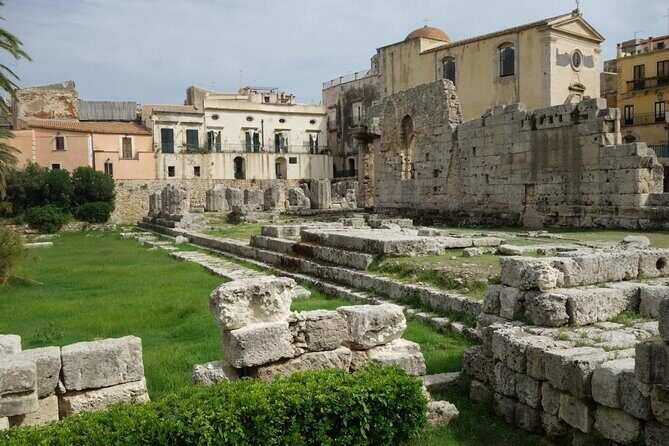
- Tempio di Giove Capitolino and the Temple of Apollo
- Pompeii at home: Casa dei Vettii, Casa del Fauno, and Casa degli Amorini Dorati
- Casa dei Vettii: frescoes, mosaics, and comfort
- Casa del Fauno: an early villa
- Casa degli Amorini Dorati: beauty you don’t rush
- Baths and street life: Suburban Baths, Stabian Baths, Via dell’Abbondanza, and Thermopolium
- Suburban Baths: a spa near the walls
- Stabian Baths: the largest baths in Pompeii
- Via dell’Abbondanza: the main street
- Thermopolium Regio VI, Insula VIII, 8: an ancient restaurant stop
- The mosaic stop: Casa del Poeta Tragico
- What’s included (and where the real cost can rise)
- Who this private Pompeii tour suits best
- Practical tips so you get the most from 2–3 hours
- Should you book this Pompeii private tour?
- FAQ
- How long is the private Pompeii tour?
- What is the price per person?
- What does the tour include?
- Do I need to buy the Pompeii Archaeological Park ticket separately?
- Where is the meeting point and what time does it start?
- Is this tour private and in English?
Key highlights worth your time
- A private format: only your group, so questions and pacing stay flexible
- Official English guide with the kind of storytelling that points out what you’d likely miss on your own
- Smart mix of Pompeii life: theaters, villas, baths, temples, and a street-food stop
- Signature sights in short bursts across ~2 to 3 hours, so you don’t get stuck in just one zone
- Bottled water plus a Pompeii map included, which helps on a site this big
How an official guide makes Pompeii click
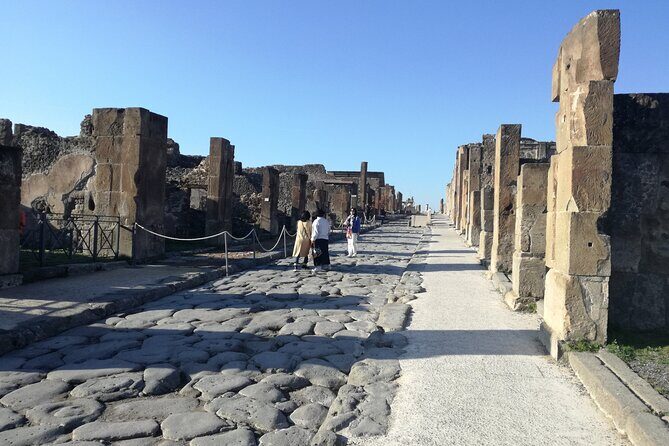
Pompeii can feel overwhelming. You arrive, and suddenly you’re staring at walls, doorways, and fragments—beautiful, yes, but hard to organize in your head. This tour works because it gives you a path with clear anchors, so you learn the city by moving through it.
The guide on this experience is a big part of the value. In the feedback, the name Paolo comes up again and again, and people describe him as both deeply informed and fun to listen to, with a steady rhythm and jokes that do not get in the way. Even better, at least one reviewer notes he was part of the original excavation team as an archaeologist, which means you get a real sense of how discoveries have changed over time.
You’ll also notice that the tour format isn’t just a long lecture. The stops are timed in short segments—often around 5 to 20 minutes—so you actually look at what’s in front of you. That matters in Pompeii, where the details are there, but only if you slow down enough to see them.
One more practical perk: you don’t have to keep re-orienting yourself. You get a Map Archaeological Park Pompeii, and your route is already built for you, starting and ending at the same meeting spot.
You can also read our reviews of more guided tours in Pompeii
Meeting at Via Villa dei Misteri (and what the timing means)
The tour meets at Via Villa dei Misteri, 1, 80045 Pompei NA, Italy. The start time is 12:30 pm, and the visit runs about 2 to 3 hours.
That midday timing can be a choice. Pompeii in the afternoon can be warm, and the ruins cover a lot of ground. The advantage of a 2 to 3 hour private tour is that you’re not stuck all day in heat and crowds trying to “finish Pompeii.” You get a concentrated hit of the highlights, plus enough context to make the place feel logical.
Because it’s private, only your group participates. That usually makes a difference in how you handle stops. In the reviews, people mention the guide was patient when they wanted to move slower or ask more questions, and that he allowed time for photos. So if your group likes to actually look, this pacing can work in your favor.
The tour ends back at the meeting point, which is a surprisingly big deal in Pompeii. You’re not trying to catch buses or backtrack through the site while you’re tired. You get a neat loop.
Public Pompeii: Teatro Grande, Forum, Odeon, and the temples
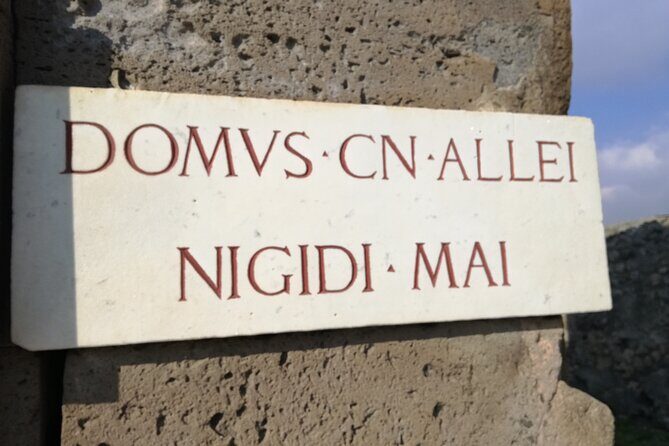
A great guided Pompeii tour starts with the public spaces—because that’s where you learn how people gathered, watched, worshipped, and argued. This route does that early and often, so you’re building mental folders as you go.
Teatro Grande: tragedies and comedies
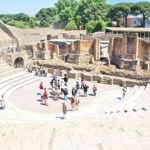
Stop one is Teatro Grande, a majestic theater tied to Greek-Roman tragedies and comedies. Even with a short visit, this is a powerful checkpoint because it shows how performance and public life were blended. You’ll have a chance to spot how a theater shaped community behavior: who sat where, what the stage represented, and why entertainment mattered beyond pure fun.
This is also where you’ll likely hear some of the lighter storytelling. One review specifically mentions word origins, with the guide connecting explanations to modern language in a way that made the history feel less like a textbook.
Foro de Pompeya: the main square
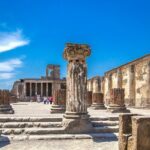
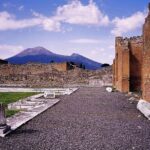
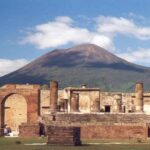
Next up is the Foro de Pompeya, the main square. Squares are where authority and daily decisions mix. This stop helps you shift from entertainment to civic life—how people moved, interacted, and built a shared public identity around the center of town.
You can also read our reviews of more private tours in Pompeii
Odeon and Teatro Piccolo: singing tradition
You also stop at Odeon – Teatro Piccolo, described as the theater symbol of the singing tradition. This is a reminder that Pompeii’s culture was not only about big performances in massive venues. Music and smaller-scale performance mattered too, and the tour uses this as a contrast point.
Tempio di Giove Capitolino and the Temple of Apollo
Two temple stops close this public-landmark thread: Tempio di Giove Capitolino (the Temple of temples) and Temple of Apollo (Apollo as god of the sun, son of Zeus). Temples are more than pretty ruins. They’re where you learn how the Romans structured belief into daily routines.
If you’re the type who likes to understand why buildings look the way they do, these temple stops are worth your attention. The guide’s explanations help connect the names and roles to what you see on site, instead of making you memorize facts you can’t picture.
Consideration: because these stops are short, you’ll get the big ideas fast. If your group wants to linger, go for it, but expect the rest of the route to flex slightly.
Pompeii at home: Casa dei Vettii, Casa del Fauno, and Casa degli Amorini Dorati
Once you’ve seen the public engine of the city, the villas bring the human scale back. It’s one thing to learn how people gathered; it’s another to picture how they ate, decorated rooms, and spent time indoors. This tour puts several home bases in your path.
Casa dei Vettii: frescoes, mosaics, and comfort
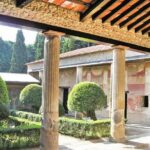
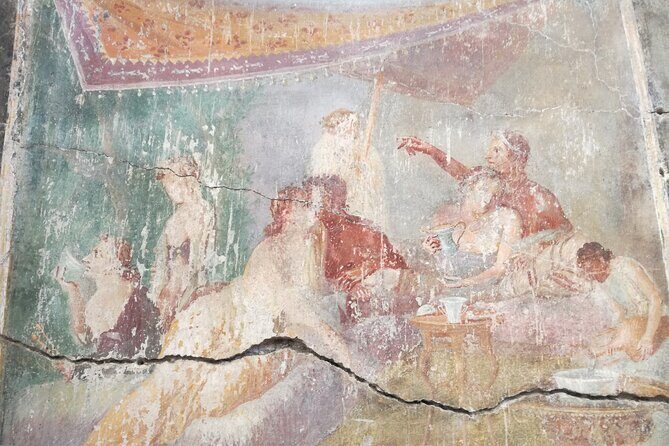
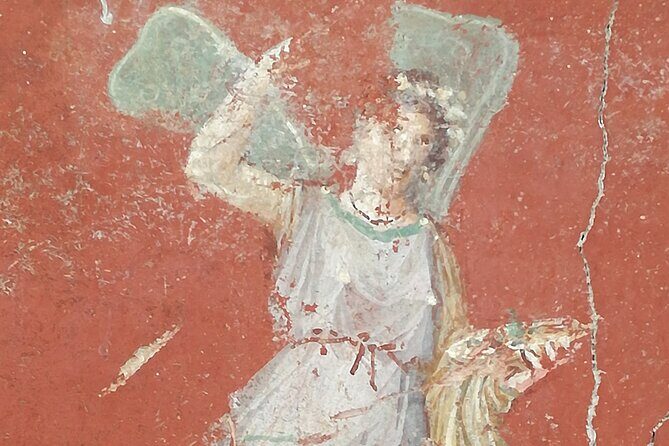
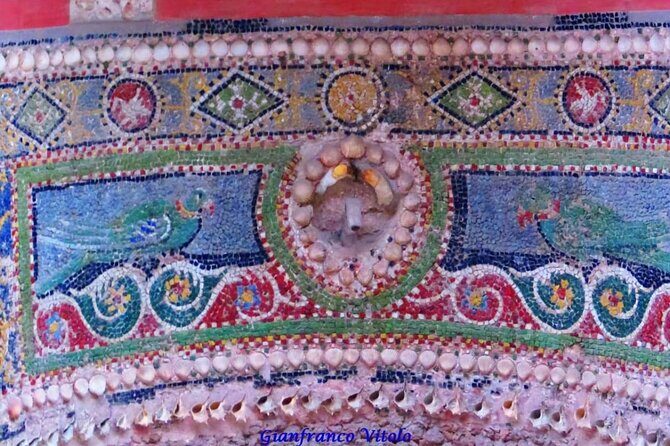
The stop at Casa dei Vettii focuses on architecture plus frescoes and mosaics. This is a key Pompeii lesson: household art wasn’t only for the wealthy as a flex. It shaped mood, identity, and what guests would remember when they toured someone’s home.
Even if you’re not an art-history person, a guide helps you see what to notice. Instead of staring at painted surfaces, you learn what those decorations were doing in everyday life.
Casa del Fauno: an early villa
Then there’s Casa del Fauno, described as one of the oldest villas in Pompeii. This stop is about age and evolution. Older villas make it easier to understand how styles and domestic priorities changed over time.
If you like seeing the “before” version of a place, this one is a good stop. It helps you avoid the feeling that Pompeii is frozen in one single style.
Casa degli Amorini Dorati: beauty you don’t rush
Casa degli Amorini Dorati is presented as a villa with beauty that’s hard to describe, and the tour gives it enough time to actually look—about 20 minutes. This matters because some of the best details in Pompeii rewards slow attention.
A practical tip for this stop: take your time with the surfaces and the layout cues. The guide’s role here is not to rush you to conclusions, but to point out what the villa’s design is trying to say.
Baths and street life: Suburban Baths, Stabian Baths, Via dell’Abbondanza, and Thermopolium
If you want Pompeii to feel like a real place, don’t skip the “how people lived” stops. Baths and street food spaces show routines you can almost imagine, even from ruins.
Suburban Baths: a spa near the walls
The tour includes the Suburban Baths, described as an extraordinary spa built near the walls. This location is useful because it reminds you that recreation and hygiene were not only inside elite spaces. It was woven into daily movement around the city.
Stabian Baths: the largest baths in Pompeii
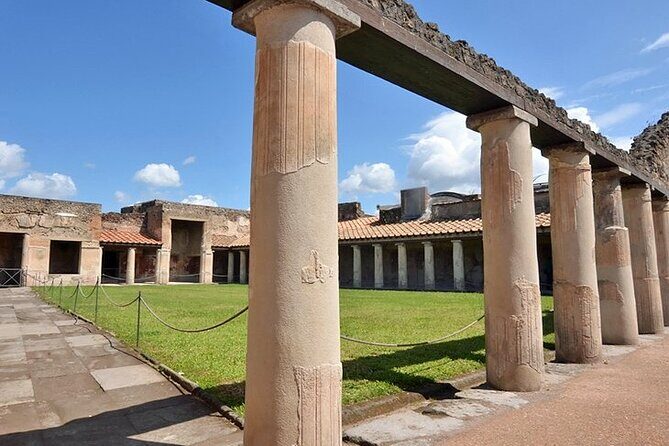
Then come the Stabian Baths (Terme Stabiane), called the largest baths of Pompeii. This is one of those stops where the scale tells the story. You’re looking at a system, not a single room: spaces that supported changing, bathing, and social time.
For many people, this is a highlight because it feels the most familiar. It’s “public infrastructure” in a recognizable form—just with ancient design.
Via dell’Abbondanza: the main street
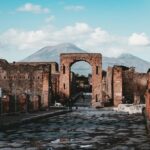
Next is Via dell’Abbondanza, the main street. Streets are where you understand logistics: movement, commerce, and how neighborhoods connect. This stop helps your brain connect the villas and public sites to a daily travel route.
Thermopolium Regio VI, Insula VIII, 8: an ancient restaurant stop
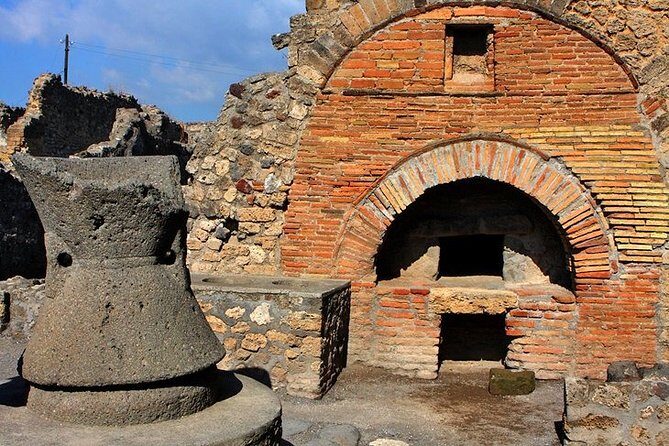
Finally, you visit Thermopolium Regio VI, Insula VIII, 8, described as one of the restaurants of the time. This is a short stop—around 5 minutes—but it can be one of the most memorable because it brings food culture into the picture.
Think of it as the “snack break” version of Pompeii. You get a sense of where people ate quickly, socialized, and kept moving.
The mosaic stop: Casa del Poeta Tragico
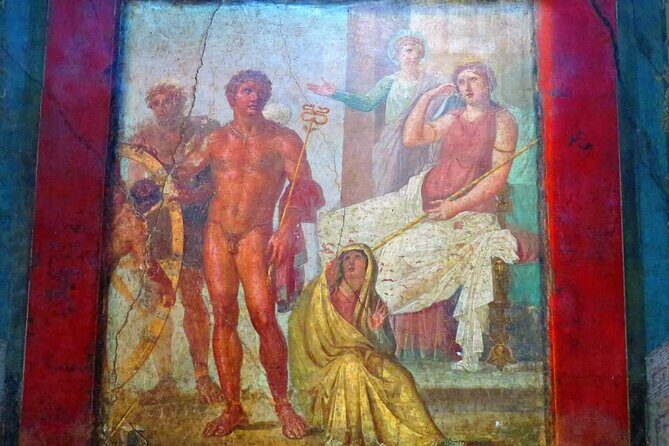
Between public life and everyday life, the tour also includes a smaller but unforgettable artistic moment: Casa del Poeta Tragico, the home of a famous mosaic, with only about 5 minutes allotted.
Short stop or not, this is valuable. A mosaic is the kind of thing that can get lost if you treat Pompeii like a checklist. With a guide, you get the chance to see what makes the piece famous and why it stands out in a city full of visual decoration.
If your group is mosaic-obsessed, you can ask the guide to spend extra time here, but know it might shift the pacing elsewhere.
What’s included (and where the real cost can rise)
Here’s the straight math on value. The price is $102.35 per person for a private tour in English lasting about 2 to 3 hours. What you get included is a tourist guide, a Map Archaeological Park Pompeii, and bottled water.
Not included are the Archaeological Park Pompeii ticket and tip.
That ticket detail is the big one for planning. If you think the price covers entry into the whole site, you’ll be surprised. So I’d treat the listed tour price as the cost of the guide + route + map/water, then add the park ticket on top.
On the other hand, the itinerary is packed with major landmarks and well-chosen “life” stops. For a private experience, that kind of structured route tends to be better value than trying to piece things together yourself and spending more time figuring out where to go next.
And if your group cares about photos, the guide’s described patience matters. People specifically mention being able to take photos without feeling rushed, which is a practical quality-of-life perk in Pompeii.
Who this private Pompeii tour suits best
This works best if you want:
- A guided route that makes the ruins easier to understand
- A guide who can explain buildings like Teatro Grande, major baths, temples, and key villas without making it feel stiff
- A group that likes asking questions and adjusting pace, since it’s private and your guide can flex
- An English tour with a guide who uses humor and storytelling, not just names and dates
It may not be ideal if you need lots of downtime. The route includes many stops across a limited time window, so you’ll be moving at a steady walk-pace between highlights.
Also, if your group has strong interest in only one category—say, only mosaics or only temples—you might want a longer or more specialized format. This tour is balanced on purpose.
Practical tips so you get the most from 2–3 hours
A Pompeii tour succeeds or fails based on comfort and attention, not on speed.
I’d plan for:
- Comfortable walking shoes, because you’ll cover enough ground to feel it
- Water habits, since bottled water is included but you still want to manage hydration
- A photo mindset that includes pauses, because the guide may give you time, especially for standout stops
If your group has specific interests, ask the guide to emphasize them. In the feedback, Paolo is described as catering the tour to people’s interests and even finding extra “small details” during the route. That’s one of the big reasons a private format often beats audio guides.
Also, since the tour is in English, if someone in your group prefers a different language, check that before you go. This one is explicitly offered in English.
Should you book this Pompeii private tour?
Book it if you want Pompeii explained through the city’s real rhythm: performance halls, civic center, temples, villas, baths, main street, and a restaurant stop. The mix of stops hits both the impressive and the everyday, and the guide approach (with Paolo named in standout feedback) seems built for people who want facts plus personality.
Pass or reconsider if you already have your heart set on ultra-deep, single-category study. This is a strong highlights tour, not a slow, academic marathon. Also double-check your plan for the Pompeii Archaeological Park ticket, since it’s not included.
If you’re visiting Pompeii for the first time and you want a guided route you can trust to make sense of the ruins, this is a very solid choice.
FAQ
How long is the private Pompeii tour?
It lasts about 2 to 3 hours.
What is the price per person?
The tour costs $102.35 per person.
What does the tour include?
You get a tourist guide, a map of the Archaeological Park Pompeii, and bottled water.
Do I need to buy the Pompeii Archaeological Park ticket separately?
Yes. The Archaeological Park Pompeii ticket is not included.
Where is the meeting point and what time does it start?
You meet at Via Villa dei Misteri, 1, 80045 Pompei NA, Italy, starting at 12:30 pm. The tour ends back at the meeting point.
Is this tour private and in English?
Yes. It’s a private tour for only your group, and it’s offered in English.