REVIEW · POMPEII
Private Pompeii Tour with 3D Virtual Reality Headset
Book on Viator →Operated by Flashback Journey to Pompeii · Bookable on Viator
Time travel, minus the machine. This private Pompeii experience uses 3D 360 VR to show you what the city looked like about 2,000 years ago, right before you walk the real archaeological park with a local guide. I like the way audio commentary and a licensed local touch the virtual scenes to the actual ruins, so it feels like learning instead of just watching.
One caution: the VR visuals are still animated reconstructions, so if you expect photoreal footage, you may feel a bit underwhelmed. That said, it can be an eye-opener for how streets, buildings, and daily life fit together across the site.
In This Review
- Key takeaways before you go
- Pompeii with a 3D Gear VR time jump
- Meeting at Piazza Esedra and how the tour feels in real life
- Stop at Pompeii Archaeological Park: where the VR and ruins meet
- Audio commentary: the secret sauce for not getting lost
- The VR reality check: Gear VR strengths and limits
- Who should think twice about the headset
- Walking Pompeii in practical comfort mode
- Morning vs afternoon: when timing helps the experience
- Price and value: what you are really paying for
- Who this private VR Pompeii tour is best for
- Should you book this private VR Pompeii tour?
- FAQ
- Where is the tour meeting point?
- How long is the Pompeii private VR tour?
- Is Pompeii admission included?
- What language is the tour offered in?
- Does the tour use a 3D VR headset?
- Can children use the VR headsets?
- Who should consult a doctor before taking this tour?
- Is the tour private?
- What is the cancellation policy?
Key takeaways before you go
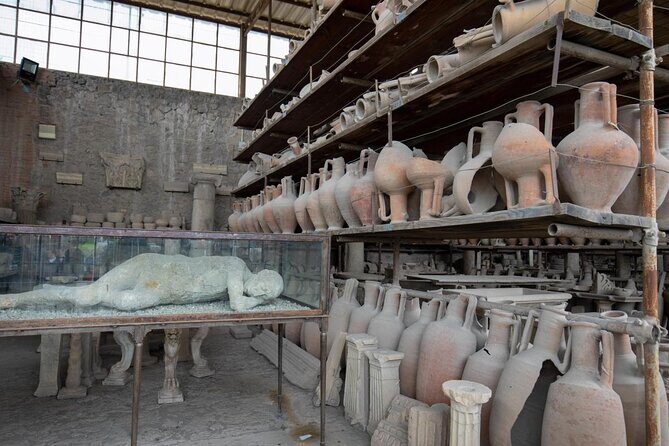
- 3D Gear VR 360 scenes show Pompeii as if it was still standing
- Licensed local guide keeps the story grounded while you move through the park
- Audio commentary helps you follow what you are seeing, not guess
- Skip-the-line admission is included, so you spend less time waiting
- Headset health rules matter, especially for kids and anyone prone to dizziness or seizures
Pompeii with a 3D Gear VR time jump
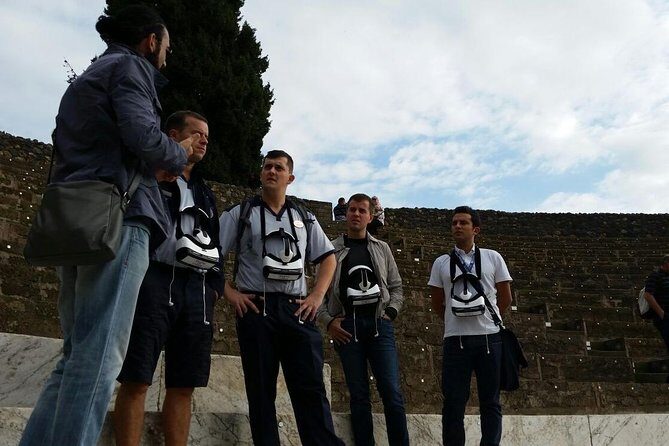
Pompeii is already a wow place. You see stone streets, building walls, and the eerie silhouettes of what used to be homes and businesses. This tour adds one more layer: a 3D reconstruction you can see in 360 degrees through a Gear VR headset.
The big idea is simple. Instead of only seeing what survived after the eruption, you get a sense of the city as it looked back then. That means temples, homes, shops, theaters, and markets show up as a complete scene, not just as scattered remains. For first-time Pompeii visits, that can make the whole site click much faster.
I also like the pacing. You are not stuck in a lab. You use the headset as part of a guided walk through the Pompeii Archaeological Park, then keep building the picture on the ground with your guide’s explanations and answers to questions.
You can also read our reviews of more private tours in Pompeii



Meeting at Piazza Esedra and how the tour feels in real life
This tour meets at Piazza Esedra, 80045 Pompei NA, Italy. It also ends back at the meeting point, which keeps things easy after the walk. The location is listed as near public transportation, so you should be able to plan without stress if you do not want to rely on a car.
You can choose a morning or afternoon slot, which matters in Pompeii because light and heat can change how long you feel comfortable walking. The tour duration is listed at about 2 to 3 hours. Many people will likely experience closer to the shorter end once you factor in headset time and guided movement.
Another quiet advantage is that it is private. Only your group participates. That usually means fewer awkward logistics and more chances to ask questions without feeling like you need to compete with a crowd.
And one more practical point: even though it is a private tour, you still walk on uneven terrain. Comfortable shoes are not optional here. Plan like you are touring a real archaeological site, not a museum.
Stop at Pompeii Archaeological Park: where the VR and ruins meet
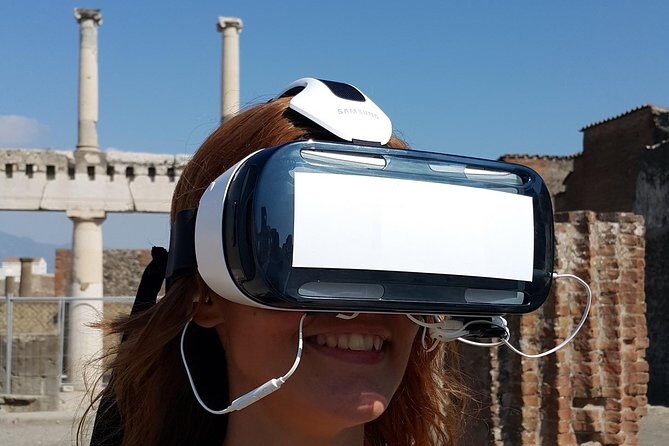
Your main stop is the Pompeii Archaeological Park. This is where the tour becomes more than a technology demo. You are guided through the site while the headset helps you see what is missing.
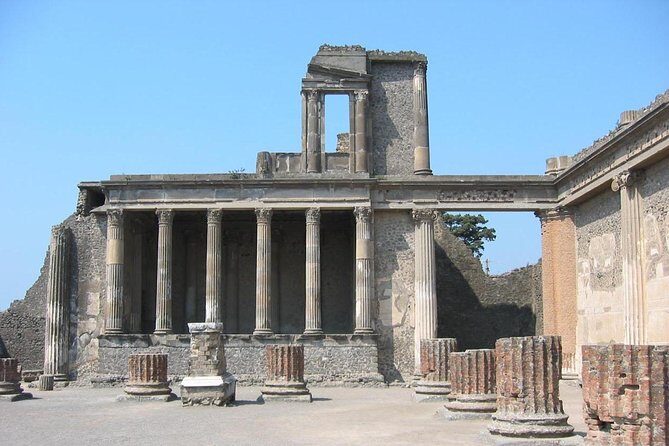
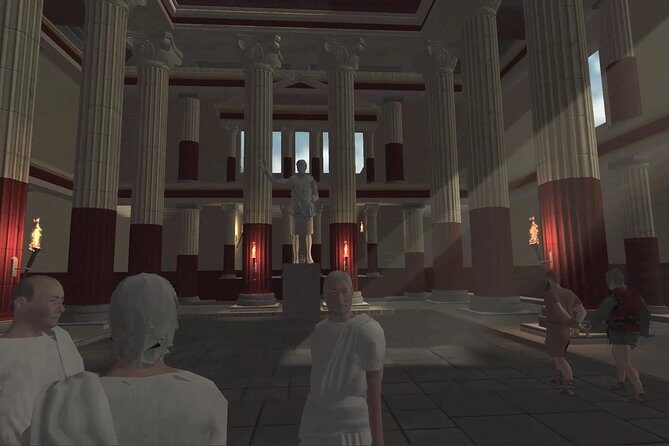
In the VR portion, you get a 360-degree view of reconstructed Pompeii. The story is framed around the city before it was destroyed by the eruption of Mount Vesuvius, with scenes placed to help you visualize what life in the Roman Empire looked like. The guide role matters here. The headset can show you form and layout, but the guide helps you understand function: what a space likely was used for, why certain areas mattered, and how the ruins you are standing next to connect to the reconstructed version you just saw.
You will move through themes like:
- Temples and public religious space
- Homes and everyday domestic life
- Shops and commercial streets
- Theaters and social gathering spots
- Markets where people would have met and traded
The entrance fee is included, so you do not have to hunt down tickets or time your arrival around separate lines. You also get skip-the-line access, which can save your energy for the walking portion.
One thing to watch: VR time can feel like a pause in your normal sightseeing rhythm. If you like to roam freely and take your own photos at your own pace, you may feel that structure a bit. Still, that structure is what makes the learning stick.
Audio commentary: the secret sauce for not getting lost
A headset is only helpful if you can understand what you are looking at. That is why the audio commentary is a core part of the experience. It gives you narration that fits what you are seeing in the 3D reconstruction, so you are less likely to spend the tour asking yourself, So what am I looking at?
This also helps with orientation in a place where things can blur together. Pompeii covers a lot of ground. Without guidance, it is easy to remember big highlights but miss how neighborhoods and building functions connect. With audio plus a licensed local guide answering questions, you get more of the why behind what you are seeing.
If you enjoy learning on the go, this combo is a real plus. You are not just looking at reconstructed streets. You are also getting context as you walk among the actual remains.
The VR reality check: Gear VR strengths and limits
The headset used is Gear VR. It is 3D and 360 degrees, meaning you are not just watching a flat video. You look around and the scene adjusts as you move through it, which helps you grasp space in a way that still photos cannot.
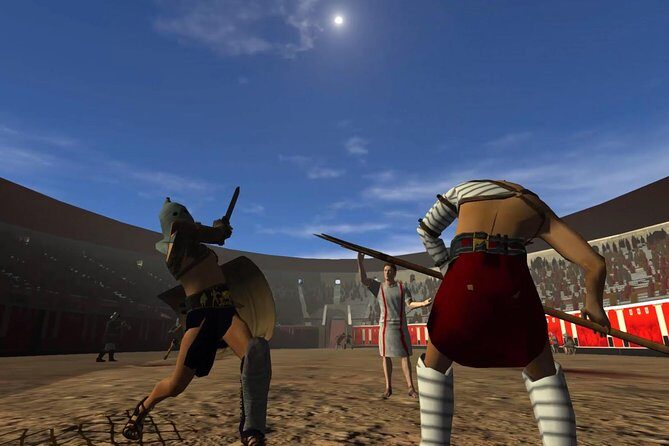
But here is the honest part. One concern noted is that the animation quality may not meet your expectations. In other words, the VR is not trying to be cinema-grade realism. It is more like guided animation that aims to explain how Pompeii might have looked. If you are the type who wants hyper-real textures and stone-by-stone detail, you may end up feeling, I wish I had just done a standard walk with more time on the ruins.
Still, the VR can be very effective for a first encounter with Pompeii. Ruins can look confusing at first glance. Animated reconstructions can help you understand where you are standing and what you are looking at, even if the style is not photoreal.




Who should think twice about the headset
This tour comes with clear health and safety guidance for a reason. If you have any history of seizures, dizziness, epilepsy, or related issues, you are advised to consult a doctor before using the VR headset. People with binocular vision abnormalities, psychiatric disorders, or heart conditions (and anyone pregnant, as well as the elderly) are also told to check with a doctor first.
There are also specific headset warnings tied to how virtual reality affects people:
- Some individuals can experience severe dizziness, seizures, epileptic seizures, or blackouts triggered by visual patterns.
- If you feel symptoms like dizziness, disorientation, blurred or double vision, nausea, or eye strain, you should stop immediately.
- Gear VR can emit radio waves that may affect nearby electronics, including pacemakers. If you have a pacemaker or implanted medical device, the guidance is to not use the headset without consulting your doctor or the device manufacturer.
For kids, the guidance is strict:
- Use is not recommended for children under 13.
- Parents may use discretion for ages 9 to 12.
- Children under 9 are not permitted to use the headsets.
None of this is meant to scare you. It is meant to keep you comfortable and safe. If you are unsure where you fit in, talk to your doctor before you book.
Walking Pompeii in practical comfort mode
Even with VR, you still cover ground at Pompeii. The guidance is clear: wear comfortable shoes because you will walk over uneven terrain. That matters because Pompeii is not smooth flooring. You want something with grip and support.
You should also travel light. Minimize bags, pocketbooks, and backpacks. You may need to wear a lightweight bag across your shoulder during the tour. It is a small thing, but when you are walking and keeping your hands free, less bulk is more comfortable.
The tour is stated to operate in all weather. That is good news because Pompeii weather can be unpredictable. Still, if it is wet, go extra slow on uneven areas. If you have a camera or phone, keep it secured and easy to access, because you may want to compare the reconstructed view with what you see in front of you.
Morning vs afternoon: when timing helps the experience
You get a choice of morning or afternoon. That is not just schedule flexibility. Timing changes how long you feel comfortable outside. Pompeii is open air, and walking takes energy.
A morning slot can feel easier if you want a calmer start. An afternoon slot can work well if you prefer a later day and want more time earlier in Pompeii or nearby. Either way, the tour format stays about the same: headset learning paired with a guided walk through key Pompeii areas.
If you are sensitive to heat or you know walking tires you quickly, picking the least oppressive time of day is one of the easiest upgrades you can make.
Price and value: what you are really paying for
The price is $217.49 per person, and it is a private tour. That is not the cheapest way to see Pompeii. So the value question is fair.
Here is what you are buying:
- A licensed local guide
- Skip-the-line entrance
- A Gear VR headset with 3D 360 reconstructions
- Audio commentary designed to match what you are seeing in the virtual scenes
If you were only paying for an entry ticket and a standard guide, the cost would likely be lower. But the headset and reconstructed 3D experience are the main differentiators. In practice, this tour is best when you think VR will help you understand the site, not when you only want ruins and photos.
There is also a mention of group discounts. If you are traveling as a group and can share the booking, the per-person value usually improves.
One more detail that signals popularity: it tends to be booked far in advance on average. If you know your travel dates, check early. Pompeii is always busy, and private slots plus VR equipment can be harder to line up last minute.
Who this private VR Pompeii tour is best for
This is a strong match if:
- You are curious about how Pompeii looked before the eruption, and VR will help you picture it.
- You want a guided explanation while you walk, not a self-guided wander.
- You like structured time with someone local who can answer questions.
- You are comfortable with the headset setup and the health guidelines.
It may be a weaker match if:
- You are sensitive to VR motion effects or have any of the medical cautions listed.
- You expect photoreal VR and only want realistic imagery.
- You prefer long, free-form walking with no structured headset time.
For teens, it can work well, but only within the age recommendations. For adults, it is usually a fun way to add meaning to the ruins.
Should you book this private VR Pompeii tour?
Book it if you want Pompeii to explain itself more quickly. The 3D 360 VR plus a licensed local guide is designed to connect the reconstructed city to what you see on the ground. If you like learning and you think the idea of seeing temples, homes, shops, theaters, and markets re-created will help you get more from the park, this is a good bet.
Skip or rethink it if the VR style might disappoint you, especially if you are expecting hyper-real detail. Also, do not treat the health rules like fine print. If you have any relevant medical history or you are unsure, get medical advice first.
If your goal is straightforward ruins and photos with no headset, you might prefer a more traditional guided tour. But if your goal is to step back in time and understand what you are standing in, this private VR format is exactly built for that.
FAQ
Where is the tour meeting point?
The tour starts at Piazza Esedra, 80045 Pompei NA, Italy. The experience ends back at the same meeting point.
How long is the Pompeii private VR tour?
The duration is about 2 to 3 hours.
Is Pompeii admission included?
Yes. Admission to the archaeological park is included, and skip-the-line entrance is also included.
What language is the tour offered in?
The tour is offered in English.
Does the tour use a 3D VR headset?
Yes. You’ll use a Gear VR 3D virtual reality headset, with 360-degree viewing.
Can children use the VR headsets?
The use of 3D virtual reality headsets is not recommended for children under 13. Parents may allow children aged 9 to 12 at their discretion, and children under 9 are not permitted to use the headsets.
Who should consult a doctor before taking this tour?
People with histories of seizures, dizziness, epilepsy, epilepsy-like symptoms, preexisting binocular vision abnormalities, psychiatric disorders, heart conditions, other serious medical conditions, and pregnant, elderly people are advised to consult a doctor before taking the tour.
Is the tour private?
Yes. It is a private tour/activity, and only your group will participate.
What is the cancellation policy?
You can cancel for free up to 24 hours in advance for a full refund. If you cancel less than 24 hours before the start time, you will not receive a refund.