REVIEW · POMPEII
Private Pompeii Tour with 3D Virtual Reality Headset – Tour Assistant Only
Book on Viator →Operated by Flashback Journey to Pompeii · Bookable on Viator
Pompeii feels different with a VR headset. This private tour pairs a walk through the ruins with 3D reconstructions of streets and buildings as they looked around 2,000 years ago. I also like that the ticket includes skip-the-line entrance, so you spend more time seeing than waiting.
Before you go in, there’s a short 5-minute headset training from the staff, then you’re led through the Pompeii Archaeological Park by an escort. While you’re there, the headset provides audio commentary in six languages, and you can watch up to 15 3D VR videos.
One big consideration: the escort is not a licensed archeology guide, so they can’t answer site questions on the spot. On top of that, the VR experience has health and dizziness cautions, so it’s smart to review the warnings if you have vision, heart, seizure, or pacemaker concerns.
In This Review
- Key things to know before you go
- Why the VR headset changes Pompeii’s story
- Meeting at Hotel Vittoria and the 5-minute headset training
- Inside the ruins: VR moments and walking time together
- Audio commentary in six languages: how to pick what works for your group
- Where the assistant can help (and where they can’t)
- Footwear, weather, and VR safety for real bodies
- Age rules for VR headsets: what you can plan for
- Value for money: what $124.02 buys in a 2.5-hour visit
- Should you book this private Pompeii VR tour?
- FAQ
- FAQ
- How long is the private Pompeii tour with VR headsets?
- Can I choose a morning or afternoon departure?
- Is the Pompeii entrance ticket included?
- Does the tour include a licensed archeology guide?
- What languages are available during the tour?
- What is the minimum age to use the VR headset?
- Where does the tour start and where does it end?
- How many VR videos can you watch during the tour?
- Who should talk to a doctor before using the VR headsets?
Key things to know before you go
- Private group setup means only your group participates, not a mixed crowd.
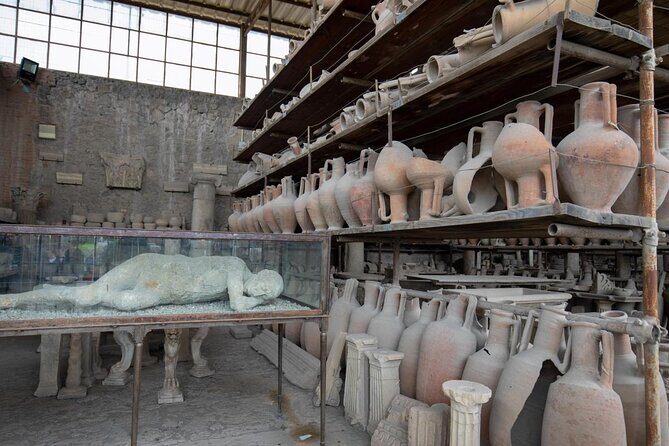
- Headset time travel inside the ruins brings temples, homes, shops, theaters, streets, and markets back to life.
- Audio commentary in six languages helps if your group has mixed language comfort.
- You still walk Pompeii over uneven ground, so good shoes matter.
- Assistant-led, not licensed-guided means you’ll rely mostly on the headset for history, not Q&A.
- VR has real safety limits for certain medical conditions and anyone prone to dizziness.
Why the VR headset changes Pompeii’s story
Pompeii can be oddly hard at first glance. Stones are stones, and it’s easy to miss the everyday life that once filled the streets. This tour uses 3D VR headsets to recreate Pompeii as it was before the eruption of Mount Vesuvius, turning ruins into a scene you can understand faster.
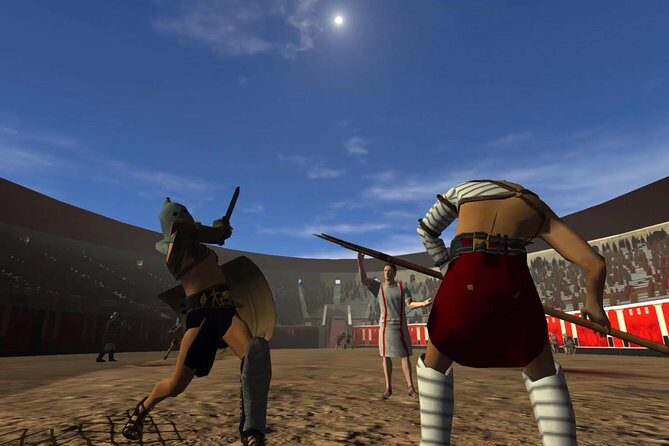
What I like here is that the VR is not just a movie in the abstract. The reconstructions are tied to what you’re standing in front of: homes, shops, theaters, and the street grid start to make sense when you can compare the current ruins with the ancient look. You also get audio commentary through the headset, so you’re not forced to read every plaque to follow the story.
The tradeoff is that the VR is still a screen experience. The graphics may not feel like modern video games (no guarantees there), but the point is historical visualization, not perfect realism. If you want archaeology explanations that go deep, you’ll need to supplement with another guide later or use your own research between stops.
You can also read our reviews of more private tours in Pompeii



Meeting at Hotel Vittoria and the 5-minute headset training
Your day starts at Hotel Vittoria, Piazza Esedra (Pompei NA). The tour ends at Piazza Immacolata, which is handy if you’re planning to keep moving by foot or public transportation afterward.
This setup works best if you arrive a few minutes early and keep things simple. You’ll be walking over uneven terrain, so comfortable shoes are a must, and the tour encourages you to travel light—minimize bags and backpacks. A lightweight shoulder bag is usually the easiest option.
Before you enter the ruins, there’s a short training session (about 5 minutes) on how to use the VR headsets. That matters more than it sounds. When the basics are covered right away, you spend less time fiddling and more time paying attention to what’s around you. It’s also a small moment where you can gauge whether the headset feels okay for you and your group.
Inside the ruins: VR moments and walking time together
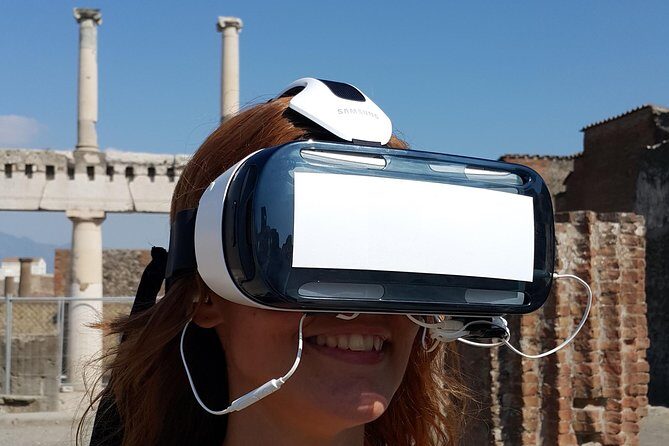
Once you step into Pompeii Archaeological Park, the escort leads you through the site while you use the headsets. This is where the tour earns its name: you’re not trapped in one room. You experience Pompeii with a combination of real walking and short VR segments.
The headset includes up to 15 3D VR videos, and the plan is built around those “time travel” moments. Expect that pacing to include pauses for viewing and picture-taking opportunities. That photo time is not just a bonus; it’s practical. Pompeii is a place where comparison helps—seeing a modern ruin and then seeing the reconstructed version in your headset makes the differences stick.
Even with VR, you’re still dealing with the real environment. The park has uneven ground, and you’ll be moving between areas. If you’re hoping to keep this day calm and low-effort, plan for slow steps, breaks, and hydration, and don’t assume you can sprint through the experience.
Audio commentary in six languages: how to pick what works for your group
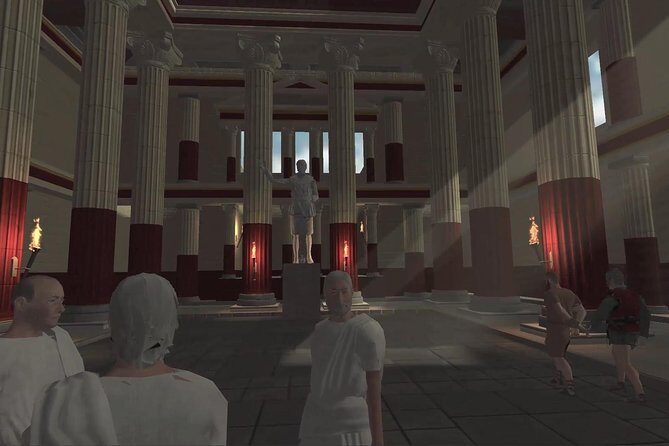
The escort speaks only English and Italian, but the headset audio commentary is available in six languages: English, Italian, German, French, Spanish, and Russian. That’s a big deal for mixed-language groups because it lets everyone follow the narration even when the escort’s language is limited.
The main value is continuity. When you’re walking in ruins, it’s easy for a group to get separated by confusion—who heard what, who missed a key detail, who’s asking the wrong question in the wrong moment. The headset narration keeps the story flowing while you move, and you can listen at your own pace instead of trying to keep up with live explanation.
One more practical note: since the escort isn’t a licensed guide, the headset audio becomes your best source for the “what you’re looking at” facts. If you want the kind of history that comes with names, dates, and deeper interpretations, consider pairing this with a separate licensed guide at another time or using your own reading before you arrive.
Where the assistant can help (and where they can’t)
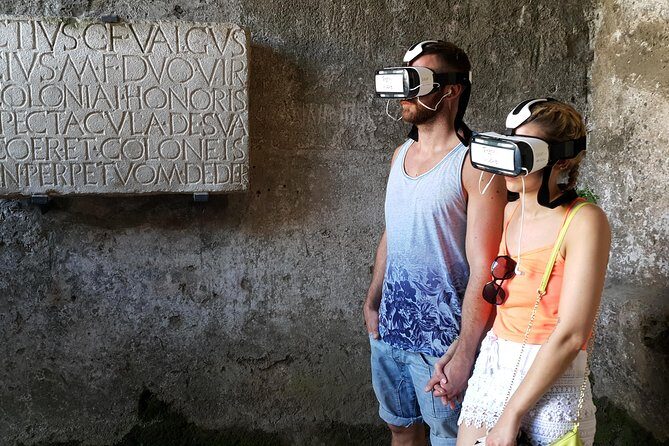
This is a tour with an escort, not a full licensed guidance experience. The escort is there to lead you through the ruins and manage the flow, and you can absolutely rely on them for logistics and on-the-ground direction.
But they can’t answer archeological questions about the site. If you want to quiz someone about excavation details, specific structures, or scholarly interpretations, don’t plan on getting that from the escort. Instead, use the headset commentary for the core facts during the walk, and save broader questions for a licensed guide you hire separately.
This limitation also changes how you should ask for help. Ask things like where to stand for the best viewing, how to manage the headset safely, or how long you’ll spend in a section. The escort’s job is to keep you comfortable and moving, not to run a full interpretive lecture.




Footwear, weather, and VR safety for real bodies
You’ll be walking over uneven terrain, so wear comfortable shoes that you can trust on stone and uneven paths. The tour runs in all safe weather conditions, so dress appropriately for Pompeii’s conditions that day.
Then there’s the VR health side, which you should treat seriously rather than casually. The tour uses Gear VR-style 3D headsets (Samsung/Oculus Gear VR). The provider recommends checking with a doctor if you are pregnant, elderly, have pre-existing binocular vision abnormalities, psychiatric disorders, or a heart condition. They also point out that some people (about 1 in 4,000) may experience severe dizziness after VR exposure, and anyone with seizure history or loss of awareness should consult a doctor first.
They also warn about VR discomfort symptoms and instruct you to stop immediately if you experience issues like dizziness, disorientation, eye strain, blurred or double vision, nausea, or impaired balance. In other words: if your body says no, you listen. Don’t push through.
One more important detail: the Gear VR can emit radio waves that may affect nearby electronics, including cardiac pacemakers. If you have a pacemaker or other implanted medical device, you should not use the headset without consulting your doctor or the device manufacturer.
Age rules for VR headsets: what you can plan for
Kids can be part of this experience, but the age guidance is clear. The minimum age to use the headset is 9. The manufacturer recommendation also says the headsets provided should not be used by children under 13 (Gear VR). Parents who allow younger children do so at their own risk and are fully responsible for safety and well-being.
If you’re traveling as a family, that means you’ll want to think about maturity and comfort with motion and balance. The provider notes that a comfortable tour experience requires an unimpaired sense of motion and balance. Also, children must be accompanied by an adult.
My practical take: this is often a great fit for kids old enough to follow the narration and handle the headset without panicking. For younger kids, the walking and the ruins themselves are still interesting, but the VR may not be a good match for comfort or safety.
Value for money: what $124.02 buys in a 2.5-hour visit

At $124.02 per person for about 2 hours 30 minutes, you’re paying for a specific blend: private participation, VR equipment, skip-the-line admission, and an escort to manage the experience.
Here’s what makes it feel more like value than just a tech add-on:
- The ticket includes skip-the-line Pompeii entrance, which can protect your time.
- The VR component is included (one headset per adult and youth).
- You’re not paying for a separate ticket entry if you would otherwise buy one on arrival.
- It’s designed as a short, structured visit rather than an all-day DIY wander.
Group discounts can help too, and the tour is booked fairly far in advance on average (about 41 days). That’s a quiet clue that this slot can sell out, especially for popular departure times. If your trip window is fixed, booking earlier usually keeps you from hunting for last-minute options.
Where the price may feel less justified is if you strongly prefer a licensed site guide for deep questions. Since the escort can’t answer archeology questions, you may end up using the headset commentary more than you expected. If your travel style is mostly about detailed explanations from a person, you might prefer a traditional licensed-guided tour.
Should you book this private Pompeii VR tour?
I’d book this if you want a fast way to understand Pompeii’s layout and daily life without needing a live interpreter who answers every question. The combination of real walking and headset reconstructions is a smart shortcut for first-timers, families with older kids, and anyone who likes tech-assisted learning.
Skip it or plan carefully if any of the VR safety issues apply to you or your group. The health warnings are not fine print, especially around dizziness risk, seizure history, binocular vision problems, and pacemaker interference. If VR makes you feel queasy on a good day, don’t gamble with a ruined-stone day.
If you’re flexible with dates, you also have free cancellation up to 24 hours before the start time, which is useful when travel plans change. If your schedule is fixed, book sooner rather than later, since these tours are scheduled with limited availability.
FAQ
FAQ
How long is the private Pompeii tour with VR headsets?
It lasts about 2 hours 30 minutes.
Can I choose a morning or afternoon departure?
Yes. You can pick either a morning or an afternoon departure time.
Is the Pompeii entrance ticket included?
Yes. Admission is included, and it includes a skip-the-line entrance fee.
Does the tour include a licensed archeology guide?
No. The tour assistant/escort is not a licensed guide and cannot answer archeological questions about the site.
What languages are available during the tour?
The tour assistant speaks English and Italian. The headset audio commentary is available in six languages: English, Italian, German, French, Spanish, and Russian.
What is the minimum age to use the VR headset?
The minimum age is 9. The manufacturer also recommends the headsets should not be used by children under 13.
Where does the tour start and where does it end?
It starts at Hotel Vittoria, Piazza Esedra, 80045 Pompei NA, Italy and ends at Piazza Immacolata, 80045 Pompei NA, Italy.
How many VR videos can you watch during the tour?
You can watch up to 15 3D virtual reality videos.
Who should talk to a doctor before using the VR headsets?
The provider recommends consulting a doctor if you are pregnant, elderly, have pre-existing binocular vision abnormalities or psychiatric disorders, or have a heart condition. They also advise caution for anyone with seizure history or loss of awareness, and they note the headsets can emit radio waves that may affect pacemakers.