REVIEW · POMPEII
Pompeii with an archaeologist, small group!!!
Book on Viator →Operated by Naplesprit · Bookable on Viator
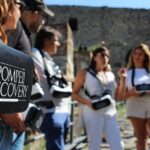
Pompeii feels real fast. This visit is built around a small group and led by an archaeologist, so you don’t just look at ruins—you get help making sense of a whole Roman city. I like that the tour is designed for the afternoon, when the heat and crowds are usually easier to handle, and when the light can make photos look great.
Two things I love about this tour: first, the guide steers you through key places for understanding daily Roman life, from a typical decorated house to local shops and public spaces. Second, the pacing is short and focused—about 2 hours—which makes it a practical way to see the main highlights without turning your day into a full-day endurance test.
One thing to consider: it’s weather-dependent. If conditions are poor, you’ll either get a different date or a full refund, so plan for a bit of flexibility rather than assuming it will run no matter what.
In This Review
- Key things to know before you go
- A guided Pompeii sprint that actually helps you see the point
- Meet at Ristorante Suisse, then go straight into the site
- Pompeii’s 79 AD story: how the city becomes a time machine
- The decorated house and shops: home life you can read
- Thermal baths and the theater: public life, Roman-style
- The lupanary and the harder edges of Pompeii
- “Moving molds” and tour craft: why interpretation matters
- Afternoon timing: heat and crowds, plus late-day light for photos
- Price and value: what $66.09 really buys you
- Who this Pompeii tour fits best
- Should you book this Pompeii with an archaeologist?
- FAQ
- FAQ
- How long is the Pompeii with an archaeologist small group tour?
- What group size should I expect?
- Is the tour offered in English?
- Where do we meet for the tour?
- What’s included in the price?
- Is lunch included?
- What happens if the weather is bad?
- What’s the cancellation policy for a refund?
Key things to know before you go
- Small group size (max 12): easier questions, less waiting around, calmer pace.
- Archaeologist-led context: you’re not just sightseeing stones; you’re learning how Romans lived.
- Late-day timing: planned to reduce heat and crowd stress, with better end-of-day light.
- Must-see highlights in a short window: house decorations, shops, thermal baths, theater, lupanary, and more.
- English tour: clear explanations focused on understanding the city.
A guided Pompeii sprint that actually helps you see the point
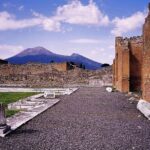
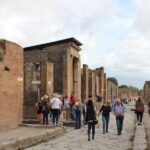
Pompeii is famous for a reason. A Roman city covering 66 hectares was buried after the eruption of Vesuvius in 79 AD, and the result is a place where daily life from that era is still visible. The tricky part is that ruins can feel like random walls and streets unless someone gives them meaning.
That’s where this tour works. With an archaeologist guiding you, you’re guided toward the big themes of Roman life and what different buildings were for. You’ll move through the most important and famous buildings without feeling like you’re running a marathon.
The group size also matters. With a maximum of 12 people, you get a visit that feels like walking with an expert rather than being one face in a line. And because the tour is designed for the afternoon, you’re usually not starting the day at the peak of the sun and the peak of the crowds.
You can also read our reviews of more tours and experiences in Pompeii.


Meet at Ristorante Suisse, then go straight into the site
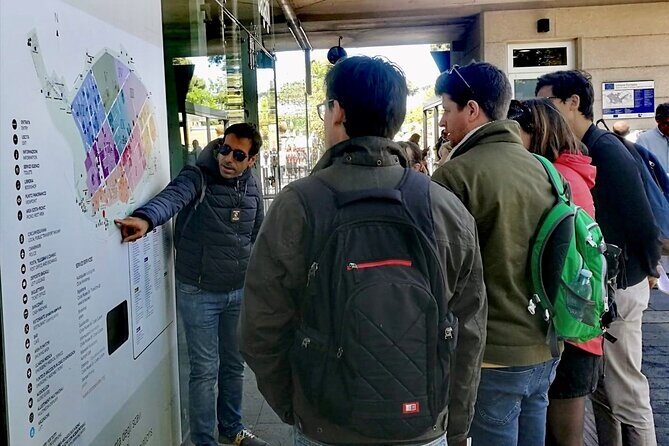
You’ll start at Ristorante Suisse, Piazza Esedra 10/13, 80045 Pompei NA, Italy. The activity ends back at that same meeting point, so you’re not stuck figuring out a second rendezvous later.
A couple practical perks make the experience smoother. Your ticket is handled as a mobile ticket, and you get a Pompeii Express entrance ticket included in the price. That combo matters because it can save time on arrival and helps keep your 2-hour window from getting eaten up by logistics.
The tour is offered in English, and it runs for about 2 hours (approx.). That time frame is short enough to feel doable, but long enough that the guide can connect the dots between places—houses, shops, and public buildings—so you come away with a clearer picture of how a Roman city functioned.
If you’re sensitive to walking, bring comfortable shoes. Pompeii is a walking experience even when the route is well planned.
Pompeii’s 79 AD story: how the city becomes a time machine
The eruption of Vesuvius in 79 AD is the event that turns Pompeii from an old city into a kind of “frozen snapshot” of Roman life. This tour keeps that context up front: you’re shown Pompeii as a Roman city, not just a pile of ruins.
What I like about this approach is that it frames the site as a place with systems and routines. Roman life wasn’t only temples and grand monuments. It also involved home decorations, local commerce, public baths, entertainment, and the everyday rhythms of a working city.
You’ll also hear how Pompeii’s layout and buildings help explain that daily life. The guide isn’t just naming locations. The goal is understanding the aspects of daily life and habits of the Romans, which is exactly what makes the experience more satisfying than a quick photo stop.
The decorated house and shops: home life you can read
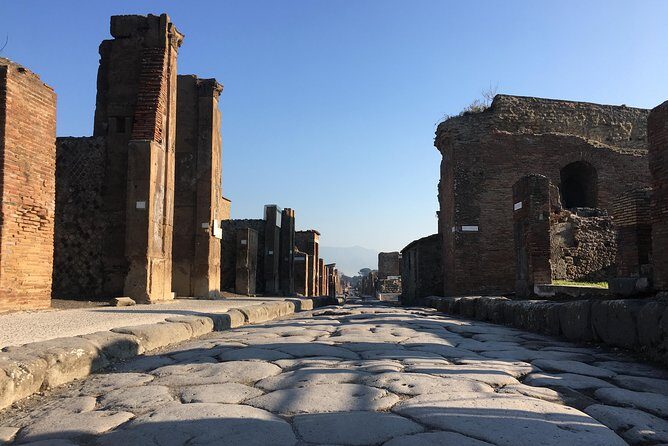
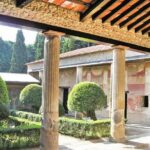
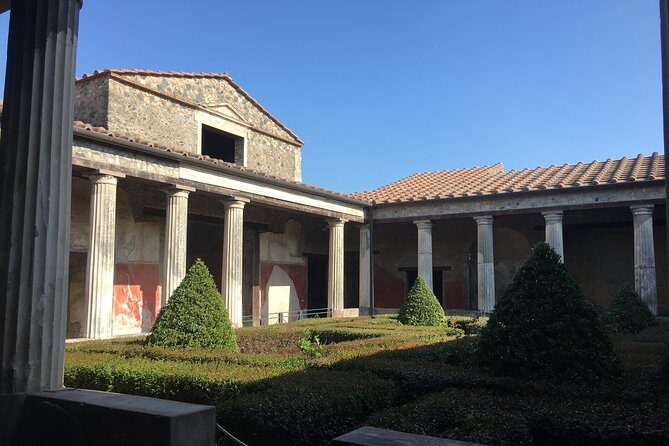
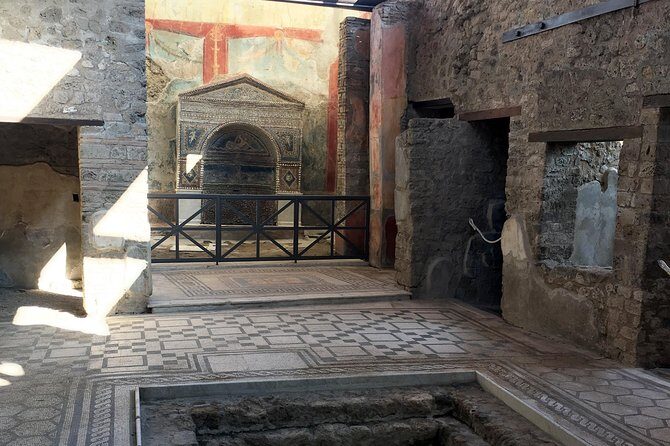
One of the most memorable parts of Pompeii is how much you can learn from everyday spaces. This tour includes a typical house with its decorations, plus shops.
Why these stops matter: houses and shopfronts are where you can feel the human scale of the city. A public building can impress you, sure. But a home tells you about taste, routine, and what people thought was worth displaying. Shops show how normal people got supplies and interacted with neighbors.
And because you’re walking with an archaeologist, you’re more likely to notice the details you would otherwise miss. Even in a short tour, the guide helps you connect what you see to what it likely meant for the people living there.
If you love photography, this is the part where you can get creative. Interiors and storefront-style spaces often work well for images because there’s a story in the setting, not just a view.
Thermal baths and the theater: public life, Roman-style
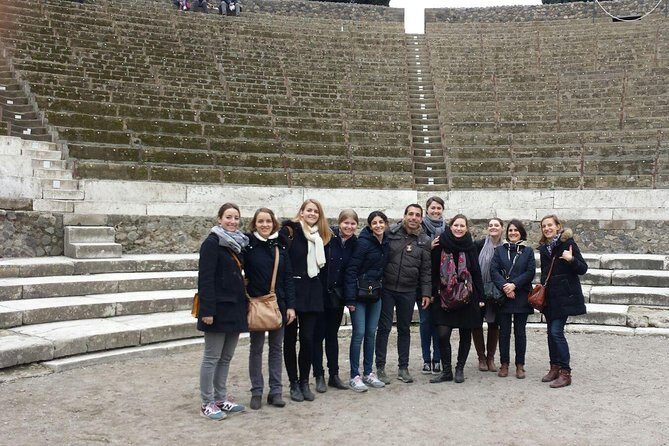
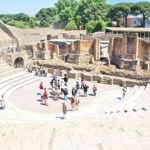
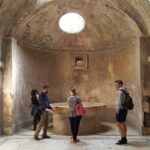
This tour doesn’t skip the places where community life happened. You’ll visit thermal baths and the theater.
The baths are more than a place to wash. Public bathing spaces were also social spaces, and you’ll get a sense of how people gathered and spent time. It’s a good reminder that Rome had strong public rhythms—people didn’t always retreat to private life when they wanted interaction.
The theater adds another side of the city’s routines. It’s entertainment, yes, but it also shows how public culture was organized. Seeing it during a guided walk helps you understand why these spaces weren’t optional luxuries—they were part of the city’s daily energy.
The advantage of fitting both baths and theater into a 2-hour route is that it gives you balance. You get a glimpse of hygiene and leisure, not just stone streets and dramatic architecture.

The lupanary and the harder edges of Pompeii
Pompeii is not only polite and pretty. This tour includes a visit to the lupanary, which brings the conversation into the more complicated reality of the city.
This stop can be uncomfortable for some people, and that’s normal. But it’s also part of what makes Pompeii valuable: you see how daily life worked across the full range of what people dealt with. A guided visit helps keep the topic in context rather than turning it into a shock-value photo moment.
I appreciate tours that don’t sanitize the story. If you’re traveling with kids, you might want to think ahead and decide whether this is a topic you’re comfortable discussing. The good news is that this tour is aimed at families too, so it’s not purely an adult-only experience—but that doesn’t mean every family will want the same level of detail.
“Moving molds” and tour craft: why interpretation matters
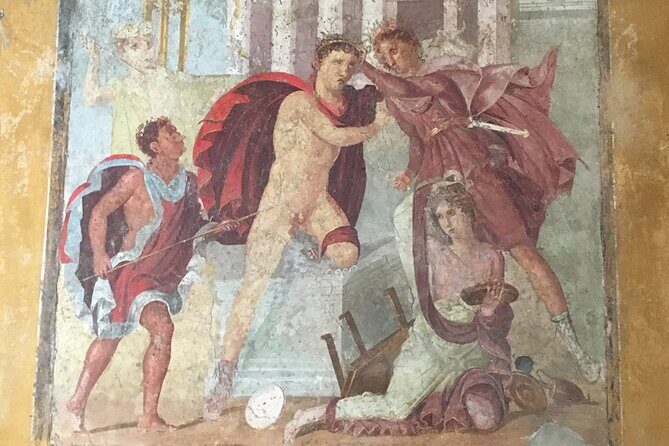
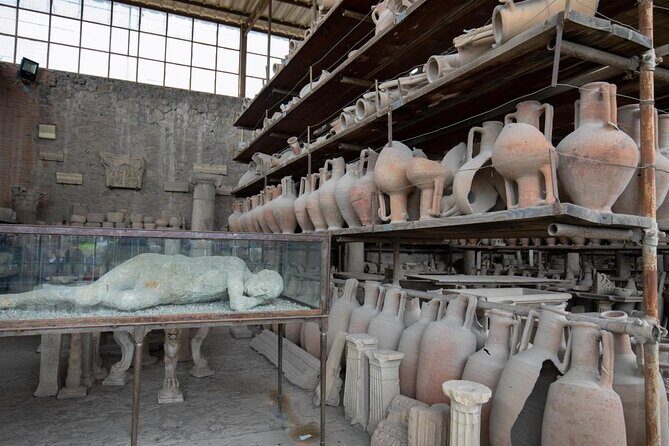
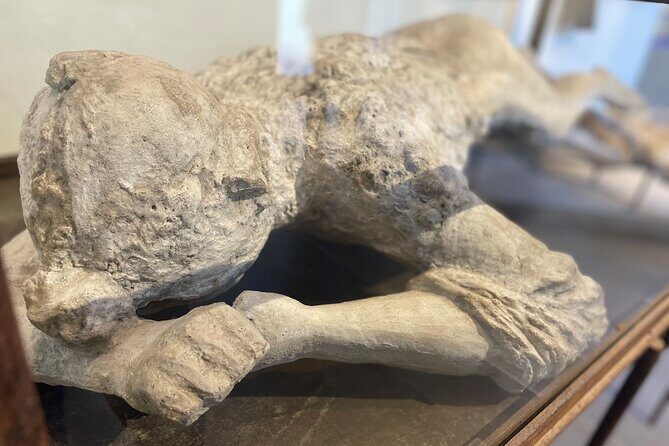
This visit also mentions the moving molds and other displays as part of the learning experience. Even without getting lost in technical descriptions, the idea here is clear: you’re shown ways to understand the preserved remains and how archaeologists communicate what those finds mean.
This kind of stop is useful because Pompeii can overwhelm you. When you’re surrounded by ruins, your brain starts guessing. The molds and similar explanations help you reduce the guessing and swap it for real understanding.
That’s also why this is archaeologist-led instead of guide-only sightseeing. You’re there to learn the logic behind what you’re seeing, and those interpretive pieces can turn confusion into clarity.
Afternoon timing: heat and crowds, plus late-day light for photos
The tour is designed for the afternoon to avoid the heat and the crowds as much as possible. That design choice matters. Pompeii is a big site, and even when your route is not the whole city, the sun can still drain you quickly.
Then there’s the timing bonus: the tour is calibrated so the charm of the light at the end of the day can make the visit feel magical. For photographers, that’s often when shadows look better and surfaces show texture rather than glare. For everyone else, it makes the walk more pleasant.
If you want better photos, aim to bring what you always bring for warm-weather walking: sun protection, water, and comfortable shoes. The tour won’t replace basic comfort planning, but the timing helps a lot.
Also, because this is a small group, you’ll spend less time watching other people shuffle around. That keeps the pace steady and the photos more intentional.
Price and value: what $66.09 really buys you
At $66.09 per person for about 2 hours, this isn’t a “cheap ticket” experience. It’s priced as a guided visit with included entry.
Here’s why it can still feel good value:
- You get a small group (max 12), not a massive crowd.
- An archaeologist leads the tour, so you’re paying for interpretation, not just movement through the site.
- The Pompeii Express entrance ticket is included, which helps you avoid extra ticket purchases and keeps things efficient.
- The route covers multiple major areas tied to everyday life, so you don’t leave with only one highlight.
What’s not included: lunch. That means you’ll want to plan food before or after the tour based on your schedule. If you’re pairing this with other stops in the area, this tour’s short duration can make planning easier.
Bottom line: if your goal is to understand Pompeii in a focused way—houses, shops, baths, theater, and the lupanary—this price-to-time ratio can make sense. If your goal is maximum walking and seeing every corner of Pompeii, you might want a longer self-guided or full-day plan instead.
Who this Pompeii tour fits best
This tour is recommended for families and also for photography enthusiasts and people who genuinely enjoy archaeology. That makes sense with the mix of everyday spaces plus major public buildings.
Families often like the short, structured format. Two hours is manageable, and the archaeologist-led explanations can make the site feel less like a field trip into emptiness. Still, because the tour includes the lupanary, it’s worth thinking about what your kids are ready for.
Photography fans will like the late-day timing and the variety of scenes: decorated home spaces, street-level shop areas, and big public architecture. The small group also helps, because it’s easier to pause and reposition without the tour constantly moving away from you.
If you like your travel days organized and you don’t want the stress of a full-day site marathon, this is a strong choice.
Should you book this Pompeii with an archaeologist?
Book it if you want:
- A guided Pompeii visit focused on understanding Roman daily life
- A small group experience that avoids the worst crowd pressure
- An afternoon plan with better light for photos
- The value of an archaeologist plus an included Pompeii Express ticket
Skip it or consider alternatives if:
- You prefer to wander freely with no guidance
- You need a full-day ticket to see everything on your own pace
- You can’t be flexible about weather, since the tour needs good conditions
If you’re in the “I want the highlights, but I also want the meaning” camp, this is a very sensible way to experience Pompeii.
FAQ
FAQ
How long is the Pompeii with an archaeologist small group tour?
It lasts about 2 hours.
What group size should I expect?
The tour has a maximum of 12 travelers.
Is the tour offered in English?
Yes, it’s offered in English.
Where do we meet for the tour?
You’ll meet at Ristorante Suisse, Piazza Esedra 10/13, 80045 Pompei NA, Italy.
What’s included in the price?
Included are a small group (12 max), a tour with an archaeologist, and the Pompeii Express entrance ticket. A mobile ticket is provided.
Is lunch included?
No, lunch is not included.
What happens if the weather is bad?
The experience requires good weather. If it’s canceled due to poor weather, you’ll be offered a different date or a full refund.
What’s the cancellation policy for a refund?
You can cancel for a full refund up to 24 hours before the experience’s start time.