REVIEW · POMPEII
Late Afternoon Best time to visit Pompei on a private tour
Book on Viator →Operated by Alex Tour · Bookable on Viator
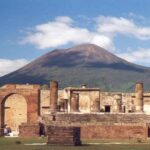
Pompeii hits different when the light turns soft. This late-afternoon private tour keeps you moving through the Pompeii Archaeological Park with a licensed guide, so you’re not stuck trying to piece together history on your own. I love the private guide format because you can ask questions and get explanations right where the ruins are. I also love the timing—Pompeii at sunset gives the stonework a warm glow, and the crowds usually feel more manageable than mid-day.
One thing to plan for: the main Pompeii entrance ticket isn’t included in the $249 price, so you’ll add it on top (Euro 18 for adults). Also, you’re walking an active outdoor site for about 2 hours, so it helps to be comfortable on uneven ground.
In This Review
- Quick hits before you go
- Why Late Afternoon at Pompeii Feels Like the Real Pompeii
- Meeting at Via Villa dei Misteri and Getting Your Bearings
- Entering Pompeii Through Porta Marina: AD 79 Comes First
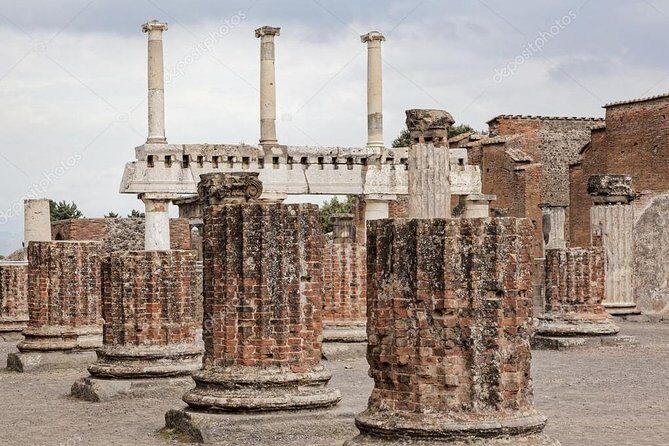
- The Forum: Where Daily Power Played Out
- Temple of Apollo: Myth Meets Stone
- Stabian Baths and Roman Comfort: A Real Daily-Life Stop
- Teatro Grande: Greek Roots in Roman Pompeii
- Casa del Menandro: Frescoes and Mosaics That Feel Almost Close
- Panificio di Popidio Prisco: A 2,000-Year-Old Bakery Moment
- Termopolio di Vetuzio Placido: Street Food as Social Life
- Orto dei Fuggiaschi: The Plaster Casts You Won’t Forget
- What Makes This Private Tour Worth $249 (and What Adds Extra Cost)
- The Most Praised Aspects You Should Expect
- Who This Tour Is Best For
- Practical Tips for Your Late Afternoon in Pompeii
- Should You Book This Late-Afternoon Private Pompeii Tour?
- FAQ
- How long is the private late-afternoon Pompeii tour?
- Where do we meet for the tour?
- Is the Pompeii entrance ticket included in the price?
- What’s included with the $249 price?
- Can the guide help with skip-the-line tickets?
- Which major sights will we see during the tour?
- Is this tour private or shared?
- Is the meeting point easy to reach by public transportation?
- Are service animals allowed?
- What if the weather is bad?
Quick hits before you go
- Start at Porta Marina, then get the eruption story early so the rest makes sense fast
- Forum, Temple of Apollo, and key domus in one tight route without a full-day slog
- Stabian Baths + theatres show Roman daily life, not just big temples
- Plaster casts of victims help you understand what happened in AD 79 in a powerful way
- Late-afternoon timing often means cooler temperatures and gentler crowd levels
Why Late Afternoon at Pompeii Feels Like the Real Pompeii
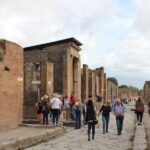
Pompeii can feel overwhelming. The site is huge, and if you show up when everyone else shows up, you’ll spend more time dodging people than noticing details. A late-afternoon start helps you do the opposite: you get a calmer pace, and the ruins look more human as the light changes.
This tour is designed around that idea. You’re not trying to “see everything.” You’re trying to see the right things, in the right order, with a guide who can connect the dots. And because it’s private, it’s easier to slow down at the spots that grab you.
You’ll also notice how much difference temperature makes. Even in cooler seasons, Pompeii is outdoors and exposed. Late afternoon often means fewer harsh hours in the sun, which makes it more comfortable to focus.
You can also read our reviews of more tours and experiences in Pompeii.

Meeting at Via Villa dei Misteri and Getting Your Bearings
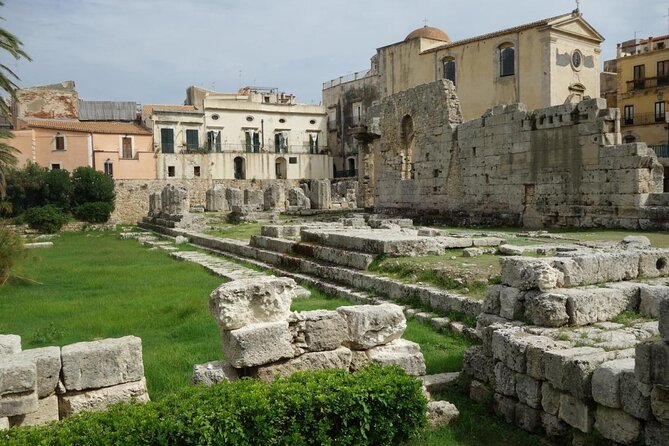
You’ll meet at Via Villa dei Misteri, 2, 80045 Pompei NA, Italy. The tour ends back at the same meeting point, which is handy when you’re planning the rest of your evening in the area.
A practical tip: go into Pompeii with a simple mindset—watch, listen, then look again. The guide’s job is to point out what to notice, but your job is to give yourself permission to pause. On a tight 2-hour route, those short pauses are what turn “I saw ruins” into “I understand what I’m seeing.”
Also, you’ll receive a mobile ticket. That’s one less thing to manage on your phone while you’re finding meeting points and navigating the park.
Entering Pompeii Through Porta Marina: AD 79 Comes First
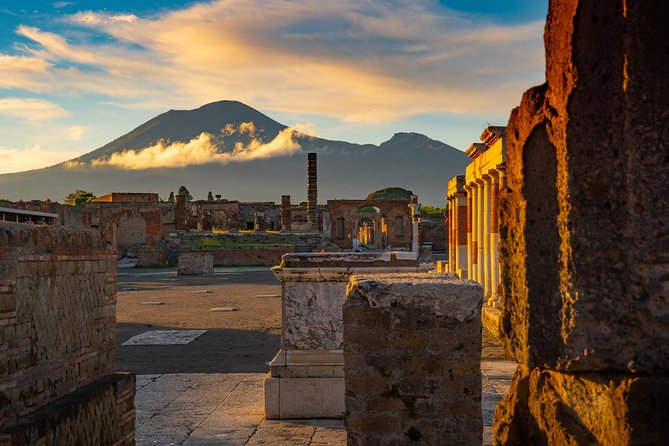
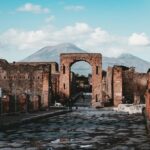
The walk starts at Porta Marina, Pompeii’s sea gate. Starting here is smart because it frames the city as a living place—connected to travel, trade, and daily movement—before you start jumping to specific monuments.
Right away, your guide sets up the eruption of AD 79. You’ll hear the dynamics of what happened and how the city’s layout shaped what people encountered. When that context is in your head early, the rest of the tour stops feeling like random stops.
Then you move through key “anchor” areas that help you understand how Pompeii worked:
- the Forum as the center of political, economic, religious, and social life
- body casts, which preserve people in their final moments
- an ancient public baths area
- shops and workshops
- the water system that kept daily life functioning
One small consideration: some parts of Pompeii can be crowded depending on the day and the flow in the park. A private guide can adjust, including choosing a rich house based on crowd levels and opening rotation (or based on your request). That flexibility is the value of going private.
The Forum: Where Daily Power Played Out
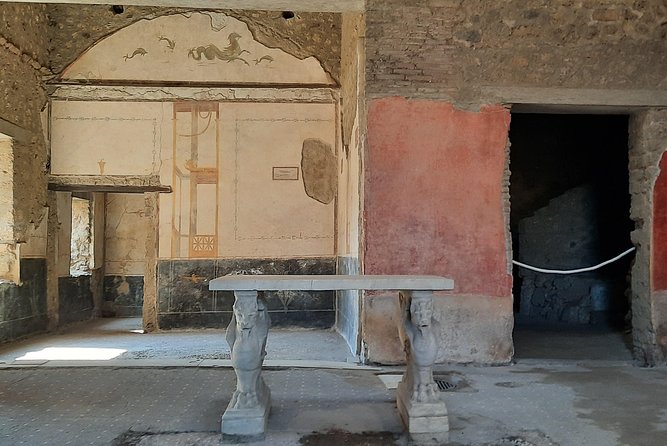
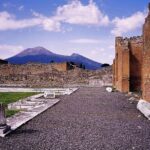
The tour moves from the larger introduction into the heart of civic life at the Forum. This is Pompeii’s main square—where the city’s decisions, beliefs, business, and social rhythm all met.
What I like about seeing the Forum with a guide is the explanation of what you’re looking at. Without context, you can stand in the middle of a ruin and wonder, Which building mattered? What was the point? With the guide pointing out the roles of different spaces, you start to understand the city as a system.
A practical note: the Forum area can be open and exposed, so keep water handy and wear something that works for late-day light. Even if it’s cooler, Pompeii is still an outdoor walk.
Temple of Apollo: Myth Meets Stone
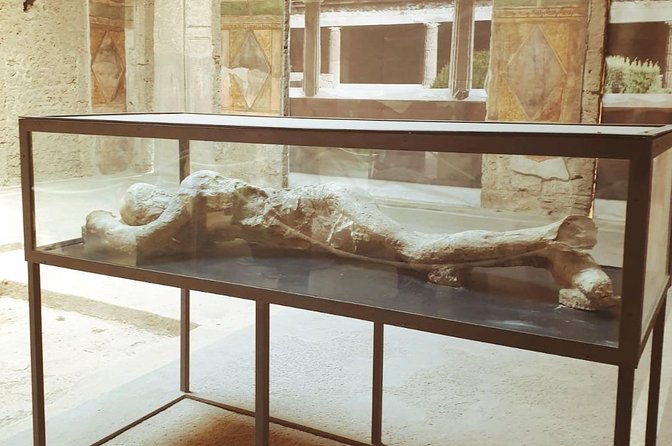
Next comes the Temple of Apollo. This stop is quick—think about a short, focused visit—but it’s designed to connect mythology and daily life. Roman religion wasn’t just “church stuff.” Temples reinforced civic identity, public values, and the way people explained the world.
A good guide makes you look at the architecture as something functional, not just decorative. You’ll likely connect what the temple represented to the broader Roman belief system, which adds texture to what you’ve seen in the Forum.

Stabian Baths and Roman Comfort: A Real Daily-Life Stop
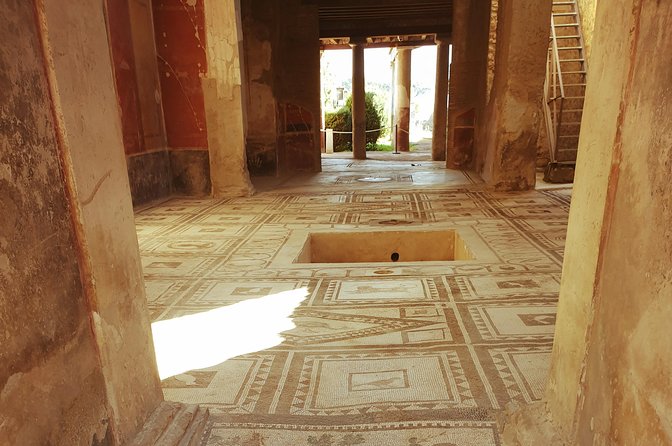
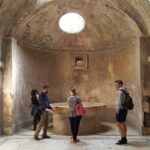
Then you reach the Stabian Baths (Terme Stabiane). Roman baths were social spaces as much as they were for hygiene. Here, the ruins tell a story about routines: movement through rooms, shared talk, and public life.
This stop gives you a chance to shift gears. Instead of focusing only on politics and religion, you get a slice of what people did on ordinary days. It’s also one of those places where a guide’s description makes the layout click.
Time matters here. You’ll have enough to understand the space, but not so much that you lose the thread and overheat. In about 15 minutes, it’s usually the right balance of detail and momentum.
Teatro Grande: Greek Roots in Roman Pompeii
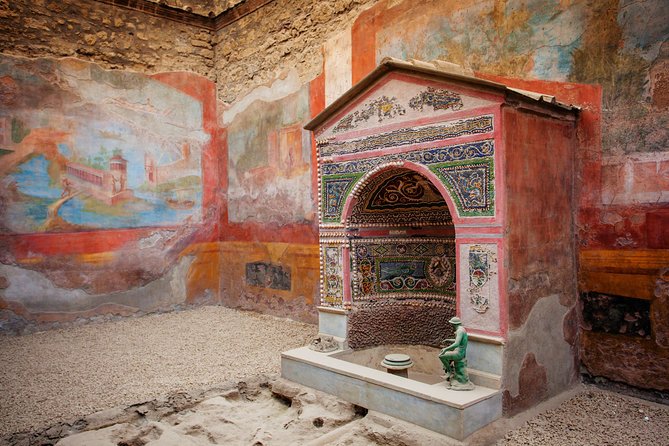
The tour includes Teatro Grande, the Greek theatre. It’s a reminder that Pompeii wasn’t purely Roman-from-the-start. It absorbed influences, adapted them, and used them for public gatherings.
The value of a short theatre stop is that it gives you a “soundtrack” for imagination. Even if you can’t picture a full show, you can picture the crowd movement and why theatres mattered as social anchors.
If you’re sensitive to stairs or uneven surfaces, keep an eye on your footing. Pompeii is a ruin site, and theatres often have steps and changing ground levels.
Casa del Menandro: Frescoes and Mosaics That Feel Almost Close
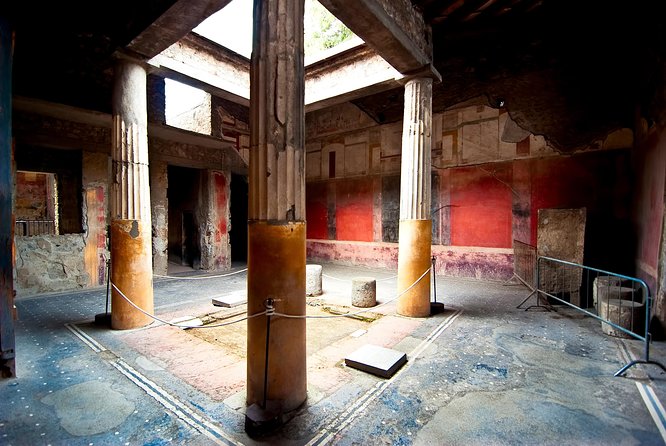
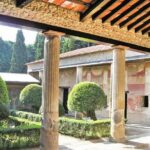
One of the most satisfying stops is Casa del Menandro, a rich Roman domus with fresco paintings and mosaics. This is where Pompeii starts feeling personal—because domestic art and floor patterns aren’t just grand monuments. They’re the visual language of someone’s private life.
You’ll have enough time (about 20 minutes) to look past the wow-factor and notice how decorative elements are placed. The guide’s job here is to help you “read” what’s left: what the designs suggest about taste, status, and household identity.
Potential drawback: this is one of the stops people most want to linger in. The tour is timed, so if you’re a slow-and-steady ruins photographer, you may want to take your photos quickly and plan to come back later on your own—if your schedule allows.
Panificio di Popidio Prisco: A 2,000-Year-Old Bakery Moment
Then you’ll see Panificio di Popidio Prisco, a bakery that dates back about 2,000 years. A bakery stop might sound random at first, but it’s one of the most practical ways to understand daily life.
Food production was serious business in Pompeii. You get to see how ovens and mills fit into a real workflow. It’s the kind of stop that makes history feel tangible, because it’s tied to something you can easily imagine doing yourself.
This part of the tour is short—around 10 minutes—so you’ll focus on the key machinery and the general process rather than getting stuck in a “museum mode.”
Termopolio di Vetuzio Placido: Street Food as Social Life
Next is Termopolio di Vetuzio Placido, an ancient street food spot. This is the Pompeii version of quick bites and social hangouts. It’s also one of the fun stops, because it breaks the pattern of temples and big civic spaces.
Again, it’s brief (about 5 minutes), but the point is to show how people ate where they lived and traveled through the city. When you see it after the bakery, you start to connect the supply chain: produce, mill, bake, sell, and eat.
If you love food history, this stop is a nice reminder that the eruption interrupted ordinary routines—not just big ceremonies.
Orto dei Fuggiaschi: The Plaster Casts You Won’t Forget
Finally, you reach Orto dei Fuggiaschi, where you see plaster casts of victims. This is the emotional core of the tour.
Plaster casts aren’t “pretty.” They’re sobering. The value of seeing them with a guide is context: you understand what you’re looking at and why it mattered. And because you’ve heard the eruption story earlier, the scene lands with more meaning.
Time here is about 15 minutes. That’s enough for you to absorb what the guide explains and to step back when you need a breath. If you’re sensitive to intense scenes, consider telling the guide at the start. A private guide can pace it in a way that works for you.
What Makes This Private Tour Worth $249 (and What Adds Extra Cost)
Let’s talk money. The tour price is $249 for a private experience lasting about 2 hours. That includes a private licensed guide, plus a route designed to hit big highlights without turning Pompeii into a full-day endurance test.
What’s not included is the entrance ticket. Adults pay Euro 18, while under 18 is free. On request, the guide can also buy skip-the-line tickets for you.
So your real budget is: $249 + entrance ticket. If you compare that to a group tour, the math depends on what you want. If you value asking questions, adjusting pacing, and avoiding the stress of managing your own route, private often feels like good value fast. If you’re traveling solo on a tight budget, you’ll want to weigh extra cost against the benefits of a tailored experience.
The Most Praised Aspects You Should Expect
The best part of this tour style is simple: the guide connects details to the place you’re standing in. Alex Tour’s Alex is the kind of guide who keeps the group moving while still stopping when questions come up.
From the reviews that inform my expectations, three themes come through:
- Storytelling that stays organized, so you don’t feel lost in a sea of ruins
- A pace that respects time, which matters when you want highlights in 2 hours
- A personal, engaging vibe, including for families and for groups with different energy levels
I’d also expect the tour to feel comfortable on days when Pompeii is hot. Late afternoon helps, and the guide’s pacing helps too.
Who This Tour Is Best For
This private late-afternoon format is a strong fit if you:
- want to see major Pompeii sights without a 4–6 hour commitment
- dislike navigating on your own and prefer expert interpretation
- care about crowd control and temperature
- want a route that moves quickly but still leaves room for questions
It can also work well for families, including kids, as long as everyone is ready for a walk through outdoor ruins. Because the tour is private, the guide can often tailor explanations to your group’s needs.
If you’re the type who likes to spend hours inside one area, you might find 2 hours feels short. In that case, you’d pair this with extra self-guided time later. But if you want a smart “greatest hits + meaning” tour, this hits the sweet spot.
Practical Tips for Your Late Afternoon in Pompeii
A few things will make your experience smoother:
- Wear shoes with grip. Pompeii surfaces can be uneven, and you’ll be moving consistently.
- Bring water. Even in better light, it’s still a long outdoor walk.
- Aim to stay present. Pompeii rewards close looking, especially at domus details like mosaics and frescoes.
- If you’re set on a particular house visit or you want less crowd exposure, tell your guide what you prefer early. Private means you can steer.
Also keep an eye on weather. This experience requires good weather, and if it’s canceled due to poor weather, you’ll be offered a different date or a full refund.
Should You Book This Late-Afternoon Private Pompeii Tour?
If you want Pompeii without the all-day stress, I think it’s a smart booking. The late-afternoon timing is practical, and the private guide format is what turns ruins into understanding. You also get a strong mix: civic life (Forum), religion (Temple of Apollo), Roman daily routine (baths and theatres), domestic art (Casa del Menandro), food culture (bakery and street food), and the human impact of AD 79 (plaster casts).
I’d book it if you’re short on time, want clear storytelling, and care about comfort. I’d hesitate only if you need long, slow exploration in one area, because the tour is built to cover key highlights within about 2 hours.
FAQ
How long is the private late-afternoon Pompeii tour?
It lasts about 2 hours.
Where do we meet for the tour?
You’ll start at Via Villa dei Misteri, 2, 80045 Pompei NA, Italy, and you’ll return to the same meeting point.
Is the Pompeii entrance ticket included in the price?
No. The entrance ticket is not included. It costs Euro 18 for adults, and it’s free under 18.
What’s included with the $249 price?
The tour includes a private licensed guide. The mobile ticket is part of the experience as well.
Can the guide help with skip-the-line tickets?
Yes. On request, skip-the-line tickets can be bought by the guide.
Which major sights will we see during the tour?
You’ll see highlights such as the Forum, the Temple of Apollo, Stabian Baths, Teatro Grande, Casa del Menandro, Panificio di Popidio Prisco, Termopolio di Vetuzio Placido, and Orto dei Fuggiaschi, along with other key areas like shops/workshops and parts of the water system.
Is this tour private or shared?
It’s private. Only your group participates.
Is the meeting point easy to reach by public transportation?
The meeting point is near public transportation.
Are service animals allowed?
Yes, service animals are allowed.
What if the weather is bad?
The experience requires good weather. If it’s canceled due to poor weather, you’ll be offered a different date or a full refund.
If you tell me your travel dates and group size (adults/kids), I can help you estimate your total cost with the entrance ticket and suggest the best time window for late-afternoon light.