REVIEW · POMPEII
Pompeii: walking tour with 3D glasses and with entrance ticket
Book on Viator →Operated by AR Tour · Bookable on Viator
Pompeii suddenly clicks with 3D glasses. This is a 2-hour walking tour inside the archaeological park where augmented reality reconstructions are shown right over the ruins as you follow the main route.
Two things I like a lot: the entrance ticket is included, and the AR moments help you picture what these streets and buildings looked like before the eruption changed everything. You’re not just looking at stones—you’re matching the past to where you are right now.
One consideration: this is not a stop-by-stop, always-explained, classic lecture tour. The AR glasses create the biggest impact at select moments, so if you want constant narration at every landmark, you may feel a bit “on your own” between AR stops.
In This Review
- Key things to know before you go
- Pompeii in AR: what the 3D glasses really do to your walk
- Price and value: $62.75 with admission ticket included
- Meeting point at Coffee Shop Vittoria and how the timing works
- The two-hour itinerary: walking the main route with AR stops
- Where this tour goes (and where it doesn’t): Villa dei Misteri is skipped
- Kids, eyeglasses, and comfort: practical details that affect your experience
- Getting the most from the assistant: hearing and group positioning
- The eruption question: why some people leave wanting more
- Who this Pompeii 3D AR tour is best for
- So should you book this Pompeii 3D AR walking tour?
- FAQ
- How long is the Pompeii walking tour with 3D glasses?
- Is the entrance ticket to Pompeii included?
- Where do we meet for the tour?
- What time does the tour start?
- Is this tour offered in English?
- Can children use the 3D glasses?
- Can I wear the AR glasses if I already wear eyeglasses?
- Does the tour run in bad weather?
Key things to know before you go
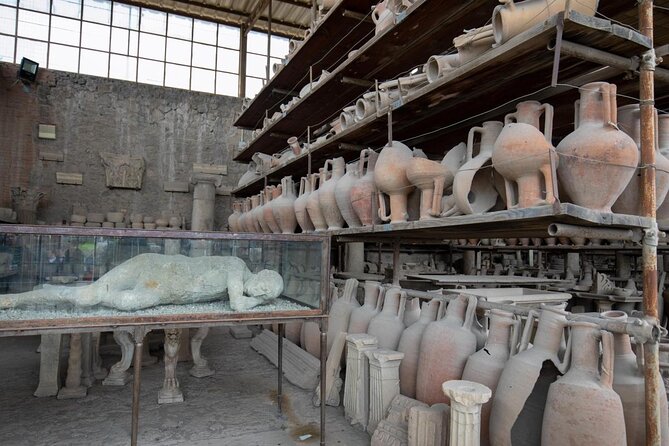
- AR reconstructions on the ruins so you can compare past vs. present while walking
- Entrance ticket included with a mobile ticket for easier arrival
- Small group size (max 15) which helps the walk feel manageable
- Main route focus with time left to explore the park on your own afterward
- 3D not for kids under 8 (they can enter with a standard ticket, but can’t use the 3D tech)
- Comfort matters: you’ll be walking on uneven ground, and the glasses can feel tiring on the neck
Pompeii in AR: what the 3D glasses really do to your walk
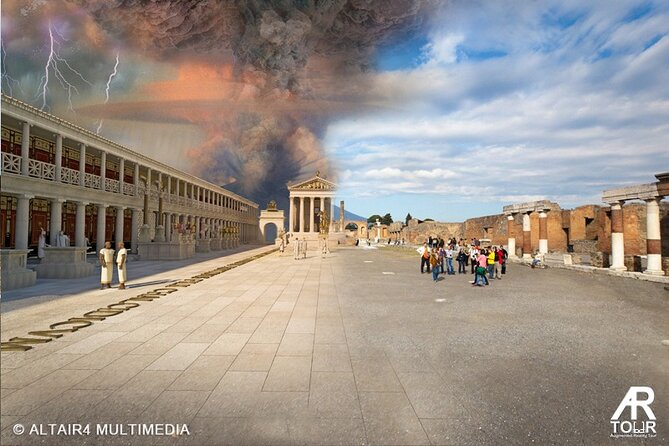
Pompeii is famous for being frozen in time. The tricky part is that, when you’re standing in the middle of ruins, it can be hard to “see” the city as it once was. That’s where this tour’s AR 3D glasses come in.
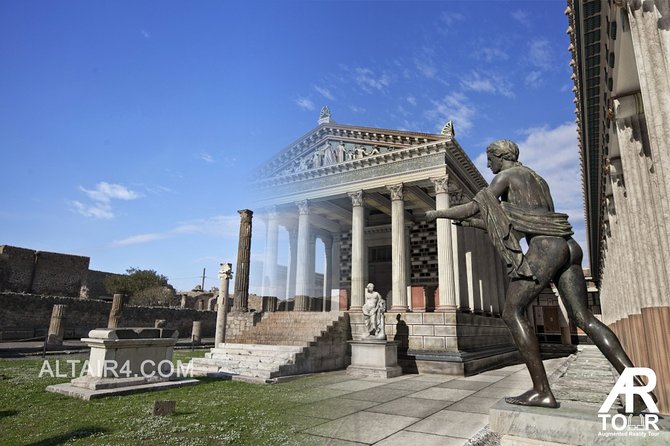
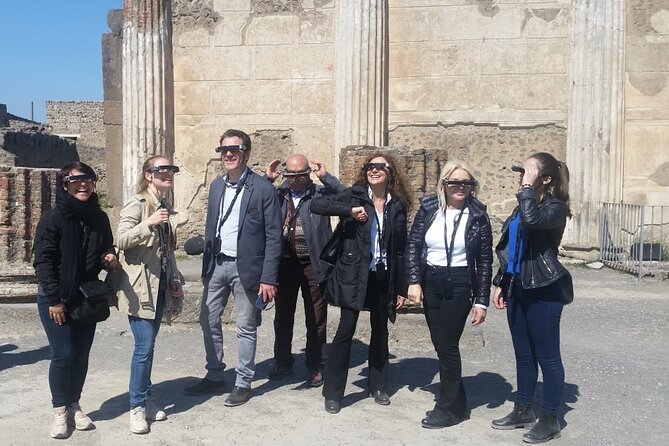
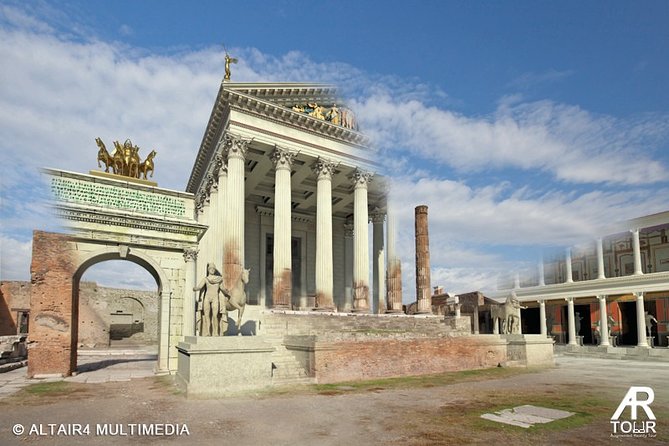
Instead of imagining from scratch, you’ll be shown reconstructions placed over specific spots on the site. As you walk, the city starts to make sense in layers: the layout of the streets, the idea of building fronts, and the way spaces would have worked for daily life. A few of the AR effects are described as short clips, but the overall impact is that you get a fast visual bridge between what’s left and what once stood there.
The best part is that you’re not stuck with a screen the whole time. You’re still outdoors, moving between landmarks. The tech just gives your brain something to line up with the physical setting—so the visit feels less like staring and more like mapping.
You can also read our reviews of more tours and experiences in Pompeii.



Price and value: $62.75 with admission ticket included
At $62.75 per person, this is priced like a premium Pompeii add-on, but the math is simpler because the admission ticket is included in the tour.
If you’ve ever done Pompeii without a guide, you know the entrance cost is only half the puzzle. The other half is: How do you make sense of what you’re seeing quickly, especially if you only have a couple of hours before you want to roam on your own? This tour is built around that exact “use my time well” goal.
You also gain structure. You meet at a set point, you follow a main route, you get AR interpretation at planned stops, and then you’re released back into the park afterward. For many visitors, that means less time getting oriented and more time enjoying the site.
Where the value can feel lower is when your expectations are for a fully traditional, deeply narrated guide at every stop. The experience is AR-led, and the assistant’s role includes managing the glasses and keeping the group moving. If you’re the type who wants every street corner explained like a textbook, you may want a different style of tour.
Meeting point at Coffee Shop Vittoria and how the timing works
Your start is at Coffee Shop Vittoria, Via Mare, 80045 Pompei NA, Italy, with a 10:30 am departure. The activity ends back at the meeting point, so it’s a simple loop.
Plan to arrive 15 minutes early. If you show up late, the group is only waited for up to 5 minutes before moving on. That’s a real detail worth taking seriously at Pompeii—finding your meeting spot can take longer than you expect, especially when you’re navigating footpaths and crossing busier areas.
A small practical tip: if you’re traveling with a phone-only ticket, keep your mobile screen ready and bright enough to be read quickly. This tour uses a mobile ticket, so you’ll want to avoid fumbling while the group gathers.
The two-hour itinerary: walking the main route with AR stops
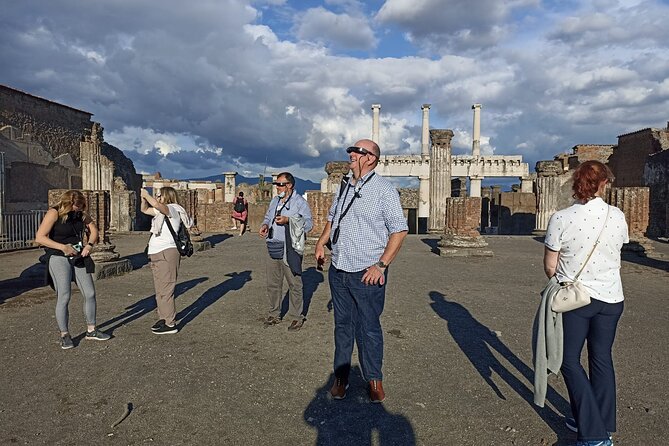
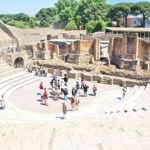
There’s one main “stop” on paper: the Archaeological Park of Pompeii. In practice, your walking tour is about the main route through the site—moving between key areas where the AR glasses can overlay reconstructions.
What you should expect during the walk:
- Your assistant will meet you at the entrance area and lead you along the main route
- The AR visuals help you see reconstructions of buildings and spaces directly on the ruins
- The tour runs about 2 hours, which fits well if you also want to wander after
What makes this format workable is the pacing. Pompeii is huge. Two hours is enough time to feel oriented and get a few big “oh wow” moments without burning your whole day. After the tour, you can keep exploring independently, which matters because Pompeii rewards slow roaming and repeated looking.
Now, the drawback to keep in mind: some AR moments may feel like “snippets,” and the AR coverage isn’t necessarily equal to what you’d see on a classic guided tour that stops frequently for deep explanations. In other words, it’s easier to follow the big ideas than to satisfy a desire for minute-by-minute details at every landmark.
Where this tour goes (and where it doesn’t): Villa dei Misteri is skipped
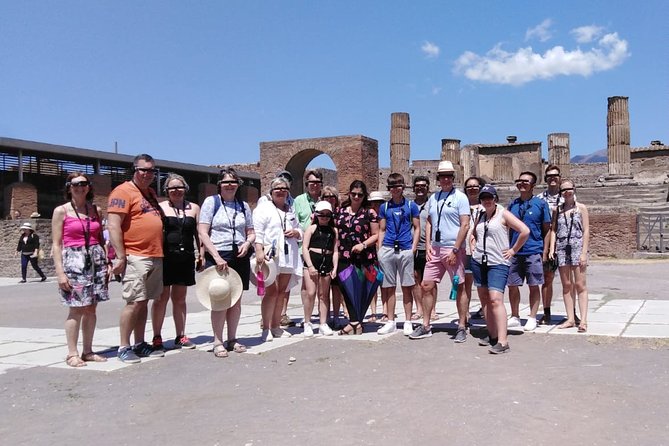
This tour focuses on the core park route and does not include suburban villas, specifically including villa dei Misteri.
If you were hoping for outlying areas beyond the main walk, plan for that ahead of time. Pompeii’s scale means there’s always trade-offs in a short tour. This one is optimized for AR interpretation and getting you oriented inside the main park.
So if your must-see list includes outlying villas, consider pairing this with an add-on plan after the tour—or choosing a different itinerary that explicitly covers those areas.


Kids, eyeglasses, and comfort: practical details that affect your experience
A few details can change how smooth your visit feels:
- Children under 8: they can enter the park with a standard ticket, but they cannot use the 3D technology.
- Eyeglass users: the AR glasses can also be worn by participants who already use eyeglasses.
On comfort, the tour is a walking experience. You’ll want comfortable shoes because Pompeii’s surfaces are uneven and stone-heavy. That’s the obvious part.
The less obvious part is the glasses themselves. Some people found the headset/kit tiring over time, especially when it’s worn during a full walk. If you’re sensitive to physical strain from straps or devices, you might want to mentally prepare for breaks where you’re not actively using the glasses.
Also, the tour takes place regardless of weather conditions, so dress for heat or rain and keep water in mind. Two hours moves quickly when you’re uncomfortable.
Getting the most from the assistant: hearing and group positioning
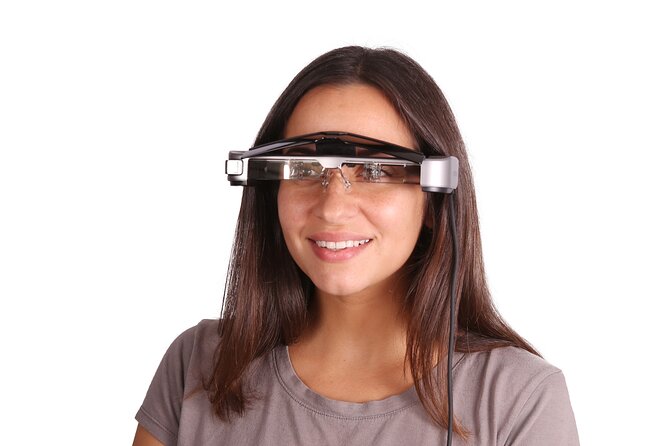
This tour uses AR glasses as the main “delivery system,” and the assistant’s job is to lead you along the route and support the AR interpretation.
That matters for how you should position yourself. If you tend to drift behind, you can lose the assistant’s direction when the group is moving between stops. When the group is walking and you’re not close enough, it’s easy to miss key instructions like where to stop for an AR moment.
My advice: keep a steady place in the group. If you can, stay where you can easily hear the assistant without turning your head constantly. Pompeii already makes you work—watch your feet, read signs, and look up at walls—so don’t also add the stress of trying to catch every word.
One more thing: the AR narration and visuals are central. If you prefer a tour that depends on live commentary at every stop, you might feel less satisfied between AR moments. If you’re flexible—if you like the “see it, then figure it out” rhythm—this format can be very rewarding.
The eruption question: why some people leave wanting more
Pompeii’s story is inseparable from the eruption of Mount Vesuvius. In this AR tour, the main emphasis is on the buildings and city spaces you can see during the walk.
That means the eruption itself isn’t a major AR focus within this experience. Some people wish there were an explicit AR stop dedicated to seeing the eruption or understanding it in a more visual way while you’re in the right context.
The provider has indicated work is underway on a Mt. Vesuvius / eruption-focused AR option for the future. So if the eruption is the centerpiece of your visit, you may want to plan an additional Vesuvius day—or look for that upcoming AR-style option when it’s released.
Who this Pompeii 3D AR tour is best for
This tour suits visitors who want:
- A structured introduction to Pompeii that doesn’t eat the whole day
- AR reconstructions that make ruins easier to understand fast
- A setup where you can stay after the tour to explore at your own pace
It may be less ideal if you:
- Want a traditional, stop-and-explain guide cadence at every landmark
- Are strongly focused on the eruption itself during the Pompeii walk
- Need a tour format with constant, high-volume live audio at every moment (this one relies more on AR stops than continuous, site-wide narration)
If you like technology but don’t want your whole day consumed by screens, this is a good compromise. You’re outside, in the real place, with the reconstructions acting like a translation layer.
So should you book this Pompeii 3D AR walking tour?
Book it if you want a smart-value way to get oriented in Pompeii and you’ll appreciate AR reconstructions as your main storytelling tool. The included admission ticket helps, and the two-hour format makes it easy to keep roaming afterward.
Skip it (or swap to a different style) if your top priority is a deeply detailed, classic guided lecture at every stop, or if you specifically want an eruption-focused AR moment inside this same Pompeii walk.
If you do book, show up on time, stay close to the assistant, wear good walking shoes, and think of the glasses as your “past glasses” rather than as a complete replacement for understanding the site.
FAQ
How long is the Pompeii walking tour with 3D glasses?
It’s about 2 hours.
Is the entrance ticket to Pompeii included?
Yes. The admission ticket is included with the tour.
Where do we meet for the tour?
Meet at Coffee Shop Vittoria, Via Mare, 80045 Pompei NA, Italy.
What time does the tour start?
The start time is 10:30 am.
Is this tour offered in English?
Yes, it’s offered in English.
Can children use the 3D glasses?
Children under 8 can enter with a standard ticket, but they cannot use the 3D technology.
Can I wear the AR glasses if I already wear eyeglasses?
Yes, the AR glasses can also be worn by participants who use eyeglasses.
Does the tour run in bad weather?
Yes, the tour takes place regardless of weather conditions, so dress appropriately.