REVIEW · POMPEII
Pompeii Express: 1-Hour Guided Tour
Book on Viator →Operated by Enjoy Pompeii · Bookable on Viator
One hour can still teach Pompeii. This Pompeii Express tour is built for limited time: you get a guided hit list of major sights, plus stories that make the city feel human again. I like the tight focus on the most important spots, and I like how the guide keeps you moving without turning it into a sprint. The main catch: the Pompeii site entry ticket is not included, so you’ll want to budget extra before you go.
If you’re trying to avoid long hours baking in the sun, this is a smart way to see more without wasting your energy wandering. The group stays small (up to 20), and you’ll use a mobile ticket for the experience. Still, you should plan for quick stop times and a bit of navigation at the start, since meeting up can feel slightly unclear if you don’t arrive early.
In This Review
- Key things to know before you go
- Pompeii in a hurry: what the one-hour format gets you
- Price and what is actually included (site ticket is extra)
- Where to meet on Via Villa dei Misteri (and why early matters)
- Stop-by-stop: the route from Pompeii Archaeological Park to Casa dei Vettii
- Stop 1: Pompeii Archaeological Park (the setting, in 5 minutes)
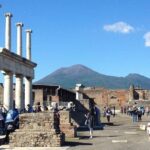
- Stop 2: Foro de Pompeya (the public square, in about 5 minutes)
- The mosaic stop: the Beware of the dog moment (brief, but memorable)
- Stop 3: Thermopolium VI (ancient fast food, in about 10 minutes)
- Stop 4: Casa dei Vettii (wealth, frescoes, and domestic life, about 15 minutes)
- The highlights that make this tour feel worth it
- What to expect from the guide (and why your attention will matter)
- Timing, weather, and how to dress for a one-hour Pompeii sprint
- Who this tour suits best (and who should look elsewhere)
- Should you book Pompeii Express?
- FAQ
- How long is the Pompeii Express guided tour?
- What is included in the price?
- Do I need to buy the Pompeii site entry ticket?
- What are the main stops on the tour?
- Is the tour limited to a small group?
- What’s the meeting point for the tour?
- Do I get a ticket on my phone?
- What happens if weather is bad or the minimum group size isn’t met?
- What is the cancellation window for a refund?
- My quick booking call
Key things to know before you go
- A real one-hour plan: a structured route that prioritizes the biggest Pompeii moments
- Site ticket not included: Pompeii Archaeological Park costs extra on top of the tour price
- Fast stops, guided meaning: short visits paired with explanations of daily life and design
- Forum plus food plus houses: you’re not just looking at stones, you’re seeing how people lived
- Casa dei Vettii as the “wow” finale: famous for preserved fresco paintings and wealth
- Small group pacing: up to 20 people, with a guide who can adjust to the group’s walking ability
Pompeii in a hurry: what the one-hour format gets you
Pompeii is huge. Even if you love ruins, you can lose a lot of time just figuring out where to go next, then second-guessing whether you’re seeing the best parts. That’s exactly where this 1-hour guided format helps. Instead of asking you to do the hardest part (planning), the tour does the prioritizing for you.
In one hour, you get a fast tour through the bones of the ancient city: the setting (Pompeii Archaeological Park), a public centerpiece (the Foro), and then the “private life” side in the form of a top-tier house. You also stop for an ancient “fast food” counter and one of the most recognizable mosaics. It’s a lot to pack in, but the route keeps the focus on what visitors usually want most.
The other big benefit is energy management. Pompeii can be brutal in warm weather. This tour is designed to keep exposure to the sun more controlled than an open-ended self-guided wander, because you’re on a schedule with defined stop points.
You can also read our reviews of more guided tours in Pompeii
Price and what is actually included (site ticket is extra)
The headline price is $21.99 per person, and that includes the 1-hour guided tour. You also get a mobile ticket, which is convenient when you’re moving fast through a busy place like Pompeii.
But here’s the decision point: Pompeii Archaeological Park entry is not included. The site entry fee is €19.00 per person. If you’ve ever arrived excited, only to discover you still need to pay at the gate, you’ll want to avoid that surprise by planning for both costs upfront.
So is it good value? For most people, yes—because the tour price buys you something you can’t easily DIY: a focused route plus an interpretation of what you’re seeing. If you already know Pompeii well and just want photos, you might prefer self-guided. If you’re visiting for the first time, or you only have one shot, paying for a guide often turns “cool ruins” into “I get what this all means.”
Where to meet on Via Villa dei Misteri (and why early matters)
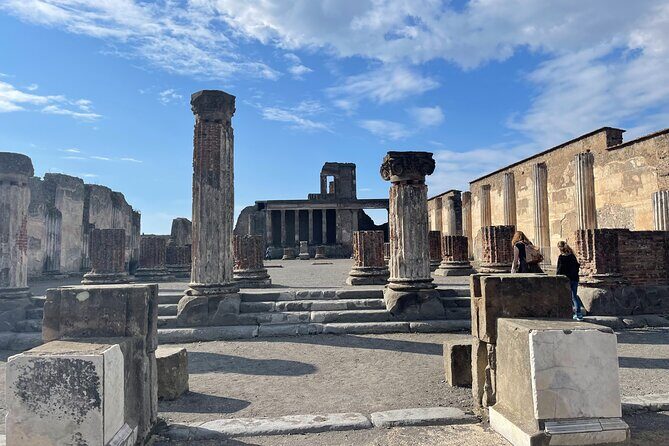
The tour starts at Ristorante Bar Sgambati, Via Villa dei Misteri, 1, 80045 Pompei NA, Italy. It ends at Via Villa dei Misteri, 2, 80045 Pompei NA, Italy.
I recommend arriving a bit early. With tours like this, a small delay can make the first stops feel even shorter than they already are. One practical issue: some people find it confusing to spot the exact group at the start if there isn’t clear signage. If you’re the type who likes certainty, show up, locate the meeting spot, and take a moment to confirm you’re in the right place before the hour begins.
The good news is that the route is tight. Even if the start is slightly chaotic, once the guide leads you into the park and onto the main stops, the pace becomes straightforward.
Stop-by-stop: the route from Pompeii Archaeological Park to Casa dei Vettii
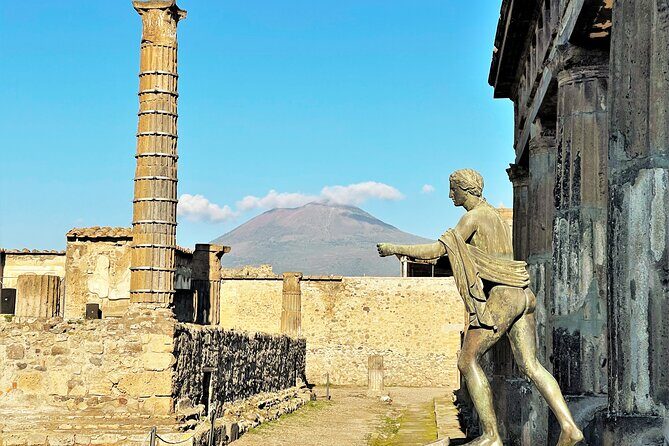
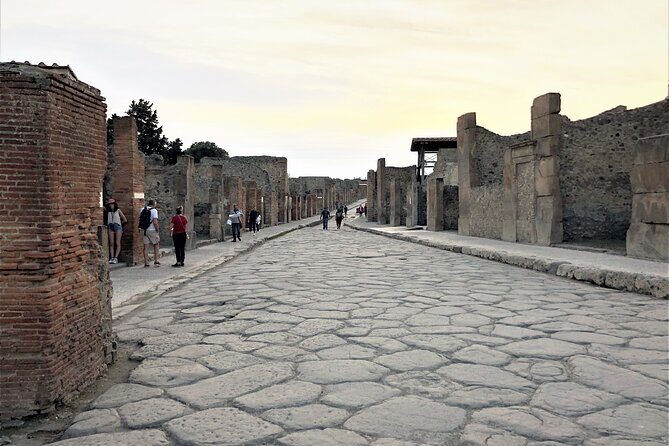
This tour moves in a sequence that alternates public space, street life, and elite domestic life. The schedule is short per stop, so the guide’s explanations matter even more than usual.
Stop 1: Pompeii Archaeological Park (the setting, in 5 minutes)
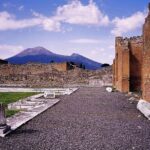
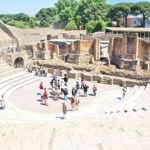
You begin at the Pompeii Archaeological Park, where the city’s story is framed by one event: Pompeii was buried by the eruption of Mount Vesuvius about 2,000 years ago. In a brief window (about 5 minutes), the guide sets the scene and connects the ruins to everyday life rather than treating it like a museum display.
Drawback to keep in mind: five minutes is not enough to read every inscription or study building details. This is a “get your bearings fast” stop. If you want deep exploration, you’d need a longer tour later. But as a starter, it’s useful. It helps you look at what follows with context.



Stop 2: Foro de Pompeya (the public square, in about 5 minutes)
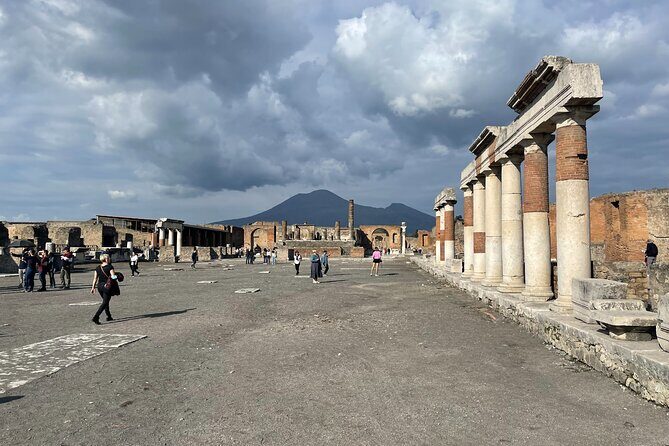
Next is Foro de Pompeya, Pompeii’s ancient square and public buildings. This is where you see how the city organized power and community life in shared spaces—politics, gatherings, and daily movement through town.
The time here is short (again around 5 minutes). The value is that the guide points out what makes a forum a forum, so you’re not just standing in an open area wondering what you’re looking at.
Also, this stop is listed as free for admissions, so your paid entry is for the broader park experience rather than each individual stop.
The mosaic stop: the Beware of the dog moment (brief, but memorable)
There’s a quick stop for one of Pompeii’s most photographed images: the Beware of the dog mosaic. It’s described as possibly the most popular mosaic of Pompeii, tied to that famous sign you keep seeing referenced online.
This is one of those moments where even a short visit is worth it. The mosaic works because it’s playful and human: it’s not abstract art. It’s part of the house culture. In a one-hour tour, this kind of recognizable detail gives you a mental anchor. You leave with something you can point to later.
Stop 3: Thermopolium VI (ancient fast food, in about 10 minutes)
Then comes Thermopolium VI—an ancient fast food stop. The guide explains what Romans ate there, turning a “food counter” into a picture of daily routines and cravings.
This is one of the most fun stops to understand, because it feels strangely familiar. You’re seeing a place that served prepared food quickly to people moving through the city. The time here is about 10 minutes, so you get a bit more breathing room than the forum stop.
As with the other stops, the watchword is interpretation over inspection. You’re here to understand the function.
Stop 4: Casa dei Vettii (wealth, frescoes, and domestic life, about 15 minutes)
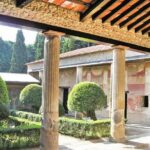
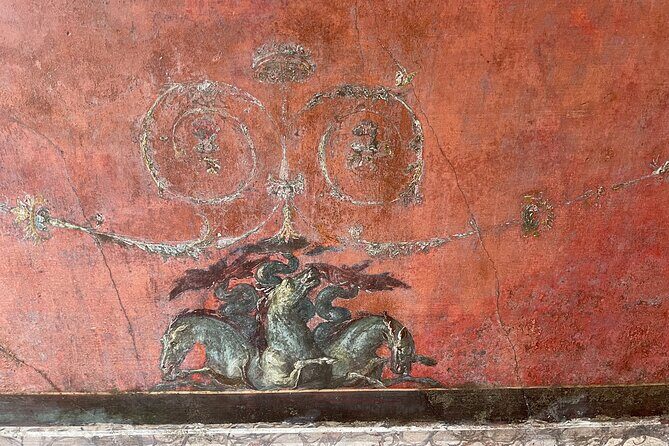
The tour finishes at Casa dei Vettii, described as the richest of the Pompeian houses with some of the best-preserved fresco paintings. You’ll also learn how domestic life worked and what made these houses sustainable.
This is the biggest “wow” moment in the schedule. It gets about 15 minutes, which is meaningfully longer than many other stops on the route. If you only have a single guided tour, I’d rather you spend your deeper attention here than any other stop.
One more benefit: a house like Casa dei Vettii helps you shift from seeing Pompeii as a tragedy to seeing it as a living city. Frescoes and home design remind you that people made art, hosted visitors, and built comfort into everyday life.
The highlights that make this tour feel worth it
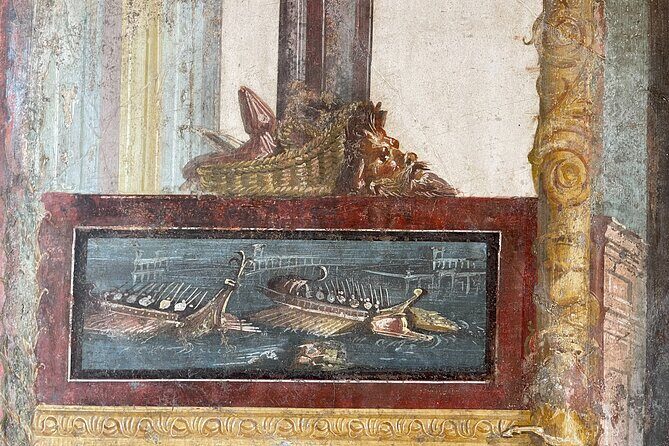
This experience is built around recognizable Pompeii moments, but it’s also built around variety. You don’t just view ruins from one angle.
Here are the parts that tend to deliver the best payoff for first-time visitors:
- Guided meaning for everyday spaces: you see public areas, street-level food culture, and a high-status home. That mix helps the city click as a whole.
- Short-but-stacked stops: instead of one long dive, you get several quick “chapters.” It’s perfect for travelers with limited time.
- Casa dei Vettii as your anchor: preserved fresco paintings give you something concrete to remember.
- The Beware of the dog mosaic: even if you don’t know Pompeii, you’ll likely recognize this image and understand why it’s famous.
- A guide who can adjust pace: the best versions of this tour keep walking matched to the group’s ability. When the pace fits, you spend more time looking and less time rushing.
One extra note from what people report: a guide named Sasa has been described as relaxed, knowledgeable, and with a good sense of humor. Humor matters on ruins days. It makes the stories land.
What to expect from the guide (and why your attention will matter)
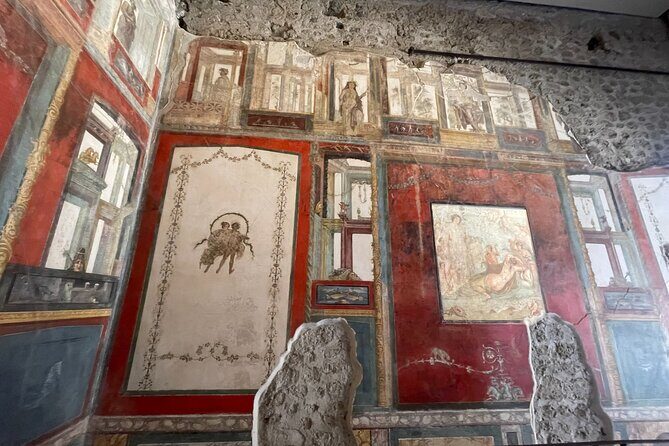
This tour is explicitly guided. The guide is the difference between reading stones and understanding a city. You’ll get stories about Pompeii, plus practical context tied to each stop—why it existed, what people likely used it for, and how to look at the features in front of you.
Even better: the guide can respond to the walking ability of the group. That matters because a one-hour tour leaves less room for delays. If everyone is moving at the wrong speed, the experience can feel compressed in a bad way. When the guide matches the group, the stop times feel purposeful instead of rushed.
A small practical downside can happen at the start: finding your group. That’s why early arrival helps. Once you’re together and moving, the structure takes over.
Timing, weather, and how to dress for a one-hour Pompeii sprint
This experience requires good weather. If the day is rough, you may be offered a different date or a full refund. That’s important because Pompeii ruins are exposed. Even though the tour is only about an hour, you’ll still be outside.
What I’d pack for this kind of schedule:
- Comfortable walking shoes with good grip
- Sun protection (hat, sunglasses, sunscreen) since you’ll still be outside
- A light layer if it’s warm but windy
- Water, even if you think it’s only an hour—Pompeii heat can surprise you
Because the stops are short, you may be tempted to skip the small essentials. Don’t. This tour is efficient, not weightless.
Who this tour suits best (and who should look elsewhere)
This is a great fit if:
- You have limited time in Pompeii and want the biggest sights covered
- You’d rather be guided than choose a route on the fly
- You want sun exposure managed with a structured hour
- You like getting context fast, then wandering later at your own pace
It may not be ideal if:
- You’re hoping for deep reading, slow photography, or full immersion
- You want to explore beyond key highlights
- You’re visiting in a way that doesn’t allow extra time for site entry (since the site ticket is extra)
Should you book Pompeii Express?
If you’re trying to see Pompeii smartly without turning the day into a puzzle, I’d book it. The big reason: in just one hour, you cover public life (Foro), daily food culture (Thermopolium VI), and elite domestic life (Casa dei Vettii), with a guided layer that helps you understand what you’re looking at.
Just do the math before you go. Add the €19.00 Pompeii entry fee to the tour price. If that extra cost fits your budget, this is a solid way to make Pompeii feel cohesive instead of chaotic.
FAQ
How long is the Pompeii Express guided tour?
It’s about 1 hour.
What is included in the price?
You get a 1-hour guided tour.
Do I need to buy the Pompeii site entry ticket?
Yes. The Pompeii Archaeological Park ticket is not included and costs €19.00 per person.
What are the main stops on the tour?
You visit the Pompeii Archaeological Park, Foro de Pompeya, a Beware of the dog mosaic stop, Thermopolium VI, and Casa dei Vettii.
Is the tour limited to a small group?
Yes. The group size is maximum 20 travelers.
What’s the meeting point for the tour?
The start is at Ristorante Bar Sgambati, Via Villa dei Misteri, 1, 80045 Pompei NA, Italy and the end is Via Villa dei Misteri, 2, 80045 Pompei NA, Italy.
Do I get a ticket on my phone?
Yes. The tour offers a mobile ticket.
What happens if weather is bad or the minimum group size isn’t met?
The experience requires good weather. If it’s canceled due to poor weather, you’ll be offered a different date or a full refund. If the minimum number of travelers isn’t met, you’ll also be offered an alternative or a full refund.
What is the cancellation window for a refund?
You can cancel for a full refund up to 24 hours in advance. After that, the amount paid is not refunded.
My quick booking call
Book this if you want the essentials—guided, efficient, and easier on your legs and sun exposure. Skip it only if you’re looking for a slow, deep, self-paced day where you can linger for hours in each corner.