REVIEW · POMPEII
Guided Private Tour in Pompeii
Book on Viator →Operated by Capri Top Tours · Bookable on Viator
Pompeii feels personal with the right guide. This private Pompeii experience is built around daily life in Roman times, with an archaeologist steering you through the real places Romans used for work, worship, and rest. I especially liked the way the tour turns big ruins into small, human moments—like the food counter and market areas—and the fact that you get a focused, guided pace instead of wandering on your own. One thing to plan for: the main Pompeii site entry fee is not included (18 euros per person), and at least one stop (the Teatro Grande view) may have limited access depending on current conditions.
You also get smart on-site choices. Starting at Piazza Esedra and entering from Porta Marina Inferiore is designed to help you avoid the worst queueing, and the tour runs about 2 hours 30 minutes, so you can still have energy for more Pompeii—or even a second stop in the region the same day.
Finally, I liked the human touch in the guiding. Toni (the archaeologist guide name that comes up repeatedly) tells the story so you can picture what people did day to day, with details that feel practical rather than lecture-style. It’s a mobile-ticket tour for a small private group (up to 5), ending back at the meeting point in Piazza Esedra.
In This Review
- Key things that make this Pompeii tour work
- Entering Pompeii from Piazza Esedra the practical way
- Teatro Grande and the entertainment zone: what you’ll see
- Tempio di Iside: religion meets a discovery story
- Termopolio di Vetuzio Placido: Pompeii’s fast-food counter
- Stabian Baths (Terme Stabiane): bathing, routine, and safety
- Piccolo Lupanare: the city’s red-light district
- Casa del Fauno: luxury home energy
- Basilica and the forum core: where Roman public life happened
- Macellum and Pompeii’s food market: where daily needs met art
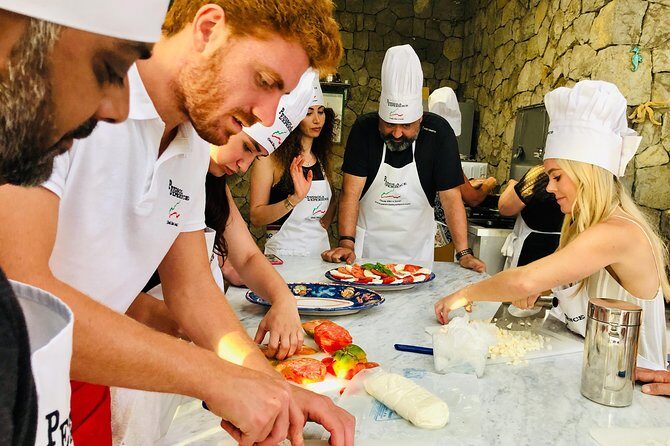
- Tastings, wine, and Roman-style snacking: the human scale payoff
- Time, walking, and how to get the most from 2.5 hours
- Price and value: $326.72 per group plus the site entry
- Who this Pompeii tour suits best
- Should you book this guided private Pompeii tour?
- FAQ
- How long is the Pompeii private guided tour?
- How many people are included in the group?
- Is the Pompeii Archaeological Park entrance fee included?
- What meeting point should I use?
- Does the tour use a mobile ticket?
- What sites or highlights are included?
- Is Teatro Grande fully accessible during the tour?
- What food and drink experiences are included?
- Can I cancel for a full refund?
Key things that make this Pompeii tour work
- Archaeologist-led storytelling that connects sites to everyday Roman life
- Small private group (up to 5) for a calmer pace
- Porta Marina Inferiore entry approach to help with queueing
- Food and street-life stops, not just monuments
- Roman baths experience plus tastings (bread, Roman-style snacks, wine)
- A tight 2.5-hour route through forum, temples, baths, and villas
Entering Pompeii from Piazza Esedra the practical way
You start at Ristorante Suisse in Piazza Esedra (10/13), and that matters more than it sounds. Piazza Esedra is a straightforward way to get oriented fast, and the route to the Pompeii gates from there is set up to bring you in via Porta Marina Inferiore. The point is simple: you spend less time stuck and more time walking the streets that shaped the whole city.
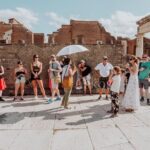
This is also a private tour for your group only, up to five people. In practice, that means you can ask questions without waiting for a large crowd to move. It’s a real value add in Pompeii, because the city is big and the ruins can blur together fast if you don’t have someone to keep the thread.
You’ll use a mobile ticket. That’s useful on a day when you’re already balancing sun, phone battery, and walking shoes.
You can also read our reviews of more guided tours in Pompeii
Teatro Grande and the entertainment zone: what you’ll see
Early on, you’ll reach Teatro Grande, the entertainment area of Pompeii. The tour includes the big theater and the little theater from a panoramic view, but it also notes that full access may not be possible at the moment. So don’t expect to treat this stop like a museum walkthrough of every section.
Still, the panoramic angle is the point. When you can see how the theater area sits within the city, it helps you understand how Romans arranged leisure in relation to everything else—politics, religion, and the everyday streets. It also gives your eyes a breather: after the initial entry and walking, this view helps you get the layout of Pompeii in your head.
If access is restricted, think of this as a lookout stop rather than a deep inspection. That mindset keeps your expectations aligned with how Pompeii operates day to day.
Tempio di Iside: religion meets a discovery story
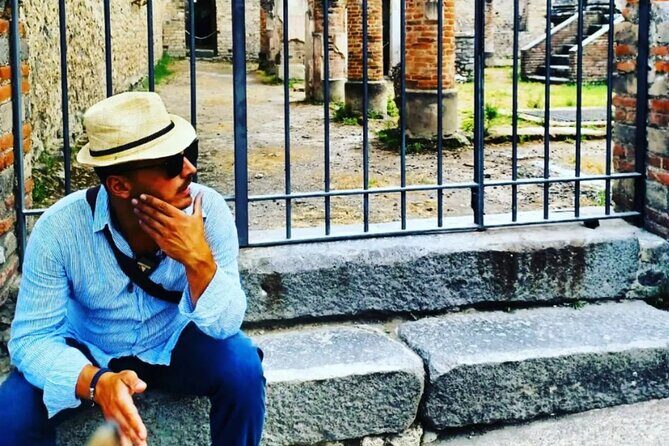
Next is Tempio di Iside. This temple area comes with an extra layer because the plan includes a look at a house right in front of it—connected to why significant discoveries were made in this spot.
For me, this is where a guided archaeologist approach helps most. Pompeii isn’t only about structures standing still; it’s also about what the earth revealed and how archaeologists connect evidence to people. A guide can explain the reasoning behind what you’re seeing, turning random-looking spaces into a story about finds and context.
This stop is short, but don’t treat it like filler. A quick temple stop can still give you something important: Pompeii wasn’t just Roman apartment blocks and markets. It was a city where worship shaped public life.
Termopolio di Vetuzio Placido: Pompeii’s fast-food counter
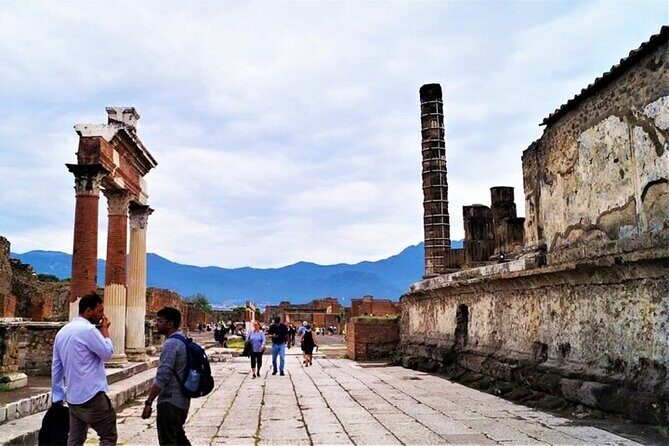
If you want street-level Pompeii, you’re in the right place at Termopolio di Vetuzio Placido. Termopolia were Roman-style “fast food” spots—places where you could grab something hot or ready-to-eat instead of cooking at home. This specific site is known for its frescoes, and that’s a huge part of the experience.
Here’s what I think this stop does well: it grounds the city in daily routine. Instead of thinking only about elites in villas, you’re getting a glimpse of food habits and public consumption. Frescoes make it even better, because they show decoration and branding-like detail in a setting that served real meals.
It’s also a good moment to slow down just a touch and look at the surfaces with intention. A guide can point out what you’d miss—like how the artwork and layout support the function of the space.
Stabian Baths (Terme Stabiane): bathing, routine, and safety
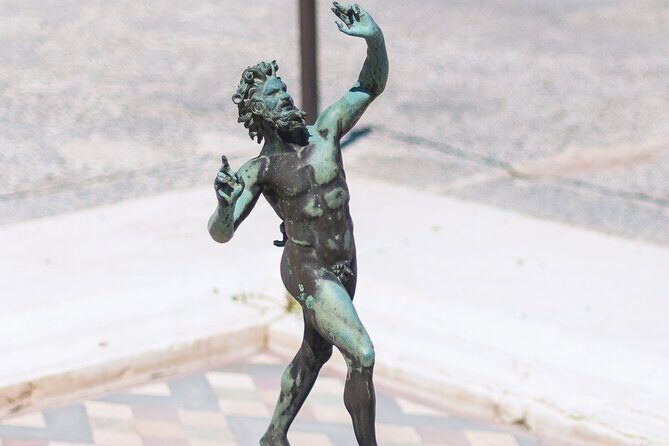
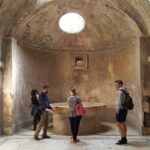
Then comes Stabian Baths (Terme Stabiane), the public spa complex. The tour includes an opportunity for a Roman-style bathing ritual, which is one of the most memorable parts of this route.
Why this matters: baths were social hubs, not only hygiene. You’d chat, trade news, and spend time there—so Pompeii’s baths reveal how people organized downtime. In addition, the tour frames the baths as a real way Romans stayed safe, which adds a practical angle to what can otherwise feel like a “tourist-only” topic.
Even if you’re not the type who loves wellness history, public bathing in a Roman city helps you understand why Pompeii functioned the way it did. It also changes the rhythm of the walk. You’re in a different world for a while—less politics and religion, more routine.
Plan to spend more than a quick glance here. The stop is around 20 minutes, so it’s not rushed to the point of feeling pointless.
You can also read our reviews of more private tours in Pompeii
Piccolo Lupanare: the city’s red-light district
Next is Piccolo Lupanare, the red-light district, plus a visit to a brothel. This is not a comfortable topic for everyone, and that’s exactly why a good guide approach helps—because you can stay respectful while still learning how society worked.
What I like about including this stop is that it widens your view of Pompeii beyond the glamorous stories. Roman life included desire, commerce, regulation, and risk, and Pompeii recorded all of it. A guided explanation helps you interpret the space instead of reducing it to shock value.
This is another short-ish block of time (about 20 minutes), and it’s best treated as an educational stop: pay attention to layout and function, and let your guide frame what the site tells us.
Casa del Fauno: luxury home energy
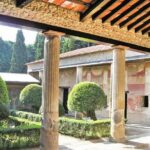
Then you reach Casa del Fauno, one of the best examples of luxury housing in Pompeii. This is the classic “wow” moment on a compact tour—big rooms, higher-status design, and the sense of space that most people never see in everyday Roman neighborhoods.
The tour also includes time in a villa garden with frescoes and a glass of wine, which is a lovely break from walking. Even on a structured itinerary, that pause matters. It turns Pompeii from a series of photos into a lived-in memory.
A practical note: because this is a private, short tour, don’t expect every luxury detail to be shown in depth. You’re getting the essential ideas of what luxury looked like, where it lived in the city, and how it differed from more everyday spaces.
Basilica and the forum core: where Roman public life happened
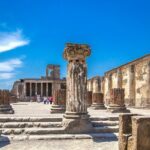
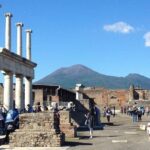
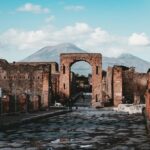
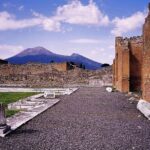
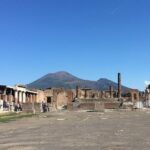
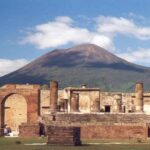
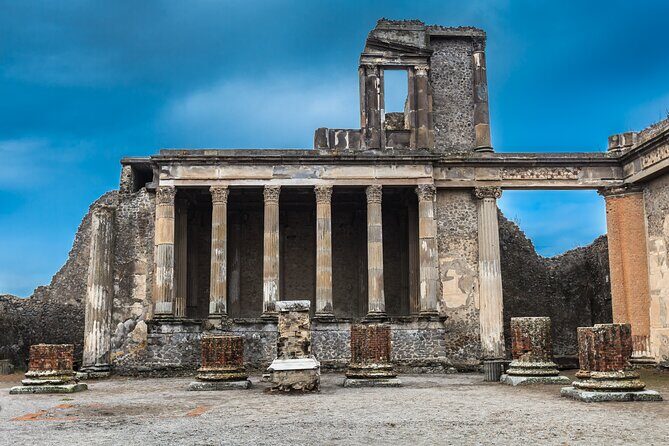
Pompeii’s political and civic heart is the Foro de Pompeya, and your route connects it with the Basilica (Pompei La Basilica) and major temple spaces.
The Basilica stop is described as the Roman parliament with huge marble decoration. Even if you only see part of it in a quick visit, it’s an important clue to how Roman civic life presented authority: marble, scale, and a built environment meant to signal order and status.
From there, you move through major religious and civic landmarks tied to public speech and public life:
- Temple of Apollo (Apollo’s Sanctuary)
- Temple of Venus (Venus sanctuary highlight)
- Temple of Jupiter Capitolino, framed as a place connected to public speech in the Roman forum
- Then the Foro de Pompeya itself as the center of city activity
I like this structure because it teaches you how the Romans blended politics, worship, and everyday movement. The forum wasn’t only where laws were discussed. It was where people passed through, watched, socialized, and absorbed the city’s power in real time.
Your guide’s job here is key: the stops are short, so the narrative has to do the heavy lifting. A good archaeologist can keep the story flowing so you don’t just collect names.
Macellum and Pompeii’s food market: where daily needs met art
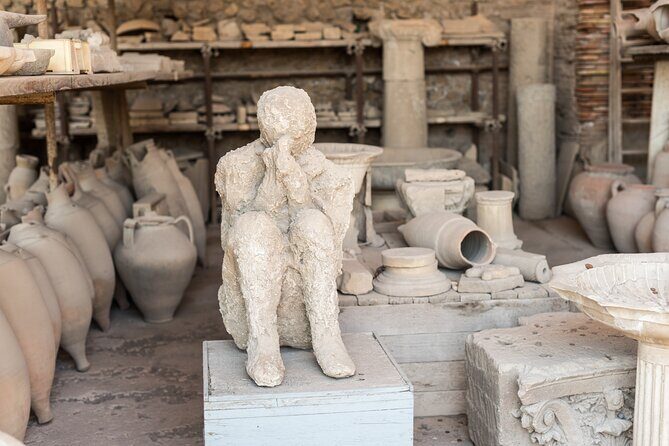
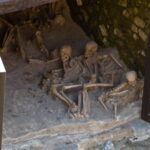
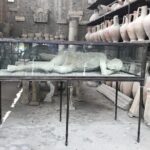
Next is the Macellum, the food market. This stop is built around practical life, and it’s also one of the more visually rewarding places because the plan includes high frescoes and body casts.
The body casts part is one of Pompeii’s hardest realities, but in a guided setting it’s easier to understand why it matters without turning it into a grim sideshow. The market theme helps: it’s not only tragedy; it’s also what people were trying to do when life ended—buying, eating, selling.
Also, markets are where you see how a city feeds itself. The Macellum shows how supply and daily consumption worked, making all the earlier food references feel connected rather than random.
This stop runs about 15 minutes, which is enough time to take in the main layout and absorb what a market meant in Roman life without burning your day.
Tastings, wine, and Roman-style snacking: the human scale payoff
The tour includes a local bakery tasting—freshly baked bread plus Roman-style snacks. It also includes wine during the villa garden break.
These aren’t just extras to make the tour feel fancy. They help you remember Pompeii as a living culture, not only a tragic archaeological site. Food and drink are part of daily life in every era, so taste becomes a bridge when the buildings are silent.
If you’re the type who cares about value, this is a big plus. Even before you add up the sight tickets, you’re getting planned meals-and-snacks style experiences that match the theme of daily routine.
Bring an easy attitude. You’re not on a food tour tasting every dish in Pompeii. You’re getting a few well-placed, theme-matching bites that reinforce the story your guide is telling.
Time, walking, and how to get the most from 2.5 hours
This tour runs about 2 hours 30 minutes. On a site as large as Pompeii, that’s tight. The route concentrates on high-impact categories: entry points, entertainment, religion, everyday food, baths, a brothel district, luxury housing, civic architecture, and the forum.
That compact design is both the advantage and the only real trade-off. You will not have time to linger for long in every room or corner. So come ready to look, absorb, and move.
For the best experience:
- Wear comfortable shoes. Pompeii involves walking on-site surfaces.
- Plan hydration for daylight hours.
- If you want extra time in one area, ask your guide early. A private guide can often adjust within the limits of the route.
Price and value: $326.72 per group plus the site entry
The tour price is $326.72 per group (up to 5). On a per-person basis, that can be a strong deal if you’re traveling with others.
At full group capacity (5 people), you’re roughly paying about $65 per person for the guide service, then you still have the Pompeii Archaeological Park ticket at 18 euros per person (free under 18). If you’re only a couple, your guide-cost share per person rises, and the site ticket becomes a larger share of the total.
My take: this is best value when you have 3 to 5 people, or when you’re the type who wants an archaeologist to handle interpretation so you don’t waste time guessing what you’re looking at.
Also remember: the tour includes ticketed admissions for multiple stops within the route, plus the curated extras like bakery tastings and wine time. Even with the site ticket added, the package stays thematically tight.
Who this Pompeii tour suits best
This tour fits best if you want:
- Roman everyday life, not only monuments
- A small group experience with an archaeologist guide
- A short, high-coverage route (about 2.5 hours)
- Food and sensory moments like bread/snacks, baths ritual, and wine
It may not be ideal if you:
- Want a slow, unstructured wandering day
- Plan to photograph everything for long periods without moving
- Need a stop-by-stop deep dive into a single building
Should you book this guided private Pompeii tour?
I’d book it if you want Pompeii to feel guided, connected, and efficient. The route balances civic spaces, temples, daily food spots, public bathing, and a window into both luxury housing and the more complicated corners of Roman society. You’ll leave with a clearer sense of how the city worked day to day, not just a list of famous ruins.
I’d think twice if you’re traveling solo on a tight budget, because the group price makes the guide portion higher per person. Also, if access restrictions affect Teatro Grande views during your visit, you’ll need to accept a more lookout-based version of that stop.
If your goal is a smart first Pompeii visit with a guide who can explain what you’re seeing, this private tour is a very practical choice.
FAQ
How long is the Pompeii private guided tour?
It’s approximately 2 hours 30 minutes.
How many people are included in the group?
The tour is private for your group, with up to 5 people.
Is the Pompeii Archaeological Park entrance fee included?
No. The Pompeii Archaeological Park ticket is not included. The fee is 18 euros per person, and entry is free for under 18.
What meeting point should I use?
You meet at Ristorante Suisse, Piazza Esedra 10/13, 80045 Pompei NA, Italy.
Does the tour use a mobile ticket?
Yes. The tour features a mobile ticket.
What sites or highlights are included?
The tour includes Pompeii Archaeological Park entry, Teatro Grande viewing area, Tempio di Iside, Termopolio di Vetuzio Placido, Stabian Baths, Piccolo Lupanare, Casa del Fauno, the Basilica, Temple of Apollo, Macellum, Temple of Venus, Temple of Jupiter Capitolino, and the Foro de Pompeya.
Is Teatro Grande fully accessible during the tour?
The plan notes that the big theater and little theater panoramic view is included, but access may not be available at the moment.
What food and drink experiences are included?
You get freshly baked bread and Roman-style snacks from a local bakery. You also have a glass of wine during the villa garden time.
Can I cancel for a full refund?
Yes. You can cancel up to 24 hours in advance for a full refund.